19 171 résultats
89245Nijmegen, KUN, 1989.
19625955001962 In-4 br., [pp.76-119], bibliographie.
1914230704052026xbvkWohl Tunis (1904-1914: 'Tunesische Periode'). Kartons, mit sichtbarem Plattenrand; quer (ca. 13,5 x 18 cm).
18911000510AGLuxor, 1891. Gemälde auf Leinwand auf Keilrahmen, im Prunkrahmen, unten rechts signiert und datiert 1891 : rückseitig bezeichneter Klebezettel des Künstlers : Bildmasse 42 x 32 cm, Rahmen 59 x 48 cm *Thieme/Becker XIII, 508.- Wurzbach V (1859).- Bötticher I (1891).- [6 Warenabbildungen] schöne gepflegte Erhaltung,
19811224260Edizione A. C.; (Rom), 1981. VI; 127 Seiten; graph. Darst.; 30 cm; kart.
199274370München : Lipp, 1992. Pflanzen im Alten Ägypten (Katalog zur Sonderausstellung Ingolstadt, Deutsches Medizinhistorisches Museum, 6.8.1992 - 4.10.1993 ; Hannover, Kestner-Museum, 25.10.1992 - 31.1.1993 ; 1993: Berlin, Dresden, München) / Schriften aus der Ägyptischen Sammlung ; H. 6) 276 S.; 28 cm Großformat, Paperback / kartonierte Ausgabe
20002502170115xbvkLondon, late 1990s/early 2000s. Ca. 25,2 x 19,4 cm.
20002502170114xbvkLondon, late 1990s/early 2000s. Ca. 30 x 21 cm (sheet), ca. 24 x 19 cm (image).
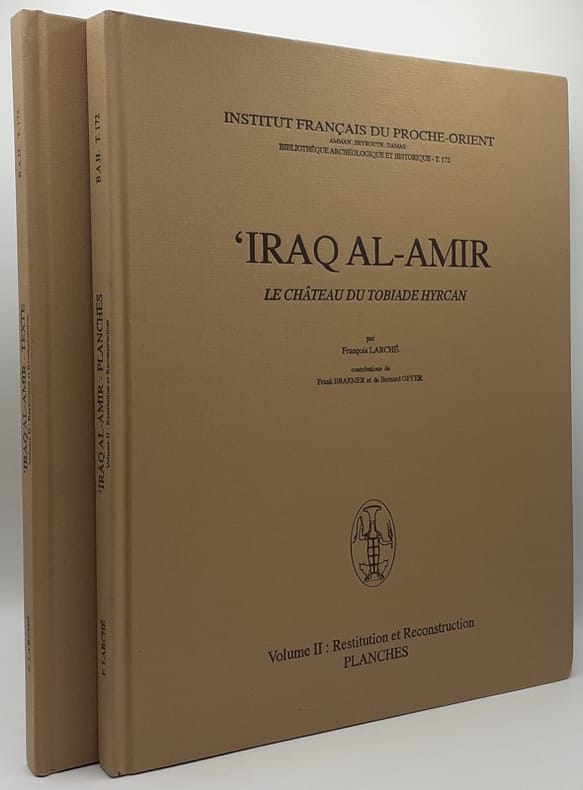
591726Beyrouth, IFPO, 2005. 2 vol. in-folio, cart. éd., titre en brun, VIII-169 pp., 15 pp., 118 ill. dont 3 dépliantes h.-t. (croquis, dessins, plans, coupes ...), 57 pl. comportant 355 reprod. photogr. en n/b., bibliographie, tables des ill. et des planches.
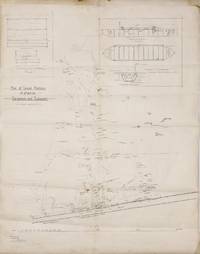
114959A detailed map of the battleground of the failed attempt by Turkish troops to invade Egypt on 3 February 1915. At the head of the map are large sketches of 'Frame of Kerosene Tin Raft in Turkish Attack' and 'Sketch of Turkish Pontoons captured at Toussoum-Serapeum 4.2.1915'. The Australian War Memorial has one of the 24 pontoons used by the 4th Turkish Army in their attempt to cross the Suez Canal in its collection. In fact the AWM records that 'The action in which it was captured was the first in which a unit of the AIF 3 Field Company Australian Engineers was engaged and as such this trophy was the first captured by the army in the First World War. by May 1918 the Australian War Records Section was lobbying for an example to be brought back to Australia noting that while Australian involvement by 3 Field Company Engineers was small it was important'. <p>Both Charles Bean 'The Official History of Australia in the War of 1914-18' Volume 1 Chapter VIII: 'The Turkish Expedition against Egypt' pages 140-165 and the AWM have much to say on this attack. After Turkey entered the war on 31 October 1914 one of the first objectives of both the Germans and Turks was to strike a blow against Britain in Egypt. By January 1915 a 'Turkish force of an estimated 10000 had travelled from Jerusalem to Kantara on the Suez Canal a distance of 200 miles. The force was composed of 5 percent Germans 10 percent Turks and 85 percent Bedouins and was aimed at raising anti-British feeling within the protectorate of Egypt inciting a Jihad and denying use of the canal to Allied forces. This potential threat forced the British to base up to 70000 troops in Egypt 30000 of them defending the Canal. Initially the Turks had three options: to attack from the Jordan-Mediterranean coast to Kantara through the Sinai from Beersheeba to Ismalia or from the south to Suez. Thus the British were obliged to keep options open defending all three zones along the 159 km of canal until it became obvious the Turks were marching south-west from Beersheeba heading for the central zone at Ismalia straight across the Sinai Desert. Despite being initially unconvinced that the Turks could actually organise such a crossing the British were aware of the intent; they decided to base their forces on the West Bank of the Suez using the canal as part of the defence bolstered by Royal Navy ships. This essentially meant giving up the Sinai. The force opposing the Turks mainly comprised of the 10th and 11th Divisions Indian Army. The New Zealand Wellington and Otago Battalions however assisted in the defence. The 3rd Field Company Engineers AIF were detached to operate searchlights and the Ismalia powerhouse but no other Australians were involved directly in the defence. The majority of defenders were hidden by high spoil banks thrown up on the west bank during construction of the Suez Canal. Small parties of Turks were spotted by a French seaplane on 15 January - but they missed most of the force heading out of Beersheeba and across the Sinai. This move was unexpected as most armies had moved along the coast. The Turks sent smaller parties to the southern & northern routes as a diversion and to keep the British guessing. The central party physically dragged their pontoons on wagons and artillery across the desert. Early on the morning of 3 February about 3:30 am movements and sounds were noticed by the defenders on the eastern bank and the Indian sentries started shooting. After dying down more sounds were noted a kilometre south. A Turkish pontoon landed on the west bank loaded with 25 Turks. This was charged by Punjabis and all the occupants were killed; a second crossed under fire but landed with only 10 survivors - four were captured in the morning. Pontoons were raked with shrapnel and machine gun fire killing all aboard. Many more were targeted on the east bank as their crews attempted to launch them with heavy casualties. Witnesses noted ten or eleven damaged pontoons drifting full of dead. Survivors tried to hide behind pontoons and make a dash for safety - many of these killed as well. Orders were given for Torpedo Boat 43 to blow up remaining intact pontoons. At the same time unaware of the disaster and hearing that some pontoons had already crossed the Turkish commander sent up thousands of reinforcements. The British Territorial artillery spotted them and started shooting as did the guns of the French battleship "Requin". An Indian counter-attack across the Canal took 250 prisoners and the attack ceased. The British had lost just on 160 men - the Turkish toll was ten times higher. The Turks retreated back across the desert. The Turkish performance at the Canal may have coloured Australian British and Indian attitudes to Turkish fighting ability which they brought to Gallipoli to their cost' AWM. <p>Bean provides more and pertinent details: 'Early in January the 3rd Field Company of Australian Engineers . had been sent down to construct trenches and floating bridges at the Canal. The British authorities at once began to discover in this company men experienced in almost any work which was needed. Within a week some were detached to manipulate searchlights others had taken over the power-house at Ismailia sic others were surveying for artillery ranges or for maps while the main body was making bridgeheads at Serapeum Ismailia and Kantara and also a floating bridge for Ismailia ferry-post'. <p>Bean's last words are also telling: 'There was a heavy fall in the current estimate of the fighting value of the Turkish Army. This was not without its influence on future events'. Those events which commenced on 25 April 1915 and reverberate to this day may go a long way to explaining why this extraordinary map appears to have been unrecorded. Bean was certainly unaware of it when he wrote his history; the AWM makes no reference to it; and Trove locates no examples. In the overall history of the First World War it may be a sideshow completely overshadowed by the Allied invasion of Turkey at Gallipoli: everything went according to the script of this dress rehearsal except the roles were reversed. unknown
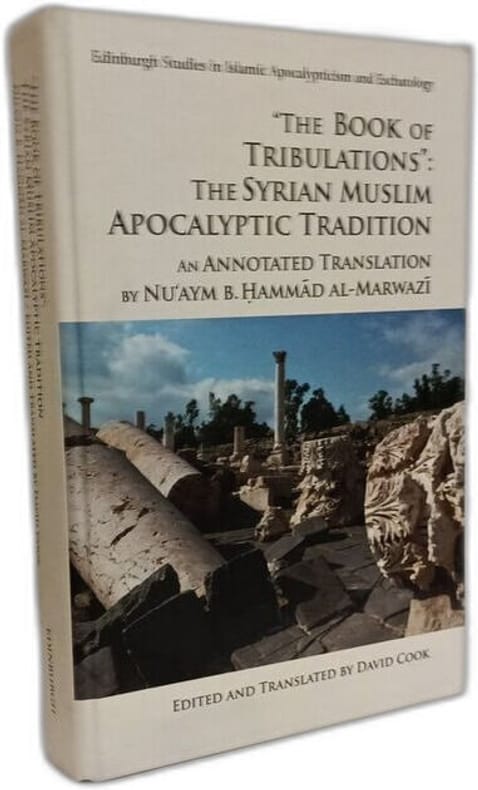
2017100145111Edinburgh University Press 2017 248 pages 15 8x23 8x3 6cm. 2017. Cartonné. 248 pages. Ouvrage académique en trois volumes étudiant l'évolution historique du culte marial en Égypte des premiers siècles (I-VI) jusqu'à l'époque moderne (XI-XX). L'œuvre analyse les documents la liturgie copte et les influences culturelles notamment les possibles liens avec le culte d'Isis. Il s'agit d'une publication de référence de la collection Studium Biblicum Franciscanum
19761252174Stuttgart, Berlin, Köln, Mainz : Kohlhammer, 1976. 164 S. ; 21 cm kart.
18651215209Leipzig; Alexander Danz (auf den Einbänden: "Otto Aug. Schulz"), 1864 / 1865. 444 Seiten und VII; 475 Seiten; 1 Illustr.; 24 cm; 2 fadengeh. Orig.-Pappbände.
Sehr gute Exemplare; die farb. illustr. Einbände stw. geringfügig berieben. - 2 BÄNDE. - Beilagen. - Untertitel von Band II: Das Grab des Sennefer. - INHALT : Band I: Danksagung ----- Schirmherrschaft, Ehrenschutz Geleitwort Vorwort ----- Altägyptischer Jenseitsglaube - ein Überblick; Voraussetzungen unseres Verständnisses ----- Jenseitsliteratur der alten Ägypter ----- Katalog/Teil I ----- Vorgeschichtliche Zeit (Kat.Nr. 1-27) ----- Katalog/Teil II ----- Altes Reich (Kat.Nr. 28-59) ----- Mittleres Reich (Kat.Nr. 60-99) ----- Katalog/Teil III ----- Neues Reich - Spätzeit -Griechisch-römische Zeit (Kat.Nr. 100-529) ----- Foto-, Abbildungs- und Literaturnachweis ----- Empfohlene und weiterführende Literatur ----- Die ägyptischen Dynastien und ihre wichtigsten Herrscher / Band II: Wilfried Seipel Vorwort ----- Rolf Gundlach und Mitarbeiter ----- Der Staat des frühen Neuen Reiches: Königtum, Verwaltung und Beamtenschaft ----- Rolf Gundlach und Mitarbeiter ----- Die Entwicklung der Nekropole von Theben-West ----- Rolf Gundlach und Mitarbeiter ----- Der thebanische Bürgermeister Sennefer, ein Beamter aus der Zeit Amenophis' II. ----- Rolf Gundlach und Mitarbeiter Das Grab des Sennefer ----- Monique Nelson - Fathy Hassanein Sennefers Mystische Jenseitsreise ----- Marcel Kurz ----- Das Grab des Sennefer - Zur Technik der Nachbildung ----- Christiane Desroches Noblecourt ----- Sennefers Auferstehung - Gestern und Heute ----- Wolfgang Helck ----- Ägypten im frühen Neuen Reich, Grundzüge einer Entwicklung ----- Chronologische Übersicht über die Geschichte Ägyptens ----- Historischer Abriß zur frühen 18. Dynastie. ISBN 3900746141
19861194052Otto Harrassowitz Verlag; Wiesbaden, 1972-1986. Über 7000 Seiten; ca. 50 Hefte (Lieferung 1 - 49) in 6 Leinen-Mappen.
195331999Leipzig: Koehler & Amelang, 1953. -1956. 316; 185 S. mit Abb., gebundene Ausgaben mit illustr. Umschl.
105.141Bruxelles, Vromant, 1925-1930. 25 x 33, 2 livres, 362 + 415 pages, 257 + 390 figures en N/B, broché, couverture à rabats, bon état.
198 p., 542 lots en partie illustrés en coul. Inv. Th 405
129 p., 197 lots coul. Inv. 44476
éà p., ill. n/b., 3 pl. coul. Inv. 24899
34 p., nbr. ill. coul. Inv. 34108
68 p., ill. n/b. et coul. Inv. 24112
261 p., 422 lots illustrés en coul.Petite arrache à la couverture. Inv. 44111
117 p., ill. coul., quelques annotations. Inv. 24897