1 461 résultats
20131357065PN. New. 2013. Soft Cover. Date is original print. This is a reprint edition. . PN paperback
20071346356PN. New. 2007. Soft Cover. This is a reprint edition. . PN paperback
20131356159PN. New. 2013. Soft Cover. Date is original print. This is a reprint edition. . PN paperback
20111352114PN. New. 2011. Soft Cover. Date is original print. This is a reprint edition. . PN paperback
20090691141606_newPrinceton University Press 2009-11-01. Hardcover. New. 0x0x0. Princeton University Press hardcover

2013x-0691162131Princeton Univ Pr 2013. Paperback. New. 547 pages. 9.00x6.00x1.50 inches. Princeton Univ Pr paperback
177448172Upsala Johan Edman 1774. Lille 8vo. Samtidigt hldrbd. med ophøjede binf på ryggen. Rygtitel. Ryg noget slidt mest ved kapitæler. 184291 pp. talrige textfigurer. Brugsspor. Et bladhjørne bortrevet. Nogle samtidige notater og tilskrifter. <br/><br/><em>De første 6 bøger blev oversat for første gang på svensk i 1744 også af Mårten Stroemer mens udgaven her er den første svenske oversættelse som også omfatter 11. og 12. Bog.Riccardi: 1774-2 - Steck: V29. </em> unknown
179155348Berlin Matzdorff 1791. Small 8vo. Contemp. hcalf. Gilt spine. Titlelabel with gilt lettering. Stamps on title-page. 402 pp. 3 folded engraved plates. <br/><br/><em>Contains extensive commentaries to the first 6 Books. </em> unknown
169145401Lugdunum Batavorum Leiden Danielem à Gaesbeek 1691. Small8vo. Contemp. full vellum. Spine gone and frontcover detached. Some soiling to covers. Wood-cut printers device on titlepage. 24468 pp. and many diagrams in the text. A few scattered brownspots and a few quires with light browning. <br/><br/><em>First edition of Heinrich Coetsius' translation of the six first books of Euclid.Riccardi 1691 7 - Max Steck p. 109 1691. </em> hardcover
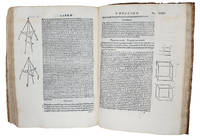
161937801Pisavri Pesaro Typis Flaminij Concordiæ 1619. Folio. Contemp. hcalf. Fronthinge nearly broken but still holding. Titlepage in red a. black. 8 of 10 leaves lacking first leaf of the foreword and last leaf of Index. Text complete. 255 leaves with many figures in the text. First 16 leaves with some browning and foxing in lower right corners. 5 leaves mended no loss of text and 8 with smaller repairs no loss. A few annotations in margins in old hand. <br/><br/><em>Scarce second expanded edition of Federico Commandino's importent translation of the Elements. Commandino's first translation was published in 1572 and this translation was made use of by subsequent editors for centuries. The first Italian translation was also done from the Latin text of Commandino. - Riccardi 16192. - Max Steck: IV 19. </em> unknown
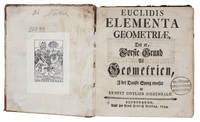
174441890Kjøbenhavn Ernst Henrik Berling 1744. 4to. Samt. hldrbd. over træ. Ryg lidt slidt Overtrækspapiret på permer med mangler.1220311 pp. samt 5 foldede kobberstukne plancher i teksten talrige geometriske figurer. De første blade og de 5 plancher med en svag vandskjold. Svag skjold på de sidste ca 20 blade. En del blade med brunplet i øvre margin.4to. Contemporary half calf over wooden boards. Spine a bit worn and lacing some of the paper over boards. Faint damp stain to first leaves to plates and to the last ab. 20 leaves. Some leaves with a brown spot to upper margin. 12 20 311 pp 5 folded engraved plates. Numerous geometrical figures in the text. <br/><br/><em>Første udgave på dansk af Euclids "Elementer" omfattende Bog 1-6 og 11-12. J.F. Ramus have allerede nogle år tidligere udgivet Euclid men disse var mindre lærebøger i uddrag og på latin. Oversættelsen indeholder en lang introduktion af Ramus "Betænkning om Euclidis Elementer og om deres Oversættelse i det Danske Sprog."Ziegenbalg var teologisk kandidat men havde studeret matematik i flere år både i Jena og i England. Han blev udnævnt til professor i matematik ved Københavns Universitet efter Ramus og havde i nogle år forinden fungeret som dennes assistent. Hans oversættelse er dedikeret Christian den VI og i forordet introducerer han den således "offereres oversættelsen Deres Kongelige Majestæt.disse udi det Danske Sprog oversatte Elementa Geometriæ som ere Hoved=Kilden til alle Mathematiske Videnskaber og have nu i 2000 Aar været i saa stor Estime at alle de største og erfarne Mathematici have grundet deres Skrifter paa dem og at de til almindelig Nytte og Brug ere bekientgiorte næsten udi alle Europæiske men ey tilforn i dette Sprog."First edition of the first Euclid-translation into Danish comprising Book 1-6 and 11-12. Bound in cont. hcalf. Rebacked in old style. A good copy. - Riccardi Bibl. Euclideana Parte 4 p. 47. - Bibl. Danica IV:96. </em> hardcover
1566002448Venice: Curtio Troiano 1566 Bound in vellum with hand written spine titles 351 632 pp. numerous illustrations. Title page dated 1565 colophon dated 1566. Second Tataglia translation with the first Tatarglia translation being the first translation of Euclid into a modern language. This copy with cancel between pages 8 and 9 few marginal notes marginal worming affecting at most two letters and that on few pages front cover first nine leaves and last leaves from page 309 to end with damp stain light intermittent damp stain between. Otherwise still a very good copy. Curtio Troiano hardcover
154334704Colophon: Venice Venturino Rossenelli 1543. Folio. 305x22 cm. Contemporary full Italian limp vellum. Remains of ties. Old handwritten title on spine. Upper part of front cover slightly creased. A few small nicks to hinges at cords. Vellum with brownspots. 242 leaves 2-241 numb. II-CCXXXIX. Misnumbering of leaves in sign. A 10 lvs. due to the insertion of corrections on f A5. Collation corresponds to that given by Thomas-Stanford No. 34. Large margins profusely illustrated with diagrams. Upper right corner of title gone with loss of of 3 letters "NSE" in MEGARENSE f A2-A6 with upper right corners and a wormtract-hole in lower margin repaired. A wormtract in lower margin on the next 11 lvs. A1-A6 mounted skillfully on thin opaque parchment-paper. A rather faint dampstain in upper right corner throughout. Last 5 leaves with a small nick in right margin no loss. Otherwise remarkably clean and printed on good strong paper. On the title a large woodcut device with arms with G.T. Gabriele Tadino to whom the work is dedicated. Colophon with large woodcut device with the letters .P.Z.F. and this repeated on verso of last leaf. <br/><br/><em>Scarce first edition of the first translation of Euclid into any modern language by the famous Niccolo Tartaglia. The translation and Tartaglia's commentaries strongly accelerated the development of physics and mechanics in the 16th century as it showed how mathematics could be applied to dynamics and mechanics as well as to architecture construction and perspective. More than 20 years should elapse before the next language would receive the privilege of displaying Euclid among their goods this was the French translation published by Pierre Forcadel Paris 1564. "When Tartaglia submits that his redaction was made "secondo le due tradittioni" there is no question that Campanus - who appears to be heavely favored - and Zamberti are meant. When Campanus has added propositions or premises Tartaglia has approriately translated them and noted their absence "nelle seconda tradittione" while things omitted by Campanus but included by Zamberti receive the reverse treatment" John Murdoch in DSB. Niccolo Fontana Tartaglia of Brescia has a great name in the history of mathematics. A cut in the face from a French soldier caused him to stammer and as a consequence of this he was called 'Tartaglia' the stammerer. He is famous for his solution of third-degree equations which occasioned a long polemic with Cardano about priority. He is also known for "Tartaglia's Triangle" later known as "Pascal's Triangle" and he is well-known for his Archimedes-edition of 1543 and 1551 with his commentaries. "The most famous source of Greek geometry is the monumental work of Euclid of Alexandria called the "Elements" around 300 B.C. No other book of science had a comparable influence on the intellectual development of mankind. It was a treatise of geometry in thirteen books which included all the fundamental results of scientific geometry up to his time. Euclid did not claim for himself any particular discovery he was merely a compiler. Yet in view of the systematic arrangement of the subject matter and the exact logical procedure followed we cannot doubt that he himself provided a large body of specific formulations and specific auxiliary theorems in his deductions. It is no longer possible to pass judgement on the authorship of much of this material; his book was meant as a textbook of geometry which paid attention to the material while questions of priority did not enter the discussion." Cornelius Lanzos in "Space through the Ages". Max Steck III:40 - Thomas-Stanford: 34 - Riccardi Euclideana 1543 1 - Adams E:992. - Brunet II:1090. Premiere edition de ce travail estimé. - Graesse II:513. </em> hardcover
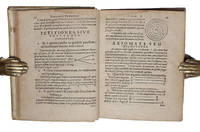
163734701Uppsala Eschillus Matthiæ 1637. Small 4to. Cont. full vellum over wood. Spine ends worn tears to hinges but not broken lower edges of boards with old repairs. Some old ink annotations on boards. Inside frontcover and on title many old owner names small wholes cut in titel without loss of letters. First ab. 20 leaves with a faint dampstain in upper margin inkspots on last page. Internally clean. 243502 pp. numerous geometrical diagrams in the text. <br/><br/><em>Scarce first edition of the first Swedish edition of Euclid's Elements Book I-VI with Gestrinius' commentaries to the axioms and porpositions and with his attempt of a proof of the "Parallel-axiom" The Fifth Postulate. In the preface he discusses the use of plane-geometry in the theories of Aristoteles Eudoxus Ptolemy and Kepler. - Gastrinius 1594-1648 became professor of mathematics in Uppsala in 1621 after studies in Greifswald.Collijn 1600-Talet I:310. - Riccardi p. 436 16372 - Poggendorff I:889. - Not in Max Steck. </em> hardcover
1852055273Cassell and Co. 1852. Not Given . Soft cover. Very Good. 12mo. LONDON : 1852. Euclid of Alexandria 3rd century BC who wrote a work on geometry called the Elements. Flush-bound dark-red patterned cloth over card; printed paste-downs; not issued with end-papers. Neat contemporary owner name; no internal markings. Bright tight and clean. Minor wear only. VERY GOOD. 61pp. 3pp adverts. 12mo. Will be well-packed for posting/shipping. Rosley Books for Antiquarian books CHS Cumberland Everyman GKC Inklings Keswick Literature MacDonald Rarities Theology and History. . Only one copy recorded in the UK British Library. VERY SCARCE. <br/> <br/> Cassell and Co., paperback
1396058931.Gpaperback. Good. Access codes and supplements are not guaranteed with used items. May be an ex-library book. paperback
1396308334.Ghardcover. Good. Access codes and supplements are not guaranteed with used items. May be an ex-library book. hardcover
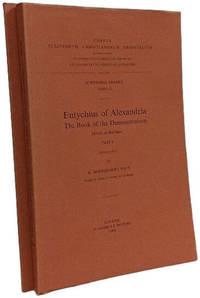
1960100150661Peeters 1960. bords un peu frottés intérieurs propres. in8. 1960. Broché. 2 volumes. Peeters unknown
1627205608.Ghardcover. Good. Access codes and supplements are not guaranteed with used items. May be an ex-library book. hardcover
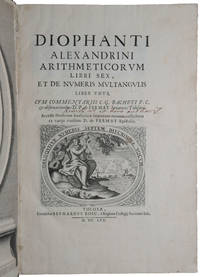
16706238Toulouse: Bernard Bosc 1670. First edition. <p>First edition large-paper issue with the rare engraved portrait of Pierre de Fermat by François Poilly - rare in this edition - and with the editor's presentation inscription on the title page: de Molieres ex dono authoris placing this copy with Louis de Molières Pierre de Fermat's brother-in-law and trésorier de France at Montauban in the year of publication. Prepared by Clément-Samuel de Fermat from his father's marginalia on Bachet's Diophantus the volume prints Fermat's forty-eight number-theoretic observations among them at page 61 the editio princeps of Fermat's Last Theorem - the marginal claim that no power above the second decomposes into two like powers and that a marvellous proof exists which the margin cannot contain. The theorem held for three hundred and fifty-eight years generating algebraic number theory the arithmetic of elliptic curves and modular forms in the course of the search for its proof until Wiles closed it in 1995. A contemporary hand has attempted corrections to Fermat's observation on cube differences at page 135.</p>. Box: 378 x 264 x45 mm. The First Printing of Fermat's Last Theorem. <p>First edition large-paper issue with the engraved portrait of Pierre de Fermat by François Poilly on the leaf facing the title - rarely found in copies of this edition - and with the editor's presentation inscription on the title page. The portrait a fine oval bust set above Fermat's family arms on a chevron three eagles and in base a crescent for the Fermats of Bas-Quercy is the work of one of the leading Parisian printmakers of the second half of the seventeenth century; most copies of the 1670 Diophantus lack it and its presence here together with the generous margins of the large-paper sheets and the inscription immediately below marks the volume as one of the small number of copies Clément-Samuel reserved for the inner circle of the Fermat family and their Toulouse connections. Beneath the printed line naming Pierre de Fermat as Senatoris Tolosani a period hand has added six Latin words: de Molieres ex dono authoris - "to de Molières from the gift of the author." The recipient is Louis de Molières 1610-1687 born at Cahors into the noblesse de robe of Bas-Quercy and established as trésorier de France at the Montauban bureau des finances a post he would hold for forty-two years. His first marriage in 1646 had been to Louise de Fermat c. 1613-c. 1650 Pierre de Fermat's younger sister. Louise had been dead twenty years by the time this copy left the press; Louis had long since remarried a demoiselle de Marqueyret; but the connection between the two robe families of the lower Garonne ran too deep for that to matter. The author named in the inscription is not Pierre - who had died in January 1665 - but Pierre's eldest son Clément-Samuel de Fermat c. 1632-1697 the lawyer and conseiller au parlement who had inherited his father's offices had spent the five years since his father's death transcribing the elder Fermat's mathematical marginalia into publishable form and who oversaw the volume through the Toulouse press of Bernard Bosc in 1670. By sending a large-paper copy to his late aunt's widower - the senior surviving link to his father's family in the generation above his own - Clément-Samuel placed his father's posthumous monument where it most properly belonged.</p> <br /> <br /> <p>The volume is the second edition of Bachet de Méziriac's 1621 Greek-and-Latin Arithmetica of Diophantus of Alexandria expanded by Clément-Samuel with his father's forty-eight mathematical observations and completed by the Doctrinae analyticae inventum novum of the Jesuit Jacques de Billy - a summary account of Fermat's analytical method drawn from the correspondence Billy had maintained with Fermat in the last years. The Arithmetica itself is the foundational work of Greek algebra and of Diophantine analysis setting out 189 problems in indeterminate analysis that had occupied mathematicians from Regiomontanus and Bombelli through Viète and Bachet. Fermat had annotated his personal copy of the 1621 Bachet edition - the copy he acquired in 1636 or 1637 probably through the circle of Carcavi and Mersenne - with marginal notes responding to individual Diophantine problems and in many cases generalising them into new theorems. That original annotated copy is lost. Its contents survive because Clément-Samuel working from his father's papers and almost certainly with the copy itself in hand transcribed the forty-eight observations and printed each at the appropriate point in the Diophantine text. The result is a conflation of the Bachet edition with Fermat's marginalia: Greek and Latin in parallel columns for the Diophantus with Bachet's commentary and Fermat's observation intervening at the relevant problems.</p> <br /> <br /> <p>At its centre - literally and historically - stands the single most consequential marginal note in mathematics. On page 61 of this volume as a commentary on Diophantus Book II Problem VIII the problem of dividing a given square into two smaller squares sits Fermat's observation in nine lines of italic Latin. Against the proposition that every square decomposes into two squares - the problem whose rational solutions are the Pythagorean triples - Fermat remarks that no cube decomposes into two cubes no fourth power into two fourth powers and in general no power higher than the second can be decomposed into two powers of the same kind. He has discovered he adds a truly marvellous proof of this proposition; the narrowness of the margin cannot contain it. This is Fermat's Last Theorem. It is printed here for the first time. The original 1621 Bachet that Fermat annotated no longer exists so the 1670 printing is the sole testimony to how Fermat actually wrote the proposition and the sole source for the evocative remark about the margin.</p> <br /> <br /> <p>The theorem held. For three hundred and fifty-eight years Fermat's claim resisted verification. Leonhard Euler produced the proof for exponent three in 1770 invoking the method of infinite descent that Fermat had set out in other contexts. Sophie Germain in the first decade of the nineteenth century opened a substantial class of exponents - the class of primes now called Sophie Germain primes. Dirichlet and Legendre settled exponent five in 1825. Gabriel Lamé reached exponent seven in 1839 and briefly claimed the full theorem a claim Liouville corrected within weeks by pointing to a failure of unique factorisation in the relevant cyclotomic integers. Ernst Kummer in 1847 working precisely on that failure introduced the ideal numbers that would become the foundation of algebraic number theory and proved Fermat's proposition for all regular primes. By the late nineteenth century Fermat's Last Theorem stood as a celebrated challenge and Paul Wolfskehl's 1908 bequest of a hundred-thousand-mark prize for a valid demonstration kept thousands of amateur attempts flowing to the University of Göttingen through the First World War and the Weimar collapse. The decisive modern move came in 1986 when Gerhard Frey suggested that any counterexample to the Fermat equation would produce a semistable elliptic curve whose properties must contradict the Taniyama-Shimura-Weil conjecture on modular forms. Kenneth Ribet proved the Frey implication the same year. Andrew Wiles working almost alone at Princeton announced a proof of the relevant portion of the modularity conjecture at Cambridge in June 1993; referee Nick Katz identified a subtle error; Wiles and Richard Taylor together closed the gap over fourteen further months; and the finished paper appeared in the Annals of Mathematics in May 1995. Fermat was right.</p> <br /> <br /> <p>The three and a half centuries between statement and proof generated a disproportionate share of modern number theory. Kummer's ideal numbers founded algebraic number theory. The theory of cyclotomic fields the arithmetic of elliptic curves and the whole modern apparatus of modular forms and Galois representations - together forming the present-day Langlands programme - all derive directly or by consanguinity from the long search for Fermat's proof. Wiles's demonstration runs past a hundred pages and invokes techniques Fermat could not have envisaged; the opinion of most specialists is that whatever proof Fermat believed he had was probably in error most likely a descent argument of the kind that works for exponents three and four but cannot be extended. Fermat himself in a 1659 letter to Carcavi set out his method of infinite descent in some detail and applied it to prove that the area of a rational right triangle can never be a square number - a proposition that by a short chain of reasoning implies his Last Theorem for exponent four. Whether that technique could be stretched to the general case is the question to which the answer three hundred and thirty-six years later was Wiles's hundred pages.</p> <br /> <br /> <p>Fermat's engagement with Diophantus ranged far beyond the single marginal note at page 61. Forty-seven further observations thread through the volume responding to Diophantine problems on rational squares Pythagorean right triangles the representation of integers as sums of squares and the arithmetic of cubes. Several of these observations announce theorems of comparable depth. The two-square theorem - that every prime congruent to one modulo four is the sum of two squares in essentially one way - sits among them as do the germ of the four-square theorem later proved by Lagrange the statement that every number is the sum of three triangular numbers and the generalised Fermat equation x2 − Ay2 = 1 the Pell equation which Fermat correctly recognised as always solvable in integers for non-square A. The observation at page 135 - headed OBSERVATIO D.P.F. and placed after Diophantus Book IV Question III - displays Fermat's characteristic fusion of correction and extension. Bachet had offered a partial treatment of the problem of finding two cubes whose difference equals a given number; Fermat shows that Bachet missed an entire further family of solutions which follow from his own method by continued iteration in infinitely many cases. Given the two cubes 8 and 1 whose difference is 7 Fermat produces a second pair of rational cubes with the same difference. His printed solution gives the sides 1265/183 and 1256/183 yielding the cubes 2024284625/6128487 and 1981385216/6128487. The verification is clean: the difference of these two new cubes reduces exactly to 7.</p> <br /> <br /> <p>Across the printed denominators on this page however a contemporary hand has drawn firm lines and written substitutions above the print: 61 in place of 183 for the sides and 226981 in place of 6128487 for the cubes. The substitution is not arbitrary - 183 is three times 61 and 6128487 is twenty-seven times 226981 which is itself 61 cubed. The annotator has evidently noticed that Fermat's fractions appear to contain a common factor of the cube of three and has tried to simplify them by cancelling it. But the correction does not preserve the answer. The revised sides 1265/61 and 1256/61 are each three times larger than their printed counterparts; the revised cubes are each twenty-seven times larger; and the difference of the revised cubes becomes 189 rather than 7. The substitution would solve a scaled version of Fermat's problem - one in which the given cubes were 216 and 27 rather than 8 and 1 - but it does not solve the problem as Fermat poses it on this page. The correction is the work of a contemporary reader who followed Fermat's argument closely enough to recognise the internal structure of the solution and who carried enough confidence to intervene in a freshly printed Toulouse folio but who stopped short of the final verification that would have caught the scaling error. That degree of engagement is itself worth marking. Fermat's observation on Book IV Question III was considered obscure even among the professional mathematicians of the period; the appearance of contemporary manuscript attention to its numerical detail in a copy that left the editor's hands in 1670 places this volume inside the very narrow circle of readers who took Fermat's more technical observations seriously from the moment of publication.</p> <br /> <br /> <p>Two further inserted slips of paper at pages 61 and 197 carry contemporary but more elementary annotations placing this copy plainly in the hands of a seventeenth-century reader working through the mathematics of the volume rather than merely its production. The slip at page 197 - facing the large printed table of eighty-one integer solutions to a Diophantine problem in four variables from Book V - carries calculations in a reader's hand involving the quantities eight hundred and ten thousand a cubic variable and a squared variable in a working attempt at the problem treated above. A later eighteenth-century English hand has added a note on the flyleaf framed as a dismissive verdict on Fermat's mathematical claims. A discreet twentieth-century dealer's mark on page 9 identifies the code of Lucien Scheler 1902-1999 the Parisian antiquarian bookseller and poet whose handling of the book places its modern provenance within a narrow compass of known trade hands.</p> <br /> <br /> <p>The recipient of the 1670 inscription belongs to a world of parliamentary offices and extended family connection that the inscription itself records in six Latin words. Louis de Molières born at Cahors in 1610 served forty-two years as trésorier de France at the Montauban bureau des finances one of the senior royal financial posts in lower Languedoc. His first marriage in 1646 was to Louise de Fermat daughter of Dominique de Fermat - the consul and leather merchant of Beaumont-de-Lomagne - and therefore sister of Pierre and paternal aunt of Clément-Samuel. Louise died in the late 1640s. Louis remarried a demoiselle de Marqueyret and continued as head of one of the prominent parliamentary families of Bas-Quercy until his death in 1687. His son by the second marriage Armand de Molières later served as second président of the Cour des aides at Montauban - the Armand whose name has occasionally been conflated with his father's in later bibliographic sources producing the hybrid 'Louis-Armand' that appears in some modern descriptions. The present inscription is addressed to Louis senior Pierre's brother-in-law and Clément-Samuel's uncle by marriage a man whose household at Montauban sat fifty kilometres north of Pierre's at Toulouse and who by 1670 was the senior family member in the generation linking back to Pierre's parents at Beaumont.</p> <br /> <br /> <p>Pierre de Fermat's reputation does not rest on the Last Theorem alone. A conseiller at the parlement of Toulouse and a magistrate of the Chambre de l'Édit at Castres he was an amateur mathematician in the technical sense only - an amateur who corresponded with Mersenne Pascal Descartes Huygens Wallis Carcavi and Roberval on terms of complete intellectual equality and who made fundamental discoveries in four distinct branches of mathematics. In number theory beyond the Last Theorem he discovered the theorem now called Fermat's Little that for any prime p and integer a not divisible by p the quantity a raised to the power p minus one is congruent to one modulo p stated and used the two-square theorem developed the method of infinite descent as a rigorous technique for negative existence proofs and extended the theory of amicable numbers well beyond the pair 220 and 284 known since antiquity. In analytic geometry his Ad locos planos et solidos isagoge - which he sent in manuscript to Carcavi and Mersenne in 1636 - predated Descartes's Géométrie in composition though not in print. In the calculus of variations his method of adequality supplied a systematic technique for locating maxima minima and tangents that Newton and Leibniz both later acknowledged as precursor. In the summer of 1654 in the correspondence with Pascal that Carcavi preserved he worked out with Pascal the foundations of the mathematical theory of probability solving the problem of the division of stakes in interrupted games of chance. In optics he enunciated the principle of least time - Fermat's principle - which furnished the first variational formulation in physics and served as direct ancestor to the principle of least action and the whole edifice of Lagrangian and Hamiltonian mechanics. Any one of these contributions would secure a reputation; that a sitting magistrate of the Toulouse parlement pursuing mathematics in stolen evening hours made all four is the condition Clément-Samuel set himself to commemorate in this volume.</p> <br /> <br /> <p>Of those four strands the 1670 Diophantus captures chiefly the number-theoretic Fermat and within that only the portion he wrote as marginalia on Bachet. His analytic geometry and his general method of maxima et minima appeared in 1679 as Varia Opera Mathematica again at Toulouse edited again by Clément-Samuel. His complete correspondence and further manuscripts were assembled definitively only in the late nineteenth century by Paul Tannery and Charles Henry whose four-volume Œuvres de Fermat 1891-1912 with a supplementary fifth volume by Cornelis de Waard in 1922 remains the standard scholarly edition. But the 1670 edition is the book in which Fermat's Last Theorem first entered print the book through which Fermat's name reached the working mathematicians of the late seventeenth and eighteenth centuries and the book Euler and Gauss both studied and built on. Its place in the foundational history of number theory is not in dispute. What is less often remarked - and what this particular copy preserves - is the presence in 1670 of readers who took Fermat's more technical observations seriously enough to attempt corrections in the margins even when as at page 135 those corrections did not finally succeed.</p> <br /> <br /> <p>References: Honeyman 885 - Norman 771 - Smith Rara Arithmetica pp. 348-349 - Brunet II 702 - Roberts & Trent Bibliotheca Mechanica p. 108 - Hoffmann 1242 - Weil Number Theory: An Approach through History from Hammurapi to Legendre Birkhäuser 1984 chapters II-IV - Mahoney The Mathematical Career of Pierre de Fermat Princeton University Press second edition 1994 - Goldstein Un théorème de Fermat et ses lecteurs Presses Universitaires de Vincennes 1995 - Singh Fermat's Enigma Fourth Estate 1997 - Wiles 'Modular elliptic curves and Fermat's Last Theorem' Annals of Mathematics 141 1995 pp. 443-551 - Taylor and Wiles 'Ring theoretic properties of certain Hecke algebras' Annals of Mathematics 141 1995 pp. 553-572.</p> <br /> <br/> <br/> <br /> <p>Folio 365 × 246 mm pp. xii 341; 48. Engraved portrait of Pierre de Fermat by François Poilly on the leaf facing the title Fermat in scholarly dress within an oval frame his arms below on the plinth - rarely found in copies of this edition. Engraved allegorical vignette on the title page Orpheus with the lyre encircled by the Virgilian motto obloquitur numeris septem discrimina vocum. Numerous woodcut diagrams in the text. Greek and Latin in parallel columns throughout the Diophantus. Separate pagination for the Inventum novum. Light browning. Contemporary calf gilt fillet on covers spine richly gilt in compartments with gilt-tooled lettering DIOPHANTI / FERMAT edges speckled red binding slightly rubbed. A fine copy.</p> . Bernard Bosc unknown
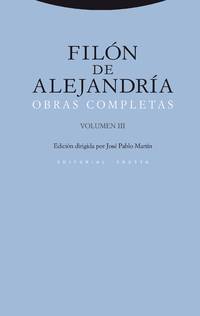
20092-8498790239Editorial Trotta S.a. 2009. Perfect Paperback. New. Spanish language. 8.98x5.59x0.71 inches. Editorial Trotta, S.a. paperback
1975LC1156Acervo Cultural Editores Colección Valores en el tiempo 1975. Hardcover. Near Fine/No Jacket. Buenos Aires Acervo Cultural Editores Colección Valores en el tiempo 1975-1977. 145 x 205 cm 390 372 456 448 389 pp. Sin las sobrecubiertas. 5 tomos encuadernados en cuero con detalles en dorado. Únicamente el quinto tomo presenta roces leves en el dorado. Sin marcas de lectura. Pequeña rotura en la página 309 del tercer tomo. The Book Cellar & Henschel. <br/> <br/> Acervo Cultural Editores, Colección Valores en el tiempo hardcover
ETRYHERN10722NEW. NEW. Enviamos a todo el mundo por USPS. UPS o DHL. 100% garantia en su compra. We ship worldwide. unknown
20162-8498796105Editorial Trotta S.a. 2016. Paperback. New. Spanish language. 8.98x5.75x0.94 inches. Editorial Trotta, S.a. paperback
20122-8498792428Editorial Trotta S.a. 2012. Paperback. New. Spanish language. 8.98x5.59x0.94 inches. Editorial Trotta, S.a. paperback