1 461 résultats
1969738744PN. New. 1969. Soft Cover. Date is original print. This is a reprint edition. . PN paperback
1969738625PN. New. 1969. Soft Cover. Date is original print. This is a reprint edition. . PN paperback
1970739828PN. New. 1970. Soft Cover. Date is original print. This is a reprint edition. . PN paperback
1992259801PN. New. 1992. Soft Cover. Date is original print. This is a reprint edition . PN paperback
1983768441PN. New. 1983. Soft Cover. Date is original print. This is a reprint edition. . PN paperback
1983769926PN. New. 1983. Soft Cover. Date is original print. This is a reprint edition. . PN paperback
1985774560PN. New. 1985. Soft Cover. Date is original print. This is a reprint edition. . PN paperback
1993262123PN. New. 1993. Soft Cover. Date is original print. This is a reprint edition . PN paperback
1967731573PN. New. 1967. Soft Cover. Date is original print. This is a reprint edition. . PN paperback
20051344448PN. New. 2005. Soft Cover. md . PN paperback
1958706146PN. New. 1958. Soft Cover. Date is original print. This is a reprint edition. . PN paperback
1972745886PN. New. 1972. Soft Cover. Date is original print. This is a reprint edition. . PN paperback
1971741905PN. New. 1971. Soft Cover. Date is original print. This is a reprint edition. . PN paperback
1996289772PN. New. 1996. Soft Cover. Date is original print. This is a reprint edition . PN paperback
1996292622PN. New. 1996. Soft Cover. Date is original print. This is a reprint edition . PN paperback
1995279367PN. New. 1995. Soft Cover. Date is original print. This is a reprint edition . PN paperback
1988146651New York NY: Rizzoli 1988. First Thus . Oversized Hardcover. Good/Good. 4to - over 9¾" - 12" tall. 216pp. Original boards. Pages are clean unmarked but slightly age-toned. Binding is tight and secure. Boards have bumping to head/heel of spine rubbing to extremities corners slighty frayed. Unclipped pictorial DJ is sunned/slightly finger soiled with bumping to head of spine faint creasing to front cover rubbing to extremities. We have added a removable mylar covering to the dust jacket for protection. Nice reading copy. <br/> <br/> Rizzoli hardcover
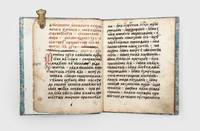
185682Russia: mid-17th century. On the Antichrist and the Harrowing of Hell A miscellany with three theological works the first apparently unrecorded outside Russia - all rare both on the market and institutionally especially from such early date. Hippolytus of Rome 3rd century opposed the Bishops of Rome forming a sort of schismatic group; his Slovo circulated in manuscript form and was among the earliest treatises on the Antichrist. It is a collection of passages from the Old and New Testament with an apocalyptic and millenarian tone especially focused on "the relationship between the antichrist and the events that would lead to the end of time" Valdez p. 145. The National Library of Russia lists five copies of this work none as early as this. The second work here attributed to Eusebius of Samosata also known as "of Caesarea" 3rd-4th century is instead believed to have been written by Eusebius Bishop of Alexandria 5th century of whom little is known. His homilies were very popular in Eastern Christianity. The subject of numerous paintings and illustrations this work focuses on St John the Baptist's posthumous descent into Hell where he continued to preach about the coming of the Messiah anticipating Christ's own Harrowing of Hell. The National Library of Russia lists three copies of this work all later. The third text - a reflection on life which opens with the statement "Where is the goodness of youth in all its glory" and occupies the last three leaves - has not been traced and appears to be unrecorded. Provenance: Dr Ellis H. Minns Pembroke College Cambridge his bookplate on front pastedown - Dylan's Book Store Swansea Wales July 1994 - Martin Schøyen. Three works in one vol. quarto 190 x 150 mm manuscript on paper. Ff. 68 18-20 lines in Cyrillic half-uncial and Skoropis cursive per full page in two hands. Watermark: double-headed eagle cf. Heawood 440 dated 1652. Rubricated titles and initials some with penflourishing in red ink. Quarter brown calf over marbled boards c.1800 rebacked. Chapters 22 to 24 of first work copied at end. Extremities rubbed spine flaking contents toned and finger-soiled some marginal ink marks or small ink-burn holes to text marginal glosses occasionally trimmed but legible: a very good example. None in Cleminson. A. Valdez Historical Interpretations of the "Fifth Empire" 2010. hardcover
174215887London: Jac. Bettenham 1742. Hardcover. Very Good bound with a contemporary repacked leather spine and new end papers. A few bumps and scuffs to exterior. Toning a few stains. No markings to text. 8vo 8 1/4"h x 5 1/2"w. Text is in Latin commentary in Greek. Rare in this edition. Jac. Bettenham hardcover
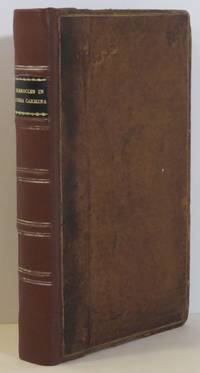
17421508240010Londini typis Jac. Bettenham 1742-01-01. Hardcover. Very Good. Commentarius in Aurea carmina. Handsome contemporary full leather. French binding gilt ruled. Gilt stamping to spine red spine label. Marbled end pages. Hardcover. Good binding and cover. Clean unmarked pages. Provenance: From the library of Louis De Givenchy book plate circa 1780 see: A Guide to the Study of Book-plates John Warren 1900. Louis de Givenchy was a noted scholar. Givenchy armorial crest on front paste down. Londini, typis Jac. Bettenham hardcover
1170539823.Gpaperback. Good. Access codes and supplements are not guaranteed with used items. May be an ex-library book. paperback
1379738458.Ghardcover. Good. Access codes and supplements are not guaranteed with used items. May be an ex-library book. hardcover
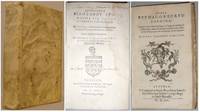
15836293Lutetiae Paris E Typographia Steph. Prevosteau . 1583-85. Two works bound in one volume: 12mo pp. xxiv 347 i. 12mo pp. ii 11 xi 90. Old ink-burn D11-E9 in the first work ie pp. 93-114 particularly noticeable E3-E6. Second work lacks two of the final leaves of text. Text concludes with the errata on verso of H1; H2 and H3 have been extracted; H4 blank as called for by Adams is present. Greek and Latin text. Contemporary limp vellum. Two early ownership inscriptions on title. The clearer of the two reads Ex libris Ioa. Maussaci in an early seventeenth century hand possibly Philippe Jacques de Maussac 1590-1650 president in Montpellier and a Greek scholar he edited Harpocration in 1614 cf. Sandys II p. 287. First edition of the commentary on the Golden Verses of Pythagorus by the fifth-century Neoplatonist Hierocles discovered in the library of François de la Rochefoucauld-Randan and edited and translated by Curterius; bound here with the first edition of Théodore Marcile's Latin translation. Both works were printed by Stephan Prevosteau - he is credited in the colophon of the first work and a variant title page carries his imprint Adams P2312 rather than Nivelles - and pairings of the works are not unknown. The example in the recently dispersed Macclesfield library lot 2711 in part 8 October 2006 was similarly bound in limp vellum and issuing them together may have been Prevosteaus own recommendation to his clients.Adams P2313 & P2314; Brunet III 154-155; Sandys II 105. Book hardcover
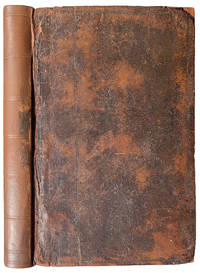
1682PW1341London:: Printed by M. Flesher for Thomas Fickus 1682. 1682. 8vo. 54 166 pp. Original calf boards rebacked with calf new endleaves; small tear to lower corner of p. 165 far from text block. Signed by Alfred Keene 1839. First English edition. This is one of the first books Norris published. "Norris John 1657–1712 Church of England clergyman and philosopher was born on 2 January 1657 at Collingbourne Kingston Wiltshire the third surviving child of John Norris bap. 1614 d. 1682 and his wife Elizabeth d. 1696. His father was vicar of Collingbourne Kingston under the Commonwealth and he moved to the living of Aldbourne Wiltshire in 1660. Norris was educated at Winchester College and entered Exeter College Oxford in 1676. A keen student at both Winchester and Oxford he early abandoned his inherited Calvinism and concentrated his reading on Platonist authors. On graduating BA in 1680 he was appointed a fellow of All Souls by Archbishop Sancroft on the recommendation of Thomas Jeames the warden during a dispute with the fellows over the filling of the vacancies in the college. Norris always retained a great esteem for All Souls and the college in turn erected a bust of h His early writings show him to have been at that time a strong tory and high-churchman but also show that he deliberately turned aside from political involvement. All the writings that he considered to be worth preserving were included in A Collection of Miscellanies which appeared in 1687. im in the Codrington Library when this was built in the following century. . . . Norris's writings have tended to be neglected by historians of philosophy partly perhaps because of Locke's dismissive attitude and partly because many of his theories are so close to those of Malebranche that it is difficult to disentangle their influence. He has been better treated by historians of literature who see his poetry much of which continues to be republished as marking especially clearly the transition from the spirit of the Renaissance to that of modern times. Much of Norris's poetry which has its roots in the metaphysical tradition is somewhat laboured. At his best however he has a lyrical spirit . . . In private life Norris seems to have been a kindly person a devoted parish clergyman and the friend and supporter of several of the learned ladies of his time. In the history of English thought he is a transitional figure. In contrast to the Cambridge Platonists he adopted wholeheartedly the Cartesian dualism of mind and matter. His theory of knowledge was a Cartesian Platonism similar to that of Malebranche to whose more developed theories he was at times too inclined to defer. In the history of English philosophy religion and literature he deserves to be remembered." – DNB. Lowndes The Bibliographer's Manual of English Literature vol. 3 p. 928. See: W. J. Mander The Philosophy of John Norris. Printed by M. Flesher, for Thomas Fickus, 1682. hardcover