79 résultats
192875946Bolenge Congo: Disciple's of Christ Cono Mission 1928. Seventh edition. Octavo. 118 pp. All in Bogangi. Original flexible red cloth. Very good.Mainly comprised of Christian hymns in Bobangi. It must have been quite popular to make it to the seventh edition but we can find no copies on OCLC. Disciple's of Christ Cono Mission hardcover
191840631Bolenge: Congo. Very Good with no dust jacket. 1918. Fifth Edition. Flexible cloth. Small 8vo ; 231 pages; Belgian Congo. Bonkanda wa Nsao ya Nzakomba. Fifth Edition Enlarged and Revised. 231 hymns on 76 leaves in Bobangi. 8vo contemporary plain limp cloth; moderate wear spine sunned. Bolenge Congo Belge 1918. Not too many of these survive African Congo exposure in good shape. Mainly comprised of Christian hymns in Bobangi. . Congo hardcover
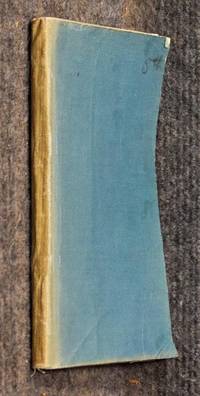
189075399Boston: Baptist Missionary Society 1890. Original stiff printed cad. The front shows a steam-powered stern-wheel riverboat steaming up the Congo Rive . There are two local people standing on the shore seeming to cheer them on. On the top right in an image of Adam McCall "one of the first missionaries to the Congo." In the upper left in the circular seal of the American Baptist Missionary Union. Someone has penciled "Winter of 1890" on the left margin. The recto contains a map of the Congo and its environs. Some old glue reside on the map side else a very good copy."It is generally known that the American Baptist Missionary Union has a steamer on the Upper Congo River for the purpose of aiding in carrying on the missionary work in Central Africa. The funds for building the steamer were furnished by a benevolent lady in Tasmania and it was named the “ Henry Reed†in memory of her deceased husband. It is a beautiful vessel and has proved very serviceable and well adapted to the navigation of the Upper Congo and its tributaries which furnish an uninterrupted navigable waterway of five thousand miles in the interior of Africa. To support the steamer and to carry on the missionary work which it is intended to do will require several thousand dollars annually. To provide these funds "The Henry Reed Steamboat Company†has been formed. Ten cents will constitute any one a stockholder in the company for one year; and all annual stockholders will receive a certificate with a picture of the steamer and a map of the Congo Free State. The payment of one dollar will constitute any one a stockholder in the Steamboat Company for life and a neat certificate will be given. Those who have been stockholders in the Company for ten years will receive a certificate of life membership on returning their ten annual certificates and the annual certificates will also be receivable at any time for ten cents each toward a life membership. Any one who has been a stockholder for five years can become a life stockholder by returning their five annual certificates and paying fifty cents; or any number of annual certificates may be sent which will be counted at ten cents each toward a life membership the remainder of the one dollar to be paid in cash.We are confident this Steamboat Company will be received with great favor especially by the boys and girls in the Sunday schools and mission bands. Superintendents teachers and leaders of mission bands are invited to receive payments for certificates and forward them and the certificates will be sent in return" Baptist Missionary Magazine vol. 67. Baptist Missionary Society unknown
1909310760Bruxelles: Albert de Wit . Institute International de Bibliographie 1909. First edition. With 8 plates from photographs with multiple images; folding map; folding plan. xx 376 pp. Preface by Cyrille van Overbergh. 8bo. Later red cloth with original printed rose wrapper mounted to front cover. Light soiling to wrapper toning to text. First edition. With 8 plates from photographs with multiple images; folding map; folding plan. xx 376 pp. Preface by Cyrille van Overbergh. 8bo. An ethnographic description of the Warega or Lega people of what is now the Democratic Republic of the Congo published shortly after the creation of the Belgian Congo; volume 5 in the Collection de Monographies ethnographiques published by Cyrille Van Overbergh. A short biographical footnote on p. viii describes the author as a reserve officer in the Belgian army. Albert de Wit ... Institute International de Bibliographie unknown
191137502Bruxelles: Publiées par le Ministere des Colonies 1911. First edition. Aqurelles par Norman-H. Hardy. 403 photographs and drawings 2 fold-out maps and 29 full- page folio-size plates containing 20 color drawings 15 color plates of raffia designs 53 photographs of carved figures and objects and 14 photographs of 18th century Bombala embroidery. 1 vols. Large 4to. Original tan printed portfilo. Book loose in fasicules. Fine. wrappers slightly worn. First edition. Aqurelles par Norman-H. Hardy. 403 photographs and drawings 2 fold-out maps and 29 full- page folio-size plates containing 20 color drawings 15 color plates of raffia designs 53 photographs of carved figures and objects and 14 photographs of 18th century Bombala embroidery. 1 vols. Large 4to. Publiées par le Ministere des Colonies unknown
189737040New York: Fleming H. Revell Co. 1897. 8vo. 316 pp. Frntsp. numerous photos plates 1 large folding map. Green cloth gilt lettrng & decrtn mnr soilng shlfwr frnt hnge startng still VG- copy. First edition of this excellent biography of A.C. Good who was the first white to penetrate far into the Bulu region of German Congo. There he was initiated into the tribe preached in the language and even translated the Gospel. Fleming H. Revell Co., hardcover
190730722London: Religious Tract Society 1907. First Edition. Illustrated with 17 full-page plates and a folding map of Congo at the end of the volume. Thick 8vo publisher's original brick-red cloth the spine and upper cover lettered in gilt top edge gilt. xx 446 14 ads. pp. A fine and handsome copy clean and very well preserved. FIRST EDITION AN EXPANSIVE AND ELUSIVE BIOGRAPHY OF A CONGO PIONEER WRITTEN BY HIS WIFE. A fine work with extensive commentary on the geography the people and the social and cultural interactions of the period. An enlightening look into Congo at a time that the Belgian's were establishing rule over a vast area of the territory. Religious Tract Society hardcover
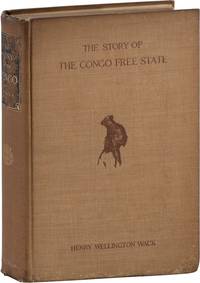
190561952New York: G. P. Putnam's Sons 1905. First Edition. First printing. Octavo 23.5cm. Tan cloth stamped in brown titled in gilt on black leather spine label top edge gilt; xvi634pp; photogravure frontispiece portrait black and white map 100 black and white halftone plates large color folding map at rear. Errata slip at p.x. Sound but rubbed slight fraying at spine ends spine label much abraded minor abrasions to boards internally largely clean: around Very Good. <br /> <br /> Wack 1875-1954 was a paid apologist for Leopold II and his atrocity-ridden regime in the Congo Free State. 61952. G. P. Putnam's Sons unknown
193082301New York: Farrar & Rinehart 1930. First Edition. First printing. Octavo. Publisher's brown cloth; dustjacket; xiv318pp; color frontispiece and seven unnumbered leaves of b/w plates after André Durenceau who also designed the endpapers and dustwrapper. A sound generally clean copy; text over-opened at p.70 a few faint spots of foxing; Very Good. In the original dustwrapper unclipped but tattered with losses along upper margin and spine ends closed tears and age-toning; just Good. With the engraved bookplate of Portland Oregon collector Frederick W. Skiff d.1947. <br /> <br /> A colorful but cringingly condescending account by an Anglo-American trader who spent the years 1882-1896 in what was then French Equatorial Africa today called the Republic of the Congo. Includes chapters on cannibalism native African slaveholders and sexual customs about which the author warns he ".shall speak with the utmost frankness.for the reason that they are the most powerful and dominating factor" in the lives of the natives of Equatorial Africa. With illustrations in dramatic Art Deco style by Franco-American illustrator and muralist André Durenceau. Farrar & Rinehart unknown
19227647Luebo Congo Belge Africa: The J. Leighton Wilson Press American Presbyterian Congo Mission 1922. First Edition. Hardcover. Very good. Plain mauve cloth 5 x 7 inches 58 pp. index clean text. No entries for any edition at WorldCat. We have seen three binding varieties for this issue: blue pebble cloth dark green pebble cloth and a mauve plain cloth.There are 38 articles in the Constitution - these define the work the officers & workers the powers of the officers the election of officers &c. The By-Laws start with no. 39 and run to no. 113. These treat with standing committees and their duties how appointed then practical matters of budgets ordering supplies hospital and medical fees &c. Ends with a 8 pp. index. The J. Leighton Wilson Press | American Presbyterian Congo Mission hardcover
19227646Luebo Congo Belge Africa: The J. Leighton Wilson Press American Presbyterian Congo Mission 1922. First Edition. Hardcover. Very good. Dark green pebble cloth 5 x 7 inches a few blotchy stains to the binding 58 pp. index clean text. No entries for any edition at WorldCat. We have seen three binding varieties for this issue: blue pebble cloth dark green pebble cloth and a mauve plain cloth.There are 38 articles in the Constitution - these define the work the officers & workers the powers of the officers the election of officers &c. The By-Laws start with no. 39 and run to no. 113. These treat with standing committees and their duties how appointed then practical matters of budgets ordering supplies hospital and medical fees &c. Ends with a 8 pp. index. The J. Leighton Wilson Press | American Presbyterian Congo Mission hardcover
0259475807.Gpaperback. Good. Access codes and supplements are not guaranteed with used items. May be an ex-library book. paperback
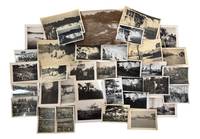
1946235061946. Congolese ceremonial and colonial encounter photo archive showing indigenous ceremonial dance dress and culture uniformed troops and Belgian officials in the Belgian Congo during the late 1940s and early 1950s. Key scenes are tied to the 1947 visit of Prince Regent Charles to Paulis. Belgium ruled the Congo from 1908 until independence on June 30 1960 after the Belgian parliament took over King Leopold II's Congo Free State following international exposure of forced labor and mass abuses. Several captions appear to place the photographs during the governorship of Eugène Jungers Governor General of the Belgian Congo from December 31 1946 to January 1 1952 a period when Belgian rule promoted "paternal" administration while Congolese political pressure and demands for advancement were growing. The strongest scenes center Congolese public ceremony rather than colonial officials alone: men dancing in lines drummers seated before large instruments children gathered for viewing and performers facing crowds in open fields and palm-lined roads. Chief Tongolo and his daughter appear among colonial representatives during the Prince Regent's visit giving the archive a named Indigenous presence within a public ceremony shaped by Belgian authority.<br /> <br /> Photo archive of 24 silver gelatin photographs measuring approximately 3" x 4" each Belgian Congo 1940s-1950s. Several French captions can be translated; "Governor General Jungers"; "the regiment's standard at the cemetery"; "parade of the veterans"; and "Congolo gives his speech." Congolese men dance in feathered or fiber headdresses body ornaments patterned waist cloths shields and drums sometimes advancing across open ground before lines of onlookers. Belgian men in white suits and pith helmets stand with Congolese adults and children outside official buildings and in outdoor assembly areas while other scenes show African soldiers in formation a ceremony near railroad tracks a colonial cemetery observance and a station or compound with crowds gathered along walls and platforms.<br /> <br /> After the Second World War Belgium's Congo policy remained formally paternalist while urbanization war service missionary education and wage labor created new Congolese claims to political recognition that colonial rule could not contain;within thirteen years of Prince Regent Charles's 1947 visit the Congo gained it's independence and became Republic of the Congo. Light handling wear toning and minor curling; captions remain legible on several versos images remain clean and clear. Overall in very good condition. The archive records Congolese ceremonial life at the point where public dance veteran commemoration colonial ceremony military display and Belgian administrative power occupied the same public spaces. unknown
1900235051900. Belgian colonial Congo photo archive depicting European officials Indigenous Congolese adults and children public ceremony domestic labor and railway grounds between the early twentieth century and 1950. Belgium formally ruled the Congo from 1908 until June 30 1960 after King Leopold II's Congo Free State became notorious for forced labor and violence against Congolese people. A few scenes highlight colonial hierarchy as one photo shows white men in suits helmets and uniforms pose formally in chairs while Congolese men women and children appear as attendants or anthropological subjects surrounding the trio. A 1947 inscription identifying "le régent Charles" places part of the group during the Belgian prince regent's postwar tour of the Congo eight years before King Baudouin visited in 1955 and thirteen years before Congolese independence on June 30 1960.<br /> <br /> Photo archive of 12 silver gelatin photographs ranging from 3" x 4" to 3.5" x 4.75" Belgian Congo 1900-1950. French inscriptions include "Congo Belge août 1950"; "le régent Charles 1947"; "lundi le 18 janvier 1943 avec notre meilleur bonjour de tous les trois"; and "travailleur portant à l'eau" meaning "worker carrying water." Other scenes show a uniformed colonial procession outside a brick building helmeted men posed in the bush an elephant captioned with French notes Congolese children at a water spout men carrying water a compound walkway a railway yard and Congolese drummers and dancers assembled before mixed local and colonial audiences. The dichotomy of colonists occupying the pose of command travel inspection and ownership while Indigenous Congolese people appear in the surrounding labor ceremony and service spaces make for a compelling collection.<br /> <br /> Belgian rule in the Congo depended on racial separation administrative paternalism extraction mission education and controlled public ceremony while Congolese political demands intensified after the Second World War and culminated in independence on June 30 1960. Light toning handling and corner wear; photos remain clear and several inscriptions legible en verso; overall in very good condition. This archive gives Belgian colonialism a concrete human scale through officials posed with indigenous children workers ceremonial performers industrial railway spaces and royal reception scenes arranged around the unequal encounter between European power and Indigenous Congolese life. unknown
19544520Belgian Congo: Congo Tours 1954. First Edition. Soft cover. Fine. Belgian Congo BIG GAME HUNTING Promotional Brochure issued September 1954. 3 part fold-out brochure. 6 pp 7.5 x 5/1/5 pages. Covering all hunting areas Lake Albert Kamanda Aba Beni Tayala's Semliki River and Gabios. Giving safari rates what they include costs of licenses trophy fees and a full page map. Area hunted is contiguous to Soudan Uganda and Tanganyika i.e. the best big game areas in the Belgian Congo. Fine. Congo Tours unknown
ria9781020598982_inpHardcover. New. New Book; Fast Shipping from UK; Not signed; Not First Edition; N/A hardcover
261720 pp. text 50 loose plates as issued 1 map. Series: Kunst in België III. Text: Dutch. Brussels: Cultura. Date of publication not identified but c.1960. In folder. KEYWORDS: 007 Africa: Central unknown
1946232341946. Belgian Congo photo archive documenting colonialism and segregated settlement in Paulis Jadotville and at Kiubo Falls in 1946-1947 while Belgian rule expanded displacing Congolese communities from political power and control over local resources. Made by an unidentified traveler or colonial observer the group moves between industrial sites river traffic town streets waterfalls village compounds and posed encounters with Congolese residents placing daily life beside the infrastructure of empire. Jadotville in Katanga had been built within the orbit of Union Minière du Haut-Katanga and the copper economy that tied the Congo to European industry; Paulis belonged to the northeastern colonial administrative network that extended surveillance mission activity and commercial penetration into local societies. By the later 1940s these systems were producing wealth for Belgium and foreign markets through forced and controlled labor regimes.<br /> Photo archive of 36 black and white silver gelatin photographs various sizes ranging from 2.5" x 3.5" to 5" x 7" Belgian Congo 1946-1947. Nine photographs are identified to the Paulis region in 1946 including versos inscribed in French with "Habitations Européens à Paulis" "Pavillon de l'hotel" and "Le Kigoma sur le fleuve." These images show European-style houses set among palms a large riverside or lakeside steamer a broad colonial street with automobiles and low commercial buildings thatched structures and Congolese figures posed near village compounds and along a tree-lined road. The remaining photographs from Jadotville and Kiubo Falls in 1947 include multiple views of the falls from overlooks and near the waterline several repeated compositions of cascades and riverbanks a dense electrical installation with transformers and steel framing public crowd scenes dugout canoes on calm water groups standing beside temporary camp structures and additional views of thatched settlements large shade trees and Congolese men women and children positioned before houses or in open clearings. Several photographs set European-built environments against Congolese dwellings and occupied landscapes making the colonial dichotomy apparent within this grouping.<br /> Waterfalls river steamers electric infrastructure and ordered streets mark the channels through which copper labor and administrative authority moved outward to Belgian and international markets while the photographs of Congolese settlements and residents show the populations who bore that reorganization of land and economy. In the late colonial Congo extraction and transport depended on African labor under coercive conditions and urban growth in places such as Jadotville advanced through racially unequal housing wage structures and civic access leaving Congolese people concentrated in subordinate quarters or rural zones even when their work sustained the entire system. Light wear and occasional creasing; several versos inscribed in French; overall very good condition. An intimate look into Belgian colonial rule at the point where industrial wealth infrastructure and local displacement met on the ground. unknown
2026100071790Clarence Denis imp. 2026. Bon état sous papier de soie couverture un peu défraîchie intérieur propre. in8. 2026. Broché. illustrations en noir et blanc Clarence Denis (imp.) unknown
18891250325.28<p>L. Bourlard Bruxelles 1889. . Very Good. 8vo paperback. Vg condition. Covers lightly soiled. contents clean no marking or writing: appears unread - most pages still uncut. . Binding square and tight. 127 pp. text plus maps and charts. An interesting original publication outlining the ambitious project to ultimately traverse the Congo by rail line.</p> L. Bourlard, Bruxelles paperback
1528202511.Gpaperback. Good. Access codes and supplements are not guaranteed with used items. May be an ex-library book. paperback
0266991424.Ghardcover. Good. Access codes and supplements are not guaranteed with used items. May be an ex-library book. hardcover
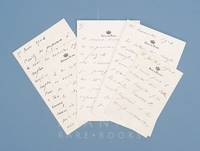
1901100107AG1901. Laeken / Brussels Château de Laeken Palace of Laeken 1901 - 1906. 16 pages of MLS Manuscript Letters signed on 10 leaves of Leopold's official stationery "Château de Laeken" and "Palais de Bruxelles". The leaves with different sizes 135 cm x 9 cm and 18 cm x 115 cm. Excellent condition. Unsigned. Tremendously rare to find original letters by Leopold II on the open market in which the Colonial Free State and the protection against inquisitive visitors is discussed in such clear and instructive fashion. Leopold's correspondence with Adolphe de Cuvelier shows how he is very much trying to still protect and influence the narrative of his Colonial Slavery Outpost even in the final years of his life. Adolphe de Cuvelier 1860-1931 Secretary General of the Ministry of Foreign Affairs of the Congo Free State President of the Syndicate for Studies and Enterprises in Congo. He was given the title of knight in 1893 and baron in 1908 each transferable at first birth. Wikipedia _______________________________ Leopold II French: Léopold Louis Philippe Marie Victor; 9 April 1835 17 December 1909 was the second King of the Belgians from 1865 to 1909 and through his own efforts the owner and absolute ruler of the Congo Free State from 1885 to 1908. Born in Brussels as the second but eldest surviving son of Leopold I and Louise of Orléans he succeeded his father to the Belgian throne in 1865 and reigned for exactly 44 years until his deaththe longest reign of any Belgian monarch. He died without surviving legitimate sons. The current Belgian king descends from his nephew and successor Albert I. Leopold was the founder and sole owner of the Congo Free State a private project undertaken on his own behalf as a personal union with Belgium. He used Henry Morton Stanley to help him lay claim to the Congo the present-day Democratic Republic of the Congo. At the Berlin Conference of 18841885 the colonial nations of Europe authorized his claim and committed the Congo Free State to him. Leopold ran the Congo using the mercenary Force Publique for his personal gain. He extracted a fortune from the territory initially by the collection of ivory and after a rise in the price of natural rubber in the 1890s by forced labour from the native population to harvest and process rubber. Leopold's administration of the Congo Free State was characterised by atrocities and systematic brutality including torture murder and the amputation of the hands of men women and children when the quota of rubber was not met. In 1890 George Washington Williams used the term "crimes against humanity" to describe the practices of Leopold II of Belgium's administration of the Congo Free State. Colonial accounts typically emphasized Leopold's modernizing changes in the Congo and not the mass death he facilitated. These and other facts were established at the time by eyewitness testimony on-site inspection by an international commission of inquiry and the 1904 Casement Report. Modern estimates range from 1 million to 15 million Congolese deaths with a consensus growing around 10 million. Some historians argue against these figures citing the lack of reliable censuses the enormous mortality caused by smallpox and African trypanosomiasis and the fact that there were only 175 administrative agents in charge of rubber exploitation. In 1908 the reports of deaths and abuse and pressure from the Congo Reform Association and other international groups induced the Belgian government to take over the administration of the Congo from Leopold as a new territory Belgian Congo. Wikipedia unknown
1955176246Congo Belge Conseil de Gouvernement 1955 1955. First Edition. Paperback. Very good paperback copy in glassine dw; edges very slightly dust-dulled and nicked. Remains particularly and surprisingly well-preserved overall; tight bright clean and strong. Copy from Foreign Office. Foreign Office Library. ; 8vo 8"" - 9"" tall; 54 pages; Physical desc.: Various pages numbers and languages: 51 lxvii 39 p folded map. Subjects: Colonialism -- Facts and Figures -- Statistics. Languages: French Dutch. (Congo Belge Conseil de Gouvernement, 1955) paperback
B9781019867105Hardback. New. hardcover