Bedouin and White HorseBiblio.com
5 résultats
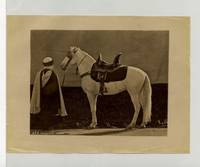
1880145821880. Vintage original albumen photograph of a Bedouin with his white horse published circa 1880. Image size: 7" x 9." In this image we can see a Bedouin horseman traditionally dressed in a thoab and kufiyya with igaal. The warrior is approaching his horse from the front. His majestic white steed stands saddled and alert. Overall in very good condition. unknown
1885145461885. Vintage original albumen photograph of a Bedouin Warrior with his camel published circa 1875. Image size: 8.25" x 11." In this image we can see a Bedouin traditionally dressed in a thoab and kufiyya. The warrior is standing in the desert holding the reins of his camel. The camel is saddled with the Bedouin's sword visible on his side flank. In the background is a single fort tower in the bare desert. Overall in very good condition. unknown
1880145371880. Albumen photograph Bedouin cavalry charge circa 1880 documents mounted warfare practices among nomadic groups in the Arabian desert during the late nineteenth century a period when Bedouin tribal forces maintained regional influence through mobility horsemanship and control of desert routes. The image captures armed horsemen in coordinated motion with swords drawn providing visual evidence of cavalry tactics central to intertribal conflict and territorial defense prior to the consolidation of modern state authority in the region. Such imagery supports research into Middle Eastern military history nomadic social organization and the representation of non-Western subjects in early photographic practice.<br /> <br /> Single albumen print measuring approximately 7" x 9" depicting approximately a dozen mounted Bedouin riders in full gallop across open desert terrain. The composition includes figures in the foreground advancing with raised swords with additional environmental detail visible in the background including tents near a palm tree and distant mountainous forms along the horizon. The photograph captures a dynamic moment of movement unusual for the period given the technical limitations of nineteenth-century photography which more commonly produced static or posed scenes. No visible inscriptions noted; composition emphasizes both action and landscape context.<br /> <br /> Produced during a period when photographic processes required long exposure times the successful rendering of motion in this image indicates either careful staging or a rare attempt to document kinetic activity in situ. Bedouin cavalry traditions remained central to Arabian Peninsula power structures throughout the nineteenth century preceding the military and political transformations that accompanied Ottoman decline and later state formation in the early twentieth century. Visual records of mounted action from this period are comparatively limited particularly those that attempt to depict combat or maneuver in progress making the photograph relevant for studies of early visual ethnography colonial-era image production and the documentation of pre-modern military systems. Light wear consistent with age; image remains clear with strong tonal contrast; overall in very good condition. unknown
1819PHO-2364Paris, chez P. Mongie Ainé, 1819. 2 volumes in-8 (20,5x13cm), X- 392- 394 pp., 2 volumes reliés presque à l'identique pleine basane marbrée (de l'époque pour le premier volume, pastiche pour le second), dos lisse avec pièces de titre et tomaison vertes, défaut au titre tome 2, quelques rousseurs. 7 planches dont un frontispice et une carte dépliante dans une pochette en fin de volume du tome II, un plan de Tripoly en Barbarie (Nicolas de Fer, 1705 ?) dans une pochette au tome 1
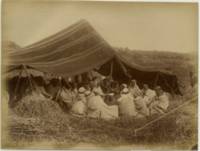
1900145891900. Nineteenth century albumen photographs depicting Bedouin camp life in the Arabian desert during the period when early photography began documenting nomadic societies of the Middle East. European photographers and travelers working across the Ottoman and Arabian regions during the nineteenth century frequently recorded images of desert encampments tribal leaders and mounted riders as part of a broader photographic interest in documenting cultures associated with caravan routes pastoral nomadism and the social organization of Bedouin communities. These images present scenes of communal gathering and mounted travel central to Bedouin social and economic life.<br /> <br /> Two original albumen prints showing Bedouin encampment scenes. Circa nineteenth century. Each photograph measures approximately 8 x 10 inches. One image depicts a large group of Bedouin men assembled beneath a tent in an open desert plain covered with sparse grass suggesting a communal meeting or gathering within the camp. The second photograph captures five mounted horsemen their horses fully saddled speaking with an older Bedouin figure positioned outside a cluster of tents that form part of a larger encampment. The photographs document both the spatial layout of a Bedouin camp and the presence of mounted riders whose mobility was central to pastoral life and desert travel.<br /> <br /> Photographs of Bedouin communities produced during the nineteenth century formed part of a wider photographic record of the Middle East created by travelers military observers and early ethnographic photographers. Such images circulated in travel literature and photographic albums that introduced European audiences to the landscapes and social organization of the Arabian deserts. Visual documentation of Bedouin camps offers insight into the material culture of nomadic life including tent structures mounted transport and communal gathering practices that structured desert society. Light age toning and minor handling wear; overall very good condition. A clear pair of nineteenth century albumen photographs documenting Bedouin camp life. unknown