[Georgia & South Carolina]Biblio.com

4 868 résultats
192041211Washington D.C.: Published by the United States Coast and Geodetic Survey 1920. Large folding nautical chart printed on heavy paper stock. Uncolored. A rare original coastal survey of the border between Georgia and South Carolina including Savannah Ossabaw Island Wassaw Island Skidway Island Tybee Island. Bluffton Beaufort Hilton Head Island Port Royal Island Phillips Island Fripp Island Hunting Island and Parris Island.<br/> <br/> Established by President Thomas Jefferson in 1807 as the Survey of the Coast the U.S. Coast and Geodetic Survey was the United States' first civilian scientific agency. This agency has followed its mission to survey the U.S. coastline create nautical charts of the coast and help increase maritime safety since its founding and has often played fascinating roles in significant chapters of U.S. history. It served in all theaters of the Civil War in the service of the Union Army and Navy pioneered acoustic exploration in the wake of the sinking of the Titanic and during WWI it worked to detect enemy submarines. In addition this agency worked to survey and produce detailed maps and renderings of the U.S. coast. These nautical survey maps commonly referred to as "T-sheets" provide fascinating insights into the history of the United States coastline which has and will continue to shift. These maps are the most important data source for understanding the physical and ecological characteristics of the U.S. shoreline. The present map is a highly detailed and accurate sea chart of the coastal border of Georgia and South Carolina and an important historical view of the developing states. Published by the United States Coast and Geodetic Survey unknown
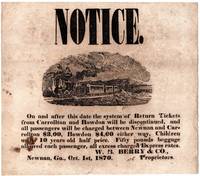
187012823Newnan Ga: October 1 1870. Broadside 7.75 x 9 inches with engraved vignette at center. Old folds moderate foxing and dust-soiling light staining. Short closed tear to bottom edge. Overall very good. A delightful mid-19th-century Georgia railroad broadside advertising changes to the ticketing system for one of the southern rail lines owned by William Byrd Berry. Here rates for travel between Berry's hometown of Newnan and Carrollton or Bowdon are specified and the rates for children under the age of 10 are noted as half price. Further the broadside stipulates baggage is capped at fifty pounds and the excess will be charged "Express rates." The work is signed in type by "W.B. Berry & Co." and dated October 1 1870 in Newnan. The text is enhanced with a striking central vignette of a locomotive pulling several railcars through a mountainous region. William Byrd Berry 1831-1902 was a prominent businessman and landowner born and raised in Newnan Georgia. He served as president of various banks and was involved in a number of railroad interests in the state. As far as we can tell the present broadside is unrecorded. October 1 unknown
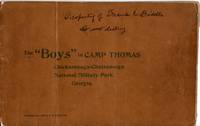
189813100Chattanooga TN: Sidebottom & Kerr 1898. 48pp. Slim oblong octavo. Original orange-tan wrappers printed in black stapled. Wrappers soiled creased and chipped with contemporary ownership inscription on front wrapper. First and last leaves detached from text block text block itself detached from wrappers. Good only. A scarce historical photobook that doubles as a catalogue for a Chattanooga photography studio at the outset of the Spanish-American War. Named after Union General George H. Thomas Camp Thomas was a massive temporary military training facility established at the Chickamauga Battlefield in Georgia during the Spanish-American War. The camp hosted up to 70000 troops but became a national scandal after deadly disease outbreaks. The work features seventy total monotone photographs from third-page to full-page with brief printed captions and plate sizes memorializing various scenes at Camp Thomas in 1898. The subjects of the photographs include military structures scenes on the training ground soldiers from various state units in small and large groups soldiers hosting local visitors the large corral of horses at the camp monuments inside the camp / national park views of the natural scenery and more. According to explanatory text on the inside front wrapper "the main idea is to show by photograph such scenes of every day occurrence; routine work both on and off duty as will give nearest a correct idea of what the life of a soldier in camp is made of or as you would see him were you on the grounds in person."<br /> <br /> The rear wrapper reveals an additional motivation for the publication of the work in the form of instructions for ordering any of the photographs featured within. Such is the reasoning behind the plate sizes listed by each example. The Chattanooga studio Sidebottom & Kerr states that "Every Plate in this Book was made expressly for it and having the negative can furnish upon short notice photograph of any plate." The company offers to send the catalogue free of charge to anyone east of the Rocky Mountains. A scarce and unusual photobook that does double duty as a Tennessee photographic studio's order book. OCLC reports just eight total institutional holdings. Sidebottom & Kerr unknown
199515955JMetuchen NJ: The Scarecrow Press 1995. First Edition. With a card by signed by Georgia Hale affixed to the page opposite the title page. Illustrated. Fine bright copy in a fine dust jacket. The memoirs of silent film star Georgia Hale’s relationship with Charles Chaplin as the lovely heroine in his comic masterpiece ‘The Gold Rush’ and as his off-screen companion. With stories of well-known personalities of the times including Marion Davies Sergei Eisenstein Ralph Barton Albert Einstein and Oona O’Neill whom Chaplin married in 1943. With passages from Hale’s previously unpublished correspondence with Chaplin and with illustrations from the Chaplin archive most of which are published here for the first time. The Scarecrow Press unknown
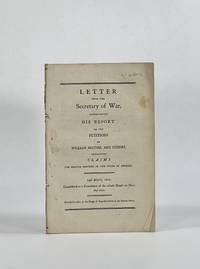
7686Philadelphia :no printer 1800. Disbound. Very Good binding. Octavo. 41 3 blank pp. Removed from nonce volume. Light toning to the cover but very nice. No printing information but Evan tentatively hypothesizes Philadelphia. Concerns service in Georgia during the period 1790-1794 in the wars with the Creek and Cherokee Indians. Gives and excellent review of the events and personalities. Eberstadt 114-326. Evans 38774. [Philadelphia? :no printer, 1800] unknown
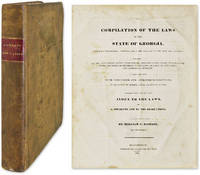
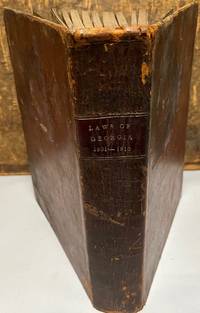
1831589071831. Milledgeville 1831. 1st ed. Milledgeville 1831. 1st ed. 1831 Compilation of Georgia Law Georgia. Dawson William C. Compiler. A Compilation of the Laws of the State of Georgia Passed by the General Assembly Since the Year 1819 to the Year 1829 Inclusive: Comprising All the Laws Passed Within Those Periods Arranged Under Titles With Marginal Notes And Notes of Reference to the Laws Or Parts of Laws Which are Amended or Repealed: To Which are Added such Concurred and Approved Resolutions As are Either of General Local or Private Nature: Concluded With a Full and Ample Index to the Laws and a Separate One to the Resolutions. Milledgeville: Published by Grantland and Orme 1831. 488 150 xxix pp. Text in parallel columns. Quarto 10" x 8". Contemporary sheep blind fillets to boards lettering piece and blind fillets to spine. Light rubbing to boards and extremities corners bumped a few minor scuffs and stains to boards hinges starting. Toning and light foxing to text faint dampstaining in places to margins internally clean. A desirable copy. $600. First edition. This was the fifth digest of Georgia state laws preceded by others from 1801 1802 1812 and 1821. It is digested alphabetically by topic. Babbitt Hand-List of Legislative Sessions and Session Laws 87. unknown
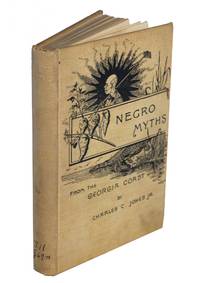
1888177281888. Jones Charles C. Negro Myths from the Georgia Coast 1888 presenting a late nineteenth-century compilation of African American folklore recorded in the Gullah dialect of the Georgia and South Carolina coastal region with direct relevance to the study of Black oral traditions linguistic history and post-emancipation cultural expression. The volume gathers fable-like narratives often centered on anthropomorphic animals that reflect storytelling traditions rooted in African diasporic heritage and adapted within enslaved and freed communities of the coastal South. Its use of Gullah a Creole language shaped by West African linguistic structures and English situates the work within ongoing efforts of the period to document vernacular speech and preserve forms of cultural expression that had developed under slavery and persisted into Reconstruction and beyond.<br /> <br /> Jones Charles C. Negro Myths from the Georgia Coast. Boston and New York: Houghton Mifflin and Company 1888. First edition. The text is rendered in Gullah dialect reflecting the linguistic patterns of African American communities along the Georgia and South Carolina coasts including areas around Savannah and Charleston. Jones raised in a plantation environment and familiar with the regional speech patterns compiled these narratives as part of a broader nineteenth-century interest in folklore and dialect studies contributing to early written records of Gullah language and storytelling traditions.<br /> <br /> Single volume. Ex libris. Minor foxing to the front pastedown and bumped corners; overall very good condition. A late nineteenth-century printed record of African American folklore and language from the coastal South documenting narrative forms and speech patterns that remain central to the study of Gullah culture and linguistic history. unknown
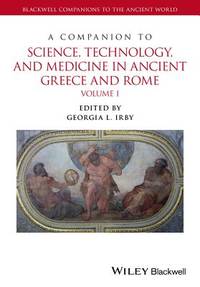
2016__1118372670Blackwell Pub 2016. Hardcover. New. 1st edition. 1120 pages. 10.00x7.00x2.50 inches. Blackwell Pub hardcover
Z1-F-044-00968Orion Children's Books. Used - Good. Ships from UK in 48 hours or less usually same day. Your purchase helps support Sri Lankan Children's Charity 'The Rainbow Centre'. Ex-library so some stamps and wear but in good overall condition. 100% money back guarantee. We are a world class secondhand bookstore based in Hertfordshire United Kingdom and specialize in high quality textbooks across an enormous variety of subjects. We aim to provide a vast range of textbooks rare and collectible books at a great price. Our donations to The Rainbow Centre have helped provide an education and a safe haven to hundreds of children who live in appalling conditions. We provide a 100% money back guarantee and are dedicated to providing our customers with the highest standards of service in the bookselling industry. Orion Children's Books unknown
199948743Brill Leiden 1999. 8vo. First Edition with photographs in the text; pale blue cloth upper board framed in blind and lettered in gilt gilt back a fine copy in unclipped dustwrapper. VERY SCARCE. Brill, Leiden, hardcover
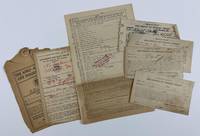
19495007Atlanta Ga 1949. Very good. Eight printed documents most completed in manuscript. Some folds mostly minor dust-soiling wear and creasing moderate toning and some unobtrusive chipping. An interesting group of documents issued from the Afro-American Life Insurance Company's Atlanta District during the Jim Crow period. The collection includes a Member's Receipt Book issued by an agent of the company in La Grange Georgia with twenty manuscript entries in pencil collecting weekly insurance dues for a policy holder named Minnie B. Reed over the course of a few months in 1949; a small folder issued to Reed presumably to hold her receipt book; four loose partially-printed receipts for premiums paid by a man named Paul Ealy also in 1949 completed in manuscript weekly payments for life insurance for both of these policy holders was twenty-five cents; and two blank application forms for the company's insurance service. The application forms include the company's home office address in Jacksonville Florida and indicates the company's expansion through the use of several ink stamps applied to most of the documents indicating the material emanated from the company's Atlanta office. The present grouping provides an interesting snapshot of insight into the company's activities costs and reach during the period just after World War II.<br /> <br /> "Florida's First African-American Insurance Company -1901-2001. The Afro-American Insurance Company formerly the Afro-American Industrial and Benefits Association was founded in 1901 to provide affordable health insurance and death benefits to the state's African-Americans. Founded by the Reverend E.J. Gregg E.W. Latson Abraham Lincoln Lewis A.W. Price Dr. Arthur W. Smith J.F. Valentine and the Reverend J. Melton Waldron the Afro's first office at 14 Ocean Street was destroyed by the great Jacksonville Fire two months after it opened on May 3 1901. It then moved to 621 Florida Avenue the home of treasurer and future president Abraham Lincoln Lewis 1865-1947. From their next home office at 105 E. Union Street the company wrote millions of dollars of insurance policies and started district offices in Georgia Alabama Louisiana and Texas." - Historical marker at the site of the company's original location in Jacksonville. unknown
1967129429Beverly Hills CA: Metro-Goldwyn-Mayer MGM 1967. Draft script for the 1968 British film. Based on Bernard Malamud's 1966 Pulitzer Prize and National Book Award-winning novel. <br /> <br /> Set in Czarist Russia Frankeheimer's adaptation is a brutal realization of Malamud's novel wherein a poor Jew named Yakov Bok assumes the identity of a Gentile after moving from the country to Kiev in order to secure a job working for a drunken anti-Semite. When Bok is wrongfully accused of murder he must go to prison to avoid stigmatizing the entire Jewish community. <br /> <br /> Alan Bates was nominated for an Academy Award for Best Actor for his portrayal of Bok. By 1960 the blacklisted Trumbo one of the Hollywood Ten began to receive credit for his work in Hollywood after serving time in a federal penitentiary for his conviction in the House Un-American Committee hearings to impugn possible Communists in the US. <br /> <br /> Shot on location in Hungary. <br /> <br /> Light blue titled wrappers dated September 7 1967 with a credit for screenwriter Trumbo. 138 leaves with least leaf of text numbered 129. Mechanically and xerographically duplicated dated variously between 9/6/67 and 9/7/67 with a revision page dated 8/7/67. Pages Near Fine wrapper Very Good bound with two gold brads. Rear wrapper now encapsulated in mylar. Metro-Goldwyn-Mayer [MGM] unknown
1950233431950. Steel construction photo archive documenting the labor system of midcentury building expansion in Macon Georgia depicting how fabrication delivery crane work and frame erection operated within the commercial and industrial growth of the postwar South. An unidentified commercial photographer working for local firms recorded construction as an active process through graded sites exposed structural skeletons transport vehicles stacked steel rail access and crews handling heavy members before enclosure. The presence of a truck marked "Georgia Steel Erectors and Fabricators" places the archive within the working world of regional steel contractors whose labor connected shop fabrication road transport and on-site assembly during the decades when Georgia cities expanded through new industrial plants warehouses and commercial structures.<br /> <br /> Photo archive of 10 silver gelatin photographs each 8" x 10" Macon Georgia circa 1950s to early 1960s. The photographs center on different stages of steel-frame construction including long rows of newly set columns broad skeletal buildings rising from cleared ground and partially enclosed structures with cranes positioned beside masonry walls and open bays. One image shows a crane truck with the side panel lettering "Georgia Steel Erectors and Fabricators" while another records large steel beams loaded on a trailer. Several views widen to include rail lines running directly into or beside the worksite stacked pipe or cylindrical materials graded roadbeds and an aerial overview that places the project within a larger industrial landscape of streets lots and service buildings. Laborers are shown throughout the archive on construction sites hauling and directing material. The sequence repeatedly favors unfinished structural stages over completed architecture making the archive a record of process material handling and coordinated building labor rather than a promotional set of finished-property views. Studio stamps en verso identify Drinnon Inc. by Ralph Jones Macon Georgia and one bearing the stamp Bryson's Photography Pensacola Florida.<br /> <br /> These photographs preserve the mechanics of midcentury construction at the point where steel fabrication transport and erection crews shaped Georgia's built environment. Macon's role as a commercial and industrial center made projects of this kind central to regional development and this archive shows that growth through the practical use of cranes beam delivery frame sequencing and the integration of road and rail infrastructure into the construction site itself. Light surface wear and minor edge wear; studio stamps clear on versos. Overall very good condition. The archive shows how labor materials and structural steel systems produced new industrial and commercial space in midcentury Georgia. unknown
2000BN152824National Bank of Georgia 2000. 2000. Hardcover. Money in Georgia <br/><br/>Money in Georgia National Bank of Georgia; Irakli Managadze; Iulon Gagoshidze et al. National Bank of Georgia hardcover
1618105-nnew. unknown
1618105like new. unknown
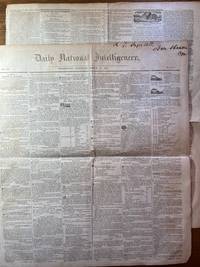
183236785Washington DC: Gales & Seaton 1832. Newspaper. Good. Newspaper. Approx. 21" x 18." 4 pages. Two folds. Sheets are detached. Newspaper has light toning. Name of R. J. Ingersoll New Haven Con" written top of issue. Possibly the same Ingersoll that served 4 terms in Congress from 1825-1833. <br /> <br /> Entire contents of page 2 concern "The Cherokee Case. Opinion of the Supreme Court delivered by Mr. Chief Justice Marshall January Term 1832. Samuel A. Worcester vs. The State of Georgia." The case is also printed on the first column of page 3. Supreme Court case of Samuel Worcester. From the Brittannica website: <br /> <br /> Worcester v. Georgia involved a group of white Christian missionaries including Samuel A. Worcester who were living in Cherokee territory in Georgia. In addition to their missionary work the men were advising the Cherokee about resisting Georgia's attempts to impose state laws on the Cherokee Nation a self-governing nation whose independence and right to its land had been guaranteed in treaties with the United States government. In an effort to stop the missionaries the state in 1830 passed an act that forbade "white persons" from living on Cherokee lands unless they obtained a license from the governor of Georgia and swore an oath of loyalty to the state. Worcester and the other missionaries had been invited by the Cherokee and were serving as missionaries under the authority of the U.S. federal government. They did not however have a license from Georgia nor did they swear a loyalty oath to that state. Georgia state authorities arrested Worcester and several other missionaries. After they were convicted at trial in 1831 and sentenced to four years of hard labour in prison Worcester appealed to the U.S. Supreme Court.<br /> <br /> Worcester argued that Georgia had no right to extend its laws to Cherokee territory. He contended that the act under which he had been convicted violated the U.S. Constitution which gives to the U.S. Congress the authority to regulate commerce with Native Americans. The Constitution also bars the states from passing laws that alter the obligations of contracts-in this case treaties. Several treaties between the Cherokee and the U.S. government recognized the independence and sovereignty of the Cherokee Nation. Furthermore Worcester argued that the Georgia laws violated an 1802 act of Congress that regulated trade and relations between the United States and the Indian tribes.<br /> <br /> The Supreme Court agreed with Worcester ruling 5 to 1 on March 3 1832 that all the Georgia laws regarding the Cherokee Nation were unconstitutional and thus void. Writing for the court Chief Justice John Marshall held that "the Indian nations had always been considered as distinct independent political communities retaining their original natural rights as the undisputed possessors of the soil." Even though Native Americans were now under the protection of the United States he wrote that "protection does not imply the destruction of the protected." Marshall concluded:<br /> The Cherokee Nation then is a distinct community occupying its own territory.in which the laws of Georgia can have no force and which the citizens of Georgia have no right to enter but with the assent of the Cherokees themselves or in conformity with treaties and with the acts of Congress. The whole intercourse between the United States and this Nation is by our Constitution and laws vested in the Government of the United States.<br /> <br /> Georgia however ignored the decision keeping Worcester and the other missionaries in prison. Eventually they were granted a pardon and were released in 1833. Pres. Andrew Jackson declined to enforce the Supreme Court's decision thus allowing states to enact further legislation damaging to the tribes. The U.S. government began forcing the Cherokee off their land in 1838. In what became known as the Trail of Tears some 15000 Cherokee were driven from their land and were marched westward on a grueling journey that caused the deaths of some 4000 of their people.<br /> <br /> The Supreme Court agreed with Worcester ruling 5 to 1 on March 3 1832 that all the Georgia laws regarding the Cherokee Nation were unconstitutional and thus void. Writing for the court Chief Justice John Marshall held that "the Indian nations had always been considered as distinct independent political communities retaining their original natural rights as the undisputed possessors of the soil." Even though Native Americans were now under the protection of the United States he wrote that "protection does not imply the destruction of the protected." Marshall concluded:<br /> The Cherokee Nation then is a distinct community occupying its own territory.in which the laws of Georgia can have no force and which the citizens of Georgia have no right to enter but with the assent of the Cherokees themselves or in conformity with treaties and with the acts of Congress. The whole intercourse between the United States and this Nation is by our Constitution and laws vested in the Government of the United States.<br /> <br /> Georgia however ignored the decision keeping Worcester and the other missionaries in prison. Eventually they were granted a pardon and were released in 1833. Pres. Andrew Jackson declined to enforce the Supreme Court's decision thus allowing states to enact further legislation damaging to the tribes. The U.S. government began forcing the Cherokee off their land in 1838. In what became known as the Trail of Tears some 15000 Cherokee were driven from their land and were marched westward on a grueling journey that caused the deaths of some 4000 of their people. Gales & Seaton unknown
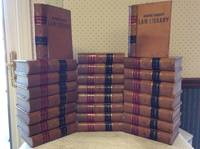
18471233456Georgia 1847. 1st Edition. Leather bound. Fair. A complete run of the first 24 volumes of the State of Georgia's offical law reports. FIRST EDITIONS FIRST PRINTINGS OF THESE RARE PRE-CIVIL WAR GEORGIA IMPRINTS. Vol. I was published in New York but Vol. II was published in Savannah Vols. 3-20 in Athens GA and Vols. 21-24 in Columbus GA. The set is bound in matching leather but some bindings are damaged. Each volume has a law library name stamped on the covers; the front boards of Vols. I and VI are detached; the spines of Vols. I IX and XX are torn; most volumes have a strip of brown cloth tape across the top of the spine. ATTENTION: many bindings are fragile so one can expect other covers to detach. Other than some very minor foxing scattered throughout the set the interior pages are clean tight and unmarked. Offered as-is and no returns accepted. Buyer should understand they may need to rebind these books. These reports on various law cases were standard volumes in Georgia courts but the vast majority were destroyed during the Civil War As with other works from this era antebellum printings from Georgia are today rarely found. unknown
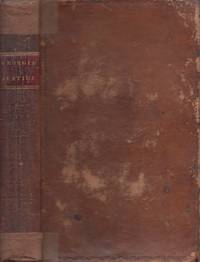
181935648Milledgeville: S. Grantland 1819. First Edition. Leather bound. Fair. Octavo. iv 463 pages. Polished sheepskin leather binding with red leather title label on the spine. A brown piece of linen tap used at the top and at the bottom of the spine. Covers rubbed. Internal hinges in good condition. Some arithmetic written on the right front flyleaf. "Augusta Wylie King 1929" written in blue pen on the verso of the right front flyleaf. Light toning and foxing to the contents. A few pages have ink splotches. Newspaper clipping stored between pages 342 343 has left stains to the pages. <br /> <br /> Contents include sections on "Free Negroes" and a section on "Slaves". 11 page list of subscriber names by county located in the back. Subscriber names are listed alphabetically by county. List includes the name of Daniel Ross of the Cherokee Nation. Fair.<br /> <br /> Shaw & Shoemaker 47639; Not in Sabin; Derenne Georgia Catalog Vol. I page 366 - "Probably printed in Philadelphia for notice of copyright on Sept. 28 1819 by Mathew Carey & Son as proprietors in Eastern District of Pa. appears on verso of the title page. S. Grantland unknown
193132998Wormsloe Georgia: Privately Printed 1931. First Edition. Hardcover. Good. Large quartos. 3 volumes: xxxiii 1 448 pages 1; x 1 449-896 pages 1; x 1 897-1396 pages. Illustrated with frontispiece engravings each volume including Wymberly Jones De Renne photograph portrait the library at Wormsloe and the interior view of the library. This set has been rebound by the National Library Bindery Company the original covers suffered serious silverfish and insect damage but not the interiors which are in very good condition. Green buckram bindings with gilt lettered titles stamped on the spines. New end sheets added in front and in the rear of all volumes. The old front and rear end sheets were removed but the half title pages were preserved. Gilt top edges for all three volumes. Untrimmed text with several unopened pages. Some of the opened pages suffered small edge tears when opened. <br /> <br /> Volume I covers 1700-1836. Volume II covers 1836-1891. Volume III covers 1891-1929 and includes newspapers maps engravings bibliography addenda and index. A massive collection of Georgia titles that eventually was placed with the University of Georgia. A great reference set for the Georgia researcher or collector. This set was limited to 300 copies and numbered. This set is numbered 87. Privately Printed hardcover
181332691Augusta: Adams & Duyckinck 1813. Leather bound. Good. Large quarto. 6 708 pages 20 page index. Brown calf leather binding with gilt stamped red label on spine. Leather binding is worn with a small area of dried ink on the spine partially obscuring the title on the red label. Old ink inscription of "Madison County Georgia" hand written on right front free end paper. Right front free end paper starting to come loose. Moderate to heavy toning and foxing to pages. Contents include laws regarding slaves and Thomas Jefferson's peace treaty at Fort Wilkinson in 1802 with the Creek Indians. <br /> <br /> Derenne Vol. I page 346; Sabin 13574. Adams & Duyckinck unknown
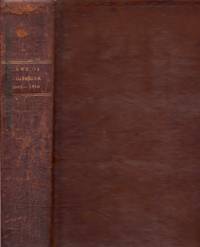
181235763Augusta: Printed by Adams & Duyckinck 1812. First Edition. Leather bound. Fair. Quarto. 4 708 pages 18 page index. Full brown calf leather binding with gilt stamped title on red leather spine label. Leather boards rubbed on the edges and scuffed on the back. Boards are slightly bowed. Darkened section of leather on the front cover. Leather head of spine is edge worn. Moderate toning to the text. Previous owner inscription on right front flyleaf. <br /> <br /> Contents include laws relating to Slavery and free Negroes. Also included is a Creek Indian treaty - "Treaty at Fort Wilkinson in 1802". This treaty was signed during the Thomas Jefferson administration by James Wilkinson Benjamin Hawkins Andrew Pickens and several of the Creek Chiefs Warriors etc. Fair. <br /> <br /> Derenne Vol. I page 346; Sabin 13574. Printed by Adams & Duyckinck unknown
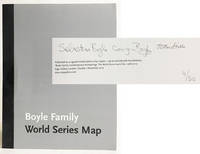
2013021884Vigo Gallery London 2013. Book. Fair. Wrappers. Signed by the Artists. 100 pages. Folio sized paperback. From a limited edition of 30 this is number 4 signed in pencil by the three artists who collectively make up the Boyle Family. There is a deep vertical crease near the center of the book near the spine with some minimal shelfwear to the edges and some spots of surface loss possibly insect damage on the back cover. But inside the pages are clean and free of markings. Published to coincide with the exhibition held in October/November 2013 this artist book has only an introductory text in English with facsimile excerpts selected randomly from the artists' monumental World Series Map showing the 1000 sites that make up the series. Beautifully printed. Vigo Gallery, London Paperback
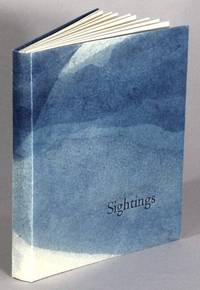
201068905Place of publication not identified: Artichoke Press / Ephemeral Press January 2010. Edition limited to 35 copies this no. 31; 6" x 5" 10 interleaved bifolia; Layered Indigo Day a handmade flax sheet by Cave Paper forms the cover of a non-adhesive tab and fold binding. The book block is hand sewn comprised of textured Domestic Etching and interleaved Thai Kozo sheets. The text is set in 12 pt. Optima" colophon. Stitching becoming a little loose else fine. "Poems & illustrations: Georgia A. Greeley; book design: Sue Bjerke." Denver and Hennepin County in OCLC. Artichoke Press / Ephemeral Press, January unknown
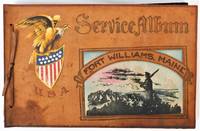
1934189891934. Photograph album 1934-1940 documenting the service of a U.S. Army soldier stationed at Fort Benning Georgia; Fort Williams Maine; and additional locations across the northeastern United States Many photos captioned with names of fellow soldiers friends and placenames. This Album has relevance to the study of interwar military life mechanization and training practices prior to American entry into the Second World War. The images include multiple views of tanks such as the Mark VIII Renault Ford 3-ton and Christie models reflecting the transitional development of armored warfare during the interwar period. Scenes at Doughboy Stadium at Fort Benning evoke the continued presence of World War I memory within military culture while the broader sequence of photographs captures routine service camaraderie and movement across training posts. Captioned images identify fellow soldiers and locations and autograph pages at the beginning of the album preserve personal inscriptions humor and social connections within the unit. Additional photographs include landscapes from New York Vermont and Maine as well as personal images of acquaintances situating the soldier's experience within both military and civilian contexts.<br /> <br /> Photograph album containing 149 black and white silver gelatin photographs most measuring approx 2.5 x 3.5 inches with a few larger prints including examples measuring approximately 7 x 5 inches. The photographs are mounted in a suede-bound "Service Album" measuring approximately 11 x 7 inches with many images captioned in manuscript identifying individuals and locations. The content includes military equipment soldiers group portraits training environments and personal snapshots reflecting both formal and informal aspects of Army life during the late 1930s. The 149 photographs are mounted in the album with minimal losses; pages generally well preserved. Light wear consistent with handling; overall very good condition. A cohesive visual record of U.S. Army service and evolving military technology in the years immediately preceding World War II. unknown