Antiquariat.de

201 résultats
184657031Gottingae: Typis expressit officina Academica Dieterichiana 1846. 29, (1) Seiten. 4° (26,5 x 21 cm). Orig.-Broschur.
186037544no place: Lemuel Towers 1860. First Edition. Original wraps. Very good. 16p octavo. A very good copy in original printed wraps. Heavy foxing to rear two pages. uncut. <br/><br/> Lemuel Towers paperback
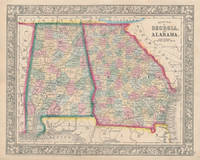
186046972New York: S. Augustus Mitchell Jr. 1860. Folio 15¼" X 12¼" image area 13¼" X 10 3/4". Hand colored. Very good. Lightly age toned with faint soiling. Attractively colored map of these two side-by-side southern states from the 1864 edition of "Mitchell's New General Atlas Containing Maps of the Various Countries of the World Plans of Cities Etc." Sharp floral border. Neatly affixed to verso is a slightly-damaged "Map of the Florida Southern Railway" Boston: National Color Printing Co. 1883. S. Augustus Mitchell, Jr. unknown
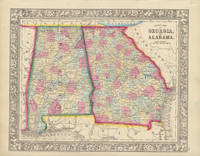
186045852New York: S. Augustus Mitchell Jr. 1860. Folio 15¼" X 12¼" image area 13¼" X 10 3/4". Hand colored. Very good. Mild age toning. Nicely boldly colored map of these two side-by-side southern states from the 1864 edition of "Mitchell's New General Atlas Containing Maps of the Various Countries of the World Plans of Cities Etc." Attractively colored with bold decorative border. S. Augustus Mitchell, Jr. unknown
1850354298Milledgeville 1850. 34pp. Dbd. Scattered foxing. Very good. 34pp. Dbd. Consists largely of a discussion of the recently proposed "act for the admission of California into the Union" and the effects such a move would have on slavery. The main thrust of the resulting resolutions was an affirmation of the need for the fugitive slave law. An important part of the debates over the fate of the Union in 1850. DE RENNE p.532 unknown
1884256388Atlanta Georgia: Supreme Court of Georgia 1884. 2 pages. 8vo. Laid down back to back VG. 2 pages. 8vo. Member of the Supreme Court of Georgia and a member of the Confederate Congress. <br/><br/> Supreme Court of Georgia unknown
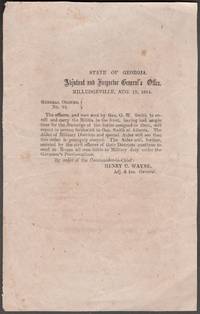
186435142Milledgeville: State of Georgia 1864. First Edition. Broadside. Very good. Broadside 9.5" x 6". Printed on the front side only. Light toning and wear to the paper. <br /> <br /> Parrish and Willingham 2888 . 2887 states No. 24 issued at Atlanta but gives no date. 2888 states Nos. 1-31; 7 January - 13 October 1864. Order reads; "The officers and men sent by G. W. Smith to enroll and carry the Militia to the front having had ample time for the discharge of the duties assigned to them will report in person forthwith to Gen. Smith at Atlanta. The Aides of Military Districts and special Aides will see that this order is promptly obeyed. The Aides will further assisted by the civil officers of their Districts continue to send to Macon all men liable to Military duty under the Governor's Proclamations."<br /> <br /> By order of the Commander-in-Chief Henry C. Wayne Adj. & Ins. General. [State of Georgia] unknown
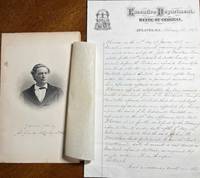
187833739Atlanta 1878. Document. Very good. Approx. 12.5" x 8" legal sized lined paper. 2 sheets. Executive order signed by Colquitt regarding John B. Woodlaw Constable for the 530th District G. M. Fulton County. Illustrated mast head at top. State seal affixed to the second page. <br /> <br /> Alfred Colquitt Colquitt a Democrat defeated the Republican nominee in 1876 becoming the first Democratic senator after Reconstruction in Georgia. He was a Confederate Captain in the Sixth Georgia Infantry during the Civil War. In 1883 Colquitt was elected to the United States Senate. He died in 1894 while still serving in the Senate. unknown
189035930Brooklyn: Historical Printing Club 1890. Limited Edition. Hardcover. Good. 12mo. 20 pages. Original publishers gray and white paper covered boards with black printed title on front cover. Old label removed from front paste down. Light soiling and shelf wear to the covers. Limited numbered edition of 250 copies. This copy is numbered 36.<br /> <br /> Derenne Georgia Catalog Vol. 2 page 884. Historical Printing Club hardcover
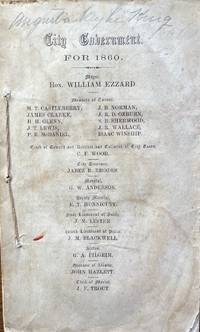
186036730Atlanta: Atlanta 1860. First Edition. Wraps. Fair. Stitched wraps. Pages 3-131 x. Missing the front cover that may identify the printer and location. Light soil and toning to the wraps. Light damp stains to the back pages. Last index page torn in half with content missing on page ix. Contents include rules for Slaves and free people of color. Previous owner name top of page 3 Augusta Wylie King. Early Atlanta imprint. Atlanta unknown
184335322Washington DC: U.S. Army 1843. Document. Good. Approx. 10' x 8" document. Folded sheet. 2 pages of contents with address on back. Letter written July 27 1843 and received 2'nd of August 1843. Transcribed below. Some of the content is difficult to decipher<br /> <br /> Ordnance Office Washington 27 July 1843<br /> <br /> Lieut. G. H. Talcott Comnd'g Augusta Arsenal <br /> <br /> Sir: <br /> <br /> It becomes necessary to enclose your property returns for correction neither of them having the certificate required by the 148th article ordinance regulations and now rendered necessary by the change of termination of the fiscal year from 30 September to that of June.<br /> <br /> You drop from the quarterly return a quantity of stores as "sold": no account sales have been rec'd see 103 article: there is also a number of articles dropped under the caption of quotation marks broken up worn out lost and dropped quotation marks but no voucher. These stores should be embraced on an abstract giving each item a separate line and attaching such explanations aside show the particular manner in which it was disposed of in fact all articles disappearing from the return should be covered by a proper voucher so that the May pass at the treasury. The same remarks are applicable to the tool return having omitted to send any vouchers with it: the stores "turned over to Lt. Hagner" do not appear to do not appear on the quarterly return as having been turned in as it is supposed was the case. The tools of iron steel etc. should be taken up on the quarterly return either as unserviceable or there wage in scrap iron steel a letter has been received two day from W Baker requesting certain connections certain corrections to be made to the return but as it has to be sent back for those others he will be best able to make them himself and for which purpose please submit it to him respectfully I am your obedience servant sp.<br /> <br /> Signed in different hand than than the content<br /> <br /> G Talcott Lt. Col. Ordn. U.S. Army unknown
186734814Washington DC: n.p. 1867. Wraps. Good. Disbound wraps. 11 pages 1 page blank. Spine taped in two places. Light toning to the contents. A report laying out the benefits of a building a railroad for the arsenal. n.p. unknown
187230930Augusta: Chronicle and Sentinel Publishing Company 1872. First Edition. Hardcover. Fair. Octavo. vi 1 page blank 3 224 pages. LXVI "Supplement to the City Code. Marbled paper covered boards with brown leather spine and corners. Leather is dry and rubbed. Spine is chipped and flaking. Edge wear to the boards. Outer joint and inner front hinge cracked and cover loose but attached. Title faded on the spine. Light soiling to the front and rear end papers. Fair.<br /> <br /> Note: this code contains a resolution numbered "Forty-Fifth" on page 170 that was adopted October 14th 1870 honoring Robert E. Lee. This city code is the first pasted after the end of reconstruction in Georgia 1871. Scarce. 4 copies located in OCLC. Chronicle and Sentinel Publishing Company hardcover
1834151220097Stereotyped and published by C. Alexander & Co 1834-01-01. Hardcover. Acceptable. Stereotyped and published by C. Alexander & Co hardcover
189635331Atlanta: James H Meegan. Printed by the Franklin Printing Co. Atlanta 1896. Limited Edition. Hardcover. Good. Octavo. x 215 pages. Frontispiece engraving of Jackson. Illustrated with engraved portraits. Genealogical chart in front of the book. Rebound in later green cloth hardcover with gilt title on the front cover. Light foxing to first few pages. a limited facsimile edition. Numbered and signed by the publisher - this is number 20 of 250 copies. The publisher obtained an original rare copy of the 1809 Augusta edition from the library of C. C. Jones and published this in 1896. Part I only published.<br /> <br /> Howes C 309; reference Derenne Vol. I page 336. James H Meegan. Printed by the Franklin Printing Co. Atlanta hardcover
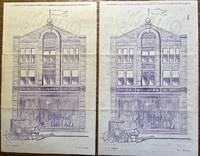
189036735Macon: W. J. Juhan and C. J. Juhan Dry Goods 1890. Broadsheet. Very good. Broadsheets contents both sides. Two copies. Approx. 9.5" x 6". Folded. Color illustration of the Dry Goods store in Macon Georgia on the front side. On the reverse side is a handwritten letter on printed letterhead. Broadsheets are in very good condition. W. J. Juhan and C. J. Juhan Dry Goods unknown
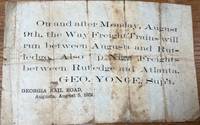
185836085Augusta: Georgia Rail Road 1858. Broadside. Fair. Broadside. Approximately 5" x 7.5". Paper is folded creased toned with two small holes. Tears at the splits. Tape repair on the blank reverse side. Fair condition only. Obscure. No other copies of this advertisement were found during a recent search. Georgia Rail Road unknown
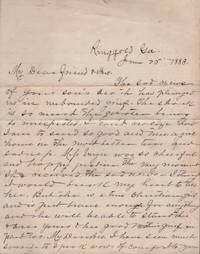
188335413Georgia 1883. Archive. Good. Small archive of 3 handwritten condolence letters written to the Buice family in Ringgold Georgia. Also included is the month of June calendar with a note written at bottom not legible and notes written on the blank side. The calendar sheet has some light stains and edge tears. Light fading and wear to the letters. Good condition. . <br /> <br /> All three letters begin with sorrow and condolences to the Buice family after their son Albert died. Written on the back of the June calendar is the note: "Our darling Baby girl was Born June 12th 1883. Our Darling Son was drowned June 24th 1883 aged 20 years lacking one month. Sadest day of our life." <br /> <br /> The first letter from Ringgold dated June 25 1883 is 4 pages long and addressed to "Dear Friend & Bro." It is signed W. L. Laice sp. <br /> <br /> The second letter written form Augusta Georgia is dated June 29 1883 and addressed "Dear Bro & Sister Buice. It is 3 pages long and signed by Cadesman Pope. <br /> <br /> The third letter from Dadeville Alabama is dated July 2nd 1883. It is addressed to "Mrs. Buice and family." This letter is 8 pages long and makes references to LaGrange Georgia. This letter also mentions the murder of the Dr. Carter editor of the People's Advocate: "Just two weeks ago my door neighbor was shot dead in tracks uptown. He was one of the nicest men I ever knew except that he was not a Christian he was a Physician here - was with Tillie and I both when we were sick not long ago. Was so refined well educated a polished gentleman. Political disturbances was the origin of his death. He was editor of the People's Advocate published weekly at this place and had said something in the editorials that offended a young man 22 years old who walked up to him in the square and demanded a private interview which Dr. Carter refused. Told him he had no business with him which could not be transacted there. Then young Sturdivant or Sturdevant drew out his pistol and shot him through the head." The letter is signed Mrs. Dansby. <br /> <br /> An article appearing in the Hazleton Sentinel and sourced from Columbus Georgia June 18th states "Dr. John F. Carter of Dadeville Alabama was shot and killed in that place by B. B. Sturdivant son of ex-Probate Judge Sturdivant Saturday night. Carter had been making some severe strictures on Judge Sturdivant in his paper about which young Sturdevant called to see him yesterday. unknown
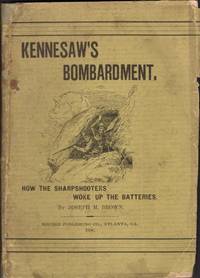
189034729Atlanta: Record Publishing Company 1890. Wraps. Fair. Stapled wraps. Approx. 7" x 5". 172 pages. Illustrated. Yellow illustrated paper covers with title printed on the front. Restored. Fragile paper covers and end sheets reattached. Paper tears repaired with mulberry paper. Text is lightly damp stained in the middle portions. A few pages with insect damage on the corners and edges. No loss of print. A few small pencil margin notes inside. <br /> <br /> The author Joseph Makay Brown was the son of the Georgia's Civil War Governor Joseph Emerson Brown. Joseph M. Brown was elected Governor of Georgia twice serving 1909-11 and 1912-13. This book is historical fiction. <br /> <br /> Scarce in the trade. One copy currently held in OCLC Rice. Not in Georgia Derenne catalog and not in Nevins. Record Publishing Company unknown
186436375Jefferson County Georgia: n.p. 1864. Letter. Good. Letter. Single sheet folded to make 4 pages. Approximately 9" x 7.5". Multiple folds. Light toning to the paper. <br /> <br /> Contents very difficult to read but the writer is discussing a potential land purchase and purposes meeting the letter recipient at Thomson. The writer instructs the recipient to "send your letter to Reedy Creek Post Office." The writer states "it is good fresh land and close to Augusta it is only thirty three miles from Augusta and it close to no rail road so rit soon and let the man no what you are a going to do." Letter contains no direct Civil War content. n.p. unknown
187434803Albany New York: Joel Munsell 1874. First Edition. Wraps. Very good. Wraps. x errata slip 184 pages. Original printed green stitched wraps. Black title on the front cover. Pages uncut and untrimmed. Appears unused. Light wear to the covers and foredge. A small chip and paper split on the spine. <br /> <br /> Howes J 205; Derenne Georgia catalog volume 2 page 747. Joel Munsell unknown
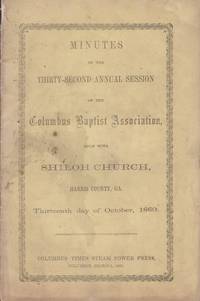
186030260Columbus: Columbus Times Power Press 1860. First Edition. Wraps. Good. Wraps. Approx. 8.5" X 5.5". 20 pages. Original printed stitched yellow wraps. Light soiling to outer wrap. Columbus Times Power Press unknown
183236785Washington DC: Gales & Seaton 1832. Newspaper. Good. Newspaper. Approx. 21" x 18." 4 pages. Two folds. Sheets are detached. Newspaper has light toning. Name of R. J. Ingersoll New Haven Con" written top of issue. Possibly the same Ingersoll that served 4 terms in Congress from 1825-1833. <br /> <br /> Entire contents of page 2 concern "The Cherokee Case. Opinion of the Supreme Court delivered by Mr. Chief Justice Marshall January Term 1832. Samuel A. Worcester vs. The State of Georgia." The case is also printed on the first column of page 3. Supreme Court case of Samuel Worcester. From the Brittannica website: <br /> <br /> Worcester v. Georgia involved a group of white Christian missionaries including Samuel A. Worcester who were living in Cherokee territory in Georgia. In addition to their missionary work the men were advising the Cherokee about resisting Georgia's attempts to impose state laws on the Cherokee Nation a self-governing nation whose independence and right to its land had been guaranteed in treaties with the United States government. In an effort to stop the missionaries the state in 1830 passed an act that forbade "white persons" from living on Cherokee lands unless they obtained a license from the governor of Georgia and swore an oath of loyalty to the state. Worcester and the other missionaries had been invited by the Cherokee and were serving as missionaries under the authority of the U.S. federal government. They did not however have a license from Georgia nor did they swear a loyalty oath to that state. Georgia state authorities arrested Worcester and several other missionaries. After they were convicted at trial in 1831 and sentenced to four years of hard labour in prison Worcester appealed to the U.S. Supreme Court.<br /> <br /> Worcester argued that Georgia had no right to extend its laws to Cherokee territory. He contended that the act under which he had been convicted violated the U.S. Constitution which gives to the U.S. Congress the authority to regulate commerce with Native Americans. The Constitution also bars the states from passing laws that alter the obligations of contracts-in this case treaties. Several treaties between the Cherokee and the U.S. government recognized the independence and sovereignty of the Cherokee Nation. Furthermore Worcester argued that the Georgia laws violated an 1802 act of Congress that regulated trade and relations between the United States and the Indian tribes.<br /> <br /> The Supreme Court agreed with Worcester ruling 5 to 1 on March 3 1832 that all the Georgia laws regarding the Cherokee Nation were unconstitutional and thus void. Writing for the court Chief Justice John Marshall held that "the Indian nations had always been considered as distinct independent political communities retaining their original natural rights as the undisputed possessors of the soil." Even though Native Americans were now under the protection of the United States he wrote that "protection does not imply the destruction of the protected." Marshall concluded:<br /> The Cherokee Nation then is a distinct community occupying its own territory.in which the laws of Georgia can have no force and which the citizens of Georgia have no right to enter but with the assent of the Cherokees themselves or in conformity with treaties and with the acts of Congress. The whole intercourse between the United States and this Nation is by our Constitution and laws vested in the Government of the United States.<br /> <br /> Georgia however ignored the decision keeping Worcester and the other missionaries in prison. Eventually they were granted a pardon and were released in 1833. Pres. Andrew Jackson declined to enforce the Supreme Court's decision thus allowing states to enact further legislation damaging to the tribes. The U.S. government began forcing the Cherokee off their land in 1838. In what became known as the Trail of Tears some 15000 Cherokee were driven from their land and were marched westward on a grueling journey that caused the deaths of some 4000 of their people.<br /> <br /> The Supreme Court agreed with Worcester ruling 5 to 1 on March 3 1832 that all the Georgia laws regarding the Cherokee Nation were unconstitutional and thus void. Writing for the court Chief Justice John Marshall held that "the Indian nations had always been considered as distinct independent political communities retaining their original natural rights as the undisputed possessors of the soil." Even though Native Americans were now under the protection of the United States he wrote that "protection does not imply the destruction of the protected." Marshall concluded:<br /> The Cherokee Nation then is a distinct community occupying its own territory.in which the laws of Georgia can have no force and which the citizens of Georgia have no right to enter but with the assent of the Cherokees themselves or in conformity with treaties and with the acts of Congress. The whole intercourse between the United States and this Nation is by our Constitution and laws vested in the Government of the United States.<br /> <br /> Georgia however ignored the decision keeping Worcester and the other missionaries in prison. Eventually they were granted a pardon and were released in 1833. Pres. Andrew Jackson declined to enforce the Supreme Court's decision thus allowing states to enact further legislation damaging to the tribes. The U.S. government began forcing the Cherokee off their land in 1838. In what became known as the Trail of Tears some 15000 Cherokee were driven from their land and were marched westward on a grueling journey that caused the deaths of some 4000 of their people. Gales & Seaton unknown
183434357New York: Thomas Illman 1834. First Edition. Map. Good. Map. Approximately 15" x 13" wider margins than other copies. Colored map shows Cherokee Tribal lands in North Georgia. A couple of very small edge tears on the right center edge not affecting content. Map is clean and in good condition. Entered according to an act of Congress in the year 1834 by Thos. Illman. Pencil note in the upper left corner on the verso states "From Burr's "A New Universal Atlas" Phillips No. 771 New York 1835 D.S. Stone/Thomas Illman Plate No. 52." Drawn before the forced removal of the Cherokee Indian Tribe in North Georgia. Thomas Illman unknown
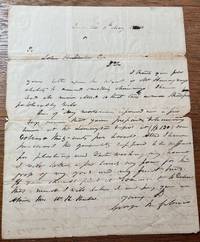
184636641Lexington Georgia: n/a 1846. Letter. Fair. Letter. 2 pages. Written from Lexington Georgia May 11th 1846 to John H. Newton Esq. of Athens Georgia. The paper has multiple folds edge chips and splits at the folds. Small tape repairs made to the paper on the verso. Contents of the letter are difficult to transcribe but it appears to be some sort of property deal. A crude sketch is located on the second page. Fair only. From wikipedia:<br /> <br /> Gilmer's career consisted of multiple alternating elected positions at the state and federal level. Of the two great Georgia political factions known as the Crawford men and the Clarke men he favored Crawford. He was elected to the Georgia House of Representatives in 1818 1819 and 1824. Gilmer was also elected to the U.S. House of Representatives in 1820 1826 1828 and 1832. Due to an oversight he did not serve after the election in 1828 because he failed to accept the position within the legal time frame and the governor ordered a new election.<br /> As governor of Georgia Gilmer aggressively pursued Indian removal laying claim to Federal assistance promised by the Compact of 1802.1<br /> <br /> He initiated the prosecution of Cherokee missionary Samuel Austin Worcester for violation of a law requiring all white persons residing within the Cherokee nation to obtain a license from the governor and to swear to uphold the laws of Georgia.23 Worcester was arrested in 1831 and sentenced to four years' hard labor.4 The Cherokee Nation hired a lawyer William Wirt and sued the state of Georgia in Cherokee Nation v. Georgia.5 This led to the United States Supreme Court decision Worcester v. Georgia which struck down the Georgia statute imposing its laws on the Cherokees as violating the Treaty of Hopewell.<br /> <br /> Backed by the Georgia militia and Governor Gilmer the General Assembly dissolved the Cherokee government annulled its laws and passed an act authorizing Gilmer to take possession of the Cherokee lands in north Georgia.6<br /> The Cherokee issue was hotly debated in the gubernatorial campaign of 1831.7 Gilmer lost the election to Wilson Lumpkin. The state seized Cherokee gold mines and set up a land lottery system in 1832 to distribute Cherokee lands.8<br /> <br /> During his second term as Governor of Georgia beginning in 1837 Gilmer supported and expedited the Federal government in the final removal of Indians from Georgia.9 This process came to be termed the Trail of Tears. n/a unknown