7 201 résultats
1979LFA-126728087Un ouvrage de 222 pages, format 215 x 240 mm, illustré, broché couverture couleurs, publié en 1979, Editions de la R.M.N., bon état
2011LFA015f0Un ouvrage de 176 pages, format 220 x 280 mm, illustré, broché couverture couleurs, publié en 2011, R.M.N., bon état
1948LFA00848N° 128 - 13 mars 1948 - Une revue de 32 pages, format 380 x 280 mm, nombreuses illustrations
LFA-126730620Une plaquette de 24 pages, format 160 x 235 mm, illustrée, brochée couverture couleurs, s.d., Intourist, bon état
1983LFA-126730621Une plaquette de 64 pages, format 170 x 215 mm, illustrée, brochée couverture couleurs, publiée en 1983, bon état
2010LFA-126716744Un ouvrage de 160 pages, format 215 x 270 mm, illustré, relié cartonnage sous jaquette couleurs, publié en 2010, Thalia Edition, très bon état
1956LFA007a9N° 395 - 3 novembre 1956 - numéro complet - bon état
1957LFA007b1N° 409 - 9 février 1957 - numéro imcomplet - bon état
1957LFA007b2N° 410 - 16 février 1957 - numéro complet - bon état
2022LFA-126742248N° 3809 - 5 mai 2022 - numéro complet - bon état
2022LFA-126742271N° 3832 - 13 octobre 2022 - numéro complet - bon état
2023LFA-126742285N° 3846 - 19 janvier 2023 - numéro complet - bon état
2022LFA-126742280N° 3841 - 15 décembre 2022 - numéro complet - bon état
1994LFA00ad8N° Hors-série 8 - Printemps 1994 : Très belle revue présentant un grand nombre de reportages consacrés aux châteaux de France : environ 140 pages, format 310 x 240 mm, illustrée le numéro
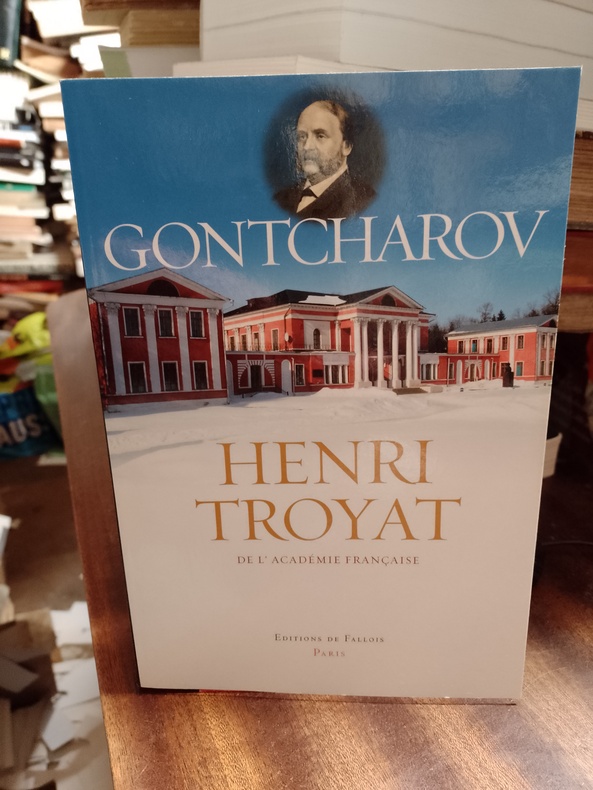
2012LITTRUSSE450123Paris, Editions de Fallois, 2012, 15,5 x 22,5, 224 pages sous couverture souple illustrée.
27865aafWien, L.W. Seidel, 1901, in-8°, VIII + 212 S., Bibl.-Marke ‘K. u. k. Kriegsarchiv’ auf Vorsatz, Bibl.-Stempel auf Titel, hs. Vermerk auf Titel-Verso, Halbleinen mit Ecken u. gelbem Marmorpapier, Autor, Titel u. Erscheinungsjahr auf Rücken.
23026Norrkoeping, Eric Biornström, (below, on printed cover: En Commission - Londres, Trübner & Co), 1863. (2), iv, (2, blank), 96 pp. 8vo. Modern boards, original covers preserved. Anderson 302; Kilgour 436; Zaleski 197. First separate edition: Herzen's letters to Turgenev, which first appeared in My Past and Thoughts, published here with a new introduction. 'Herzen's renewed interest in Russia's past and future was closely linked to his bitter disappointment in the "old world". He was a discerning critic of bourgeois society, even if his strictures were not always fair. The modern reader is struck especially by certain far-sighted observations, that seem to anticipate criticism of a complex phenomenon we have come to refer to as "mass culture". Herzen's most interesting comments in this respect are to be found in a series of articles entitled Ends and Beginnings, in which he conducted a polemic with Ivan Turgenev, who had become the moral authority for liberal Westernizers in Russia' (Andrzej Walicki, A History of Russian Thought, Oxford, Clarendon Press, 1980, p. 170). Alexander Herzen (1812-70) was a prominent nineteenth-century Russian social thinker and is known as the 'father of Russian socialism.' Early in his intellectual development, Herzen was influenced by German idealist thinkers such as Schiller and Schelling. He believed in the autonomy and dignity of the individual and opposed forces, such as family and state, that oppressed the individual. Later, under the influence of French socialist thinkers such as Charles Fourier, Herzen's thought became more radical. Herzen projected his earlier concern for the oppressed individual onto society at large and he became a supporter of socialism. The socialism he envisioned was a loose federation of self-governing communes. Only in such a system could the ideal society be achieved- according to Herzen that society would be a free association of individuals which provided for the full flowering of each personality. Herzen initially placed his hopes for this future order in the European socialist movement. After the failure of the 1848 revolutions to achieve socialist principles, however, Herzen became disillusioned about European prospects and turned his attention to Russia. Herzen argued that socialist transformation would actually come first to Russia because communal institutions such as the peasant commune survived and bourgeois attitudes hadn't yet emerged. This sense of the advantages of Russian 'backwardness' was influential among the Populists in the 1870s. Herzen has been called a 'gentry revolutionary.' The illegitimate son of a wealthy landowner, Herzen viewed the gentry as a progressive class. The revolution he envisioned was for the people but not necessarily by them. Also, his socialism was a national destiny rather than a class one, and because he promoted the value of individualism in collectivist form--in other words, the full flowering of the individual could best be realized in a socialist order. Among Herzen's works are From the Other Shore (1848-50) and The Russian People and Socialism and his autobiography, My Past and Thoughts.He founded a periodical, the famous Kolokol, in whose pages the free word first appeared in the Russian language, unhampered by censor or police, exposing the government's secrets, criticizing bureaucratic abuses, approving the good intentions of the czar, the 'liberator', and trying to dictate to him a reform program.
1996ARTTTTT232311023Paris, Bibliothèque des arts, "Art moderne", 1976, 25,5 x 34,5, 134 pages sous percaline éditeur et jaquette illustrée. Iconographie noir & blanc et couleurs.
84044Genève, 1981, 235x165mm, 313pages, broché. Bel exemplaire.
1972104401972 Moscou, 1972; in-8° carré , pleine toile éditeur illustrée du portrait de l'auteur, titre en rouge au dos, jaquette de papier rouge au dos et 1er plat illustré d'un dessin en noir et blanc, titre en noir, 2ème plat de papier noir; 174pp. (1)f. Nombreuses illustrations en brun, brun et noir et noir de Matvey Borisovich Mazrukho (1911-200) . La pièce “ Mystery-bouffe“ fut publiée pour la 1ère fois en 1918, puis revue en 1921.
1962152091962 Paris, Librairie des Cinq Continents, et Clamart, Cahiers d'études littéraires, collection des Études critiques, 1962. Édition originale, un des 5 exemplaires numérotés sur papier de Madagascar, premier grand papier. In-8 broché de 39 pp. + 4 pp. de fac-similés hors texte. Avec un bel envoi autographe signé de l'auteur. Très bon état.
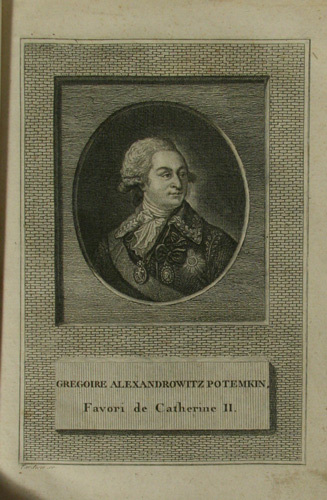
88422aafParis, Librairie Stéréotype, chez H. Nicolle, 1808, in-8vo, frontispice gravé (portrait ajouté de Gr. Alex. Potemkin par Tardieu sc.) + VIII + 303 p., reliure en plein veau, dos orné or avec pièce de titre rouge, coiffe sup. manque avec restauration rudimentaire. Bel état intérieur sans rousseurs.
45086Payot 1928, in-8 broché, 384 p. (petit manque sans gravité en bas du premier plat de couverture, sinon bon état) Première édition française ; sur bon papier. Témoignage de premier ordre sur la famille impériale, l'auteur ayant été la confidente de la tsarine.
185398641853 Paris, Librairie Hachette, 1853; in-16° broché, couverture vert imprimée en noir au dos et 1er plat, et locomotive noire au 2ème plat, gardes de papier jaune; (vi), 98pp., (1)f. et 4pp. (catalogue Hachette). 2 petits manques de papier en marge supérieure du titre (dus à une mauvaise découpe),rousseurs rarissimes. La célèbre couverture de la Bibliothèque des chemins de fer est en très bon état.
128406aaf(Lith. Honegger d’après Schweizer del.), um 1845, 25x18 cm, lithographie originale / Original Lithografie, leicht stock- fleckig, 1 Blatt (32.5x24 cm).