(FREGOLENT Alessandra) -MareMagnum

17 864 résultats
Milano, Il Sole 24 Ore, 2005, 8vo brossura con copertina illustrata a colori, pp. 159 completamente illustrato a colori (anche con tavole a pagina doppia) .
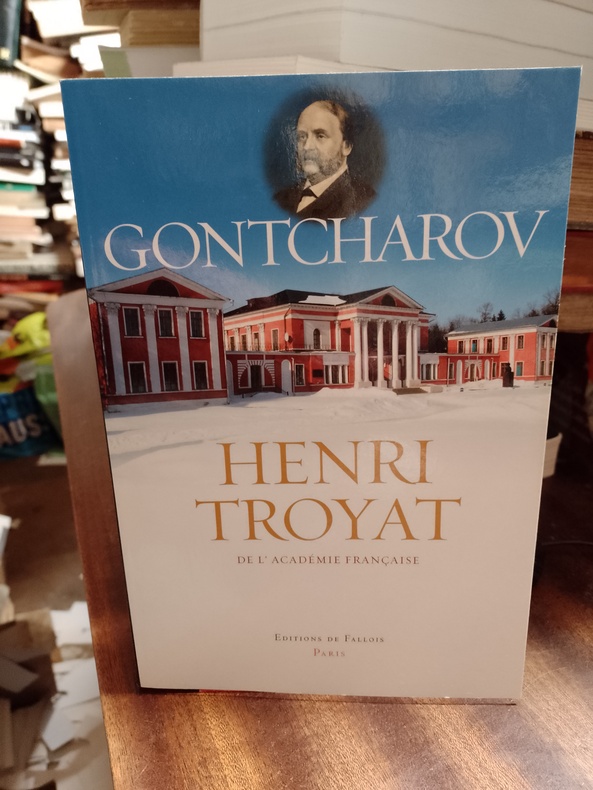
2012LITTRUSSE450123Paris, Editions de Fallois, 2012, 15,5 x 22,5, 224 pages sous couverture souple illustrée.
Softcover in-8, 341 pp., broche, couv. Tres bel exemplaire [CL-7]
Milano, Fondazione Feltrinelli, 1997, 8vo brossura editoriale con copertina illustrata, pp. 281 con illustrazioni f.t.
27865aafWien, L.W. Seidel, 1901, in-8°, VIII + 212 S., Bibl.-Marke ‘K. u. k. Kriegsarchiv’ auf Vorsatz, Bibl.-Stempel auf Titel, hs. Vermerk auf Titel-Verso, Halbleinen mit Ecken u. gelbem Marmorpapier, Autor, Titel u. Erscheinungsjahr auf Rücken.
23026Norrkoeping, Eric Biornström, (below, on printed cover: En Commission - Londres, Trübner & Co), 1863. (2), iv, (2, blank), 96 pp. 8vo. Modern boards, original covers preserved. Anderson 302; Kilgour 436; Zaleski 197. First separate edition: Herzen's letters to Turgenev, which first appeared in My Past and Thoughts, published here with a new introduction. 'Herzen's renewed interest in Russia's past and future was closely linked to his bitter disappointment in the "old world". He was a discerning critic of bourgeois society, even if his strictures were not always fair. The modern reader is struck especially by certain far-sighted observations, that seem to anticipate criticism of a complex phenomenon we have come to refer to as "mass culture". Herzen's most interesting comments in this respect are to be found in a series of articles entitled Ends and Beginnings, in which he conducted a polemic with Ivan Turgenev, who had become the moral authority for liberal Westernizers in Russia' (Andrzej Walicki, A History of Russian Thought, Oxford, Clarendon Press, 1980, p. 170). Alexander Herzen (1812-70) was a prominent nineteenth-century Russian social thinker and is known as the 'father of Russian socialism.' Early in his intellectual development, Herzen was influenced by German idealist thinkers such as Schiller and Schelling. He believed in the autonomy and dignity of the individual and opposed forces, such as family and state, that oppressed the individual. Later, under the influence of French socialist thinkers such as Charles Fourier, Herzen's thought became more radical. Herzen projected his earlier concern for the oppressed individual onto society at large and he became a supporter of socialism. The socialism he envisioned was a loose federation of self-governing communes. Only in such a system could the ideal society be achieved- according to Herzen that society would be a free association of individuals which provided for the full flowering of each personality. Herzen initially placed his hopes for this future order in the European socialist movement. After the failure of the 1848 revolutions to achieve socialist principles, however, Herzen became disillusioned about European prospects and turned his attention to Russia. Herzen argued that socialist transformation would actually come first to Russia because communal institutions such as the peasant commune survived and bourgeois attitudes hadn't yet emerged. This sense of the advantages of Russian 'backwardness' was influential among the Populists in the 1870s. Herzen has been called a 'gentry revolutionary.' The illegitimate son of a wealthy landowner, Herzen viewed the gentry as a progressive class. The revolution he envisioned was for the people but not necessarily by them. Also, his socialism was a national destiny rather than a class one, and because he promoted the value of individualism in collectivist form--in other words, the full flowering of the individual could best be realized in a socialist order. Among Herzen's works are From the Other Shore (1848-50) and The Russian People and Socialism and his autobiography, My Past and Thoughts.He founded a periodical, the famous Kolokol, in whose pages the free word first appeared in the Russian language, unhampered by censor or police, exposing the government's secrets, criticizing bureaucratic abuses, approving the good intentions of the czar, the 'liberator', and trying to dictate to him a reform program.
12mo. Iv, 27-116 pages. SUBJECT (S) : Jews - education - United States. "Reprinted from the American Jewish year book 5697." Light water damage throughout - pages are wrinkled and dye from covers has run on end papers, small tears at ends of spine, front hinge broken, ex library. Readable. Good condition. (AMR-24-11)
Original Cloth. 4to. 159 pages. 27 cm. First edition. In Yiddish. Inscribed by Grade in year of publication. Poems by Chaim Grade. "Der mentsh fun fayer (The Man of Fire; 1962) includes a moving elegy for the murdered Soviet Yiddish writers, lyrics about the American landscape, and the haunting voice of the dead who impress upon him the obligation to keep their memory alive. " - YIVO Encyclopedia. Published by Cyco-Tsiko, printed by Shulsinger Bros. With four illustrations and cover design by Benn. Attractively printed and bound. Subjects: Yiddish poetry. Chaim Grade. Light soiling to edges of binding, otherwise very fresh and clean. Very good condition. (YID-21-47)
8vo. Xii, 244 pages. Second printing. Tissued frontispiece portrait of the author. Illustrated with plates. Index. Autobiography of Kraus, a Jew who immigrated to the U. S. From Bohemia at the age of 15. Covers missing, ex library. End papers chipped. Internally sound. Good condition. (AM-24-7)
8vo. Xii, 244 pages. Second printing. Tissued frontispiece portrait of the author. Illustrated with plates. Index. Autobiography of Kraus, a Jew who immigrated to the U. S. From Bohemia at the age of 15. Covers missing, light water stain throughout. Ex library with blindstamps. Good condition. (AM-24-8)
Original Wraps. 8vo. [164-176] [i. E. 12] pages. 23 cm. First separate edition. In Yiddish. Offprint from Inzikh Numer 56 (Dec. 1940) , p. 164-176. A review and critique of Moyshe (Morris) Bassin's anthology of American Yiddish poetry - Amerikaner Yidishe Poezye (1940) . Contains the bookstamp of the author, Minkoff. Nahum Baruch Minkoff (1893-1958) was a Yiddish writer, poet, literary historian and critic, editor of the Yiddish literary monthly Zukunft and one of the founders of the In Zikh group of Yiddish poets. Subjects: Yiddish poetry. Bassin, Morris, 1889-1963. Amerikaner yidishe poezye. OCLC lists 5 copies (Nypl, Illinois, HUC, CJH, JTSA) . Light soiling and edge wear to wraps, internally clean and fresh. Condition. (YID-21-39) xx
1916107220BBNew York, Metropolitan Ballet Company and Morris Gest, (1916). 4°. [20] Bl. mit Frontipiz, 15 (1 doppelblattgr.) Farbtafeln von L. Bakst und Martin Bierbaum und 10 Portrait-Tafeln in Heliographie ("engraved and printed by The Sackett & Whilhelms Company") von Léonide Massine, sowie 2 (1 farb.) Werbeanzeigen. Orig.-Kartonumschlag mit Kordelheftung und goldgepr. Deckeltitel und Vignette. 2 Hefte.
San Pietroburgo, Alfa-Colour, 1998, 8vo brossura con copertina illustrata a colori, pp. 143, numerose illustrazioni a colori nel testo.
1996ARTTTTT232311023Paris, Bibliothèque des arts, "Art moderne", 1976, 25,5 x 34,5, 134 pages sous percaline éditeur et jaquette illustrée. Iconographie noir & blanc et couleurs.
In-8 p. (mm. 220x140), brossura muta coeva (piccole manc., sciupata), pp. XIV,499. "Prima edizione" della versione italiana. Esempl. con barbe, con aloni e fioriture.
84044Genève, 1981, 235x165mm, 313pages, broché. Bel exemplaire.
1972104401972 Moscou, 1972; in-8° carré , pleine toile éditeur illustrée du portrait de l'auteur, titre en rouge au dos, jaquette de papier rouge au dos et 1er plat illustré d'un dessin en noir et blanc, titre en noir, 2ème plat de papier noir; 174pp. (1)f. Nombreuses illustrations en brun, brun et noir et noir de Matvey Borisovich Mazrukho (1911-200) . La pièce “ Mystery-bouffe“ fut publiée pour la 1ère fois en 1918, puis revue en 1921.
3 Voll. In-8°, legatura coeva in mezza pelle (da restaurare), pp. (4)xiij(1)-355(7), (4)295(3) e (4)viij-516(2). Al frontespizio del Terzo Tomo il sottotitolo è il seguente: Contenant nombre d`anecdotes et de faits historiques sur la guerre de Perse, la marche des armées russes contre la France, la disgrace et la mort de Souworow, les opérations de finances de Paul I, sa vie domestique, et sa fin tragique. Suivi de pièces justificatives, parmi lesquelles se trouve la constitution pour la famille impériale. Edizione originale. Legature da restaurare, con mancanze ai dorsi, segnatamente dei volumi primo e terzo. Piccolo leggero aloncino al margine inferiore delle prime quattro carte del primo volume; per il resto ottimo esemplare, marginoso e abbastanza fresco. Charles François Philibert MASSON (Blamont, 1762 - Coblenz, 1807) fu in Russia istitutore dei figli del Conte Nikolai Saltykov, Ministro della Guerra. Divenne assai popolare tra l'élite di San Pietroburgo, per il suo gusto nella letteratura e la sua brillante conversazione. Fu in seguito segretario privato del Granduca Alessandro di Russia, il futuro Zar Alessandro I. Malgrado le sue conoscenze, Masson fu espulso dalla Russia dallo Zar Paolo I, con l'accusa d'essere simpatizzante della Rivoluzione Francese. Visse in Germania, per un po', prima di fare ritorno in Francia dove pubblicò queste sue celebri Mémoires.
Un volume (su tre) in 8vo, 12x20 cm, di XVI-444 pagine; ritratto inciso all'antiporta “avant la lettre”. Questo terzo volume è di notevole interesse storico, "contenant nombre d'anecdotes et de faits historiques sur la guerre de Perse, la marche des armées russes contre la France, la disgrace et la mort de Souworow, les opérations de finances de Paul I, sa vie domestique et la fin tragique. Suivi de Pièces justificatives, parmi lesquelles se trouve la constitution pour la famille impériale". Bella legatura coeva in mezza pelle, dorso liscio ornato con fregi a secco e dorati.
Milano, Fabbri, 1980, sei volumi in-4to legatura editoriale finta pelle con impressioni a secco e titoli ai dorsi, pp. 1504 completamente illustrati in nero e a colori.
Milano, Garzanti Editore, 1960. Nel 1956 David Douglas Duncan fu il primo ad ottenere dai sovietici il permesso di usare senza restrizioni la macchina fotografica all’interno del Cremlino. Eccezionale testimonianza delle ricchezze inestimabili custodite all’interno del Cremlino. In 4to (cm. 33); cop. orig. rigida in tutta tela con titolo al dorso; pp. 170. Con 84 splendide tavole a colori applicate. Piccolo difetto al dorso restaurato con nastro adesivo trasparente, per il resto ottima copia. Ax
Mendrisio, Archivio del Moderno - Accademia di architettura, 8 aprile - 7 maggio 2000, in-8, pp. (56). Cartella in cartoncino editoriale contenente il testo su fogli sciolti. Con illustrazioni a col. e bibliografia. Ottime condizioni.
Zürich, Kunsthaus, 17. Dezember 1966 - 26. Februar 1967, in-8, br., pp. 122. Con 9 cartine e 74 tavv., di cui 16 a col., glossario.
Milano, Il Saggiatore, 1965, due volumi in-8vo br. edit. pp. 1247
1985FAKS0193Sredne-Uralskij-Buchvlg. 1985. Fol., 210(2) S. (Einleitung, faks. Textwiedergabe, 16 Graphiken von Witalij WOLOWITSCH, 1 Doppelbl. Resume in Englisch, Französisch und Deutsch), OLn. m. Deckelbild u. gepr. Tit. in OKartonschub. nur an diesem leichte Gebrauchsspuren, sonst ausgezeichneter Zustand. Der vorliegenden Band enthält eine vorlagengetreu nachgebildete Textwiedergabe der von Mussin-Puschkin vorbereitetenund ausgeführten Erstauflage des "Igor-Liedes" und eine dichterische Übertragung des Dichters Alexej Domnin (1928-1982). Die Ausgabe bietet außerdem eine rhythmische Übertragung des altrussischen Textes von Andrej Komlew nach der akzentologischen Rekonstruktion von Prof. Kolessow, wo anhand des "Lied"-Textes die meisten altrussischen Betonungen restauriert sind. [2 Warenabbildungen]