83 résultats
1961X116799Erevan [Yerevan], 1961 [130] + 426pp., 27cm., text in Armenian (with a second title page in Russian in Cyrillic script: "Istorija Armenii"), publisher's hardcover in green cloth, text is clean and bright, good condition, First critical edition, cfr. OCLC 68132898, weight: 1.1kg., X116799
1999X111390Nashville, The Battery Press 1999 xxii + 614pp. Illustraed with 39 maps & 8 plates out of text + one large folding map loose in rear pocket, 24cm., publisher's hardcover with gilt lettering, reprint of the original Cambridge University Press 1953-edition, text and interior are clean and bright, good condition, weight: 1.2kg., X111390
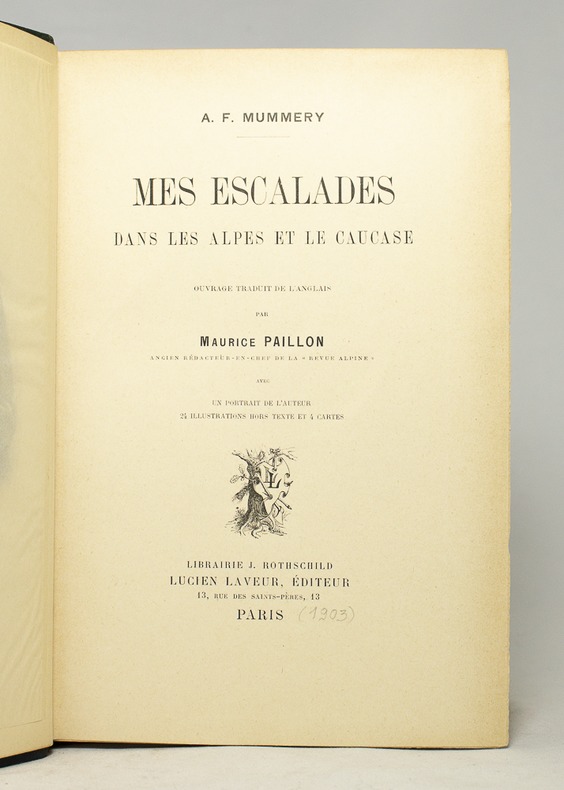
1903AUB-2476Paris, éd. Lucien Laveur s.d. (1903). Bon et gd in-8 broché, couverture ornée d'éd., XL + 331 pages avec annexes + planches. Couverture usagée. Ttaduction et présentation par Maurice PAILLON.
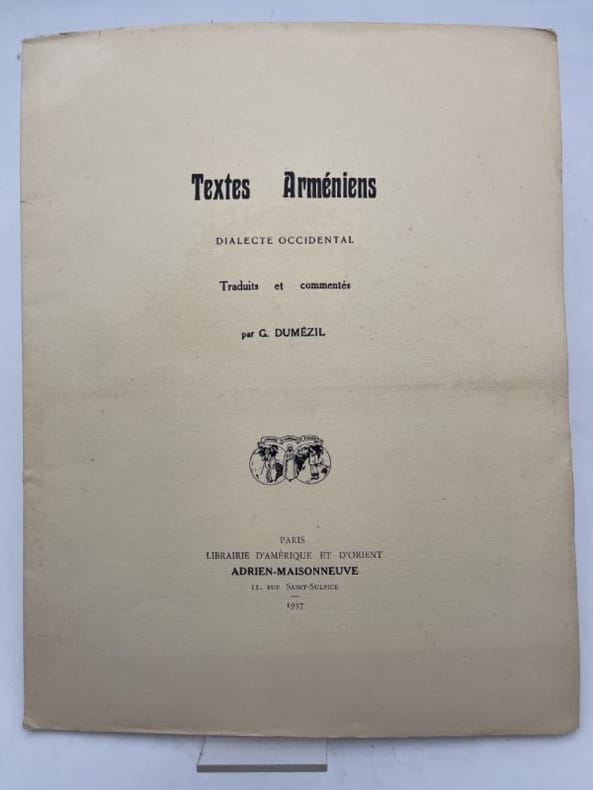
1937187992Adrien Maisonneuve Paris, Adrien Maisonneuve, 1937. In-4 carré broché de 39 pages. Édition originale rare des Textes arméniens publiés par Georges Dumézil, grand philologue, historien des religions et comparatiste. Cet ouvrage rassemble et commente un ensemble de textes en langue arménienne, traduits, annotés et accompagnés dune introduction critique. Il sinscrit dans les premiers travaux orientalistes de Dumézil, avant ses grandes synthèses sur les structures indo-européennes. Louvrage illustre son érudition linguistique et son intérêt pour les littératures du Caucase et de lArménie, alors peu accessibles aux chercheurs occidentaux. Témoignage des débuts scientifiques de Georges Dumézil, futur académicien et grande figure des études indo-européennes.
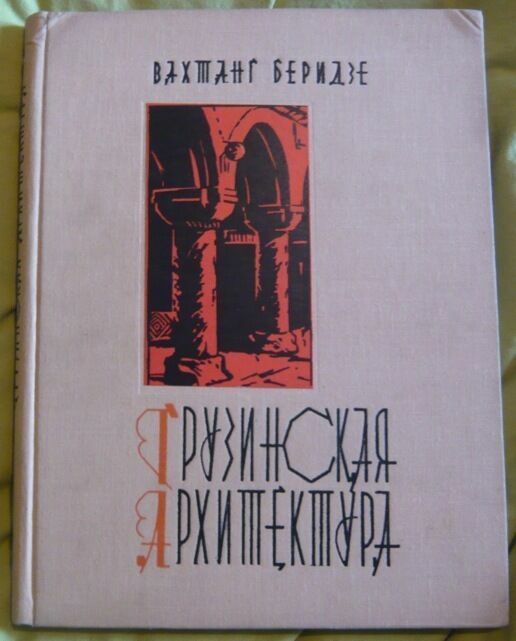
196755271967. Tbilissi édition non mentionnée 1967 - Cartonné 23 cm x 30 cm 94 pages - Texte en français et en russe de Wachtang Beridze - 182 photos noir et blanc et 49 figures in-texte - Bon état
190316667Paris, Lucien Laveur, éditeur, 1903. In-8 de XL-327-[7] pages, demi-maroquin bleu. Dos passé, griffure sur le premier plat.
1936AUB-3638Grenoble, Didier & Richard 1936. Bel exemplaire broché, couverture ornée d'éd., fort in-4 no 559/1500 sur Rives B.F.K., XXIX +195 pages + planches.
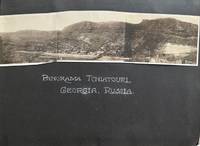
192558598Tchiatouri Georgia & Wallace ID: Georgian Manganese Mining Co. Day Mining Co. ca. 1925-1929. Thick oblong 4to. 11.75 x 8.25 x 2.25 in. 168 pp unpaginated. on thick black paper stock. With 635 silver gelatin photographs sized from 2 x 3 in. up to 8 x 10 in. with the majority sized 3.25 x 5.25 in. nearly all annotated below in neat white ink lettering some w/ annotations somew/in negative indicating negative number those partially lifed from black paper have ink & pencil annotations on versos matching the white ink captions some are RPPC’s w/ captions w/in the negatives at lower fore-edges of image and also present is an 8 page folded manuscript inventory documenting about 400 of the photos closely matching most of the captions. Contemporary flexible black calf Badger post-binder black enamel coated screw-posts a few leaves loose others proud some photos overlapping occasional closed tears a few inner joints neatly repaired at gutter still an outstanding exemplar. This exceptional album provides an essential documentary record of the Soviet era Caucasus of Georgia Azerbaijan Armenia and Abkhazia just a few years after the 11th Red Army invaded Georgia and after a one-week offensive Georgian Bolsheviks took over the country. The album opens with a composite panoramic photo of Tchiatouri notably without the rusting overhead tramways installed by Stalin during the 1950’s. Following the formation of Georgia SSR Tchiatouri and the surrounding regions held some of the largest metallurgical grade manganese in the World and in the 1920’s the Georgian Manganese Company. The subsequent photos depict several of the homes occupied by mine personnel the surrounding region and the main company offices. Many of the photos focus on the local peasants bazaars markets Georgian families fruit markets animal markets and more. Additional photos depict the foreign ex-patriot life in Batum Batumi Adjara with birds-eye views of the city Orthodox churches converted at the time to a Men’s Club as well as tea and banana plantations. Still more photos show Armenian refugees Jewish cigarette boys wine merchants carrying wine in pig skins ox carts horse-drawn street cars village blacksmiths gypsy fortune tellers trained bears and even the local kerosene vendor wagon. Mining operations in Seminoff and Karuto are shown with ore being hauled by ox cart loaded onto rail cars ore crushing mill as well as views of Perevisi Chokruti Shukrut and other ore bearing plateaus their Karuto house. Of additional interest are the photos of the Tchiatouri Monastery a cliffside still functioning convent known as the Mgviemevi Convent featuring a 13th-Century two-nave basilica native village and connecting ore tramways. A series of photos is also devoted to the old Sachakari Modinakhe Castle ruins both inside and out fortifications and local cave dwellings all much more severely damaged decades later in the 1991 earthquake. The compiler has also included photos of the market homes and street scenes in Tiflis as well as the old Roman Walls the local prison Kurdish homes and camel herds along the railway to Moscow scenes along the railroad line between Tiflis & Baku and the Caspian sea port of Russian caviar at Petrovsk. The Harriman Georgian Manganese Co. maintained offices in Moscow and in fact W. Averell Harriman 1891-1986 himself negotiated with Leon Trotsky prior to Lenin’s death and the rise of Stalin forcing him into exile in 1929 for the Manganese mining rights. Many of the photos reveal an extended winter trip through Moscow with a visit to the Kremlin the newly built Lenin’s tomb Red Square the Bolshoi Grand Theater and even a visit to the Polish & Russian Border. After a short trip through France in the midst of rebuilding and Great Britain the couple voyage to Greece Turkey and Palestine. Photos depict Turkish sailboats mosques and street views in Samsun Turkey Constantinople from the Bosphorus the Galata Bridge the Sultan’s palace and Seraglio the Hagia Sophia as well as the old walls. While traveling by rail through Syria and Palestine a series of photos is captioned that the railroad was “made famous by Lawrence in the Revolt of the Desert these pictures taken between Damascus and Tiberius.†The visit through Palestine shows farms Jerusalem the Dome of the Rock Wailing Wall street scenes and the Church of the Nativity. This is followed by tour down the Nile visits to the Pyramids as well as later stops in Somalia Sri Lanka Singapore Saigon Indo-China Hong Kong and Japan. The album is unsigned without ownership markings and has been attributed to Jack Powers and his wife Ruth Fitzgerald Powers 1895-1967 by an unrelated family who held the album. In addition at the rear of the album there are numerous photos of the Day-Hale Co. hunting trips on the Locksaw River in Idaho which included Henry Day Jack Powers E.L. Hale and Dr. Max Smith with Powers clearly identified and closely matching several of the photos depicted in the other parts of the album. Powers began working as a machinist and mechanic with an auto dealership before World War I but by the early 1920’s was actively working as machinery trouble-shooter for Tamarack Custer Mining Co. ad Day Mining Co. subsidiary and also worked as a specialist on compressors. Harriman and his younger brother Roland owned mining operations in Soviet Georgia copper mines in Silesia oil fields in Iran and even a power plant in Poland but after the stock market crash in 1929 they merged with their biggest competitor to become Brown Brothers Harriman & Co. He is perhaps best remembered for development of the Sun Valley Lodge and ski resort in Ketchum Idaho. See: Strishkov & Levine The Manganese Industry of the U.S.S.R. 1986 pp. 7-10; Day Mines Inc. Manuscript Group 306 Records 1921-1985 Univ. of Idaho Special Collections & Archives; Rudy Abramson Spanning the Century: The life of W. Averell Harriman 1891-1986 1992. Georgian Manganese Mining Co., Day Mining Co., unknown