17 résultats
a78366Stockholm 1854 Bonniers Forlag. 16mo 16.5 x 10 cm original printed wraps. Contents: 1. Special karta af Krim opens to 29 x 23 cm. VG plus. 2. Dito af Svarta Hafvet opens to 16 x 22 cm. Near Fine. 3. Plan af Sebastopol och dess omgifningar opens to 32x 38 cm. Fine. 4. Panorama och Utsigt af Sebastopol opens to 22 x 15 cm. VG plus. 5. Underrattelser om dess orter 19 pages of text describing Krim in detail in Swedish. All maps and panorama views are VG to Fine. Owner signed on front. Rear cover panel present but detached. Book itself is Good a bit worn. . paperback
AQ29397Two volumes. Manuscript on paper. 109; 119pp. Contemporary half- morocco and morocco-backed marbled paper boards respectively. Cocked and a little soiled remaining tight some rear leaves removed from earlier volume. The first and more interesting of this pair of manuscript journals narrates a voyage from London to Balaklava in the transport ship Mary-Ann of Bristol commanded by Captain Lambert. Having departed the English coast on June 9th 1856 the Mary-Ann passes Cape St Vincent on June 16th bound for the Crimea. By the next day she sails abreast of the strait passing the Rock of Gibraltar by the third day. Another transport ship the Onward is pulled alongside by the Chief Mate returning from the Crimea with troops and horses onboard bound for for England. The message is relayed to the captain that ‘all the troops were waiting in Constantinople for ships to convey them home'. So begins the journal of Second Mate Thomas Nunn Hall recently married on his voyage to Balaklava. Hall mentions the other ships he encounters on voyage - the Lady Eglington is signalled and he notes he remembers her from a tour of the Dardanelles the previous year. Also mentioned are the ships sailing in company with the Mary-Ann The Herefordshire 'lazy 1800 tons' being most named. It becomes more apparent that our narrator - a most unwilling and witless seaman - has sailed this voyage before. Though it remains unclear if Hall served actively in the war he later reminisces about 'standing on the deck of the ship 'Chalmers'.from the Crimea to the Holy Land instead of being on the poop deck of the 'Mary-Ann'.' By the 6th of July they pass the island of Malta three days later sight the Greek mainland though it takes a further four days for Mytilene to come into view. Finally they come to anchor at the Dardanelles and by July 20th reach the Sea of Marmara to take on several guests including a Mrs Hunter “a fine handsome woman of about 26 years of age” whom Hall determines to make speak to him. Fortunately she seems none too perturbed. The troops previously thought to be collected are nowhere to be found and the Mary-Ann is to take on stores for England instead. Steam tug Helen Fancet tows the ship up the Golden Horn though a mishap takes place damaging the ship. They later anchor up among the ships of war. During an evening walk in Pera he witnesses some society event with the French military band playing to 'hundreds of people' including 'many beautiful and elegantly dressed English and French ladies'. Given the relative paucity of interesting narrative presented in his frequently introspective often 'vexed' and occasionally calamitous account we should perhaps consider it a blessing that the journal ends before the voyage was completed. . 8vo. hardcover
1021700940.Gpaperback. Good. Access codes and supplements are not guaranteed with used items. May be an ex-library book. paperback
102004800X.Ghardcover. Good. Access codes and supplements are not guaranteed with used items. May be an ex-library book. hardcover
19931WT-VMA-EC51993. Paperback. Good. 1993 paperback. Average external wear pages yellowed with some minor creases and blemishes binding firm. paperback
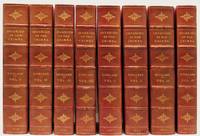
186330083Edinburgh and London: William Blackwood and Sons 1863-1887. 8 volumes. First Edition of each of the eight volumes. With a profusion of maps and plans throughout. 8vo handsomely bound in three-quarter red calf over red cloth covered boards the spines with raised bands central gilt ornamental tooling in the compartments two compartments lettered in gilt gilt rules to the joins marbled endleaves top edges gilt with the signification of the old Bournemouth bookseller of the late 1800's Horace G. Commin. A handsome set well preserved the text-blocks and illustrated portions all in very pleasing condition the bindings with very little evidence of wear hinges all strong and the bindings tight and sound. A COMPLETE SET OF THE FIRST EDITIONS OF THIS HISTORICALLY IMPORTANT AND WELL RESPECTED WORK. PERHAPS THE MOST IMPORTANT OF ALL WRITINGS ON THE CRIMEA. Alexander William Kinglake was an English travel writer and historian. He was educated at Eton College and Trinity College Cambridge. was called to the Bar in 1837 and built up a thriving legal practice which in 1856 he abandoned to devote himself to literature and public life. His magnum opus was this great work--The Invasion of Crimea: Its Origin and an Account of its Progress down to the Death of Lord Raglan in 8 volumes published from 1863 to 1887 by Blackwood Edinburgh one of the most effective works of its class. The History which Geoffrey Bocca describes as a book "by which no intelligent man can fail immediately to be fascinated no matter to what page he might open it" is presented here.<br> Kinglake's subject is the Crimean War of the mid-nineteenth century which was fought from October 1853 to February 1856 in which Russia lost to an alliance of the Ottoman Empire France the United Kingdom and Piedmont-Sardinia. The immediate cause of the war involved the rights of Christian minorities in Palestine then part of the Ottoman Empire with the French promoting the rights of Roman Catholics and Russia promoting those of the Eastern Orthodox Church. Longer-term causes involved the decline of the Ottoman Empire the expansion of the Russian Empire in the preceding Russo-Turkish Wars and the British and French preference to preserve the Ottoman Empire to maintain the balance of power in the Concert of Europe. <br> The churches worked out their differences with the Ottomans and came to an agreement but both the French Emperor Napoleon III and the Russian Tsar Nicholas I refused to back down. Nicholas issued an ultimatum that demanded the Orthodox subjects of the Ottoman Empire be placed under his protection. Britain attempted to mediate and arranged a compromise to which Nicholas agreed. When the Ottomans demanded changes to the agreement Nicholas recanted and prepared for war. <br> The Crimean War was one of the first conflicts in which military forces used modern technologies such as explosive naval shells railways and telegraphs and it was one of the first to be documented extensively in written reports and in photographs. The war quickly became a symbol of logistical medical and tactical failures and of mismanagement. The reaction in Britain led to a demand for the professionalizing of medicine most famously achieved by Florence Nightingale who gained worldwide attention for pioneering modern nursing while she treated the wounded.<br> The war also marked a turning point for the Russian Empire. The war weakened the Imperial Russian Army drained the treasury and undermined Russia's influence in Europe. The empire would take decades to recover. Russia's humiliation forced its educated elites to identify its problems and to recognize the need for fundamental reforms. They saw rapid modernization as the sole way to recover the empire's status as a European power. The war thus became a catalyst for reforms of Russia's social institutions including the abolition of serfdom and overhauls in the justice system local self-government education and military service. <br> As the Ottoman Empire steadily weakened during the 19th century the Russian Empire stood poised to take advantage by expanding southward. In the 1850s the British and the French Empires were allied with the Ottoman Empire and were determined to prevent that expansion. The historian A. J. P. Taylor argued that the war had resulted not from aggression but from the interacting fears of the major players:<br> "In some sense the Crimean war was predestined and had deep-seated causes. Neither Nicholas I nor Napoleon III nor the British government could retreat in the conflict for prestige once it was launched. Nicholas needed a subservient Turkey for the sake of Russian security; Napoleon needed success for the sake of his domestic position; the British government needed an independent Turkey for the security of the Eastern Mediterranean. Mutual fear not mutual aggression caused the Crimean war."<br> Field Marshal FitzRoy James Henry Somerset 1st Baron Raglan known before 1852 as Lord FitzRoy Somerset as a junior officer served in the Peninsular War and the Waterloo campaign latterly as military secretary to the Duke of Wellington. He also took part in politics as Tory Member of Parliament for Truro before becoming Master-General of the Ordnance.<br> He became commander of the British troops sent to the Crimea in 1854: his primary objective was to defend Constantinople and he was also ordered to besiege the Russian port of Sevastopol. After an early success at the Battle of Alma a failure to deliver orders with sufficient clarity caused the fateful Charge of the Light Brigade at the Battle of Balaclava. <br> Dissatisfaction with the conduct of the war was growing with the public in Britain and other countries and was worsened by reports of fiascos especially the devastating losses of the Charge of the Light Brigade at the Battle of Balaclava. On Sunday 21 January 1855 a "snowball riot" occurred in Trafalgar Square near St Martin-in-the-Fields in which 1500 people gathered to protest against the war by pelting buses cabs and pedestrians with snowballs. When the police intervened the snowballs were directed at the constables. The riot was finally put down by troops and police acting with truncheons. In Parliament the Conservatives demanded an accounting of all soldiers cavalry and sailors sent to the Crimea and accurate figures as to the number of casualties sustained by all British armed forces in Crimea especially concerning the Battle of Balaclava. When Parliament passed a bill to investigate by the vote of 305 to 148 Aberdeen said he had lost a vote of no confidence and resigned as prime ministe. The veteran former Foreign Secretary Lord Palmerston became prime minister and took a hard line wishing to expand the war foment unrest inside the Russian Empire and reduce the Russian threat to Europe permanently. Sweden–Norway and Prussia were willing to join Britain and France and Russia was isolated.<br> France which had sent far more soldiers to the war and suffered far more casualties than Britain had wanted the war to end as did Austria. Negotiations began in Paris in February 1856 about seven months after Lord Raglan's death and were surprisingly easy. France under the leadership of Napoleon III had no special interests in the Black Sea and so did not support the harsh British and Austrian proposals.<br> Peace negotiations at the Congress of Paris resulted in the signing of the Treaty of Paris on 30 March 1856. In compliance with Article III Russia restored to the Ottoman Empire the city and the citadel of Kars and "all other parts of the Ottoman territory of which the Russian troop were in possession". Russia returned the Southern Bessarabia to Moldavia. By Article IV Britain France Sardinia and Ottoman Empire restored to Russia "the towns and ports of Sevastopol Balaklava Kamish Eupatoria Kerch Jenikale Kinburn as well as all other territories occupied by the allied troops". In conformity with Articles XI and XIII the Tsar and the Sultan agreed not to establish any naval or military arsenal on the Black Sea coast. The Black Sea clauses weakened Russia which no longer posed a naval threat to the Ottomans. The Principalities of Moldavia and Wallachia were nominally returned to the Ottoman Empire and the Austrian Empire was forced to abandon its annexation and to end its occupation of them. The Treaty of Paris admitted the Ottoman Empire to the Concert of Europe and the great powers pledged to respect its independence and territorial integrity. wiki<br> Tuckwell wrote in 1902 that In 1854 Kinglake "accompanied Lord Raglan to the Crimea.He had hoped to go in an official position as non-combatant but this was refused by the authorities. His friend Lord Raglan whose acquaintance he had made while hunting with the Duke of Beaufort’s hounds took him as his private guest. Arrested for a time at Malta by an attack of fever he joined our army before hostilities began rode with Lord Raglan’s staff at the Alma fight and accompanied the chief in his visit of tenderness to the wounded when the fight was over. Throughout the campaign the two were much together. There are often slight but unmistakable signs of Kinglake’s presence as spectator and auditor of Lord Raglan’s deeds and words; his affection and reverence for the great general animate the whole; in outward composure and latent strength the two men resembled each other closely. The book is in fact a history of Lord Raglan’s share in the campaign; begun in 1856 at the request of Lady Raglan the narrative ends when the Caradoc with the general’s body on board steams out of the bay “Farewell†flying at her masthead the Russian batteries with generous recognition ceasing to fire till the ship was out of sight. “Lord Raglan is dead†said Kinglake as Vol. VIII. was sent to press “and my work is finished.â€<br> Tuckwell wrote that: "In order therefore rightly to appreciate The Invasion of the Crimea we must look upon it as a great prose epic; its argument machinery actors episodes subordinate to a predominant ever present hero. In its fine preamble Lord Raglan sits enthroned high above generals armies spectators conflicts; on the quality of his mind the fate of two great hosts and the fame of two great nations hang. He checks St. Arnaud’s wild ambition; overrules the waverings of the Allies; against his own judgment but in dutiful obedience to home instruction carries out the descent upon the Old Fort coast. The successful achievement of the perilous flank march is ascribed to the undivided command which during forty-eight hours accident had conferred upon him. From his presence in council French and English come away convinced and strengthened; his calm in action imparts itself to anxious generals and panic-stricken aides-de-camp. Through Alma fight from the high knoll to which happy audacity had carried him he rides the whirlwind and directs the storm. In the terrible crisis which sees the Russians breaking over the crest of Inkerman in the ill-fated attack on the Great Redan where Lacy Yea is killed his apparent freedom from anxiety infects all around him and achieves redemption from disaster. William Blackwood and Sons hardcover
4206031Short description: In Russian. Crimea Veniamin SKyivich. Mining Quantitative Analysis Manual. Kharkiv: Type. Peaceful Labor 1915. The image is provided for reference only. It may reflect condition of one of the available copies or only help in identifying the edition. Please feel free to contact us for a detailed description of the copies available. SKU4206031 unknown
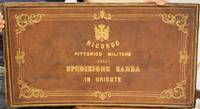
1857B5185Torino: Del Ministro di Guerra c.1857. A fine example of this fascinating work in superbly decorative contemporary full gilt calf. Plates are crisp with occasional very mild browning. . Edition: First Edition. Binding: Contemporary decorative full calf. Gilt borders and ornamentation on top and bottom cover. Gilt title on top cover. Gilt dentelles on top and bottom cover. Textured Pink pasted and free endpapers. Notes: Large Oblong Folio 430x790mm<br>This book shows scenes from the Crimean War and is interesting both from the point of view of military history as it shows plans of battles fought depictions of the fortifications camps etc. and for large tables depicting landscapes and scenes of the theater of war. <br><br>The Crimean War October 1853 – February 1856 was a conflict in which Russia lost to an alliance of France Britain the Ottoman Empire and Sardinia. The immediate cause involved the rights of Christian minorities in the Holy Land which was controlled by the Ottoman Empire. The French promoted the rights of Catholics while Russia promoted those of the Orthodox Christians. The longer-term causes involved the decline of the Ottoman Empire and the unwillingness of Britain and France to allow Russia to gain territory and power at Ottoman expense <br><br>The Sardininan-Piedmont the predecessor to modern day Italy contribution to the allies in the Crimea was part of the Prime Minister’s Camillo Cavour diplomatic plan to secure French support for the notion of a united Italy the success of which resulted in the Austro-French war of 1859.<br> Size: Large Oblong Folio Illustration: Illustrated with twenty five lithographs; A beautiful frontispiece depicting a military procession 10 maps 4 are large fold-out maps 7 colour panoramas 3 are large fold-outs and 7 lithographs showing military scenes and diagrams of forts and inventions. All plates have embossed stamp of the Sardinian Office of the Minister of War “Real Corpo di Stato Maggiore.†Category: Book Military; Book Russia; Book Europe Italy; Book Europe Ukraine; Del Ministro di Guerra unknown
2018016208Paris: Serious Publishing 2018. 1st Edition. Soft cover. Fine. 4to. SIGNED with inscription from Yan Morvan. Text in French. Soft cover. 159 pp. Photographic documentation of the biker scene in Paris during the 1970s. the photos are accompanied by an unpublished short story by Pierre Mikailoff and text by Loulou de Crimee first president of the French Hells Angels chapter. A near fine copy with some slight soiling to rear cover. Serious Publishing unknown
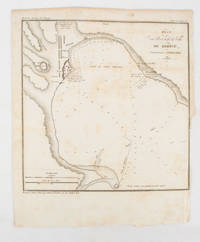
1839175248Paris.: Librairie de Gide. 1839. Engraved map 21.1 x 20.8 cm 27 x 22 cm sheet original folds trimmed to the inner margin with slight loss to the border only map spotted but otherwise in sound condition. Map of the Port of Kerch in Crimea prepared for the 1839 edition of the French Journal "Nouvelles Annales des Voyages." the editors for this edition amongst others the translator and geographer Jean-Baptiste Benoît Eyriès and Alexander von Humboldt founding members of the world's first geographical society the Société de Géographie. . (Librairie de Gide). unknown
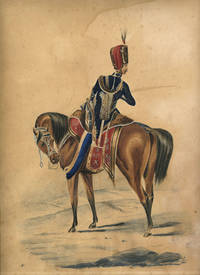
1850236911850. Very good condition. A wonderful watercolor of a British cavalry officer at the siege of Sevastopol signed "J.H." at the lower right. Perhaps the original study for the finished painting by Richard Simkin stance and details are identical to Simkin's image britishcavalryregiments.com/30-10h/10h5.jpg depicting the officer from the back turning in the saddle to his right his uniform and the horse's tack are painted in lavish and painstaking detail down to the studs on the bridle. This artwork predates Simkin's work.<br /> <br /> On the outbreak of war in the Crimea 1854-56 the 10th Hussars left India and traveled to the Black Sea but luckily were not part of Cardigan's charge of the Light Brigade avoiding the battle of Balaclava which took place in October of 1854. The regiment was heavily involved in the siege of Sevastopol and the triumphant battles of Eupatoria and Kerch.<br /> <br /> The Regiment returned to England in 1856 and in 1863 the 10th The Prince of Wales's Own Royal Hussars again had a Prince of Wales as their colonel this was Prince Edward later King Edward VII. The 10th Hussars are credited with introducing polo to England having learned it in India when a captain in the 10th Hussars observed a match and immediately formed a team with his fellow officers.<br /> <br /> 9 3/4 x 11 3/4". Overall tanned slight water mark in area above the soldier's head. Painted on card stock. unknown
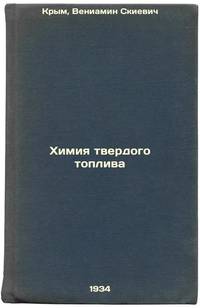
8986724Short description: In Russian. Crimea Veniamin Skievich. Solid Fuel Chemistry. Kharkiv; Kyiv: Scientific and Technical Publishing House of Ukraine 1934. Please feel free to contact us for a detailed description of the copies available. SKU8986724 unknown
2245627 April no year; on letterhead of Horringer Bury St Edmunds. 3pp 12mo. Bifolium. In good condition lightly aged with traces of paper from mount adhering to blank reverse of second leaf. Folded twice. From the Cullum papers Simpson being a neighbour of the family. Having 'just come in from a longish walk' he is sorry to have missed Lady Cullum. He wishes he 'knew which of the two ways you name would be most agreeable to you for us to dine with you; but since you kindly leave it to me I say Friday on which Evening we will have the pleasure of being at Hardwick at 7 o'Clock.' He reports that the 'two Miss Lockharts' are 'quite taken' with her and 'loud in their praises of Lady Cullum'. He gives the names of the party he has 'made up' for the following Thursday: 'Herveys 3 Wynches 2 Col. Wollaston and Mr. Barton - You and Miss Bird and ourselves make up the twelve.' He is 'not afraid of a Fox well fed on good poultry worrying Dot!' He does not think Dot can catch the fox 'so believe he and Pater may try their best in great safety'. He ends with the remembrances of his two daughters to Lady Cullum and Miss Bird. 27 April [no year]; on letterhead of Horringer, Bury St Edmunds. unknown
17022The account of 'Events in 1855 and 1856' dated by Wrench from Park Lodge Baslow Derbyshire 1902. The duplicated letter dated 12 December 1880. The printed advertisement for talk at the School Baslow and dated 14 January 1881. Wrench was the son of a clergyman and well connected being presented to the Prince of Wales and staying at Chatsworth in his old age. His obituary in the British Medical Journal 27 April 1812 describes how he went out to the Crimea in 1854. 'He had been gazetted Assistant Surgeon to the 34th Regiment in November and joined it on its arrival in the Crimea. He served during the terrible winter of that year and was present at the capture of the quarries the successful assault on the Redan of June 18th and the final capture of Sebastopol on September 8th 1855. He was mentioned in despatches and received the Crimean medal and clasp for Sebastopol and the Turkish medal.' Wrench's own account of his experiences in the Crimea Item One below – entirely unpublished – is a personal one vividly-written and full of detail. It does not appear to be present in the collection of his family papers at Nottingham University Library. ONE: Manuscript consisting of 'Events in 1855' 4pp and '1856 12pp making a total of 16pp. 8vo on twelve leaves attached with a stud. In good condition on aged and dogeared paper. The first page of the 1855 manuscript is headed '12 sic Pages in this Year' but comprises four numbered pages. The beginning of account sets the scene and gives an indication of the level of detail: 'The 1st Janry found me doing duty with the 28th Foot or Slashers in the 3rd. Divt of the army before Sebastopol having landed at Balaclava from the Ship "Queen of the South" on the 20th. Nov. 1854. On the 6th July I was ordered to do duty with the 50th. Foot but as I did not wish to move the weather being very bad and my tent being as comfortable or rather as little uncomfortable as it could be made except to join my own Regt. the 34th. to which I had been gazetted on the 1st. of December 1854. I applied to be sent to it and was ordered to join which I did on 9th of Janry.' The account is made up from diary entries and is none the less vivid and interesting for that: 'On the following morning a wounded Russian named Alexo was brought into our Hospital and we amputated his leg he did really well and was eventually exchanged at Odessa. Poor Jordan's death threw a great damp on the Regiment as he was the first Officer we had had killed. On the 9th. of April being Easter Monday the 2nd. Bombardment took place. It was a fearfully wet windy day so that no one was able to go out to see what damage was done. On the 10th. I was on trenches and the noise was terrific but nothing to what I have since heard. I had a very narrow escape from a round shot which hopped over the parapet close to where I was.' In June 'after 68 hours bombardment an assault was made on the Quarries by ourselves . I did not go down till about 8 with Robinson Scott & Peel and 100 men. We were marching about the Trenches half the night and were finally sent to the middle ravine just below Mamelon. The scene there was most horrible the ground being strewn with dead & wounded. English French & Russians. One poor Russian boy was dragged up by two Zouaves but fainted just opposite to where we were lying. I got a light and found he was shot through the belly and that nothing could be done for him. I gave him some water and he lie sic by me some time but died before morning. I got an amulet off his neck & his cap pouch which I sent home'. The 1856 account begins in dramatic style: 'The first entry in this Diary relates to the explosion which took place within the British Lines during the Siege of Sebastopol. Feb 3rd. I was not many hundred yards from this explosion when it took place & will here relate now Janry 1900 my recollection of it. It took place in Novr. or Decr. 1855. I had just come in from a ride & had given my horse to my Batman when I noticed a vast cloud of smoke shoot up from the Right Siege train an open air arsenal about 500 yds from my house - a tremendous noise of explosion followed & knowing that there would be a rain of missiles from above to fall immediately I jumped under my doorway - hoping the strong lintel would protect me . a shower of fragments fell around me rattling on my iron roof - and wounding many men in the Regiment - 70 men were killed by the explosion some over half a mile off. The artillery horses were passing in front of my door to water & stampeded hurting several men in their rush. Both my horse and my dog bolted. I got the horse back in a few hours - but my dog taken sic a few weeks before out of Sebastopol returned to her old home and was found there weeks afterwards I brought her to England My house that I had just finished building myself did not sustain much damage. .' The account continues packed with incident. At one point he writes: 'I had written the above in 1859 and continue it forty one years after November 4 1900. The events & fights of May 1856 being written so legibly in my brain that I can read much of what we did & said. Alas all the actors except myself are passed away. My notice has been called to the excursion by reading an Illustrated article in a magazine named "Travel" in which Dr. Hy. Lansell has been describing a tour taken last year over the same ground - so little altered from what I saw in 1856 that his description would do for mine'. The diary concludes in fine style. On 2 May 1856 he goes to Yalta where he finds 'the daughters of the English Clerk of the Works of Prince W's Palace were keeping the Hotel a very rough primitive structure low stone built rooms with a long rough wooden verandah overlooking the lovely Bay - We enjoyed an excellent dinner of Turbot & Oyster Sauce & a bottle of excellent local wine like Hock - as we returned we went over the Emperor's Villa Orianda . One day when I remember seeing for the first time a Persian horizontal Water Wheel in a very pretty village embosomed in Walnut Trees where also I bought an embroidered linen neck scarf which I still possess - On another occasion I accompanied Best & Chapman to the Alma & where I picked up the Russian Cannon Ball now on top of the Study Clock - I tried hard to get someone to accompany me to Bagshi Serai & Chuphut Kale but I had to go alone - I wonder now how I dare. For it was in the heart of the Enemies Country. I remember the Priest spit when I went near them in the Church in the Rock and I rode home at night through the Russian Camp on the river Balbec. I certainly felt no fear but that was the Ignorance of youth'. A final note more than half a page long records a meeting at Chatsworth in 1902 with Grand Duke Michael and his wife the Countess Torby. TWO: Duplicated letter by Wrench a hectograph in purple ink intended for circulation among his 'dear children'. 4pp. 12mo. Bifolium. In fair condition on aged and lightly-creased paper. Signed 'E. M. Wrench'. At the beginning is a half-page drawing by Wrench captioned 'Russian Soldier - In the Valley of the Shadow of Death. near Sebastopol - 1855 on Black Sea in the distance'. He describes a lecture he gave at Bakewell the previous Monday on the Siege of Sebastopol beginning 'I began by describing the terrible state of the hospital at Balaclava in November 1854. I had a ward full of wounded from Inkerman with bad cases of fever & cholera - All the windows had been blown out by the great storm of November the 14th. The sick had no beds and often nothing to eat until 3 or 4 oclock in the afternoon. The harbour of Balaclava was crowded with steamers while the coast near was strewn with the wrecks of the 21 ships that had gone down in the storm. .' The letter continues with much valuable detail and a drawing of a 'Section of "sunk" tent with fire place' on the third page. In the final paragraph he reports that 'Lord Edward Cavendish M.P. took the chair at my lecture. The room was quite full and some of the audience had come 8 or 10 miles to hear me.' THREE: Printed handbill advertisement with duplicated illustration another purple hectograph by Wrench on reverse joke featuring two soldiers and a horse and cart. 1p. 12mo. In good condition on lightly-aged paper. The printed advertisement is crisply printed and the date '14th' is added in red ink. It reads: 'A Lecture will be delivered in the School Baslow On Friday January 14th. 1881 At 7.30 p.m. By E. M. Wrench F.R.G.S. entitled Personal recollections of the Siege of Sebastopol. Illustrated by Drawings &c. Admission One Penny. No Change given at the Door.' The account of 'Events in 1855 [and 1856]' dated by Wrench from Park Lodge, Baslow [Derbyshire], 1902. The duplicated letter dat unknown
0282561099.Gpaperback. Good. Access codes and supplements are not guaranteed with used items. May be an ex-library book. paperback
2448210 April 1874; from Hill Street Woolwich on letterhead of Hill House Woolwich S.E. An excellent letter casting light on the relationship between the editor of The Times and a senior correspondent. See the two men’s entries in the Oxford DNB. Brackenbury’s states that ‘During the Austro-Prussian War of 1866 Brackenbury was the Times correspondent with the Austrian army and was at the battle of Königgrätz Sadowa — riding with Benedek under fire at Chlum — and reported the naval battle of Lissa. He was the Times correspondent in the Franco-Prussian War accompanying Prince Frederick Charles in the Le Mans campaign; and in the Russo-Turkish War of 1877 when he crossed the Balkans with Count Gourko.’ 4pp 12mo. Bifolium. In very good condition folded twice. Thin strip from windowpane mount adhering to edges in not unpleasing way. Signed ‘C. B. Brackenbury’ and addressed to ‘My dear Delane’. The letter begins: ‘Captain Clarke brought me today the last number of his translation of the German War of 1870-71. He is sending you a copy and I hope you will find some one to review it in my place.’ Brackenbury has himself translated ‘the Report of the Committee on French Army re organization together with the law as proposed and passed’ which the War Office is publishing. ‘You shall have the first copy issued which I will mark myself.’ In his opinion a great deal of the report ‘bears upon much more than French re-organization’. He will be very glad if Delane finds it ‘worth a notice’. He continues: ‘Though I may not write more on military affairs I don’t see why I should not review other books if you can find any for me. Even if you have no space for them at present the reviews might stand over till the interest of the new parliament is over.’ It seems to him ‘unnatural to have no work in hand for you’. The postscript reads: ‘They say that my review of Clarke’s first number started the Intelligence Department.’ 10 April 1874; from Hill Street [Woolwich], on letterhead of Hill House, Woolwich, S.E. unknown
1996291490PN. New. 1996. Soft Cover. Date is original print. This is a reprint edition . PN paperback