Poland, JeffreyBiblio.com
116 résultats
1994DADAX0198249802OXFORD UNIVERSITY PRESS 1994-03-10. 1. hardcover. New. 8.50x5.51x1.00. Buy with confidence. Excellent Customer Service & Return policy. OXFORD UNIVERSITY PRESS hardcover
19052307230001Doubleday Page & Company 1905. First Edition. hardcover. Good. 0x0x0. Orchidology: Roberta Poland's unique copy with her meticulous hand written notes map dates and locations she found the orchids mentioned in the book Bound in publisher's green cloth. Hardcover. Good cover. Gutters weakened. xxxv 158 pages illustrations plates 22 cm. From the library of Roberta Poland of Deerfield Mass 1899-1989 with her book plate and gift inscription. Includes a letter from Roberta to Chester Brooks. Poland was a botanist and science teacher at Deerfield Academy. She references her work with Harry E. Ahles in her letter. Her papers are held by the University of Massachusetts Amherst Nature History Collection. Doubleday Page & Company hardcover
1933HALL191413Paperback. 1933. 222pp paper covers London 1940. A very good copy. . paperback
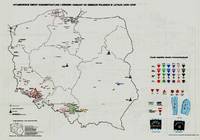
197941929Warszawa Warsaw: Pan´stw. Wydawn. Naukowe 1979. 1st Edition. Original black printed portfolio 8vo. Portfolio of seven large folding maps on on 4 sheets of heavy paper 3 are double sided 1 is singled sided. Primarily black and white with some color. Text in Polish. <br> Title translates to “Nazi camps in Poland 1939 - 1945. An Encyclopaedic Reference Book: Maps." Collection of 7 maps each 84 cm x 60 cm 33 x 24 inches produced by Jan Laskowski at the Main Commission for the Investigation of Nazi Crimes in Poland. The maps comprise Volume II of the work; Volume I is a heavily illustrated 676-page book of the same title which we offer separately. <br> The Seven maps all present are: <br> - Map 1 Single Sided: Hitlerowskie obozy na ziemiach polskich w latach 1939 - 1945. “Nazi camps in Poland in the years 1939 - 1945â€. Showing: concentration and extermination camps sub-camps of concentration camps extermination centers POW camps more important sub-camps working divisions commandos and temporary POW camps penal labor camps major labor camps prisons transit camps & ghettos. <br> - Map 2A: Getta na ziemiach polskich w okresie okupacji hitlerowskiej w latach 1939 - 1945 “Ghettos in Poland during the Nazi occupation in 1939 - 1945â€. <br> - Map 2B: Hitlerowskie obozy przejsciowe na ziemiach polskich w latach 1939 - 1945 “Nazi transit camps in Poland in 1939-1945â€. <br> - Map 3A: Hitlerowskie wiezienia i areszty na ziemiach polskich w latach 1939 - 1945 “Nazi prisons and arrests in Poland in 1939 - 1945â€. <br> - Map 3B: Hitlerowskie obozy pracy na ziemiach polskich w latach 1939 - 1945 “Nazi labor camps in Poland in the years 1939 - 1945â€. <br> - Map 4A: Hitlerowskie obozy jenieckie na ziemiach polskich w latach 1939 - 1945 “Nazi POW camps in Poland in 1939 - 1945â€. <br> - Map 4B: Hitlerowskie obozy koncentracyjne i osrodki zaglady na ziemiach polskich w latach 1939 - 1945 “Nazi concentration camps and extermination centers in Poland in 1939 - 1945â€. <br> Maps 2A & 2B have been described as a “Terrifying pair of maps showing the locations of German POW and internment camps in Poland during World War II highlighting the widespread locations of these establishments. In some parts of the map the information becomes so dense that three inset maps are shown. This map was designed by Jan Laskowski and printed in 1979 as part of a work on the Nazi extermination machine produced by PWN Warsaw a state-owned research-focused publishing house in Poland.<br> The map on the front is particularly interesting for its depiction of symbols used to classify internees in German camps. The uppermost of these depictions shows the combinations that can be made for different types of prisoners of different levels of importance. The armbands that would have been worn by these prisoners is shown as well as the prison uniforms. Other details are also shown. <br> The map lists hundreds of sites run by Nazi operators throughout the country. These include concentration camps death camps transitional camps and ghettos. The map is divided according to Poland's voivodeships with a key in the lower left. Names of cities too long to spell are also provided in the lower left. <br> This map was produced during a point in Poland's history during which it was actively revisiting the period during the Second World War. Leading social scientists devoted their time to trying to gather all the living as well as the recorded history of the events of the Holocaust and related atrocities before this information vanished. Leading these efforts particularly during the 1960s and 1970s was the Glówna Komisja Scigania Zbrodni przeciwko Narodowi Polskiemu known as the Chief Commission for the Prosecution of Crimes against the Polish Nation. They were active in publishing maps both for domestic educational purposes and for international remembrance and diplomatic efforts regarding the Holocaust. Jan Laskowski was a leading cartographer who produced a number of maps in this field. <br> These maps were produced as part of a series of maps that purported to combine to form an atlas of all of Hitler's crimes in Poland. Many of the large wall maps produced during this period could only show a fraction of the crimes or only the atrocities committed in one region. Thus a series of maps was needed to show all the points necessary which this present work contributes to. <br> Polish Reinterpretations of the Holocaust: Studying the effects of German occupation in Poland is a delicate subject. While it is certain that Poland suffered at least as badly as any other European nation during the Second World War reinterpretations of the Holocaust in the country have also been used to satisfy nationalistic tendencies. It has become evident to Western observers in the last several years that there is a strong nationalist movement in Poland that seeks to place blame for the Holocaust solely on the shoulders of non-Polish actors a movement originally fostered under Soviet rule. This movement has gone so far as to limit freedom of speech criminalizing with a three-year sentence the suggestion that Poland or its citizens in any form participated in the murders committed by Nazis. As such the term ‘Polish concentration camps’ has been deemed unacceptable with the government-approved term being ‘concentration camps on Polish territory.’ <br> All lines of evidence show that this map 2A & 2B was produced using the most accurate and impartial historical sources. The language on the map is simple naming only ‘Hitler's Atrocities’ and there is no evidence of a clear anti-German bias. However it is impossible to separate this map one of the most important productions of the remembrance movement during this period from the social situation in which it was produced. Maps like these can easily be converted into propaganda instruments and today's Polish leaders most of whom grew up during Soviet occupation will have formed their understanding of the Holocaust through maps like these. <br> Soviet Censorship: While the content of the map appears to have been produced free from bias the map still had to go through Soviet censorship. Mentioning prisoner of war camps in which primarily Soviet troops were interned would have been a prerequisite condition upon which the publication of the map rested. Further the lack of mention of any Soviet killings or camps requires no explanation….The map unlike many later maps makes no differentiation between the populations who suffered at the various camps. This represents the Soviet agenda that all nations suffered fought and won equally which sought to limit divisions in this post-identity state†Ruderman 2022. <br> SUBJECTS: World War 1939-1945 -- Prisoners and prisons German. -- Concentration camps -- Poland. Guerre mondiale 1939-1945 -- Prisonniers et prisons des Allemands. -- Camps d'internement -- Pologne. Obozy koncentracyjne -- Polska -- 1900-1945. OCLC: 830885973. <br> Light shelf wear to portfolio as expected. All maps in pristine condition with normal folds as issued. Very Good Condition. Complete and dramatic BR5 holo2-147-19-'cc. Warszawa (Warsaw): Pan´stw. Wydawn. Naukowe unknown
1944187614Breda: Louis Vermijs N.V. 1944. First edition celebrating the Polish contribution to the allied liberation of Europe while the war was still ongoing. At this time the 1st Armoured Division were stationed in the Netherlands having freed cities including Breda where this work was published. The illustrations show battles throughout the campaign German tanks and the division's commander Major General Stanis aw Maczek. The 1st Polish Armoured Division was formed in 1942 from the remains of the 10th Motorized Cavalry Brigade after they were defeated during the German invasion of Poland. After training in Scotland they were transferred to Normandy in August 1944 proceeding to fight across France Belgium and the Netherlands. The latter half of the work celebrates the liberation of Breda during Operation Pheasant where the Germans were forced out without any civilian casualties. It shows Polish Liberation Day festivities held in the city local shops welcoming the allied forces and the plaque recording the freedom of the city given to the division on 30 October 1944. We have traced only eight institutional copies. Oblong octavo 159 x 321 mm. Half-tone photographic illustrations throughout route map in text. Original buff paper wrappers orange cord binding front wrapper decorated with blue and black border and crest of the 1st Armoured Division in colour rear wrapper lettered in black. Title page inscribed "To my best friends - Mr. & Mrs. A. M. Burchart Limberg 17 Holland 9th Dec 1944". Wrappers a little creased small patch of soiling on front wrapper minor offsetting internally: a very good copy. unknown
1999__3110157152De Gruyter 1999. Hardcover. New. reprint 2012 edition. 1185 pages. 9.75x6.25x2.75 inches. De Gruyter hardcover
1996x-1568218168Jason Aronson Inc 1996. Hardcover. New. 310 pages. 9.25x6.75x1.00 inches. Jason Aronson Inc hardcover
1996DADAX1568218168Jason Aronson Inc 1996-11-01. hardcover. New. 6.48x0.95x9.20. Buy with confidence. Excellent Customer Service & Return policy. Jason Aronson, Inc hardcover
1996SONG1568218168Jason Aronson Inc 1996-11-01. hardcover. Used: Good. 6.48x0.95x9.20. Buy with confidence. Excellent Customer Service & Return policy. Jason Aronson, Inc hardcover
194547189Krakow: Spóldzielnia Wydawnicza "Czytelnik" Czytelnik Publishing Cooperative 1945. First edition. Softcover. g to von-. Octavo 8 1/4 x 6". 93pp. 13 leaves of double sided photographic plates interleaved and unpaginated. Illustrated tan red and black wrappers with black lettering on the front cover. Photographic b/w frontispiece. Spóldzielnia Wydawnicza "Czytelnik."<br /> <br /> Possibly an earlier publication on lower quality paper compare to a slightly smaller publication by the "Library of the Union of Polish Patriots in the USSR" Biblioteczka Zwiazku Patriotów Polskich w ZSRR with the same text in different layout. That publication issued on higher quality paper and with twenty-eight photogravures three more than in this publication with twelve photographs appearing in both publications though in lesser quality here.<br /> <br /> Court Proceedings of the Polish-Soviet Special Criminal Court established in Lublin in August 1944 in order to investigate the crimes committed by the Germans in the Majdanek extermination camp. Despite the importance of this document it must be mentioned that the Commission made erroneous assumptions regarding the duration of the camp and the number of people killed at Majdanek. The Publishing cooperative "Czytelnik" was established behind Soviet front lines in 1944. It became the first post-World War II. publisher in Poland.<br /> <br /> The total numbers of the victims is still controversial: In this report 1.5 million victims of different nationalities were counted however according to the latest researches there were 79000 victims 59000 of whom were Jews See: Kranz T.: "Bookkeeping of Death and Prisoner Mortality at Majdanek." pp. 81-110. In: Silberklang D. Ed.: Yad Vashem Studies. Vol. 35:1. Jerusalem 2007.<br /> <br /> Illustrated with 25 pages of b/w photographic reproductions including a frontispiece on 13 double-sided interleaved plates altogether thirty-two photographs depicting members of the Commission Nazi guards now prisoners who used to run the camp and survivors alike testifying before the Commission. Also includes views of the actual concentration camp piles of suitcases Zyklon B poison gas pellets gas chambers ovens and survivors amid corpses.<br /> <br /> Wrappers with some chipping rubbing creasing and/or closed tears to extremities. Small stain on the back cover and side edge of book block. Verso of frontispiece with a vertical crease. Some pages throughout with some light age toning or small water spots. Overall text and images clear and vibrant. Wrappers in good interior in very good- condition overall. One of two editions of this work published in Moscow and Krakow in 1945. It is not certain which was released first. Each has different wrappers size pagination and publishers. Spóldzielnia Wydawnicza "Czytelnik" (Czytelnik Publishing Cooperative) unknown
1985x-0891308369Oxford University Press U.S.A. 1985. Paperback. New. 232 pages. 8.75x5.50x0.50 inches. Oxford University Press, U.S.A. paperback
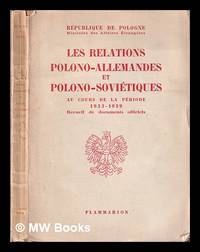
1940404763Paris : Flammarion 1940. 1st edition. Softcover. Paperback copy; edges somewhat dust-dulled and nicked. Creased cover. Boards stained and torn with some loss. Remains quite well-preserved overall. Physical description; 252 pages 1 ; 25 cm. Notes; At head of title: République de Pologne. Ministère des affaires étrangères. Subjects; Poland History 1918-1945 ; Sources. Poland Foreign relations Germany. Germany Foreign relations Poland. Poland Foreign relations Soviet Union. Soviet Union Foreign relations Poland. Poland History 1918-1945 Sources. Paris : Flammarion paperback
1962199026Atlanta Georgia: Atlanta Art Association Galleries / Browse Borrow And Buy Gallery 1962. Softcover. VG- scuffs scratches & smudges to wraps; light sunning to edges & spine; blue ink 'check-mark' to upper front edge. corners rubbed. listings and illustrations may have instances of light blue ink 'check-marks.'. pale blue textured wraps w/ darker blue illustration & printing. approx 32 unpaginated pgs w/ bw illustrations. Essays by Reginald Poland. Detailed 89 piece listing and 22 black/white illustrations. Exhibition held February 6 through February 25 1962. Atlanta Art Association Galleries / Browse, Borrow And Buy Gallery paperback
1998G0898631971I3N00Star Pub Co 1998. Hardcover. Good. Pages can have notes/highlighting. Spine may show signs of wear. ~ ThriftBooks: Read More Spend Less.Dust jacket quality is not guaranteed. Star Pub Co hardcover
1941HALL291781Paperback. 1941. Note: Adressee le 3 Mai 1941 aux Puissances alliees et neutres. 185pp card covers London 1941. Very good copy. . paperback
19501709801950. POLAND. L'exécution du plan triennial: de reconstruction économique en Pologne. 62 pp. illustrated throughout with isotype diagrams charts and photographs. Small oblong folio 210 x 287 mm. bound in publisher's illustrated wrappers. Warszawa: n.p. 1950. A stunning example of avant-garde book design with extremely imaginative use of isotypes as is often the case in the service of boring material. Wrappers sightly soiled otherwise fine. Rare with OCLC listing just International Labor Office and Northwestern in the U.S. and copies in Europe unknown
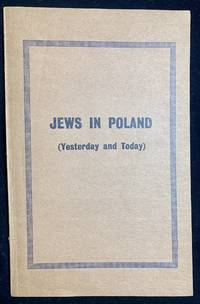
196843041London: The White Eagle Press Limited 1968. First edition. Original paper wrappers Small 8vo 88 pages. 21 cm. In English.<br> On the condition of Jews in Poland both historical and contemporary. Includes discussion of the Holocaust defense of Poland from charges of anti-Semitism and resistance organizations.<br> “On the eve of the Second World War Poland was home to over three million Jews making it the second-largest community in the world. Warsaw the capital had a population of over 300000 Jews more than 30% of the population of the city—and a larger Jewish community than in most European countries. Around 85% of Polish Jewry was annihilated during the Holocaust. After the war many survivors refused to return to or remain in Poland which was marked by civil war and anti-Semitic violence. Since the end of Communism the small Jewish community in Poland has been able to reassert its identity and begin the process of rebuilding. Most of the country's Jews live in Warsaw but smaller communities also exist in Kraków Wroclaw Lodz Katowice Szczecin Gdansk and several other cities.†World Jewish Congress<br> SUBJECTS: Jews -- Poland. OCLC: 10213086<br> Ex-library with usual markings but otherwise excellent. Very Good Condition. YIZ-23-77-CCX-’el. London: The White Eagle Press Limited unknown
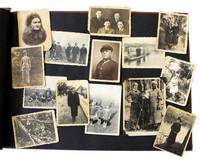
1939187411939. Polish Jewish family photographs created between 1934 and 1939 documenting Jewish life in Poland during the final years before the outbreak of World War II and the destruction of much of Eastern European Jewry. The photographs record members of a Polish Jewish family including men women and children during a period when Jewish communities remained deeply rooted throughout Poland but faced increasing political hostility and anti-Semitic agitation across Central Europe. Poland contained one of the largest Jewish populations in Europe during the inter war period with many families living in small Jewish communities often referred to as shutters as well as in larger towns and cities. The images capture everyday family and community life immediately before the German invasion of Poland in September 1939 a moment that would fundamentally transform the lives of Jewish communities across the region.<br /> <br /> Photo archive consisting of 21 silver gelatin photographs mounted in a photograph album together with 10 additional loose photographs. Images measure approximately 2.5 x 3.5 inches and depict family members in individual portraits group gatherings and scenes of school children assembled in large smiling groups. Several photographs carry handwritten inscriptions on the verso written in Polish and possibly Yiddish indicating personal exchanges between family members or relatives. Among the photographs are two portraits of a Polish Jewish man wearing Polish Army uniform one dated 1939 documenting Jewish participation in the Polish armed forces in the months immediately preceding the outbreak of war. The album pages preserve images of family gatherings and posed portraits reflecting domestic and social life within a Polish Jewish household during the final years of the inter war period.<br /> <br /> The photographs were created during a period of growing political instability in Europe that culminated in the German invasion of Poland on September 1 1939. That invasion followed the collapse of the German Polish non aggression agreement and the signing of the German Soviet pact that divided Poland between the two powers. German forces entered Poland with a large mechanized army supported by aircraft and armored divisions overwhelming the Polish military within weeks despite organized resistance. Jewish citizens served in the Polish armed forces and were present throughout the country's military and civilian life before the war. Album measuring approximately 15 x 11 inches containing 21 mounted photographs and accompanied by 10 loose photographs. Minor edge wear present with occasional cracks to several prints that do not affect the clarity of the images. Many photographs bear inscriptions and dates on the verso. Overall condition very good. unknown
19586054Atlanta GA: Atlanta Art Association Galleries 1958. First Edition; First Printing. Softcover. Book condition is Very Good in wraps. Some minor wear and smudging to wraps. Text is clean and unmarked. Illustrated with color and half tone illustrations. ; Small 4to 9" - 11" tall. Atlanta Art Association Galleries unknown
19852090502125300494Sangyo tosho 1985. Soft Cover. Fine. The book is in fine condition. Sangyo tosho paperback
196563258New York: Oliver Layton Press 1965. 7" x 5¼" saddle-stitched but wrappers separated from text block; pp. 59 1; very good. Contributions by Tuli Kupferberg George Montgomery and others with illustrations by Ed Sanders Arthur Lewis Jefferson Poland and Michael Francis Itkin. Among those on the Advisory Committee are Allen Ginsberg Tuli Kupferberg Peter Orlovsky Diane di Prima and Ed Sanders. Oliver Layton Press unknown
2000x-3790813095Physica Verlag 2000. Paperback. New. 1st edition. 361 pages. 9.25x6.25x1.00 inches. Physica Verlag paperback
1990Q-0898402778Here's Life Publishers 1990-01-01. Paperback. New. In shrink wrap. Looks like an interesting title! Here's Life Publishers paperback
1933173338New York: Edgar Weyhe 1933. Limited to 200 numbered copies. Paperback. VG with minor coiling to orange dustjacket covers otherwise almost like new except for some separation of spine at the very top. Orange printed dustjacket surrounding a white printed glued wrap-around stiff cover. 54 pp. Two color plates including a signed in pencil lithograph portrait of Shore by Jean Charlot 18 bw photographic reproductions after photographs of the artist's work by Edward Weston 5 smaller bw reproductions which may be lithographs at the head of the text articles. The first color plate may also be a color lithograph but it is not signed. One of Armitage's rarest works. A monograph on the art and career of California modernist painter Henrietta Shore.The portrait by Charlot is signed by the artist but hideous. Includes an article by Edward Weston who also photographed the original artworks by Shore. Includes articles by Merle Armitage Edward Weston and an Appraisal by Reginald Poland. Very rare. Forward colophon reads "Two hundred numbered copies of this book designed by Merle Armitage have been printed . by the Will A. Kistler Company . It is set in twelve point Rockwell type and the entire contents of the book is printed by the Artochrome Process. The photographs of the paintings pastels crayons and drawings in this book were made from the originals by Edward Weston. This is copy no. blank"--Colophon./ Descriptive letterpress on versos facing the plates." Edgar Weyhe paperback
1998Star-9783540628620Springer 1998. Hardcover. New. Springer hardcover