42 résultats
1982121562Paris: Gallimard 1982. Hardcover. VG Some slight discoloration to dj. Red cloth over boards; Gilt titling to spine and front cover; Color pictorial dj.; 388 pp.; 4 gatefolds; 464 color and bw plates and figures. Text in French; Part of the "Le Monde Roman" series; A wonderful richly illustrated guide to the art and architecture of Europe during the time of 1060-1220 roughly the time of the crusades. Gallimard hardcover books
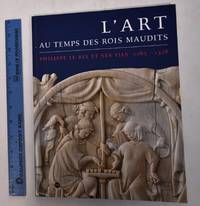
1998168805Paris: Reunion des Musee Nationaux 1998. Softcover. VG. Minor cover wear. Dark blue and color-illustrated glossy wraps. 79 pp. An abundance of color and BW illustrations. Text in French. Catalogue of an exhibition. Reunion des Musee Nationaux paperback books
37392Paris: 2003. Softcover. 10.5" x 8.25". 645 3pp. Photographic illustrations throughout text. Red and pictorial wraps. Spine very slightly cocked some light wear to edges of wraps; light marginal toning to pages otherwise interiors clean and sound. Very Good. ISBN 9782711845699 . VeryGood. Paperback . [2003] paperback books
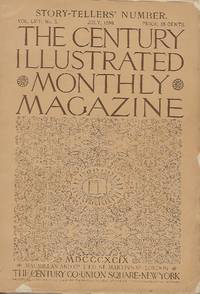
189956102NY: Century Co 1899. Vol. LIX No. 6. 8vo. printed wraps. Very Good little chipping edges & one-inch chip head of spine; neatly repaired tear front cover; contents clean & tight. <br/><br/> Century Co paperback books
1928018491München: Georg Müller 1928. xi 454p. b/w illus. slightly chipped dj. Georg Müller unknown books
13595NY MACMILLAN 1949. FIRST EDITION VERY GOOD. F. NY, MACMILLAN, 1949 unknown books
197454620London: The Architectural Association School of Architecture 1974. First edition. 29 1/2 x 20 inch illustrated broadside printed in three colors. Four old folds else near fine. A bold presentation for this schedule of events featuring John Heath-Stubbs Peter Mayer Stefan Themerson Hidé Ishiguro Brian Jeffery Henri Chopin and George MacBeth. London: The Architectural Association School of Architecture, unknown books
1978183818Berlin: Mann 1978. Hardcover. VG/VG. Off-white cloth boards with green lettering; green dust jacket color illustrated with white lettering; 232 pp; illustrated in color and bw. Text in German. Ivory art in the Middle Ages. Includes bibliographical references pages 215-221 and index. Mann hardcover books
198128691New York: New Wilderness Foundation 1981. First edition. Paperback. Very Good. Folded tabloid newsprint format. Elephant folio. A magazine devoted to new music and literature. Folded at center else a very good example. 20 pp. Includes reviews articles photographs and more including two separate contributions by Bernard Heidsieck. New Wilderness Foundation paperback books
1575575041575. Rare Treatise Dealing With Legal Rights of Farmers and Other Rural People Choppin Rene 1537-1606. De Privilegiis Rusticorum: Lib. III. O Fortunatos Nimium Sua Si Bona Norint Agricolas Gnauosque Senes Extrema per Illos Iustitia Excedens Terris Vestigia Fecit. Paris: Apud Nicolaum Chesneau 1575 colophon: 29 November 1574. xvi 248 24 pp. Quarto 9" x 6-1/2". Contemporary limp vellum early calligraphic title to spine ties lacking. Negligible light shelfwear text block partially detached from binding. Woodcut printer device to title page woodcut decorated initials. Some toning light dampspotting and early annotations to a few leaves. $2000. First edition. Choppin or Chopin was a French jurist and an avocat of the Parlement of Paris. Like Jean Bacquet and Jean Bodin Choppin drew on Roman law and feudal principles to advocate a centralized state under royal rule. De Privilegiis Rusticorum addresses legal privileges enjoyed by rural people in Roman and civil law such as access to uncultivated land. A well-written and remarkably comprehensive work it went through seven subsequent editions in Latin. Its final edition translated into French was published in 1634. This was a rarely explored topic and Choppin's treatise is the only early example we have encountered. According to the Biographie Universelle "it deserves notice for the singularity of its subject for its profound research and the decisions it contains" 8:499. All editions are scarce today and rare in North American law libraries. OCLC locates three copies of the 1575 edition at Columbia George Washington University and Harvard. Camus Profession d'Avocat 1477. unknown books
38212Boston: Ditson. Large 4to 184. AEG. Exterior worn cover detached. Some offsetting on music pages but interior VG. Ditson unknown books
1895140940284Boston: Houghton Mifflin and Company 1895. Early Reprint. Good. Early reprint of the first edition with copyright page dates 1894 but title page dated 1895. Bound in publisher's original green cloth stamped in gilt. Good. Cloth grubby spine-toned and worn. Former owner ex-libris bookplate to front paste down. Fraying to fore edge of first blank sheet rear inner hinge exposed. Houghton, Mifflin and Company unknown books
WELLER9780142437322New. New book. unknown books
331691 page. Small octavo 131 x 100 mm. Dated "Paris 10 avril" 1845. In French. <br/><br/>Chopin plans to leave Paris within three weeks most probably for Nohant George Sand's summer estate and tells his correspondent that he will be back in September or October. He thanks the addressee for the "good memories" and sends compliments to her aunt:<br/><br/>"Je pars dans 10 ou 20 jours - Je reviens au mois de 7-embre ou 8-bre. Je vous remercie pour votre bon souvenir - et croyez-mois toujours dévoué Chopin Mille compliments à Mme votre tante." <br/><br/>Very slightly worn; light vertical crease; minor remnants of adhesive to blank lower left corner; very slight staining to blank lower margin.<br/><br/>Together with:<br/>A bust-length portrait etching of the composer by the German artist Wilhelm Pech 1876- image size 120 x 95 mm. sheet size 199 x 150 mm. Signed "W. Pech" in pencil at lower right below image. Upper margin slightly abraided and with remnants of adhesive to recto and verso.<br/><br/>Provenance<br/>Previously in the collection of John and Johanna Bass founders of the Bass Museum of Art in Miami Florida. Sydow: Correspondance de Frédéric Chopin La Gloire 1840-1849 no. 579. <br/><br/>The year of this letter saw the publication of opp. 57 the Berceuse for piano and 58 the Sonata for piano. "The Sonata no. 3 in B minor op. 58 - dedicated to Countess Emilie de Perthuis a friend and wife of the royal aide-de-camp - and the Berceuse were published to great critical and public acclaim. The Third Piano Sonata the last of this genre represented in the words of musicologist Anatole Leikin Chopin's reconsideration 'not only of sonata form but of the sonata genre as well' because 'his sonatas like his mazurkas or nocturnes are marked by a special musical idiom.' Zieliński believes that the Sonata no. 3 is Chopin's 'deepest' work." Szulc: Chopin in Paris pp. 302-303.<br/><br/>"Most of the winter of 1845 was a time of acute illness for Fryderyk. George Sand wrote Stefan Witwicke in Freiwald Germany late in March that between Chopin's 'coughing fits and his lessons it is difficult to find a moment of peace and silence.' About the same time she informed Ludwika Chopin's sister in Warsaw that 'our dear little one was greatly tired by the severe winter . but since the weather improved he has been completely rejuvenated and revived. Two weeks of warmth helped him more than all the medicines . "<br/><br/>" . By mid-May heat in Paris became oppressive and George and Fryderyk began to think about moving to Nohant for the summer. George had started on a new novel Isidora and hoped to complete it in peaceful Berry. Chopin too was ready to go purchasing a calèche a vehicle with a folding top to make their journey more private and pleasant than by diligences. But Dr. Papet warned them that a typhus epidemic had broken out in the region and urged a delay. Finally they left Paris on June 12 with Pauline Viardot just back from a Russian tournée joining them in Nohant a few days later." op. cit. pp. 303-305.<br/><br/>The year 1845 was important to Chopin for another reason as it marked the beginning of a major rift in his relationship with George Sand: <br/><br/>"When Chopin and Sand returned to Paris in August 1842 they moved to new accommodation in the Square d'Orléans close to their friends the Marlianis and also incidentally to Kalkbrenner and Alkan. It was a satisfactory domestic arrangement. But Chopin's health was giving cause for real concern and the relationship with Sand was deteriorating partly due to growing tensions within the family. All of this together with his inability to recapture his earlier fluency in composition contributed to his low spirits in the winter of 1843-4. But the hardest blow of all came in May 1844 when he learnt of the death of his father. Sand immediately whisked him off to Nohant but he refused to be consoled until his sister Ludwika to whom he had always been close announced her intention to visit France with her husband that summer. They met in Paris in July and the visitors divided their time between there and Nohant until they departed for Poland in early September. 'We are mad with happiness' Chopin wrote. But it was not to last. The winter season brought further strains in his relationship with Sand and when they set out for Nohant in June 1845 tensions within the family circle were beginning to come to a head." Kornel Michałowski revised by Jim Samson in Grove Music Online.<br/><br/>Chopin's correspondent may very well be his pupil the Austrian pianist Friederike Müller. <br/><br/>Friederike Müller 1816-1895 lived with three of her father's sisters in Vienna following the death of her mother. She arrived in Paris in 1839 to study with Chopin and was his pupil until 1841 and then again in the winter of 1844-1845. "She wrote a kind of diary in the form of approximately 230 letters to her Viennese aunts about her stay in Paris and her encounters with Chopin. They are an extremely valuable source for his biography . " Wikipedia.<br/><br/>Müller often passed Chopin's best wishes on to her aunt/s in her letters. Chopin dedicated his Allegro de Concert op. 46 to her. Grabowski & Rink p. 356. unknown books
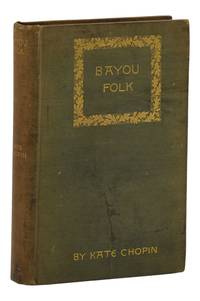
1897150428004Chicago: Way & Williams 1897. Second Edition. Hardcover. Very Good. Second Edition. In Very Good condition. Lacking front free end paper. Light wear at corners and spine ends light rubbing to stamping on spine. A lovely copy. Way & Williams hardcover books
19751338543Antwerp: Guy Schraenen 1975. Softcover. Large Octavo; 8 pages; G; Stiff black wrappers with red text; Covers have creasing along spine and bending along tail edge of spine; Signed and numbered #174 by Henri Chopin on inside of rear cover; Henri Chopin was a French Avant Garde artis in the 1950s-70s; Shelved Case 0. 1338543. Shelved Dupont Bookstore. Guy Schraenen unknown books
183318021Paris: Chez Maurice Schlesinger 1833. First Edition. Used; Like New/Used; Like New. 1er Concerto pour le Piano avec accompagnement d'orchestre dedié à Monsieur F. Kalkbrenner par Fréd. Chopin. Op. 11. Disbound upright folio. 44 pp. PN M. S. 1409. From the collection of Alfred Cortot with his green stamp to the lower right of the title. Occasional fingerings and other annotations in pencil. Notes on the verso of the last page in pencil in French indicate that this copy belonged to pianist Antoine François Marmontel and suggest that the fingerings may be in his hand. Translated from the French: "This copy belonged to Marmontel judging by the dedications of the pieces bound in the same volume. Perhaps the notes in pencil are from Marmontel." Toning and foxing; wear to the spine; overall very good. 10 x 13.25 inches 25.5 x 34 cm. Grabowski & Rink 11-1-Sm. A historic copy having been owned by two of the most important pianists in history. <br style="">Pianist teacher and musicologist Antoine François Marmontel became Professor of Keyboard at the Paris Conservatory in 1848 succeeding Pierre Zimmermann and beating out his former teacher Charles-Valentin Alkan. He achieved renown as a pedagogue; among his many notable students were Georges Bizet Vincent D'Indy and Claude Debussy. Marmontel was the author of a large number of pedagogical works as well as musicological works which are among the best sources for the history of the piano and pianists.<br style="">One of the 20th century's most influential — yet inimitable — classical figures Alfred Cortot was born in 1877 in Switzerland to a French father and a Swiss mother and he based his long career as a pianist conductor and teacher in Paris. Cortot was one of his era's most renowned interpreters of Chopin his best recordings setting an enduring standard for poetry in motion. In 1925 the pianist made the first electrical recording of classical music for the Victor label in New Jersey featuring music by Chopin and Schumann. Among his hundreds of subsequent recordings was the first complete version of Chopin's Preludes Op. 28. In holding up Cortot as a paragon of Chopin playing even decades after his death The New York Times described his method as combining "lucidity with spontaneity. It is almost modern in its lack of sentimentality and attention to structure; yet it is unmistakably Romantic in its insistence on freedom and variety. Each line is suffused with subtle detail with interior contours and dynamic shadings. But these are not indulgent ornaments; they reveal rather than cloud the music's intentions." <br style=""><br style="">The Piano Concerto No. 1 in E minor Op. 11 was composed in 1830 when Chopin was twenty years old and was first performed on 11 October of that year at the Teatr Narodowy the National Theatre in Warsaw Poland with the composer as soloist during one of his "farewell" concerts before leaving Poland. The first of Chopin's two piano concertos to be published it was therefore given the designation of Piano Concerto "No. 1" at the time of publication even though it was actually written immediately after the premiere of what was later published as Piano Concerto No. 2. Chez Maurice Schlesinger unknown books