(Kamchatka and Siberia)Biblio.com
508 résultats
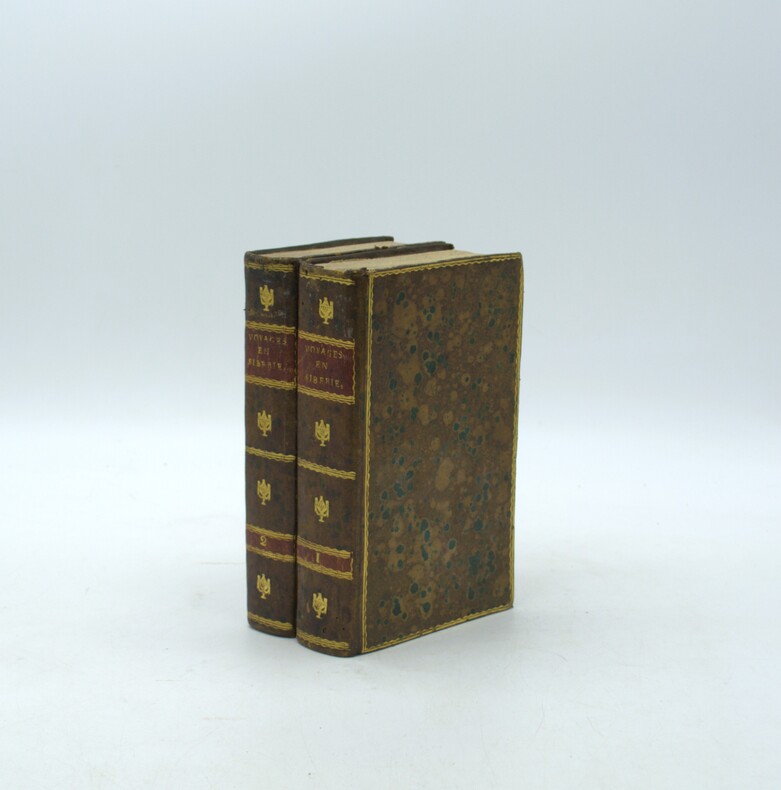
1808365162Netherlands 1808. Six watercolors on individual sheets measuring approx. 10-1/2 x 16-1/4 inches. Five of the six watercolors titled in manuscript below the image and with extensive Dutch-language notes on the verso of each sheet. Oblong folio. Bound into modern half morocco and marbled boards oblong quarto in size gilt morocco label on front board reading: KAMTSCHATKA ET SIBERIE ALBUM DE DESSINS. Very minor wear or soiling in the edges of the margins else fine. Six watercolors on individual sheets measuring approx. 10-1/2 x 16-1/4 inches. Five of the six watercolors titled in manuscript below the image and with extensive Dutch-language notes on the verso of each sheet. Oblong folio. An atlas of splendid watercolors by an unknown artist showing scenes in Kamchatka and Siberia in the late 18th century. The paintings are quite well done. While the artist's facility for drawing human figures is not of the highest magnitude his ability in rendering places topography and villages is excellent. The identity of the artist is unknown but it seems likely that he was a Dutchman of some means who owned or had access to a collection of the most important accounts of 18th-century travel in eastern Russia and the Kamchatka peninsula. The watercolors show scenes of village and seaside life as originally depicted in the plates to the travels of Cook Sarychev and Chappe D'Auteroche which all took place between 1760 and 1795. Though undated a manuscript note on the verso of the final watercolor carries the date of 1808 and likely indicates when one or all of these images were painted.<br /> <br /> The images contained in this atlas are faithful detailed and accomplished watercolor renderings of printed plates from the atlas to James Cook's third voyage; the atlas to the voyage of Gavrila Sarychev; and the account of Jean Chappe D'Auteroche's travels to Siberia in the early 1760s. The artist has taken great care to retain interesting ethnographic details from the original sources showing details of clothing and decoration as well as animals dwellings from thatched huts to wooden structures buildings churches sleds and local boats and canoes. Two of the images feature fishing scenes and all but one of them shows a locations near a river or the sea. The interest and usefulness of the album is further heightened by the extensive manuscript notes in Dutch on the verso of each view. In some cases the notes give details of the source of an illustration but they also provide information about the region depicted the people who live there the natural resources and topography and much more. Further study of the album could lead to more information about the artist and the circumstances of its creation.<br /> <br /> The illustrations with their original manuscript captions are as follows:<br /> 1 "Gericht der stad Bolcheretskoi in Kamtschatka en ein Man Reirende in en Winter." This winter scene in Kamchatka is a combination of two plates from the atlas to Cook's voyages "A Man of Kamtschatka Travelling in Winter" and "A View at Bolcheretzkoi in Kamtschatka." It shows a small village of wooden buildings with thatched roofs while a family of natives bundled against the cold stand in the foreground. Two cows are shown in a pen and farm dogs and sled dogs mill about.<br /> 2 "Gerigt van de Stad en Haven van St. Petrus en St. Paulus aan Kamtschatka." This image copies a plate from the atlas to Cook's voyages entitled "A View of the Town and Harbour at St. Peter and St. Paul in Kamtschatka." An interesting scene of a small fishing village featuring a group of men casting large nets and other groups in canoes. Larger sailing vessels are in the water in the background and snow-capped peaks are seen in the distance. In the left foreground are a native husband and wife with an infant strapped to the woman's back.<br /> 3 "Gericht der Stad Tobolsk in Siberien." Copies a plate from Chappe D'Auteroche's VOYAGE EN SIBERIE Paris 1768. A very nice and well-done scene of a largish seaside town with several whitewashed buildings with tall spires along the waterfront and on a cliff. Workers are shown storing casks of goods by the waterside.<br /> 4 "Gericht der Vesting auf Sterkte Sueden - Kolymsk en der Rivier Kolyma." This image copies a plate from the atlas to Sarychev's voyage PUTESHESTVIE FLOTA KAPITANA SARYCHEVA. St. Petersburg 1802. An attractive scene of a small village of wooden buildings in a waterside setting. This scene is most interesting for the details of the structures including a Russian Orthodox Church.<br /> 5 Untitled. This is a version of the Cook atlas plate titled "Summer and Winter Habitations in Kamtschatka." This interesting scene gives great details of the dwellings used in Kamchatka. Located along a river they are built on stilts so as to withstand floods.<br /> 6 "Gericht van de Sterkte of Vesting Werchue - Koymsk en van de Rivier Jasjaschna." This image copies a plate from the atlas to Sarychev's voyage PUTESHESTVIE FLOTA KAPITANA SARYCHEVA. St. Petersburg 1802. Another view of a small fishing village with men casting nets at the shoreline a mid-size sailing ship in the water and a small group of one- and two-story buildings on the shore opposite.<br /> <br /> A very interesting suite of watercolors showing evocative scenes of village life in Siberia and Kamchatka at the time when European explorers were first visiting that remote area. unknown
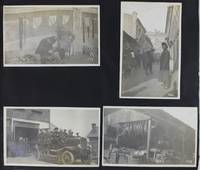
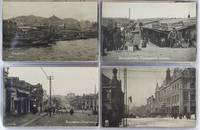
19223735Mainly Vladivostok 1922. Very good. 261 images about half real photo postcards and half vernacular photographs between 2.5 x 1.5 inches and 3.5 x 5.5 inches. Oblong folio. Contemporary brown leather photograph album string-tied. Lacking fore-edge flap spine chipped moderate rubbing and scuffing to boards. Minor occasional wear to photographs. A unique collection of photographs documenting the joint military expedition by Allied Forces into Vladivostok in southeastern Russia after the conclusion of World War I the October Revolution and the Russian Civil War most likely assembled by an American soldier serving there at the time. The American contingent of the incursion was called the American Expeditionary Force Siberia which partnered with nine other countries to attempt to bring stability to the region rescue 40000 members of the Czechoslovakian Legion being held up by Bolsheviks outside Vladivostok protect and retrieve American supplies in eastern Russia and stem the early spread of Communism. A similar expedition to northern Russia now known as the Polar Bear Expedition was attempted in Archangel. By practically every standard the joint missions failed and in fact damaged relations between the Allied Forces and Russia especially for the United States for decades to come. <br /> <br /> The present collection of photographs and real-photo postcards opens with several photo postcards with printed captions showing parades of the military forces of the various Allied countries who participated in the expedition to Vladivostok as they arrived in the city. These include the British Army landing in Vladivostok the Imperial Japanese Expedition marching in front of the Czech Headquarters the Japanese Vanguard relieving the Imperial Japanese Naval Party the French Army landing in the city the Allied Naval Fleet in the Vladivostok harbor and two views of the landing of the American Army. Two additional captioned postcards show the Czech forces joining the French Army and a rather shocking image of about ten dead Czech soldiers with the image captioned "Czech victims in vicinity of Nicholoske former Bolshevik Head-quarters at Vladivostok." <br /> <br /> The remainder of the photo postcards and photographs capture additional parades numerous street scenes but also scores of images showing the outskirts and countryside around Vladivostok ships from various countries anchored in the harbor or trying to navigate the icy conditions military patrols often carrying weapons American and other soldiers interacting with the locals scenes along the railway views of refugees fleeing the region and much more. Upon arriving in Vladivostok American soldiers were tasked with guarding segments of the rail lines of the Trans-Siberian Railroad running into and out of Vladivostok. American forces are seen here performing those duties but also overseeing a temporary dormitory of beds in an evacuation hospital patrolling the area around the city as well as the refugees along the railway hanging out in their makeshift barracks and more with one image even showing a group of American soldiers posing in baseball uniforms.<br /> <br /> Particularly striking are the images of the indigenous refugees posed near the railroad and in other locations. Some of the subjects appear to be Siberian nomads but others traveling along the rail line are almost certainly Czech refugees fleeing Russia after their role in fighting for their own freedom against the new Russian regime. Several photos here capture groups of people obviously en route to somewhere else along the railroad at train depots and resting in makeshift encampments or tent cities overseen by military personnel.<br /> <br /> Historical material from the Vladivostok expedition is exceedingly rare especially images of soldiers with boots on the ground. The present collection provides a fascinating glimpse of life in Vladivostok during this volatile moment in Russian history as well as a notable instance when American and Allied gunboat diplomacy utterly failed. unknown
19223734Vladivostok Russia; China; Japan; Philippines; Cuba; Panama; and Egypt 1922. Very good plus. Ninety-six real photo postcards postcards and photographs each about 3.5 x 5.5 inches or slightly smaller. A very well-preserved group arranged in clear plastic sleeves in a brad-bound folder. An informative and ultimately unique collection of mostly annotated images documenting the military exploits of Lester W. Soden of Portland Oregon a Navy Midshipman serving in important locations in Asia and elsewhere in the years immediately following World War I. Soden sent the postcards and photographs home to various family members and friends in Portland Oregon. On the verso of the great majority of the postcards and photographs Soden has added vital typed or handwritten captions describing the subject location or other important information for each image as well as occasionally adding a personal note about them. Most of the images do not exhibit postmarks so were likely sent along by Soden with letters.<br /> <br /> Most important among Soden's experiences here and encompassing almost half of the images forty-seven in fact was his time in Vladivostok Russia in 1918-1920 as part of the American Expeditionary Force Siberia. All but four of the postcards and photographs from Russia have typed captions on the verso providing critical background information on Soden's experiences. Soden's captions run from one line "Street scene in Vladdie" to a couple of lines "View of Vladivostok Siberia showing section of the city along the tracks of the Siberian railroad and one of the fine Russian churches in the back ground. This was taken but a week ago" to detailed much longer efforts for example: "Since coming to Siberia I have not seen a single saw mill where modern machinery such as power driven saws and etc was used. Here is a picture I took the other day in Vladivostok showing the Asiatic method of making lumber. The Chinamen do the work two men to a saw one on top of the framework that serves for a work bench the other stands on the ground and away they saw on logs turning out lumber of various thicknesses. When first I witnessed such ancient methods it seemed as tho I had stepped into a land of long ago but time has accustomed me to such sights in Siberia."<br /> <br /> Soden's other images provide a deep picture of the Vladivostok area at a crucial time in its history picturing street scenes the funeral of "a deceased shipmate who died at Vladivostok" the Bay of the Golden Horn Japanese headquarters and a Japanese market in the city troops and ships from other Allied countries a YMCA train car serving coffee to soldiers a Bolshevik armored car stuck in the mud a portrait of Czech leader General Radola Gajda here spelled Gaida two images of Gajda's armored train car which he used in a failed attempt to occupy Vladivostok in 1918 and much more. Part of the Allied mission in Vladivostok involved protecting and providing passage for Czech troops who had fought for their own freedom against Lenin and the Russian revolutionaries. One of Soden's captions concern these freedom fighters: "Czech troops along the trans-Siberian R.R. coming into Vladivostok. They have some sort of decorations on the cars. You will notice the odd style of cars used with single axeled wheels that are not solid steel like the car wheels we have in the States where only double tracks are used. The cars here are very short tho once in a while one notices standard sized cars with double tracks identical to the ones used in the States in fact they were built there."<br /> <br /> In addition to his time in Siberia Soden also served in China Japan Manchuria the Philippines Egypt Panama and Cuba. Seventeen postcards document his experiences in China as well as sixteen in Japan and Manchuria eight in the Philippines and the remainder from Egypt Panama and Cuba. Most of these images are also captioned on the verso picturing street scenes a Peking sawmill the city of Shanghai Tartar Wall Hankow a Dragon Festival in Hong Kong the Nanking Road and more in China. Most of the Japanese images show the celebrations in Tokyo for the return of Hirohito from a tour of Europe but also temples in Nikko the American fleet in Yokohama and two street views of Dairen City Manchuria. Other images depict a child's funeral "The other day I was lucky enough to see a native funeral one of the strangest sights I've ever seen. You would think it's a parade" and a Manila river scene in the Philippines; Guantanamo Bay in Cuba; the United Fruit Company's offices in Panama; and more. The only non-visual item included with the postcards and photographs is a black ribbon reading "U.S.S. Scorpion" presumably Soden's ship. unknown
142264aafLondon, Printed for W. Miller, MDCCCIII, (1803), in-folio, 4 ff. (titres anglais / franç. + 2 ff. dédications / 4 ff. préfaces / 1 f. de Table + 73 planches en couleurs accompagnies de 73 ff. de descriptions,II + 140 pages of descriptions + 73 handcoloured engraved plates including the engraved title (by J. Dadley, published 1803 by E. Harding), Exlibris (Armorial bookpates:) F. H. Goodyear (devise: Possunt quia posse videntur) / + John Arden (devise: Patientia vinces), full red leather binding with gilt decorations on spine and covers. Light signes of use on extremites.
In-8 gr. (mm. 256x192), p. vitellino coevo (con aloni, restauro a una cerniera per spacco), dorso a cordoni con decoraz. e tit. oro su tassello, tagli rossi, pp. (4),XXII,314, con 4 carte geografiche, inc. in rame e più volte ripieg. (carte générale de l’Empire Russe - Voyage de Krenitzin et de Levasheff aux Isles des Renards, en 1768 et 1769 - Carte du voyage de Synd vers les Parages de Tschukotikoi: partie Nord Est de la Sibérie - Carte du voyage de Shalaurof: Mer Glaciale) e 1 bellissima grande tavola (più volte ripieg.) con la veduta di “Maimatschin ville frontière chinoise et du ruisseau de Kiachta, prise de l’Ouest”, pure inc. in rame. "Prima edizione della versione francese". Cfr. Brunet,II,399 - The Hill Collection of Pacific Voyages,391 per la prima ediz. inglese del 1780: “The Reverend William Coxe was an English historian who traveled widely in Europe and Russia.. Coxe recounts (from 1745 on) the principal Russian discoveries and explorations made in northwestern America in their attempts to open communications with Alaska and the Aleutia Islands. The voyages and discoveries of Nevodsikoff, Serebranikoff, Trapesnikoff, Drusinin, Korovin, Glottoff, Solovioff, Krenitzin, Levasheff, Synd, Bering, Shalauroff, and several others are included.. Coxe made suggestions which led the Russians to promote expeditions of discovery to the northern parts of Siberia. Notable in the present work are a useful bibliography and pertinent observations on the fur trade between the Russians and the Chinese”. Lievi arross. o aloni al margine esterno bianco, ma buon esemplare.
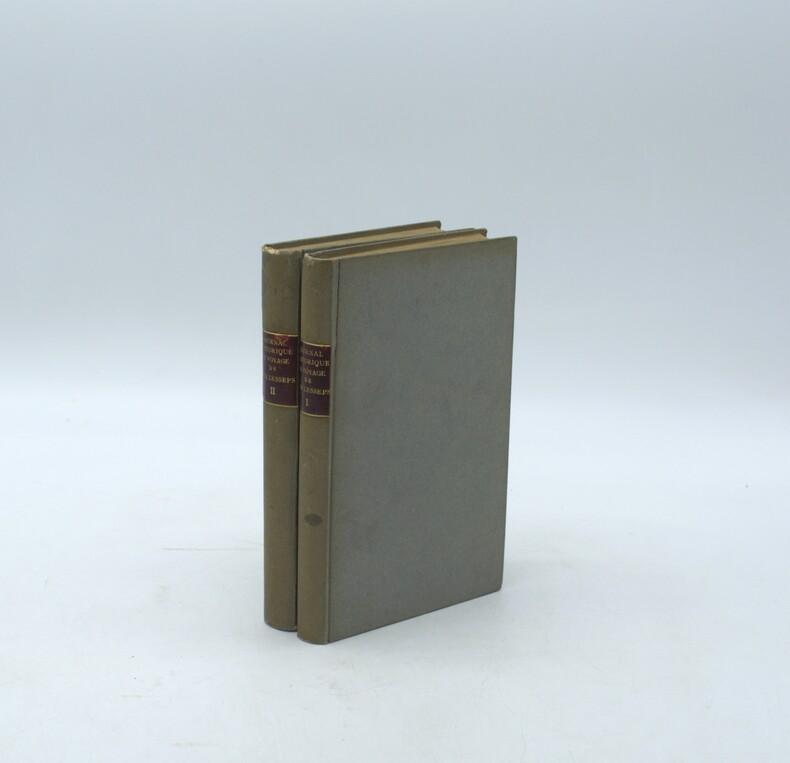
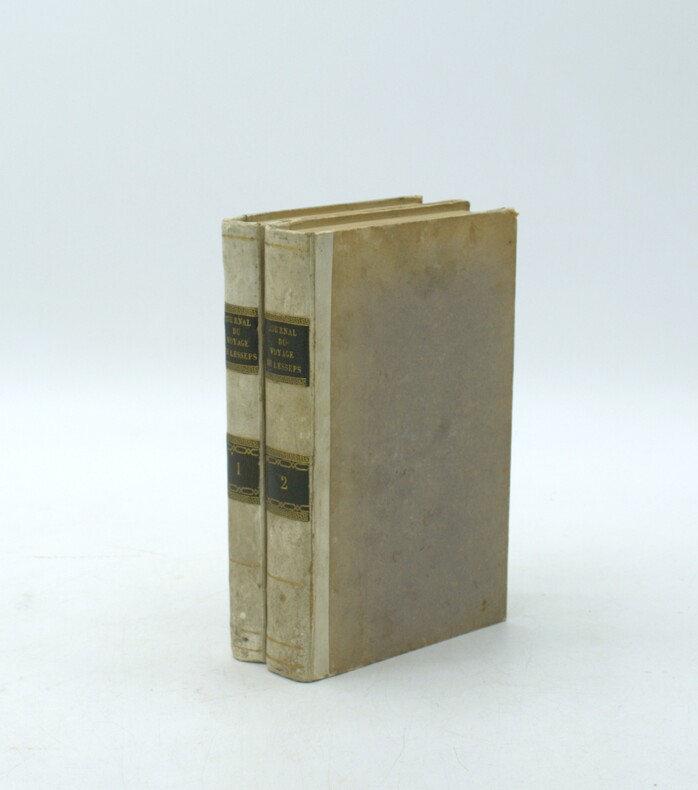
1790PHO-2142Paris, de l’Imprimerie Royale, 1790. 2 volumes in-8° (20 × 13,5 cm), reliés en cartonnage postérieur, dos lisse avec pièces de titre, d’auteur et de tomaison, (6)-VII-1-280 pp. ; 4 ff., 380 pp., VI pp. d’errata. Illustré de deux cartes dépliantes (Kamtschatka ; Route de M. de Lesseps) et d’une planche dépliante (Caravane kamtschadale). Petits défauts, réparations aux faux-titre, titre et 1er feuillet.
1899F0313Krasnojarsk Axelrodt 1899. 124 Textillustrationen auf Tafeln in Autotypie, 1 Bl., 124 S. Farbig illustrierter Leinenband. Zustand 1, tadellos!
1918140212Washington: Governemnt Printing Office 1918. Hardcover. very good. 1st Edition. 103xv; 180xv; 121xv; 162xvpp. Four volumes. 16mo. Original green cloth with fold over right hand board and button snap. Title imprinted on spine and front board. Minor wear and soiling to exterior. Russian alphabet tipped onto pastedown in each volume. 33 Figures in Vol. 1; 106 figures in Vol. 2; 49 figures in Vol. 3 and 24 figures in Vol. 4. The figures consist of black and white illustrations and maps many folding. Each volume has a section of blanck pages for notes with a number of the pages filled at an early date. Limitation page unused on the reverse of the title page. very good A very interesting publication marked "Confidential for Official Use Only" on the top of the title page. The limitation page states there wer 3000 copies printed and each were assigned to a specific individual of which this set seems not to have been named. The general use would have been intended for military purposes and thus many were probably destroyed after the First World War. Each volume was given a copy no. On the front board with this being a mixed set with the numbers 429 211 143 and 143. A great set filled with information about Russia before World War I. 1918 Governemnt Printing Office hardcover
1790PHO-2166Paris, de l’Imprimerie Royale, 1790. 2 volumes in-8° (20 × 12,5 cm), demi veau ivoire, dos lisse avec pièces de titre et tomaison maroquin noir, (6)-VII-1-280 pp. ; 4 ff., 380 pp., VI pp. d’errata. Illustré de deux cartes dépliantes (Kamtschatka ; Route de M. de Lesseps) manque la planche dépliante (Caravane kamtschadale). Petits défauts, coins usés
1790PHO-2145Berne, chez la Société Typographique, 1791, 2 volumes in-8° (20x12cm), 591pp., 534pp., basane cailloutées époque, dos lisse avec pièces de titre et tomaison grenat, filets aux plats, tranches jaspées, manque la préface, quelques rousseurs, brunissures, coiffe légèrement usée. Complet des 20 planches
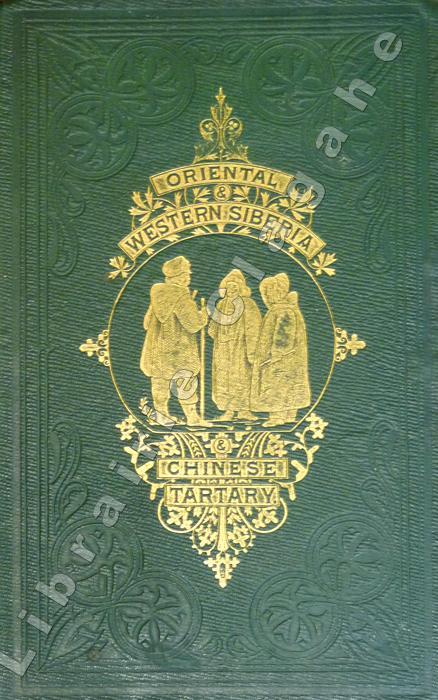
185811572Londres, Hurst and Blackett ; 1858 ; in-8, cartonnage de l’éditeur en percaline verte décorée et dorée, titre doré ; VIII, (4), 611, (1) pp., 20 planches hors-texte en chromolithographie, 32 gravures sur bois in-texte, 1 grande carte dépliante hors-texte.
8vo., Uncorrected Proof Copy; original wrappers, upper cover with paper label printed in black, a near fine copy housed in custom-made board solander case with printed paper labels. With the following additional items: (1) typescript resume on author's printed stationery of the British Military Mission in Siberia 1918-1920 (with MS corrections); (2) draft T.L. on the author's printed stationery. A request by the author for information regarding Lieut.-Col. L.C. Morley, Royal Hampshire Regiment, senior officer i/c British Military Mission at Irkutsk in 1919; (3) T.L.s. from Captain H. Flint, Royal Hampshire Regiment, responding in some detail to the author's request; (4) publisher's printed order form for the published work. Apart from the author's book we have been unable to trace any published dedicated account of BRITMIS, which accordingly remains a well-nigh forgotten component of the immediate aftermath of WWI. A UNIQUE COLLECTION NOW SAFELY PRESERVED FOR THE FUTURE.
196 pages. Reproductions of dozens of black and white photos. Author documents the dramatic trip which saw her ripped her from her comfortable Polish home on her sixteenth birthday in 1940 and took her thousands of miles, eventually settling in England. Unmarked. Above-average but not excessive wear. Binding intact with some lean to spine. Small address labels inside each cover. A worthy copy of this important and unforgettable true story. Book
56295Paris, 1883-85, Hachette et Cie, 2 volumes, pt. In-4, demi-chagrin brun foncé à grands coins, dos à nerfs, caissons filets dorés, auteur-titre et tomaison dorés, doubles filets dorés de mors et coins, têtes dorées, reliure d'éditeur de Charles Magnier, Tome 1 : (12) - IV - 481 - (5) pp., 2 portraits, 11 cartes en coul. et en noir (dont 1 carte divisée en 3 planches) et Tome 2 : (8) - 478 - (2) pp., 1 carte en noir dépliable, Première Edition traduite du suédois par Charles Rabot et Charles Lallemand, et dédié à S.M. le roi Oscar. L'auteur (1832-1901) était géologue et minéralogiste finlandais connu pour son exploration de l'Arctique. Ce livre est une mine d'informations dans de nombreux domaines des sciences naturelles; C'est également un grand classique ethnographique des peuplades du nord de la Sibérie.Bouts des coins émoussés du tome 1; très bon état des reliures; rousseurs éparses habituelles; les dorures de tête en très bon état
In-8 gr. (mm. 258x170), tela verde edit., decorazione e titolo oro al piatto (lieve alone), tit. oro al dorso, pp. VIII,634, con bella antiporta figurata e disegnata da E. Mazzanti. Il vol. è molto ben illustrato nel t. da 144 figure inc. su legno (numerose a p. pagina): molte sono disegnate da Mazzanti (tratte da fotografie o dipinti eseguiti da vari artisti), altre tratte da riviste di viaggi; unite 3 carte colorate (1 carta etnografica di una parte dell’impero russo - 1 carta geografica su l’OB dal suo confluente coll’Irtis fino alla sua foce - e 1 grande carta geografica, più volte ripieg., con il corso inferiore e principio dell’estuario del fiume OB). Resoconto dell’affascinante viaggio effettuato dal botanico e antropologo italiano di origine francese Stefano Sommier (1848-1922), nell’estate del 1880. Partito da Mosca il 21 giugno si recò nel cuore della Siberia occidentale sfruttando la via dei suoi grandi fiumi per colmare le lacune sulle conoscenze floristiche della tundra. E raccolse informazioni sulle popolazioni native ancora pressoché sconosciute allo stesso governo russo. Attraversò gli Urali e raggiunse Tobolsk da dove, percorrendo gran parte dell’altopiano siberiano, con un viaggio tutt’altro che agevole di circa tremila chilometri, costeggiò l’Irtis fino a Samarova, alla sua confluenza con l’Ob, di cui raggiunse la foce. Tornato a Tobolsk, sempre per via d’acqua proseguì fino alle steppe dei Kirghisi, attraversò gli Urali meridionali e, passando per Oremburg, Samara e Pensa, rientrò a Mosca (25 ottobre). Risg. con aloni, firma di apparten. ms. al frontesp., qualche fiorit. interc. nel testo, ma complessivam. un buon esemplare.
Roy. 8vo., First English Edition, with a frontispiece (original tissue guard present), title in red and black, 155 plates on 94 and 3 large folding maps, some light and occasional age-staining; handsomely bound in dark blue full morocco, handsomely bound in dark blue full morocco, back gilt with five raised bands, second and fourth compartments lettered and ruled in gilt, all other compartments tooled and ruled in gilt, uncut, gilt from original front board preserved and mounted on new leaf at front, a most attractive copy ideal as a gift or for presentation. An account of the Siberian Company's 1913 attempt to navigate the Kara Sea, to open a commercial route linking the Siberian interior with Europe.
191947912Vladivostok Siberia: 31st Infantry Regiment 1919. Very Good -. Vladivostok Siberia: 31st Infantry Regiment 1919. First Edition. Oversized tabloid 59.5cm; 6pp. Folds chips and a few splits along edges; paper toned and a bit brittle; Good to Very Good. <br /> <br /> Quite scarce publication from the 31st Infantry Regiment published "Every Once In A While" "Wherever We Happen To Be." This issue was published during the Russian Civil War and the United States' failed Siberian Intervention. The paper itself is full of local and international news and leads with an article "What Siberians Are Taught: One Paper Says America Treats the Russians in the Same Way as Negroes."<br /> <br /> We find three holdings in OCLC at the Hoover Institution Montana State and U.S. Army War College. . 31st Infantry Regiment unknown
17816224Neuchâtel, de l'imprimerie de la Société typographique, 1781. In-8 de XXIV-320p., demi-basane brune à coins, dos passé, mors fendus, coins frottés (rel. XIXe). Intérieur parfait, grand de marge.
(Russia asiatica - Viaggio in Siberia occidentale - 1880 - Fiume siberiano Ob' - Antropologia - Etnografia - Botanica) In 8° (cm 27 x 19), legatura coeva in cartone rigido a fondo avorio con applicata ai piatti ed al dorso la brossura originale illustrata da E. Mazzanti, taglio davanti e di piede in barbe, guardie in carta Roma marrone, pp. VIII,634, con vignetta figurata al frontespizio, 144 illustrazioni nel testo di cui molte a piena pagina, tre carte geografiche a colori fuori testo di cui due ripiegate alla fine del volume (Carta etnografica di una parte dell'Impero russo - L'Ob' dal suo confluente coll'Irtys fino alla sua foce - Corso inferiore e principio dell'estuario del fiume Ob'). Prima ed unica edizione italiana. Circoscritte e marginali tracce di ossidazione alle pagine, peraltro volume solido e ben conservato.
Pages 442-528 plus 24 pages of nice ads. Features: Hunting Wild Cattle - an Englishman's stirring adventures while catching bulls in Patagonia; My Mine-Sweeping Experiences - Joe W. White describes his WWI mine-sweeping and submarine-hunting adventures in home waters - a valuable record of the dangerous work and daring methods employed by our fishermen in destroying enemy mines and driving away submarines - with great photos; The Golden Nugget (short story); The One-Handed Hunter and the Rhinocerous; In the Wilds of Siberia - Part III - fascinating narrative with many photos of convicts/prisoners; My Adventures with the Wanderobo (a warlike African tribe); The Strange Order of the Dervishes - article with great photos; Filming the Sea Elephant; The Adventures of a Newspaperman - part 5 - some wartime experiences with German spies and other curious characters; My Week-End at Freetown - a picturesque account of the capital of Sierra Leone, with photos; Relief Worker's Adventures - part III - thrilling photo-illustrated experiences among the war victims of Armenia, Syria and Persia (The American Committee for the Relief of War Victims in the East); Kangaroo Hunting and Bark-Stripping; My South African Adventures - part 2; Canary Birds at School - French methods of breeding and training canaries; and more. Somewhat above-average external wear with loss to bottom of back strip and openings between front cover and spine at each end. Bit of writing on back cover. A worthy copy of this great vintage issue. Book
45750Belin-Leprieur et Morizot.1854. In-8, percaline romantique polychromme.540 p.Ills.par rouargue,Outwaith et Kernot. Belle reliure avec un coin émoussé.Plats et dos ornés.Rousseurs I-T.Tranches dorées.
1823000104Paris Janet et Cotelle 1823
1854113296Paris, Belin-Leprieur et Morizot, impr. Gustave Gratiot, Paris 1854 In-4 26,5 x 17 cm. Reliure éditeur demi-chagrin bleu-marine, dos à nerfs encadrés de fers dorés, tranches dorées, 540 pp., vignette de titre et 21 planches gravées sur acier hors texte de Rouargue, Outwaith, Kernot, dont 8 scènes de genre avec des rehauts de couleurs pour les costumes, table des matières. Coin émoussé et frotté, gouttière régulière, intérieur frais.
Pages 266-352 pages plus 16 pages of great vintage ads. Features: Flying in Central Africa (part I) - adventures from the flying log-book of an R.A.F. officer during ther campaign in German East Africa; My Adventures in Bolivia - Frank Rose was arrested as a dangerous revolutionary but managed to escape; Relief Worker's Adventures (part I) - thrilling adventures among the war victims of Armenia, Syria, and Persia, with photos; Hunting Big Game by Motor-Car - Captain F.A.M. Webster describes how he does it, with photos; The Adventures of a Newspaper-man (part III) - Frederic Martyn's adventures - with photos; Pukalofa's Tragic Revenge - Captain Samuel Randall recounts the brutal behavior of a whaling captain towards his crew in 1868, and what followed; In the Wilds of Siberia (Part I) - great photo-illustrated article by Harry Somerset-Lister describes his adventures; The Theft of the Zuni God - in New Mexico three U.S. Cavalry troopers stole the idols of the Indians, thus incurring their wrath; "The Surf Deer" - Reminiscences of the Dover Destroyer Patrol by Captain E.R.G.R. Evans, the Commander of the destroyer Viking; Shooting Elephants in the Middle of a Battle - what happened during the German East African Campaign; Hunting an Elephant During War - another thrilling incident of an elephant hunt during stern fighting in German East Africa, related by a Rhodesian soldier; Our Life at Holzminden - Lieut. J. Whale describes his life in this German POW camp in Brunswick, and provides his own illustrations; The Making of a Mandarin - photo-illustrated explanation of the curious and picturesque examinations which are held every three years in China and Indo-China for the coveted diploma of Chu-Jen, which entitles the holder to call himself a full-fledged Mandarin; Smugglers' Strategy Unveiled - photo-illustrated article explaining the many ingenious methods used by German and Swiss smugglers to get food and other things into enemy territory; The Tragedy of the Sling-Chain - Miner Bill Burton is killed in Australia; and more. Unmarked with average wear. A quality copy of this great vintage issue. Book
1907137343London: His Majesty's Stationary Office 1907. Undetermined. very good. Original broadside. 13.25" X 8.25". A few small chips and closed tears to edges not touching text. Ink of a few words slightly smudged. Three old horizontal folds else a bright and clean broadside. very good A scarce piece of postal ephemera advertising the new mail route through Siberia to the "Far East". The mail took a circuitous route leaving London and arriving in Vladivostok via express train from Moscow. The mail was then sent through the Siberian wilderness aboard Russian steamers "as opportunities offered" to destinations such as Hong Kong Shanghai and Canton. An interesting broadside only hinting at what must have been a harrowing journey for the First Class Mails through the wild watercourses of Siberia. 1907 His Majesty's Stationary Office unknown