2 945 résultats
14216The 'Note of Fees' dated November 1814. Horne's receipt from Edinburgh 18 November 1814. Both items in good condition on lightly-aged paper. The 'Note of Fees' is 1p. 4to and comprises 11 charges totalling £44 2s 0d. Docketted on reverse. Among the charges are: 'Herald Painter for painting writing and Emblazoning Arms in Patent £2 2s 0d' 'Herald Painter's Charge for Sketches both of the Arms of Lord Balgray and Miss Robertson: - one in colour given to his Lordship Seven in pen and Ink sent to him at Ormiston Hall and one given to Learmouth & Co. Coachmakers £2 2s 0d' together with 'Lyon Clerk for Extra Trouble £6 6s 0d'. The receipt is 1p. 12mo and is docketted on the reverse 'Note of Fees of Arms For Miss William Boyd Robertson of Lawers Novr. 1814.' It carries two embossed four pence tax stamps is signed by 'James Horne Lyon dept.' and reads: 'Edinburgh 18th. November 1814 Received from Mrs. Robertson Williamson by the hands of Messrs. Dundas & Rollo W.S. Forty four pounds two shillings Stg being in full payment of the annexed note of the Fees of her Patent of Armorial Bearings.' The 'Note of Fees' dated November 1814. Horne's receipt from Edinburgh, 18 November 1814. unknown
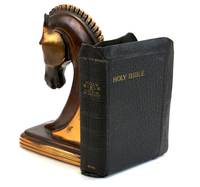
1922509114Oxford University Press 1922. Leather. VERY GOOD. Church Hymnary d. 1922 Bible and Psalms undated but assumably therabouts. 2323 pp. Metric Psalms and Hymns. Small-format 32mo bound in full-yapp black cowhide leather with pronounced grain gilt stamped lettering to spine and front cover all edges art gilt black place ribbon color maps. Some modest rubbing to the leather around the tips binding remains entirely sound inscription to FFEP verso otherwise text clean and unmarked with little sign of use or wear. Oxford University Press unknown
1995LFA-126746690N° 15 (Octobre 1995) : revue de 66 pages, format 215 x 285 mm, illustrée, brochée couverture couleurs, bon état
1998LFA-126746737N° 34 (Février-Mars 1998) : revue de 66 pages, format 215 x 285 mm, illustrée, brochée couverture couleurs, bon état
First Edition, [6], 97, [1], xxxpp., with half-title, engraved title with an engraved vignette drawn and engraved by W. H. Lizars, inscription on title "Jas. Hay 16 April 1821", date shaved from the imprint, large folding pedigree, disbound. "It will be seen, involves the question of the Male Representationship of the ancient Sovereigns and Princes of the isles; for whoever is Heir Male of Ranald of the Isles Founder of Clanranald, is also the Male Representative of his remote Ancestor Donald of the Isles, Grandson and Heir of Somerled first King of the Isles, after whom the Macdonalds are surnamed at the present day. It is well known that the descendants of Somerled (who lived in the 12th century) were Sovereign Princes, and treated as such by Foreign Powers."
1994LFA-126741868Revue de 130 pages, format 230 x 300 mm, illustrée, brochée couverture couleurs, bon état
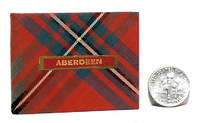
32481Dundee: Valentine & Sons Ltd N.D. First Edition. Hardcover. 1920s. 18 pages of plates. MacGregor Tartan cloth with red leather label lettered in gold affixed to the front panel and red label on rear pastedown endpaper. The views include Queen's Cross the General Post Office Wallace Statue the Old Machar Cathedral Aberdeen University and more. Light fading to spine else a fine copy. ; 5.2 x 4 cm. Valentine & Sons, Ltd hardcover
21, [1]pp., a little soiled, later wrappers.
186061757Glasgow Edingburgh & London: Morison Kyle 108 Queen Street ca. 1860. 16mo. 5.2 x 6.25 in. viii 280 pp. all w/ printed ruled borders musical scores printed throughout. Crimson-coloured Victorian publisher’s cloth gilt lettering on front cover & spine t.e.g. minor edgewear rubbing inner hinges neatly repaired still a VG copy from the library of James Grahamslaw 1833-1872 a Scottish farmer who emigrated to Vancouver Island British Columbia in 1866 helped found Victoria Lodge No. 1 of the Freemasons in 1871 and a year later died in the British Virgin Islands whose widow Violet Kerr Grahamslaw b. 1833 moved to Portland OR w/ note in MS dated April 18th 1866 from John Black. First edition of this very scarce Victorian collection of Scottish songs & music in dialect including many published here for the first time as well as musical scores published for the first time. Not to be confused with the John Cameron series published contemporaneously this volume was preceded by the “First Series†in 1856. No copies in Worldcat. Morison Kyle, 108 Queen Street, hardcover
172323751723 London: Printed by C. Meere, and sold by A. Bettefworth, 1723-1725. Deux vol. in-16: 8 x 13 cm. 5ème édition pour le Ier vol. [Nobility of England], deuxième édition pour le 2ème vol. [Origin of the Scots]. I/ 1 fr., 1 f. [Titre], 2 ff. n. ch. [Preface], pp. 1-120 [armoiries gravées], pp. 3-541[1], 4 ff. [Index & Addenda]. II/ 1 fr., VIII pp., pp. 1-86 [armoiries gravées], 511[1] pp., 13 ff. de planches gravées hors-texte. Reliures d'époque en plein veau marron, dos à quatre nerfs. Couvertures fortement frottées, le t. II a les coiffes arasées, les mors abîmés, les coins émoussés et le premier plat détaché du reste de l'ouvrage. Quelques feuillets déchirés dans les deux volumes, sans manque. Mouillures et rousseurs éparses. Ex-libris manuscrits au début de chacun des volumes. Assemblage d'époque complet de toutes ses planches. Exemplaire captivant de ce classique de l'héraldique britannique du XVIIIe siècle.
1987LFA-126739807N° 33 (Avril 1987) 66 pages, format 205 x 285 mm, illustré, broché couverture couleurs, bon état
185481635Edinburgh:: W. H. Lizars 1854-1855. First edition. publisher's green cloth with printed paper labels on spines. Light foxing to the first few and last few leaves in each volume; the cloth of one volume quite faded; moderate use to both bindings but both are tight and sound. . Folio. Two large folding maps. Additional postage particularly international applicable. W. H. Lizars, hardcover
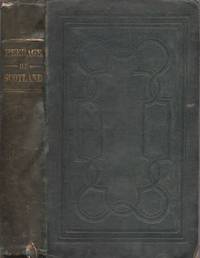
183434169Edinburgh: Peter Brown 1834. Hardcover. Fair. 12mo. xii 220 pages. Frontispiece armorial plate. Illustrated with armorial plates in text. Green cloth hardcover with blind stamped decorations on the covers. Gilt title on the spine. Pronounced slant to the hardcover. Untrimmed text edges. Cloth is worn and torn on the outer joints corners and base of the spine. Light toning and scattered foxing to the pages. Crack in the middle of the text block. No loose pages. Single complete volume with errata printed on page 220. Fair. Peter Brown hardcover
GF9970Photographie 7,5x4 cm - collée sur carton - vers 1900 -
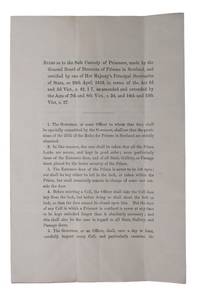
1853AQ21538s.l.: s.n. 1853. 2pp 2. Single folded sheet. Two horizontal folds manuscript docket title to verso. Lightly creased and dust-soiled. An apparently unrecorded pamphlet detailing nine regulations to ensure the safety of prisoners in custody in Scottish gaols e.g. 'Prisoners sentenced to Transportation and those committed for Trial shall not be employed in the menial offices of the Prison under any circumstances'. Not located in OCLC or COPAC. . Quarto. [s.n.] unknown
14100Lawers Strathearn Scotland. All three paid on 26 December 1842. The three documents in good condition on lightly-aged paper. ONE: 'Note of Men employed in the Village of Comrie by Orders of Mrs. R. Williamson of Lavers - to join the Lavers Company for hir sic Majesty the Queen'. on reverse 'Lawers Thos Biccarton for Men attending during the Queens Visit £1 . 19/- paid 26 Decr. 1842'. Beneath this in pencil in a later hand: 'Queen Victoria visit to Strathearn Sept 10 1842'. 1p. 4to. With some words in red ink. Mainly comprising a table of 29 names days wages due of men 'Attending the Lawers Company'. Between them the men worked 26 days and received a total of £1 19s 0d 1s 6d each. Beneath the table signed 'Thos. Biccarton' is the receipt proper: 'By orders of Mrs. R. Williamson 1842 All paid by T. B. on 10th Septr. Lawers I do hererby acknowledge to have Received from H. G. Watson Esqr. Factor for Lawers Estate the Sum of one Pound Nineteen Shillings Stg this being full pay due to the annexed Acct. for 26 men attending of Lawers in honor & Loyalty for her Majesty the Queen passing through Lawers Grounds on Saturday the 10th day of Septr. 1842 And for the above sum receipt is hereby discharged by me'. TWO: Receipt signed by 'Daniel Mc.Gregor' for 'Expense erecting triumphall arches for Her Majesty'. 1p landscape 12mo. Naming five men and recording the money paid to them. Docketted on reverse: 'Lawers D McGregor for Sundries £1. 14 . 8 pd 26 Dec 1842'. THREE: on reverse 'Lawers John McRorie for putting up Triumphal Arches £0 . 7s 6d paid 26 Dec 1843'. On slip of paper. Signed receipt by McRorie for a 7s 6d 'Attested by James MCulloch'. This was the Queen's first visit to Scotland. See The Times 12 September 1842 for an extended report of this part of the Queen's visit. [Lawers, Strathearn, Scotland.] All three paid on 26 December 1842. unknown
73281Paris, Hachette, 1840, in 8° broché, 119 pages.
8805Jahrgang XXVII. Heft 4. April 1928. Alfred Runge & Eduard Scotland, Konrad Wittmann, Hans Schumacher Très bon état.
74479c.1920. . Silver gelatin print. Very good tonal range and in good condition pasted on card.<br /> <br /> [c.1920]. unknown
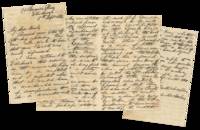
1903List2990Dover and Chatham Ontario; Edinburgh and Blairgowrie Scotland 1903. Seventy-eight pieces: seven 2.5 x 4†photographs mounted on heavy cardstock; with seventeen letters from Alexander to James Macfarlane fifty-two from James to Alexander Macfarlane and two from others to Alexander Macfarlane. Fourteen from 1853–1882; eleven from 1883–1885; thirteen from 1886; twelve from 1887; thirteen from 1888; eight from 1889–1903. Sorted chronologically. Envelopes good to very good; letters generally near fine. Alexander Macfarlane 1851–1913 was a Scottish physicist mathematician and logician. He earned a D.Sc. from the University of Edinburgh in 1878; following this he would teach at the University of St. Andrews the University of Edinburgh the University of Texas at Austin and Lehigh University. Macfarlane earned a number of accolades including elections to many scientific and mathematical societies and an honorary doctorate from the University of Michigan. After his retirement in 1894 Alexander Macfarlane moved to a farm in Ontario left to him by his uncle James who is his correspondent herein. Much less is known about James Macfarlane; born in Scotland in 1806 he immigrated to North America by way of New York in 1835. He purchased land in Dover Township now Chatham Ontario in 1853 and was elected the town’s reeve in 1879. At the time of this correspondence he was a farmer by occupation. The photographs in the collection—portraits of unknown individuals—are likely his as they are from photography studios in the Brantford and Toronto area and seem to date from before Alexander Macfarlane’s arrival in the colony.<br /> <br /> James Macfarlane’s letters to his nephew mainly written between 1886 and 1889 give detailed descriptions of farm life and logistics in 19th-century Ontario. He grew corn wheat beans clover and hay raised pigs and cows and kept a number of workhorses alongside a few seasonal employees. The elder Macfarlane describes the state of his crops the health of his animals and especially his finances taxes and employees’ wages; he writes of “a constant fear of running aground†March 17 1887. However he also occasionally discusses academic or political affairs – it is unclear what education Macfarlane had or what political experience besides his reeveship but from his writing it seems not insignificant. One prohibition-related incident in 1887 especially stands out:<br /> <br /> “During the night between last Saturday & Sunday there was a dynamite explosion in front of the handsome residence of H. Cummings Esq. of Chatham – damage but no one hurt. It is believed it was the doing of the Chatham grogocracy – Mr. C. favours prohibition – Tories do notâ€. August 10 1887<br /> <br /> This letter dates the incident to late on the 6th or early on the 7th of August 1887; we do not find the explosion mentioned in local newspapers from the time.<br /> <br /> Alexander Macfarlane’s letters which comprise most of the earlier letters in the group focus on his burgeoning academic career. In 1882 when the majority of his letters were written he had applied and was waiting to hear about a position as Chair of Mathematics at University College Dundee now the University of Dundee which was then just being formed. Besides occasional discussions of work in which he is currently engaged Macfarlane writes about his tactics for bettering his chances at the Chair; for example:<br /> <br /> “I have just received some information which indicates that I shall have an excellent chance of being successful. Rev. Mr. Tait who was our minister before he left Blairgowrie for Newport opposite Dundee happens to be a very intimate friend of the founder of the College Miss Baxter of Balgavies. I saw from the first that it would be important to secure his cooperation; he has been very active in his support. Recently he was staying at Balgavies and when the College was discussed he spoke highly in my favour. He has persuaded Miss Baxter to take some active steps in my favour. Copies of all the applications etc. are sent to her which seems to indicate that a proposed appointment is submitted to her for approval.†September 19 1882<br /> <br /> The wait is difficult for Macfarlane and he frequently comments with displeasure on related workplace politics. For instance he is upset by the choice of William Peterson—whom he describes as “a fop†October 3 1882—for Principal of the new university:<br /> <br /> “Peterson had this advantage that many of the electors had a bias in favour of a Classical man for the office of Principal. He got only a second class at Oxford. I say nothing on the subject but I have heard others express an opinion that a mistake has been made.†August 13 1882<br /> <br /> And later:<br /> <br /> “Most people express themselves as greatly surprised at the choice the Dundee Council made of a Principal. My theory of the matter is that Professor Donaldson with the view of furthering his own candidature wished to ingratiate himself with Professor Sellars after he saw that Mr Porter would not be accepted by the Council. I feel that the Council may do anything as they seem nearly incapable of forming an independent opinion.†September 27 1882<br /> <br /> When he does not receive the Chair Macfarlane shares his thoughts with his uncle about the state of Scottish Universities especially that they “have no reputation for scholarship†and that the Scottish people “need not expect learning to flourish at their Universities†November 23 1882.<br /> <br /> Of course Macfarlane’s career turned out fine despite this setback; in 1895 he tells James not unfairly that “I am considered one of the foremost thinkers of the day in the field of exact science†March 21.<br /> <br /> Overall a look at the lives and activities of an uncle and nephew with extremely different careers; of interest both to scholars of Ontario history and farming and to historians of science and higher education. unknown
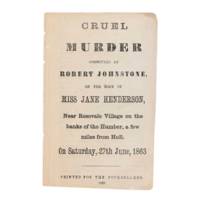
18636706Glasgow: Printed for the Booksellers 1863. First edition. 16x10cm 8pp. Unbound folded sheets in very good condition with some toning and light wear. <br /> <br /> Uncommon Scottish chapbook being a ballad in prose and poem describing the murder of Miss Jane Henderson by her lover Robert Johnstone with a knife. <br /> <br /> <br /> . Printed for the Booksellers unknown
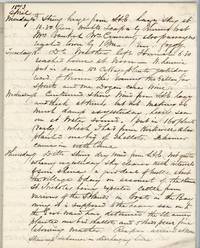
187346421Kirkwall Orkney Scotland 1873. Paper wrappers. A near fine copy. 56 pp. 4to. A rare daily diary from April 14th 1873 to January 27th 1874 detailing the weather storms the growing of crops cattle shipments plantings the comings & goings of the islanders of ships some large mostly smaller Reaper class to & from Inverness Edinburgh Wales and beyond including the author's trip to Edinburgh concerning the author's acceptance as clerk treasurer and officer of the board of the church. The journal ends with his note that he "must down to Kara Are of Kara and brake the sad news to his sister about a death.and followed by "moderate wind with a slight drizzling rain." A wealth of information on a remote area of the Orkney Islands. unknown
1693AQ21131Edinburgh: Printed by the Successors of Andrew Anderson 1693. Single leaf broadside. Edges uncut. Horizontal tear and some loss to head - not touching text. The sole edition of a broadside concerning arrangements for recruiting a militia force of 2975 as promised under an Act issued by Charles II in 1663 entitled An Humble Tender to His Sacred Majesty of the Duty and Loyalty of His ancient Kingdom of Scotland for the protection of the nation. ESTC records copies at three locations in the British Isles NAS NLS and Signet and one further in North America Folger. ESTC R229987 Wing S1674. Dimensions 370 x 300 mm. Printed by the Successors of Andrew Anderson unknown
184897631848. Full Leather. Good binding. 5-1/4" x 3-3/8." 108 pp. Full brown leather over flexible boards. Vertical red rules for accounting printed on each page. 1-3/8" strip of leather neatly removed from the fore-edge of the front cover; occasional ink spotting and minor stains throughout; toned leaves with a few creases; faded pencil calculations to pastedowns. <br /> <br /> Interesting mid-19th century farm ledger apparently from eastern Scotland possibly Inverurie or Aberdeen recorded during the great famines in Ireland and the Scottish Highlands. The currency symbols at the top of the expense and income columns appear to be in pounds shilling and pence and various place and personal names which appear repeatedly in the text – i.e. Commercial Co. of Port Elfinston sic Aberdeen Wm. Duncan et al – lead to our deducing this locale. Although the ledger is anonymous the names of Robert Frasier Brach and James Dugard appear possibly as business clients as do the names of the recorder's many temporary workers. These workers usually hired around the planting and harvesting season are both male and female and include Mary Ellice Jas Marr George Dugard Wm. Duncan Alex Burr and many others. <br /> <br /> Extensively detailed and highly readable this ledger document the many expenses and income sources of a working farm showing precise amounts for equipment scythes and carts feature prominently horses bolls of meal barrels of lime whisky and various other sundries. The farm's produce relied heavily on grains especially corn and barley just as the Corn Laws were being heatedly debated in Parliament and its overall diversity demonstrates the crop diversity that allowed eastern Scotland and the Lowlands to evade the ravages of the potato blight; plots and crops for planting the "slack land" are also demarcated. Charts showing daily employee wages are also of special note. <br /> <br /> Overall a unique useful and well-maintained agricultural document concurrent with and standing in stark contrast to the devastation occurring in the western portion of the country and Ireland at that time. unknown