James I, King of Scotland, (1394-1437).Biblio.com
2 945 résultats
182714557Perth; Printed by Crerar and son 1827. 1827. Duodecimo pp. 295. Full calf border of blind rolls and gilt double fillets to boards; ornamented and titled in gilt to spine; marbled end-papers. Contemporary ownership inscription in ink to title-page and in pencil to end free end-paper. Soiling to upper board rubbing to joints continuing to spine and upper edge of lower board shelf-wear to extremities edges evenly toned. Occasional spots of toning to contents but generally clean. A very good copy. A study of Scottish poetry and music from antiquity to the eighteenth century including discussion of Ossian Alan Ramsay and traditional folk song with two further works on Scottish poetry and dialect. WorldCat locates copies at Harvard Cincinnatti Michigan South Carolina; National Library of Australia; Leipzig; in the UK Copac locates copies at BL National Library of Wales Manchester and Newcastle. Perth; Printed by Crerar and son, 1827. hardcover
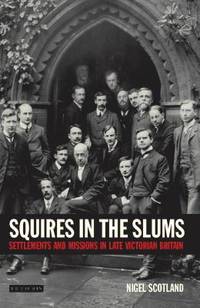
61296695I.B. Tauris & Company Limited . Hardback. New. I.B. Tauris & Company, Limited hardcover
1821221500Edinburgh: William Blackwood 1821. First Editions of both First and Second Series. 2 vols. 8vo. Original boards paper spine labels. Spine chipped joints shaky else Very Good. First Editions of both First and Second Series. 2 vols. 8vo. William Blackwood unknown
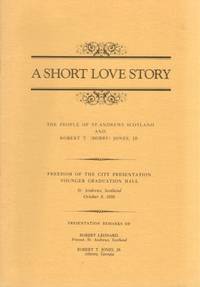
198435433Atlanta: Atlanta Athletic Club 1984. Wraps. Very good. Stapled wraps. 10" x 7". 16 pages. One photograph inside. Yellow covers with title printed in black on the front. Included with the story is a fund raising card for the "Bobby Jones Room Fund" and a explanatory fund raising copied typed letter from John P. Imlay President of the Atlanta Athletic Club. Atlanta Athletic Club unknown
1743111111113499Printed by Robert Urie and Company 1743. Hardcover. Good. Printed by Robert Urie and Company; Glasgow 1743. Hardcover. A Good full leather binding with title label on spine binding intact but a bit fragile with starting hinges some handling/scuffing to boards bit of cracking to leather spine and rear board some loss to board corners rubbing along joints chip top spine edge ink markings front free endpaper few dog-eared pages pulpy text block edges age toned text block mild bookworm damage to first approx. 37 pages faint moisture staining to pastedowns and front/back matters creases to rear free endpaper few dents with holes to mid front board some soiled specks to text block edges and pastedowns. Overall in a good antiquarian condition. 16mosextodecimo or approx. 4.5 x 7 inches. 567pp. We pack securely and ship daily with delivery confirmation on every book. The picture on the listing page is of the actual book for sale. Additional Scans are available for any item please inquire. Printed by Robert Urie and Company hardcover
1821221500Edinburgh: William Blackwood 1821. First Editions of both First and Second Series. 2 vols. 8vo. Original boards paper spine labels. Spine chipped joints shaky else Very Good. First Editions of both First and Second Series. 2 vols. 8vo. William Blackwood unknown books
BAY_06_SH_041022Encyclopaedia Britannica. Used - Very Good. Three volume set leather binding. Text blocks firm and clean bindings tight boards straight no highlights or underlining. Minor shelf wear. Solid clean set! Well packaged and promptly shipped from California. US veteran operated. Encyclopaedia Britannica hardcover
1971130797Encyclopaedia Britannica 1971. Hardcover. Fine/No Jacket as issued. L 4to 9.75 - 12'' tall. Hardcover. Book Condition: Fine. Jacket Condition: No Jacket as issued. Encyclopaedia Britannica 1971. 698 1011 954 pages. Three volumes complete. Facsimile edition. Faux leather. Nice Firm Clean copies ! Slip laid in describing the original condition with 160 copperlate engravings. Size: L 4to 9.75 - 12'' tall. Simulated foxing age spots on this facsimile. Language/Reference::Reference Works Classics/Collectors Series::Classics Modern 6179L 6179L Encyclopaedia Britannica hardcover
14033Six of the fourteen from Dollar Mains Clackmannanshire Scotland; one from 'Mrs. Fisher's Drummond Street' Edinburgh. Dating from 1799 3 1802 5 1803 5 1804. Totalling: 32pp. 4to; 3pp. foolscap 8vo; 3pp. 12mo. Each letter a bifolium addressed on the reverse of the second leaf with various postmarks wafers and seals and each docketted by the Williamson. The collection in good condition on lightly-aged paper. The fourteen letters addressed by 'E. Williamson' to 'Alexr. Williamson Esqr of Balgray' at the following addresses: six to 'St Leonard by Cross Castle'; three to Lauristone Lauriestone Loristone Street 'back of the medow' and 'North Side of the Medow'; two to 'Lexingtone Michel Cort sic'; and the earliest three addressed to him at 'St Catherine'. Each of the letters addresses him as 'My Dear Father' and is signed by Mrs Williamson as his 'Daughter' but they are each also docketted by Williamson as sent by 'Mrs. Williamson' and from the context and the semi-literate style of the writing it is clear that the writer is Williamson's daughter-in-law rather than his daughter and of French extraction. The letters also indicate that Mrs Williamson's husband was named Charles. The correspondence reveals a foreign lady in a dependent and vulnerable position in Georgian Scotland. It is largely concerned with refurbishments at Dollar Maine for which Williamson is paying letters are docketted by him 'sent her five Guinea Notes' 'sent her two Twenty Shilling Notes' and 'sent her two Guinea Notes' with Mrs Williamson making various requests complaining of lack of funds and justifying her expenditure against suggestions that she is being 'extravagante'. There are clearly tensions between the two parties: one letter is docketted by Williamson: 'Ansd 31st. March 1802 - That I would give no further Directions about the House except the putting in the new Window that I had agreed to allow formerly - That Chas. when he arrives might do as he thought proper'. Williamson's patience has clearly snapped by the time of the last letter. Four of letters are jointly written by Williamson's granddaughter Ann the niece of Mrs Williamson. Mrs Williamson's earliest letter 13 March 1799 sets the tone. In it she writes that she is 'better to have come to Town I am positively sure if I have stay at dollar in the severe wather I will not be in this world now - I was excidingly well receive by Servants People of Consequence & always engage in good Company My Skem is to go from here in the beginning of the nix week as I can not have all I want just now - I have ordre & was myself for my Gardin Seed I have Intention to Land tomorrow some by the Carrier - the Early Seeds you was so good to offer me some suply of money I will accept with gread pleasure what you please to give me but I never will fix how much as I will owe to your generosity'. A week later 30 March 1799 she explains her reasons for not returning to Dollar from Edinburgh: 'I was ready at 8 o Clock in the morning yesterday - but oblige to send an other exxpres to my Servant for he go back to Dollar as it was a terrible Day & so stormed no batots can pass the Ferry without danger . I hope you do not desaprove my Conduct - I do not believe it was possible to do in an other manner - no woman body can expose semself on the watre & in a Cart with such day yestreday & today specially with bad Health'. On 29 March 1802 she writes: 'I supose you will alow me to send for a masson for have the Thing of the chimney Pot properly I have done nothing yet & I have not a Room to go In as the window are to be put Tomorrow'. On 9 May 1802: 'Now my house is ready for receive you & Mr Charle now my dear Father it is Pretty I wish you come for see it - I am sure Mr Charle will be very surprize but I am very wex about my good & Pretty gates - My Dear Father the Country is full of Blargard every Day some Drink Dull mad mans come to the Door my Dear Lion is a gread Saffety it fear them all - but <.> Poor fellow is chut at night For my Roomm he can not privint to Breck the gates & no body lake to go at 12 o Clock at night out see what it is'. On 29 May 1802 she refers to the troubles in her homeland: 'I had some letter from France Saturday & I hope I shall not loss at all If the Peace continue - but it is says all have Soufer very much by the revolution the letter come from Paris In 9 days'. On 20 December 1802: 'Certainly My dear Father I will not be so extravagante to kept Horses for Town after a days reste all must come back twice - let me know how you like my Small Chees & If you think of some things I can bring with me for you - & also If your Batty lake the Ketchen chees If it is agreable to you I shall send more'. On 3 December 1803: 'I have ranged the house In a way to make us Comfortable but not extravagante - as you had allow me to do I shall send the Carpenter with his account to Mr Jamson - an old gate from here is to be minded for a <> at law hill - it was all roted In each side but the Midle it seem can Serve at lawhill - & James shall take it & put it - I have made also greadeal In my Jardin of my one money I hope pay peoples for work & myself I was working very hard for Six weeks - I have done also a gravel walk rong the Jardin In the Planting & make a kind of wood & what kind wether it is we can walk dry In it'. The last letter 1 January 1804 begins: I had yourr yestrenight & I can not Endestand what can have put you angre as I am sure I have always done my dutty - to my Husband to you & to my nice - it is very Inconvenient for me to go Just now but as you Insist upon her doing I shall bring away with me & Set of Tomorrow as soon it is possible In a Post Chaise tho' I am very Short of money In this Instant'. Mrs Williamson's niece Ann's letter of 14 November 1803 is typical: 'My dear Grand Papa I receved with much peasure sic your Letter of 8 Nover and return the most grateful thanks for you fine presant it is very purty My Aunt thinks it purty too - It is very cold here there has been snow upon the hils here but not much yet - I supose Papa has nearly got to America by this time for he has been more than a month away - Lyon plays with me every day and we are grate friends'. Six of the fourteen from Dollar Mains, Clackmannanshire, Scotland; one from 'Mrs. Fisher's Drummond Street', Edinburgh. Dating f unknown
11784Melvill House 14 June 1800. One page 8vo edges sunned mainly good condition. "My LOrd Having retired tot her Country after dissolving the General Assembly of the Church of Scotland I only had yesterday the Honour of receiving your Grace's Letter of the 7th informing me of His Majesty's Gracious Acception of their Address on the present Situation of publick affairs. I immediately forwarded it to the 1st. Clerk of the Asembly as a farther Record and Testimony of His Majestys benevolent Disposition towards the Church of Scotland. ." Melvill House, 14 June 1800. unknown
12179All three from Dalmahoy House near Edinburgh. Dated 3 March 1828 June 1841 and June 1852. 1828: 2pp. 4to. 'Dalmahoy nr Edinburgh March 3d 1828'. Signed 'Morton'. In fair condition lightly-aged and with a short closed tear along one fold. The draft begins: 'I had the honor a short time agao of announcing to your Lordship my intention of offering myself as a candidate for the high honor of becoming a Representative Peer of Scotland and I now venture on the score of our near neighbourhood in this country and in the hope I entertain that your Lordship will allow that circumstance to plead my excuse for being thus troublesome to solicit earnestly your kind support at the ensuing election. Should I have the good fortune to obtain this favor at Your Lordship's hands it will always be remembered by me with the most sincere gratitude'. 1841: Two drafts one on each side of a piece of 4to paper. Both from 'Dalmahoy near Edinbro June 1841'. In good condition lightly-aged. One side headed by Morton: 'Eighty copies of this letter will be required'. He solicits the vote as a dissolution of Parliament has taken place and the 'Election of the Representative Peers of Scotland' approaches. The other side headed 'Twelve copies of thsi letter will be required'. Apparently identical to that on the other side of the paper; neither signed. 1852: 'Dalmahoy Edinburgh June 1852'. 1p. 4to. Signed 'Morton'. 'It is my intention to offer myself as a candidate for the honor of re-election as one of the Representative Peers of the Scottish Peerage in Parliament and therefore venture sic to solicit the honor of Your Grace's vote and support at the approaching Election'. All three from Dalmahoy House, near Edinburgh. Dated 3 March 1828, June 1841 and June 1852. unknown
19212Edinburgh Scotland 'Monday afternoon'. 12 June 1843. . 2pp. 12mo. In fair condition aged and worn. On a bifolium docketed with the date on the second leaf. He writes that he has 'taken Trinity Grove' and that he has 'looked at your grass at Denham Green - and found it has been so neglected that it is scarcely good for any thing - We will see how it looks by the time we go down'. His daughter 'thinks she will try to keep the cow on the lawn of Trinity Grove assisted by cabbage leaves &ct from the Garden'. [ Edinburgh, Scotland? ] 'Monday afternoon'. [ 12 June 1843. ] unknown
191463715Edinburgh: His Majesty's Stationery Office. 1914. Half-Leather. Very Good. Lvi 291pp illustrated with plates text drawings large folding col map at rear bound in half leather/marbled boards raised bands/ gilt leather spine label ex Uni library with original grey card covers bound in nice looking book; Large Octavo . His Majesty's Stationery Office hardcover
4to., First and Sole Edition thus, on laid paper, with a frontispiece (original tissue guard present), title in red and black, and a fine double-page facsimile, parallel text in Latin and English, free endpapers browned (as usual), frontispiece and facsimile lightly spotted; original series binding of olive green cloth, blocked in blind, club badge blocked in gilt on front board, gilt back, uncut, a remarkably bright, clean copy. EDITION LIMITED TO 525 NUMBERED COPIES. New Spalding Club, publication no. 12. With the club's Seventh Report by Council (1893) and list of members (to 30 June 1894) bound in at end. Hector Boethius [or Boece] (1465-1536), first principal of the University of Aberdeen, is known for two important works of medieval Scottish history: the 'Historia Gentis Scotorum' (Paris, 1527) and his earlier Lives of the Bishops of Murthlack and Aberdeen (Paris, 1522). Of the latter work, a facsimile text in the original Latin was issued by the Bannatyne Club (publication no. 11) in 1825. The present edition remains the sole published transliteration. Moir was Co-Rector of Aberdeen Grammar School. Read 3742.
17675121767 Sans lieu 1767 In8 broché 452 pages -pièce de titre papier au dos et couverture d'attente.
In 4°; (4), 278, (4) pp., antiporta incisa con il titolo e 34 tavv. f.t. incise con vedute di città. Bella legatura coeva in mezza pelle rossa con titolo e ricchi fregi in oro al dorso. Doppio filetto in oro ai piatti foderati con tessuto rosso con motivi a rilievo. Dorso a 4 nervi. Spellature agli angoli dei piatti e al margine alto del dorso. Un leggero alone al margine inferiore del frontespizio inciso e al margine bianco delle prime tavole fuori testo, non fastidioso e palesemente presente al momento della stampa essendo, invece, le pagine di testo ben pulite. Ogni tavola presenta una velina protettiva con il titolo della tavola che protegge. A parte il leggero alone alle prime tavole sopra descritto, il volume si presenta all’interno in buone condizioni di conservazione. Antica firma nobiliare di appartenenza al margine alto bianco del primo frontespizio datata “Firenze 1849” che attribuisce la copia alla celebre nobildonna scozzese appartenente al famoso Clan Macnab (uno dei più antichi di Scozia), Sarah Anne Macnab figlia di Archibald Macnab e Margaret Robertson. Sarah Anne visse a lungo a Firenze dove morì, all’età di 90 anni nel 1894. Prima edizione di questo noto scritto del grande patriota e scrittore messinese Giuseppe la Farina che si inserisce nelle opere di viaggio legate alla tradizione del Grand Tour. L’opera raccoglie le impressioni suscitate nell’autore da diversi scorci italiani. Letterato e storico, La Farina, collaborò con le Effemeridi Letterarie Messinesi. Fondatore e redattore di numerosi giornali, fu autore di opere storiche e politiche (Studi sul secoloXIII; L’Italia dai tempi antichi fino ai nostri giorni), geografiche (L’Italia nei suoi monumenti; Messina e i suoi monumenti) e letterarie (Studi sopra alcuni canti della Divina Commedia). Nel 1848 condusse la Legione Universitaria della Sicilia contro i Borboni e fu deputato di Messina al parlamento siciliano dal 1848 al 1849 ed incaricato come diplomatico assieme ad Emerico Amari di offrire la corona siciliana al Duca di Genova. Nel Veneto fronteggiò gli austriaci nel 1849 quale consigliere del re sabaudo. Emigrato dapprima in Francia, verso la fine del 1856 assieme a Daniele Manin e a Giorgio Pallavicino Trivulzio fondò la Società nazionale italiana, una associazione avente l’obiettivo di orientare l’opinione nazionale verso il Piemonte di Cavour. La Farina ebbe parte attiva alle annessioni del regno sabaudo e favorì la spedizione dei Mille in Sicilia. Eletto deputato al primo parlamento italiano, nello stesso 1860 fu nominato Consigliere di Stato, successivamente Ministro dell’istruzione, dei lavori pubblici dell’interno e della guerra. Bellissime le vedute animate dei luoghi più belli del bel paese tra i quali: Lago di Como, di Lugano ( Lago Maggiore) e di Garda e poi ancora Monte Bianco, Val d’ Aosta, Bagni S. Gervasio, Genova, Venezia, Ancona, Firenze, Pisa, Roma, Itri, Subbiaco, Baja, Sorrento, Pompei, Pestum. Opera non comune. Completa. “Uno dei piu’ classici libri di vedute italiane” (cfr. Cremonini).a Vicenza, viceprefetto a Bassano, consigliere imperiale a Venezia (1841) fu studioso di belle arti e di storia. Socio dell’Ateneo Veneto, dell’Accademia delle scienze di Torino e di Padova nacque a Vicenza nel 1776 e morì a Venezia nel 1849. Esemplare in ottime condizioni di conservazione. Bibl.: Lozzi, 6094. Fossati – Bellani, 2295.
1905DEZ-1052London, A. et C. Black, 1905. In-8 en plein maroquin au dos à faux nerfs et caissons décorés de fleurons dorés. Filets et roulettes d'encadrements dorés sur les plats, coupes guillochées, roulettes d'encadrements sur les contre-plats, toutes tranches dorées. Ex-dono de Edith et Ernest Hall à Raymond Michel. Xi, 255 pp. 75 planches en couleurs sous serpentes légendées d'après Harold Sutton Palmer. Le dos et une partie du premier plat passé, mors du 1er plat fendu sur 1 caisson en haut et 1 caisson en bas, coins émoussés, intérieur frais.
40632Londres.Longmans,Green and co.1901.EO.In-4 en demi-vélin à coins.167 p.avec Index.Gravure par Walter.L.Cotts en frontispice.Très nombreuse illustration et gravures en noir dont 2 planches en couleurs. TBE.Caractères dorés au dos et soulignant les plats.En langue anglaise.
18705358CBLondon und Edinburgh, A. Fullarton; New York, Fullarton, Macnab & Co., o.J. (ca. 1870?). Gr.-8°. LXVIII, 816 S.; 872 S. Mit 59 Karten (teilw. farbig) und Stahlstichtafeln. Halbleder d. Zt. mit Rückenvergoldung. + Wichtig: Für unsere Kunden in der EU erfolgt der Versand alle 14 Tage verzollt ab Deutschland / Postbank-Konto in Deutschland vorhanden +, 5358C 2 Bde.
1827AUB-8459London 1827. Bon exemplaire relié, reliure pleine toile, 40 pages + planches. (+solde texte vol. I).
First edition, [4], 178pp., new endpapers, recent quarter calf, marbled boards, morocco spine label. William Aiton (1760-1847) of Strathaven was Sheriff Substitute for the Middle Ward in Lanarkshire, and was widely known as an authority "on all matters bearing on Scottish husbandry". He had the perception to observe that one of the major problems of the Scottish farmer was the cultivation of moss earth. Goldsmiths'-Kress no. 19038.1; Fussell III, p. 59; Rothamsted, p. 9.
2 vols., roy. 8vo., First Edition, with numerous plates, many full-page and smaller illustrations, plans and diagrams in the text, and 2 large folding maps in pocket at end of second volume, free endpapers lightly spotted; green cloth, gilt backs, a near fine set in unclipped dustwrapper. A standard reference.
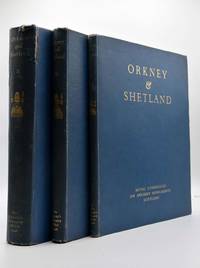
mon0000982734Scotland Royal Commission on Anc. Hardcover. Very Good. in x in x in. 3 volume set. Complete with numerous plans and illustrations. Volumes 2 & 3 complete with foldout maps. Scotland Royal Commission on Anc hardcover
684799like new. unknown
176237525ABUlm und Leipzig, Gaum 1762. 4°. Frontispiz, [6] Bll., 280 S., [1] Bl., 281-544 S. HLdr der Zt mit rotem Rückenschild. Rückenbezug stellenweise beschabt, Einband restauriert. Teils gebräunt bzw. etwas stockfleckig, die letzten Bll. mit kl. blaßen Wasserrand.