"Jimmy" Late of Ciro's LondonBiblio.com
16 759 résultats
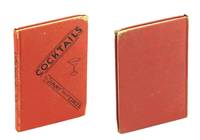
1928513j0949New York: David McKay Company Inc. Good with no dust jacket. 1928. First Edition. Hardcover. Documents 251 drinks from Absinthe to Zaza. "This in short is a work dedicated to the simplification of serious and scientific drinking." - Preface. 4-96 pp. Undated but the Chanticleer Society suggests a printing date of 1928. Includes eight pages of toasts at back. Moderate wear to original red boards lettered in black. Tight clean and unmarked. No dust jacket. A sound example of this wonderful vintage cocktail reference. 6.75" by 4.5" ; 16mo - over 5¾" - 6¾" tall; Cocktails By "Jimmy" Late of Ciro's London Recipes Alcoholic Drinks Vintage . David McKay Company Inc. hardcover
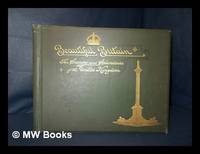
1884204244London : The Werner company of Chicago 1884. First Edition. Hardback. Very good copy in the original gilt-blocked dark green cloth over beveled-boards. Gilt insignia and vignette to front board. Spine bands and panel edges slightly dulled and dust-toned as with age minor generalized wear to extremeties. Remains particularly well-preserved overall; tight bright clean and strong.; 8vo 8"" - 9"" tall; 192 pages; Physical description. : 192 p. ; 28 x 35 cm. Notes: Photographs taken by gracious permission of Her Majesty the Queen. Royal residences palaces and castles bowers and hunting lodges river banks and islets the homes of princes."" -- t. P. Subject: Castles - Great Britain - Pictorial works. Great Britain - Pictorial works London : The Werner company of Chicago hardcover
19832090502113712678Not Available 1983. Soft Cover. Fine. The book is in fine condition. Not Available paperback
16215The Ladies' Sanitary Association. London: Published at the Office 14a Princes Street Cavendish Square. Printed by Odell & Ives 18 Princes Street Cavendish Square. Undated 1859. 15pp. 8vo. In good condition lightly-aged no wraps disbound. No copy on COPAC or on OCLC WorldCat. [The Ladies' Sanitary Association.] London: Published at the Office, 14a Princes Street, Cavendish Square. [Printed by Odell & I paperback
16971The reference on the letterhead of 'Baron Camera Studies. 23 Grosvenor Street W.1. Mayfair 5069 London '. 2 August 1940. Some of the photographs are dated between 1936 and 1947. The collection of 26 items is in fair condition aged and lightly worn. The 24 black and white photographic prints of which there are 23 different images and one image duplicated in a smaller size range in size from 29 x 24.5 cm to 8.5 x 11.5 cm. The pictures are tender and affectionate in an informal style unusual for Baron. One picture stamped 'UNRETOUCHED ROUGH PR<.>' shows Owen sitting on Baron's knee on a wooden bench the two smiling. The four largest are studies of Owen's smiling face staring into the camera. Also present are three profile shots of Owen at work one of them with 'DREAMING OF THEE' scratched onto the plate. There is also a picture of Owen with a young woman an actress with 'Teddington Studio 1940' in pencil on reverse. Several of the images have manuscript notes on the reverse. An image of Owen at her desk has 'May 31st /44 Swabe's Studio Grosvenor St'. A small duplicate of one of the largest images has 'Miss Owen 79 Cowper Rd W.7'. A portrait of a smiling Owen has 'Teddington Studio 1940'. An image of Owen standing in the street has 'Shepherds Bush Studios 1947'. A picture of Owen standing outdoors clutching hands with two other women has 'A. T. P. Studios Jan: 1936'. Another street shot has 'Gainsborough July /45'. Six more images show Owen with others including one scene of what appears to be a society wedding two at a party or in a pub and one taken outdoors seated with a group of ladies in a crowd. The autograph reference by Baron is 1p. 8vo and headed 'To whom it may concern'. The first paragraph reads: 'Miss Owen has been in my employ for 4 years in the capacity of head printer & retoucher. During this period she has proved herself to be a first class technician in all departments of the dark room work. Apart from this - her loyalty honesty and devotion to duty have made her an indispensible member of my staff.' He ends in the wish that Owen will remain in his employ 'for as long as we can keep going after my taking up army duties'. He hopes that 'this reference will I hope always be useful to her'.The last item is a page of typed 'NOTES ON PHOTOGRAPHER BARON'S ASSISTANT MARY OWEN' by 'Kay Locker daughter of Reginald Christopher Wright and therefore Mary Owen's great niece'. The notes discuss: Name 'Baron seems to have called her affectionately "Missie Owen" or Missie Owenie". Within the family she was known certainly in later years as "Tiny" or "Tinie".' Position Testimonial Background. Unsigned manuscript note at foot: '"Baron" archive acquired from Kay Locker May 2014'. See Scans. The reference on the letterhead of 'Baron | Camera Studies. 23 Grosvenor Street W.1. Mayfair 5069 [ London ]'. 2 August 1940. So unknown
16972The inscription on the back of the photograph is dated May 1940. The other items undated. Three black and white prints ranging in size from 12 x 17 cm to 10 x 7.5 cm. The contact sheet is 12.5 x 13 cm. The four items in fair condition lightly aged and worn. One of the three pictures shows a smiling Baron outdoors with a young blonde boy his son who is holding a camera tripd; another shows him standing with his arm on the shoulder of another man his brother both on skis in the snow; and the third shows him in a heavy wool coat on the steps of a European building with a man in Slavic costume. The last is inscribed on the reverse: 'May 1940 <>. Miles from anywhere love Baron'. The AGFA contact sheet has nine images of the photographer's head and shoulders: smiling frowning smoking. Also present is a 4to leaf extracted from a magazine dated 'May 2 1953 ' with pictures of Baron outside his Brick Street studio and at his fixing dish. The inscription on the back of the photograph is dated May 1940. The other items undated. unknown
25153Town Hall Ealing 8 9 and 10 June 1920. Francis A. Percy Printer West Ealing. A nice piece of Ealing ephemera and scarce: no other copy traced either on WorldCat or JISC. 48pp 12mo. Stapled into grey wraps with heavily-inked cover illustration by Joan Murrell depicting six figures from various nations Japanese geisha in the middle beneath bunting of five flags with Union Flag in centre and with 'BAZAAR OF NATIONS' at head. Title page reads: ‘Book of the Bazaar / held at the / Ealing Town Hall / Tuesday Wednesday Thursday / June 8th 9th 10th / 1920. / Complete Guide to Bazaar containing a Detailed Account of the Stalls Entertainments Side Shows also Names of Stall Holders Helpers &c. / PRICE . ONE SHILLING.’ The 48pp of text have become detached from the wraps as a result of the rusting of the staples; apart from rust staining they are in fair condition lightly discoloured and worn in wraps with slight wear at extremities. On the reverse of the title page is a photograph of the organizer ‘Rev. A. C. BUCKELL M.A.’ Facing this is a ‘List of Patrons’ of the ‘Bazaar of Nations’. On the reverse of the list is a photograph of ‘Rev. L. T. S. BARRETT’ facing which is the ‘Daily Programme’ with a photograph of ‘Rev. J. G. T. FIRTH’ on the reverse. P.7 carries an explanation of ‘The Object of the Bazaar’. This consists of raising money for the payment of a debt for the parish hall and payment for repairs to the hall and to the clergy house. The pamphlet mostly consists of advertisements but among the features are poems including a full-page one by ‘T. P. Cope-Proctor Ealing’. Details of the sixteen stalls are given each of the first fifteen representing a country from England to the U.S.A. no Germany; also details of the opening ceremony and pageant. See Image. Town Hall Ealing, 8, 9 and 10 June 1920. Francis A. Percy, Printer, West Ealing. paperback
16522To be sold by Auction by Messrs. Knight Frank & Rutley . in conjunction with Messrs. Richardson & Pierce Ltd. on the premises . 17 August 1931 and three following days. J. F. Austen was the son of John Austen VII. For his relation to the novelist see 'Jane Austen's Letters' ed. Le Faye OUP 2011. The present item is excessively scarce with no copies traced on either COPAC or OCLC WorldCat. 4to 18pp. on ten leaves paginated 1-2 17-24 57-63 79. In original brown printed wraps. Aged and worn with rusted staples. The present item is defective lacking several leaves perhaps the attentions of the booksellers only interested in the books but carrying the Fourth Day's Sale complete pp.57-63 lots 936-1076 devoted to the sale of the 'Library of Miscellaneous Literature including Italian English and French Standard Authors also Loggan's Oxford and Cambridge folio vellum 1675; Johnson's Dictionary 1st Edition 2 vols. folio calf 1755; Saxton's Atlas of England folio old calf 1579 etc. etc.' The library section largely priced in pencil with a few names. One notable lot given the circumstances was '990 Austen Jane Works 6 Marryat 4 and 20 0ther vols.' which sold for £2 10s. Loosely inserted is a printed billhead from Alfred J. Burrows 'Amalgamated with Messrs. Knight Frank & Rutley' made out in pencil to Maggs and dated 20 August 1931 a bill for five lots purchased at the sale totalling £35 2s 6d. To be sold by Auction by Messrs. Knight, Frank & Rutley [...] in conjunction with Messrs. Richardson & Pierce, Ltd. on the premi paperback
15265The cartoons were published in Punch London: 26 August 1865; 18 May and 2 June 1866; 18 May 1869. Four charming and amusing cartoons from Punch's golden age. All four are executed in a similar style but the identity of the cartoonist or cartoonists is unknown. The first of the two cartoons in Item Two below as published by Punch has the monogram signature 'F C' engraved in the bottom right-hand corner. No Punch cartoonist with these initials is apparent. ONE: Captioned: 'Another Brilliant Idea Only Brillianter!' 21 x 13.5cm. In good condition on leaf of browned high-acidity paper torn from a notebook. Two men idle in a punt while two women hold up sheets. Appeared on 26 August 1865 as companion piece to an earlier Punch cartoon 5 August 1865 the latter captioned 'Brilliant Idea How we had ourselves blown up the river as it was a great deal too hot to row.' TWO: Two companion pieces 12 x 10cm and 11 x 9cm laid down on 13.5 x 21 cm leaf. Both in good condition lightly-aged; with slight loss to one edge of mount. Mount captioned in manuscript: 'ON THE ICE. Being Helped along a Slide by some one Else's Brother and - Being Helped along by one's own Brother.' Dated in bottom right-hand corner of mount to August 1866 but in fact appearing in Punch 10 March 1866. In the first of the two a pretty young girl is solicitously assisted along an icy path by a dapper young man with moustache straw hat and cane; and in the second the same young lady's younger brother propels her forwards along the path with a heave his head planted firmly in her bustle. THREE: Captioned: 'Boat-Race of the Future. Drifting down to the Starting-Point.' 11 x 17cm. On 13 x 21cm mount. Two row boats each containing five ladies in with an urban river bank behind them. The five ladies in the boat in the foreground are smartly dressed in uniform striped dresses and spotted hats. Published in Punch 2 June 1866. Both in good condition lightly-aged; with slight loss to one edge of mount. FOUR: 'This is what we may Expect to see this Season.' 21 x 13.5cm. In good condition on leaf of browned high-acidity paper torn from a notebook as Item One. Lady dressed in high style with top hat and bustle rides side-saddle on a bicycle with her little dog scampering beside her while pursued by a surprised John Bull on another bicycle past a bemused bystander. Published in Punch 18 May 1869 with the slightly different caption 'Oh! Then this is what we may expect to see this season.' The cartoons were published in Punch (London): 26 August 1865; 18 May and 2 June 1866; 18 May 1869. unknown
20844London: Ford & West Imp. 54 Hatton Garden. 1852. 6pp. small 4to. Stitched into brown wraps with lithographed title on cover in pastiche of Gothic design including monogrammed initials 'IS' in shield with the letters picked out in red. In fair condition aged and worn. An extremely scarce item no copies found on OCLC WorldCat or COPAC whose text and illustrations cast light on the practices at the Royal Academy in the mid-Victorian period. Scumble is a glaze painting technique. The piece is a poem in four-line stanzas written in Wardour Street English beginning: 'Now lyth and listen Students all I come before ye here To tell the Mischance that befell A yonge Probationere Merrye it was in Londonne streetes The daye was faire to see When sallied forth an Artiste-youth To the Royal Academie.' The drophead title on the first page has the letters in the name 'Arthur Scumble' also picked out in red. Each page carries a highly-stylised illustration the last five in text the first in the margin and depicting a herald holding a flag on a pole and blowing into a horn. The other five illustrations show: the artist handing in his drawing; drawing a skeleton; drawing his 'Figure after the Antique'; running away with hat and glasses flying; and his body being searched after his suicide by two policemen. Running synopses in margins the first reading: 'Of a yonge Artiste hight Arthur Scumble & how he takes a Drawynge to ye Academie to obtain entrance therein as a Probationere.' There follow: 'He urgeth on ye Portere ye. necessitie of a speedie Decisionne by ye. Council.' 'He commenceth Worke at ye Academie' 'But lykes it lyttle' 'He fyndeth ye Skeleton tough' 'Commenceth hys Figure after the Antique. The Cause of much swearynge' 'and wyshynge the Curator and Keeper to be in a warmer place than wold be consistent with ease and comforte' 'He groaneth in spirit' 'He completeth hys figure' 'The Council decides on ye Drawynges wyth its usual Judgmente' 'Ye Decisionne of ye Councill is adverse – rejectynge ye Drawynges' 'Ye Rage of Scumble thereat' 'and' 'Astonishmente of ye. Portere' 'In dysorder of mind & Bodye he fleeth from ye Academye' 'He commyteth Suicide' 'Ye. Ende'. See IMage. London: Ford & West, Imp. 54, Hatton Garden. 1852. paperback
22535'Harmsworth Trust Library The Tenth Portion'. London: Sotheby & Co. Day of Sale: 26 March 1947. The full title reads: 'Harmsworth Trust Library The Tenth Portion Catalogue of the Collection of the Writings of the Revd. C. L. Dodgson "Lewis Carroll" Forming part of the renowned Library of the late Sir R. Leicester Harmsworth Bt. LL.D. and now Sold by Order of the Trustees'. 21pp 8vo. With frontispiece and plate with illustrations on both sides as well as several facsimiles in text. Front cover states: 'Illustrated Catalogue 2 Plates and 6 Line Reproductions'. In yellow printed and stapled wraps with last page of text printed on inside back cover. Loosely inserted is the printed list of 'Prices and Buyers' Names' 2pp 8vo the buyers including the firms of Quaritch Elkin Mathews Maggs Sotheran. Aged and worn. Ownership inscription at head of front cover of 'Miss Myers' i.e. the manuscript dealer Winifred Myers 1909-1985 - and marked up in ink and pencil by her on last page and both sides of back cover. The printed list indicates that 'Myers' - her father's firm - bought the three lots preceding the last. The catalogue has a foreword dated January 1947 discussing the collection. 'While he entered the field a little later than Mr. M. L. Parrish he soon became his most formidable rival and many rarities which might have gone to America in the late 'twenties and early 'thirties were preserved in this country to be offered now'. The catalogue is arranged in three parts: 'Works by C. L. Dodgson lots 2871-2982; Autograph letters and MSS. lots 2983-2988; Photographs and association items lots 2989-2997'. The total of sale according to the inserted list was £3314 5s 0d. The highest-selling lot was 2882 a presentation copy of the first edition first issue of 'Alice in Wonderland' which was bought by Maggs for £1200. ['Harmsworth Trust Library | The Tenth Portion'.] London: Sotheby & Co. Day of Sale: 26 March 1947. paperback
26489Between April and June 1907 Daily Chronicle; National Vigilance Association; London Council for the Promotion of Public Morality; London Female Preventive and Reformatory Institution. A marvellous slice of unexplored Edwardian social history raising questions of morality censorship art and pornography from the papers of William J. Taylor Secretary of the London Female Preventive and Reformatory Institution. The 'Living Statuary' controversy arose over 'the propriety of the living statuary exhibitions in music-halls' Daily Chronicle 30 April 1907 and in particular the performances of the Australian artiste Pansy Montague b. 1885 known as 'La Milo' who posed as a living statue covered in alabaster whitening with a few strategically placed pieces of white material. The scandal was not restricted to London: a parade in Coventry in 1907 in which 'La Milo' took part as Lady Godiva caused an outrage. The present collection gives a full picture of the range of opinion with Taylor invoking John Ruskin and a large number individuals quoted in the newspaper reports some of the quotaions lengthy from individuals ranging from leading clerics and Mrs Bramwell Booth to Millicent Fawcett Hall Caine Sir Lawrence Alma-Tadema and Max Beerbohm the last of whom comments with characteristic wit: 'It is no more improper for human beings to represent statues than for statues to represent human beings. But the practice strikes me as rather absurd.' The result of the controversy was inconclusive and the practice of 'living statuary' continued for decades in the 'tableaux vivants' at Soho's Windmill Theatre. The collection is in good condition with light signs of age and wear apart from the three loose newspaper cuttings which are in poor condition. ONE: Duplicated copy of letter on 'LIVING STATUARY' by William J. Taylor as secretary of the LFPRI 200 Euston Road NW 4 May 1907 'To the Editor of the Daily Chronicle'. 2pp 8vo. With a few minor manuscript corrections. 'Having for nearly 49 years laboured to rescue the victims of ungoverned passion' he is in the present case 'surprised that not more references have been made to that prince of art critics John Ruskin. His words are surely worth of recall.' A long quotation from 'the “Eagle's Nest†Lecture 8' follows on how 'The study of the nude is injurious beyond the limits of honor and decency in daily life'. Taylor feels that 'the words of Ruskin should be written in letters of fire and burned into the consciences of men and women everywhere. The only safe path to the maintenance of virtue is not to go in any direction calculated to excite our baser nature but in striving to keep as far away as it is possible.' TWO: Two typewritten circulars and two manuscript cards from the National Vigilance Association And International Bureau for the Suppression of the White Slave Trade London. All four items on the NVA's letterhead and the first three signed by both the NVA secretary Willliam Alexander Coote 1842-1918 and the secretary of the London Council for the Promotion of Public Morality E. Fox Butlin. First circular 15 May 1907 2pp discussing the fact that 'the Music Halls have for some time been giving an entertainment described as “Living Statuary†in which men and women appear apparently in a state of nudity' and the 'strong protests' that have been made 'in London and the Provinces'. The NVA and LCPPM are joining a deputation to the London County Council which is to be headed by the Bishop of London and they request a delegate so that 'the deputation shall be thoroughly representative of the efforts being put forth in London to help young men and women to a more excellent way of life'. First card postmarked 16 May 1907 and addressed to the secretary of the London Female Preventive and Reformatory Institution written in manuscript and giving the date of the deputation. Second circular 29 May 1907 1p giving details of the time and place of the delegation. Second card postmarked 3 July 1907 unsigned and in manuscript a reminder of the date for the deputation. THREE: File of newspaper cuttings from the Daily Chronicle. In brown paper folder with the following on the cover: 'Row III Hole I Correspondence Daily Chronicle April – May 1907 Living Statuary'. A series of fourteen cuttings of long articles in small print from between 30 April and 6 June 1907 each headed 'LIVING STATUARY' laid down on one side each of twelve ruled 8vo leaves. The date of each article is given in manuscript. Subtitles: 'Exhibitions Withdrawn in Manchester. Managers' Decision' 'Attitude of the London County Council. La Milo's Reply. Protest by Mr. Thornycroft the sculptor' 'Is it degrading What famous painters think. Sir L. Alma-Tadema's view.' 'Influential Deputation to the L.C.C. No answer given.' 'Leading public men on the controversy. Artists' views. Influential appeal to the L.C.C.' includes quotations from figures including Conrad Dressler Hayden Coffin Charles Hawtrey and Evan Spicer 'Further protests from notable men. Bishop's opinion. Effect of campaign on the managers.' quotations from figures including the Bishop of Ripon W. R. Colton G. R. Sims Mrs. Bramwell Booth 'Birmingham exhibitions withdrawn. Father Vaughan. Trenchant attack on the performers.' many quotations including ones from Hall Caine Walter Crane Max Beerbohm 'It is no more improper for human beings to represent statues than for statues to represent human beings. But the practice strikes me as rather absurd.' Bishop of Manchester; 'â€La Milo†Makes an Appeal to the L.C.C. Artists' Deputation.' 'Rev. Silvester Horne's Visit to Music Hall. His impressions.' 'Nottingham Police as Censors of the Exhibitions. Mr. Straus is pleased.' 'Licensing Committee to view La Milo. Dr. Emil Reich. “Revolting untruth of the accusations.â€' 'Exhibitions Withdrawn in Glasgow. The London Crusade.' several quotations 'Bishop of London to Lead Deputation to L.C.C. Action in Wigan.' including long quotations from 'Mr. John Davidson' 'Dr. Horton' and 'Mrs. Fawcett'. FOUR: A further four cuttings the first three loose and in poor condition with detached sections chipping and loss to text. The first from the Tribune 26 June 1907: 'Living Statues Banned. County Council's Decision. Indignant Artists.' The second an editorial from the Evening News and Evening Mail same date: 'The Death of Living Statuary.' The third without source or date: 'Living Statuary. Important Deputation to the L.C.C. Action Probable.'The fourth laid down on paper an unrelated short report on 'Art and American Morals' from the Evening News 4 June 1907. Between April and June 1907 [Daily Chronicle; National Vigilance Association; London Council for the Promotion of Public Moralit unknown
22267Berlin; 4 September 1820. The letter announces the transfer to Berlin of 'Monsieur de Wagner' London Chargé d'Affaires of the the Kingdom of Württemberg resident at 42 Alpha Place Regent's Park. The recipient Sir John Coxe Hippisley whom George III had described as a 'busy man' and 'grand intriguer' had retired from public life two years previously but was clearly still involved in diplomatic affairs. 2pp 4to. Bifolium. Forty-one lines of neatly-written text addressed to 'Sir J C Hippisley Bart. Lower Grosvenor Street.' On aged and worn paper with short closed tears at edges of folds. On paper with two prominent circular watermarks one a regal eagle with motto 'Gott bewahre sein Reich' the other a portrait of 'Friedrich Wilhelm III Koenig von Preussen'. Wagner begins with 'the most humble and anxious apology' for his late letter which he hopes to excuse by explaining the 'circumstances': 'Soon after my arrival in Stuttgart I had the honor to see the King and to deliver your letters and parcels; I delivered also those to the Queen Dowager Augusta of Brusnwick wife of Frederick I who had died in 1816 in her own hands as well as to Baron Maucler who probably has written to you since'. Wagner delayed writing to Hippisley as Maucler had 'promised me a letter for you'. Wagner was 'received very graciously and promoted to the rank of Councillor of Legation'. A bout of ill health was cured by a two-month tour of Switzerland. 'The King and Queen as you will have heard were in Italy and derived benefit from the baths tho' as yet without the desired effect for the prospect of the throne' i.e. no pregnancy. On Wagner's return to Stuttgart 'the situation as Chargé d'Affaires at Berlin was offered to me under favorable conditions' which he accepted. The previous holder Count Mandelsloh is to be Wagner's 'second successor in London' and will 'present you this himself and I beg to recommend him to you most particularly for you will find him worthy in every respect of the kind reception and confidence with which I have been honored by you myself'. He will write to Hippisley 'more at length on another opportunity when I shall have more leasure sic'. In the meantime he presents his respects 'to Lady and to Miss Hippisley as well as to Mr. Hippisley'. He ends with an expression of the 'due sense of gratitude for the kindness you have conferred on me'. Berlin; 4 September 1820. unknown
249075 February 1918; on letterhead of Woodlands Cobham Surrey. See her entry and that of Kegan Paul in the Oxford DNB. 1p 4to. In fair condition lightly aged and worn. The recipient is not named. Reads: ‘Dear Sir. / Mr. Kegan Paul was a great friend of mine & when it came out he gave me a book called “Rabbi Jeshua†1881. published by the firm. I should be so much obliged if you might tell me the name of the writer if I am asking what is never done please forgive me. / Yrs truly / Maria Theresa Earle’. At top right in her hand: ‘Mrs C. W. Earle’. 5 February 1918; on letterhead of Woodlands, Cobham, Surrey. unknown
82611 May 1859. 12mo 4 pp. Bifolium. Watermarked 'TOWGOOD'S SUPER FINE 1859'. Eighty-seven lines of text. Text clear and complete on aged and grubby paper. With little hope of influencing the editor of Punch the author feels compelled to 'write and tell you what I and many others think about your Publication and the malignant spite you display towards individuals who happen to incur your wrath'. This 'malignity' he feels 'must be derived from that murderous old ruffian from whom your publication takes its name and which alone prevents it being an influential publication. Men laugh at the jokes in it and admire the skill of Mr. Leech and his assistants but II have yet to find the Man whose opinions were ever changed by anything he saw in "Punch".' He gives two examples of 'many instances of individuals who have been persecuted' by the magazine: the actor Charles Kean and 'Mr Williams of Lambeth'. What had Kean 'done to incur the wrath of "Punch" Simply offended one of its staff'. As for Williams he had stated 'in a Speech to the Electors of Lambeth . that he had been offered a Title which he rejected - now that was nothing but the truth for you know very well that a Baronetcy really was offered to Mr Williams and rejected'. The author accuses 'Punch' of being 'ready enough to make yourself a mere tool of corruption . trying to do that by ridicule which those in power could not do by flattery'. Quotes 'the advice given this day by the "Weekly Dispatch" to the "Saturday Review" before concluding 'You need not make any funny remarks about any grammatical errors that may appear in this letter. If there are any I admit them for I do not profess to be a Scholar'. 1 May 1859. unknown
74021810. 'Cox and Son Printers Gt. Queen Str.' London. Printed on one side of a piece of thin laid paper dimensions 320 x 195 mm. Laid down on a piece of brown paper and discoloured by the glue employed. Text clear and entire but with chipping and slight loss to extremities. Twenty-one line notice beginning 'LONDON the 16th May 1810. The COURT of DIRECTORS of the United Company of Merchants of ENGLAND Trading to the EAST INDIES do hereby declare that they will put up to Sale at their present MARCH SALE besides those Goods already declared the undermentioned viz. COMPANY'S Rice - - - Bags 1700 PRIVATE-TRADE AND PRIVILEGE Benjamin Camphire Castor Oil Galls Ginger Gum Lack Lake. Rice Safflower Saffron Sal Ammoniac Spice Sticklac Redwood &c.' The sale also includes 'PRIVATE TRADE AND PRIVILEGE Cornelians Tortoiseshell China-Ware Rattans Ebony &c.' See Image. 1810. 'Cox and Son, Printers, Gt. Queen Str.' [London] unknown
25462The Clarendon Hotel Bond Street London. The entries all said to date from 1831. The Clarendon Hotel was once - as ‘Routledge’s Popular Guide to London’ stated in 1862 - ‘the most fashionable place in London’ and the present collection of autograph signatures from its guestbook all of them said to date from 1831 bear witness to the fact that - as ‘Gilbert’s Visitor’s Guide to London’ 1851 states - it was ‘frequented by the Nobility and Gentry and Foreigners of rank’. Its reputation had been made during the Regency period and in 1820 ‘Leigh’s New Picture of London’ stated that it ‘and Jaquiers are now one hotel’. The hotel’s fame is indicated by the fact that two years after the date of the present collection in 1833 the its pretensions were ridiculed from Scotland by ‘Blackwood’s Magazine’: ‘“I hope†said M‘Goul “it’s a goot house - no sand crunching upon the floor nor the rafters plack with peat reek.â€â€™ Walter Besant provides information regarding the hotel in his ‘Survey of London’ 1911 ‘At No. 169 on the west side of Bond Street was the Clarendon Hotel formerly the town house of the Dukes of Grafton and afterwards the residence about 1741 of the elder Pitt. The hotel was closed in 1877 and replaced by a row of shops.’ The revised ‘Survey’ 1980 provides more information. The present collection of material consists of a large number of autograph signatures on gilt-edged leaves extracted from the Clarendon Hotel guestbook: a total of seven full leaves dating from between 15 October and 2 November 1831 and nine slips cut from leaves seven of them dating from the April 1831. The material is in good condition with minor signs of age. Accompanying the material are two Typed Letters Signed to Mrs I. McArthur of Croydon from the City of Westminster Public Libraries. The first from the City Engineer and Surveyor W. W. Ratcliff 28 January 1953 refers her to the author of the second written three days later from the Archivist G. F. Osborn which states: ‘The Clarendon Hotel was situated on the west side of New Bond Street. Its number in 1831 was 169 but the building of that date covered the approximate frontage now taken up by Nos. 173-178 New Bond Street. At one time in the 1830s but not I think as early as 1831 it extended backwards and included No. 20 Albemarle Street.’ An autograph postscript reads: ‘Asprey corner of Bond St. & Grafton St. is 165 New Bond St. It must have been between Grafton St & the Bond St. entrance of the Royal Arcade backing on to what is now the Royal Institution 21 Albemarle St.’. Also present is a meticulous collection of manuscript material relating to the autographs presumably the work of Mrs. McArthur or associate including a four-page transcription of the material not entirely accurate dated by the writer to the year 1831 in a neat close hand an alphabetical index of names 2pp 4to and six pages of biographical information 6pp 4to relating to signatories. There are around 180 entries of names and titles with addresses occasionally added in another hand. A small percentage for example Talleyrand and Admiral Sir Thomas Hardy are clearly NOT the signatures of the parties named in these cases apparently entered by the same hotel staff who added the addresses but the range of variation between the different entries coupled with some spot-checking indicates that most are genuine signatures of the parties named although on some occasions the names of women are given in the hand of the ‘head of the family’. A few individuals for example the Count of Montara Sir Brook Taylor and the future prime minister Palmerston sign several times. An entire list of the names is as follows: the first four among the non-signatures Lord Southampton; Lord Godrich; Prince de Talleyrande; ‘Mr Wood 13 <> St.’; Lt. Colonel Henry Webster; Lord Palmerston; Mr Ashley; Sir Robert Chester; Sir George Seymour; Sir Charles <Dalbias> Inspector General of Cavalry; Major Sullivan 3rd Dragoon Guards ‘Aidecamp’; Earl Bathurst; Viscount Villiers; ‘The Lord Chancellor’; ‘Koscheleff’; Sir James Graham; Vice Admiral Sir Edward Codrington; Mr Bradshaw; Earl of Jersey; Mr A Vail; Sir Gore Ouseley; General Viscount Combermere; Sylvain Van De Weyer; ‘Colonel Hill Royal Horse Guards’; the following two not signatures Sir John Elley; Lord Cavendish; the following three marked as ‘not autographs’ Marquis Salisbury; Sir A. W. Clifford; Lord W. Russell; note in French by ‘Le Docteur de <Florn> 93 Strand corner of Beaufort Buildings’ paying compliments to ‘S. E. le Comte d’Orloff’; Major General Sir John Macdonald; Mr George Villiers; Lieut General Sir James Kempt; Earl of Beverley; Le Comte de Rochechouart; Lieut. General Sir Hudson Lowe; ‘Lord Grosvenor 15 Grosvenor Sq’; the following five on a slip headed ‘Clarendon Hotel Friday October 14th.’ ‘Le Baron Hy. de Bode general Major et Commandeur de l’Arsénal de St. Petersbourg’ ‘Major Wernick <> Russian Vice Consul / 44 Great <> Street Hanover Square’ ‘Mrs Stuart 13 Bolton Row Piccadilly’ ‘The Marquess of Winchester 27 Cavendish Square’ ‘Earl of Albemarle North Britain’; Sir Brook Taylor ‘55 Portland Place’; Earl of Erroll; Earl of Munster ‘13 Belgrave Street’; ‘His Royal Highness The Duke of Sussex’ ‘Kensington Palace’; Le Baron de Ralamb Charge d’Affaires de Suede et de Norvege’; ‘Lt Colonel Fox Gren. Guards ‘Kensington Square’; Alexy de Wahl; Count Rechberg; second signature ‘Lt Colonel Fox Gren. Guards Ecuyer de S M’; Baron de <>; Cher. d’A<> L<>; Lord Burghersh; Lord Fitzroy Somerset; second signature Alex sic de Wahl; ‘Miss S. Wyngard Kensington Palace’; Captn Sir Geoarge Seymour RN; Dr Francis Seymour Guards; Earl of Morley; Marshal Lord Beresford; Sir William Fremantle; Lady Mary Taylor; both in same hand ‘Earl of Albemarle / Countess of Albemarle’; Lt. Colonel Webster; ‘Duchess Dowr. of Richmond’; Marchioness of Winchester; Countess Bathurst & Lady Georgiana Bathurst; ‘Le Comte D’Aglie Ministre de Sardaigne’; Captain a Court RN; Cte Dietrichstein; second time Marshal Lord Beresford; Cte Donkoff; Earl of Carnarvon; the following three in the same hand and not that of Sir Thomas Hardy Lady Hardy; The Miss Hardy; Sir Thomas Hardy; ‘Mr C W Chastin’; Earl of Denbigh; Earl and Countess of Carlisle; Lord Hill; all in one hand ‘l’ambassadeur des Pays Bas et Md. Falck / le Baron de <> de Wynvelt / Ambassadeur des Pays bas pres de la Sublime porte / la Barone. de Zuylen’; ‘Le Ministre d’Espagne et Mme. de <> B<ermudez>; The Marchioness of Stafford; following two in same hand Countess Gower; Earl Gower; Countess of Sandwich; following two in the same hand Lord Dover; Lady Dover; ‘Lord & Lady William Russell; ‘Lord & Lady Fitzroy Somerset.’; Lord St Helens; Baron de Bode; Lady Mary Fox; Sir Robert Chester; Countess Mengden; Lord Palmerston; ‘Mr. de Gersdorft Ministre-Resident de S. M. le Roi de Saxe’ Mr Temple; ‘The Bavarian Minister & Baroness de Cetto’; Lod Wharncliffe; Lord Clanwilliam; Lord Dudley; Lord Lothian; Ld Stuart de Rothesay; Lady Wharncliffe; Earl Bathurst; Marquess of Landsdowne; Le Baron de Neumann; Lord Falkland; next two in same hand Lord Frederick FitzClarence; Lady Frederick FitzClarence; Lord Holland; next two in same hand Marquis of Clanricarde; Marchioness of Clanricarde; ‘Colonel Porter Aide de Camp to H R H the Duke of Cumberland’; M de <>; next three in same hand Lord Beverley; Countess of Beverley; Lady Louisa Percy; Count de Mortara; Colonel Trench; Sir Stratford Canning; Countess Cowper; Earl Cowper; Lady Ann Beckett; Lord Arthur Lennox; Le Chevalier du Zea Bermudez; Sir V<> L<ambe>; next two in same hand Viscount Falkland; Viscountess Falkland; next two in same hand Lady Frederick FitzClarence; Lord Augustus FitzClarence; Count Mandelsloh; next two in same hand Countess of Grey; Earl of Grey; ‘L’Ambassadeur de France / La Duchesse de Dino’; next two in same hand Lord Lilford; Lady Lilford; next three in same hand Earl of Beverley; Countess of Beverley; Ladies Percy; Earl of Mulgrave; The Marchioness of Stafford; ‘Le Prince Frederic de Hohenlohe Oehringen’; ‘Le Baron Bockelberg Chamberllan de S M. le Roi de Preuss sic’; Lord Howard of Effingham; Earl of Burnley; second Le Comte de Mortara; Lord Arthur Lennox; second ‘The Chevalier du Zea Bermudez’; ‘Sir F: <Lambe>; P. Esterhazy; second ‘Prince Frederic de Hohenlohe Oehringen’; second ‘Le Baron de Bockelberg Chambellan de S. M. le Roi de Prusse’; third Le Comte de Mortara; second Sir Brook Taylor; ‘the Bavarian Minister’; Le Prince de Leiven; Sir John Brooke Pechel; ‘Lt. Col. Greenwood / 2nd Life Guards’; Count Ruhberg; third Prince Frederic de Hohenlohe Oehringen’; third ‘Le Baron de Bockelberg’; fourth Le Comte de Mortara; ‘le Comte Michele Woronzow’; Mr John Talbot; fifth Le Comte de Mortara; third Sir Brook Taylor; Lady Frederick Bentinck; Mrs. L. Fox; ‘Marquess & Marchss. of Westminster’; ‘Le Baron et la Baronne de Bülow’; ‘Le Baron de Neu<>; second Sir John Brooke Pechel; Lord Marcus Hill; ‘Benkhausen’; ‘Tolstoy’ father of the novelist; second Prince Esterazy; ‘Major Genl. Sir George Quentin Kerr’; second Count Mandelsloh; second le Prince de Lieven; ‘<M:> de Paliansky gentilhomme de la Chambre de S. Mé. L Empereur de toutes les Russies’; ‘Le Comte de Ruhberg’; ‘Le Comte De Morel’; ‘Count Danneskiold-Samosoè’; sixth Le Comte de Mortara. The Clarendon Hotel, Bond Street, London. The entries all said to date from 1831. unknown
6740c. 1818 London: Printed by G. Brimmer 15 Water-lane Fleet-street; and sold by G. and I. Offer Postern Row Tower Hill and J. Higham 6 Chiswell Street. On one side of a piece of unwatermarked wove paper 32 x 25 cm. Good on lightly aged and creased paper. Attractively produced within a decorative border with the title in gothic script and the text beginning in a single column before splitting into two. Printer's and publishers' details at foot with advertisement of five works published between 1815 and 1817. After three scriptural quotations begins 'ALL Sinners who are arrested by the HOLY SPIRIT tried in the Court of Conscience cursed and condemned by the just and holy law of God and in consequence thereof become willing to serve his Majesty JEHOVAH in the Royal Regiment of SAINTS and in CAPTAIN IMMANUEL's Company or NEW JERUSALEM where the company now lies; .'. Contains two poems: the first 26 lines beginning 'These soldiers are bold and well they may Since Christ their Captain leads the way;' and the second 16 lines 'GIRD thy loins up Christian Soldier Lo! thy Captain calls thee out;'. The central conceit of this piece - especially effective during the high militarisation resulting from the Napoleonic Wars - would later be taken to the ultimate extreme by the Salvation Army. A single copy of an earlier version produced in 1791 and with significant variations is held by the Bodleian. Excessively scarce: no copy on COPAC. According to BBTI Brimmer was active between 1802 and 1824 and George Offer no G. and I. Offer in Postern Row before 1794 and until 1824. [c. 1818] London: Printed by G. Brimmer, 15, Water-lane, Fleet-street; and sold by G. and I. Offer, Postern Row, Tower Hill, and unknown
1983stela1227London: Institute of Contemporary Arts & The Scottish Arts Council 1983. 1983. oblong 4to. unpaginated. profusely illus. in b/w. included is a catalogue essay to supplement the book pp. 7 wrs. wrs. minor wear to extremities. Published in conjunction with an exhibition. Soft cover. Very Good. [London: Institute of Contemporary Arts & The Scottish Arts Council, 1983]. Paperback
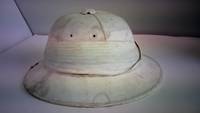
5a1660Charles Owen London um 1930. Mit Lederkinnriemen ohne Größenangabe fleckig/ an den Rändern mit etwas Abrieb . - Aus der Sammlung eines Beamten der deutschen Botschaft in Niamey/ Niger zwischen 1962 und 1966 - unknown
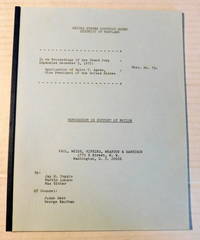
1973100164<p>Washington DC September 28 1973. 1973. Fine. - Quarto 11 inches high by 8-1/2 inches wide. Softcovers printed light blue paper wraps bound with a dark blue plastic spine. 24 mechanically reproduced pages printed on one side of each sheet. Fine.</p><p>Included with the brief are copies of arguments presented to the House of Representatives favoring an impeachment inquiry: 1 "Why the Calhoun Precedent Governs and the Colfax Precedent does not". 2 mechanically reproduced folio pages. and 2 "General Arguments as to Why House of Representatives Should Not Defer to Grand Jury Proceedings". 2 mechanically reproduced folio pages. Each are printed on 13 inch high by 8-1/2 inch wide sheets stapled at top left. There is minor faint creasing to the top edges as the pages of the "arguments" overlap the brief.</p><p>RARE.</p><p>Unbeknownst to the public and most of the Nixon administration a grand jury had been impaneled on December 5 1972 and a federal investigation into political corruption in Maryland was underway. The investigation focused on Spiro Agnew's activities as Baltimore County Executive and as Governor of Maryland. It was found that Agnew had accepted bribes and kickbacks from contractors in exchange for public service contracts. In September of 1973 Agnew engaged the K Street law firm of Paul Weiss Rifkind Wharton & Garrison. Martin London became his lead attorney. London together with Jay H. Topkis and Max Gitter drafted a "Memorandum In Support of Motion" addressing the question as to whether it would be constitutional to indict or criminally try a sitting Vice President. The memorandum puts forth historical arguments as to why "the constitution bars a criminal proceeding against the Vice President of the United States". In the meantime following a precedent set in 1826 by Vice President John C. Calhoun Agnew asked the House of Representatives to initiate an impeachment investigation into bribery charges. The hope was that his name would be cleared by such an investigation. However Speaker Carl Albert after consulting the parliamentarian and other members denied Agnew's request on September 26 1973 stating that the request "relates to matters before the courts. In view of that fact I as Speaker will not take any action.at this time". On October 5 1973 Solicitor General Robert Bork responded negatively to Agnew's request to enjoin the grand jury proceedings investigating him. He provided the United States District Court for the District of Maryland with a brief stating that "considerations based upon the Constitution's text history and rationale which indicate that all civil officers of the United States other than the President are amenable to the federal criminal process either before or after the conclusion of impeachment proceedings." Spiro Agnew resigned from his office on October 10 1973 pleading no contest to a single charge of tax evasion.</p> Washington, DC, September 28, 1973. paperback
1995stela216London: 1995. 1995. 4to. unpaginated. profusely in colour some b/w. wrs. Exhibition catalogue. Soft cover. Fine. London: 1995. Paperback
1987stela217London: 1987. 1987. 4to. pp. 50. 5 colour fold-out illus. profusely illus. in colour & b/w. wrs. printed acetate dw. Exhibition catalogue. Soft cover. Fine/Dust Jacket Included. London: 1987. Paperback
1965stela626London: 1965. 1965. 8vo. pp. 20. 6 b/w plates. wrs. institutional bookplate & rubber stamp on front endpaper. Exhibition catalogue. Soft cover. Very Good. London: 1965. Paperback
1967stela675London: 1967. 1967. 8vo. unpaginated. profusely illus. in b/w few colour illus. wrs. scuffed at edges spine bit sunned one page has two pink ink scores some surface loss to some interior pages in the outer margin. Exhibition catalogue. Soft cover. Very Good. London: 1967. Paperback