Antiquariat.de

282 résultats
1822311600Berlin, Reimer, 1822. X, 1308; 364; 232 S. Abweichende Halbleder d. Zeit (beschabt, Rücken von Band 1 lose, 2 Rücken mit Bibliotheksschildern).
1822194275Berlin, Reimer, 1822. (Nachdruck). Zusammen ca. 1588 S. Hln. (100 Jahre BGB. Vorkodifikatorisches Recht, 24) ISBN 3-8051-0224-0
181598486Berlin, G. Decker, (1815). Kl.-Folio. 31 S. Kartonage d. Zeit mit handschriftlichem Deckelschild (beschabt, Rücken mit langem Einriß). [2 Warenabbildungen]
188231349ABFreiburg, Herder 1882. 8°. XVI, 441 S. HLwd der Zt mit Rückentitel. Einband berieben; teils etwas gebräunt; Name am Vorsatz; ein Stempel (mehrfach whdt).
185013027München, um 1850. "Aquarellzeichnung unter Passepartout in Holzrahmen. Rahmengröße: 20 x 17 cm; Blattgröße: ca. 14 x 9 cm."
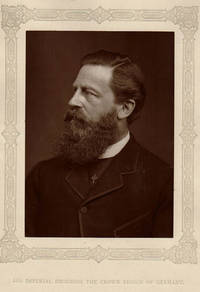
188096441Lock and Whitfield circa 1880. 1880. Fine. - A richly hued 4-3/4 inch high by 3-1/2 inch wide woodburytype portrait of the then Crown Prince Frederick III mounted onto 11-1/4 inch high by 8-1/2 inch wide stiff cream stock. An eagle & crown device above a light gray printed decorative frame highlights the image. The subject is identified in the same light gray centered within the lower half of the sheet. "Specially taken for this work by Lock and Whitfield" is centered below the title. Near fine. <p>Friedrich Wilhelm Nikolaus Karl 1831-1888 was German Emperor and King of Prussia for a period of 99 days in 1888 the year in which he passed away. The period came to be known as the Year of the Three Emperors as his father Wilhelm I passed away in March of that year and Frederick Wilhelm's only son afflicted with cancer of the larynx died in October. Though he professed a hatred of war Crown Prince Frederick had distinguished himself in the Austro-Prussian and Franco-Prussian wars. He was admired by both friends and enemies for his humane conduct.<p>Both a printing process and the print which it produces Woodburytype was invented and patented by Walter B. Woodbury in 1864. A photomechanical process Woodbury type prints are made from exposing a dichromate-sensitized sheet of gelatin to UV light shining through a photographic negative. Each area of the gelatin hardens to a depth in proportion to the amount of exposure to the light before it is then soaked in warm water. The relief image is then pressed onto a sheet of lead to create an intaglio metal printing plate. Lock and Whitfield, circa [1880]. unknown
18201192160Jena, J. G. Schreiber, 1820. 2 Bl., 87, (3) S. Brosch. d. Zeit (unbeschnitten, Umschl. verblichen u. angestaubt, 2 Bibl.-St.).