618 résultats
18882180Bloomsburg PA 1888. Very Good . Manuscript notebook composed by Ida Sylva Wagner a young woman training to become a teacher at the Bloomsburg State Normal School now Bloomsburg University of Pennsylvania between 1888-1889. Comprised of 88 pages in ink and pencil blending lecture and reading notes with what appear to be Ida's own drafts of analytic essays practice lesson plans and examination questions. Quarter cloth over marbled boards measuring 5.5 x 8.5 inches. Shelf-wear to extremities and hinges tender but holding. Text block overall tight with mild toning not affecting text. Wagner's ownership signature and school information on front paste-down; second ownership signature along with Wagner's later teaching location on rear paste-down. In Very Good condition overall considering its daily class use and apparent usage as a reference guide during Ida's later teaching career.<br/><br/>Established in 1869 the Bloomsburg State Normal School aimed to provide rigorous teacher training to ensure that regional educators could "teach the youth elements of classical education" Bloomsburg University. State census records show that she would have been 22 at the time of this class and that she later moved to Luzerne County to work as a teacher after graduation. This notebook rigorously documents her work in an advanced Practical Teaching course which provided pedagogical methodology as well as requiring students to put methods into practice by designing usable teaching materials. Ida's notebook is roughly divided into sections with blanks separating each; and they include practical notes including Introductory Consideration Foundations and Principles Length of Recitation Object Lessons and Plan of Lessons as well as sample content for lessons such as Primary Reading Primary Numbers and Rules of Grammar. In her hand Ida reflects on the importance of theory and practice noting "The powers of the child which demand the teacher's attention are the physical the intellectual the moral and the spiritual.before knowing can take place there must be something to know and the thing to be known must affect its appropriate sense." This guiding principle clearly shapes the class and Ida's notes show that she is being trained in the "something to know" for example the 15 pages of vocabulary pronunciations and definitions as well as the "affecting its appropriate sense" for example the 46 initial pages on methods for shaping appropriate lessons. <br/><br/>A dense resource with research possibilities including but not limited to the fields of history of pedagogy history of American higher education women's education and employment and gender studies. Very Good . unknown books
190076337Berlin, Marquardt & Co., Verlagsanstalt, ca. 1900. Kl. 8°; 66 Seiten mit vier Vollbildern in Tonätzung und vier Farbbildern. Fraktur; Orig.-Ledereinband Rückenkanten berieben; farbige Anstreichungen und Anmerkungen im Text Die Musik. Sammlung illustrierter Einzeldarstellungen
189032659ALeipzig, Fedor Reinboth, ohne Jahr (ca. 1890). Ca. 22 x 14,5 cm. 120 Seiten. Halblederband der Zeit mit goldgeprägtem Rückentitel, Lederecken, Marmorpapierbezügen, Schnittmarmorierung und gestalteten Vorsätzen. Vierte Auflage.
189024178ALeipzig, Fedor Reinboth, ohne Jahr (ca., 1890). Ca. 20,3 x 14 cm. IV (1) Seiten, 115 (1) Seiten. Halbleinenband der Zeit. Dritte Auflage.
187832640ALeipzig, Verlag von Edwin Schloemp, 1878. Ca. 21,3 x 14 cm. 82 (2) Seiten. Original-Broschur. Vierte umgearbeitete Auflage.
189032639ALeipzig, Verlag von Gebrüder Senf, ohne Jahr (ca. 1890). Ca. 18 x 12,5 cm. 32 Seiten, 22 Seiten, 25 Seiten, 19 Seiten, mit Notenbeispielen, 1 Seite Werbung. Weinroter Original-Leinenband.
1888q6b1967kr3amazF. Freund, Buch- und Kunstverlag Leipzig, 1888. Aus dem Inhalt: Über die Benennungen musikalisches und rezitierendes Drama; Der Wagnerianer als Schriftsteller; Die Zaubertränke bei Wagner; Die Moral des Tristan; Zur Kritik der Meistersinger; Über den Plan einer Stylbildungsschule in Bayreuth; Weia Waga - Ein wenig Philologie etc. 263 S. Einfache Leinenbindung aus der Zeit oder etwas später. Einband sehr leicht angeschmutzt, sonst gut. Seiten angebräunt, stark holzhaltiges Papier, sauber. Gutes, sauberes Exemplar. Hans Paul Freiherr von Wolzogen (1848 in Potsdam; 1938 in Bayreuth) war ein deutscher Literat, Redakteur, Librettist und Herausgeber. Sein Vater, Alfred von Wolzogen, war Hof-Theaterintendant in Schwerin; seine Mutter war eine Tochter des Baumeisters Karl Friedrich Schinkel. Er wurde 1877 von Richard Wagner nach Bayreuth geholt, wo er von 1878 bis 1938 die Zeitschrift Bayreuther Blätter redigierte und herausgab. Wolzogen war Leiter des Allgemeinen Richard Wagner Vereins und er gehörte zu den Unterzeichnern des Gründungsmanifestes des völkisch gesinnten, antisemitischen Kampfbunds für deutsche Kultur (1928) 8° [2 Warenabbildungen] Leinen
188833569ALeipzig, F. Freund, 1888. Ca. 20,4 x 14,5 cm. VI (1) Seiten, 263 (1) Seiten. Halbleinenband der Zeit.
18792521ALeizig, Breitkopf & Härtel, 1879. 1 Blatt, Seite 61 - Seite 80. Illustrierte Original-Broschur.
187818936ABLeipzig, Schloemp, 1878. 18 : 12,5 cm. 107 Seiten mit einigen Notenbeispielen. Halblederband der Zeit. 4. verbessert und vermehrte Auflage
188315369ALeipzig, Verlag von Oswald Mutze, 1883. Ca. 22 x 14,5 cm. Frontispiz, VII (1) Seiten, 395 Seiten, 4 Seiten Anhang (Inhaltsübersicht der Gesammelten Schriften und Dichtungen von Richard Wagner), 1 Seite Werbung für die Bayreuther Blätter. Leinenband der Zeit mit goldgeprägtem Rückentitel und Lesebändchen.
188532868ALeipzig, Druck und Verlag von Oswald Mutze, 1885. Ca. 22 x 15 cm. Frontispiz, VII (1) Seiten, 395 Seiten, 4 Seiten Anhang (Inhaltsübersicht der Gesammelten Schriften und Dichtungen von Richard Wagner), 1 Seite Werbung für die Bayreuther Blätter. Halblederband der Zeit mit goldgeprägtem Rückentitel, Schnittmarmorierung und Lesebändchen. Zweite Auflage.
189633595ALeipzig, Constantin Wild's Verlag, 1896. Ca. 24 x 15 cm. VII (1) Seiten, 224 Seiten, mit 2 Illustrationen. Original-Broschur.
18813125108Deighton Bell and Co 1881. Pages cut. Pages foxed. Text in good condition. Bookplate inside cover. Re-bound by library. Covers marked and scuffed. Spine splitting at top of book. This book has hardback covers. Ex-library With usual stamps and markings In poor condition suitable as a reading copy. No dust jacket. Please note the Image in this listing is a stock photo and may not match the covers of the actual item300grams ISBN: Deighton, Bell and Co hardcover
1897M83154Leipzig & Baden-Baden, Constantin Wild's Verlag 1897 154pp.richment illustré (plans, portraits, tableaux, 19cm., br.orig., bon état, M83154
189863147-2Stgt., Strecker & Moser 1898. (2), XII, 497, (5) S. Mit 1 Portr. Original-Leinenband
1898KUN707Leipzig, Wigand, 1898. 45 Seiten, 11 ganzseitige Illustrationen, weitere Abb. auf Textseiten, H 45 x 38 cm, Vollgoldschnitt, Holzfurnier auf Leinen. - Einband berieben, beschabt, Ecken bestoßen. Buchblock gut. Geschenkvermerk auf Vorsatz, einige Schutzblättchen vor den ganzseitigen Illustrationen schadhaft, wenige Stockflecken. Insgesamt schön mit Gebrauchsspuren. fest gebunden/ hardcover
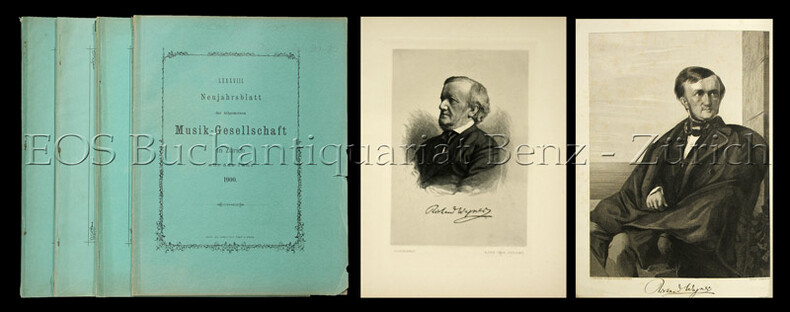
19004780CB4 Bände. Zürich, Hug, 1900-1903. 8°. 39 S.; 48 S.; 36 S.; 34 S. Mit 3 Portraits von Richard Wagner, 2 Portraitstafeln mit div. Personen und 10 Beilagen. Orig.-Broschur. = "Neujahrsblatt der Allgemeinen Musikgesellschaft in Zürich", auf das Jahr1900 bis 1903, 88 bis 91. Jg.
181810296AB1818. Göttingen Vieweg 1818. Kl.-8°. 1 doppelbl.-gr. Kupfertaf. VI 80 S. Br. d. Zt. Callisen XX S. 302 f.; Engelmann 608; Hirsch/H. V 813. - Inauguralabhandlung des bedeutenden Staats- und Gerichtsmediziners Karl Wilhelm Ulrich Wagner 1793-1846. - Stellenw. etwas braunfleckig. unknown
1886410791886. Slg. klin. Vortr. 271-272. - Leipzig Verlag von Breitkopf & Härtel 1886 8° 106 pp. orig. Broschur; unaufgeschnittenes Exemplar. Erstdruck! unknown
1889195921889. Zbl. Chir. 16/47; 18/ 2. - Leipzig 1889 8° pp.833-848 feine Broschur. First Edition! "One of the greatest advances in the method of opening the skull for surgical exploration of the brain and its investing membranes was that made in 1887 by Wilhelm Wagner of Königshütte." "Previous to this the skull had been opened by means of a trephine and the area enlarged as necessary by mallet and chisel or by the use of bone forceps. The new method at once made large areas of the brain more easily accessible without leaving a large and troubelsome cranial defect. At the same time it sounded the knell of the various elaborate and time consuming methods of craniocerebral topography which were then in vogue. In other words it was now possible for neurosurgeons to visualize the underlying cerebral cortex sufficiently well so that with the wider exposure obtained by the osteoplastic flap the lesion was almost certain to be brought into view if the neurological localization had been at all acurate." Walker Neurosurgical Classics Walker No. 33: Garrison & Morton No.4862: "Osteoplastic flap operation. Wilhelm Wagner's 1848-1900 method of opening the skull made a large area of the brain more easily accessible than by trephining". unknown
1889127291889. hardcover. 6 pages pp. 833-38 IN: Zentralblatt fur Chirurgie vol. 16. Contemporary 1/2 calf; rubbed. Leipzig 1889. First Edition. Offered entire.<br/> <br/> Osteoplastic flap operation. Wagner's method of opening the skull made a large area of the brain more easily accessible than by trephining. GM 4862.<br/> <br/> unknown
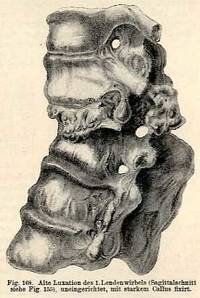
1898209161898. Dtsch. Chir. Lfg.40 . - Stuttgart Verlag von Ferdinand Enke 1898 8° XXXII 564 pp. 232 Abbildungen Leinenband d.Zt.; ExLibris von "Dr. Werner Block". First Edition of "the first successful account of the management of spinal injuries was by Wilhelm Wagner 1848-1900 a general surgeon working alone in a small workers compensation hospital Königshütte Hospital in Upper Silesia where he spent his whole career. He developed the practical treatment of spinal injuries and demonstrated how patients could and should be treated. He wrote a book with his former pupil Paul Stolper 1865-1906 on injuries of the spine and spinal cord. This dealt with every aspect of the subject. He started with anatomy of the spinal column pathology of injury the mechanism of injury the symptomatology and practical treatment including the indications for surgery. He understood the necessity of relieving pressure in preventing pressure sores and was concerned to prevent subsequent deformity. He identified six major problems: sepsis from pressure sores; treatment of cervical fractures; post-traumatic syringomyelia; infection of the chest; stones in the kidneys leading to sepsis of the renal tract; and the necessity of immobilising patients in bed until the fracture healed. The textbook is remarkable in its breadth of vision and its emphasis upon such commonplace but vital aspects of treatment as how the patient should be transported and nursed. Particular attention was paid to the pressure points and positioning of the patient. Water beds were used. He emphasised the need to prevent soiling of the mattress in incontinent patients. For doubly incontinent patients special beds were designed such as those used for cholera patients with a bucket underneath that could be removed. Once the fracture had healed the patient was mobilised and put into a bath. The object of treatment of the spine was to establish bony union. Wagner was opposed to operative treatment on the spine and recommended that radiographs should be used to estimate the position of the fracture. He recommended palpation of the kyphus to reduce a dislocation. He described in detail how a dislocated cervical spine could be reduced. He devoted pages to the description of how the bladder should be managed. Wagner treated patients with spinal injuries and was able to mobilise them. He gave opinions in court about their life expectancy so they were probably returning home. It is remarkable that he carried out all this work alone in a municipal hospital without an academic position." - J.R. Silver History of the treatment of spinal injuries. Postgraduate Medical Journal 81 2005: pp.108-114 unknown
1887943London: Swan Sonnenschein Lowrey & Co. 1887. 4th Edition. VG/--. Decorative bookplate to free endpaper. Tiny 1/8 inch crack to leather gutter / light page toning to interior - otherwise a clean tight copy. Illustrated - 3/4 leather. Swan Sonnenschein, Lowrey & Co. hardcover
187826018Leipzig 1878. In Schilderungen für Jugend und Volk. I.Göttersagen II.Nordische Heldensagen Neue Jugend- u.Hausbibliothek. Neue Folge 5./6.Bd. Unsere Vorzeit erster Band Einbanddeckel und Rücken goldgeprägt. Guter Zustand 2.verb.Aufl. Otto Spamer 8°. Ln. goldgepr. Mythologie unknown