23 résultats
15875686AG1587. Holzschnitt aus "Cosmographia" ("Das vierthe Buch", deutsche Ausgabe, "Von Italia" ) von Sebastian Münster, Darst. 14,4 x 23; Bll. 23 x 37. Auf Wunsch Digitalaufnahme in jpg-Format erhältlich- photo in jpg-format available. Je nach Versandart können die Portokosten bis zu 2 ? weniger als angegeben betragen.
15875611AG1587. Holzschnitt aus "Cosmographia" ("Das vierthe Buch", deutsche Ausgabe, "Von Italia" ) von Sebastian Münster, Darst. 15,4 x 12,5; Bll. 23 x 37. Auf Wunsch Digitalaufnahme in jpg-Format erhältlich- photo in jpg-format available. Je nach Versandart können die Portokosten bis zu 2 ? weniger als angegeben betragen.
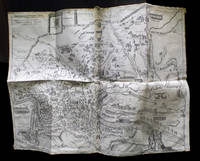
15702653451570. Old cloth tape reinforcement around edges and at folds. Possibly removed from a folio-sized book based on the number 49 on the first page of the bifolium this full-sheet map includes a description of the city of Rome in Latin on the first page of the folded bifolium the map of Rome including the Hippodrome Circus of Nero public baths and baths of Diocletian in addition to several churches and a depiction of hte Vatican in the lower left-hand corner.<br /> <br /> A striking 16th century illustration likely an engraving with a keen eye for detail. unknown
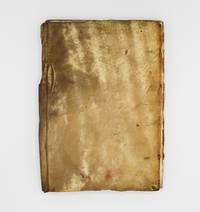
1556373862Venice: Paulus Mauntius 1556. Chronology and Commentary each with separate title page and printer's device. Ff. 16 169 1 corrigenda. 1 vols. Folio. Early limp vellum fore edge flaps. Spine worn manuscript waste visible as spine supports; upper cover detached and soiled. Rough but complete and unsophisticated. Cloth slipcase and chemise. Chronology and Commentary each with separate title page and printer's device. Ff. 16 169 1 corrigenda. 1 vols. Folio. Commentary on the history of Rome with a chronology of Kings and consuls from Romulus to the early emperors. The book on Roman names is at ff. 151-169 and conatins two woodcuts of Roman coins. Adams S1115; EDIT16 28012; BM STC Italian 1465-1600 p. 626; Renouard A.A. Annali delle edizioni Aldine p. 169 no. 16 Paulus Mauntius unknown
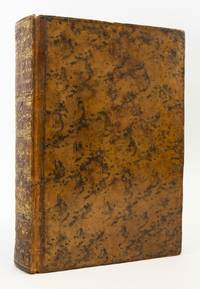
1557ST16379-032Basel: Hieronymus Froben 1552; Venice: Jacopo Strada 1557. FIRST COMPLETE AND FIRST ILLUSTRATED EDITION of the first work; FIRST EDITION Second Issue of the second work. 330 x 215 mm. 13 x 8 1/4". 108 leaves; 8 p.l. 192 181-228 pp. 99 leaves index. Two works in one volume. <br/> 18th century marbled calf rebacked original backstrip laid down flat spine in compartments formed by decorative leafy rules and featuring large floral ornaments at center two morocco labels marbled end papers. Printer's device on titles and on final leaf of first work fine large and small mostly historiated woodcut initials and MORE THAN 100 FINE WOODCUTS mostly large or full-page IN FIRST WORK several signed by "C S" perhaps Conrad Schnitt or Christoph Schweizer ILLUSTRATING BUILDINGS OCCUPATIONS MILITARY MACHINES COSTUMES etc. some cuts repeated one cut printed upside down; 369 numismatic woodcuts in text of second work 262 of these including repetitions with medallion portraits and 107 with names only. Front flyleaf with early ink inscription of a library number; third leaf of first work and 10th leaf of second work with the crowned "L" library stamp of the Lamoignon Library. VD16 N 1884; Schweiger II 618; Brunet IV 111; Graesse IV 691 all for first work; Mortimer Italian 322 a later edition with copies of these cuts 355; Adams N-354 P-195. ◆Original spine leather somewhat dried and eroded covers slightly pitted and marked but the binding entirely firm with only superficial wear to joints and certainly agreeable. First title a little smudged and foxed a few other trivial imperfections but A REMARKABLY FRESH CLEAN AND SMOOTH COPY INTERNALLY AND WITH FINE IMPRESSIONS OF THE CUTS.<br/> <br/> This is a very attractive copy with distinguished provenance of two works with considerable data relating to and shedding substantial light on the politics government provincial administration and military establishment of Rome as well as other aspects of Roman life. The first work here is an anonymous early fifth century Roman state handbook more commonly known as the "Notitia Dignitatum" edited by Siegmund Ghelen Gelenius ca. 1477 - ca. 1554 and Beatus Rhenanus 1485-1547 from a lost Medieval manuscript. It is arranged according to the provinces of the Roman Empire and their cities. The second work is a synopsis of Roman history from Romulus through the reign of Habsburg emperor Charles V in the 15th century. Its first section is based on the "fasti consulares" inscriptions from the Arch of Augustus in the Roman forum listing all Roman consuls from 483 B.C. to 19 A.D. These relics were discovered in the 1540s when the forum was being quarried for building materials. The compiler of this work Panvinio 1529-68 was an Augustinian monk devoted to antiquarian studies who spent considerable time in Italy recording inscriptions on ancient monuments medals and other surfaces. He recognized the "fasti consulares" fragments recovered from the ruins and worked frantically to save them. They were restored by Michelangelo and added to the collection of what became the Capitoline Museum. Panvinio also used the coins and medals collected by Strada the publisher as a source for this compilation. A considerable portion of the interest and value in this volume today resides in the woodcuts. Copied from the original illustrations in an early manuscript of the work now lost; the cuts in the first work include many depictions of books showing several different kinds of decorated bindings. The illustrations also provide many details of Roman dwellings costumes and objects used in private religious and military life. Excepting the fact that they have produced books on basically the same subject our two printers could hardly be more different. Whereas the Swiss Froben was one of the giants of Renaissance printing and a great promoter of learning the Venetian Strada apparently spent much of his time speculating in the antiques market being one of the first merchants to make a business of selling Italian antiques to foreigners. Our copy comes from the collection of the great bibliophile Antoine Moriau 1699-1759 who leased the stately Hôtel d'Angoulême Lamoignon in Paris to house his library of 14000 books and more than 2000 manuscripts. The second work here is rare. Hieronymus Froben, 1552; Venice: Jacopo Strada unknown
151829908Paris: Germain Hardouyn. Colophon: "ont este imprimees a Paris pour Germain Hardouyn demorant entre les deux portes du Palais a lenseigne de Saincte Marguerite. 1518. First of the edition. Printed on vellum and beautifully illuminated with forty hand-painted miniatures. There are sixteen large and twenty four small miniatures i.e. metalcuts painted in blue red brown green yellow white and gold and numerous one- and two-line initials in gold and blue pictorial metal-cut borders throughout partly illuminated. With full page miniatures: Skeleton Maria with the infant Jesus Jesus on Mount of Olives Flight to Egypt The Three Magi Nativity Crucification etc. 8vo 17.8 x 11/0 cm handsomely bound in eighteenth century full marbled polished calf the edges gilt the spine with raised bands gilt decorated. 112 leaves printed on vellum in a Gothic typeface twenty-four lines per page. Almanach / Calendar for the years 1518 -1525. Signatures: A - O8 14 quires = 112 leaves complete. A handsome and well preserved copy complete. A FINE PRINTED BOOK OF HOURS FROM THE EARLY 16TH CENTURY PARIS. In the late fifteenth and early sixteenth century printed books of hours like the present copy were produced in greater numbers than manuscript horae in part in order to meet the demands of a bourgeoning middle class audience that could afford such items.<br> RARE. Not in Brunet Bohatta Lacombe Mortimer French Adams Germain Hardouyn. (Colophon: "ont este imprimees a Paris pour Germain Hardouyn demorant entre les deux portes du Palais a lensei hardcover
155319230LYON Strada et Thomas Guerin 1553 in-4 plein-veau un volume, reliure de l'époque plein veau brun raciné (binding full calfskin)petit in-quarto (17 x 24 cm), dos à nerfs (spine with raised bands) décoré or (gilt decoration) filets or (gilt line) et filets à froid (blind-stamping line decoration), entre-nerfs à fleuron au fer plein (floweret with full blocking stamp) dans un encadrement à filet or avec rinceaux aux angles, titre frappé or (gilt title), pièce de titre sur fond bordeaux à filets or, légers manques de dorure au dos (blurred gilding), restauration ancienne aux coiffes, triple filets or en encadrement aux plats avec manques de dorure, coins écornés, toutes tranches lisses peignées bleu,rouge et noir, Ex-libris : "DOCTORIO TINEL ROTOMAGENSIS" (Dr TINEL célèbre collectionneur de ROUEN) imprimé en noir sur une étiquette de papier blanc, orné de 487 gravures de MEDAILLES in-texte gravées sur bois en noir + 3 superbes Lettrines gravées sur bois en noir, [XI (Epitre) + VII(Indice) + II (Privilège) + I (blanc) + 394 + V (Nom des Empereurs) + XXV(Tables Alphabétiques)] Pages, la page de titre manque, 1553 LYON Jaque de Strada et Thomas Guerin Editeurs
1595AQ19655Romae i.e. Rome: Apud Georgium Ferrarium 1595. 8 196pp 34. Contemporary vellum title in manuscript to spine. Extremities worn heavily marked and discoloured several worm-holes to boards spine cracked. Ink-stamp of the Lawes Agricultural library to FEP early ink signatures to title a couple scored through leaves browned and stained some worming to margins. An early edition of the statutes and laws of the Roman city guild of agricultural workers published by Giorgio Ferrari for the Roman Papal Press. Part of the comprehensive reforms and publication of decrees and statutes issued in the wake of Michele Ghislieri’s election as Pope Pius V in 1566 this volume outlines an extensive reorganisation of the agricultural industry including measures relating to the sale and distribution of vegetables and live-stock including pricing regulations regarding the division of land the rates of pay for farm workers and numerous public health measures relating to hygiene. Numerous revised editions were issued up to the mid-nineteenth century. COPAC records copies of this edition at two locations Cambridge and Oxford; OCLC adds one further BNF. . Quarto. Apud Georgium Ferrarium hardcover
155963276Geneva: Excudebat Henricus Stephanus Henri Etienne illustris viri Huldrici Fuggeri typographus 1559. Folio. 9 x 13 in. iiii 56 leaves 4 A-G8 i.e. 120 pp unpaginated. Printer’s device on title page decorated initials decorated headpieces. Contemporary mottled calf 5 raised bands on spine gilt ornament on spine gilt & tan morocco spine label scuffing rubbing slight worming to covers minor chipping head & foot of spine faint tidemark to lower corner visible through C2 still a good copy from the libraries of S. Pietro in Vincoli Rome Italy and then Joseph Pitton de Tournefort 1656-1708 noted French Botanist credited as the first to make clear distinction between genus and species who published his books as “conseilier du roy†as seen here in ink manuscript at lower fore-edge of title. First edition of Henri Etienne II’s printing of Steun von Schwarzenau’s “Collection of genealogies of Roman patrician and plebian families featuring a detailed analysis of ancient Roman lineages tracing them through generations. He wrote the work at 21 while finishing his studies in Padua and Strasbourg from 1554-1159 and served on the Court Council of Emperor Macilimian II from 1564-1566 and then President of the Court Chamber until 1575 often mediating as a Protestant between Protestants and Catholics. This is an early work published by the then 30-year-old scholar-printer and grandson of the famed Henri Estienne who in 1557 with the financial backing of Ulrich Fugger established his own press before inheriting his father Robert Etienne’s press later in 1559. Adams S1931; See: Renouard Estienne 118: 2 L2082-2091. Excudebat Henricus Stephanus [Henri Etienne], illustris viri Huldrici Fuggeri typographus, hardcover
156755<p>4º mm 220x158; cc. 4 76 8. <strong>Frontespizio allegorico inciso</strong>; testatine capilettera e fregî silografici. Caratteri corsivo e romano. Legatura coeva in cartonato rustico. Le prime otto carte sono interessate al margine da leggere gore d'umidità per il resto l'esemplare è fresco e pulito con ampli margini.</p><p>Provenienza: all'angolo inferiore sinistro della seconda carta coeva nota manoscritta di possesso; la stessa mano corregge il testo di alcuni componimenti.</p><p><strong>First edition of a poetry book essential for the history of Renaissance music as it constitutes the first organic collection of Torquato Tasso and Battista Guarini's poems.</strong></p><p>According to scholars <strong>Tasso and Guarini were the poets whose verses were most frequently set by Italian madrigalists and monodists in the late 16th and 17th centuries. From the 1570s through the 1630s virtually all composers of secular vocal music in Italy and Europe including notable ones like Luca Marenzio and Claudio Monteverdi set one or more of their poems producing a total of hundreds of settings</strong> cfr. <em>Torquato</em><em> Tasso in Music Project</em>: https://www.tassomusic.org; https://interlude.hk/the-music-of-poetry-giovanni-battista-guarini-tirsi-wanted-to-die/.</p><p><strong><em>Editio princeps</em> della "prima raccolta organica di rime tassiane </strong>…<strong> 38 sonetti due madrigali due canzoni" </strong>A. Casu <em>"Translata proficit arbos": le imprese "eteree" nelle 'Rime' del Tasso</em> "Italique" <em>online</em> II 1999 <strong>nonché del primo rilevante <em>corpus </em>di liriche guariniane</strong> 35 sonetti 56 stanze e un madrigale.</p><p>Sull'attribuzione tipografica cfr. D.E. Rhodes <em>Rettifiche e aggiunte alla storia della stampa a Padova 1471-1600</em> in <em>Studi di bibliografia e di storia in onore di Tammaro de Marinis</em> IV Verona 1964 p. 35.</p><p>L'Accademia degli Eterei nacque nella Padova dei primi anni '60 per iniziativa di un gruppo di giovani studenti letterati e soprattutto di Scipione Gonzaga Mantova 1542 – San Martino dall'Argine 1593. Fu inaugurata ufficialmente da un'orazione di Stefano Santini il primo gennaio 1564. Alle sedute bisettimanali dedicate alla discussione e alla recita di testi poetici prese parte anche il Tasso reduce dalla breve stagione trascorsa a Bologna e richiamato a Padova proprio dal Gonzaga. All'ambiente degli Eterei vanno ricondotti molti componimenti lirici tassiani di questa stagione che poi confluirono nella presente raccolta si veda l'edizione a cura di G. Auzzas e M. Pastore Stocchi Padova Accademia Galileiana 1995: alla sezione di rime per Lucrezia Bendidio il Tasso accostò altri testi dei suoi esordi dagli omaggi a Leonora d'Este a una serie di liriche d'occasione.</p><p>"A consacrare la fama dell'esordiente lirico Battista Guarini giunse l'anno successivo la prima vera esperienza di un qualche rilievo: la partecipazione su invito di Scipione Gonzaga all'Accademia patavina degli Eterei. Il ruolo e l'importanza del Guarini nel sodalizio in cui assunse il nome accademico di Costante risultano ben documentati oltre che dalla carica di segretario di cui venne insignito dal <em>corpus</em> delle sue rime accolte nella silloge degli accademici che vide la luce nel 1567. <strong>Un <em>corpus</em> che insieme con quello del giovanissimo Torquato Tasso si configura numericamente come il più folto a testimonianza del valore riconosciutogli nel novero degli undici "novissimi" poeti animatori dell'Accademia e promotori con la raccolta di una sperimentazione di prim'ordine nello sviluppo del petrarchismo veneto</strong>. Il felice "albergo delle Muse" Eteree resterà lungo la vita errante e tormentata del G. il solo fulgido esempio di una serena vacanza intellettuale di un esercizio letterario libero da obblighi servili e fondato su una pratica di relazioni personali: quel "sistema delle protezioni e degli amici" di cui sarà perno Scipione Gonzaga al quale il G. farà appello nei tempi bui delle sue disavventure cortigiane per ottenere appoggi e sostentamento. L'amicizia con il Gonzaga ma anche con altri Eterei come Ridolfo Arlotti e Annibale Bonagente oltre agli ovvi rapporti con il Tasso accompagnò il G. per tutta la vita coronata dalla scelta del cardinale come consulente e censore del <em>Pastor fido</em>. È inoltre presumibile che la stagione eterea fosse coincisa anche con lo sviluppo di quegli interessi filosofici che il G. verrà sempre rivendicando nelle <em>Lettere</em> come la più autentica inclinazione della sua indole costretta alla poesia per "diporto cortigiano" e "obbligo di servitù" ma per natura propensa a coltivare frutti di più elevata speculazione" E. Selmi <em>DBI</em> LXI 2003.</p><p>L'Accademia fu sciolta fra il 1567 e il 1568 proprio a ridosso di questo raffinato florilegio. La dedicata a Margherita di Valois detta Margherita di Francia Duchessa di Savoia Saint-Germain-en-Laye 1523-Torino 1574 che data 1° gennaio 1567 è firmata da Giovan Battista Guarini il Costante e Luigi Gradenigo l'Occulto. Oltre a quelle del Tasso e dei due prefatori sono presenti rime di: Annibale Bonagente Digiuno Ascanio Pignatello Adombrato Giovacchino Guarino il Lagrimoso Francesco Pusterla l'Affrenato Pietro Gabrielli l'Impedito Ridolfo Arlotti il Sicuro Stefano Santini l'Invaghito e il cardinale fondatore Scipione Gonzaga l'Ardito.</p><p>Cfr. M. Magliani <em>Sull'edizione delle Rime de gli Academici Eterei del 1567</em> Padova Accademia Patavina di Scienze Lettere ed Arti 1994 pp. 5-26 Estratto dagli <em>Atti e Memorie dell'Accademia Patavina di Scienze Lettere ed Arti</em> vol. 106 anno accademico 1993-1994 parte 3. Classe di Scienze Morali Lettere ed Arti; <em>Rime de gli Academici Eterei</em> a cura di G. Auzzas e M. Pastore Stocchi Introduzione di A. Daniele Padova 1995.</p> [Comin da Trino]
154388<p>8° mm 151x104; cc. 32. Marca tipografica al frontespizio. Margine superiore un poco rifilato. Pergamena posteriore.</p><p>Seconda edizione del dialogo albertiano - meglio conosciuto sotto il titolo di <em>Theogenius</em> - dopo quella che priva di dati tipografici ISTC cataloga come: "Florence 1500" cfr. L.B. Alberti <em>Opere volgari</em> II <em>Rime e trattati morali</em> a cura di C. Grayson Bari 1966 p. 409.</p><p>Il <em>Theogenius</em> rappresenta un capitolo poco noto della fortuna e dell'influsso dell'epicureismo nel Quattrocento. In questo dialogo infatti l'Alberti illustra diversi temi dell'etica epicurea e <strong>traduce alcuni versi del <em>De rerum natura</em> di Lucrezio </strong>S. Gambino <em>Alberti lettore di Lucrezio: motivi lucreziani nel "Theogenius"</em> "Albertiana" IV 2001 pp. 69-84.</p><p>Leon Battista Alberti's <em>Theogenius</em> revived and revised the ancient view developed in the Hellenistic age according to which philosophy aims to form rather than inform people showing them how to cultivate a specific attitude towards existence through a rational comprehension of the nature of humanity and its place in the cosmos. This view of philosophy as a way of life was challenged by the development of scholastic philosophy seen as a body of speculative doctrines and professional skills ancillary to the superior wisdom of theology. Nevertheless it survived thanks to Renaissance humanists like Petrarch Alberti Erasmus and Montaigne. <strong>On the influence of Lucretius on Italian Humanism after Poggio Bracciolini's discovery of the only surviving manuscript of <em>De rerum natura</em> 1417</strong> cf. A. Brown <em>The Return of Lucretius to Renaissance Florence</em> Harvard University Press 2010 and S. Greenblatt <em>The Swerve: How the Renaissance Began</em> London 2011.</p> Appresso Paulo Girardo, [colophon:] per Venturino Rosinello
1527a300107839(Mainz, Johann Schöffer am 5. September 1527). 1 Blatt (Titel mit Holzschnitt-Umfassung); 8 Seiten; 1 Blatt; Seite 9 - 218; 1 Blatt (Druckvermerk recto, verso blank, bzw. mit handschriftlichen Ausführungen). Neuerer Lederband mit reicher Blindprägung über fünf Bünden, sowie mit blindgeprägten Innenkanten. Der seitliche Schnitt mit handschriftlicher Initiale(?). (21 x 16 cm) 8°. [16 Warenabbildungen]
156014605[Genève], Henri Estienne, Huldrich Fugger (Huldrici Fuggeri), 1560 ; in-8 ; plein vélin ivoire ; 100 pp. (A-F 8, G 2).
1555112612lyon gryphe 1555 Apud Seb. Gryphium (Sébastien Gryphe) Lugduni (Lyon), 1555, 1 volume de 7x11.5 cm environ, (1) f., 619 p. (mal paginé 519 pp.), reliure postérieure du XVIIe plein veau havane, dos à 4 nerfs richement orné de titre et motifs dorés, coupes dorées, tranches rouges, gardes marbrées peignées. Ex-libris manuscrits et date sur la page de titre. Coiffes absentes, quelques frottements coins et coupes, petites taches sur les plats, passages soulignés dans les marges au crayon à papier, une page tachée (p. 145), petite mouillure claire sur les dernières pages, dernier feuillet vierge arraché. Bon état général.
1558118122Lyon, N. Edoard 1558 In-4 32 x 21,5 cm. Reliure de l’époque veau havane, dos à nerfs encadrés de petits fers dorés, pièce de titre maroquin havane, [24]-718-[62] pp., bandeaux, lettrines, table des chapitres, table des principales matières. Manque page de titre, mouillures angulaires.
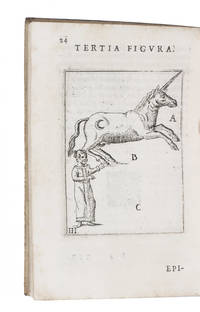
1596F75BBB01U79OBrescia 1596. Small 8vo 14.5 x 10 cm. Pietro Maria Marchetti Contemporary limp sheepskin parchment sewn on 3 alum-tawed thongs with manuscript title on smooth spine. With Marchetti's woodcut anchor and dolphin device imitating Aldus's on the title-page 16 numbered engraved emblematic illustrations plate size 8.5 x 6.5 cm woodcut headpieces tailpieces and decorated initials 3 series and decorations built up from cast fleurons. With the Latin text set in italic and the Italian translation in roman. 106 6 blank pp. First edition of the so-called Oracles of Leo the Wise with a bilingual Latin an Italian text and 16 lovely and rather surreal engravings: an emblematic book of prophecies traditionally attributed to Leo VI 866-911/12 Emperor of Byzantium from 866 to his death and at least here also to Antonius Severus 188-217 sole Emperor of Rome from his murder of his brother in December 211 to his death the book does not indicate which Severus is intended but the preface notes that he reigned from 212. The Latin text was circulated already attributed to Leo the Wise in the 12th century but Christians revived it in the 16th century and interpreted it as a prophecy that the Ottoman Empire would fall in 1622. These oracles remained popular in the 17th century when they were presented as having predicted the setbacks that the Ottomans suffered in Europe in that period.Owner's inscriptions on the title-page further with a bookplate. With a water stain in the first quire but otherwise in very good condition with only very minor foxing. The sewing supports have broken at the back hinge the thong ties are lost and the vellum is slightly wrinkled but the binding is still in good condition.l BMC STC Italian p. 622; Caillet 11042; Edit16/ICCU CNCE 28586; Mortimer Italian 254. hardcover
1521186161521 Broché - 15 x 21 - 299 pp - année 1966 - éditions St Augustin St Maurice Suisse -
159933044-51Basel Konrad Waldkirch 1599. Printer's device and historiated initials at top of title-page. Double columns. 166 ff. Sm. folio. Old boards spine and all edges leather- rebacked. In a cloth case. Basel Konrad Waldkirch 1599. First Basel edition of this dictionary entitled "Arukh" of the entire post-biblical literature and a special dictionary to the Talmud and Midrash. Rabbi Nathan ben Jechiel b. Abraham c. 1020-1106 was a Jewish Italian and both a lexicographer and one of the most important Talmudic authorities of the 11th century. He quotes on individual headwords texts from many of today lost writings and leads rabbinic expressions on their supposed original in Greek Latin Persian etc. It attained great popularity especially at the work on Tamudic lexica up to the present. This work was first issued at Venice in 1533 but in fact it is not a word-for-word reprint.- Due to paper quality slightly browned throughout some small wormtracks in inner margin of last few leaves otherwise a good copy. - VD 16 N 160; Fürst III p. 21; Prijs 158; Wininger JNB vol. 4 p. 500. JUDAICA ; Basel, Konrad Waldkirch hardcover
15523039FBBasileae [Basel], apud Mich. Isingrinium [Michael Isengrin], 1552. 2°. 33,5 x 22 cm. [23], 392 Blatt. Etwas späterer Ganzlederband auf 6 Bünden mit handbeschriebenem Pergamentrückenschild, reichem goldgeprägtem Rückenschmuck und Rundum-Rotschnitt. [6 Warenabbildungen]
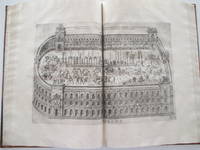
160015864AB1600. Venice Io. Baptista Ciotti 1600. 385 : 25 cm. Engraved title 6 leaves 136; 15 pages 32 double-page engraved plates. Calf in contemporary style. First edition. - Panvinio was an Augustinian monk and an important Reneissance historian of early Rome who also served as Corrector and Reviser of the books of the Vatican Library in 1556. The present work on the games triumphs and circuses of Rome Pompeii and Constantinople is profusely illustrated with engraving depicting gladatorial combat animal sacrifice Roman coins statuary classical architecture etc. - Engraved title mounted and bound oppoisite the dedication page page 15 of the appendix mounted on old paper the right part supplemented handwritten some minor waterstains in the lower edge not affacting text or illustrations. The intersting engravings in strong impressions. - Adams P-189; Berlin Kat. 1854; Mortimer Harvard Italian 357. unknown
1544000238Paris: Rob. Stephani 1544. Hardcover. See Description. First and only Estienne edition. 8vo. pp. 208 32. Title page with Estienne device Renouard Typographiques #294. Latin text printed in italic. The title page shows some mild spotting; a faint monogram is also written in an old hand on either side of the printers device. Interior pages are clean and crisp. Bound in early 19th century straight grained red morocco with spots of rubbing to the extremities. The outer joints are professionally strengthened. The upper corner tip to the front cover is neatly patched. All edges are gilt. The inside front cover contains the heraldic book plate and the monogrammed ticket of English book collector Sir John Hayford Thorold 1773-1831 See De Ricci "English Collectors " plate VIII also pp. 159-160. An additional heraldic plate from another owner is located on the marbled fly-leaf. Contents include the extant historical works of the Roman statesman and author Caius Crispus Sallustius 86-35 b.c.e 1. "De conjuratione Catilinae" On the Catiline Conspiracy describes events surrounding Lucius Sergius Catilinas attempts between 65 and 62 b.c.e. to forcefully take over the Roman government 2. "De bello Jugurthino"On the Jugurthine War narrates the war of succession in Numidia 111-104 b.c.e. where Roman forces sought to intervene in the power struggle between King Jugurtha and his brother Adherbal. 3 Fragments of other historical writings. This edition of Sallustius was printed by Robert Estienne the French printer-scholar best known for fine typography and quality editions of the classics. Renouard Estienne p. 60; Adams S-155; Schweiger III p. 873; Graesse VI p. 238. <br/> <br/> Rob. Stephani hardcover
158823525Antuerpiae Christophorum Plantinum 1588 -in-12 plein-veau reliure plein veau havane blond moucheté in-douze (binding full calfskin duodecimo)(16,2 x 10,3 cm), RELIURE PASTICHE XIXème, dos 5 nerfs (spine with raised bands), titre frappé "or", pièce de titre sur fond rouge avec un filet "or" en encadrement, entre-nerfs à fleuron dans un encadrement d'un filet "or" avec rinceaux "or" aux angles, roulette "or" en place des nerfs avec filet "or" de part et d'autre des nerfs, roulette large "or" en tête et en pied, coiffe de tête avec léger manque de cuir, coiffe de pied manquante avec manque de cuir en bas du dos (1 cm2)(lack of leather on the spine), charnière du premier plat et du quatrième plat fendue (joint of the front and the back cover cracked) mais la reliure demeure néanmoins solide, plats décorés à froid, d'un filet à froid en encadrement, filet "or" sur les coupes, toutes tranches lisses jaspées rouges, marque-page en tissu (bookmark in tissue), mouillure claire sur l'ensembe des bas de page mais sans gène aucune pour la lecture, Ex-Libris manuscrit à l'encre brune : LAVALLEE, texte à manchette (marginal note) avec rajouts manuscrits à l'encre brune, sans illustrations (no illustration) excepté la marque de l'Imprimeur PLANTIN en bas du titre gravée sur bois en noir + lettrines historiées gravées sur bois en noir, ([16] + 718 + [2] P. en blanc + [22]) pages, 1588 à Antuerpiae : Apud Christophorum Plantinum Editeur,
1578112941578 6 tomes reliés en un fort volume, reliure plein veau havane (binding full calfskin) in-folio (38 x 25 cm), dos à nerfs (spine with raised bands) décoré or (gilt decoration) filets or (gilt line) et filets à froid (blind-stamping line decoration) - entre-nerfs - compartiments à fleuron au fer plein (floweret with full blocking stamp), rinceaux, filets or et roulette or - titre frappé or (gilt title)- pièce de titre sur fond marron clair (label of title) avec filet et roulette or (label of title with gilt line), plats décorés or (gilt decoration) frottés (rubbed) épidermés (lights scratches), charnière fendue (cracked joints) sur 4 centimètes en haut du 1er plat, coins écornés (corners dog-eared), plats ornés d'un encadrement à double filets or avec rinceaux aux angles (joints and corners with double gilt line) frottés (covers lightly rubbed) avec un ornement décoratif doré en ovale avec rinceaux et entrelacs au centre de chaque plat, toutes tranches lisses (all edges smoothes). Edition illustrée d'un titre frontispice en rouge et en noir à encadr. au tome I, titre au même encadr. à la 4e partie du tome II, marques typographiques, initiales historiées et figures gravées par Jost Amman et de 105 figures sur bois (10 x 15 cm) (engraving-wood) in-texte en noir, dans le goût de la renaissance maniériste, avec de nombreuses scènes de batailles et de meurtres Certaines répétées plusieurs fois + fronts-de-chapitre bandeaux (headpiece) + lettrines (dropped initial) + culs-de-lampe (tailpiece) , les 5 autres tomes sont illustrés d'un titre frontispice + fronts-de-chapitre bandeaux (headpiece) + lettrines (dropped initial) + culs-de-lampe (tailpiece) avec en plus la Marque de l'imprimeur gravée sur la dernière page, cicatrices de mouillures marginales (scars of waterstains), manque marginal de papier sur la page n'affectant pas la compréhension du texte (lack of paper, but the text is intact), [(35) + (1 bc) +905 +(1 bc) + (23) pages] + [47 pages] + [119 pages] + [82 pages] + {104 pages] + [94 pages], 1578 Francforti ad moenum (francfort sur le main) apud Johannem and Sigismondum Feyerabendt Editeur,