671 résultats
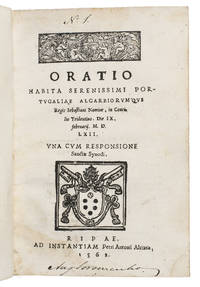
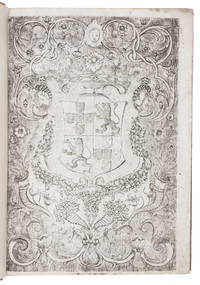
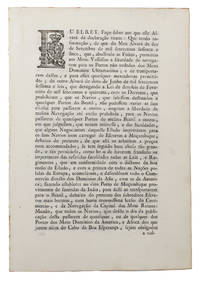
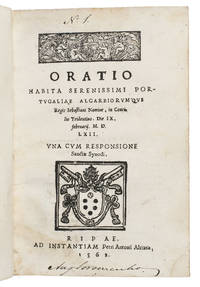
1562ABC_47938Ripae = Riva del Garda Italy 1562. 4to 18.2 x 13.4 cm. Pietro Antonio Alciatis Mid 19th-century marbled paper wrappers. With the woodcut coat-of-arms of the Medici popes and a woodcut head-piece on the title-page 2 large woodcut decorated initials in the text a woodcut head-piece at the start of the text and two ornaments at the start and end of the text. 1 1 blank 6 pp. Rare copy of the speech written in name of King Sebastião of Portugal 1554-1578 for the Council of Trent 1545-1563. The speech was given on February 9 1562 in front of the bishops and other attendants of the council when King Sebastião was just 8 years old. The speeches provided by the Kings of the European nations were to be measured carefully as the position taken by the Church in many matters carried geo-political changes; not a century ago the Pope had granted a large portion of the South American territories to Portugal through the Treaty of Tordesillas a line that took centuries to properly determine. It is unknown who wrote this speech but it is often attributed to Giovanni Strozzi active 1547-1562 who wrote another similar work. The text makes clear that the kings of Portugal have always been good Christians and promises that Sebastião will be as well. The last page contains the response from the Synod. This work rarely appears on the market.The Council of Trent was an ecumenical council of the Catholic Church held in reponse to the Protestant Reformation. There were 25 sessions over the course of 18 years. The attendants discussed the Church's doctrine and teachings in order to clarify them and defined what it considered to be heresies. The council had a long-lasting impact on religion in Europe through the numerous apologetic and polemical documents and decrees that resulted from it.With a manuscript note on the recto of the first blank flyleaf: "Indice" and two manuscript notes on the title-page "No. 1" at the head of the title-page and "Aug. Soromenho" at the foot of the title-page. With slight water-staining in the top and bottom margins of the leaves very slightly browned throughout. Otherwise in very good condition.l Adams vol. II 1953; USTC 850992; cf. BM Italian p. 619 different ed. unknown
1562ABC_47938Ripae = Riva del Garda Italy: Pietro Antonio Alciatis 1562. Mid 19th-century marbled paper wrappers. 4to 18.2 x 13.4 cm. With the woodcut coat-of-arms of the Medici popes and a woodcut head-piece on the title-page 2 large woodcut decorated initials in the text a woodcut head-piece at the start of the text and two ornaments at the start and end of the text. Rare copy of the speech written in name of King Sebastião of Portugal 1554-1578 for the Council of Trent 1545-1563. The speech was given on February 9 1562 in front of the bishops and other attendants of the council when King Sebastião was just 8 years old. The speeches provided by the Kings of the European nations were to be measured carefully as the position taken by the Church in many matters carried geo-political changes; not a century ago the Pope had granted a large portion of the South American territories to Portugal through the Treaty of Tordesillas a line that took centuries to properly determine. It is unknown who wrote this speech but it is often attributed to Giovanni Strozzi active 1547-1562 who wrote another similar work. The text makes clear that the kings of Portugal have always been good Christians and promises that Sebastião will be as well. The last page contains the response from the Synod. This work rarely appears on the market.The Council of Trent was an ecumenical council of the Catholic Church held in reponse to the Protestant Reformation. There were 25 sessions over the course of 18 years. The attendants discussed the Church's doctrine and teachings in order to clarify them and defined what it considered to be heresies. The council had a long-lasting impact on religion in Europe through the numerous apologetic and polemical documents and decrees that resulted from it.With a manuscript note on the recto of the first blank flyleaf: "Indice" and two manuscript notes on the title-page "No. 1" at the head of the title-page and "Aug. Soromenho" at the foot of the title-page. With slight water-staining in the top and bottom margins of the leaves very slightly browned throughout. Otherwise in very good condition.l Adams vol. II 1953; USTC 850992; cf. BM Italian p. 619 different ed. Pietro Antonio Alciatis, unknown
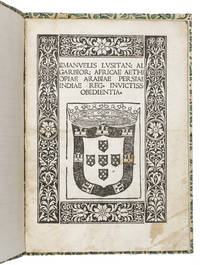
ABC_49338Rome: Marcello Silber 1514. 19th-century decorative paper with a pattern of green flowers. Small 4to ca. 19.5 x 14 cm. With the woodcut coat of arms of King Manuel I on the title page surrounded by a woodcut floral border. First and only edition of an important oration proudly announcing the Portuguese expansions in Africa Arabia and India with special mention of the conquest of Azamor present day Azemmour Morocco in August 1513. The oration was delivered to Pope Leo X 1475-1521 on 20 March 1514 to draw his attention to the latest Portuguese victories. No expenses were spared for this delivery as the oration was accompanied by lavish gifts brought from Asia including "Indian slaves Persian horses two leopards a young panther colourful parrots and a trained elephant . which caused a sensation as it bowed three times before the pope and squirted water from its trunk over the admiring multitude" Lach.The oration was delivered by Diego Pachego dates unknown "an eminent Portuguese jurist who gave the formal orations for his country in 1505 and 1514 on two of the most important occasions when the Portuguese announced to the papacy their progress in Asia" Lach. Pachego was a member of the Portuguese embassy of obedience intended to pay homage to a newly elected pope and hopefully gain his favour. As other countries especially Spain wanted to claim important regions such as the Spice Islands the support of the pope meant these would remain in Portuguese hands. King Manuel I 1469-1521 was highly aware of this so when Leo X became pope in 1513 he was determined that his mission of obedience would be such as had never been seen before. He sent all the riches that his Asian territories had to offer: the finest brocades the most precious metals the rarest gems and the most exotic animals including the white Indian elephant Hanno which was sent directly from India and became the pope's favorite pet. The present oration was also part of this event. It stressed the king's obedience to the pope and itemised his great successes in the East and in Africa. Despite its importance however the oration is quite rare as we have only been able to find 3 other copies in sales records of the past hundred years.The work is slightly browned with brown stains on the title page pp. 5-8 and pp. 13-14 a small hole in p. 5 affecting 1 letter a small water stain in the lower margin throughout. Otherwise in good condition.l BMC Italian p. 483 wrongly dated 1513; Edit 16 56280 12 copies; OPAC SBN CFIE030609 11 copies incl. 1 incomplete; USTC 845977 11 copies; WorldCat 727385121 1088206352 13 copies; cf. Lach Asia in the making of Europe vol. I book 1 pp. 167-168 and vol. II book 2 p. 8. Marcello Silber, unknown
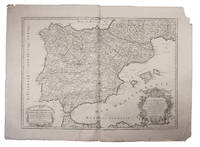
1708E7GCJJB1RUYXParis 1708. Hubert Jaillot Engraved map on 2 assembled sheets 55.5 x 78 cm engraved by Cordier. With title in decorated cartouche on the bottom right corner scales and privilege in decorated cartouche on the bottom left corner and a few lines coloured in green. Large map of Spain and Portugal this state with a privilege for 20 years granted in 1708. Engraved by Cordier after the map by Nicolas Sanson.Strengthened fold damaged corners but map in very good condition.l Cf. Pastoureau Jail. II A map 91. unknown
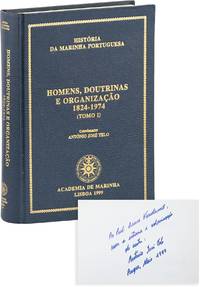
199987187Lisbon: Academia de Marinha 1999. First Edition. Inscribed by the author on front endpaper to the American military historian Bruce Vandervoort dated in year of publication. Large octavo; blue simulated leather over boards; gilt titles; 678pp. Mild rubbing to board edges still a tight Near Fine copy. Text entirely in Portuguese. Academia de Marinha unknown
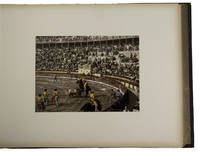
1899ABC_46443Spain 1899. Oblong album 32 x 41 cm. Hauser & Menet and others Half black leather red buckram sides blind-stamped boards title in gold on front board gold-stamped spine marbled endpapers. An album with 58 photographic prints including one tinted varying in size 20.5 x 15.5 to 27.5 x 21.5 cm each on thick paperboard. 58 ll. Album containing 58 photographic prints depicting scenes and sights in Spain and Portugal. Subjects of the prints vary. From the El Escorial the historical residence of the King of Spain to the interior of the cathedral - and former mosque - of Cordoba. The prints also show the exterior and interior of the bullfighting arena in Madrid. 2 of these 3 prints show bullfighting in action. A little more than half of the prints contain captions revealing the location depicted in the photograph such as the scenic views of cities such as Madrid Barcelona and Seville. The subject and/or location of the prints without captions remain unclear but some are very likely sites in Portugal since all of the prints with captions are in Spain.According to the captions the photographs of Seville were taken by E. Beauchy a Spanish photographer from the same city. He photographed the region of Andalusia south Spain at the end of the nineteenth-century. Some prints of Madrid and Barcelona were produced by printers of Spanish graphic art Hauser and Menet in 1896 and 1897.With an Antwerp bookseller's ticket on the front paste-down. The binding shows some minor signs of wear mostly around the spine and corners of the boards. Slight foxing/browning of the outer edges of the paperboard not affecting the photographs some photographs have slightly faded edges which does not interfere with the actual image. Overall in good condition. An album with 58 views of sights in Spain and Portugal. hardcover
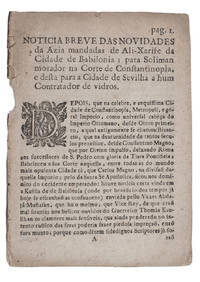
1742I14GSHQ8NCJEColophon: Madrid 1742. 4to 20 x 14.5 cm. heirs of Juan Garcia Infanzon Disbound. With a woodcut initial. 7 1 blank pp. Rare pamphlet satirising several Portuguese notables. According to this pamphlet presented as a fictional letter from "Ali-Charif of the city of Babylon" to "Suliman the Moor at the court of Constantinople" these notables are part of a Turkish regiment that might be sent off to fight "Thomas Kaulikan" Tahmasp Qoli Khan better known as Nader Shah. A follow-up to the pamphlet was published a week later and once again describes the regiment now in a letter "from Mecca to Holland to the city of The Hague" and from there to Cambrai in France" cf. Rossi 2392.Nader Shah was one of the most powerful rulers in Persian history and waged several military campaigns in Afghanistan and India. Although not at war with Portugal his war against the Islamic Mughal Empire in India culminating in the capture of Delhi in 1739 led indirectly to Portugal's loss of its colonial territory in India in the war with the Hindu Marathas 1737-1741.Browned throughout with the spine damaged; a fair copy.l Braga da Cruz Catalogo da collecçaõ de miscelânes V 7066; Porbase 2 copies; Rossi "La Spagna nella 'Livreria do Convento de Nossa Senhora de Jesus' in Lisbona" in: Annali-Sezione Romanza XXIII 1 1981 2391; WorldCat 1 additional copy. unknown
1711I17ERD520PLVLisbon 1711. Small folio 29 x 21 cm. Monastery of São Vicente de Fóra Modern sheepskin gold-tooled spine red morocco title-label. With engraved arms as fronstipiece and a title-page printed in red and black. 28 494 29 1 blank pp. Rare second edition of the first Portuguese pharmacopoeia first published in 1704 by the friar D. Caetano de Santo António d. 1730 an apothecary of the Monastery of Santa Cruz of the city of Coimbra who upon publication of the second volume was working at Lisbon in the Monastery of São Vicente de Fora. "The Pharmacopeia Lusitana shows how important the convent pharmacy was at that time in Portugal. The Portuguese religious apothecaries were very knowledgeable on pharmaceutical matters" Pita. With a few manuscript annotations in the margins. Ca. 50 leaves with a waterstain at the head of the gutter margin an occasional smudge and two leaves with a small hole and small tears otherwise in very good condition.l J.R. Pita Brief history of Portuguese pharmacopoeias pp. 1-5; Porbase 1 copy; Wellcome IV p. 369 incomplete; WorldCat 5 copies. unknown
182212181Lisboa: Impresa Nacional 1822. Lisboa Imprensa Nacional 1822. En 8º mayor. 100 pp. Encuadernación en cartoné tejuelo de piel en el plano superior con letrerÃa dorada. Primera edición de la primera Constitución Portuguesa votada en Cortes extraordinarias y constituyentes el 23 de Septiembre de 1822 y aceptada por el rey D. João VI en octubre del mismo año. Considerada como un triunfo de los liberales contenÃa 240 artÃculos en su mayorÃa inspirados cuando no directamente copiados de la constitución española de 1812: cesión de soberanÃa al pueblo e independencia de los poderes legislativo ejecutivo y judicial. Esta es la Constitución que los Andradas y otros diputados brasileños se negaron a firmar. Bien acogida en un principio por los brasileños supuso al final el detonante de la independencia de Brasil. Varios dÃas antes de la publicación del "Suplemento" en Lisboa las Cortes declararon el gobierno brasileño subordinado a la constitución lo que fue rechazado por los representantes brasileños quienes comandados por Andradas declararon la independencia de Brasil en 1822. Inscripción en tinta en la portada ligeras manchas ocasionales papel ligeramente tostado. Impresa Nacional unknown
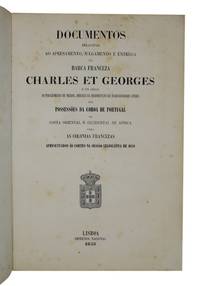
1858AQ31156Lisboa i.e. Lisbon: Imprensa Nacional 1858. 4 249 16 xviii pp. With a terminal errata leaf. Contemporary cloth-backed marbled paper boards lettered in gilt. Rubbed some surface loss to boards. Recent Portuguese bookseller's ticket to FEP occasional slight spotting. The sole edition of a selection of documents reproducing official correspondence between Portuguese French and English authorities relating to the confiscation in 1857 of the French barque Charles-et-George. The vessel was seized by the Portuguese off the coast of Mozambique and found to be carrying 110 Africans destined to be sold to French sugar plantations in the Mascarene Islands. The captain was imprisoned and a prize-crew brought the ship to Lisbon. The French government demanded that the ship be returned the captain released and damages paid. Extensive negotiations ensued. Despite numerous appeals England declined to support the Portuguese in their efforts to uphold international law prohibiting the transport of slaves. Portugal was ultimately forced to capitulate. . First edition. Folio. Imprensa Nacional hardcover
177241404Lisboa: impresso na officina de Miguel Rodrigues 1772. First edition. Removed. Very good clean copies both removed from larger volumes with numerals noted on top edge of each leaf. 4 pp.; 6 pp.203-208. Approx 8 x 11 1/2 each. Two documents five years apart concerning the needed educational reform in Portugal at the Collegio de Nobres. The first document concerns rules to tighten up the procedures of the College of Nobles instituted by Sebastião José de Carvalho e Melo Marquês de Pombal just a year earlier to strengthen scientific education and the second with further reforms to educate the sons of the nobility with useful and practical knowledge shortly before the school's failure. Pombal's attempt "was not a successful enterprise: among the main causes for its failures were financial difficulties the attitude of the Portuguese nobility who antagonized such an educational programme disciplinary questions and the inappropriateness of the course to students who were too young to profit from them. Scientific teaching lasted for 5 years 1766-1772 " In The Sciences in the European Periphery During the Enlightenment p. 11. It would be the reforms of the University of Coimbra to which the focus was transferred that would finally succeed. OCLC locates a copy of the first document at the BN Espana. Delgado da Silva: Collecção da legislação Portugueza II pp. 318-20 & pp. 585-7. OCLC: 740377909. impresso na officina de Miguel Rodrigues unknown
175943057Lisboa: Impressa na Secretaria de Estado dos Negocios do Reino 1759. Removed from a larger volume. A very good fresh crisp copy tiny stain to fore edge pinprick to upper margin. 7 1 pp. 11.5 x 8 inches. Issued on the anniversary of the supposed plot against the King of Portugal by the Jesuits the "Lei de expulsão da Companhia de Jesus de Portugal e seus Domínios" of September 3 1759 promugated on October 3 1759 condemned the Jesuits as rebels and traitors banishing them from all Portuguese territiories under pain of death along with anyone who either helped or communicated with them. It was the culmination of a long list of actions by the Marquês de Pombal who was behind these laws and who had written in a letter to Conde de Unhão in February before the law was published that "nothing can be omitted or ought to be omitted to disarm the Jesuits' diabolical machinations so that they may not be reborn and any hidden roots remain in our land." This was reflected in the document which accused the Jesuits of attempting to assassinate the king ruin the kingdom destroy Portugal and "clandestinely pursuing the usurpation of the entire state of Brazil with such an artificial and so violent progress that if it was not promptly and effectively shut down".the Company of Jesus' goal would be accomplished. "within a space of less than ten years and become inaccessible and insurmountable." Dated and signed in print: "Dada no palacio de Nossa Senhora da Ajuda aos tres de setembro de mil setecentos cincoenta e nove. Rey." And then "Lisboa 3 de outubro de 1759 Rodrigo Xavier Alvares de Moura. Foi impressa na Secretaria de Estado dos Negocios do Reino." Printed as Section XIX of "Collecçaõ dos Breves Pontificios e Leys Regias . sobre a liberdade das pessoas . dos Indios do Brasil" Lisbon Impressa na Secretaria de estado por especial ordem de Sua Magestade 1759. See Gauz: Portuguese and Brazilian Books in the John Carter Brown Library 759/1. Impressa na Secretaria de Estado dos Negocios do Reino unknown
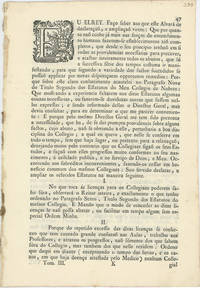
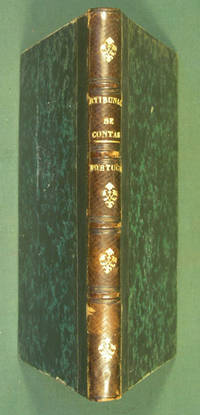
188634020Lisboa: Imprensa Nacional 1886. First editions. Quarter morocco over marbled boards raised bands five compartments decorated in gilt. A very good copy boards rubbed endpapers toned. 86 140 pp. 10 folding charts. 8vo. The Tribunal de Contas lasted from 1849 to 1911. Rules of the Court Auditors this is the first revision since 1869 bound with the Organization of Treasury Services. OCLC shows 1 copy of Regimento do Tribunal at LOC; also one in Biblio Universitaria Joao Paulo II and in BN Portugal which also has the only copy of Organisacao dos Servicos. Imprensa Nacional hardcover
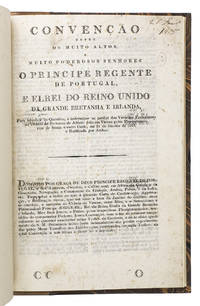
ABC_48887Lisbon: Na Impressão Regia 1815. Modern half calf marbled paper sides with the title and year of publication lettered in gold on the spine. Small folio ca. 28.5 x 18 cm. With the text printed in two columns in Portuguese on the left and in English on the right. Very rare first Portuguese edition of this treaty between Portugal and the United Kingdom of Great Britain and Ireland concerning the indemnification of Portuguese subjects for certain detained slave trade vessels as a result of British actions undertaken in pursuit of the abolition of the slave trade. "Britain agreed to pay compensation for the several Portuguese slavers detained brought before and condemned by British courts on the ground of illegal slave-trading along the African coast prior to 1814" J.P. van Niekerk "British Portuguese and American judges in Adderley Street ." pp. 22-23. Another edition of this same treaty in 8 pages was printed in the same year in Rio de Janeiro with the complete imprint including the place of publication.The present bilateral treaty comprising three articles printed in two columns in Portuguese and English was drafted on 21 January 1815 during the Congress of Vienna a series of international diplomatic meetings held in Vienna from September 1814 to June 1815 concerning the new layout of the European political and constitutional order after the downfall of the French Emperor Napoleon Bonaparte. The signatories of the present treaty were plenipotentiary at the Congress of Vienna formally this treaty was concluded between the Prince Regent of Portugal - future King John VI 1767-1826 - and the King of Great Britain and Ireland George III 1738-1820 as mentioned in the title.A more detailed description is available upon request.With the book plate of "Biblioteca de Hariberto de Miranda Jordão Filho" mounted on the front pastedown. The text leaves with a vague horizontal and vertical fold in the centre a manuscript annotation "21 Janeiro 1815" in brown ink in the upper outer corner of the first page some foxing. Otherwise in good condition.l Gauz Portuguese and Brazilian books in the JCB 815/10; Porbase 3240734 1 copy; WorldCat 1042407673 12791342 38346960 4 copies; cf. Camargo & Moraes Bibl. da Impressão Régia do Rio de Janeiro I 428; Rodrigues 735 & 737 Rio de Janeiro ed.; for more context relating to the treaty: Lesaffer R. "Vienna and the Abolition of the Slave Trade" Oxford Public International Law online via: https://opil.ouplaw.com/page/498; Niekerk J.P. van "British Portuguese and American judges in Adderley Street: the international legal background to and some judicial aspects of the Cape Town Mixed Commissions for the suppression of the transatlantic slave trade in the nineteenth century Part 1" in: The Comparative and International Law Journal of Southern Africa Vol. 37 No. 1 March 2004 pp. 1-39. online via: https://journals.co.za/doi/pdf/10.10520/AJA00104051_114. Na Impressão Regia, unknown
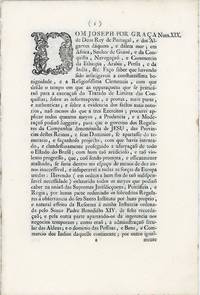
1772ABC_48853Lisbon 1772. Folio ca. 29 x 20 cm. Na Regia Officina Typografica Disbound and subsequently mounted in a modern black stiff paper folder with a printed label mounted on the front wrapper. With a large decorated woodcut initial E incorporating the Portuguese royal coat of arms. 3 1 blank pp. Very rare first issue of two of a late 18th-century decree by the Portuguese King José I 1714-1777 dealing with difficulties in the transportation of enslaved people from Mozambique to Brazil. This text dated 12 December 1772 and signed Rey King at the end is also signed by the notorious Portuguese nobleman and diplomat Marquez de Pombal. Sebastião José de Carvalho e Melo 1st Marquis of Pombal 1699-1782 who was the Secretary of State of the Kingdom during the reign of Dom José I in the period of 1750-1777. It is concluded with a formal text dated 18 December 1772 and signed by João Baptista de Araújo a senior officer of the Secretariat of State.In 1761 Marquez de Pombal prohibited the importation of enslaved people in Portugal and Portuguese India not for humanitarian reasons but because they were needed for labour in Brazil. He stimulated the trade of mostly African enslaved people for that colony and with his support two companies for slave trade were founded the Companhia Geral de Comércio do Grão-Pará e Maranhão and the Companhia Geral de Comércio de Pernambuco e Paraíba. Both companies were privileged and had a monopolistic character. Their lists of shareholders included many Portuguese noblemen and clergy. Between 1757 and 1777 more than 25000 enslaved people were imported to Pará and Maranhão from West African ports.The two issues can be identified by their catchwords on p. 1: issue one shows the catchword as a vol- that catchword was changed in the second issue to a.The inner margin shows some signs of the previous binding. Otherwise in very good condition.l Gauz Portuguese and Brazilian books in the JCB 772/1; WorldCat 1045359449 3 copies; cf. Porbase 2301650 and no copies. unknown
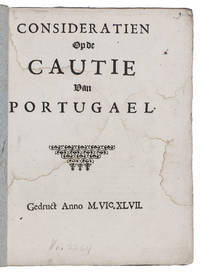
1647B32D19U6QRO5Amsterdam 1647. Small 4to 20 x 15.5 cm. Johannes van Marel pseudonym Later blue paper wrappers. With cast fleurons assembled to form a decoration on the title-page and a headpiece. Set in roman for the main text and italic type. 15 1 blank pp. First and only edition of a rare pamphlet defending Portugal against the claims of the Dutch Government and the West India Company WIC in Brazil: one of the earliest and one of the three "most remarkable works" published by Portugal's supporters in the Netherlands Asher p. 194. In an effort to take back Brazil from the Dutch the Portuguese had supported a local revolt in 1645 and the hostilities on land and sea between the Portuguese and the WIC had escalated rapidly. Portugal was suing for peace and the present pamphlet presents their side. In a series of questions and answers it sets forth the Dutch reservations about the peace and distrust of Portugal and attempts point by point to refute all arguments against a settlement.The author and printer of the pamphlet have not been identified but the author himself refers to his own Vertooch aen de . Staten Generael published earlier in the same year.With some waterstains otherwise in good condition.l Alden & Landis 647/51 6 copies; Asher 225 & pp. 192-194; Borba de Moraes p. 200; Knuttel 5554; Sabin 15933; STCN 6 copies; not in Van Doorninck. unknown
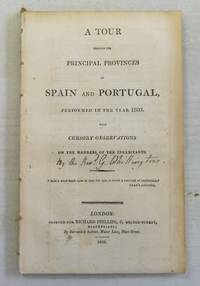
18066039<p>A Tour Through the Principal Provinces of Spain and Portugal Performed in the Year 1803. With Cursory Observations On the Manners of the Inhabitants A Tour Through the Principal Provinces of Spain and Portugal Performed in the Year 1803. Published by For Richard Phillips by J.G. Barnard London England London 1806. Small 8vo up to 9½" tall. 77pp. with folding map. Map is detached with browning. Text in very good condition.</p><p>George Downing Whittington 1780-1807 was a Church of England priest and architectural historian.</p> Richard Phillips
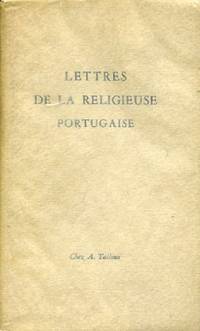
196169871Alpignano: Tallone 1961. Brossura wrappers. Ottimo Fine. Nouvelle édition des ''Lettres portugaises'' établie sur celle de 1669. Préface de Amedée Boinet. 24mo. pp. 127 13. Ottimo Fine. Edizione originale di 300 esemplari. Tallone, unknown
dola1042np: Companhia do Minho 1977. First Edition. 8vo. 2 p.l. 144 2. text in Portuguese. profusely illus. bds. dw. dw. wrinkled & with short repaired tear. dola1042 np: Companhia do Minho, 1977] unknown
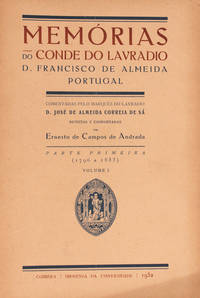
2003PG038<p>Comentadas pelo Marquês do Lavradio D. José de Almeida Correia de Sá revistas e coordenadas por Ernesto de Campos de Andrada. Parte Primeira 1796 a 1833 Volume I. Volume II a Volume VI e VIII Imprensa da Universidade. Coimbra.1932 1933 1934 1937 e 1938. </p>_x000d_<p>5 Volumes de 233x16 cm. Com viii 432; viii 478; 401 iv; viii 379 viii 347</p>_x000d_<p>Brochado. Ilustrado em extratexto sobre papel couché com 94 gravuras. </p>_x000d_<p>Obra dividida em três partes. A primeira ocupa os volumes I e II e abrange o período de 1796 a 1833. A segunda parte ocupa o 3º e 4º volumes e abrange o período de 1834 a 1853 a terceira parte ocupa o 5º volume e abrange o período de 1854 a 1857. </p>_x000d_<p>Cada volume contém índice dos capítulos e índice onomástico. </p>_x000d_<p>Exemplar com todos os volumes por abrir.</p>_x000d_<p>5 de 8 volumes.</p>_x000d_<p>Memórias que registam pormenorizadamente quer os acontecimentos da vida privada quer os acontecimentos políticos diplomáticos militares e sociais de uma época conturbada que foi dominada pelas invasões francesas pela revolução Liberal de 1820 e pela Guerra Civil entre Liberais e Absolutistas. </p>_x000d_<p>D. Francisco de Almeida Portugal Lisboa 1796 - Roma 1870 oitavo filho do 3º Marquês do Lavradio distinguiu-se como diplomata representando Portugal em diversos países europeus desde 1818 até ao fim da sua vida. O lugar mais importante que ocupou foi o de ministro plenipotenciário em Londres desde 1851 a 1869. Neste último ano foi transferido para Roma onde faleceu. Desempenhou por diversas vezes as funções de Ministros dos Negócios Estrangeiros e foi elevado á dignidade de 2º Conde do Lavradio em 1 de dezembro de 1834. </p>_x000d_<p>D. José Maria do Espírito Santo de Almeida Correia de Sá Lisboa 1874 - Lisboa 1945 que sucedeu a seu bisavô como 6.º Marquês de Lavradio e 9º Conde de Avintes foi um aristocrata e intelectual oficial do Exército Português. Distinguiu como memorialista e no campo da historiografia militar. Frequentou a Academia Militar e em 1910 aquando da imposição da República o Marquês de Lavradio passou à reserva e acompanhou o Rei Dom Manuel II para o exílio em Inglaterra. Além da colaboração na edição destas memórias do seu tio avô e escreveu igualmente as suas memórias que incluem as impressões do exílio em Inglaterra com o rei D. Manuel II. </p> I-95-H-54 unknown
9788575262092AUTENTICA EDITORA. new. Para Walter Benjamim o vidro representa a transpar�ncia a ren�ncia �� intimidade e �� subjetividade. Para Maurice Blanchot � a separa��o necess�ria o impedimento da utiliza��o dos objetos de prazer e interesse AUTENTICA EDITORA unknown
1835DEMO016253ILondon: Richard Bentley 1835. First edition. hardcover. Good . 8vo 228 pages 19th C half sheep marbled boards. Ex libris Sam Crimpton a Hook or Hooke family and William Wilson of Bardstown JY with his rubber stamp on the title-page. head of spine repaired. <br/><br/>A travel memoir by Beckford author of VATHEK and one of the wealthiest Englishmen of his era. He built Fonthill Abbey arguably the most sensational of the English Gothic Revival buildings. It has been said that his visit to Batalha in 1794 influenced his ideas about Fonthill Abbey which was begun in 1796. The Prince Regent of Portugal insisted that Beckford should visit these abbeys. This copy is extra-illustrated with an engraved portrait of young Beckford and with multiple photogravure prints of views of these two places. Richard Bentley hardcover
46788979-nnew. unknown
46788979like new. unknown
1396578846.Ghardcover. Good. Access codes and supplements are not guaranteed with used items. May be an ex-library book. hardcover