Ruiz, Arturo; Molinos, ManuelBiblio.com
671 résultats
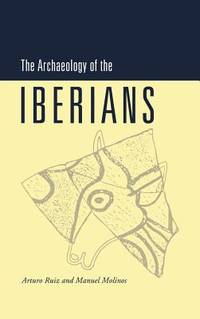
1999357120U.S.A.: Cambridge University Press 1999. Hardcover. Fine/Fine. clean unmarked copy. <br/> <br/> Cambridge University Press hardcover
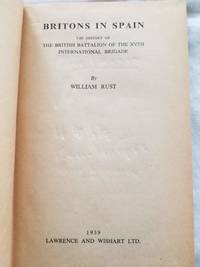
19391918London: Lawrence and Wishart Ltd. 1939. First edition. Hardcover. Fair. Signed by 18 members in ink and pencil across the half-title and facing page. According to a well researched web history of the brigade at Weebly "Upon returning to the UK many of the surviving members of the Battalion embarked ona speaking tour to raise awareness and funds for the Spanish people. It lasted 32 days from 9/1/1939 until 8/2/1939 and took in the length and breadth of the UK." The signatures here represent folks who participated in that tour. Left page: Nurses Mary E. Slater S.R.N. - Nursed on the Aragon front and Margaret Finlay; Fred Copeman organiser of the Invergordon Mutiny commanded the British Battalion during 1937. Right Page: John Henlon - along with inscription "XV Brigade Salud y Victoria" - Miller Clive Branson- later killed on the Arakan Front Burma 25/02/1944 J L--- W. J. Harrington M. White Ben Sturgess Henry G-ly Charles H.G. Cooley Alan Gilchrist - Wounded in the chest at the Ebro on 31/7/1938 Bob Cooney - British Battalion Political Commissar G. R. Peck most likely Gustav Robert Daubenspeck Cyril A. Sexton -Chief Clerk of XV Brigade Base and Arthur Nicoll. The book itself is only fair lacking dustjacket. A first edition in red boards heavily worn with tearing at the paper of the joints and a chip out of the spine head. Interior is much better but paper is browned and the rear hinge is fragile at the appendices. Previous owner's name to the front free-endpaper and a number at the top of the rear one. 212 pp. some black and white photos near the rear of the book. A rough copy - unique in it's history and collection of autographs. <br /> <br/><br/> Lawrence and Wishart Ltd. hardcover
20062-8498230055Wanceulen S.L. 2006. Paperback. New. 276 pages. Spanish language. 9.21x6.69x0.71 inches. Wanceulen S.L. paperback
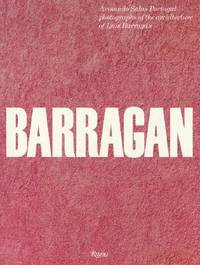
1992SKU-1254AA04303244Rizzoli Publishing 1992. 1. Hardcover. Good. Good in a Good dust jacket; Hardcover; Withdrawn library copy with the standard library markings; Jacket is moderately shelfworn and edgeworn with sun-fading and a small surface abrasion/peel-mark to the back of the jacket but is overall good and intact Now fitted with a new Brodart jacket protector; Moderate wear to the boards; Library stamps to endpapers; Text pages clean & unmarked; Good binding with straight spine; This book will be shipped in a sturdy cardboard box with foam padding; Large Format 11.75" - 12.75" tall; 3.0 lbs; Light purple/red dust jacket with title in white lettering; 1992 Rizzoli Publishing; 168 pages; "Barragan: Armando Salas Portugal Photographs of the Architecture of Luis Barragan" by Armando Salas Portugal. Rizzoli Publishing hardcover
0847814823.Ghardcover. Good. Access codes and supplements are not guaranteed with used items. May be an ex-library book. hardcover
1992SONG0847814823Rizzoli 1992-10-15. First Edition. hardcover. Used: Good. 9.50x1.00x12.50. Buy with confidence. Excellent Customer Service & Return policy. Rizzoli hardcover
1991094463Chrysler Mexico 1991. 1st Edition . Hardcover. Very Good. Hardcover in slipcase. Very good clean tight condition. Text free of marks. Professional book dealer since 1999. All orders are processed promptly and carefully packaged. <br/> <br/> Chrysler Me?xico hardcover
2007621Cotton Patch Publishing 2007. Paperback. Very good. No dustjacket as issued. Cover has light wear and bottom of spine has been slightly bumped. Signed and inscribed by the author to former book owner on Acknowledgements page/front endpaper. Cotton Patch Publishing paperback
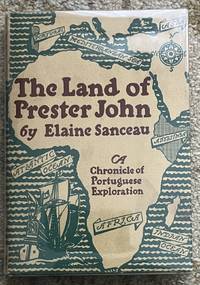
1944004152New York: Alfred A. Knopf 1944. First US Edition. Hardcover. Very Good /very good . 8vo. x 244 pp. Bound in gray cloth over green boards top edge stained maroon deckle edge stamped in dark green on cover and spine in illustrated dust jacket. Black and white maps and illustrations. Includes chronology bibliography and index. Very Good minor age-toning to pages light rubbing to extremities in Very Good dust jacket with note in pencil to front flap minor age-toning short tear to bottom edge of rear cover light wear. <br/><br/> Alfred A. Knopf hardcover
2026x-103272501XTaylor & Francis Ltd 2026. Hardcover. New. 208 pages. 9.18x6.12x9.45 inches. Taylor & Francis Ltd hardcover
033264958X.Ghardcover. Good. Access codes and supplements are not guaranteed with used items. May be an ex-library book. hardcover
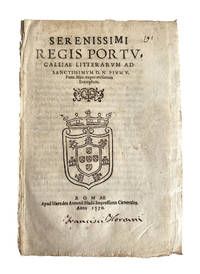
15705000917Rome: apud Haeredes Antonii Bladii 1570. In excellent original condition. Small quarto 4 leaves the last blank; woodcut device on title; page numbers in ink from an earlier binding within a volume; in a later plain wrappers binding and a folding case. <p><p>Extremely rare printed letter from King Sebastian of Portugal to Pope Pius V in which the king asks for more priests especially Jesuits stressing the significance of Portuguese conquests in the Far East in the process detailing the number of ships laden with treasure and trade goods arriving daily in Lisbon.</p> <p>The strategic relationships between the rulers of Portugal and Spain with the papacy were crucial in the discovery and colonisation period. The splitting of the new world enacted by the treaty of Tordesillas left the Portuguese and Spanish eager to exploit any advantage that could be gained and often the evangelisation of pagan natives was used to justify territorial ambitions; it was often in these pious terms that the pope was lobbied for his support.</p> <p>This letter from Sebastian is an excellent example of the sort of lobbying that took place. Donald Lach has written extensively about the nature of the exotic in the East Indies and the Far East describing how these printings often encompass exotic subjects for which monarch and pope both had a taste. In his relations with Pius V's namesake and predecessor for example Sebastian had been asked for and had promised a pair of elephants for the papal menagerie see Lach II 1 150n.</p> <p>The printing of letters and diplomatic orations such as this formed a critical part of the lobbying. Important records of the significance accorded to the new world it seems that they were generally printed in small numbers for limited circulation hence the tiny survival rate of any of these early works with this example particularly uncommon: USTC records five copies four of them in Italy and WorldCat adds another at Yale while the last copy that we can identify on the market was that offered by Maggs Bros in 1935.</p> <p>---</p> <p>At Sebastian's death fighting the Moors in north Africa the destiny of Portugal changed completely and from then on she would be under Spanish sway. "When at last she found herself again a free and independent state 1640 the sceptre of the Indies had passed irrevocably to Holland and England' Penrose p. 75. Nonetheless Sebastian still occupies a most important position in Portuguese history in which he has been compared with King Arthur or Barbarossa: he was known as the "sleeping king" who would mysteriously return at Portugal's time of great need. 'He would then be known by symbolic names: O Encoberto The Hidden One who would return on a foggy morning to save Portugal; or as O Desejado The Desired. The legend was vigorously promoted through the massive circulation of popular rhymes trovas written by Bandarra. Even as late as the 19th century Sebastianist peasants in the Brazilian sertão believed that the kings would return to help them in their rebellion against the "godless" Brazilian republic.' Wikipedia.</p> <p>Pius V reigned from 1566 to 1572: his reign was largely pre-occupied with the war against the Turks - the battle of Lepanto was won the year after this publication. In 1570 Goa was attacked by the Indian army but the Portuguese successfully defended it. Also in 1570 Sebastian issued orders that the Brazilian Indians used for slavery should be released from captivity.</p> </p> . Provenance: Early ink ownership inscription on title "Francisci Morani" sp. apud Haeredes Antonii Bladii unknown
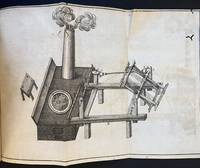
17874368Lisbon: press of the Royal Academy of Sciences 1787. Narrow 4to 209 x 118 mm. 8 xiii 3 175 pages. Title-leaf fol. 2 present in duplicate. Folding engraved plate of a mechanical silk loom; titles with woodcut arms of the Portuguese Royal Academy of Sciences woodcut and typographic headpieces occasional slight discoloration small wormtrack in the folding plate. Contemporary cat’s-paw polished sheep covers with gilt border spine in six gold-tooled compartments the second gilt lettered edges gilt and gauffered recased endpapers renewed defect in top spine compartment a dozen small wormholes. Provenance: António Romão dos Passos 1866-1951 signature in ink Antonio Passos / agronomo or Anto R. Passos scrawled across both titles the first with price note and on six text leaves. <br /> <br /> Only edition of a comprehensive overview of the Portuguese silk industry by the judicial magistrate of the Moncorvo district and author of several works on political economy and history of law. José Antonio de Sá d. 1819 a native of Bragança was an important proponent of modernization of the industry and later served as director of the Royal Silk Factory Real Fábrica das Sedas founded in 1802 in Lisbon. He was one of the earliest members of the Academia Real das Sciencias of Lisbon.<br /> <br /> Silkworms were raised in Portugal as early as the 13th century. Sericulture and silk production were concentrated in the northeastern province of Trás-os-Montes its largest center being the city of Bragança which from the 15th to 17th century was known throughout Europe for its luxurious velvets. Because of the lack of government support for industry frequent wars and above all the persecutions of the Inquisition which decimated an industry in all sectors of which Jews or converted Jews cristãos-novos played a major role Portuguese silk production suffered from intermittent crises and was even periodically decimated. Starting in the 1770s efforts to revive the industry began to have an effect: <br /> <br /> “By the end of the 18th century the Trás-os-Montes silk industry had dragged itself out of the crisis that had begun in 1750-1755 coinciding with the last incursion of the Inquisition into Bragança and embarked upon a period of great development accompanying the industrial expansion that was then taking place not only in that particular region but throughout the Portuguese kingdom. After the Inquisition’s systematic persecution of businessmen weavers and throwers had finally come to an end the continuity and expansion of the silk industry seemed to be a viable prospect. In the last two decades of the 18th century a remarkable process of modernization took place thanks to the efforts of the businessmen involved in this economic activity such as António José Lopes Fernandes who installed 200 silk looms in Bragança magistrates such as José António de Sá and Pereira de Barros and politicians such as Martinho de Melo e Castro and Rodrigo de Sousa Coutinho the latter being the Portuguese ambassador to Piedmont Italy. These efforts included the adoption of Piedmontese methods and techniques namely the organzine mill and the spinning-jenny the most advanced ones at that time in Europe in an operation led by experts coming to Portugal from that Italian region.†Sousa p. 6<br /> <br /> Sá’s work is in three parts. The first part comprises an overview of the history of silk production starting with Antiquity and summaries of the industry and government policies toward it in other countries followed by a detailed recommendation with responses to projected objections that the Portuguese government undertake a campaign to plant mulberry trees and promote the industry generally. Part two is a treatise on the silkworm and part three a technical survey of “the art of silk spinning.†Explained in the text pp. 142-148 is the letter- and number-keyed engraving of a rather fanciful machine showing a vat for softening the cocoons heating on the left from which a thread-unwinding mechanism feeds a loom on the right. <br /> <br /> The reason for the duplicated title-leaf in this copy is not clear. Perhaps one functioned as an upper wrapper — but as both titles are preceded by a half-title that appears unlikely. The book collector Antonio Romão dos Passos b. February 28 1866 was an engineer and agronomist. Other books from his library all on practical subjects are recorded; four are digitized by the Biblioteca Nacional Digital de Portugal. One a treatise on hemp has a similar indelicately scrawled signature across the title. <br /> <br /> OCLC gives six US locations. Innocencio Diccionario bibliographico portuguez IV: 246 no. 2658; Kress Luso-Brazilian Economic Literature Before 1850 p. 4. Cf. F. Sousa “The Silk Industry In Trás-Os-Montes During The Ancient Regime†E Journal of Portuguese History Vol. 3 no. 2 Winter 2005 digitized. press of the Royal Academy of Sciences unknown
ria9781119068938_inpHardback. New. New Book; Fast Shipping from UK; Not signed; Not First Edition; Advanced Computational Nanomechanics is a state-of-the-art publication on computational nanomechanics and contains eleven chapters prepared by world experts in this field. hardcover
2026x-1350410268Bloomsbury Publishing Plc 2026. Hardcover. New. 188 pages. 6.14x0.50x9.21 inches. Bloomsbury Publishing Plc hardcover
0364997044.Ghardcover. Good. Access codes and supplements are not guaranteed with used items. May be an ex-library book. hardcover
065632189X.Gpaperback. Good. Access codes and supplements are not guaranteed with used items. May be an ex-library book. paperback
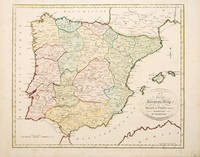
180158675General Atlas. Thomas Brown. 1801. Thomas Brown was an Edinburgh Bookseller and Publisher of the late 18th and early 19th century. The maps from his General Atlas are on the cusp between the decorative maps of the eighteenth century and the more accurate maps of the nineteenth century. Copper engraving. Excellent condition Later colour. Size: 35 x 28 cm. 14 x 11 inches unknown
1333889542.Gpaperback. Good. Access codes and supplements are not guaranteed with used items. May be an ex-library book. paperback
BN324077Spanien & Portugal Breuer Toni; Weber Peter and Richter Jürgen <br/><br/>Spanien & Portugal Breuer Toni; Weber Peter and Richter Jürgen Spanien & Portugal Breuer Toni; Weber Peter and Richter Jürgen unknown
182031850Weimar Geographischen Instituts 1820. Cont. marbled boards. Back worn. Uncut. Some dampstaining throughout mainly to margins some brownspottings. XLII798 pp. hardcover
202164450Leya. Fine in Near Fine dust jacket. 2021. Limited Edition. Hardcover. Stiff unmarked book in crisp dust jacket with a pinprick. Impressive black and white photography. ; 10 x 13.5"; 328 pages . Leya hardcover
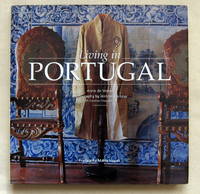
1995002813Paris: Flammarion 1995. First US Edition. Hardcover. Very Good /very good-. 4to. 256 pp. Bound in blue boards stamped in cream on cover and spine in illustrated dust jacket. Profusely illustrated with full-color photographs by Jérôme Darblay with Caroline Champenois. Preface by Mário Soares. Main text followed by Visitor's Guide with maps. Very Good light wear to extremities of binding internally clean and bright in Very Good- dust jacket with heavy wear and creasing to bottom edge including two 1/4" pieces missing from lower edge of front cover and 1/2" tear to lower rear cover. <br/><br/> Flammarion hardcover
1995002912Paris: Flammarion 1995. First edition. Hardcover. Fine/near fine. 4to. 256 pp. Bound in blue boards stamped in cream on cover and spine in illustrated dust jacket. Profusely illustrated with full-color photographs by Jérôme Darblay with Caroline Champenois. Preface by Mário Soares. Main text followed by Visitor's Guide with maps. Fine bright clean copy in Near Fine dust jacket with minor shelf wear. <br/><br/> Flammarion hardcover
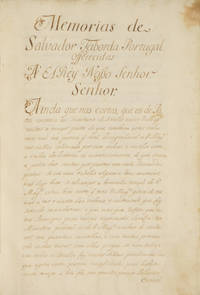
2502PG002<p>De 315x225 cm. Com xv 316 fólios. Encadernação da época inteira de pele com nervos e rótulos vermelhos gravados a ouro na lombada.</p>_x000d_<p>Manuscrito com falta de folha de rosto com falta do fólio 219 e com falta de fólios no fim. </p>_x000d_<p>Os primeiros 12 fólios contêm um índice segue-se a dedicatória ao Rei D. Pedro II nos dois lados do fólio 13 a advertência ao leitor ocupa a frente do fólio 14 o Sumário do livro primeiro preenche o verso da folha 14 e a frente do fólio 15 que tem o verso em branco. Seguem-se 4 livros da obra em que cada um é antecedido por um sumário. </p>_x000d_<p>Manuscrito muito raro no comércio e de grande importância para a história da diplomacia portuguesa no século XVII e para a história de Portugal na época. É igualmente importante para o conhecimento de pontos de vista desconhecidos até aos nossos dias sobre a vida política e sobre a política externa francesa cujos eventos são descritos com grande pormenor. </p>_x000d_<p>Na dedicatória o autor afirma que as presentes memórias são para informar o Rei de assuntos e questões que não foram explicadas nas suas cartas e ofícios enviados durante a sua missão e também para permitir ao rei ter à sua disposição uma narração seguida de todos os acontecimentos.</p>_x000d_<p>A advertência aos leitores serve para o autor explicar a maneira de escrever os nomes com a ortografia portuguesa no corpo do texto e com a forma da sua língua original nas margens. </p>_x000d_<p>O autor começa a sua narração pelo registo da sua nomeação em Março de 1677 para enviado do Príncipe Regente D. Pedro ao Rei de França Luís XIV e termina com os conflitos entre os criados do Duque de Elbeuf e os criados do Enviado do Rei de Inglaterra Duque de Savill em Setembro e Novembro de 1681. </p>_x000d_<p>O escolha de Salvador Taborda de Portugal para suceder a Ribeiro de Macedo e por indicação deste como representante dos interesses de Portugal na Corte de Luís XIV Rei de França insere-se na política de D. Pedro como Regente de Portugal e a partir de 1683 Rei de Portugal de diversificar e afirmar as relações externas de Portugal no período posterior à Guerra da Restauração e à afirmação da independência de Portugal em relação a Espanha e no contexto europeu da época. </p>_x000d_<p>Salvador Taborda de Portugal Penamacor 1632 - Paris 1690 Filho do célebre jurista Domingos Antunes Portugal doutorou-se na universidade de Coimbra onde foi admitido no Colégio de S. Pedro em 7 de Maio de 1664 e regeu a Cadeira de Instituta desde 23 de Julho de 1668. Exerceu os cargos de Desembargador na Relação do Porto Desembargador dos Agravos da Casa da Suplicação Procurador Fiscal da Junta dos Três Estados Procurador e Conselheiro do Conselho da Princessa D. Isabel. Foi nomeado Enviado Extraordinário à Corte de Paris tendo partido de Lisboa em 6 de Agosto de 1677 e chegado ao porto da Rochela em 29 de Setembro seguinte. Depois de exercer estas funções durante 13 anos faleceu em Paris em 1690 quando já estava nomeado para Enviado Extraordinário em Roma. </p>_x000d_<p>É autor de obras jurídicas que ficaram em manuscrito: <em>Relectio ad Tit. C. de Castrensi peculio </em>de poesias impressas em obras colectivas em folhetos e outras que ficaram manuscritas de correspondência nomeadamente com D. João de Ataíde e Castro mas principalmente das memórias e apontamentos da sua missão diplomática em Paris. </p>_x000d_<p>Referências: <br />Catarina Maria Marques dos Santos Viegas - Correspondência de Salvador Taborda de Portugal . temáticas e momentos vividos. Dissertação de Mestrado em História Moderna e dos Descobrimentos. Lisboa: FCSH da UNL Maio de 2019. <br />Nuno Miguel Castro Luís - Salvador Taborda Portugal. O percurso de um embaixador português à época do rei Sol. Colóquio Internacional Corte e Diplomacia na Península Ibérica séculos XIII-XVIII. Lisboa 2016<br />Duarte Ribeiro de Macedo e Ana Leal Faria - Os cadernos de Duarte Ribeiro de Macedo. Colecção Biblioteca Diplomática- Lisboa Ministério dos Negócios Estrangeiros 2007 p. 758-759.<br />Ana Leal Faria - O tempo dos diplomatas 1640-1736-1750. Projecto de Investigação. Trabalho complementar para as provas de doutoramento em História Moderna. FLUL. Departamento de História 2003-2004 p. 132 e 154.<br />Maria Rosalina Pinto da Ponte Delgado - José da Cunha Brochado 1651-1733 Universidade Lusíada 2000 374 p.<br />Inocêncio VII 195-196.<br />Barbosa Machado III 671 </p>_x000d_<p> </p>_x000d_<p> </p> M-10-C-64 unknown