WATSON, RobertAntiquariat.de

187 résultats
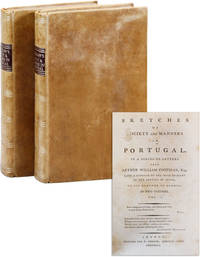
1777133882Amsterdam, Changuinon, 1777. XII, 422 S.; XII, 410 S. Mit 2 gestochenen Titelvignetten. Leder d. Zeit mit je 2 Rückenschildern (etwas berieben, Rücken mit wenigen Wurmspuren, 1 Rücken am Fuß eingerissen). [2 Warenabbildungen]
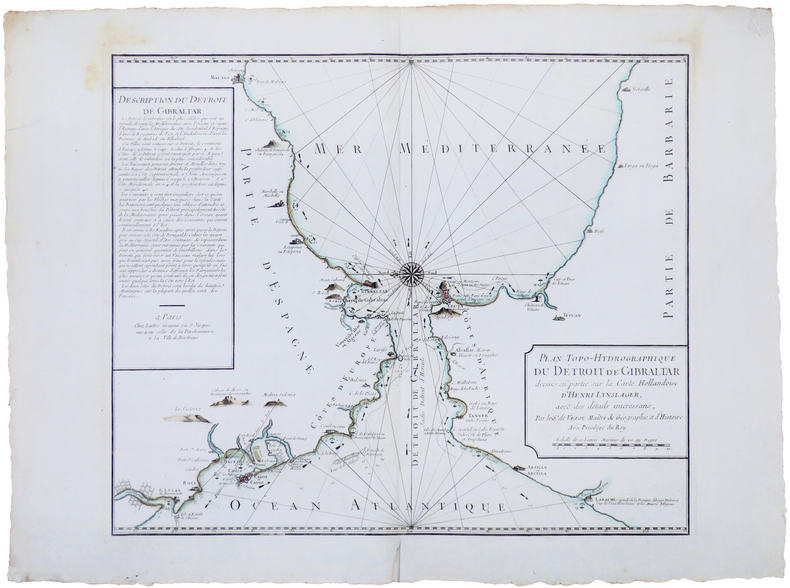
1762LBW-8935Paris, Lattré, 1762. 448 x 531 mm ; sur papier bleuté.
1729115521La Haye Chez Henri Scheurleer 1729 1 vol. Relié in-12, basane fauve, dos à nerfs avec petit fer de dauphin couronné répété aux caissons, pièce de titre de maroquin rouge, 8 ff. n. ch. + 190 pp. + 47 ff. n. ch., frontispice gravé et arbre généalogique dépliant. Exemplaire avec des rousseurs, dans une jolie reliure de l'époque un peu usée aux plats et aux mors, bien complet in fine du "Catalogue des livres qui se trouvent à La Haye dans la boutique de Henri Scheurleer" comprenant pas moins de 41 feuillets.
1729115521La Haye Chez Henri Scheurleer 1729 1 vol. Relié in-12, basane fauve, dos à nerfs avec petit fer de dauphin couronné répété aux caissons, pièce de titre de maroquin rouge, 8 ff. n. ch. + 190 pp. + 47 ff. n. ch., frontispice gravé et arbre généalogique dépliant. Exemplaire avec des rousseurs, dans une jolie reliure de l'époque un peu usée aux plats et aux mors, bien complet in fine du "Catalogue des livres qui se trouvent à La Haye dans la boutique de Henri Scheurleer" comprenant pas moins de 41 feuillets.
1772862741772 Paris, Mame, 1810, in 12 relié pleine basane tabac, dos lisse orné, encadrement doré sur les plats, 149 pages.
178610746Paris, Ches les libraires associés, 1786. 300 g In-12, pleine basane, dos orné à nerfs, filet sur les coupes xiv-396 pp.. Nouvelle édition, revue et corrigée. Légers défauts. . (Catégories : Histoire, Portugal, )
1739GITg977A Paris chez Nyon 1739. In-12 1 feuillet non chiffré titre III-VIII 1-360pp 8 feuillets non chiffrés table. Pleine basane brune, dos à nerfs orné de cadres et fleurettes dorés, pièce de titre grenat, reliure de l'époque. Manque de cuir en tête et en queue du dos, 1 mors fendillé sur 2cm, 1 coi émoussé avec perte de cuir, intérieur en bon état et bien complet. (4465)
1772561981772 A la Haye, Chez Pierre Gosse Junior et Daniel Pinet, 1772, 1 volume de 10x16.5 cm environ, (1) ff., xij pp., 276 pp., reliure pleine basane fauve marbrée, dos à 5 nerfs, orné de filets et titres dorés, pièce de titre rouge. Rousseurs, légers frottements sur les nerfs, mors et coiffes, bon état général.
1768104601768 basane marbrée, dos à n., tr. r. in-12, XVI-382pp., (16ff.), 1 frontispice, 1 pl. depl., P. Vve Savoye 1768,
1772862751772 La Haye, Pierre Gosse Junior, 1786, in 12 relié pleine basane tabac de l'époque, dos lisse orné, tranches rouges, 276 pages ; petits frottis.
178319654A Avignon, chez Chambeau A Avignon, chez Chambeau, 1783. In-12 relié pleine basane blonde de l'époque. Dos lisse à motifs dorés, titres dorés. Tranches marbrées. Titre, XII + 276 pages. Bel exemplaire.
1786177197Les Libraires Associés A Paris, Les Libraires Associés, 1786. In-12 relié pleine basane marbrée, dos lisse très orné de filets et fleurons dorés, pièce de titre cuir rouge, tranches rouges, gardes de papier marbré, 396 pages. Coiffe arasée, petit manque en cuir en pied, coins un peu émoussés, corps de l'ouvrage en bon état.
177610284Berne, chez la Société Typographique, 1776. In-8 de [2]-XI-380; 54-[2] pages, plein veau brun, dos lisse orné de roulettes, fleurons, filets et titre dorés, étiquette de titre prune, 2 coins frottés. Il s'agit d'une reliure de réemploi: gardes et étiquette de titre récentes.
178743440London: T. Vernor 1787. First Edition. Two octavo volumes 21.25cm; 20th c. tan calf with titles stamped in gilt on spines; marbled endpapers; vi4242; iv4244pp. Armorial bookplate of Thomas Tyndall to front pastedowns with contemporary ink signature of Jeremiah Quin to preliminary leaf in both volumes; mild scattered foxing to preliminary and terminal leaves occasional light thumb-soil to margins else clean and sound; light wear to lower board edges with a few rubbed spots to covers; Near Fine. Detailed history of Portuguese social customs written by the author "late a Captain of the Irish Brigade in the service of Spain" in a series of letters to his brother in London. T. Vernor unknown books
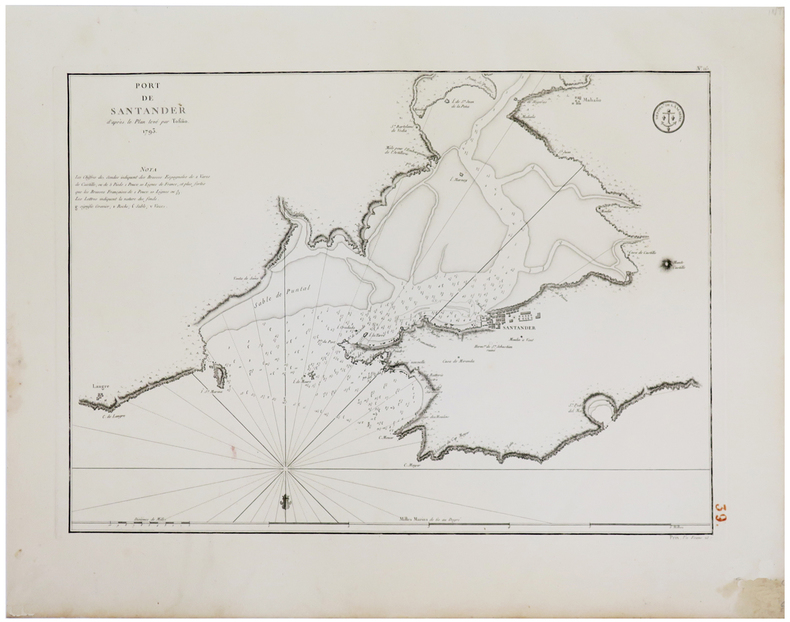
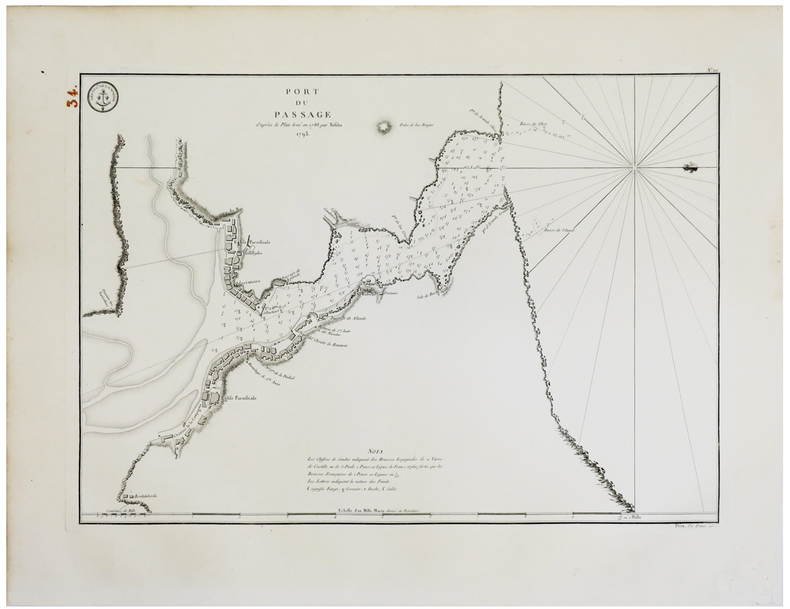
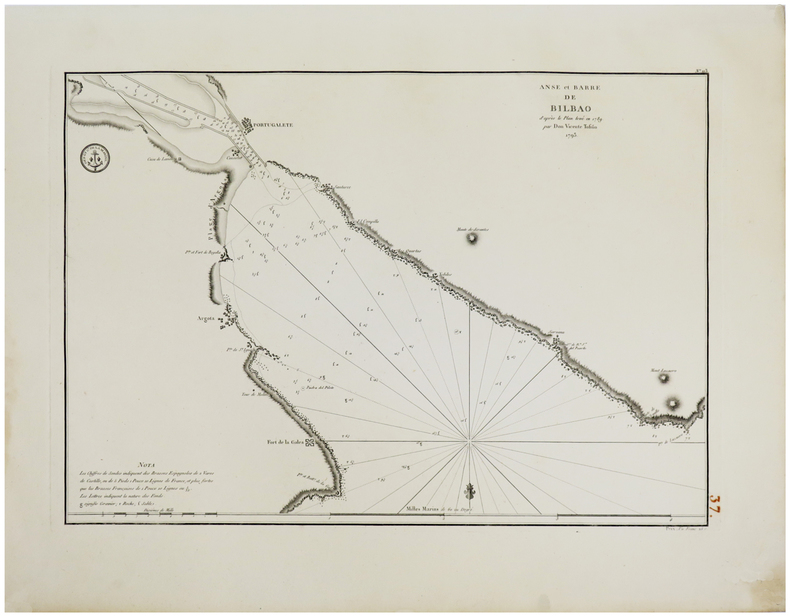
1793LBW-18041793. 372 x 526 mm.
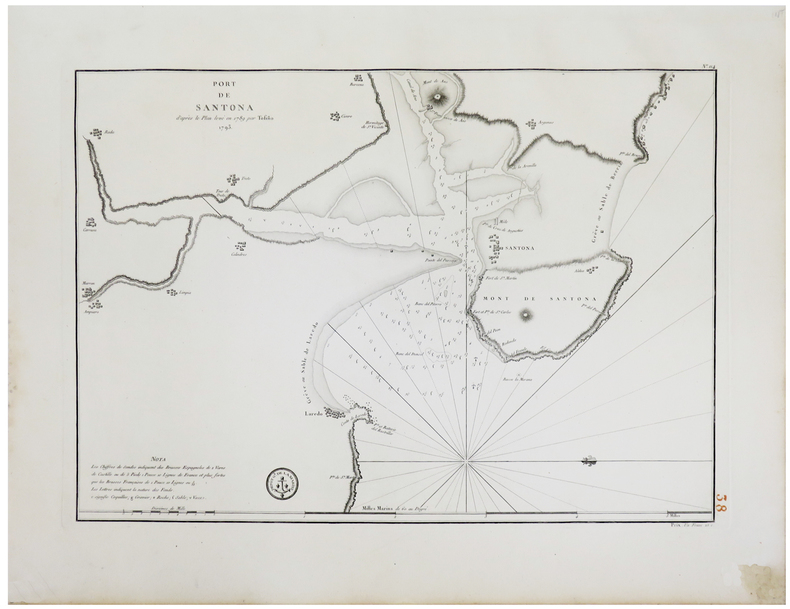
1793LBW-18031793. 372 x 527 mm.
1793LBW-18061793. 369 x 525 mm.
1793LBW-18071793. 367 x 523mm.
1720115586(Wohl Nürnberg), um 1720. Plattengröße: 315 x 225 mm (und kleiner Rand).
1800KART0161Paris, um 1800. Plattengröße:45x34 cm, Blattgröße: 56,8x43,4 cm; verstärkter Mittelfalz, No. 108 im linken Plattenrand, in der Mitte im unt. Plattenrand: Longitude du Meridien de Paris; sauberes, dekoratives Blatt.
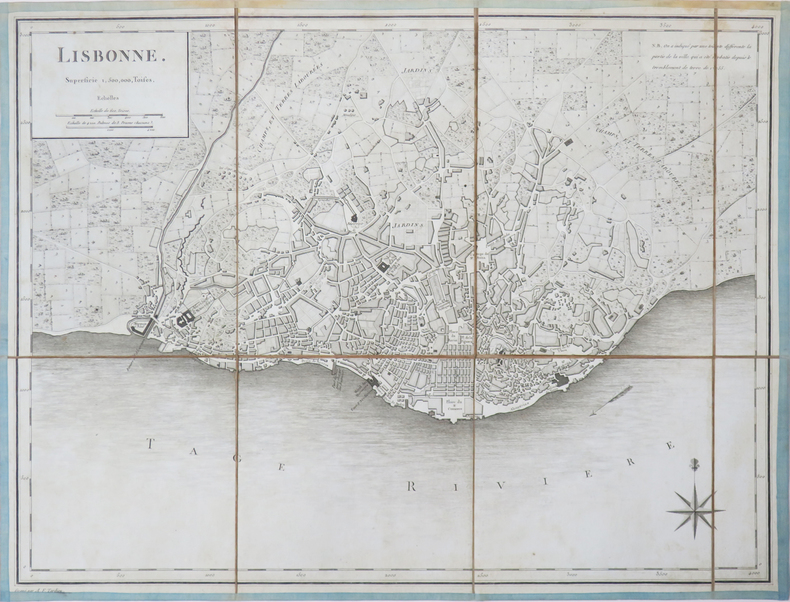
1752LBW-4060[circa 1780]. En 8 sections montées sur toile bordée de soie bleue et pliées, formant un plan de 360 x 473 mm.
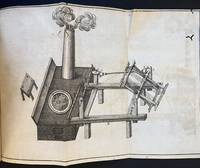
17874368Lisbon: press of the Royal Academy of Sciences 1787. Narrow 4to 209 x 118 mm. 8 xiii 3 175 pages. Title-leaf fol. 2 present in duplicate. Folding engraved plate of a mechanical silk loom; titles with woodcut arms of the Portuguese Royal Academy of Sciences woodcut and typographic headpieces occasional slight discoloration small wormtrack in the folding plate. Contemporary cat’s-paw polished sheep covers with gilt border spine in six gold-tooled compartments the second gilt lettered edges gilt and gauffered recased endpapers renewed defect in top spine compartment a dozen small wormholes. Provenance: António Romão dos Passos 1866-1951 signature in ink Antonio Passos / agronomo or Anto R. Passos scrawled across both titles the first with price note and on six text leaves. <br /> <br /> Only edition of a comprehensive overview of the Portuguese silk industry by the judicial magistrate of the Moncorvo district and author of several works on political economy and history of law. José Antonio de Sá d. 1819 a native of Bragança was an important proponent of modernization of the industry and later served as director of the Royal Silk Factory Real Fábrica das Sedas founded in 1802 in Lisbon. He was one of the earliest members of the Academia Real das Sciencias of Lisbon.<br /> <br /> Silkworms were raised in Portugal as early as the 13th century. Sericulture and silk production were concentrated in the northeastern province of Trás-os-Montes its largest center being the city of Bragança which from the 15th to 17th century was known throughout Europe for its luxurious velvets. Because of the lack of government support for industry frequent wars and above all the persecutions of the Inquisition which decimated an industry in all sectors of which Jews or converted Jews cristãos-novos played a major role Portuguese silk production suffered from intermittent crises and was even periodically decimated. Starting in the 1770s efforts to revive the industry began to have an effect: <br /> <br /> “By the end of the 18th century the Trás-os-Montes silk industry had dragged itself out of the crisis that had begun in 1750-1755 coinciding with the last incursion of the Inquisition into Bragança and embarked upon a period of great development accompanying the industrial expansion that was then taking place not only in that particular region but throughout the Portuguese kingdom. After the Inquisition’s systematic persecution of businessmen weavers and throwers had finally come to an end the continuity and expansion of the silk industry seemed to be a viable prospect. In the last two decades of the 18th century a remarkable process of modernization took place thanks to the efforts of the businessmen involved in this economic activity such as António José Lopes Fernandes who installed 200 silk looms in Bragança magistrates such as José António de Sá and Pereira de Barros and politicians such as Martinho de Melo e Castro and Rodrigo de Sousa Coutinho the latter being the Portuguese ambassador to Piedmont Italy. These efforts included the adoption of Piedmontese methods and techniques namely the organzine mill and the spinning-jenny the most advanced ones at that time in Europe in an operation led by experts coming to Portugal from that Italian region.†Sousa p. 6<br /> <br /> Sá’s work is in three parts. The first part comprises an overview of the history of silk production starting with Antiquity and summaries of the industry and government policies toward it in other countries followed by a detailed recommendation with responses to projected objections that the Portuguese government undertake a campaign to plant mulberry trees and promote the industry generally. Part two is a treatise on the silkworm and part three a technical survey of “the art of silk spinning.†Explained in the text pp. 142-148 is the letter- and number-keyed engraving of a rather fanciful machine showing a vat for softening the cocoons heating on the left from which a thread-unwinding mechanism feeds a loom on the right. <br /> <br /> The reason for the duplicated title-leaf in this copy is not clear. Perhaps one functioned as an upper wrapper — but as both titles are preceded by a half-title that appears unlikely. The book collector Antonio Romão dos Passos b. February 28 1866 was an engineer and agronomist. Other books from his library all on practical subjects are recorded; four are digitized by the Biblioteca Nacional Digital de Portugal. One a treatise on hemp has a similar indelicately scrawled signature across the title. <br /> <br /> OCLC gives six US locations. Innocencio Diccionario bibliographico portuguez IV: 246 no. 2658; Kress Luso-Brazilian Economic Literature Before 1850 p. 4. Cf. F. Sousa “The Silk Industry In Trás-Os-Montes During The Ancient Regime†E Journal of Portuguese History Vol. 3 no. 2 Winter 2005 digitized. press of the Royal Academy of Sciences unknown
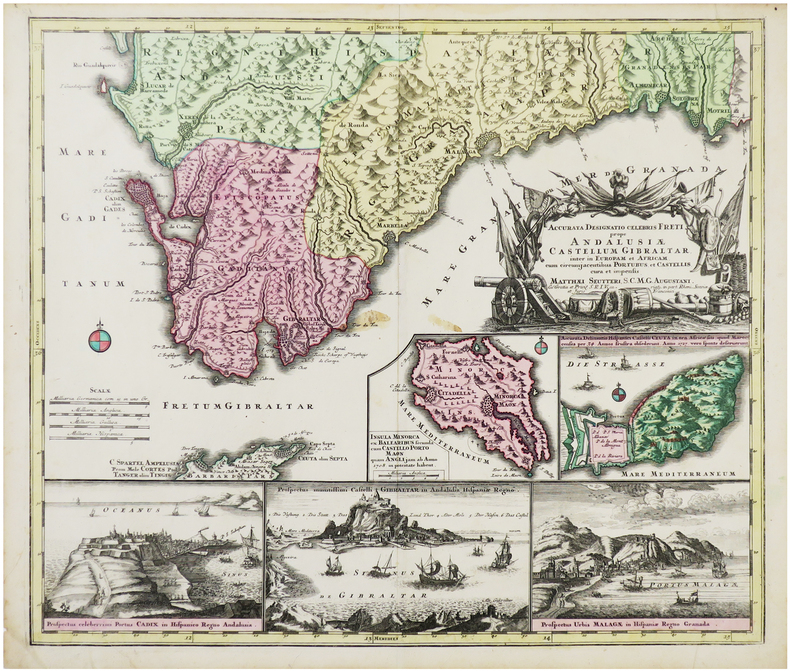
172030980Augsburg, Seutter, um 1720. 48,5 x 56 cm Blattgröße 53 x 60,5 cm
1730LBW-6426Augsbourg, [circa 1730]. 496 x 580 mm.
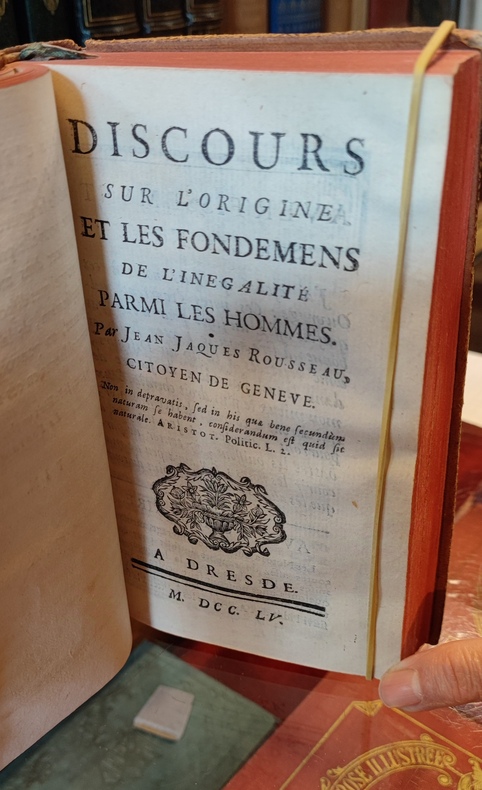
17553448A Dresde, 1755, in-12 (16,5 x 11 cm), XLVI, 206 pp., reliure d'époque veau havane, dos à 5 nerfs orné, pièce de titre rouge, roulette sur les coupes, tranches rouges. Contrefaçon, datée de la même année que l'originale réportoriée "d" dans Tchémerzine. Ce volume contient également : L. PETIT DE BACHAUMONT. Essai sur la Peinture, la Sculpture, l'Architecture. 1751, VI, 87 pp. paginées de 7 à 93. fontispice gravé par Jean-Jacques Pasquier. Edition originale, rare. Autre titre contenu dans ce volume : Relation historique du tremblement de terre survenu à Lisbonne le premier novembre 1755. Avec un détail contenant la perte en Hommes, Eglises, C(Imprimerie Gauthier-Villars. 1124-72) uvens, Palais, Maisons, Diamans, Meubles, Marchandises, &c. Précédé d'un discours politique sur les avantages que le Portugal pourrait tirer de son malheur. dans lequel l'auteur développe les moyens que l'Angleterre avait mis jusques-là en usage pour ruiner cette Monarchie. A La Haye, chez Philanthrope, A la Vérité, 1756. (petite déchirure sur le faux-titre et 2 pages).