488 résultats
19043413299Budapest, 1889/1904. Insgesamt 1320 S. Mit zahlreichen, teils ganzseitigen Abbildungen und 7, teils gefalteten Tafeln. Hldr (vereinzelte Bleistiftanstreichungen).
190116891901 Ed. Jules Céas, Valence, 1901. Grand in-4, demi-chagrin, couverture couleurs conservée de J. Magnin. 403 pages. Orné d'une aquarelle de Job, dessin de David de Sauzéa, 3 planches couleurs, une héliogravure, nb. bandeaux et lettrines
1996x-0792340299Kluwer Academic Pub 1996. Hardcover. New. 685 pages. 9.75x6.75x1.25 inches. Kluwer Academic Pub hardcover

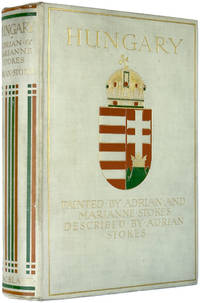
190921142851909. London; Adam and Charles Black 1909. Large 8vo. original white cloth with an armorial design blocked in orange green and gilt to spine and upper board top edges gilt; pp. xix i 320 4 publisher's advert.; with a total of 75 fine coloured plates after watercolours guarded by captioned tissues and a folding pull-out map at the rear; a near fine copy of this scarce and vulnerable book preserved in uncommonly clean condition both externally and internally with just light rubbing and dusting to boards with a previous owner's bookplate to inner upper cover another ownership inscription to front free endpaper and mild foxing to prelims.First edition of one of the scarcest titles in A. & C. Black's Twenty Shilling Series. Inman 37. hardcover
19528277Paris, Revue Neuf, 1952. In-4 de [84]pages, pleine toile rouge, premier plat orné d'un portrait au trois quart de Brassaï, dos passé, coiffe supérieure à peine frottée.
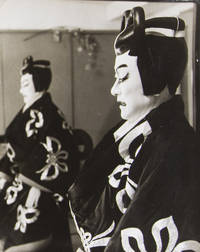
196541653Budapest: NP 1965. Original photographs. Hardcover. vg. Oblong folio 13 3/4 x 20". 30 tissue-guarded leaves. Original string-bound and gilt-ruled blue cloth. <br /> <br /> Created by the Japanese Embassy in Budapest Hungary this unique photo-album contains 66 original silver gelatin prints depicting Japan's spectacular natural and architectural landmarks as well as various aspects of its traditional art and culture Japanese dolls Bunraku Noh and Kabuki Theatres and faith Buddhism. <br /> <br /> In order of appearance the photographs featured in this album are the following:<br /> <br /> Recto of first leaf - The Sankeien Garden 2 photographs: Opened to the public since 1906 the Sankeien Garden is a vast classical Japan garden covering over 175000 square meters which exhibits a number of historic buildings from across Japan. These buildings include a three storied pagoda located high up on a hill deep inside the garden. This pagoda originally constructed in Kyoto in the mid-1400s was relocated to Sankei-en in 1914. The entire garden was once the private home of Tomitaro “Sankei†Hara 1869-1939 an extremely wealthy silk merchant. <br /> Verso of first leaf - Yomeimon Gate at the Nikko Toshogu Shrine 1 photograph: Designated a National Treasure and one of the most beautiful gates in Japan Yomeimon Gate is said to have been given the name “Main Gate of the Imperial Court.†It is also called “Gate of the Setting Sun†because one could gaze upon it all day and never tire. It is covered with over 500 carvings depicting traditional anecdotes children playing sages and wise men. <br /> Recto of second leaf - The Kofuku-ji Temple 1 photograph: Kofuku-ji is a Buddhist temple that was once one of the powerful Seven Great Temples in the city of Nara. The structure is one of the eight Historic Monuments of Ancient Nara inscribed on the UNESCO World Heritage List. - The Himeji Castle 1 photograph: : Located in Himeji Hyogo Prefecture this hilltop Japanese castle complex is regarded as the finest surviving example of prototypical Japanese castle architecture. It comprises a network of 83 buildings with advanced defensive systems from the feudal period.<br /> Verso of second leaf - Traditional bronze Japanese lanterns at a temple in Kyoto.<br /> Recto of third leaf - Osaka Castle 2 photographs: Located in Chuo-ku Osaka the castle is one of Japan's most famous landmarks as it played a major role in the unification of the country during the 16th century of the Azuchi-Momoyama period. <br /> Verso of third leaf - The Sarusawa Pond behind Kofuku-ji Temple at cherry blossom time 1 photograph; - A winter-view of a Japanese lake with a bridge in the background 1 photograph.<br /> Recto and verso of fourth leaf - Matsumoto Castle 3 photographs: Located in the city of Matsumoto Nagano Prefecture the building is one of Japan's premier historic castles along with Himeji Castle and Kumamoto Castle. It was completed in the 16th century and since then has maintained its original wooden interiors and external stonework. At verso is a photograph of the castle ground with the bridge moat and pond. <br /> Recto of fifth leaf - Himeji Castle 1 photograph: See recto of second leaf; - A view of the Hirosaki Castle at cherry blossom time. Built in 1611 the building is a hirayama-style Japanese castle and was the seat of the Tsugaru clan.<br /> Recto of sixth leaf - Himeji Castle 2 photographs. One view of the castle during spring-time and one view of the same castle during winter-time.<br /> Recto of seventh leaf - Todaiji Temple 1 photograph: One of Japan's most fanous and historically significant temples and a landmark of Nara Todaiji Temple was constructed in 752 as the head temple of all provincial Buddhist temples of Japan. Its influence grew so powerfully that the captital was moved from Nara to Nagaoka in 784 in order to lower the temple's influence on government affairs; Himeji Castle 1 photograph: Another view of this spectacular castle already featured in the two previous leaves. <br /> Recto of leaf 8 - An unidentified Japanese temple / shrine 1 photograph; - A stone garden 1 photograph.<br /> Recto of leaf 9 - The Osaka Castle and pond 2 photographs: See recto of third leaf.<br /> Recto of leaf 10 -The garden of the Katsura Imperial Villa Kyoto and the Kintai-Kyo Bridge: a historical bridge built in 1673 and located in the city of Iwakuni Yamaguchi Prefecture. The structure spans the Nishiki River in a series of five wooden arches 2 photographs.<br /> Recto of leaves 11 to 17 - Various temples with rock zen gardens moss gardens and ponds 14 photographs.<br /> Recto of leaves 18 and 19 - Various terraced rice fields 3 photographs and a wheat field 1 photograph.<br /> Recto of leaf 20 - Lake Aoki with the Hakuba Mountain Range in the background and Miho Beach with Mt. Fuji in the background 2 photographs.<br /> Recto of leaf 21 - Kegon Falls and Lake Chuzenji 2 photographs. Located near the city of Nikko Tochigi Prefecture the falls were formed when the Daiya River was rerouted by lava flows. In 1927 the Kegon Falls was recognized as one of the "Eight Views" which best showed Japan and its culture in the Showa period. Lake Chuzenji is a scenic lake created 20000 years ago when Mount Nantai erupted and blocked the river.<br /> Recto of leaf 22 - Snow-capped Mount Fuji 2 photographs. One photograph with one of the five lakes surrounding Mt. Fuji in the foreground; the second photograph with Fuji City in the foreground.<br /> Recto of 23rd leaf - Two photographs: One depicting a busy road near one of the five lakes surrounding Mt. Fuji; The second shows a snow-capped Mt. Fuji with a ropeway in the foreground.<br /> Recto of leaf 24 - Scenes of Kabuki theatre 2 photographs. A classical Japanese dance-drama Kabuki theatre is known for the stylization of its drama and for the elaborate make-up worn by some of its performers. <br /> Recto of leaves 25 - Scenes of Noh Theatre 2 photographs. Noh theatre is a traditional Japanese theatrical form and one of the oldest extant theatrical forms in the world. Wearing masks Noh performers are simply storytellers who use their visual appearances and their movements to suggest the essence of their tale rather than to enact it. <br /> Recto of 26th leaf - Hakata Ningyo Japanese dolls 2 photographs. The Hakata Ningyo are clay dolls manufactured in Hakata Northern Kyushu island. Their origin goes back to the beginning of the Edo period around 1615. <br /> Recto of 27th leaf - Bunraku puppets 2 photographs. Bunraku is the traditional puppet theatre of Japan. It started of as popular entertainment for the commoners during the Edo Period in Osaka and evolved into artistic theater during the late 17th century. Along with Noh and Kabuki it is recognized as a UNESCO Intangible Cultural Heritage. Bunraku puppets are about one-half life size and each is operated by three performers: a principal operator and two assistants. Strings are not used but rather the puppeteers co-operate to maneuver the limbs eyelids eyeballs eyebrows and mouths of the puppets thereby producing life-like actions and facial expressions. The puppeteers are in full view of the audience but are dressed in black to symbolize that they are to be taken as "invisible". <br /> Recto of leaves 28 - Scenes of Noh Theatre 2 photographs. See leaf 25. <br /> Recto of leaf 29 - Scenes of Kabuki theatre 2 photographs. See leaf 24. <br /> The last three photographs at verso of leaf 29 and recto of leaf 30 depict: <br /> 1 A sculpture of Amida a celestial buddha described in the scriptures of Mahayana Buddhism executed by Jocho and located in Byodo-in a Buddhist temple in the city of Uji Kyoto Prefecture. <br /> 2 The Alamy Great Buddha of Nara in the Daibutsuden Big Buddha Hall in Todaiji a Buddhist Temple complex located in the city of Nara. <br /> 3 The Great Buddha bronze statue in the temple of Kotokuin located in the city of Kamakura Kanagawa Prefecture. <br /> Each silver gelatin print measures appr. 9 3/4 x 8". Some have a tipped-in typed caption in English at verso and bear the stamp of the Japanese Embassy in Budapest Hungary. <br /> <br /> Photo-album and original photographs in very good condition. NP hardcover
196959361Budapest Hungary: Ernst Muzeumban. As New. 1969. Paperback. FREE UPGRADE to Courier/Priority Shipping Upon Request IN STOCK AND IMMEDIATELY AVAILABLE FOR SHIPMENT - AS NEW THE TEXT BLOCK IS PRISTINE CLEAN UNMARKED AND IN EXCELLENT CONDITION - - Text in French and Hungarian. 116 pp. With 43 ills. 20 x 23 cm. -- with a bonus offer-- . Ernst Muzeumban paperback
196558663Budapest Hungary: Galerie Nationale Hongroise. As New. 1965. Paperback. FREE UPGRADE to Courier/Priority Shipping Upon Request IN STOCK AND IMMEDIATELY AVAILABLE FOR SHIPMENT - AS NEW THE TEXT BLOCK IS PRISTINE CLEAN UNMARKED AND IN EXCELLENT CONDITION - - Text in Hungarian; introduction in Hungarian and French. 60 pp. With 15 ills. 23 x 20 cm. -- with a bonus offer-- . Galerie Nationale Hongroise paperback
196859030Budapest Hungary: Magyar Nemzeti Galeria. As New. 1968. Paperback. FREE UPGRADE to Courier/Priority Shipping Upon Request IN STOCK AND IMMEDIATELY AVAILABLE FOR SHIPMENT - AS NEW THE TEXT BLOCK IS PRISTINE CLEAN UNMARKED AND IN EXCELLENT CONDITION - - Text in Hungarian. 100 pp. With 369 ills. 23 x 20 cm. -- with a bonus offer-- . Magyar Nemzeti Galeria paperback
196959362Budapest Hungary: Szepmuveszeti Muzeum. As New. 1969. Paperback. FREE UPGRADE to Courier/Priority Shipping Upon Request IN STOCK AND IMMEDIATELY AVAILABLE FOR SHIPMENT - AS NEW THE TEXT BLOCK IS PRISTINE CLEAN UNMARKED AND IN EXCELLENT CONDITION - - Text in French and Hungarian. 258 pp. With 50 ills. 24 x 20 cm. -- with a bonus offer-- . Szepmuveszeti Muzeum paperback
193943670Budapest: Pesti Lloyd-nyomada 1939. First edition. Softcover. vg. Folio. 26pp. published unbound. Original cream stapled wraps with title printed in black to back cover protected by modern mylar. To the Honorable Upper and Lower House of the Parliament. Respectful petition of the representatives of the Hungarian Jewish community concerning "Bill No. 72. regarding the restriction of Jews in public and economic life". <br /> <br /> Official petition of the Hungarian Jews regarding the bill of the Second Anti-Jewish Law No. IV:1939. The Second Anti-Jewish Law was one of a series of anti-Jewish measures passed by the Hungarian Parliament between 1938 and 1941 and the first Hungarian law providing a "racial" definition of the Jewish status according to the Nuremberg Race Law of 1935. Besides of other severe deprivations it sets a ceiling of six percent reduced from twenty of Jews being allowed to work in various financial and commercial professions as well as industrial enterrises employing more than ten persons. It also excluded the Jews from state administrations and jurisdiction prohibited Jews from teaching high school reenacted the Numerus Clausus at universities and partly rescinded their right to vote.<br /> <br /> Bill No. 702 the Second Anti-Jewish Law was drafted by István Antal state secretary of the Ministry of Justice and Pál Teleki Minister of Religion and Education and was presented for debate before Parliament on December 23 1938. The petition aimed to sway Parliament to disapprove the law claiming it being unconstitutional and delinquent in view of legal equality human rights and the Divine Law and furthermore relinquishing social justice and threatening national unity the emancipation granted by the laws of 1849 and 1867 in short it was deemed to be against the national interest of Hungary. The petition was unsuccessful the bill was approved by Parliament and was signed into law on May 5 1939 effecting the Hungarian Jewry severely with more than 90 thousand Jews losing their jobs and thus lowering the living conditions of approximately 220000 people significantly. Braham R.: The Second Anti-Jewish Law in: The Politics of Genocide: Holocaust in Hungary New York Columbia University Press 1981 pp. 147–156. Scarce important historical document with institutional holdings recorded only in Hungary. Text in Hungarian with slight rubbing to covers. Else in very good condition. Pesti Lloyd-nyomada unknown
197069451ABZumikon (Schweiz)., Editions Pyra AG / Victor Vasarely., o. J. [1970]. 10,2 x 10,2 x 66 cm., 69451A Winzigste Bereibungen und minimalste Klebeschatten auf einer Seite, sonst guter bis sehr guter Zustand.
193320863S.d. (circa 1933-1934); in-folio en feuilles, couverture rempliée gris clair illustrée, chemise demi velin et pièce de titre en cuir, titre doré, papier à la cuve multicolore et doré en forme de feuillage, étui de même ; 86 feuillets non chiffrés, le dernier blanc ; couverture et 50 aquarelles originales de Barta, dont 3 hors-texte.