51 résultats
ria9781473916364_inpPaperback / softback. New. New Book; Fast Shipping from UK; Not signed; Not First Edition; Without sacrificing technical integrity for the sake of simplicity the author draws upon accessible student-friendly language to provide approachable instruction perfectly aimed at statistics and Bayesian newcomers. paperback
2449586-nnew. unknown
ria9780367661854_inpPaperback / softback. New. New Book; Fast Shipping from UK; Not signed; Not First Edition; Values and Professional Knowledge in Teacher Education provides distinctive insights into potential strengths to develop trainee teachers’ values within school-based training. paperback
2025x-1032637471Taylor & Francis Ltd 2025. Paperback. New. 266 pages. 9.18x6.12x9.21 inches. Taylor & Francis Ltd paperback
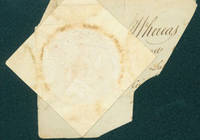
63-2355London: ca. 1820. 8.5 x 10.5 cm. Oblong Embossed seal on two pieces of laid paper likely clipped from a British Royal Decree. Good. [London: ca. 1820?]. unknown
193983836London: United Kingdom Home Office 1939. Presumed First Edition First printing. Wraps. Fair. Format is approximately 6 inches by 9.5 inches. 16 pages including covers. Illustrations. Cover worn and soiled with some edge tears creasing and chipping. It gives instructions on how to position and put together an Anderson Shelter. The shelter was sunk into the ground and is a logical precursor to the Cold War Fallout Shelters. This work includes a Description of the Shelter information on the Locations of the Shelter The Excavation Erection of the Shelter Covering the Shelter and then Finishing the Shelter off. Illustrations go from page 6 through 16 Among the aspects addressed in the illustrations are methods for drainage Terraced Houses Semi-detached Houses Illustration of major individual parts Erecting the back arch Frame arrangement Views from the inside and completion of the earth cover. Air raid shelters are structures for the protection of non-combatants as well as combatants against enemy attacks from the air. They are similar to bunkers in many regards although they are not designed to defend against ground attack but many have been used as defensive structures in such situations. Before WWII the U.K. had difficulty choosing the location of air raid shelters. During WWII many types of structures were used as air raid shelters such as cellars German Hochbunkers basements and underpasses. The U.K. began building street communal shelters as air raid shelters in 1940. Anderson shelters designed in 1938 and built to hold up to six people were also in common use in the U.K. Indoor shelters known as Morrison shelters were also in use. Prior to World War II in May 1924 an Air Raid Precautions Committee was set up in the United Kingdom. For years little progress was made with shelters because of the apparently irreconcilable conflict between the need to send the public underground for shelter and the need to keep them above ground for protection against gas attacks. In February 1936 the Home Secretary appointed a technical Committee on Structural Precautions against Air Attack. By November 1937 there had only been slow progress because of a serious lack of data on which to base any design recommendations and the Committee proposed that the Home Office should have its own department for research into structural precautions rather than relying on research work done by the Bombing Test Committee to support the development of bomb design and strategy. This proposal was eventually implemented in January 1939. They also decided to issue free to poorer households the Anderson shelter and to provide steel props to create shelters in suitable basements. The Anderson shelter was designed in 1938 by William Paterson and Oscar Carl Karl Kerrison in response to a request from the Home Office. It was named after Sir John Anderson then Lord Privy Seal with special responsibility for preparing air-raid precautions immediately prior to the outbreak of World War II and it was he who then initiated the development of the shelter. After evaluation by David Anderson Bertram Lawrence Hurst and Sir Henry Jupp of the Institution of Civil Engineers the design was released for production. Anderson shelters were designed to accommodate up to six people. The main principle of protection was based on curved and straight galvanized corrugated steel panels. Six curved panels were bolted together at the top so forming the main body of the shelter three straight sheets on either side and two more straight panels were fixed to each end one containing the door—a total of fourteen panels. A small drainage sump was often incorporated in the floor to collect rainwater seeping into the shelter. The shelters were 6 feet high 4.5 feet wide and 6.5 feet long. They were either buried 4 ft deep in the soil and then covered with a minimum of 15 inches of soil above the roof or in some cases installed inside people's houses and covered with sandbags. When they were buried outside the earth banks could be planted with vegetables and flowers that at times could be quite an appealing sight and in this way would become the subject of competitions of the best-planted shelter among householders in the neighborhood. The internal fitting out of the shelter was left to the owner and so there were wide variations in comfort. Anderson shelters were issued free to all householders who earned less than £5 a week equivalent to £320 in 2020 when adjusted for inflation. Those with a higher income were charged £7 £440 in 2020 for their shelter. One and a half million shelters of this type were distributed between February 1939 and the outbreak of war. During the war a further 2.1 million were erected. Large numbers were manufactured at John Summers & Sons ironworks at Shotton on Deeside with production peaking at 50000 units per week. The Anderson shelters performed well under blast and ground shock because they had good connectivity and ductility which meant that they could absorb a great deal of energy through plastic deformation without falling apart. Because of the large number made and their robustness many Anderson shelters still survive. Many were dug up after the war and converted into storage sheds for use in gardens and allotments. United Kingdom, Home Office paperback
191664719London: Harrison and Sons 1916. Presumed first edition/first printing. Wraps. Good. No dust jacket. Number in ink at bottom of page 3. 7 1 p. Cd. 8353. Printed under the Authority of His Majesty's Stationery Office. Harrison and Sons paperback
191655647London: HMSO 1916. good. 8.25" x 13" 7 wraps appendices staple bound entire document folded in thirds horizontally small creases to front cover edges. Small soiled/discolored areas on front cover stamps of the Bangor Historical Society on front cover small ink number at bottom of front cover. Presented to both Houses of Parliament by Command of His Majesty April 1916 Cd. 8283. Contains a memorandum respecting the case of Horst von der Goltz and the sworn statement by Horst von der Goltz. Appendix A contains addresses of persons taken from a note-book found among von der Goltz's effects; Appendix B contains letter and telegrams in German and in English translation found among von der Goltz's papers. HMSO paperback
2026x-1032259167Taylor & Francis Ltd 2026. Paperback. New. 300 pages. 6.14x0.68x9.21 inches. Taylor & Francis Ltd paperback
2025x-0367648288Taylor & Francis Ltd 2025. Paperback. New. 244 pages. 9.18x6.12x9.21 inches. Taylor & Francis Ltd paperback
2026x-103234847XTaylor & Francis Ltd 2026. Paperback. New. 196 pages. 6.00x0.44x9.00 inches. Taylor & Francis Ltd paperback
2449586like new. unknown
191568203London England: His Majesty's Stationery Office 1915. Presumed first edition/first printing. Hardcover. Good. Cover has some wear and soiling. Some page corners turned. Signed by previous owner. xix 3 561 3 p. Includes index. Stiff card cover. List of Principal Persons Mentioned. The object of this volume was to bring together the official correspondence published by the various European Governemnt relating to the outbreak of the First World War. The correspondence thus collected was not new though official translations of the Serbian and Austrian book first appeared in this volume. The work was undertaken for the benefit of students of history and politics. The intention was to republish only those original documents which the various governments had laid before the world as authentic records of events. Documents which were not included in the collections originally published by the various governments but were officially published subsequently are presented at the end of the volume in Part X. His Majesty's Stationery Office hardcover
191664721London: Harrison and Sons 1916. Presumed first edition/first printing. Wraps. Fair. No dust jacket. Historical society stamp on front page. Number in ink at bottom of front page. Some damp staining at bottom. 21 1 p. Cd. 8233. Printed under the Authority of His Majesty's Stationery Office. Harrison and Sons paperback
200282265London Nashville: Imperial War Museum 1-901623475jointly with The Battery Press Inc 2002. Reprint edition of work originally published in 1914. Hardcover. Very good. 345 1 pages. Substantial tabular information. This work is Nineteenth in The Battery Press Reference Series. This is the British General Staff's intelligence manual for the German Army at the beginning of World War I. Originally printed in 1912 and amended to August 1914 this reference volume has chapters on the conditions of service organization and numbers available in peace and war administration of the Army and General Staff infantry cavalry artillery technical troops supply and medical services tactics signalling and colonial troops. Also included are appendices giving military pay military terms and topographical signs and abbreviations. This handbook was intended for the use of officers who desired to obtain a comprehensive view of the German Army during peace-time or who may wish to follow its operations during manoeuvres or other training. The Fourth Edition of this handbook was completed after the passing of laws respecting the peace strength of the German Army up to 1915. The main effect of these changes in the law was to perfect rather than to increase the number of the larger units available on mobilization for the first line. Two new Army-Corps were created making 25 in all. Imperial War Museum (1-901623475)jointly with The Battery Press, Inc hardcover
194685740London: His Majesty's Stationery Office 1946. Presumed First Edition First printing. Wraps. Good. The format is approximately 6 inches by 9.75 inches. vi 21 3 pages plus covers. Illustrations unpaginated--12 pages two images per page. Tabular data. Diagram. Cover is worn and soiled with some damp staining at page bottoms and the back. In the course of the war the Ministry of Home Security had evolved a scientific method for the measurement of the effect of air attack in the various forms and the Home Office regarded it as desirable to invite the United States Authorities to agree that a British team of experts trained in that method should co-operate with the United States Strategic Bombing Survey to conduct an investigation into the effects of the bombing of the two Japanese cities. The United States authorities provided every possible facility for the investigation and the detailed arrangements were made by the United States Strategic Bombing Survey. In addition to factual examinations at Hiroshima and Nagasaki the United States Authorities placed at the disposal of the British experts the records and observations which their more prolonged and detailed study had produced. In particular the part of this report which deals with the effects of atomic bombs on the human structure is based on material supplied by the Medical Section of the Joint Commission for the Investigation of the Effects of the Atomic Bomb. This report by the British experts is now published in this country simultaneously with the publication in America of the corresponding report of the United States Strategic Bombing Survey. His Majesty's Government considers that a full understanding of the consequences of the new form of attack may assist the United Nations Organisation in its task of securing the control of atomic energy for the common good and in abolishing the use of weapons of mass destruction. From the Introduction: 1. On August 6th 1945 shortly after 8 a.m. an American Super-Fortress flying at 30000 feet dropped a single atomic bomb over the Japanese mercantile city of Hiroshima. The bomb exploded over the city centre. Three days later on August 9th just after 11 a.m. a Super-Fortress flying at the same height which had found its primary target cloud-obscured dropped a second atomic bomb over the industrial city of Nagasaki. This bomb exploded over the city's factory area. In Hiroshima more than four square miles of city were destroyed and 80000 people were killed. In the smaller city of Nagasaki about one and a half square miles were destroyed and nearly 40000 people were killed. The causes of destruction and of death differed in many points from those which had acted in the conventional raids of the past. It was clear that bombing had changed its character and its scale beyond recognition. 2. The British Mission which spent the month of November 1945 in Hiroshima and Nagasaki had been concerned in the past with the appreciation of air raid damage in Great Britain and subsequently on the Continent of Europe. While some of its members had for other reasons made a wartime study of Japanese conditions it was not as a whole expert in Japanese affairs. Nor was it instructed to obtain a detailed picture of those effects of the bomb which were peculiar to Japan. The report which follows tells what was seen and what could be learnt three months after the bombing in Hiroshima and in Nagasaki. But its intention is as it was the object of the Mission to point to general conclusions on the effects to be expected from similar atomic bombs should they fall outside Japan and in particular in Great Britain. The reader should picture the destruction here set down as it would strike a city which he knows well in its people its houses its public buildings its factories and its public services. His Majesty's Stationery Office paperback
68-8832London UK: 1937. Fabric Broadside. 26 x 27 cm. Very Good. London, UK: 1937. unknown
ria9781138579637_inpHardback. New. New Book; Fast Shipping from UK; Not signed; Not First Edition; Examining responses to migration and settlement in Britain from the Irish Famine up to Brexit The Discourse of Repatriation looks at how concepts of removal evolved in this period and the varied protagonists who have articulated these hardcover
38637453like new. unknown
ria9781138917439_inpHardback. New. New Book; Fast Shipping from UK; Not signed; Not First Edition; A Reader’s Guide to Contemporary Literary Theory is a classic introduction to the complex yet crucial area of literary theory. The 6th edition includes two new chapters: ‘New Materialisms’ and ‘21st Century and Future Developmen hardcover
ria9780415818933_inpHardback. New. New Book; Fast Shipping from UK; Not signed; Not First Edition; This book unpicks the complex dynamic blend of individuals’ psychological and professional assets workplace conditions and leadership support which enable teachers who stay in teaching to continue to make a difference in their caree hardcover
18948Manchester and London. Between 1890 and 1920. A useful background guide is Geoffrey Russell Searle's 'Country before Party: Coalition and the Idea of "National Government' in Modern Britain 1885-1987' London 1995. As the manuscripts in this collection indicate Cuming Walters cherished the idea of a national party from the 1890s and he was able to re-use material from that period on the formation of the National Party in 1920 not to be confused with the party of the same name a pamphlet relating to which is present dating from 1917. The collection is in fair condition with most items lightly-aged and worn but with one or two with slight loss and damage. ONE: Corrected Autograph Manuscript Draft of unpublished paper by J. Cuming Walters: 'A National Party'. Dated 'October 1890'. 35pp. 12mo. Heavily revised. TWO: Part of later corrected Autograph Manuscript Draft of Item One by J. Cuming Walters. Conclusion of lecture. Dated at end 'October 1890'. On 28 pieces of paper mostly 12mo with the main section paginated 16-41. THREE: Corrected Autograph Manuscript of unpublished lecture by J. Cuming Walters: 'The Need of a National Party A Lecture delivered at the Ladywood Conservative Club October 8th. 1890 by J. Cuming Walters'. 2 14pp. 12mo. Heavily revised with numerous deletions. Introductory 'Note' by 'J. C. W.': 'Very hastily written but not hastily conceived this Lecture can only claim attention for any new ideas it may contain & not for the manner in which they are expressed. I have tried to speak plainly and without fear; & I only ask in return that the plain issues should be considered & criticised. To the members of the Ladywood Conservative Club for whom it was written & who received it so cordially this Lecture is dedicated.' FOUR: Galley proofs of both parts of article 'Political Ideals. Why not a National Party By an Ex-M.P.' 1911. Initialled at head of first part by Cuming Walters with autograph note: 'Uncorrected Proof'. FIVE: Newspaper cutting of 'Political Ideals. Why not a National Party By an Ex-M.P.' Manchester City News 11 February 1911. SIX: Five pages of manuscript start of article 'Political Ideals Why not a National Party By an Ex-M.P.' In Cuming Walters' hand and with instructions by him to printers. With a three miscellaneous autograph leaves letterhead of the Manchester Evening Chronicle card addressed to Cuming Walters. SEVEN: Pamphlet: 'The National Party to promote Reform Union and Defence. A Statement of Policy.' Published by The Provisional Committee of The National Party at 22 King Street St. James' London S.W.1. 1917 15pp. 8vo. Stapled. With stamp on cover of the 'Secretary – National Party 23 Kilvert's Buildings Withy Grove Manchester.' List at front of 27 'Members of both Houses of Parliament and other public men' who issued the 'original Manifesto' from 'Colonel Lord Ampthill G.C.S.I. G.C.I.E.' to 'Lt.-Col. Lord Stafford D.S.O.' Headings include 'Failure of the old Party System' and 'Aims of the National Party'. Datable from the following: 'The Empire has now been engaged for three years in a war which our leading party statesmen claim to have foreseen.' Only three copies on COPAC: at the Imperial War Museum National Library of Scotland and Oxford. Items Eight to Ten are printed articles extracted from magazines. EIGHT: S. Hutchinson Harris 'A Plea for a National Party'. Fortnightly Review 1904. 10pp. 8vo paginated 1028-1037. NINE: John Beattie Crozier 'Suggestions for a New Political Party. Its Principles and Methods with Some Applications'. Fortnightly Review 1905. 16pp. 8vo paginated 195-210. TEN: Henry Jones 'Idealism and Politics. I.' Contemporary Review 1907. 12pp. 8vo paginated 610-621. ELEVEN: Newspaper cuttings from Manchester Evening Chronicle 16 July 1919. Report titled 'To-day's Political Sensation. New Centre Party Launched for Reconstruction Era. Premier as Leader. Great Lobby Excitement: Coalition Funds Amalgamated.'; and editorial titled 'New Party and the New Problems'. The editorial begins: 'As was generally anticipated the dinner to Mr. Winston Churchill last night possessed great political significance. Mr. Churchill who had just returned from a long conference with the Prime Minister delivered a carefully prepared speech in which he dilated on the necessity of forming a permanent Centre Party out of the elements of the present Coalition. Sir George Younger for the Unionists and Captain Guest for the Coalition Liberals associated themselves with the views expressed by Mr. Churchill.' TWELVE: Newspaper cutting from the Manchester City News 17 January 1920. Article titled 'A National Party'. Manchester and London. Between 1890 and 1920. unknown
2026x-0367766612Taylor & Francis Ltd 2026. Hardcover. New. 220 pages. 9.18x6.12x9.45 inches. Taylor & Francis Ltd hardcover
19185605fdLondon: Technical Department Aircraft Production Royal College of Science 1918. Octavo stiff printed wrappers pin-clasps 12 9 8 20 13 18 11 8 8 7 7 8 12 9 12 14 7 7 7 21 10 pp dozens of fold-out diagrams photos illus. Includes Rigging Notes for: Avro Biplane Type 504; B.E.2C 90 H.P. horse power; Bristol Fighter F.2A 190 H.P. Rolls-Royce; Bristol Fighters F.2B 190 H.P. Rolls-Royce and 200 H.P. Hispano-Suiza; De Havilland No. 4 275 H.P. Rolls-Royce 220 H.P. R.A.F. 3A and 200 H.P. B.H.P.; De Havilland No. 5 110 H.P. Le Rone; De Havilland No. 6 90 H.P. R.A.F.1A; De Havviland No. 9 200 H.P. B.H.P; Martynside Scout 160 H.P. Beardmore; Maurice Farman Shorthorn Biplane 80 H.P. REnault Type 1914; Maurice Farman Longhorn 80 H.P. Renault; Nieuport Scout 130 H.P. Clerget; R.E.8 150 H.P. R.A.F. 4A; S.E. 5A 200 H.P. Hispano-Suiza; Sopwith 1 1/2 Strutter 110 H.P. Clerget; Sopwith Biplane F.1 130 H.P. Clerget; Sopwith Dolphin 5.F.1 200 H.P. Hispano-Suiza; Spwith Pup 80 H.P. Le Rhone; Sopwith 2.F.1 130 H.P. Clerget; Spad Biplane Type S.VII 150 H.P. Hispano-Suiza; and Vickers F.B.9 100 H.P. Monosoupape. Good; spine mottled and stained bookplate; otherwise clean and tight. Technical Department, Aircraft Production, Royal College of Science, 1918. unknown
19183208qslLondon: Technical Department Aircraft Production Royal College of Science 1918. Octavo stiff printed wrappers pin-clasps 12 9 8 20 13 18 11 8 8 7 7 8 12 9 12 14 7 7 7 21 10 pp dozens of fold-out diagrams photos illus. Includes Rigging Notes for: Avro Biplane Type 504; B.E.2C 90 H. P. horse power; B.E.2D 90 H.P.; Bristol Fighter F.2A 190 H.P. Rolls-Royce; Bristol Fighter’s F.2B 190 H.P. Rolls-Royce and 200 H.P. Hispano-Suiza; De Havilland No. 5 110 H. P. Le Rone; De Havilland No. 6 90 H.P. R.A.F. 1A; De Havilland No. 9 200 H. P. B.H.P; Martynside Scout 160 H. P. Beardmore; Maurice Farman Shorthorn Biplane 80 H.P. Renault Type 1914; Maurice Farman Longhorn 80 H. P. Renault; Nieuport Scout 130 H. P. Clerget; Sopwith 2.F.1 130 H. P. Clerget; Spad Biplane Type S.VII 150 H. P. Hispano-Suiza; and Vickers F.B.9 100 H. P. Monosoupape. Good; spine mottled and stained bookplate; otherwise clean and tight. Technical Department, Aircraft Production, Royal College of Science, 1918. unknown