PURCELL (Jean ou John).Livre Rare Book
16 résultats
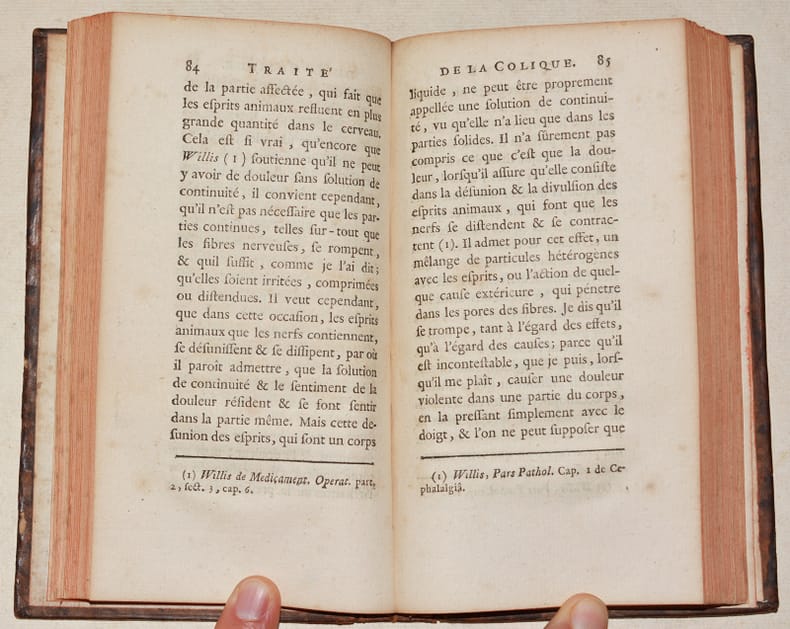
17670054651767 Paris, Lacombe, 1767. In-12 (104 X 172 mm) veau fauve marbré, dos à nerfs orné, pièce de titre, tranches rouges (Reliure de l'époque) ; 284 pages (dont titre), (2) ff. d'approbation et privilège. Rousseurs éparses.
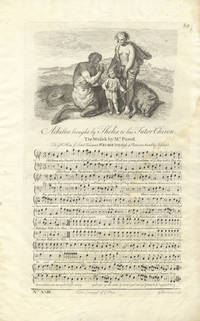
174036821London 1740. Unbound. Very Good. 1 leaf with a large elaborate vignette to head illustrating the song with music and text below set for voice and figured bass intended for the accompaniment of the flute. Signed in the plate by the engraver G. Bickham. Ca 326 x 200 mm. 12.75" x 7.85" plate mark.<br /> <br /> Slightly worn; minor browning to edges; minor soiling and dampstaining. From the second edition of Bickham's monumental work first published in 1737-1739. BUC p. 107. RISM BII p. 245. <br /> <br /> "Purcell was one of the most important 17th-century composers and one of the greatest of all English composers." Peter Holman and Robert Thompson in Grove Music Online. <br /> <br /> "Bickham 1706-1771 was principally famous in music circles for his two illustrated folio volumes The Musical Entertainer first issued in fortnightly parts each containing four plates from January 1737 to December 1739. The 200 plates are songs headed and surrounded with pictorial embellishments illustrative of the song . and engraved in the style of and even copied directly from Gravelot and Watteau. This work was the first of its kind to be published in England and quickly produced imitators such as Lampe's British Melody engraved by Benjamin Cole." Frank Kidson et al. in Grove Music Online. <br /> <br /> A charming engraving.<br /> <br /> The Musical Entertainer is considered one of the finest 18th century illustrated books. Complete copies of this monumental work are exceptionally rare. unknown
17679669AB1767. Paris Lacombe 1767. Kl.-8°. 284 S. 2 Bl. Späterer Pappband mit umlaufendem Gelbschnitt etwas fleckig Rücken angebräunt. Erste französische Ausgabe. - Blake 366; Sprengel 6195; Hirsch/H. IV 688. - John Purcell 1674-1730 war Prof. der Anatomie am Royal College of Surgeons in Dublin. - Gering gebräunt bzw. fleckig. - Mit Anmerkungen von alter Hand auf dem Innendeckel. Aus dem Besitz und mit dem Namenszug des bekannten Mediziners Emil Harless s. Hirsch/H. III 60. unknown
1770046371London: John Johnston 1770. Early Edition. Disbound. Good Condition. Disbound modest edgewear a few short tears and chips scattered toning - general quite clean internally. There were a few editions some published in parts - this is apparently complete as issued and covers Act 1 and part of Act 2. 29pp. <br/><br/>The complete work is 81pp. Size: Folio. Quantity Available: 1. Shipped Weight: Under 1 kilo. Category: Music; Inventory No: 046371. John Johnston unknown books
1770046371London: John Johnston 1770. Early Edition. Disbound. Good Condition. Disbound modest edgewear a few short tears and chips scattered toning - general quite clean internally. There were a few editions some published in parts - this is apparently complete as issued and covers Act 1 and part of Act 2. 29pp. <br/><br/>The complete work is 81pp. Size: Folio. Quantity Available: 1. Shipped Weight: Under 1 kilo. Category: Music; Inventory No: 046371. John Johnston unknown
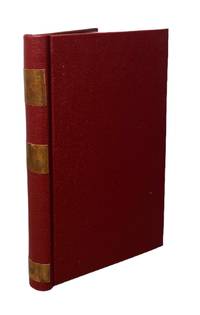
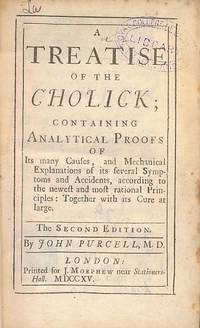
1715128312London: J. Morphew 1715. Second Edition. Hardcover. Very Good. Rebound in a red hardback binding original title label preserved. Firm and square sharp corners strong joints. Contents clean and tidy just a little toned. No pen-marks or former owner inscriptions save a small feint old stamp at the title-page. Size: 168mm x 107mm; collation: pp. 16 188 12. Thus a very good copy. Scarce. Bibliographic reference: ESTC T131939. J. Morphew hardcover
171454873London Printed for W. Lewis 1714 1714. Hardcover. Used: Good. and Mechanical Explanations of its Several Symptoms and Accidents According to the Newest and Most Rational Principles: Together with its Cure at Large; there is a clear blue stain like watercoloring to the top third of title page; o/w pages clean and book is good. no boards; 16 18812p; 16.5 x 11cm; THIS IS THE REAL THING 1714; only one board which is loose <br/><br/> London, Printed for W. Lewis, 1714 hardcover
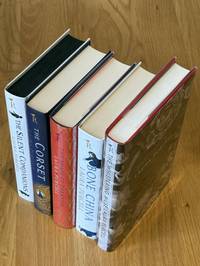
1720207539London: Raven Books in association wth Goldsboro Books 2017-2023. 1st Edition. Hardcover. Fine/Fine. All books signed by author . Five book set all signed by author on limitation or title page. The Silent Companions is limited edition number 663/750. All books are in Fine condition with Fine dustjackets where issued. No inscriptions or other markings apart from the author�s signatures. Books are unread. DJs are unclipped and protected in clear non-adhesive archival quality covers applied by the previous owner at the time of purchase. Publisher's commemorative book mark laid in. A very nice scarce set of books. Raven Books in association wth Goldsboro Books hardcover
17617777London: Published by R. H. Laurie; 53 Fleet Street and Bowles & Carver 1761. Mezzotint. New state ii/ii with the publication line altered. Inscription reads as follows: " J. Reynolds pinx.Cha Corbutt fecit./ Strive not TRAGEDY nor COMEDY to Engross a GARRICK who to your NOBLEST CHARACTER does EQUAL HONOUR./ Reddere Personae scit convenientia cuique./ Published by R.H.LAURIE; 53 Fleet Street and BOWLES & CARVER St. Pauls Church Yard London Price 6s.". In good condition apart from a small section of paper loss in the upper margin not extending into the image and two small skillfully mended tears on the bottom margin. Images size: 13 1/8 x 16 inches. One of the most famous portraits of the actor David Garrick by Sir Joshua Reynolds.<br/> <br/> David Garrick 1717-1779 was perhaps the most influential actor in the English theater. He successfully took on all aspects of theatrical production including actor manager playwright publicist and theatre advocate. He displayed an amazing range by convincingly playing parts in every genre from comedy to tragedy history to farce. From 1747 until his retirement in 1776 he was the manager of Drury Lane where he initiated many improvements: he introduced concealed stage lighting removed spectators from the stage and cultivated a naturalistic style of acting. Garrick was acutely conscious of the value of pictures as advertisements. He sat for every painter of note many of whom are now little more than names. He was painted in oils and in watercolours drawn in pencil and in pastels modelled in wax and in terracotta; his likeness even appeared on medals Wedgewood china and playing-cards. This portrait by his friend Reynolds demonstrates in a mildly humorous way the actor's talents and character; posed between Tragedy and Comedy Garrick is depicted the master of both. Garrick's broad smile and Tragedy's melodramatic stance note the dagger at her waist favor Comedy. Reynolds' painting was a huge public success and inspired many prints and paintings pirated prints of the image even made their way to the streets of Paris. The popularity of this image is a testimony to Garrick's fame and to Reynolds' talent. University of Florida website Penny An interesting derivative of this scene is Shakespeare Nursed by Tragedy and Comedy a beautiful stipple engraving based on a painting by Romney.<br/> <br/> Penny Reynolds 42; Chaloner Smith British Mezzotinto Portraits 31 this state not recorded; Russell English Mezzotint Portraits and their States 31 this state not recorded; Hamilton Catalogue Raisonné of the Engraved Works of Sir Joshua Renolds p.29; Lennox-Boyd Theatre: the Age of Garrick p.108; O'Donoghue Catalogue of Engraved British Portraits. in the British Museum 52. Published by R. H. Laurie; 53 Fleet Street, and Bowles & Carver unknown
17154866aLondon: J Morphew. G: in good condition. Slight foxing. Careful spine repair on original leather binding. Ex Royal College of Surgeons Ireland Library. 1715. Second Edition. Brown hardback leather cover with ribbed spine. 220mm x 140mm 9" x 6". xiv 198pp. . J Morphew hardcover
17617777London: Published by R. H. Laurie; 53 Fleet Street and Bowles & Carver 1761. Mezzotint. New state ii/ii with the publication line altered. Inscription reads as follows: " J. Reynolds pinx.Cha Corbutt fecit./ Strive not TRAGEDY nor COMEDY to Engross a GARRICK who to your NOBLEST CHARACTER does EQUAL HONOUR./ Reddere Personae scit convenientia cuique./ Published by R.H.LAURIE; 53 Fleet Street and BOWLES & CARVER St. Pauls Church Yard London Price 6s.". In good condition apart from a small section of paper loss in the upper margin not extending into the image and two small skillfully mended tears on the bottom margin. Images size: 13 1/8 x 16 inches. One of the most famous portraits of the actor David Garrick by Sir Joshua Reynolds.<br/> <br/>David Garrick 1717-1779 was perhaps the most influential actor in the English theater. He successfully took on all aspects of theatrical production including actor manager playwright publicist and theatre advocate. He displayed an amazing range by convincingly playing parts in every genre from comedy to tragedy history to farce. From 1747 until his retirement in 1776 he was the manager of Drury Lane where he initiated many improvements: he introduced concealed stage lighting removed spectators from the stage and cultivated a naturalistic style of acting. Garrick was acutely conscious of the value of pictures as advertisements. He sat for every painter of note many of whom are now little more than names. He was painted in oils and in watercolours drawn in pencil and in pastels modelled in wax and in terracotta; his likeness even appeared on medals Wedgewood china and playing-cards. This portrait by his friend Reynolds demonstrates in a mildly humorous way the actor's talents and character; posed between Tragedy and Comedy Garrick is depicted the master of both. Garrick's broad smile and Tragedy's melodramatic stance note the dagger at her waist favor Comedy. Reynolds' painting was a huge public success and inspired many prints and paintings pirated prints of the image even made their way to the streets of Paris. The popularity of this image is a testimony to Garrick's fame and to Reynolds' talent. University of Florida website Penny An interesting derivative of this scene is Shakespeare Nursed by Tragedy and Comedy a beautiful stipple engraving based on a painting by Romney.<br/> <br/>Penny Reynolds 42; Chaloner Smith British Mezzotinto Portraits 31 this state not recorded; Russell English Mezzotint Portraits and their States 31 this state not recorded; Hamilton Catalogue Raisonné of the Engraved Works of Sir Joshua Renolds p.29; Lennox-Boyd Theatre: the Age of Garrick p.108; O'Donoghue Catalogue of Engraved British Portraits. in the British Museum 52. Published by R. H. Laurie; 53 Fleet Street, and Bowles & Carver unknown books
1788845091788. PURCELL Joseph. A Map of the States of Virginia North Carolina South Carolina and Georgia Comprehending the Spanish Provinces of East and West Florida Exhibiting the Boundaries between the United States and Spanish Dominions as Fixed by the Treaty of Peace in 1783. New Haven: Amos Doolittle 1788. First state. Engraved map on laid paper 13x14-1/2 inches. Trimmed close costing part of the neat line on the side margins. Old folds toned repaired tear tissue backed. Wheat & Brun 491. Evans 21412. This is among the first American mappings of the southeast covering the area south from Baltimore to the Florida Keys and west from the Atlantic to just past the Mississippi River. It is one of few maps to reference the "new state of Franklin" on the North Carolina-Tennessee border which in 1788 was still maintaining a separate legislature despite Congress' refusal to admit the state. This is the only printed map to bear Purcell's 1750-1807 name despite his extensive activity as a surveyor throughout the southeast. Engraved by Doolittle 1754-1832 it appeared separately and within Jedidiah Morse's American Geography Elizabethtown NJ: Shepard Kollock 1789 and some copies of the American Magazine for August 1788. The western portion of the map includes references to various Native American tribes and the northwest portion shows interesting delineations of the claims of various land companies e.g. the Ohio Company and the Illinois Company. It was reissued with slight changes in 1793 and re-engraved in London but the first state is scarce. unknown
177536850London: Published by C. Shepherd 1775. Mezzotint. A fine impression of this early print of Charles Lee the famous General of the American Revolution.<br/> <br/> Public demand for portraits of Revolutionary heroes was not limited to America but spread to English and European print shops where an inquisitive audience clamored for a glimpse of the key figures of the war. Public interest reached such a frenzy that European printmakers published fictitious portraits before they had accurate likenesses of the sitters and thus many of the first English and European prints of Revolutionary colonials were completely invented. London publishers using the names C. Shepherd Thomas Hart and John Morris issued a series of mezzotints of the officers of the American Revolution none of which were taken from accurate portraits but rather were constructed on a visual formula and bore no resemblance to the individuals they claimed to be representing. Tomlinson's portrait of General Charles Lee is just such a portrait: the image bears little resemblance to contemporary accounts of his appearance and there is no record of him sitting for the artist. This portrait was executed and printed early in the war with the expectation that Lee would play a major role in the conflict an assumption based on his past military record in the French and Indian War. Although born in England Lee committed himself to the Patriot cause and soon became a leader in the Colonial army. He took part in the defense of Charleston and was a commander at the Battle of Monmouth. This is a fascinating early print of this Revolutionary general which not only records the practice of invented portraits but became a compositional model for other portraits of Revolutionary War heroes.<br/> <br/> Chaloner Smith British Mezzotinto Portraits Engraver not ascertained Class III 9; Cresswell The American Revolution in Drawings and Prints 147; George Catalogue of Political and Personal Satires.in the British Museum V 5296; Russell English Mezzotint Portraits and their States II p.450.9. Published by C. Shepherd unknown
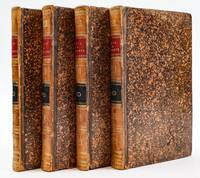
17621410537London: Henry Roberts; John Welcker; H. Simmons 1762 c.1762-1775. Mixed Editions. Hardcover. Octavos four volumes. In Very Good minus condition. Bound in full leather with gilt ornamentation to edges; Rebacked with original leather to boards preserved. Spines have red and black labels with gilt titling and ornamentation. The finish of the mottled calf shows extensive craquelure with no cracking indicating structure damage. Boards have minor cracking to spines rubbing wear throughout bumping to spine ends and corners and minor chipping to fore corners. Volume 2 boards have slight cocking. Volume 3 boards have cracking to the front joint. Textblocks have illustrated frontispieces occasional light stains and offsetting and light age toning throughout. All pages are engraved. Volume 1 textblock has pencil writing to the front pastedown and a small tear to the top end of the gutter between the front free end pages. Volume 2 textblock has occasional scattered pencil marks to margins. Volume 3 textblock has a tear to the bottom margin of page 117 not impacting text. Shelved in Room F. <br /> <br> <br /> <br> <br /> CONTENTS: <br /> VOL I: 6 200 pages plus a frontispiece published by Henry Roberts– VOL II: 6 200 pages plus a frontispiece published in 1762 by Henry Roberts– VOL III: 6 185 190-191 188-189 186-187 192-200 pages plus a frontispiece published by H. Simmons– VOL IIII: 6 112 pages plus a frontispiece published by John Welcker. A total of approximately 600 pieces of music included herein the vast majority being one page long each illustrated with an engraved headpiece. This four-volume set comprises mixed editions with a publication date provided only for volume 2. Due to the absence of publication dates on the remaining volumes specific editions cannot be conclusively identified.<br /> <br> <br /> <br> <br /> “Clio and Euterpe or British Harmony†has been published by various people throughout the years beginning in 1739 until 1780. It played an important role in documenting and popularizing British musician traditions making it both a cultural archive and a practical music book for performers of the period. 1410537. Special Collections - Upstairs. Henry Roberts; John Welcker; H. Simmons hardcover
177536850London: Published by C. Shepherd 1775. Mezzotint. A fine impression of this early print of Charles Lee the famous general of the American Revolution.<br/> <br/>Public demand for portraits of Revolutionary heroes was not limited to America but spread to English and European print shops where an inquisitive audience clamored for a glimpse of the key figures of the war. Public interest reached such a frenzy that European printmakers published fictitious portraits before they had accurate likenesses of the sitters and thus many of the first English and European prints of Revolutionary colonials were completely invented. London publishers using the names C. Shepherd Thomas Hart and John Morris issued a series of mezzotints of the officers of the American Revolution none of which were taken from accurate portraits but rather were constructed on a visual formula and bore no resemblance to the individuals they claimed to be representing. Tomlinson's portrait of General Charles Lee is just such a portrait: the image bears little resemblance to contemporary accounts of his appearance and there is no record of him sitting for the artist. This portrait was executed and printed early in the war with the expectation that Lee would play a major role in the conflict an assumption based on his past military record in the French and Indian War. Although born in England Lee committed himself to the Patriot cause and soon became a leader in the Colonial army. He took part in the defense of Charleston and was a commander at the Battle of Monmouth. This is a fascinating early print of this Revolutionary general which not only records the practice of invented portraits but became a compositional model for other portraits of Revolutionary War heroes.<br/> <br/>Chaloner Smith British Mezzotinto Portraits Engraver not ascertained Class III 9; Cresswell The American Revolution in Drawings and Prints 147; George Catalogue of Political and Personal Satires.in the British Museum V 5296; Russell English Mezzotint Portraits and their States II p.450.9. Published by C. Shepherd unknown books
177539790London: 'C. Shepherd' 1775. Mezzotint engraving 14 x 10 inches superb impression with full margins. Framed 1 1/2" gold leaf Federal frame with ribbed panel and acanthus lead corners archival Antique white mat and UV Plexiglas. A striking and very rare mezzotint portrait of John Hancock as president of the Continental Congress.<br/> <br/>This portrait was already highly valued in 1904 when S.V. Henkels described the Hampton L. Carson copy of this print as being 'Of extreme rarity in beautiful condition with wide margin. The only copy I ever saw'. Henkels' assessment was borne out by the eventual hammer price of $120.00 - a huge price when compared to a number of the other prints of John Hancock in the same sale which fetched under $1.00. See S.V. Henkels and Davis & Harvey. Catalogue No. 906 Part III Unique Collection of Engraved Portraits The Hampton L. Carson Collection. Philadelphia: 1904 lot number 3189. The American patriot is depicted in the rectangular image within an oval frame wearing a formal wig with ribbon a high collar vest and top coat the tones of the print are deep and rich and the features clearly defined. This mezzotint was issued in England as the full reality of the conflict with the American colonies was becoming clear. London publishers using the names C. Shepard Thomas Hart and John Morris issued a series of mezzotints of the officers of the American Revolution. This mezzotint of John Hancock was probably done by R. Purcell who worked under the pseudonym C. Corbutt. Peter Thomas in his volume The American Revolution in the series The English Satirical Print 1600-1832 writes "The possibility of a compromise solution to the war had been embarrassing for those opponents of government who adopted a civil war interpretation of the conflict.This was founded on the belief or assertion that the King's government posed a sinister threat to liberty in all his dominions.The rebels across the Atlantic were therefore the first line of defence of British liberty and a series of prints throughout the war depicted as heroes American leaders like George Washington and John Hancock including the present print." Thomas reproduces what at first glance is the same engraving from the British Museum collection but a closer examination reveals that the image of Hancock shows some marked differences to the present example which is most likely an earlier state. Thomas identifies the artist as "Charles Corbutt" i.e. R. Purcell noting that the name "Littleford" in the caption may be fictitious. Cresswell in The American Revolution in drawings and prints also discusses this engraving but notes incorrectly that the portrait was "after a painting done by Copley in 1770-72."<br/> <br/>W.C. Andrews Essay on the Portraiture of the American Revolutionary War New York: 1896 pp.89-90; Cresswell The American Revolution in Drawings and Prints 102; George Catalogue of Political and Personal Satires . in the British Museum V. 5293; S.V. Henkels and Davis & Harvey. Catalogue No. 906 Part III Unique Collection of Engraved Portraits The Hampton L. Carson Collection. Philadelphia: 1904 lot number 3189; Russell English Mezzotint Portraits Engraver not ascertained Class III 5; Chaloner Smith British Mezzotinto Portraits Engraver not ascertained Class III 5; P. Thomas The American Revolution 44. 'C. Shepherd' unknown books