Pohl, AlfredAntiquariat.de

775 résultats
1973311967Lima, Grafica Morsom, 1973. Originalbroschur-Mappe 30 cm
19659046-0283Madrid, Ediciones Atlas, 1965. Quart, illustr. Org.-Broschuren, LXXVII (+ I), 554 S.; VIII, 395 (+ 1) S.; 413 (+ 1) S.; 326 S., jeweils mit einem Frontispiz, die Einbände meist an den Rücken etwas eingerissen, weitere Randläsuren, gelegentlich in den Gelenken etwas gelockert, mit vermehrten Anstreichungen in Blei, aber auch gelegentlichen Eintragungen mit Tinte, insgesamt noch ordentliche Exemplare dieser seltenen Gesamtausgabe des peruanischen Schriftstellers und Inka-Chronisten sowie Beschreibers der Eroberung Perus durch die Spanier, Inca Garcilaso de la Vega (1539-1616). Er war der Sohn des spanischen Conquistadors Sebastián Garcilaso de la Vega y Vargas und einer Nichte des Inka-Herrschers Huayna Cápac. Seine Übersetzung der Dialoghi d'amore des León Hebreo, König Philipp II. gewidmet, war die erste gedruckte Bucherscheinung eines peruanischen Autors in Spanien. [Biblioteca de Autores Espanoles, Tomo CXXXII-CXXXV]. [Biblioteca de Autores Espanoles, Tomo CXXXII-CXXXV].
193049148Friederichsen, de Gruyter, Hmbg. 1930. Mit 13 Farbtafeln, 95 Tafeln, 6 Textabbildungen, 42 Kartogrammen und 1 farbige Faltkarte in Deckeltasche. 4°. XI,856 S. OKart. Einband stark fleckig. Seiten vereinzelt gering fleckig. Unaufgeschnitten.
19542310270179xbvkQuito - Oruru - Santiago - Lima - Nueva York - Londres, Sociedades Biblicas Unidas, not dated (1954). 773 pages. - Publisher's gilt-titled black cloth-binding, all edges red; 8vo.(ca. 24 x 18 x 4 cm; ca. 1,2 kg.).
1989BN255329Mainz : Röm.-German. Zentralmuseum 1989. 1989. Das Fürstengrab von Sipan. Entdeckung und Restaurierung - La Tumba del Senor de Sipan. Descubrimiento y Restauracion. Römisch-Germanisches Zentralmuseum - Inst. Nacional de Cultura de la Republica del Peru in Verbindung mit d. Komm. für Allg. u. Vergleichende Archäologie d. Dt. Archäologischen Instutes u.d. Museo Brüning Lambayeque Peru Röm.-German. Zentralmuseum ; Inst. Nacional de Cultura de la Republica del Peru in Verbindung mit d. Komm. für Allg. u. Vergleichende Archäologie d. Dt. Archäolog. Inst. u.d. Museo Brüning Lambayeque Peru. Von Walter Alva Alva . <br/><br/>Das Fürstengrab von Sipan. Entdeckung und Restaurierung - La Tumba del Senor de Sipan. Descubrimiento y Restauracion. Römisch-Germanisches Zentralmuseum - Inst. Nacional de Cultura de la Republica del Peru in Verbindung mit d. Komm. für Allg. u. Vergleichende Archäologie d. Dt. Archäologischen Instutes u.d. Museo Brüning Lambayeque Peru Röm.-German. Zentralmuseum ; Inst. Nacional de Cultura de la Republica del Peru in Verbindung mit d. Komm. für Allg. u. Vergleichende Archäologie d. Dt. Archäolog. Inst. u.d. Museo Brüning Lambayeque Peru. Von Walter Alva Alva . Peru / Das Fürstengrab von Sipan / Archäologie - Alva Alva Walter Mainz : Röm.-German. Zentralmuseum unknown
191061287Paris, Librairie Générale de l'enseignement, 1910, in-8, 24 pp, Broché, Rare tiré à part d'une étude pionnière d'archéobotanique sur des échantillons péruviens. Paul Berthon, durant sa mission archéologique au Pérou, 1907-1908, collecta de nombreux échantillons de plantes et de fleurs dans les tombeau Inca d'Ancon. Les deux auteurs étudient ces précieux échantillons (principalement des haricots et des maïs, mais aussi cherimolier, cotonnier, nectandra, et des tubercules) afin de mesurer leurs éventuelles différences physiologiques et morphologiques avec les plantes actuelles de la même espèce. 15 figures en noir dans le texte de reproductions photographiques illustrent les différents échantillons collectés. Sur la couverture, un envoi de Bois "à Monsieur [Jean] Becquerel". Couverture rigide
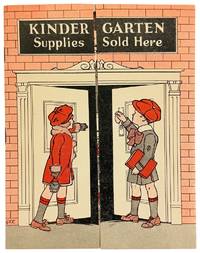
192831878N.p.: s.i. 1928. Very Good. N.p.: s.i. 1928. First Edition. 12mo 16cm.; publisher's pictorial staple bound wrappers signed in image "GEL"; illustrated throughout including photograph of a kindergarten class in Lima. Very light wear to margins brief tape repair inside upper left-hand panel else a Very Good example.<br /> <br /> Transformation fund-raising pamphlet for American kindergarten students to raise money for supplies at a kindergarten in Lima Peru. The front wrappers open like a pair of doors into a kindergarten supply store "For we're buying with the money / Juniors give o'er all this land / For the Lima Kindergarten. / They already have the land."<br /> <br /> Through another door leads to a photograph of the students at the Lima Kindergarten sitting expectantly in a classroom for their Froebel school supplies: "There are balls and books and pictures / To be colored and cut out; / Blocks and shining letters on them / Pencil crayons. Hear that shout"<br /> <br /> Unrecorded in OCLC as of January 2025. s.i. unknown
198465663Lima Peru: Secretaría del Ministro de Marina 1984. 3a ed. numerada corr. y ampliada. Hardcover. Very good in very good dust jacket. Slight bowing at rear board oversize book. Text in Spanish. 441 p. : ill. some col. ; 29 cm. This work also commemorated the Sesquicentenario de su natalicio 1834/1984. Section entitled Grau el Marino Eponimo del Pery pro Fernando Romero starts at page 29 and goes to page 68. From Wikipedia: Miguel María Grau Seminario was a renowned Peruvian naval officer and hero of the Naval Battle of Angamos during the War of the Pacific 1879-1884. He was known as the el Caballero de los Mares Spanish for "Gentleman of the Seas" for his chivalry and is esteemed by both Peruvians and Chileans. He is an iconic figure for the Peruvian Navy and one of the most famous merchant marine and naval military leaders of America. His mother Luisa Seminario y del Castillo motivated Grau to love the sea from his youth. He entered the Paita Nautical School. He first went to sea when he was nine years old going to Fortune Colombia aboard a merchant schooner. Grau later went on various merchant ships to ports in Oceania Asia America and Europe. In 1853 at the age of 19 he left the merchant marine and became an officer candidate of the Peruvian Navy where he developed an outstanding professional reputation. In 1854 he was Military officer of the steamer Rimac. His career was rapid and brilliant. In 1863 he was promoted a year later. In 1864 he was sent to Europe to oversee the construction of ships for the Peruvian fleet. Upon his return Chile and Peru joined together in a bi-national fleet against Spanish attempts to reclaim their American colonies. In 1868 he was recalled to the Navy and was named commander of the Huáscar with the rank of Lieutenant Commander. By June 1 1874 he became the commanding officer of the Peruvian Navy's fleet and later became a member of the Congress of the Republic of Peru as an elected congressman in 1876 representing Paita. the War of the Pacific against Chile began on 5 April 1879 Miguel Grau was aboard the Huáscar as its captain and the Commander of the Navy. Capitán Grau played an important role by interdicting Chilean lines of communication and supply damaging capturing or destroying several enemy vessels and bombarding port installations. Grau's Huáscar became famed for moving stealthily striking by surprise and then disappearing. These actions put off a Chilean invasion by sea for six months. At the Battle of Iquique after Huáscar sank the Chilean corvette Esmeralda by ramming her Grau ordered the rescue of the surviving crew from the waters. Grau also wrote condolences to the widow of his opponent Arturo Prat returning his sword and personal effects. At the port of Antofagasta after sneaking up on an enemy ship he courteously asked the crew to abandon ship before opening fire. These and other gestures earned him the nickname of el Caballero de los Mares "Gentleman of the Seas" from his Chilean opponents acknowledging an extraordinary sense of chivalry and his gentlemanly behavior combined with his highly-efficient and brave combat career. Almirante Grau was killed by an armor-piercing shell during the Naval Battle of Angamos on 8 October 1879. Huáscar was captured by the Chileans after incurring severe casualties in the close-range artillery duel. Although most of Grau's body was not recovered his remains were buried with military honours in Chile which were returned to Peru in 1958. For many years after his death his name was called in a ceremonial roll-call of the Peruvian Navy. His final resting place lies at the Escuela Militar Naval del Peru in El Callao in an underground mausoleum. He posthumously received the rank of Gran Almirante del Perú Grand Admiral of Peru in 1967 by order of the Peruvian Congress. A portrait of Almirante Grau is on display in the museum ship Huáscar. In the year 2000 Miguel Grau was recognized as the "Peruvian of the Millennium" by popular vote. Secretaría del Ministro de Marina hardcover
192074922Lima: Lithografia Tip. Carlos Fabbri 1920. Original hand-colored lithograph map of the city of Lima. 24 x 26 1/2 inches. Key printed on left side and title on right. No copies located by OCLC. Very good."The Italian engraver and printer Carlos Fabbri studied art & design in Italy. In 1887 he moved to Peru and commenced his career as artist & designer for the journal El Peru Ilustrado in Lima. By 1888 Litografia y Tipografia Carlos Fabbri Lima Peru was set up in Calle Mercaderes 140. Having acquired the most up-to-date printing machinery from Italy they soon became leading book publishers and printers of postage stamps maps colour labels posters cheques share certificates and amongst other things cigarette insert cards for tobacco companies during the period 1890-1920 approx. Fabbri's artistic and industrial work was awarded gold medals at exhibitions in Paris Milan Madrid London 1906 and Lima 1910" World of Playing Cards. Lithografia Tip. Carlos Fabbri unknown
1901320055J.H. Vail & Co, New York 1901. XXXI, 576 pp. with a lot of illustrations, Groß 8°, Original-Leinen, Einband leicht berieben, Innengelenk leicht angrerissen, Ecken und Kapitale bestoßen, insgesamt gutes und innen sauberes Exemplar, (little rubbed and bumped, alltogether in good condition),
1926ZB528851Lima: Casa Editora 1926. 215 pp. paperback covers chipped else good . - If you are reading this this item is actually physically in our stock and ready for shipment once ordered. We are not bookjackers. Buyer is responsible for any additional duties taxes or fees required by recipient's country. Photos available upon request. Lima: Casa Editora paperback
192446402666Paris, Morancé, 1924 ; 2 volumes in-folio, sous chemise cartonnée ornée de l’éditeur. 45 pp., 1 f. - 65 planches dont 29 en couleurs.Reproduisant de nombreuses poteries pré-colombiennes, avec des détails de leurs décors. Le volume de texte est orné d’ornements péruviens en couleurs.
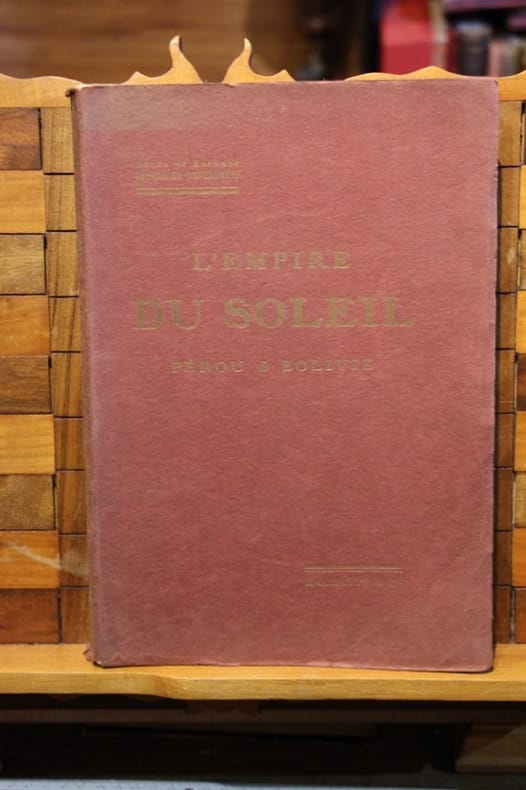
190986872Librairie Hachette & Cie 1909 In-4. Broché, couverture bordeaux imprimée, LVI-318-12 pp., 111 gravures dans et hors texte, 12 planches en couleurs, hors texte, 1 carte générale en couleurs de l’Amérique du Sud repliée in fine, notes, index, tables des gravures. Bon exemplaire.
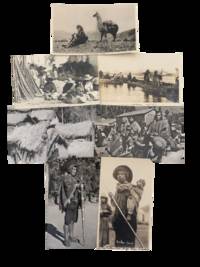
1930231131930. Peru photograph archive a compact mid twentieth-century archive depicting Indigenous life local dress rural architecture and regional travel imagery across Peru. Though the individual photographers are largely unidentified the archive brings together commercially issued postcard photographs a real photo with contemporary inscription and a later press image offering a layered record of how Peru circulated both as lived scene and as pictorial subject between the 1930s and 1960s. The group mainly focuses on Indigenous representation in small-format photography where market scenes lakeside activity portrait studies and village environments were repeatedly framed for circulation across tourist postal and editorial contexts.<br /> <br /> Peru photo archive. Peru circa 1930s-1960s. Archive of 7 silver gelatin photographs the majority postcard-format real photo cards together with one inscribed real photo and one press release photograph all measuring 4" x 6". The images include Indigenous men women and children posed and unposed in varied rural settings: a seated figure beside a llama; women gathered in a street market with goods spread before them; Indigenous Peoples along the edge of Lake Titicaca; thatched dwellings; and a crowded village scene with sitters in woven garments and hats. The inscribed real photo shows an Indigenous boy carrying a baby on his back captioned in manuscript on the front "A big brother's care - Oroya - Peru. S. America." The press photograph shows a young man turned away from the camera a woven wrap draped over his shoulder as he faces the thatched roofs of his village; its verso retains part of a newspaper clipping and a dated stamp reading December 25 1966.<br /> <br /> The archive shows how Peru was pictured through recurring subjects of Indigenous dress family care animal labor vernacular housing and public gathering while also preserving the shift from postcard circulation to newspaper image handling. The Oroya photograph is the most individualized item in the group pairing a staged or semi-staged portrait with a handwritten descriptive caption while the stamped press image preserves direct evidence of editorial use and later circulation. As a small but cohesive archive it showcases how Latin American representation in American media was formulated and circulated to a foreign audience. Minor edgewear overall in very good condition. A well-preserved group with a strong mix of commercial vernacular and editorial photographic formats. unknown
19814612Lima: Instituto de Estudios Histórico MarÃtimos del Perú 1981. First Edition — Primera edición. Hardcover — Tapa dura. 250x180mm. 9¾x7". Lima Instituto de Estudios Histórico MarÃtimos del Perú 1981. 7 tomos en 10 volúmenes. En 4º 250 x 180mm. -I: lxxxvii-474 pp. -II: 567 pp. -III: 615 pp. -IV: 665 pp. -V: 495 pp. -VI: 652 pp. -VII: 538 pp. -VIII: 612 pp. -IX: 678 pp. -X: 501 pp. gran número de ilustraciones mapas y láminas en blanco y negro y a color. Encuadernación en piel editorial con camisa. Primera edición. Primera edición. Ofrecemos los 7 primeros tomos de 12 de esta importante obra. Instituto de Estudios Histórico Marítimos del Perú hardcover
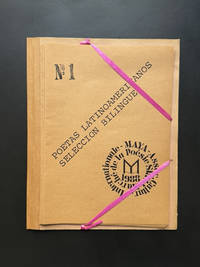
19881866<p>Nine folded leaves with texts in Spanish and French some are illustrated. 4to 21 x 29.5 cm. Very good. Numbered series with fascicles loose inside a lavender folder front cover is faded to tan with pink ribbon ties. 1866</p><p><em>Issued on the occasion of the 1988 Marché de la Poésie a major international poetry festival held every year in Saint Sulpice Square in Paris this series of bilingual broadsides showcase the talents of Latin American participants. Poets in the sequence include Orlando Jimeno-Grendi Chile José Rosas-Ribeyro Peru Elena Galván United States Jorge Nájar Peru Rubén Bareiro-Saguier Paraguay Carlos Sahakian Uruguay Luisa Futoransky Argentina Gustavo Mujica Chile and Robert Armijo El Salvador. Unrecorded.</em></p> Internationale - MAYA - Assoc. Cultur. / Marché de la Poésie
190534084Lima: Imprenta del estado 1905. First editions. Cloth. Very good copies boards and spines rubbed occasional wear some spotting or scuffing to a few boards. 8vo. Ultimately fourteen volumes would be published. Provenance: Note in first volume that it is the copy of Domingo Edwards Matte 1890-1964 Chilean book collector; earlier owner was A. Arroyo with his name in gilt on spine and is most likely the Argentinian diplomat Envoy Extraordinary and Minister Plenipotentiary in Peru Don Agustin Arroyo. Palau 14957. Imprenta del estado hardcover books
190534084Lima: Imprenta del estado 1905. First editions. Cloth. Very good copies boards and spines rubbed occasional wear some spotting or scuffing to a few boards. 8vo. Ultimately fourteen volumes would be published. Provenance: Note in first volume that it is the copy of Domingo Edwards Matte 1890-1964 Chilean book collector; earlier owner was A. Arroyo with his name in gilt on spine and is most likely the Argentinian diplomat Envoy Extraordinary and Minister Plenipotentiary in Peru Don Agustin Arroyo. Palau 14957. Imprenta del estado hardcover
1947ZB705797Callao: 1947. first edition #285-290 297-305 309-320 327-332 349-404 all complete issues or complete years in ten bindings text darkened ex library good working collection. - If you are reading this this item is actually physically in our stock and ready for shipment once ordered. We are not bookjackers. Buyer is responsible for any additional duties taxes or fees required by recipient's country. Photos available upon request. Callao: unknown
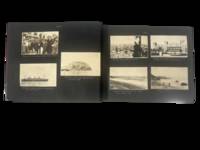
1925227551925. Latin America SS Resolute voyage photograph album 1925 documenting a steamship journey through Central and South America during the interwar expansion of international maritime tourism following the opening of the Panama Canal in 1914. The photographs record port cities landscapes and civic landmarks encountered along the Pacific and Atlantic coasts of Latin America during a period when luxury liners increasingly connected North American travelers with destinations across the hemisphere. By the 1920s transisthmian canal travel had reshaped global shipping and passenger routes allowing cruise itineraries to combine Caribbean Pacific and South American destinations within a single voyage. The album preserves visual evidence of these emerging travel circuits while also documenting major urban and cultural centers of the region during a period of modernization and expanding hemispheric exchange.<br /> <br /> Photo album compiled during the 1925 voyage of the steamship SS Resolute containing approximately 150 original silver gelatin photographs mounted to black album leaves and captioned in white ink. Contemporary red leatherette album titled "Photographs" in gilt and bound with red cord. Photographs measure approximately 3 x 4 inches to 4 x 6 inches. The photographs document the vessel's route through Panama and the Canal Zone before continuing along the Pacific coast of South America and returning through the Atlantic basin. Numerous photographs depict Panama City and the Panama Canal including views of the Culebra Cut and Gold Hill major engineering features of the canal project completed little more than a decade earlier. Other sections of the album record urban and harbor scenes in Cartagena Colombia including colonial architecture and waterfront activity. Photographs from Peru show Lima's Plaza de Armas the bullring at Miraflores and rural Andean valleys near Arequipa with terraced agricultural landscapes and local communities. Images from Chile capture the steep hills and harbor districts of Valparaíso along with coastal plazas and naval vessels near El Morro. Additional photographs from Argentina depict major civic spaces in Buenos Aires including Plaza San Martín and Plaza de Mayo documenting the monumental architecture and modernizing urban landscape of the city during the 1920s.<br /> <br /> The steamship SS Resolute operated as a passenger liner serving long distance routes during the interwar expansion of luxury cruising and international tourism. Voyages such as the one recorded in this album reflected the growing accessibility of transcontinental travel made possible by the Panama Canal and by the increasingly global network of commercial steamship lines linking the Americas. Mild toning consistent with age; mounts and binding well preserved. Overall very good condition. The photographs collectively document a hemispheric itinerary connecting canal infrastructure colonial port cities Andean landscapes and rapidly modernizing capitals offering a visual record of the cultural and geographic environments encountered by travelers during the height of the steamship era. unknown
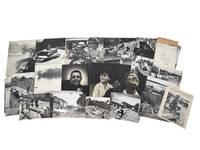
1961231231961. Baum Allyn. Peru photo archive a substantial working group of large original photographs and related New York Times material centered on Baum's Peru assignments significant for preserving a photographer's own visual record of Andean and Amazonian travel Indigenous communities village life and editorial circulation within mid twentieth century American newspaper photojournalism. Allyn Baum was a staff photographer for The New York Times from 1957 to 1967. Included is a typed note from New York Bureau Chief Gedeon de Margitay congratulating Baum on the Peru photographs published in the Magazine together with the January 21 1962 New York Times article "Into the Unknown" directly linking the images to their original publication context and to contemporary American visual encounters with Peru's Indigenous regions and frontier geographies. From the estate of Allyn Baum. Peru and New York. 1961-1973.<br /> <br /> Archive of 48 items including 46 large silver gelatin photographs a New York Times article written by Baum and a single-page typed letter regarding publication. Most photographs measure 8" x 10" while 9 larger examples measure 10" x 13". Several are mounted on board and bear Baum's signature or detailed inscriptions such as "Jungle Priest" "Headhunter" and "High Andes Quechua Indians in Peru. Working in home . producing products for sport." Many retain original press captions or handwritten notes on the versos some in Baum's own hand. The photographs document river and jungle travel in the Amazon Basin village and market scenes domestic interiors American aircraft and extensive portrait studies of Andean and Amazonian Indigenous peoples. Indigenous sitters appear weaving spinning wool knitting carrying children traveling by canoe gathered near riverside settlements or posed in both formal and informal portrait settings. Several photographs emphasize textile production and traditional labor practices among Quechua communities in the high Andes while others focus on Amazonian Indigenous groups photographed within thatched settlements and river communities preserving material evidence of architecture clothing subsistence practices and daily life during a period when American newspaper photography increasingly framed Indigenous South America through the lens of exploration modernization and remote access.<br /> <br /> The archive is a strong record of Peru in the early 1960s documenting not only transportation networks settlement patterns and regional travel but also Indigenous cultural continuity across both Andean and Amazonian environments. Baum's photographs repeatedly center Indigenous Peruvians not simply as background figures within landscape photography but as primary subjects whose labor dress craft production domestic life and physical presence structure the visual narrative of the archive. The accompanying New York Times material preserves the editorial framework through which these images entered American mass circulation while the de Margitay note confirms internal recognition of Baum's Peru work within the newspaper itself. The later date range appears to reflect continued press handling reuse and captioning rather than a single production moment giving the archive additional value as a working newspaper photography file shaped over time. Minor edgewear throughout; versos with original handwritten descriptions by Baum and press editors. A cohesive and well-preserved Peru field photography archive documenting Indigenous life regional travel and mid century American photojournalism connected to The New York Times. unknown
19124149Senior Class of 1912 Nebraska State Normal School at Peru 1912 A 1912 yearbook from Nebraska's first college first state-supported college. Stiff card boards full dark brown leather gilt front board lettering/decoration bright 10 3/8 x 8 inches 218 pp. Very good modest edgewear/rubbing; pages clean with no marks and binding sound. Rare. K071. 1st Edition. Hardcover. Very Good/No Jacket. Senior Class of 1912, Nebraska State Normal School at Peru hardcover
19114148Senior Class Nebraska State Normal School at Peru 1911 A 1911 yearbook from Nebraska's first college first state-supported college. Hardcover full brown leather gilt front board lettering and decoration bright 10 1/2 x 8 inches 232 pp. Laid in: a card with a printed Peru poem. Very good modest edgewear; sunning spine; pages clean with no marks and binding tight. Rare. K071. 1st Edition. Hardcover. Very Good/No Jacket. Senior Class, Nebraska State Normal School at Peru hardcover
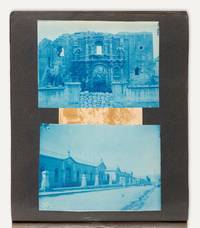
1918List2982Peru and Panama 1918. Approximately 364 photos; album and unmounted photos silver prints cyanotypes and printing-out-paper prints. Photos measure 3 x 4 to 8 x 10 inches with about half measuring 3 x 5 ½ inches. Some with photographer’s hand-stamp or credit in pencil; others with manuscript notations verso or recto; some captions to album pages. Offered in partnership with Daniel / Oliver.<br /> <br /> Rich and extensive photographic archive of Walton T. Burres of Stockton California showing his time in Peru c. 1904 as an amateur explorer and doctor for the Inca Mining and Rubber Company and his later work in Panama c. 1918 with the Rockefeller Foundation’s International Health Division.The collection consists of a large number of loose photos acquired by the gallery in 2021 and a recently discovered photo album showing some of the same subjects and containing a few duplicate images some printed in different sizes or formats as well as hundreds of previously unseen prints. Together this material makes up the largest extant archive of Burres’s photographic work. Though his work was published at the time both in Peruvian and American publications much of it was lost when he dropped it in a river that he was attempting to ford.<br /> <br /> Burres was educated at California’s Cooper Medical College the first school of medicine on the West Coast and was a prominent member of the Stockton community before sojourning to Peru around 1900 to help the Inca Mining and Rubber Company address the deadly diseases endemic to the region such as malaria and yellow fever. To encourage economic infrastructure in remote areas the Peruvian government began granting land concessions to any company that would build roads bridges or river ports. As a result the Inca Mining Company an American outfit based in Tirapata purchased the rights to mine gold along the upper Inambari River in 1896 and soon became the richest gold producer in Peru.<br /> <br /> A large portion of Burres’s Peruvian images document his 1903–1904 excursion from Arequipa 150 miles into “rubber country.†The journeys were well-recounted in U.S. papers and a number of the anecdotes described in print are seen in the present images.<br /> <br /> There are many dynamic views of Burres and his party trekking through the dense jungle and summiting the high mountains as well as shots of flora fauna and native Peruvians. Burres’s travel companions for this trip included the famed adventurer Harriet Chalmers Adams later dubbed “America’s greatest woman explorer†by the New York Times. Adams and her husband Frank both fellow Stocktonians joined up with Burres during their own multi-year expedition through South America. There are a number of portraits of a woman who bears a striking resemblance to Adams though it is possibly another person.<br /> <br /> Other Peruvian material includes numerous views of Cusco Arequipa and the surrounding environs including a beautiful interior of a chapel a Martin Chambi-esque detail shot of a stone wall and portraits of local townspeople some identified as Quechua people. There are a number of lush large-format cyanotypes rich printing-out-paper views and many handsome small-format panoramas. These were printed on Inca Mining Company surplus stationary which speaks to the makeshift nature of photo-development under the circumstances. One particularly striking image shows the top of Misti volcano barely visible above the clouds. This image was reproduced in Burres's account of his travels published in 1909 in Outing magazine.<br /> <br /> The photographs from Burres’s time in Panama document his more serious work as a virologist and health administrator in the area. One interesting photo shows a pair of recently-shot iguanas with a caption noting that “blood of these reptiles was found infected with Haemogregarina.†Another image is that of a new style of privy built from concrete and wire-mesh designed to better keep out rain water. There are also keenly-shot views of main streets and local culture in Los Santos Chiriquà and elsewhere including a number of humanistic group portraits taken at a girl’s school. unknown
19091819600 leaves typed on recto only bound in original half leather with gilt titling. Six large fold-out maps of the period. Plates composed of postal views with a few photographs laid down. Marbled endpapers hinges reinforced. 'Confidential' stamped in violet as well as 'Office Chief of Staff 2nd section' and 'Withdrawn from Library'. American contractors had just completed the Oruro/Viacha railway in 1908 with 125 miles laid to mineral rich regions to and from La Paz. This study seems to have never been published beyond the present edition.; Folio 20.5 x 41 cm; pages; All shipments through USPS insured Priority Mail. U.S. Army hardcover books