3 résultats
185854442n.p. n.d. 1858. 8vo pp. 20; self-wrappers; fine. UC-Riverside and AAS only in OCLC. In 1855 while charting the Rio de Plata Basin the United States ship U.S.S. Water Witch was fired upon by a Paraguayan fort killing the helmsman Samuel Chaney. This outraged the U.S. government who along with the U.S. & Paraguay Navigation Company decided to bring the incident to the Supreme Court. In 1858 began the Paraguay Expedition the purpose of which was to demand an apology from the Paraguyan government and to address alleged insults against the Navigation Company. The result of the expedition was that Paraguay apologized the Chaney's family was indemnified and a new advantageous commercial treaty between Paraguay and the United States was forged. <br/><br/> unknown books
1913318530London: Seeley Service & Co 1913. Third & Cheaper edition. With 30 illus and a map. 8vo. Bound in modern three quarters mottled tan calf marbled boards maroon leather title label. Fine. Third & Cheaper edition. With 30 illus and a map. 8vo. Seeley, Service & Co unknown books
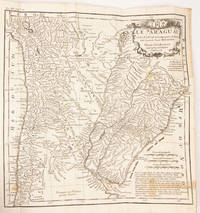
17544105Paris:: chez Bordelet libraire rue S. Jacques vis-à -vis le Collége de Jésuites à Saint Ignace 1754. FIRST FRENCH EDITION. The original Italian edition "Il cristianesimo felice nelle missioni" appeared in two parts: 1743 and 1749. Octavo:. 16.5 x 9.7 cm. 2 XXIV 402 4 p. With added map. Collation: Ï€1 a-b8/4 A-Z8/4 Aa-Kk4/8 Ll3 Lacking final blank. This is an attractive copy in contemporary mottled spine richly tooled in gold light wear to head and foot of spine and extremities. The text is in fine condition with a few small marginal stains lvs. G1-2 N8 O1 and another small stain to the margins in the final two signatures touching the text on a few lvs. The large folding map of Paraguay in nice shape with a few light stains. Faded 18th c. exlibris on title “bibliotheca….†with a globe surmounted by a Greek cross. With a large folding map of Paraguay. Muratori’s book marked an important development in the historiography of Paraguay. Muratori offered a new approach to the subject distinct from the narratives of the Jesuits the skeptical approach of the Jansenists and those writers who filled their accounts with a mixture of adventure and romance. “Muratori was far from being a propagandist for the Society of Jesus: during the research for his “Cristianesimo felice†he was locked in violent argument with them and was not allowed to consult any of their archives. He had started off with the problem of understanding the Church's missionary activity among the newly-discovered peoples and found that the original evangelical impulse remained unaffected by political considerations in the case of Paraguay… “Muratori's work was… not apologetic in intention even though his attitude regarding the State of Paraguay turned out to be a positive one but it opened up another dimension in the debate. He placed Paraguay firmly in the context of human history. Although he did not share the conclusions of the Jansenists it is nevertheless easy to understand why the Jesuits did not look favorably on his work. He did not remove the sacred element in the Jesuit enterprise but he examined what human elements lay at its root. The Jesuits finding themselves in a world which Muratori described according to Lafitau's theory employed "utility . that great driving impulse of human hearts" to civilize the Indians. "Well-regulated freedom adequate provision for food clothing and lodging public quiet and individual tranquility are in my belief the real and solid elements which contribute to a people's happiness.†These "small republics" could "in a certain sense be called an immense number of monasteries where both the spiritual and practical affairs of the day are wonderfully well regulated and the upkeep of each is provided for." It followed that Paraguay was "far in advance of the conditions of many European peoples.â€Imbruglia The Jesuit Missions of Paraguay and a Cultural History of Utopia 1568–1789 p. 135 ff. The Reductions as a restorative: Muratori was aligned with Las Casas in his estimation of the cruelty and “European barbarism†of the Conquistadors who entered the New World “totally oblivious not only to the Gospel but also to being humanâ€. In the spirit of restitution Muratori offered the reductions of Paraguay as a model for restoring and improving the happiness of the Indians -who before the Conquest had been “simple without malice patient and peacefulâ€- through a benevolent Christianity. “The Indians of the riduzioni enjoyed greater freedom than all the other subjects of the kingdom of Spain as they had no obligations other than a small tax to which men only were subjected and military duties in case of need. In any case although Muratori praised the institution of collective property and the limitation of currency as guarantees of equality he never went so far as to fantasize utopias such as proposing the "Christian communistic" system of Paraguay as a possible model for European society. He confessed to "having fallen in love" with those missions insofar as they reminded him of "the primitive Church" and praised the admirable example of the missionaries who carried the cross among barbarians.â€Buccini “The Americas in Italian Literature and Culture 1700-1825 p. 6 ff. Sabin 51419; Sommervogel II 890 et V 37. Conlon Le siècle des lumières 54:907 chez Bordelet, libraire, rue S. Jacques, vis-à -vis le Collége de Jésuites, à Saint Ignace, unknown books