[MANUSCRIPT - PARAGUAY RIVER].Biblio.com
961 résultats
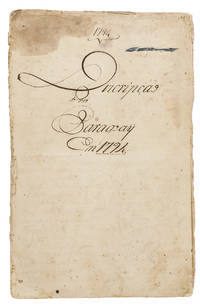
1794ABC_47826Paraguay and/or Brazil 1794. 34 x 22 cm. Stitched through 2 single holes only one remains intact. Written in brown ink in a very legible late 18th-century cursive. 1 1 blank 12 2 blank pp. A contemporary unpublished and unrecorded Portuguese manuscript describing the Paraguay River and the lands rivers and territories adjoining including the location of former Jesuit Missions. It is written within the context of the Portuguese-Spanish dispute over the frontier between Portuguese Brazil and the Spanish colonies and focuses in particular on the upper reaches of the river which at that time still remained relatively unknown. The Portuguese under the governorship of Luis de Albuquerque 1739-97 had recently in 1778 established the towns of Albuquerque today Corumbá Laredo Villa María today Cáceres Casalvasco and Salinas. These new establishments and their locations on the Paraguay River are mentioned here. The terms of the 1777 Treaty of San Ildefonso between Portugal and Spain directed that a Portuguese-Spanish delegation be sent to the Paraguay River region to determine a definitive border between the territories. The Spanish delegation arrived in 1781 under the command of the military officer and naturalist Félix Manuel de Azara 1746-1821 and waited in Asunción in Paraguay for the Portuguese. The latter in the end never arrived but the Spanish delegation remained in the region until the 1790s Azara until 1801 exploring and measuring the region as well as handling the ongoing disagreements with the Portuguese over the demarcation. This Portuguese description of the River Paraguay is undoubtedly connected to these ventures though whether it is a contemporary translation into Portuguese of a Spanish survey or a survey of the river carried out by the Portuguese themselves is uncertain. It is however the only known copy of an unpublished description of the River Paraguay and it describes in detail the little-known upper regions of the Paraguay River.With a crossed-out annotation on the title-page the title-page and the last blank leaf are somewhat water stained. The paper is otherwise uniformly toned and showing some occasional foxing the edges of the leaves are somewhat frayed slightly affecting the text at the head of each page. Overall in good condition. unknown
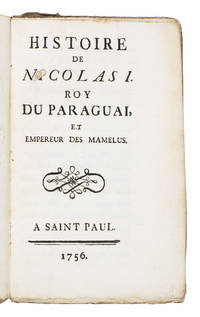
1756ABC_48388Saint Paul = São Paulo but the work was likely printed somewhere in Western Europe 1756. 8vo. Contemporary brown paste paper wrappers with a manuscript title label mounted at the head of the spine and a shelf mark label at the foot in a protective clear plastic sleeve. With a typographical ornament on the title-page. 88 pp. First or second edition of a rare biography of the mythical Spaniard Nicolas Rubiuni 1710- the "first king of Paraguay" and "emperor of the Mamelukes Mamelucos of São Paulo". It was the first time that the Bandeirantes settlers of Pirintinga served as the theme for a novel. This curious work is sometimes considered to be an anti-Jesuit publication but Borba de Moraes argues that it should simply be seen as a work of fiction instead. The first two editions of this novel were both published in 1756 and it is therefore unclear which is the first. However the present edition appears to be the most rare of the two as we have only been able to find it in two sales records of the past 100 years.The myth of Nicolas Rubiuni is said to have been created by Marquis Sebastião José de Carvalho e Melo 1699-1782 chief minister to the Portuguese king to undermine the Jesuits. When the Jesuits first arrived in Paraguay in 1588 their objective was to convert to local people the Guaraní to Christianity and to protect them from European colonists and slave traders. The Guaraní were threatened by the Bandeirantes from Brazil who tried to capture and enslave them to work on the sugar plantations. However armed by the Jesuits the Guaraní were able to defeat them in 1642 which ended to worst of the slave trade in the region. The involvement of the Jesuits inspired mixed feelings in Europe. They were painted as either romantic saviours or as exploiters who were using the Guaraní to create their own independent kingdom in Paraguay. The figure of Rubiuni was said to have stood up against the Jesuits and restore order in the region.According to Borba de Moraes the work demonstrates how closely the activities in the Americas were followed in Europe as the unknown author displays a wealth of knowledge about the missions the subjecting of Paraguay to Jesuit rule and the treatment of the Guaraní. The work must have been fairly popular in Europe as Italian German and Dutch translations were published shortly after the first French editions. With the bookplate of Carolus Franciscus S. R. J. Comes à Nefelrod mounted on the inside of the front wrapper. The edges and corners of the wrappers are somewhat scuffed with creasing and some loss of material on the spine including of the two paper labels mounted there making them difficult to read. With a wormhole on the front wrapper and first 3 leaves barely affecting the printed text. Otherwise in good condition.l Borba de Moraes I p. 404; Sabin 32020. unknown
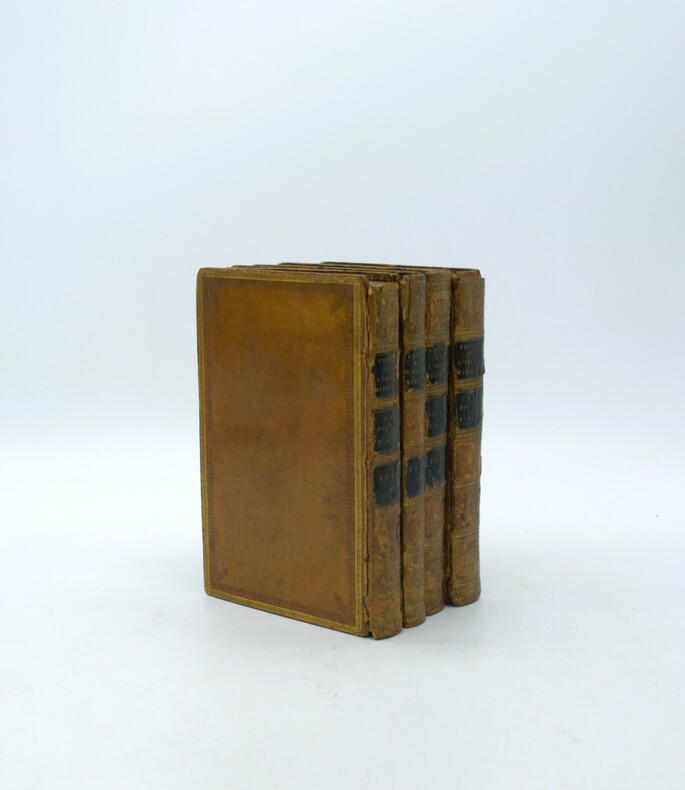
1860PHO-2406Paris, Librairie de L. Hachette et Cie, 1860-65. 2 volumes de texte in-8 (235 x 148 mm) de : I/ lxiv pp., 486 pp., (1) f. d’errata ; II/ (2) ff., 480 pp., iv pp. de table ; et 1 Atlas in-folio (57x40cm). Texte : relié demi veau, dos lisse avec titre et tomaison, dos frotté, coiffes arasés, charnières faibles au tome 2, cachets aux titres. Atlas : sous portefeuille demi toile, titre et tomaison au plat, 2 chemises de livraison comportant 13 planches (16) et 2 planches en double (Fragment de carte et Ruine de l’église Saint Michel), portefeuille frotté, chemises de livraison ébarbées, rousseurs, petites mouillures marginales, une planche plus petite en marge.
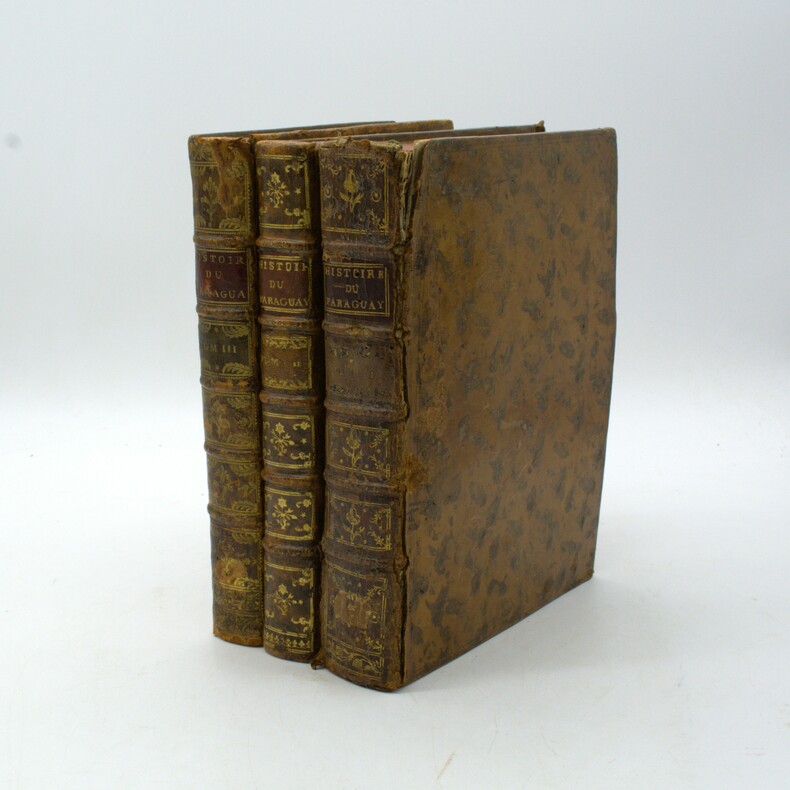
1660PHO-1576Nicolas & Jean de la Coste, Veuve Nicolas de la Coste, 1660-1671 ,3 volumes in-4° de 15ff.-776pp.-12ff. ,12 ff.-784 pp.- 14 ff., 9ff-790pp., Première décade en plein vélin , dos à nerfs avec pièce de titre, Seconde décade en plein veau, dos à nerfs orné avec titre ,tranches mouchetées, Troisième décade en demi veau (reliure moderne), coiffes arasées , coins usés , début de fentes , frottements, mouillures au tome 3.
188030328<p>HARDBACK NODJ ISSUED 1880 ON COPYRITE PG 1ST Edition THICK Embossed boards with gilt lettering and decoration. Spine cover ends and corners show very little wear. Spine cover is faded SLITELY.Text block is clean and unmarked. All OUTER edges are red stained with lettered Gold Gilt Titles Interior VG/ VG AS-IS WITH RED THIN STAIN TO OUTER EDGE FEW PGS NOJACKET THICK BROWN PURPLE embossed Cover with Bright Gold Gilt DECORATIONS CVR LITE rub wear Scuffing 517 pgs Interior nice condition light Wear FOX Interior nice tight Clean light Fox OUTER PGS EDGES LITE RED</p><p>.</p><p>& Tragic Death of Philosopher Pythagoras. Roman Catholic Church has relentlessly persecuted Tortured & Burnt them at the Stake. Recent remarkable discovery of Masonic emblems on an ancient obelisk in Egypt."</p> Redding & Co. Publ, NY, Masonic publishers hardcover
1831PHO-2405Paris, Arthus Bertrand, 1831-1840, 20 tomes reliés en 10 vol. in-8 (21 × 12,5 cm), demi-veau fauve marbré à coins, super-libris doré, dos à nerfs ornés, pièces de titre rouges et de tomaison vertes, tranches mouchetées rouge (reliure anglaise du XIXe s). Aux contres-plats, étiquette pour cote. Petites rousseurs. Légers frottements aux reliures. Provenance « Society of Writers to His Majesty’s Signet », célèbre association privée d’avocats écossais, fondée en 1594.
1752PHO-2500Amsterdam et Leipzig, Arkstée & Merkus, 1752, 2 volumes in-4 (26x22cm), 11 ff.-554 pp. et 1f.-316 pp.-7ff.-309 pp.-3pp., Veau marbré époque dos à nerfs orné avec pièces de titre et tomaison, tranches jaspées. Frottements, coins usés, accroc coiffe sup. Tome 2, 4 feuillets blanc brunis, 9 planches brunies, 1 avec déchirure réparée.
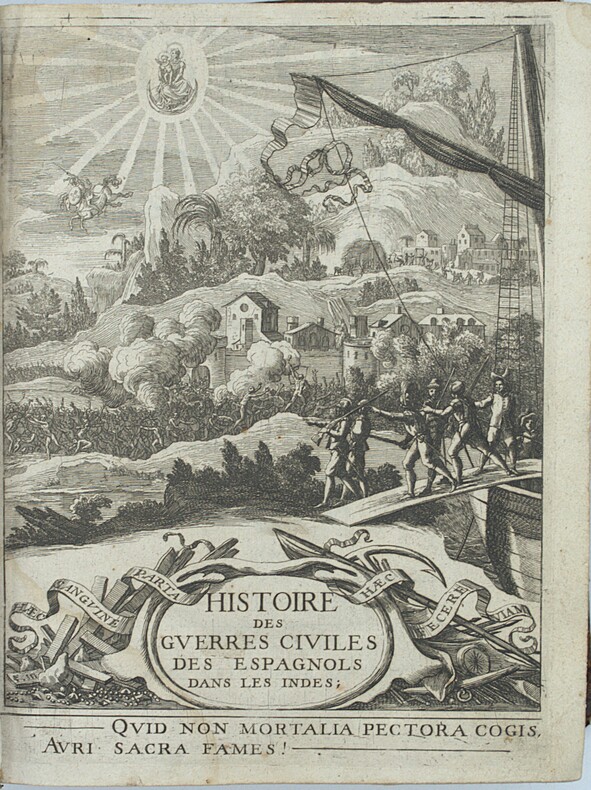
1658PHO-2397Paris ,1658. Chez Siméon Piget. 2 tomes en 1 volume in-4 (25x19cm), 16fnch.-631pp-9fnch./555pp.-10ffnch., relié veau époque, dos manquant mais corps solide, coins usés, vieille mouillure claire par intermittence.
1653PHO-2504Paris, Chez Siméon Piget, 1658. 2 volumes in-4 (24 x 19 cm), 16 ff. n. ch.-631 pp.-9 ff. n. ch. / 555 pp.-10 ff. n. ch., reliure en basane de l’époque, dos à nerfs orné, pièces de titre et de tomaison, filets à froid sur les plats. Frottements, coins usés, accroc à une coiffe, rousseurs.
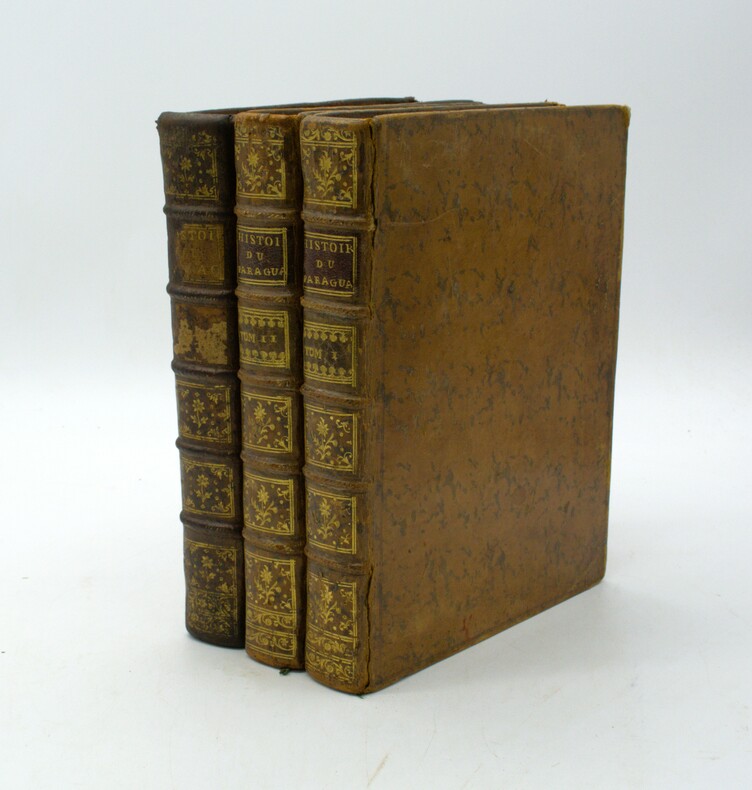
1756PHO-1895Paris, Didot, Giffart et Nyon, 1756. 3 vol. in-4 (260x200) de (5) ff., 489, xxxiii, (4) pp. ; (2) ff., 356, clviii, (2) pp. , 285pp ,cccxv,2ff .Veau marbré, dos à nerfs ornés, p. de titre et de tom., tranches rouges (reliure de l'époque),bien complets de leurs 7 cartes dépliantes dont le plan de Buenos Aires. Reliure tome 3 légèrement différente, avec pièce de tomaison absente, pièce de titre avec manque, coins usés, petit accroc.
1732PHO-2447A Paris : chez Nyon, Didot, Quillau, 1732, in-4 ° (25x20cm). Pages [2], XIV, 298, [2], 63, [1] vierges + 37 planches H.T., dont dépliantes, demi basane et coins, dos à nerfs avec pièce de titre et auteur, tranches rouges. Frottements au dos, coiffes abimées avec petits manque, coupes et coins dénudés, réparation à 2 feuillets, petites rousseurs.
19395528Tokyo: Taku Tsutomu Sho Taku Tsutomu-kyoku Bureau of Colonial Affairs Ministry of Foreign Affairs 1939. Very good. 16pp. Original printed wrappers. Even toning minor dust soiling. A short but dense and illustrated guide to a Japanese agricultural colony founded in Paraguay during the 1930s. The settlement called "La Colmena" was established outside Asuncion by a Japanese land company in 1936 after Brazil all but halted immigration by Japanese to their own country in 1934. The community was small and did not consist of more than a thousand people by the full onset of World War II. In addition to containing vital information concerning the operation of this small Japanese settlement the present work is illustrated by a number of photographic reproductions of residents at work and in the community. We could not locate a copy in OCLC. Taku Tsutomu Sho Taku Tsutomu-kyoku [Bureau of Colonial Affairs, Ministry of Foreign Affairs] unknown
In-12°, raccolta di dieci opuscoli, legatura in pelle coeva, nervature e tassello e titolo in oro al dorso, tagli in rosso, buona copia, ex libris alla carta di guardia di contropiatto superiore. 1) Relaçaõ abbreviada da Republica, que os Religiosos Jesuitas das Provincias de Portugal, e Hespanha, estabeleceraõ nos Dominios Ultramarinos das Duas Monarchias...Relation abregée concernant la République...pp.68 2) Recueil de pièces, pour servir d’addition & de preuve à la Relation abregée concernant la République établie par les Jésuites dans les Domaines d’outre mer...XV, 91; 3) Second recueil de pieces, concernant les usurpations des Jésuites dans l’Amérique espagnole & portugaise...40pp; 4) Mémoires pour servir d’addition & d’éclaircissement à la relation abregée, &c. qu’on vient de donner au public, sur l’abominable conduite des Jésuites, dans les pays & domaines d’outre-mer dépendans des Royaumes d’Espagne & de Portugal...30pp; 5) Lettres en forme de bref, de N.S. P. le Pape Benoist XIV, par lesquelles, de son propre mouvement, il établit & constitue l’Eminentissime et Reverendissime François de Saldanha, Cardinal Diacre de la Sainte Eglise Romaine...(1), 24pp; 6) Decret du Card. Saldanha, pour la réforme des Jésuites de Portugal & des domaines qui en dépendent. Du 15 mai 1758 (trad. Pierre Olivier Pinault) (1), V, 2-17; 7) Lettre de Monsieur l’Archevêque d’Utrecht à un ecclésiastique de France: au sujet des affaires présentes de l’Eglise...31pp; 8) Très-humbles et très-respectueuses remontrances que présentent au Roi, notre très-honoré & Souverain Seigneur, le gens tenans sa Cour de Parlement de Normandie...42pp; 9) Très-humbles et très-respectueuses remontrances que présentent au Roi, notre très-honoré & Souverain Seigneur, le gens tenans sa Cour de Parlement à Rouen...34pp; 10) Discours prononces dans l’Academie Françoise, le lundi 10 Mars 1760 a la reception de M. Le Franc de Pompignan...27pp Si tratta di una raccolta di opuscoli di vario soggetto, i primi sei dei quali riguardano la cattiva gestione dei gesuiti nei territori spagnoli e portoghesi d’oltremare e le relative lettere di lagnanze dirette alle autorità ecclesiastiche, l’intervento di Benedetto XIV in proposito con la nomina di Francisco De Saldanha a cardinale di Lisbona e la riforma della Compagnia di Gesù in Portogallo ad opera di questi. Il settimo opuscolo è una lettera scritta dall’Arcivescovo di Utrecht ad un ecclesiastico francese ignoto, in cui il prelato tratta delle questioni correnti nella Chiesa, tra cui il giansenismo. Gli opuscoli ottavo e nono sono rimostranze che il Parlamento normanno indirizzò a Luigi XVI riguardo l’imposizione di nuove imposte, mentre l’ultimo opuscolo è il discorso d’insediamento tenuto da Monsignor Le Franc de Pompignac davanti all’Accademia di Francia e il discorso in risposta a questo tenuto da M. Dupré de Saint Maure, Presidente dell’Accademia. In-12 °, collection of ten pamphlets, contemporary calf binding, bands, label and gilt title on the spine, red edges, good copy, ex libris on the endpaper (back side). It is a collection of pamphlets of various subjects, the first six of which concern the mismanagement of the Jesuits in the Spanish and Portuguese overseas territories and the related letters of complaints addressed to the ecclesiastical authorities, the intervention of Benedict XIV in this matter with the appointment of Francisco De Saldanha as cardinal of Lisbon and the reform of the Society of Jesus in Portugal made by him. The seventh pamphlet is a letter written by the Archbishop of Utrecht to an unknown French clergyman, in which the prelate deals with current issues in the Church, including Jansenism. The eighth and ninth pamphlets are grievances that the Norman Parliament addressed to Louis XVI regarding the imposition of new taxes, while the last pamphlet is the inauguration speech given by M. Le Franc de Pompignac before the French Academy and the speech in response to this given by M. Dupré de Saint Maure, President of the Academy.
1809PHO-1737Paris, J.G. Dentu, 1809. 3 volumes TEXTE, 2 vol. in-8°,[2]-xii-385, [2]-427 pp. , brochage d’attente orange, étiquette avec titre au dos, quelques frottement. ATLAS, 1 vol. in-4° (290x225),12 planches sous serpente en couleurs et une carte de Lapie, reliure d’attente, titre sur le plat, dos manquant, coutures apparentes, la carte est volante et datée de 1829, elle provient d’un autre ouvrage
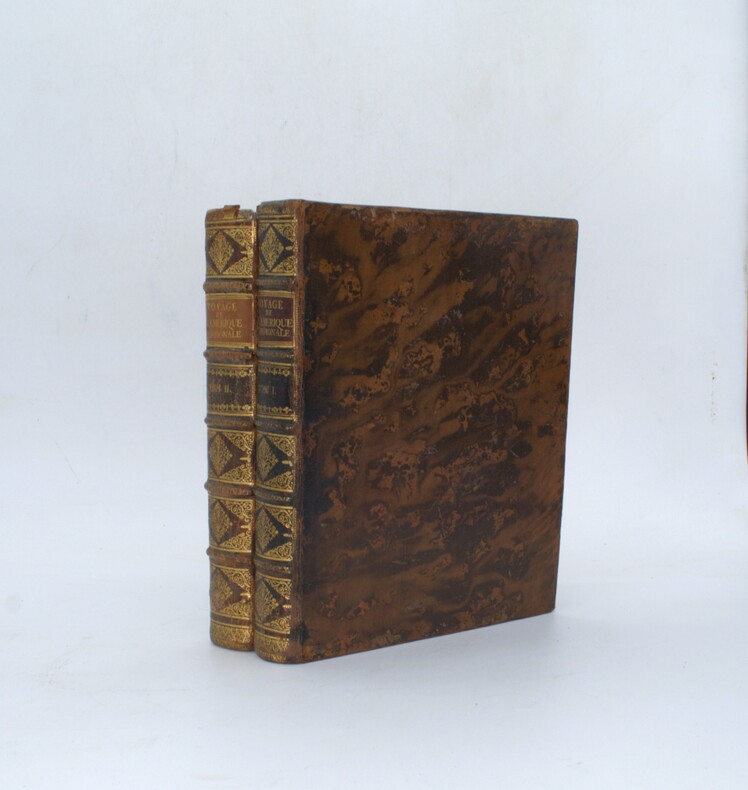
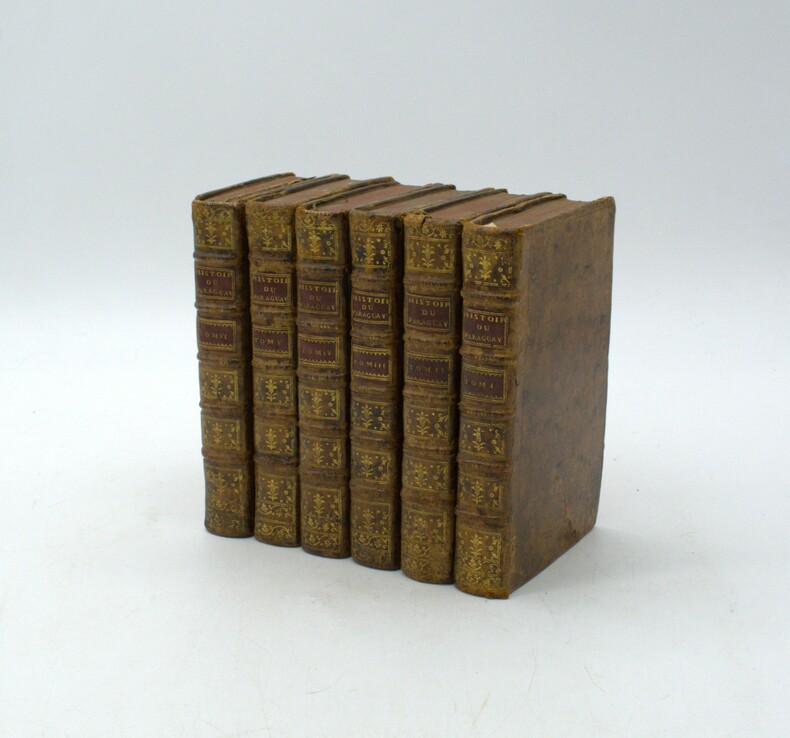
46368Paris Chez Didot, Giffart, Nyon 1758 in 12 (17x10) 6 volumes reliures plein veau fauve de l'époque, dos à nerfs très ornés, pièce de titre de maroquin rouge, pièce de tomaison de maroquin havane, tranches teintées rouge. Tome 1: 390 pages [1], avec une carte gravée dépliante en frontispice. Tome 2: 476 pages, avec un plan de la ville de Buenos-Ayres. Tome 3: 407 pages, avec une carte gravée dépliante en frontispice. Tome 4: 414 pages [1], avec une carte gravée dépliante en frontispice. Tome 5: 461 pages [1],. Tome 6: 460 pages, avec 3 cartes gravées dépliantes. Pierre François Xavier de Charlevoix, Saint-Quentin (Aisne) 1682 - La Flèche 1761, prêtre, jésuite, et professeur français, auteur de plusieurs livres sur l'histoire du Nouveau Monde. Complet des 4 cartes et 3 plans gravés. Très bel exemplaire, ensemble très frais ( Photographies sur demande / We can send pictures of this book on simple request )
1809PHO-2113Paris, Dentu, Imprimeur-Libraire. 1809, 4 volumes in-8 (20x13cm), LX-389pp., 2ff. - 562pp., 3 tableaux dépliants, 2ff.-II-477pp., 2ff.-380pp., relié veau époque, dos lisse avec pièces de titre, auteur et tomaison, frises dorées aux plats, estampage à froid avec écoinçons, roulette dorée intérieure, tranches cailloutées. Charnières fendues, charnière fragile au tome 2, frottements, accrocs au dos tome 2, coiffes abimées, coins usés, manque une pièce d’auteur et une de tomaison De la Bibliothèque de George Willbraham avec son ex-libris gravé en page de garde. Texte seul de l’édition originale du voyage de Félix de Azara.
1671PHO-1819Paris, Veuve Nicolas de la Coste, 1671 ,1 volume in-4° de 14 ff., 9ff-790pp., Troisième décade en plein basane, ex-libris manuscrit au titre, coiffes arasées, coins usés, frottements et griffures, manque l’index.
183510498Aaarau, Sauerländer, 1835. XXXXVI S., 1 Bl., 495 S. Mit Porträt, 3 Tafeln (davon eine gefaltet) und Faltkarte (ca. 47 x 31 cm), alles in Lithographie. 8° (20,5 x 13 cm). Marmorierte Pappe der Zeit mit Rückenschild.
1757PHO-1914Paris, Desaint, 1757. 6 vol in-12, veau havane moucheté époque, dos à 5 nerfs, pièces de titre et de tomaison rouge, caissons ornés, tranches rouges (défauts à la reliure dont des coins usés, 3 coiffes découvertes, des épidermures et des trous sur les mors des tomes 4, 5 et 6, très légères rousseurs). Édition illustrée de 7 cartes dépliantes hors-texte gravées sur cuivre. Provenance : bibliothèque de la Congrégation de Notre Dame - Maison des Oiseaux (étiquette lithographiée).
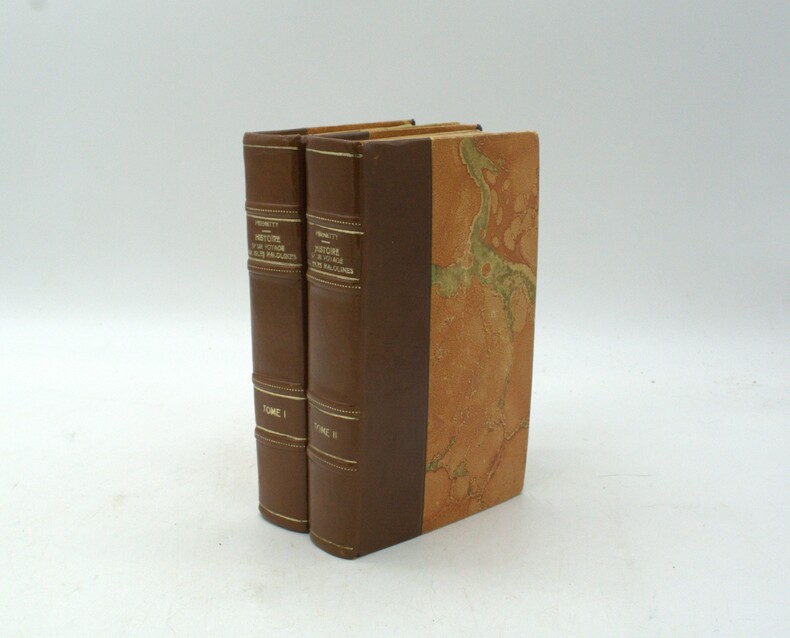
1770PHO-1934Paris, Saillant, Delalain, 1770. 2 volumes in-8 : IV-385pp. et 1f.-334pp.-1f. ; illustré de 18 planches hors texte in fine du tome 2, demi veau moderne, auteur, titre et tomaison au dos, signature aux titres, un cahier plus petit.
181221623Genève, J.J. Paschoud et Paris, 1812-1813 ; 80 ; 104, 16 pp. (Catalogue des Livres Nouveaux).Relié à la suite : Bibliothèque Universelle de Genève Nouvelle série. Tome dix-neuvième ; Genève Glaser, Paris Anselin (Imprimerie Ferd. Ramboz), 1839 ; 215 pp., 1 pl. lithographiée eet aquarellée sur la Vaccine du Dr Lombard.Soit 3 tomes reliés en un volume in-8, demi-veau glacé, dos lisse à faux-nerfs décoratifs, titre doré (reliure de l’époque).
1756PHO-1915Paris, Didot, Giffart et Nyon, 1756. 3 vol. in-4 (260x200) de (5) ff., 489, xxxiii, (4) pp. ; (2) ff., 356, clviii, (2) pp. , 285pp ,cccxv,2ff., illustré de 6 carte et plan (sur 7 manque la carte du Paraguay) et 3 vignettes gravées. Veau marbré, dos à nerfs ornés, pièces de titre et de tomaison, tranches rouges (reliure de l'époque avec différences), Tome 1 ; frottements, pièce de tomaison absente, fentes aux charnières, coins usés, coiffe sup. arasée, petite épidermure, Tome 2 ; 1 coin usé, Tome 3 ; coiffes sup. absente avec petit manque, début de fente, supra libris gratté, coins et coupes usés, cachet retiré au titre
1770PHO-1034Paris, Saillant ; Delalain, 1770. 2 volumes in-8 : IV, 385pp. / 1f., 334pp., 1f. ; illustré de 17 planches hors texte in fine , manque les pages de titre relié plein veau écaillé glacé de l'époque, dos lisses ornés, pièces de titre rouges, tranches marbrées , frottements sur dos, charnières faibles , manque aux coiffes , coins usés.
1757PHO-1258Paris , Chez Didot, Giffard , Nyon ,1757, In-12 (9,5x17cm), (6) 390pp. (2) et (4) 476pp. et (4) 407pp. (1) et (4) 414pp. (1) et (4) 461pp. (2) et (4) 460pp., 6 volumes reliés, plein veau époque , dos à nerfs orné avec pièce de titre et tomaison ,tranches rouges , ex-libris sur la page de garde, défauts de reliures et dos cassé au tome 2 , quelques brunissures ,Illustré de 7 cartes et plans dépliants sur papier fort (Amérique méridionale, plan de La Plata, Paraguay, Rivière Plate, Port Désiré, port Julien, découvertes des Espagnols).
1770PHO-2290Paris, Saillant, Delalain, 1770. 2 volumes in-8 (20x12,5 cm) : IV-385pp. et 1f.-334pp.-1f. ; illustré de 16 (18) planches hors texte in fine du tome 2, demi basane et coins époque, tomaison et pièce de titre rouge, tranches jaspées, vieille mouillure claire.