155 résultats
18902311100197xbvkParis, imprimé par autorisation de M. le Garde de Sceaux, à L'Imprimérie National, M DCCC XC.(1890); Lithograph printed by Charles Germain Becquet. Singleside printed large-paper cardboard-sheet; large-4to.(ca. 32 x 25 cm).
18902311100198xbvkParis, imprimé par autorisation de M. le Garde de Sceaux, à L'Imprimérie National, M DCCC XC.(1890); Lithograph printed by Charles Germain Becquet. Singleside printed large-paper cardboard-sheet; large-4to.(ca. 32 x 25 cm).
18902311100199xbvkParis, imprimé par autorisation de M. le Garde de Sceaux, à L'Imprimérie National, M DCCC XC.(1890); Lithograph printed by Charles Germain Becquet. Singleside printed large-paper cardboard-sheet; large-4to.(ca. 32 x 25 cm).
18902311100200xbvkParis, imprimé par autorisation de M. le Garde de Sceaux, à L'Imprimérie National, M DCCC XC.(1890); Lithograph printed by Charles Germain Becquet. Singleside printed large-paper cardboard-sheet; large-4to.(ca. 32 x 25 cm).
1890c2311100201xbvkParis, imprimé par autorisation de M. le Garde de Sceaux, à L'Imprimérie National, M DCCC XC.(1890); Lithograph printed by L. Léchaudel. 26 singleside printed large-paper cardboard-sheets, incl. 1 coloured plate; large-4to.(ca. 32 x 25 cm, few plates slightly smaller ca. 31 x 24 cm).
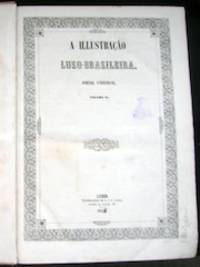
1858OB001osLisboa Typgraphia de A. J. F. Lopes Traversa Da Victoria 1858 1859. A popular weekly newspaper; in Portuguese. Similar in style and format to the <i>London Illustrated News</i>. Heavily illustrated with full-page woodcut depictions of many cities in Portugal Brazil all Europe particularly the second volume. Hard Cover. Published in three volumes beginning in 1856 cf. DLC. 40 cm.; 53 numbers: Vol II 1858: 1 2 5-35 33 of 52 numbers; vol. III 1859: 3-15 20-28 33-34 40 44 49-52 30 of 52. This volume is in the publisher's cloth binding. The imprint date of 1858 has been corrected in ink on the title-page and corrected in the gold of the front boards. This volume is not imperfect; it was made up thus. The top three inches of the spine are broken off. Stock#OB001os han oversize. Lisboa, Typgraphia de A. J. F. Lopes, Traversa Da Victoria hardcover
18012509HARDBACK "RARELY AVAILABLE FIRST" SHIPPED FROM THE UK Edition: 1st. Thus. Undated but from the titles list a first and therefore 1918. Publisher: Blackie & Son Ltd. Binding and cover condition: Beige cloth with colour pictorial decorations to front board and to spine showing young girl in school uniform holding a union jack. Spine shows a young girl with a red jacket and a straw hat. Black title to spine and face. Minimal bumps to corners. Light shelf wear to edges and to head of spine. Some small loss nibbled to tail of spine and middle of lower front edge. GD Jacket condition: No dust wrapper. Contents condition: PRIVATE COPY NOT EX-LIBRARY. Clean crisp and tight with minimal reading wear no marks to text browning to end papers and neat light gift inscription with owners name to prelims. No mention of war standard paper and the text block is very clean and bright. Back hinge is just starting to weaken. VG Illustrations: Five b/w plates & frontis. Pages: 288 pp. text. Description: A Patriotic Schoolgirl begins just as Marjorie Anderson 15 and her sister Dona 13 are about to be sent off to boarding school. Marjorie is an energetic outgoing girl but one who is prone to acting impulsively. Dona is much shyer and reserved content to live in Marjorie's shadow has no interest in sports doesn't make friends easily and would much rather continue to be home schooled. After missing their connecting train to London making them 2 hours late they meet a kind soldier who helps them with their unwieldy belongings. Unluckily when they part at Euston Station and the teacher meeting them sees them speaking with a soldier Miss Norton takes an immediate dislike to both girls. A NEAR VERY GOOD copy of the 1st. edition with some wear and prelim tanning reducing it to GD. No dust jacket. Blackie & Son Ltd. hardcover
1887120087P., Victor Palmé, 1887, fort in-8°, xi-388 pp, un portrait de l'auteur en frontispice et 42 gravures dans le texte et hors texte, reliure percaline rouge décorée noir et or de l'éditeur, coupes bisautées, tranches dorées, dos passé et lég. sali, qqs rares rousseurs (plus prononcées sur les premiers feuillets), bon état
1888R41129Ceara, Typ. Economica 1888 xlvii + 308 + iv pp., br.orig. (dos peu réparé), non coupé, 23cm., intérieur en bel état
1880108232Pernambuco: F. H. Carls 1880. Brazil following independence captured in superb photorealistic chromolithography A wonderfully preserved copy of this superb visual record of Brazil in the late 19th century. "The colourful and airy rendering contributes much to the appeal of this extensive series of images that forms one of the most comprehensive visual reports carried out on any Brazilian city in the period" Correa do Lago. The album was first issued in 1873 with 50 plates under the title Album de Pernambuco e seus arrabaldes Pernambuco and its Environs. It was later reissued with varying numbers of plates some copies having as few as 15 or 20 the composition rarely the same twice. Carls was a German graphic artist designer and photographer who joined the wave of German immigration to Brazil settling in Recife in 1859 where he established one of the first lithographic presses in Pernambuco. An enterprising and innovative printer he took on a wide range of work bringing the potential of high-quality lithographic printing to advertising material diplomas stock certificates letterheads and also maps being the publisher of José Tibúrcio Pereira Magalhães's Cidade do Recife e seus arrabaldes Recife City and its Environs in 1870. It is for the present sequence of plates that Carls is best known. They comprise an inclusive collection of impressive views of the region: the public buildings provincial assembly presidential palace the Hospital Pedro II commercial streets rua do Imperador rua 1o de Março grand private homes the mansion of Dr Augusto Frederico de Oliveira which now houses the state museum and the seat of the Portuguese merchant João José Rodrigues Mendes Barão Rodrigues Mendes now the headquarters of the Pernambuco Academy of Letters theatres churches mother churches of San Antonio and Boa Vista shipping in the harbour markets and landscapes of the outlying villages and estates all teeming with life showing the signs of the accelerating modernization of Brazil following independence "a significant iconographic series for the visual memory of the country depicting scenes of everyday life customs and landscapes" Silva p. 1567. The album was a collaboration with German-born artist Louis Adam Cornell Krauss who arrived in Recife in 1877 but it has been suggested that the plates incorporate the uncredited work of pioneering Brazilian photographers such as João Ferreira Vilela Alfredo Ducasble Guilherme Gaensly Wilhelm Gänsli and Augusto Stahl. Certainly several of the views exhibit a sharpness of detail that hints at the use of photographic templates and some bear a close resemblance to images produced by these Brazilian pioneers. For example the view of Recife from the observatory of the naval arsenal is very similar to Gaensly's framing of the same subject and the plate of the Sete de Septembro bridge bears comparison with Vilela's views. When the Pernambucan organising committee for the Berlin South American exhibition of 1866 included one of Carls's albums they did so in the belief that this would present the German public with an "an idea of the beauty of our city". Landscape quarto 300 x 420 mm. High-finish pictorial chromolithographic calendar for 1880 with Carls' imprint as title page and 36 coloured lithographic plates. Original green cloth title gilt to the front board within a broad black stylised floral panel between two single gilt ruled panels the black panel repeated on the lower board edges lightly marbled floral-pattered endpapers in sepia the title in German neatly inked in purple in a contemporary hand to the first blank small bookbinder's ticket of Wilhelm Bitz Basel to the lower fore-corner of the front pastedown dated August 1885 in the same hand. Housed in a dark green cloth flat-back box by the Chelsea Bindery. Very light shelf-wear some marginal browning to the plates occasional scatter of spotting overall very good indeed. Not in Borba de Moraes; Correa do Lago Brasiliana Itaù pp.328-9; Silva "Franz Carls: Memórias Litográficas do Recife Oitocentista" in 21st Encontro Nacional de Pesquisadores em Artes Plásticas - Vida e Ficção / Arte e Fricção 2012. hardcover
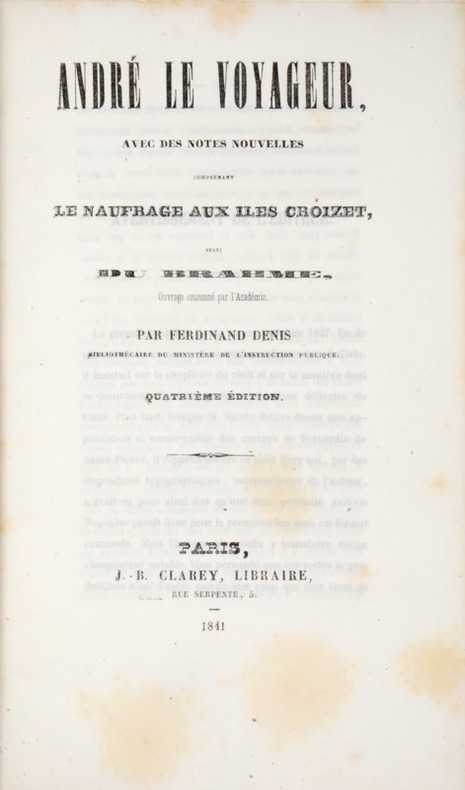
184139808Paris, Clarey, 1841. In-8 de (4)-III-259 pp. maroquin vert, dos orné à nerfs, triple filet doré d’encadrement sur les plats, dentelle intérieure dorée, tranches dorées sur marbrure, non rogné (Brany).
1887PHO-1969Rio de Janeiro, Lombaerts & Cie, 1887, grand in-4° (32x23cm), pleine percale époque, titre au dos, petits frottements aux mors, quelques rousseurs. Texte en portugais avec sa traduction française en regard, complet de ses illustrations sous serpentes.
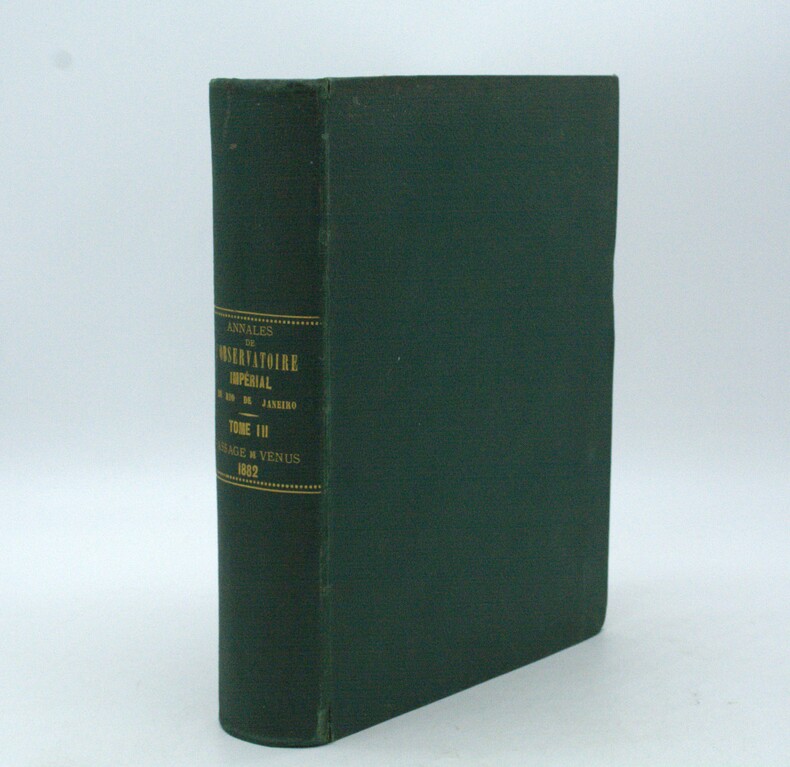
189845758Couverture rigide. Reliure pleine toile verte de l'éditeur. 727 pages. Nombreuses planches. Cachets.
1808191354Rio de Janeiro: Na Impressão Régia 1808. First edition of this broadside printed in Rio de Janeiro announcing a war declaration issued by D. João VI 1799-1816 Prince Regent of Portugal against Napoleon. We have traced only one other copy at John Carter Brown Library. This document decreed Portugal's entrance into the Peninsular Wars 1808-14 fought alongside Spain and the United Kingdom against the Napoleonic forces who had invaded the Iberian Peninsula in 1807-8. It allowed for privateering and the use of arms against the French highlighting that any plunder or looting whatever their nature "shall belong entirely to the plunderers". The Prince Regent of Portugal had escaped to Brazil with the family in November 1807 where he signed this war declaration. The imprimatur for this broadside came from Joaquim José de Sousa Lobato 1770-1837 2nd Visconde de Majé and Councillor of the Treasury in Brazil and Portugal. Folio broadside 315 x 210 mm. Text in Brazilian Portuguese. A few small marginal chips from earlier binding on left-hand blank margin very light water stain along lower edge: a very good copy. Camargo-Moraes Bib. da Impressão Régia do Rio de Janeiro II 39. unknown
18657812paris Michel Lévy 1865 in12, broché, 264 pp édition originale
189050055Librairie Charles Delagrave 1890 In_4, reliure de l’éditeur demi-percaline vermillon à coins, dos à 5 faux nerfs, caissons richement ornés de motifs dorés, auteur et titre dorés, VIII + 348 pp., 62 illustrations dans et hors-texte. Coiffes légèrement émoussées, rousseurs sur les tranches, intérieur frais. Bel exemplaire.
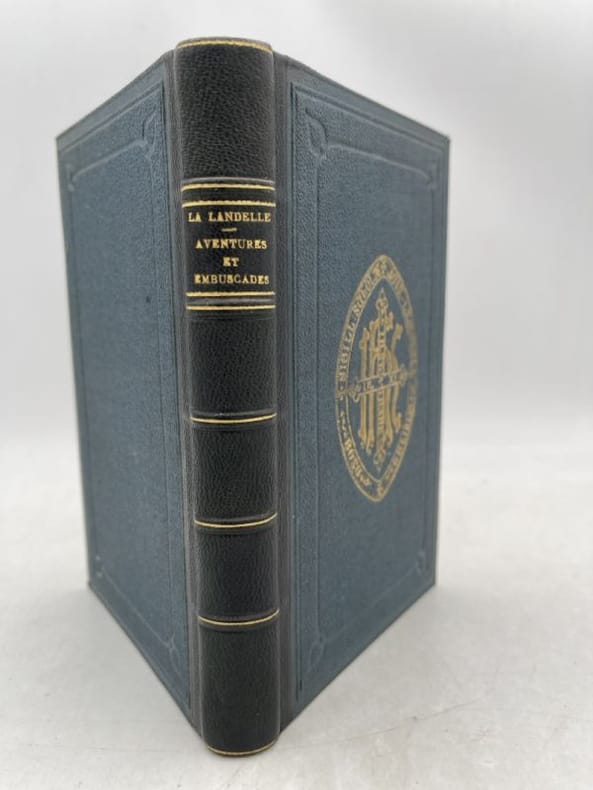
1883188247René Haton Paris, René Haton, 1883. In-12 relié demi-chagrin vert, dos à nerfs soulignés de filet doré, titre doré. Plat orné d'un fer doré de l'institution Join-Lambert à Boisguillaume, près Rouen. VIII + 312 pages. Quelques rousseurs. Peu courant
18512004AG1851. London & New York J & F. Tallis 1851. Original steel engraving / Vintage map. Drawn and engraved by John Rapkin. Partly hand-coloured. Plate Size: 23.9 cm x 34.3 cm. Sheet Size: 27.5 cm x 37.4 cm. Vintage 19th century map in very good condition. John Tallis 7 November 1817 3 June 1876 was an English cartographic publisher. His company John Tallis and Company published views maps and atlases in London from roughly 1838 to 1851. Tallis set up as a publisher with Frederick Tallis in Cripplegate in 1842; the business moved to Smithfield in 1846 and was dissolved in 1849. From 1851 to 1854 Tallis operated as John Tallis and Company. He started The illustrated news of the world and national portrait gallery of eminent personages in 1858 selling it for £1370 in 1861; it folded in 1863. Wikipedia The most important project John Tallis undertook was the 'Illustrated Atlas' from 1851. The original map we offer here was part of this exceptional Atlas and all the maps it contained are still today considered as the last reminder of an era of lavish map production. Tallis worked the project together with John Rapkin 1815-1876 and it was Rapkin's style and talent that we have to thank for when we marvel at these maps today. What makes these maps so special is the detail of engraved vignettes that surround the map and often show indigenous scenes people in their environment and even more so historical buildings or historical views of towns and cities architecture and landscape. The project of 'The Illustrated Atlas' was designed to be finished just in time for the anxiously awaited "Great Exhibition of the Works of Industry of All Nations" or The Great Exhibition sometimes referred to as the Crystal Palace Exhibition in reference to the temporary structure in which it was held was an international exhibition that took place in Hyde Park London from 1 May to 11 October 1851. It was the first in a series of World's Fairs exhibitions of culture and industry that became popular in the 19th century and it was a much anticipated event. The Great Exhibition was organized by Henry Cole and Prince Albert husband of the reigning monarch Queen Victoria. It was attended by numerous notable figures of the time including Charles Darwin Samuel Colt members of the Orléanist Royal Family and the writers Charlotte Brontë Charles Dickens Lewis Carroll George Eliot and Alfred Tennyson. Music for the opening was under the direction of Sir George Thomas Smart and the continuous music from the exhibited organs for the Queen's procession was "under the superintendence of William Sterndale Bennett". Wikipedia unknown
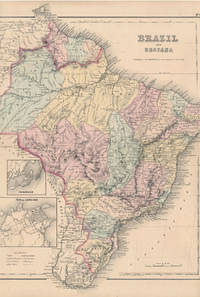
185528012New York: J.H. Colton & Co 1855. 13 3/4" X 16½" image 13¼" X 16¼". Hand colored. Near fine. Faint age toning. A beauty clean margined and striking. Small insets at lower left showing "Pernambuco" and "Rio de Janeiro." Full text "The Republic of Chili" on verso. J.H. Colton & Co unknown
183715830Paris, Firmin Didot frères, 1837. In-8 de [4]-384-[2] et 32 pages, demi-veau glacé prune, dos à nerfs orné de filets dorés, tomaison de la collection au dos.
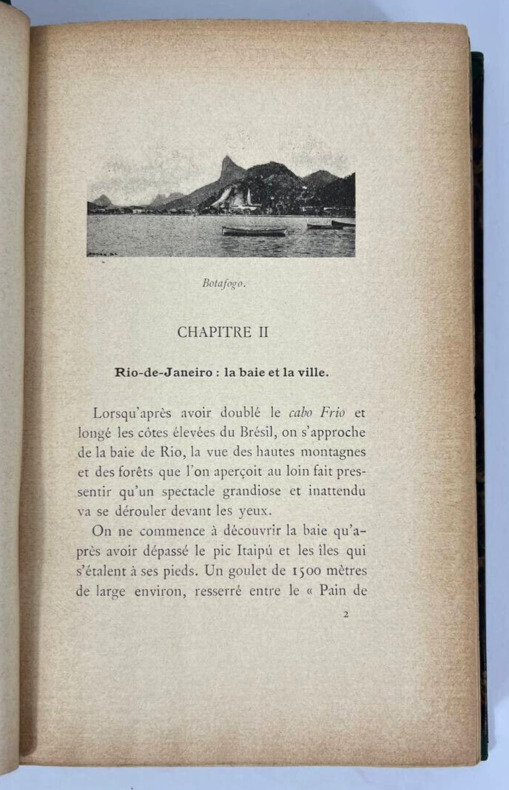
18940415Genève-Paris, Ch. Eggiman et Fischbacher, sans date [c1890]. Édition originale. Orné de 18 gravures. Grand in-12, 195 x 127 mm pour (ix) 281 (f.). Relié demi-tissu vert foncé, charnières à la Bradel, dos lisse, pièce de titre d'époque au cuir lie-de-vin foncé avec nom d'auteur et titre frappés dorés ornés de doubles filets dorés, fleuron doré et double filet doré en queue. Plats marbrés ocres, gardes blanches, deux des gardes non coupées. Page de titre avec un remarquable cul-de-lampe, Préface, chapitres avec photos noir et blanc en bandeau et illustrations hors-texte. Table des matières et des illustrations en fin d'ouvrage. "Pour bien connaître un pays, il faut non seulement vivre de la vie de ses habitants, mais le visiter avec sympathie. Nous nous sommes donc efforcé de n'embarquer avec nos bagages à Bordeaux que le minimum possible de préjugés. Nous sommes arrivés à Rio de Janeiro... bien résolu à tout regarder d'un œil intéressé et bienveillant, à tout juger d'un esprit impartial. Avons-nous été fidèle à ce programme ?"
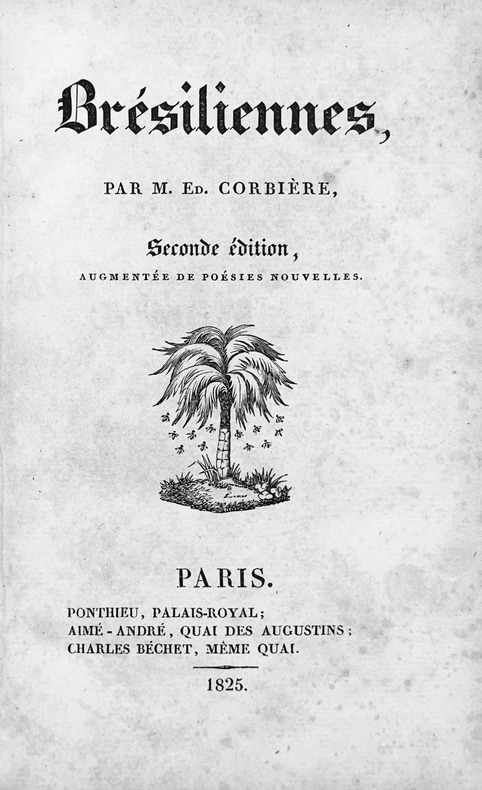
1825LBW-8905Paris, Ponthieu, Aimé-André, Charles Béchet, 1825. In-18 de (2) ff., 172 pp.; demi-veau brun à petits coins de vélin vert, dos lisse orné or et à froid (reliure de l'époque).
1886644081886. Rio de Janeiro 1886. Fourth edition. Rio de Janeiro 1886. Fourth edition. Annotated Brazilian Commercial Code Brazil. Araujo Costa Salustiano Orlando de Editor. Codigo Commercial do Imperio de Brazil Annotado com Toda a Legislacao do Paiz que lhe e Referente; Com Osarestos e Decisoes Mais Notaveis dos Tribunaes e Juizes; Concordado com a Legislacao do Paizes Estrangeiros Mais Adiantados; Con um Vasto e Copioso Appendice Tambem Annotado Contendo Nao so Todos os Regulamentos Commerciaes Como os Mais Recentes Actos do Governo Imperial Quer Sobre Bancos o Sociedades Anonymas Quer Sobre Impostos; Dispensando Consultar-Se a Colleccao das Leis do Imperio. Rio de Janeiro: Laemmert & C. 1886. 1104 pp. Octavo 9" x 6". Recent cloth printed paper title label to spine. Moderate toning to text internally clean. Ex-library. Small inkstamp to title page. $300. Fourth edition. Brazil enjoyed a remarkable period of rapid material progress and international importance under Emperors Pedro I and especially Pedro II who reigned from 1831 to 1891. The government enacted a law in 1823 calling for the gradual replacement of the Portuguese Ordenacoes with codes informed by the Enlightenment ideas of the eighteenth century and the work of Jeremy Bentham. A Projecto for commercial law was published in 1836 another in 1838. The code was enacted in 1850 and its first two editions were published in 1858 and 1869. The later editions 1878 1886 1896 are the best because they contain extensive commentary. All of these early editions are rare. OCLC locates 6 copies of the 1886 edition in North America Columbia George Washington University Harvard University of Arizona University of Pennsylvania Yale. Another copy located at the Library of Congress. British Museum Catalogue Compact Edition 4:32. unknown
1886644081886. Rio de Janeiro 1886. Fourth edition. Rio de Janeiro 1886. Fourth edition. Annotated Brazilian Commercial Code Brazil. Araujo Costa Salustiano Orlando de Editor. Codigo Commercial do Imperio de Brazil Annotado com Toda a Legislacao do Paiz que lhe e Referente; Com Osarestos e Decisoes Mais Notaveis dos Tribunaes e Juizes; Concordado com a Legislacao do Paizes Estrangeiros Mais Adiantados; Con um Vasto e Copioso Appendice Tambem Annotado Contendo Nao so Todos os Regulamentos Commerciaes Como os Mais Recentes Actos do Governo Imperial Quer Sobre Bancos o Sociedades Anonymas Quer Sobre Impostos; Dispensando Consultar-Se a Colleccao das Leis do Imperio. Rio de Janeiro: Laemmert & C. 1886. 1104 pp. Octavo 9" x 6". Recent cloth printed paper title label to spine. Moderate toning to text internally clean. Ex-library. Small inkstamp to title page. $300. Fourth edition. Brazil enjoyed a remarkable period of rapid material progress and international importance under Emperors Pedro I and especially Pedro II who reigned from 1831 to 1891. The government enacted a law in 1823 calling for the gradual replacement of the Portuguese Ordenacoes with codes informed by the Enlightenment ideas of the eighteenth century and the work of Jeremy Bentham. A Projecto for commercial law was published in 1836 another in 1838. The code was enacted in 1850 and its first two editions were published in 1858 and 1869. The later editions 1878 1886 1896 are the best because they contain extensive commentary. All of these early editions are rare. OCLC locates 6 copies of the 1886 edition in North America Columbia George Washington University Harvard University of Arizona University of Pennsylvania Yale. Another copy located at the Library of Congress. British Museum Catalogue Compact Edition 4:32. unknown books
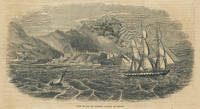
1850451361850. Overall very good. Eight views all removed from larger volumes.<br /> <br /> 1. "View of Rio De Janeiro Capital of Brazil" ca. 1850. Wood engraving. 14 x 24 cm. From The Flag of Our Union Boston MA one of the most popular newspaper in America.<br /> <br /> 2. "A Representation of a Street in Rio De Janeiro- Grand Entrance to the City of the Emperor of Brazil ca 1852. Wood engraving. 16 x 24 cm . From The Flag of Our Union Boston MA.<br /> <br /> 3. "Commencement of the works of the First Railroad in Brazil" ca. 1852. Wood engraving. 16 x 24 cm. Perhaps from The Flag of Our Union.<br /> <br /> 4. "Untitled." View of Rio with peasants in foreground and Mount Corcovado in background. 1877. Wood engraving. 16 x 24 cm. folded verso blank.<br /> <br /> 5. "The City of Belem or Para on the Estuary of the Amazon River" 1848. Wood engraving. 12 x 20 cm. From The New Pictorial and Illustrated Family Magazine Volume 5 NY 1848. p. 252.<br /> <br /> 6. "Mulattska Rio De Janeiro" 1854. Colored lithograph J.F. Meyer & Co. Stockholm. 21 x 12 cm. From Carl Skogman: Fregatten Eugenies resa omkring: jorden åren 1851-1853 1854 p. 28.<br /> <br /> 7. "Rio Janeiro" 1850. Etching aus Hildburghausen Bibliographisches Institut. 11 x 15 cm. From " Meyer`s Universum" Plate CCCXXV.<br /> <br /> 8." Rio de Janeiro" View of Bay with Mount Corcovado. 1862 penciled on verso. Colored etching. 12 x 21 cm. unknown