249 résultats
200071522Bogotá: Museo Nacional de Colombia 2000. 1st ed. Paperback. New. Tall 4to wrps 239 pp. semi glossy stock illus color photos illus. bibl. Notes and brief history of Picasso 1881-1973 in Bogota in Spanish and French. Printed on glossy coated stock. Museo Nacional de Colombia paperback
194033836Bogota Columbia: Imprenta Del Estado Mayor General Ministerio De Guerra. Good with no dust jacket. 1940. Paperback. At head of title: Publicaciones del "Archivo histórico nacional." Director: Enrique Ortega Ricaurte. South America > History > Wars of Independence 1806-1830 . Publisher's original paper wraps.1 p. L. vii 241 p. 1 L. xxv p. Port. 27cm. Spanish language text. OCLC Number: 1869840. 71 previously unpublished letters according to a penciled bibliographic note. Covers with wear to extrmities toned edges back spine fold scraped contents and binding VG. Edges tattered . Imprenta Del Estado Mayor General, Ministerio De Guerra, paperback
1391790626.Ghardcover. Good. Access codes and supplements are not guaranteed with used items. May be an ex-library book. hardcover
1390760219.Gpaperback. Good. Access codes and supplements are not guaranteed with used items. May be an ex-library book. paperback
2017115146Bogotá: Ministerio de Cultura 2017. Individual size: 10.5 x 16 cm. 10 postcards per individual postcard book 40 postcards per collection of 4 postcard books Inks: 4 x 1 Material: Propalcote 300 gr and 115 gr. Artist project by Liliana Angulo. During the time of slavery in Colombia the fugitive enslaved used the hairstyles as escape maps. The braids and designs made on the head were used as secret codes. The braided style called troops was used to indicate that the escape route was by land and the style called "herringbone" indicated a leak in the water. Some styles meant hazardous or dangerous routes. While the "happened" something that happened was being woven the people of the community learned about the events in the mine or the plantation and the actions to take during the escape. Seeds and gold were kept in the head to survive in freedom. "Quieto Pelo" is a collective creation project that aims to document oral traditions and practices associated with hairstyle hair care and political actions expressed through hair among Afro-descendant women from different regions of Colombia and from Latin America. The project proposes the action of combing as an Afro cultural heritage that is both an aesthetic process and a creative and performative act. "Quieto Pelo" has summoned hairdressers knowledgeable women activists and other people who know the stories of hairstyle in different regions of Colombia and America to share their knowledge in a public event whose character is cultural and not competitive. There the hairdressers have shown their skills and knowledge of the different techniques with which they exalt the physical qualities of the person they comb; at the same time that they make an interpretation of the traditional uses of hairstyle and its context. "Quieto Pelo" also intends to join forces -between individuals groups and institutions- and be a pretext to give visibility to the experience the options of resistance and the representations that come into conflict in the body of women of descent. African. In this sense during the development of "Quieto Pelo" I have come into contact with hairdressers as well as with people who know and value the traditions of the hairstyle. Together we have organized meetings and events in public spaces in which the hairdressers show their techniques execute their styles and the "knowers" communicate their knowledge while discussing the specificity and importance of these cultural practices in their communities. As a result of these events "Quieto Pelo" has a large archive of recording material of the hairstyles carried out and the testimonies of the different people interested in preserving these customs. A fundamental interest of the project is to propose different circulation strategies that allow the images and information that this work has generated to be available to hairdressers the Afro-descendant population and other publics interested in these practices. For this purpose booklets of printed postcards have been published that return to the hairdressers and participants with the registration of their hairstyles. Postcards have been the preferred format for hairdressers as it allows them to show their styles to their clients. Exhibitions of the archive have also been made for other audiences. "Quieto Pelo" started in 2007 and has been carried out in several places in Colombia: Quibdó - 2008 Buenaventura - 2009 San Andrés Isla - 2010 Medellín - 2010 with the support of institutions in Colombia such as Banco de la República. through the Obra Viva Program and the Moravia Cultural Development Center through the project ExSitu - InSitu Artistic Practices in Community. In 2011 it was also held in Havana - Cuba within the framework of the International Colloquium "Cultural diversity in the Caribbean" at Casa de Las Américas and at the Caixa Cultural de Brasilia with the support of the Embassy of Colombia in Brazil and the Ministry of Foreign Relations of the Republic of Colombia. In 2013 it was held in Chicago Illinois USA at the University of Chicago with the support of the Illinois Association of Hair Braiders and the United African Organization within the framework of "Unfurling: Five Explorations in Art Activism and Archiving". Gray Center for Art and Inquiry. UC. Chicago - USA. Curator: Daniel Tucker and Rebecca Zorach. Never The Same. In 2017 it was held in Tumaco - Nariño - Colombia with the support of the National University of Colombia and in 2018 an exhibition of the project's photographic and video archive was held at the Spain Cultural Center in Santiago de Chile. Likewise the photographic archive was part of the Africamericanos exhibition curated by Claudi Carreras.<br /> Printed outside of commerce. <br /> 2020 Video Quieto Pelo Libritos Postales https://drive.google.com/drive/folders/1JcoY_pu27p-9PgZnoJttYqCgUo2BT1b3usp=sharing<br /> This is a presentation of Quieto Pelo for the Molaa https://molaa.org/angulocortes. Ministerio de Cultura unknown
a812291970-1971. Nine issues of this quarterly journal January 1970 through Julio 1971. In Spanish. Issues No. 17- No. 25 run with no missing volumes. Sm.4to. about 130 pages per issue original decorated wraps. VG. Nine separate and complete issues. . paperback
036620615X.Ghardcover. Good. Access codes and supplements are not guaranteed with used items. May be an ex-library book. hardcover
1396806431.Gpaperback. Good. Access codes and supplements are not guaranteed with used items. May be an ex-library book. paperback
1396807381.Ghardcover. Good. Access codes and supplements are not guaranteed with used items. May be an ex-library book. hardcover
187575725Bogotá Imprenta de Gaitán 1875. Hardcover. Good. 384p. index cloth and and boards cover wear. Bogotá, Imprenta de Gaitán hardcover
189375724Popayán: Imprenta del Departamento 1893. Hardcover. Good. 564p. index leather and and boards cover wear and soil. Imprenta del Departamento hardcover
1463342942.Ghardcover. Good. Access codes and supplements are not guaranteed with used items. May be an ex-library book. hardcover
146331695X.Ghardcover. Good. Access codes and supplements are not guaranteed with used items. May be an ex-library book. hardcover
0428928978.Gpaperback. Good. Access codes and supplements are not guaranteed with used items. May be an ex-library book. paperback
0428938825.Ghardcover. Good. Access codes and supplements are not guaranteed with used items. May be an ex-library book. hardcover
183059268Stockholm. 1830. 8vo. Nyere skinnryggbind med enkel strekdekor på ryggen. 274 ; 300 s. Med to plansjer frontispiecer og et foldet kart over Colombia. Tryckt hos Johan Hörberg. På A. Wiborg & C. förlag Svensk. <br/><br/><em>Sabin 28065.Pent sett. </em> unknown
DADAX0270862641Wentworth Press 2018-07-29. hardcover. New. 6.14x1.56x9.21. Buy with confidence. Excellent Customer Service & Return policy. Wentworth Press hardcover
0364528990.Ghardcover. Good. Access codes and supplements are not guaranteed with used items. May be an ex-library book. hardcover
0666060517.Gpaperback. Good. Access codes and supplements are not guaranteed with used items. May be an ex-library book. paperback
1966ZB146746Bogota: 1966-71. volumes 39#1 thru 44#6 bnd. quarto ex library. - If you are reading this this item is actually physically in our stock and ready for shipment once ordered. We are not bookjackers. Buyer is responsible for any additional duties taxes or fees required by recipient's country. Bogota: unknown
1952ZB1057505Bogota 1952-1954. approx. 300 pp. in one contemporary quarter leather binding very good. - If you are reading this this item is actually physically in our stock and ready for shipment once ordered. We are not bookjackers. Buyer is responsible for any additional duties taxes or fees required by recipient's country. Bogota hardcover
1989SDR141FBAMM06242018241989-01-01. New. In shrink wrap. unknown
20012111902156000728Colombia Japan Association 2001. Soft Cover. Fine. The book is in fine condition. Colombia Japan Association paperback
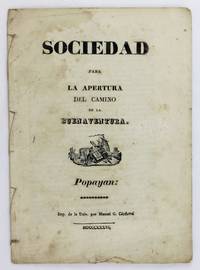
18362936Popayan: Manuel G. Córdova 1836. Good plus. 17pp. Small quarto stitched as issued. Small chip at foot of title page. Light dust soiling and some dampstaining. An unrealized proposal to build an early railroad in Colombia from the Cauca Valley to the port of Buenaventura on the Pacific coast. Two families the Borreros and the Sanders formed the company to fund the construction of the line in Cali in 1836. Because of the legal intricacies of the federal system in Colombia at the time the central government could only subsidize interoceanic transportation and it fell to individual states and private companies to build infrastructure. The first railroad in Colombia which crossed the isthmus of Panama was completed almost twenty years later in 1855. Not in OCLC. Manuel G. Córdova unknown
49488748like new. unknown