313 résultats
1937156631937 broché grand in-octavo carré (paperback in-octavo), dos blanc imprimé (white spine) - très légèrement défraîchi (spine lightly faded), illustration de la première de couverture en couleurs et illustrations intérieures en noir par (illustrations of the front cover in colors and inside in black by) Marianne Clouzot, quatrième de couverture muette (back cover without text), tranches non rognées (edges no smooth), pages de garde grises (grey endpapers), page de faux-titre avec des références bibliographiques sur son verso (bibliographical references on the back of half title page), tirage limité à 2190 exemplaires - 1 des 2000 exemplaires justifiés sur papier Héliona (details/certificate of issue - limited edition - 2190 copies were printed), naissances de rousseurs (beginning of the redness marks), 223 pages, 1937 à Paris Editions Denoël 19 rue Amélie (VIIè),
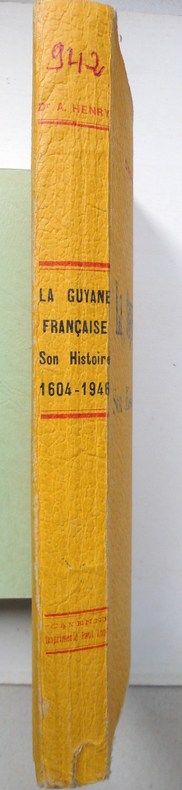
1950ZNC-203Cayenne, Imprimerie Paul Laporte, 1950, in -8°, 336 pages, couverture jaune gaufrée, un numéro écrit au stylo rouge sur le dos, un accroc recollé sur le dos .
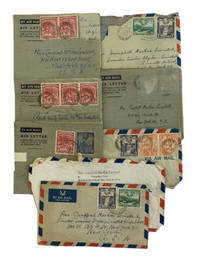
1951734561951. Paperback. Good. All appear to be written in 1951 and all were sent to Rev. Campbell MacRae Lewistall who is identified on a slip laid in one of the envelopes as Founder-teacher Blyden-Lewistall Private School at 314 West 133rd Street in New York City. Some letters are worn; all appear to be complete. Most envelopes present some with stamps. Three of the letters were from Philip Nathaniel King headmaster or head teacher of this Methodist-supported elementary school; one is from his wife; two are from his son; and two are from Mr. King's niece who was also a teacher at the school. All of the letters seem designed to establish contact with Rev. Lewistall who is addressed as Uncle. Some including the letters from King's son thank the New York Uncle for gifts such as an air rifle. It is clear from the letters that conditions at the school were far from ideal and that the Kings were hoping that their uncle in America would provide some financial support. <br/><br/> paperback books
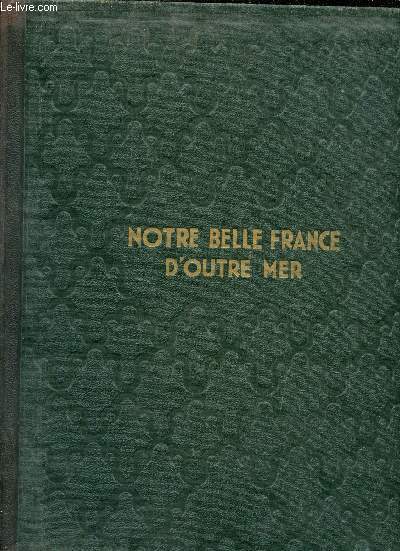
1936R320122463Editorial Argentor. 1936. In-4. Relié. Bon état, Couv. convenable, Dos satisfaisant, Quelques rousseurs. 437 pages - nombreuses photographies en monochrome dans et hors texte - nombreuses illustrations en couleurs dans le texte contre collées - quelques cartes en couleurs hors texte dépliante.. . . . Classification Dewey : 908.88-Régionalisme : Guyane
1904163311904. Paris Associations d'Imprimeurs 1904 - Relié demi-bradel coins renforcés dos à nerfs 18 cm x 25 5 cm 174 pages 11 cartes hors-texte sur les 12 annoncées nombreuses photographies noir et blanc in-texte - Texte du Docteur Lucien Morisse - Dos restauré sinon bon état intérieur
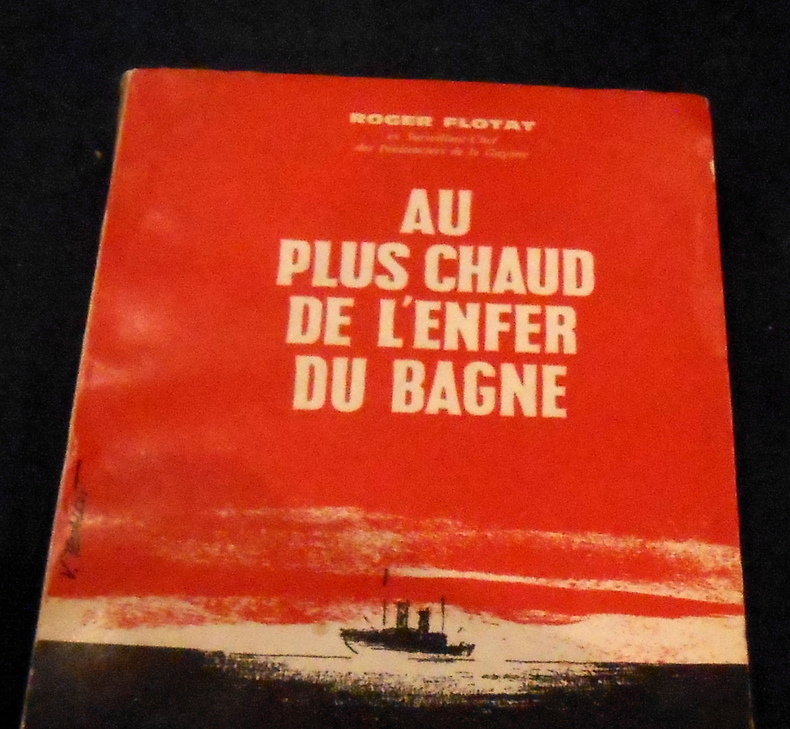
195923183Paris, Éditions du Scorpion, Jean d’Halluin, 1959. Broché, 14,5 cm x 19,5 cm, 186 pages. Texte de Roger Flotat. Très bon état. Seul livre écrit par un gardien du bagne qui s’était spécialisé dans la recherche des évadés et qui s’illustra lors de la révolte de Lanio à Saint-Joseph en 1934. Voici la dernière phrase de l’ouvrage : « Parmi les grands criminels, les gangsters actuels, que trouve-t-on ??? en majeure partie des anciens forçats qui furent libérés lors de la suppression du bagne en Guyane. » Un Poète et un Humaniste !!!
20002-0850925770Commonwealth Secretariat 2000. Paperback. New. 289 pages. 9.50x6.00x0.75 inches. Commonwealth Secretariat paperback
1932HALL510223Paperback. 1932. 44 to 224pp plates & maps card covers London 1932-1961. Very good ex-library copies. . paperback
195511328Guyane 1955 1 vol. In-4 de 7 ff.n.ch. VIII 229 feuillets chiffrés, pleine percaline de l'époque dans un emboitage cartonné.
198989161989 15 volumes brochés, illustrations : documentation in et hors-texte, 3465 pages, de 1971 à 1989 Université de Nantes,
1925810841925. Manuscript report on on the recto sides only of 15pp of lined notepaper to the secretaries of a combined mining venture based out of Number 8 Old Jewry London. A few small dogears and creases some age toning of the paper and the fact that it's written in pencil make it a little tricky to decipher at times although a partial transcript is included from a previous collector. A very good <br /> A hand-written preliminary report which nevertheless contains a wealth of logistical and local detail regarding the business of pitching camp supply lines sickness boring results and assay findings depths propected gravel assessments depth of survey records etc. Comments regarding the local labor supply place the whole exploit firmly into the realm of exploitation with phrasing like ".the riff-raff of coastal negroes who are unstable - lazy and contemptuous of authority." A fascinating and ephemeral piece of industrial colonial history. Wray himself seems to have been a widely traveled mining surveyor with some of his recorded work being not only across Africa but also the Koorboora mining region of Queensland Australia among others. unknown
1972078228Paris, Robert Laffont, 1972. Collection Vecu; 442 S.; Schmutztitel mit ganzseitiger persönlicher u. eigenhändiger Widmung u. Unterschrift (signature/autographe) von Papillon (Henri Charriere) vom 25.1.73; Schnitte teils etwas unfrisch Klappenbroschur 23,9 cm Erste deutsche Auflage Gut [4 Warenabbildungen]
19491522British Guiana 1949. Very good. Two volumes. 6633 photographs on 3311pp. Images vary in size most 4.5 x 4.5 or 3.5 x 2.5 inches with some larger. Oblong octavos. Original black paper albums string-tied. Cover of first volume detached wear around edges of covers on each volume. Internally clean and fresh. Some images with light silver mirroring. Captioned throughout. Two photograph albums of the Tikwah gold mine in British Guiana likely compiled by an operative of the company. A Who's Who of British Guiana for 1945-1948 lists Samuel Hirsh Holzman as the mine owner and managing director as well as the vice president of the Mining Association of British Guiana. Gold was discovered in Guiana in the 1880s in the area around the Essequibo River. Crude mining efforts through the next few decades resulted in minimal extraction though there was a renewed effort with technological advancements in mining in the 1940s as shown herein. The present albums document the region as well as the mining camp and its operations much of it with a keen sense of detail. In addition to captions the author has annotated many of the photos in pencil to point out relevant features. For example a photograph captioned "New Winze L. & General View of Mine Looking N.W." has pencil annotations identifying individual buildings such as the Clerk's Quarters and the Tikwah Shaft Building. An image of the foreman's shack and laborers' quarters notes the construction and materials used to build them; roads and rivers used by the company are pictured with complaints about the rough condition as are aerial views of the camp and surrounding area. There are images of the shafts and miners at work; interior shots of the mills and other buildings; and the latter portion of the first volume contains numerous group portraits of the workers and office staff each person identified by name and position. This includes the "Tikwah Ladies" mostly the wives of foremen which shows eight Black women standing together in the mining camp one holding an infant and another holding the hands of a toddler. In addition to images of the camp's operations there are many photographs documenting the difficulties involved with mining in the jungle. A series of images from 1948 shows workmen transporting equipment on the Puruni River. Captions read "Reloading boats to proceed up Puruni ballyhoo in front towed by 'Caroline' to be used at Thomas Island Falls for blasting"; "Pulling 'Caroline' over rapids at mouth"; "Pulling 'Caroline' through part of big falls." All of these images show the difficulty of transporting equipment and supplies in the region with laborers in shorts and loincloths pulling the boat with a rope over difficult terrain. Another series shows the boat caught up on rocks in the river at Kaburi Falls and the workmen endeavoring to dislodge it without capsizing. An altogether fascinating look at life in a mining camp in the jungles of Guiana full of rich detail about those working in the camp and their living environs. unknown books