Republica ArgentinaBiblio.com
612 résultats
0483737461.Ghardcover. Good. Access codes and supplements are not guaranteed with used items. May be an ex-library book. hardcover
1391674189.Ghardcover. Good. Access codes and supplements are not guaranteed with used items. May be an ex-library book. hardcover
1390849740.Gpaperback. Good. Access codes and supplements are not guaranteed with used items. May be an ex-library book. paperback
1390590992.Gpaperback. Good. Access codes and supplements are not guaranteed with used items. May be an ex-library book. paperback
1391913655.Ghardcover. Good. Access codes and supplements are not guaranteed with used items. May be an ex-library book. hardcover
DADAX027056456XWentworth Press 2018-07-27. hardcover. New. 6.14x1.63x9.21. Buy with confidence. Excellent Customer Service & Return policy. Wentworth Press hardcover
066604001X.Ghardcover. Good. Access codes and supplements are not guaranteed with used items. May be an ex-library book. hardcover
1332698794.Gpaperback. Good. Access codes and supplements are not guaranteed with used items. May be an ex-library book. paperback
9789500602914New. unknown
JOURN0406NEW. NEW. Enviamos a todo el mundo por USPS. UPS o DHL. 100% garantia en su compra. We ship worldwide. unknown
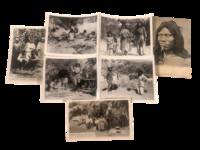
1910230061910. Indigenous Peoples of Argentina's Chaco and Northern Regions early 20th century. This photo archive consists of 10 black and white photographs comprising three real photo postcards and four original silver gelatin photographs documenting Indigenous peoples of Argentina in rural and semi-rural settings. The materials date to the early 20th century and originate primarily from northern Argentina with several images clearly associated with Indigenous communities of the Chaco. The postcards carry printed captions in Spanish identifying subjects by regional or ethnic designation. The post cards are from the 1910s-20s while the photographs are probably from 1930s-40s demonstrating the eras between Native expulsion at the turn of the century to colonial era labor workers. Historically these images must be understood within the violent context of Indigenous dispossession and assimilation policies in early twentieth-century Argentina. Following campaigns such as the Conquest of the Desert and subsequent northern military actions Indigenous peoples were subjected to land seizure population displacement forced labor on plantations and ranches and confinement within missions or state-controlled settlements. In regions like the Chaco Indigenous communities were frequently exploited for agricultural and industrial labor under coercive conditions while their cultures were documented by missionaries anthropologists and photographers who framed them as vanishing or pre-modern. The collection depicts Indigenous men women and children engaged in daily life and posed portraiture. Group scenes show families gathered outdoors domestic labor such as food preparation and carrying water and communal resting or work areas constructed from organic materials. Several photographs emphasize mobility and subsistence including figures carrying bundles tools or containers across arid terrain while others present seated family groups framed in front of shelters or temporary dwellings. Individual and small-group portraits highlight clothing that blends Indigenous traditions with elements of imposed or adopted settler attire revealing the uneven process of cultural disruption and adaptation underway at the time.<br /> <br /> Light handling and edgewear throughout photos remain crisp and clear. Overall very good condition. This archive provides an important primary visual source for understanding Indigenous life in Argentina during a critical era of colonial consolidation offering insight into everyday practices family structures and the visual strategies through which Indigenous peoples were represented and controlled. unknown
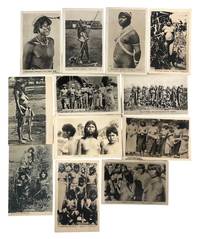
1910230041910. Real photo postcards depicting Indigenous peoples of Argentina in the early twentieth century document communities identified in captions as Indios del Chaco alongside additional references to southern regions including Tierra del Fuego. Produced during a period of intensified state expansion and consolidation these images record Indigenous individuals and groups at a time when Argentine policies of land seizure labor exploitation and missionization reshaped Indigenous life. The archive supports research into Indigenous history Latin American nation building and the visual culture of ethnographic photography.<br /> <br /> Archive consists of 12 black and white real photo postcards each with printed Spanish captions identifying subjects by region or group. The images present posed and semi candid compositions of Indigenous men women and children including group portraits of families and community gatherings as well as individual figures. Several photographs emphasize bodily presentation attire and adornment while others depict men holding tools or weapons in open landscapes. The majority of images are associated with the Chaco region an area targeted by military campaigns and settler expansion while one card references Tierra del Fuego extending the geographic range of the archive. The postcards appear to have been issued for circulation as documentary or commercial imagery.<br /> <br /> These photographs were produced in the aftermath of campaigns such as the Conquest of the Desert and subsequent northern military actions when Indigenous populations in Argentina were subjected to displacement forced labor and incorporation into state and missionary systems. Visual documentation of Indigenous communities during this period often coincided with efforts by anthropologists missionaries and state actors to classify and record populations whose autonomy was being curtailed. The images therefore function both as records of community life and as artifacts of a broader system of representation tied to colonial governance and modernization narratives. Mild fading and edge wear to some cards with others remaining sharp; overall very good condition. This archive provides primary visual documentation of Indigenous communities in Argentina during a period of significant political and social transformation. unknown
0364433116.Ghardcover. Good. Access codes and supplements are not guaranteed with used items. May be an ex-library book. hardcover
201004SA23-894-107Inc. Occidental Argentina Exploration and Production. Very Good in Very Good dust jacket. 2010. Hardcover. Spanish Language Edition. This book is in very good condition; no remainder marks. Dustjacket does have some shelfwear. Inside pages are clean. ; 226 pages . Inc. Occidental Argentina Exploration and Production hardcover
0243988222.Gpaperback. Good. Access codes and supplements are not guaranteed with used items. May be an ex-library book. paperback
0656909307.Ghardcover. Good. Access codes and supplements are not guaranteed with used items. May be an ex-library book. hardcover
048446311X.Ghardcover. Good. Access codes and supplements are not guaranteed with used items. May be an ex-library book. hardcover
0243568061.Gpaperback. Good. Access codes and supplements are not guaranteed with used items. May be an ex-library book. paperback
0259171255.Gpaperback. Good. Access codes and supplements are not guaranteed with used items. May be an ex-library book. paperback
0332851893.Ghardcover. Good. Access codes and supplements are not guaranteed with used items. May be an ex-library book. hardcover
1396064397.Ghardcover. Good. Access codes and supplements are not guaranteed with used items. May be an ex-library book. hardcover
1391267672.Ghardcover. Good. Access codes and supplements are not guaranteed with used items. May be an ex-library book. hardcover
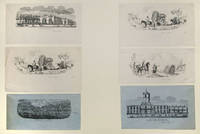
185522646Buenos Aires: R. Kratzenstein 1855. Lithographs measuring on average 3 1/2 x 6 1/2 inches on slips of blue or white paper likely clipped from the top of pictorial letter sheets. Light edge wear. Very good. Matted. An attractive group of lithographic vignettes of scenes in and around Buenos Aires.<br/> <br/> These images were published by Rodolfo Kratzenstein who was one of the leading lithographers in Buenos Aires from the mid-1850s and are probably from pictorial letter sheets issued by his firm in that period. One illustration shows a long stretch of the cityscape of Buenos Aires from the harbour and several ships are shown in the choppy waters of the port. Other images show the "Casa de Justicia" the courts and the "Palermo"neighborhood. Two other images one of them here in two examples show scenes in the countryside outside Buenos Aires both of them depicting men on horseback dealing with wagons in difficult terrain. Pictorial letter sheets from Argentina are uncommon and these are attractive images. R. Kratzenstein unknown
19732091202133000753Tokuma Bookstore 1973. Soft Cover. Fine. Number of books: 1 Tokuma Bookstore paperback
1972ZB1334058Academia Nacional de Ciencias 1972. Price HAS BEEN REDUCED by 10% until Monday June 29 SALE item 869 pp. hardcover minor library markings else text clean and binding tight. - If you are reading this this item is actually physically in our stock and ready for shipment once ordered. We are not bookjackers. Buyer is responsible for any additional duties taxes or fees required by recipient's country. Academia Nacional de Ciencias hardcover