603 résultats
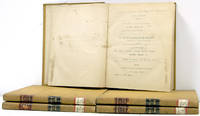
1817WRCAM32892Quebec 1817. Twenty-four volumes. Later brown cloth red and black gilt morocco labels. Printed in alternating English and French. Slight wear to and moderate soiling on covers. Occasional foxing. First view leaves of first volume torn along lower blank margin. Occasional old institutional markings. Overall very good. A large and impressive archive of Canadian laws. In an effort to pacify the disparate French and British populations of Canada the Constitutional Act of 1791 divided Canada in two. Upper Canada was primarily populated by Loyalist emigrants of the American Revolution while the citizenry of Lower Canada which included Quebec was mostly of French descent. These are the laws of Lower Canada printed in English and French. Though the first volume appeared in 1793 it includes material from the first session of the first Parliament held in December 1792. The series continued till 1836. "Public accounts are included in the early numbers of the Journals and from 1809 to 1835-36 Sessional papers are published as appendices to the Journals" - TPL. Present here is a complete run from its inception to 1813 with an additional volume for 1817. The twenty- third twenty-fourth and twenty fifth volumes are lacking. Scarce. OCLC locates only six complete runs. <br> <br> A prime resource for the study of Canadian legal history. TPL 640. SABIN 10491. OCLC 11820245 48957532. TRÉMAINE 835. hardcover books
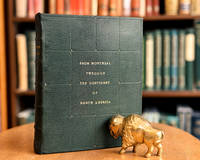
1801079699London: T. Cadell Jun. & W. Davies 1801. First edition. Leather Bound. 4to. 20th century fine leather binding. Folding maps with expert repairs. Wagner-Camp notes that 'Mackenzie discovered the river that now bears his name and descended it to the Arctic Ocean in 1789. In 1793 he became the first European to cross the North American continent north of Mexico'. Peel 55: "After the preface there follow 132 pages on the history of the fur trade in the North West. Some authorities think this was written by his cousin Roderick MacKenzie. According to the Dictionary of National Biography Voyages 1801 was compiled by William Combe from Mackenzie's notes. Includes vocabularies of the Knisteneaux Algonquin Chepewyan Nagailer and Atnah Indian languages." Sabin 43414 calls this the "first and finest edition T. Cadell, Jun. & W. Davies unknown
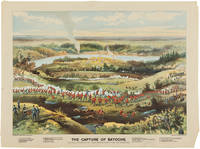
1885WRCAM54034Toronto: Toronto Lithographing Co. 1885. Three color lithographs. Cut Knife and Fish Creek: approximately 20 1/4 x 26 3/4 inches; Capture at Batoche: approximately 19 1/2 x 26 1/4 inches. Cut Knife and Fish Creek trimmed about 3/4 inch along the top margin and about 1 1/4 inches along left margin. Capture at Batoche trimmed slightly more but evenly in each margin and adhered to backing board. Overall good plus. A trio of rare battlefield views depicting three of the major skirmishes fought during the North-West Rebellion in Saskatchewan in 1885. This series of battles is also known by several other names including the Saskatchewan Rebellion the Northwest Uprising and the Second Riel Rebellion the first Riel Rebellion occurred near Manitoba in 1869 and is also known as the Red River Rebellion. Both the 1869 and 1885 actions were led by Louis Riel the leader of the Métis people. <br> <br> Chronologically the lithographs are as follows: <br> <br> 1 "Battle of Fish Creek." This battle occurred on April 24 1885 and resulted in a stunning victory when around 200 Métis soldiers overcame a superior force of 900 government soldiers and temporarily halted an advance on Batoche. <br> <br> 2 "Battle of Cut Knife." On May 2 1885 a force of Cree warriors held off a superior group of Canadian army units. <br> <br> 3 "The Capture of Batoche." Effectively the end of the rebellion the Métis were soundly defeated in the second week of May after they ran out of ammunition on the third day of fighting. This action forced Riel to surrender on May 15. <br> <br> The Métis are one of the recognized aboriginal groups in Canada who trace their roots to the first interaction between First Nations people and the earliest European settlers usually French and largely as a result of the fur trade. The Métis are among the earliest mixed-race people in Canada and developed a separate distinct culture based on their ancestral origins usually stemming from the coupling of an indigenous woman and a male European settler. <br> <br> By the 19th century the Métis were well- assimilated into French-Canadian culture and many worked as fur traders for the North-West Company or Hudson's Bay Company or supplied furs as independent trappers. When those companies pulled out of the Red River and Saskatchewan regions in the mid-to-late 1800s the Canadian government took over the land and began to enforce their will on the Métis people. <br> <br> The first armed conflict between the Métis and the Canadian provincial government occurred in 1869 in the Red River region where Louis Riel led an unsuccessful rebellion. Some fifteen years later the Métis formed their own provincial government in western Saskatchewan after hearing that the Canadian government was sending mounted police to enforce Canadian law in the region. This Second Riel Rebellion occurred in a series of skirmishes between the Métis and the Canadian armed forces between March 26 and May 12 1885. Though led by Louis Riel the Métis ultimately lost again to the Canadian government. Still both rebellions helped the Métis gain some measure of recognition and respect from the Canadian government that they would very likely not have earned otherwise. <br> <br> The lithographs were produced by the Toronto Lithographing Company purveyors of patriotic views of famous Canadian wars. In this case the company assigned W.D. Blatchly to paint the scenes for the 1885 conflicts; Blatchly was at the time one of the leading artists in all of Canada. <br> <br> An excellent series of lithographs illustrating three important events in the famous rebellion with outstanding display appeal. Toronto Lithographing Co. unknown books
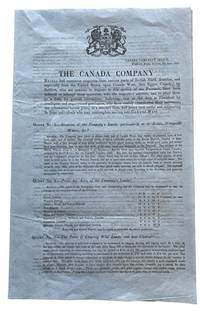
184344013Toronto 5th of June: Canada Company Office Frederick Street 1843. folio. 31cm 4 pages folded on light weir tinted blue paper in mint condition very rare. mint. Being Twenty-One numerated questions with detailed paragraph answers concerning emigration. Subjects include costs wages crops climate society etc. taxes transportation . T.P.L. 2571 "The memorandum describes the land of the district facilities for settlement and cultivations also costs". In 1843 the Canada Company led by commissioner Frederick Widder issued publications to address numerous inquiries from British North America and the United States regarding settlement in Canada West formerly Upper Canada. These documents often featuring memos from local agents provided information on land in the Huron Tract and assisted in advising prospective emigrants on farming opportunities. Key details about the Canada Company around 1843: Active Promotion: The company was actively answering questions to boost immigration to the Huron District which contained about one million acres of land. Frederick Widder was a key figure having been appointed co-commissioner in 1839 leading to improved efficiency in the company's operations. By 1843 the company was operating more effectively following the Act of Union 1841 and was in the process of paying off its debt to the British. Various documents from 1843 and 1845 were published to promote the thriving towns such as Guelph and the surrounding Wellington District. Canada Company Office, Frederick Street unknown
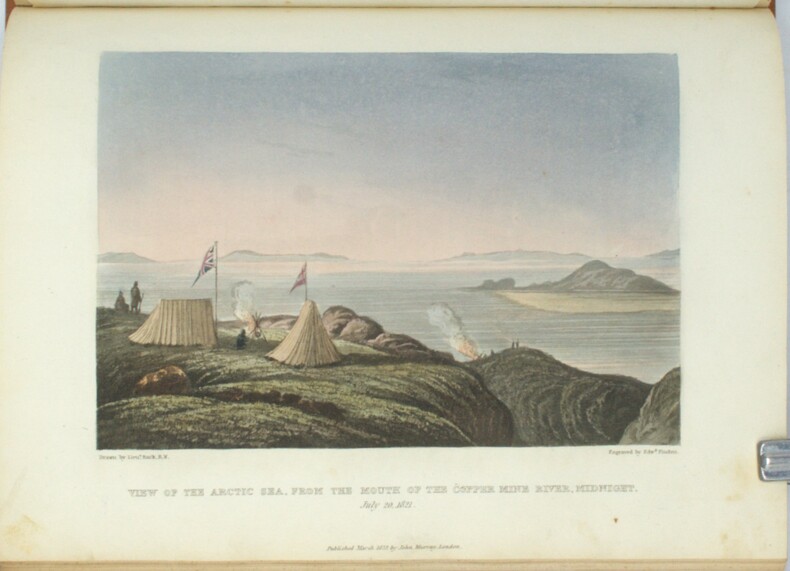
1823PHO-1666London, John Murray, 1823 et 1828, 2 volumes In-4, relié pleine toile orange, dos lisse avec pièce d’auteur et titre, date en pied, xvi-768pp. et xxvi-320pp.cvii-1f., tome 1, tâche sur les 5 premiers feuillets, petites rousseurs, mouillure angulaire sur les planches au tome 2, petits frottements à la reliure. Édition originale, illustrée de 30 planches dont 11 en couleurs pour le tome et de 31 planches au tome 2, les cartes manquent, Cachet Émile Petitot, Ex-libris manuscrit, Ex-libris Jean-Pierre Legrand-Deloron. Avec une mention signée : "membre de l'Expédition arctique T.A. 23 , 1972-1973" .
1840WRCAM32893Montreal 1840. Five volumes of six. 10030; 621; 10510; 16178; 20222130pp. Quarto. Later cloth red and black gilt morocco labels. Moderate soiling on covers library labels at toe of spines. Uniform light toning. Perforated library stamps on titlepages occasional additional library markings. First twenty pages of last volume in typescript facsimile. Overall very good. Lacks the sixth volume. An important collection of Canadian laws as passed by the Special Council of Lower Canada from 1838 to 1840. When the Patriot Uprising of 1838 caused Canadian officials to suspend the 1791 constitution which had divided Canada into the Upper and Lower Provinces each with their own legislature and establish martial law the provincial judiciary assumed administrative control in the form of the Special Council. The Special Council continued in an administrative capacity until the Union Act of 1840 which reunited the provinces with a single legislature. A fundamental cause of the Patriot Uprising was the ambiguous extent of judiciary power; based on the reign of the Special Council recorded in detail here judicial powers were more clearly defined via the Union Act. TPL calls for six volumes bound in three. The present set features each volume bound separately lacking the sixth volume. The large portions of unnumbered pages at the end of each contain sessional papers appendices and indices. <br> <br> Key insight into a tumultuous period of Canadian legal history. The journals were also issued in French. OCLC locates only five copies none of which appear to be complete. TPL 2173. GAGNON I:1830. OCLC 12010933 63013527. hardcover books
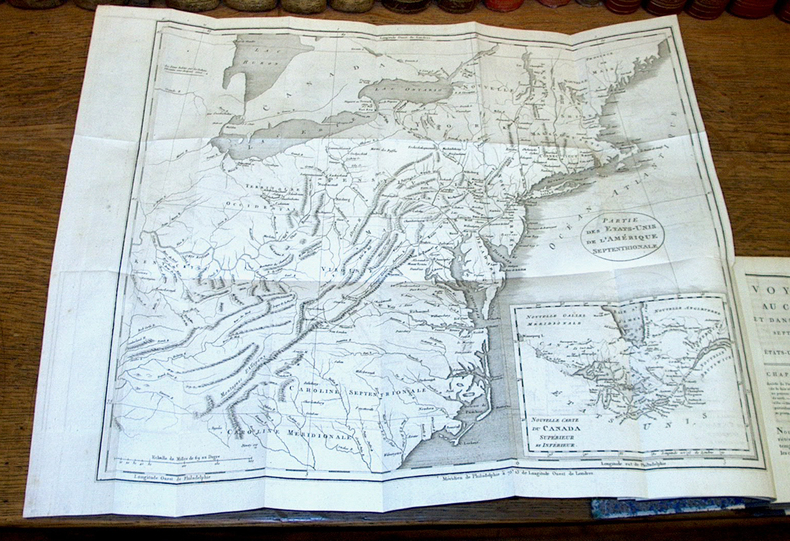
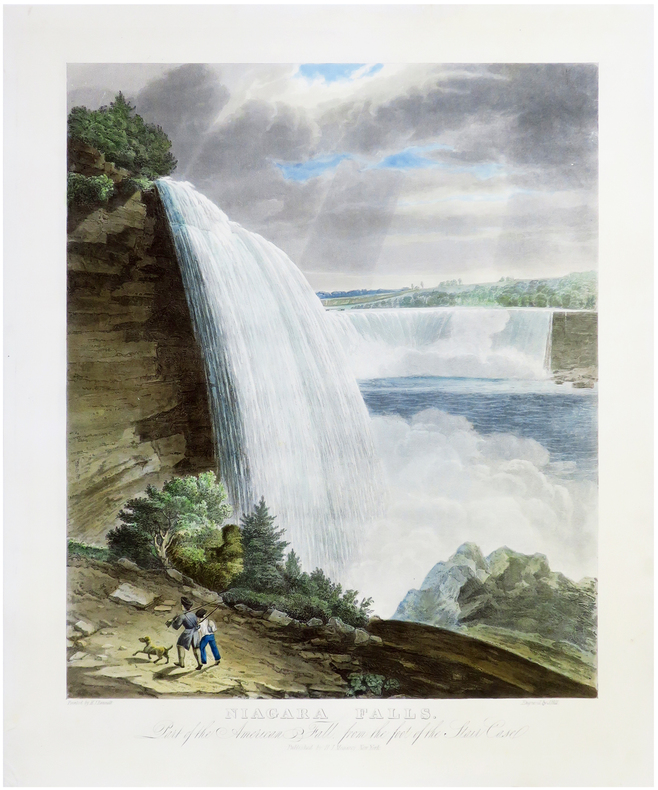
1803001778Paris Chez Gérard, Imprimerie de Munier 1803. Trois volumes in-8 (205 x 130 mm), demi-veau glacé bleu marine, dos lisse orné or et à froid, tranches mouchetées (reliure milieu 19e s.). Seconde édition française, ornée d'une carte dépliante et de 11 planches gravées sur acier d'après les dessins de l'auteur, représentant le Mont Vernon et la maison du Général Washington, les Chutes du Niagara, le Cap-Diamant, etc. Ex-libris Mr de Gaudechart. (dos très légèrement passé, quelques défauts, frottements sur les plats, quelques manques de cuir tome 1, quelques petites déchirures marginales, t. 3 sur les 30 premières pages mouillure angulaire, rousseurs). // Three octavo volumes (205 x 130 mm), dark blue glazed half calf, smooth spine tooled in gilt and blind, sprinkled edges (middle of 19th-cent. binding). Second french edition, illustrated with a folding map and 11 plates engraved on steel after the author's drawings, depicting Mont Vernon and General Washington's house, Niagara Falls, Cap-Diamant, etc. Bookplate Mr de Gaudechart. (spine a little bit faded, some defects, rubbings on covers, some lack of leather vol. 1, some little tears, vol. 3 water-stain on top corner of the 30 first pages, spots).
1829LBW-6825New York, H.I. Megarey, [1829]. 560 x 430 mm.
1867345581Halifax: James Barnes 1867. First edition of Murdoch's history bound with the first Halifax edition of the British North America Act. Murdoch: xv 1 543; xiv 624; xxiii 613pp. Several leaves of the table of contents bound out of order. British North America Act: 47 1pp. 3 vols. 8vo. Contemporary half morocco and marbled paper covered board. First edition of Murdoch's history bound with the first Halifax edition of the British North America Act. Murdoch: xv 1 543; xiv 624; xxiii 613pp. Several leaves of the table of contents bound out of order. British North America Act: 47 1pp. 3 vols. 8vo. The 1867 British North America Act united the three separate territories of Canada Nova Scotia and New Brunswick into a single dominion called Canada. Murdoch: Sabin 51433; TPL 1447. British North America Act: Lande S386 James Barnes unknown
1845LBW-8047Paris, F. Sinnett, [circa 1845]. 370 x 501 mm.
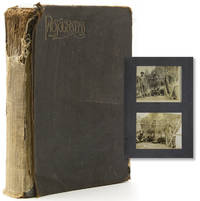
1890319445Newfoundland and Labrador 1890. 91 photographs. Most photos measure 4 x 5 inches. A few captioned in manuscript on verso. Black cloth spine perished. 91 photographs. Most photos measure 4 x 5 inches. A few captioned in manuscript on verso. The images include several aboard ship and arriving at the dock as well as images along the river and campsite including scenic views as well as images of the unidentified travellers. Other Humber River images depict villages salmon fishing with women participating including one holding a rifle. A number of photos depict indigenous peoples possibly Inuit Innu Mi'kng or So. Innit of Nu nath Kavut. The travellers must have taken another passage north with images of Labrador cliffs and even an iceberg. unknown books
1863B337Ottawa: Authority of Parliament. c.1863-1904. Binding: some contemporary yellow cloth over board and some contemporary light green paper wrappers title in black ink on flat spine. Notes: Vol vi 1892-1893 Vol vii 1894 Vol viii 1895 Vol ix 1896 Vol x 1897 Vol xi 1898 Vol xii 1899 Vol xiv 1901 Vol xv 1902-1903 Vol xvi 1904 index 1863-1884 index 1885-1906. Some volumes have the map set of their own for example: map set to accompany vol vii 1894 map set to accompany vol xii 1899 map set to accompany vol xiv 1901 map set to accompany vol xv 1902-03 map set to accompany vol xvi 1904 map set of 1895 to accompany report on the Cascade Cola Basin Alberta map set of British Columbia Cariboo Mining district 1895. Also many individual volumes are illustrated with many maps within. Size: Large 8vo. Illustration: Illustrated with many maps. Volume: 12 volumes plus 9 map ca Category: Book Atlas & Cartography Authority of Parliament. hardcover
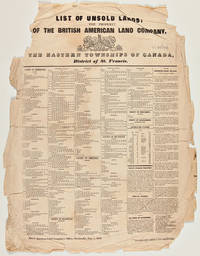
1842WRCAM39134Montreal: Printed by John C. Becket 1842. Broadside 22 1/2 x 17 3/4 inches. Printed in six columns. Small tears and creasing at all margins affecting a few words of text; significant loss at upper corners not affecting text. Good. A Canadian broadside advertising lands available in the Eastern Townships printed at the beginning of the region's transformation into a French-speaking area. In the early 1800s the Eastern Townships were an almost exclusively Anglophone region of Quebec. The American Revolution precipitated the flight of over 40000 Loyalists to Canada in the 1780s including a small handful to the largely unsettled region of Quebec between the St. Lawrence River and the U.S. border known as the Eastern Townships. The Loyalists cleared much of the rich land for farming which attracted a large number of immigrants from New England in the first decades of the 19th century. In the 1840s a rapid shift occurred in the region as French- speaking Quebecois from poorer areas began pouring in and the English speakers began emigrating to the U.S. and other parts of Canada. Francophones became a majority in the 1870s and today constitute over 85% of the population. <br> <br> The present broadside printed in English lists hundreds of lots for sale by the British American Land Company and includes over a column's worth of detailed descriptions of lands open for purchase. The following towns and areas are represented: Ascot Auckland Brompton Compton Clifton Clinton Ditton Dudswell Eaton Hereford Melbourne Newport Orford Shipton Stoke Weedon Westbury and Windsor in the County of Sherbrooke; Barford Barnston Bolton Hatley Potton and Stanstead in the County of Stanstead; Brome Ely Farnham Granby Milton Roxton Shefford and Stukeley in the County of Shefford; Acton Aston Chester Durhan Grantham Ham Kingsley Simpson Tingwock Warwick Wendover and Wickham in the County of Drummond; Sutton in the County of Missisquoi; Hemmingford in the County of Beauharnois; and improved farms in the district of St. Francis Territory Port St. Francis and the town of Sherbrooke. Not listed on OCLC and apparently unrecorded. Very rare. Printed by John C. Becket unknown books
1802PHO-1648Paris, F. Buisson, et Giguen, an X – 1802. 2 volumes de texte in-8° (210x130mm), relié pleine toile époque, dos lisse. XXIV-385pp ; 417pp. et un Atlas In-4, broché, titre sur le plat contenant 14 planches gravées (vues, costumes) et une carte dépliante du détroit qui sépare l'Asie de l'Amérique. Bon exemplaire.
1829elala1084np: 1829. 1829. 8vo. pp. 1 p.l. 3index 4-255. modern calf covers bit discoloured. The majority of the grievances were directed at the authoritarian regime of Lord Dalhousie as governor of Lower Canada and Governor-in-Chief of British North America 1820-28 when he was recalled. Included are grievances relating to Dalhousies establishment of a new Quebec Gazette his censure of Sir Francis Burton for having sanctioned a Bill of Supply his dismissal of militia officers and exercise of intimidation during elections his dismissal of justices of the peace and the unfair manner of jury selection. "Among other things the Montreal petitioners complained that contrary to the laws of England juries both grand and petty and both King's Bench and Quarter Sessions were being drawn exclusively from the town of Montreal rather than from the district at large. The committee chaired by Denis-Benjamin Viger concluded that this practice of jurors being "selected or as it were packed - summoned exclusively from among the inhabitants of a particular place or from a particular class - cannot be more compatible with liberty than it is with the rules of impartial justice. It is repugnant to every principle of our government and can only tend to the overthrow of the constitution of the country .The executive's control over the process of selecting juries became for the Patriotes yet another symbol of despotism and of the attempted exclusion of canadiens from their democratic rights given that they predominated in the countryside; a number of highly political jury trials for libel and sedition did nothing to help matters. The controversy only began to die down from 1830 when James Kempt ordered that jurors be drawn from the body of the district; the denouement came in 1832 when the legislature adopted a law regulating the qualification and selection of jurors " Donald Fyson Grand Juries Political Power And Citizenship In Quebec And Lower Canada 1764-1830 a paper for the 77th annual meeting of the Canadian Historical Association Ottawa May 1998TPL 1549. Sabin 10568. cfCasey I 1279. Not in Dionne Gagnon or Lande. np: 1829. unknown
1830WRCAM33087Quebec 1830. Two volumes bound in one printed alternately in English and French. 7288; 410- 13934-1958pp. Quarto. Antique-style half calf and marbled boards Very good. A reprint of the first collection of Canadian statutes as it appeared in 1795 to which has been added the first printings of the provincial statutes for 1797 to 1800. The first 186 pages of the first volume of statutes appear here as original sheets remaindered from the first edition. According to Tremaine these sheets were occasionally offered as "complementary sections" of the 1830 reissue. In the second volume statute titles appear only for those statutes no longer in force. The series ceased publication in 1831. In all a useful resource for early Canadian laws. TPL 644. GAGNON 2:2046. SABIN 10497. TREMAINE 943 1053. hardcover books
1864WRCAM47423London 1864. 162pp. Folio. String-tied as issued. A bit tanned some small chips at the edges. Very good. The Thomas W. Streeter copy with his pencil notes on the titlepage. This House of Commons working paper is a continuation of their return dated July 10 1863 on the subject of constructing a telegraph line to British Columbia and the Pacific. The Hudson's Bay Company unsurprisingly was intimately involved in the machinations for the building of the line. They had made an agreement with the Canadian government to build the telegraph line from the Red River to the Pacific themselves but when they failed to do so a group of English bankers proposed to step in and do the job. The papers included herein provide much information on the qualities of the land between Lake Superior and British Columbia and the need for swift communication throughout and across the vast region. Also included is a memorial from the people of the Red River Settlement discussing their urgent need for the telegraph. <br> <br> The Streeter copy sold to Nebenzahl for $30 in 1969 and was still in his stock when the Reese Company bought the last of it in 2013; here it is. STREETER SALE 3436 this copy. SOLIDAY I:1207. LOWTHER 228. unknown books
1838101145Toronto Canada 1838. Ephemera. Good. No Binding. Toronto: Printed at the Patriot Office 1838. pp. 133-160 2 161-167 1. Collation: 34-422. It's possible that this pamphlet was part of a larger work. Sewn gatherings the thread now gone no wrapper. Wove paper small pieces missing from the top right of the preliminary leaves and the last 2 leaves. Addressed to His Excellency Sir Francis Bond Head Lieutenant Governor of Upper Canada the report was submitted by the Office of the Commissioners at Cornwall on 1 January 1838 by Jonas Jones the President of the Board. The report consists of the minutes of the Saint Lawrence Commission in 1837 with letters from engineers and contractors statement of expenditures 1834-7 and estimates of expenses for the completing the work on the Saint Lawrence Canals. Not recorded by Fleming's Upper Canadian Imprints 1801-1841. The only other copy of this imprint is located at the Thomas Fisher Rare Book Library University of Toronto. unknown
1828PHO-1669London, John Murray, 1828, 1 volume In-4, relié pleine toile orange, dos lisse avec pièce d’auteur et titre, date en pied, xxvi-320pp.cvii-1f., petites rousseurs, mouillure angulaire sur les planches au tome 2, petits frottements à la reliure. Édition originale, 31 planches, les cartes manquent, Cachet Émile Petitot, Ex-libris manuscrit, Ex-libris Jean-Pierre Legrand-Deloron. Avec une mention signée : "membre de l'Expédition arctique T.A. 23 , 1972-1973" .
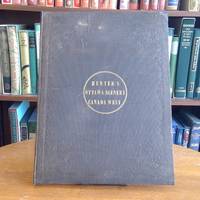
1855082714Ottawa: William S. Hunter 1855. Second edition. Hardcover. pp. 19. Folio. Rebacked blind-stamped brown cloth with gilt lettering to front board page edges gilt. Newer endpapers. 15 engravings and a map: frontispiece vignette title fold-out map 13 tinted lithographed plates with tissue guards. Some foxing to tissue guards. An important early view book of Ottawa this edition with the addition of railroad routes to the folding map. Lithographs by John Perry Newell and John Henry Bufford; after William S. Hunter. With 6 of the views attributed to Winslow Homer thus representing his earliest book illustrations. Text in double columns. Sabin 33937. TPL 3563. William S. Hunter hardcover
18414444951<p>printed for the author by F. B. Penniman hinges cracked and weak but still holding title page coming loose black cloth worn remnants of spine label light foxing pages 145-148 missing from pagination no actual missing pages unmarked rare.</p> self-published hardcover
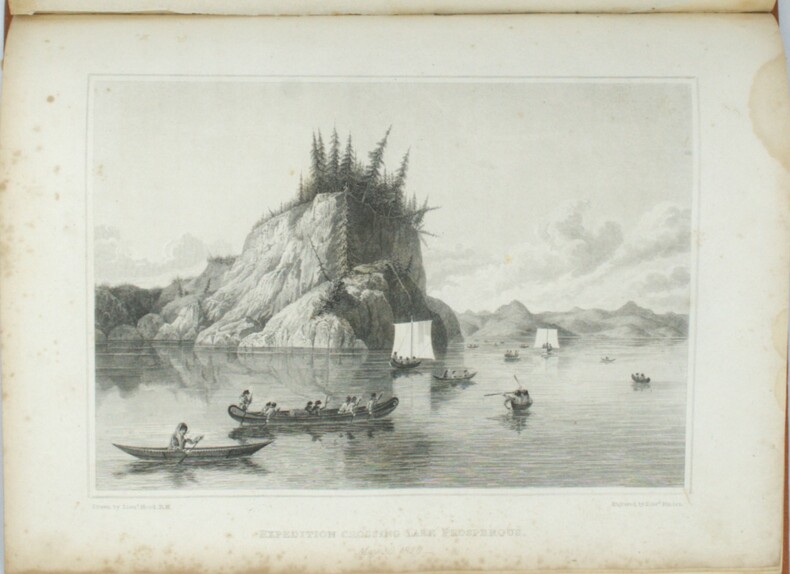
1823PHO-1668London, John Murray, 1823, 1 volume In-4, relié pleine toile orange, dos lisse avec pièce d’auteur et titre, date en pied, xvi-768pp, tome 1, tâche sur les 5 premiers feuillets, petites rousseurs, petits frottements à la reliure. Édition originale, illustrée de 30 planches dont 11 en couleurs, les cartes manquent, Cachet Émile Petitot, Ex-libris manuscrit, Ex-libris Jean-Pierre Legrand-Deloron. Avec une mention signée : "membre de l'Expédition arctique T.A. 23 , 1972-1973" .
1870126536London: William Clowes and Sons 1870. Hardcover. very good. 1st Edition. 223 12pp. Folio. Modern blue cloth boards. Fine clean copies. very good Peel 3 - 565 566. Includes: despatches from the governor Sir John Young pages 1-169; despatches from the secretary of state Earl Granville 170-180; correspondence between the Colonial Office and HBC 181-219; correspondence between the Colonial Office and Sir John Rose 220-223; and Reuter's telegrams 223 1870 William Clowes and Sons hardcover
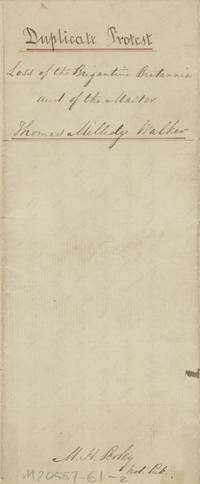
1835List2711St. John New Brunswick British North America 1835. Three 8 x 13 inch pages folded. Toning at folds; fine. With a clipping from the Quebec Gazette Monthly March 1835. Fine. Little biographical information is available on Thomas Kent save that he was a sailor aboard the Britannia and that the newspaper clipping included here identifies him as “a colored man.†Offered here is a notarized copy of Kent’s testimony concerning the wreck of the Britannia and the consequent deaths of its Captain Thomas Millidge Walker its mates Woodward and Elliot and its cook George Monroe who was also a Black man.<br /> <br /> The Britannia was owned by New Brunswick merchants Isaac and John G. Woodward who may have requested the notarized testimony for insurance purposes: the notary writes that it was written on their behalf and emphasizes that:<br /> <br /> “That the capsizing of the said Brigantine and her subsequent loss arose solely from the excessive violence of the Gale and a tremendous Sea and not from any default or negligence of the Captain or Crew.â€<br /> <br /> The ship had sailed from New Brunswick on December 21 1834 for Berbice in Dutch Guyana with a load of lumber and fish. Six days later the ship’s trials began. Kent testifies that the Britannia:<br /> <br /> “was hove to in a violent gale of wind from the north West; that a few minutes before midnight a very heavy sea struck her and capsized her on her beam-ends; . That this appearer i.e. Kent was washed overboard when the sea struck the vessel but fortunately succeeded in getting on board again when he discovered three other Seamen on Deck.â€<br /> <br /> According to the clipping the other survivors were James Potter William Phillips and Thomas Gibb. They survived solely because they had been on deck; the others “being below were drowned in the Cabin.â€<br /> <br /> The storm began to let up the next morning but “this appearer and the other three Seamen remained on the wreck nine days nearly all of which time it blew a gale of wind.†The men survived “by their fortunately catching a shark on which and a few potatoes that floated up from below they subsisted.†After nine days they were rescued by the Caledonia a packet ship traveling from New York to Liverpool. Arriving in Liverpool three weeks later the men are still not recovered from the ordeal:<br /> <br /> “one of the Seamen saved afterwards died in the Infirmary at Liverpool from fatigue and exposure; . this appearer was also so ill in Liverpool from the same causes that his life was greatly despaired of.â€<br /> <br /> Overall a harrowing account of interest to scholars of maritime history and Canadian history and of Black people’s roles therein. unknown
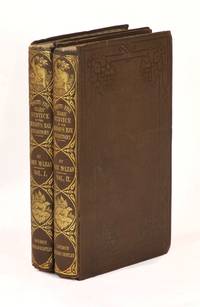
184922524London: Richard Bentley 1849. First Edition. Hardcover. Very good. Two volumes. 7.75" x 4.75" pp xii 13-308; vii 1 9-328 pp in original brown blindstamped cloth spines decorated in gilt patterned endpapers with publisher's advertisements. Chipping to cloth at spine ends old repairs visible at joints but still an attractive set uncommon in the original cloth. Wagner-Camp 169: "John McLean entered the service of the Hudson's Bay Company during the winter of 1820-21 and worked in the Ontario area for the next decade. He was then sent to New Caledonia by way of the Saskatchewan River and to Fort St. James on Stuart's Lake in British Columbia. Streeter finds McLean's style entertaining but the Company's methods of suppressing competition prosecutable under present United States law." Field 996: "the largest portion of these volumes is devoted to the narration of incidents of travel among the Indians of the territory; descriptions of the life habits and character of the different tribes inhabiting it and the relations of the Hudson's Bay Company to them. All of the statements of the author confirm the most authentic accounts of others.The last volume terminates with a vocabulary of Indian dialects." Graff 2640; Smith 6418; Streeter VI: 3712; Sabin 43514; TPL 2729. Richard Bentley hardcover