Franklin, BenjaminBiblio.com

204 résultats
1793W1985Dublin Ireland: P. Wogan P. Byrne J. Moore and W. Jones 1793. Frontispiece vi 2 303 pages. The first printing of the Dublin edition preceded in the same year only by the 2-volume first London edition--both preceding the first U. S. edition published in 1794. The Dublin edition is significant not only for its apparent scarcity but also for the frontispiece an unusual mezzotint portrait of a younger Benjamin Franklin that appears in no other edition and has seldom if ever been reproduced. The clean and tight book has been sympathetically rebacked retaining the original red leather title patch. All edges of the textblock were stained a pale green perhaps when the rebacking was done--the staining intrudes 1/16" onto the top and bottom margins of the frontispiece. Very light and faint foxing throughout; occasional smudges in the margins. Two large but light waterstains to the frontispiece but only minor and relatively unobtrusive intrusion into the image. Missing the front free endpaper. The book's condition is much nicer than it sounds; certainly an acceptable copy for the serious collector. First Edition Thus. Hardcover. Very Good. 8vo - over 7¾" - 9¾" tall. Book. P. Wogan, P. Byrne, J. Moore, and W. Jones Hardcover
1800009915Huntingdon Pennsylvania: publisher not identified Printed for the proprietor 1800. Book. Very Good Minus. Full Calf. Later American Edition. 12mo - over 6¾" - 7¾" tall. Two volumes bound as one in original calf Vol 1 vi 1 8-156 pages; Vol. 2 117 pages. Frontispiece portrait of Franklin in beaver skin hat engraved by J. Bannerman. Preface includes a letter by Richard Price. Pages 96-147 of v. 1 have the continuation of Franklin's life by Henry Stueber. "Extracts from the last will and testament of Dr. Franklin."--Vol. 1 p. 146-156. Very Good Minus joints opening but hinges still solid boards rubbed early prior owner name in ink at frontis title preface and "Life of." pages pencil and ink notations at end pages and paste downs moderate browning throughout. A quite uncommon early American imprint noted for the portrait of Franklin by Bannerman. An incomplete copy came to auction in 2015 else the last copy at auction was 1916 according to RareBookHub. Sabin 25602 Ford P.L Franklin 456 Early American imprints. First series ; no. 37442 English Short Title Catalogue;; W17376. [publisher not identified] Printed for the proprietor, Hardcover
1793W1578Dublin Ireland: P. Wogan P. Byrne J. Moore and W. Jones 1793. Frontispiece vi 2 303 pages. The first printing of the Dublin edition preceded in the same year only by the 2-volume first London edition--both preceding the first U. S. edition published in 1794. The Dublin edition is significant not only for its apparent scarcity but also for the frontispiece an unusual mezzotint portrait of a younger Benjamin Franklin that appears in no other edition and has seldom if ever been reproduced. The clean and tight book has been sympathetically rebacked retaining the original red leather title patch. All edges of the textblock were stained a pale green perhaps when the rebacking was done--the staining intrudes 1/16" onto the top and bottom margins of the frontispiece.Very light and faint foxing throughout; occasional smudges in the margins. Two large but light waterstains to the frontispiece but only minor and relatively unobtrusive intrusion into the image. Missing the front free endpaper. The book's condition is much nicer than it sounds; certainly an acceptable copy for the serious collector. First Dublin Edition. Hardcover. Collectible-Very Good. Small 8vo - over 7¾" - 9¾" Tall. Leather. P. Wogan, P. Byrne, J. Moore, and W. Jones Hardcover
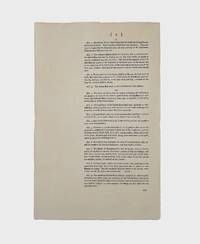
1787376957Philadelphia: John Dunlap & David Claypoole 1787. 7 1 leaves; the first two leaves in facsimile. Two contemporary manuscript corrections on fol. 3 to Art. VI Sect. 11 striking fifteen words and adding "and Representatives"; and changing the second Art. VI to VII. Folio. Unbound old folds with minor repaired tears restoration to the final leaf. Provenance: James Wilson docketed in his hand "Report of the Committee of five"; to his son Bird Wilson; to his niece Emily Hollingsworth; to her cousin Effingham B. Morris inscribed below Wilson's docketing "Above endorsement is in the handwriting of the Hon. James Wilson-so his granddaughter Miss Emily Hollingsworth tells me-Sept. 1 1886. Effingham B. Morris."; Unnamed consignor Sotheby Parke Bernet Washington D.C. December 5 1970 lot 96; • Property of a Gentleman Sotheby Parke Bernet New York April 29 1980 lot 124; Gilder Lehrman Collection deaccessioned 2026. 7 1 leaves; the first two leaves in facsimile. Two contemporary manuscript corrections on fol. 3 to Art. VI Sect. 11 striking fifteen words and adding "and Representatives"; and changing the second Art. VI to VII. Folio. • THE FIRST PRINTED DRAFT OF THE CONSTITUTION <br /> <br /> • FROM THE PAPERS OF JAMES WILSON AMONG THE PRINCIPAL ARCHITECTS OF THE CONSTITUTION AND A MEMBER OF THE COMMITTEE OF DETAIL THAT ISSUED IT<br /> <br /> • ONE OF ONLY SEVENTEEN EXTANT EXAMPLES AND THE ONLY KNOWN IN PRIVATE HANDS<br /> <br /> • PRINTED BY JOHN DUNLAP THE PRINTER OF THE DECLARATION OF INDEPENDENCE STRICTLY FOR USE BY DELEGATES AT THE CONSTITUTIONAL CONVENTION OF 1787<br /> <br /> <br /> Two hundred and fifty years ago America declared its independence from Great Britain. The Declaration of Independence however did more than simply codify a legal or diplomatic status. In Thomas Jefferson's famous Preamble the Declaration asserted in no uncertain terms that the power of government is derived from the people that the justification for government is the protection of life liberty and the pursuit of happiness and that it is the "Right of the People to alter or to abolish it and to institute new Government laying its foundation on such principles and organizing its powers in such form as to them shall seem most likely to effect their Safety and Happiness." While the Revolution began in 1776 it would culminate in 1787 with the drafting of the Constitution the document that truly established the form of government promised by the Declaration and whose own preamble harkened back to the same democratic idea that government begins with the consent of the governed: We the People.<br /> <br /> Soon after the Declaration had been passed in 1776 John Dickinson and other members of the second Continental Congress drafted the Articles of Confederation the first attempt at a government for the new nation. Passed in 1777 the Articles created a single legislative body with equal representation from each state but without a judicial or executive branch and with a weak central government which did not have the ability to tax regulate foreign or interstate commerce or otherwise compel individual states to enforce laws. The "league of friendship" or "perpetual union" it created ensured above all the independence and sovereignty of each state an understandable priority given its passage in the midst of the war to gain independence from a tyrannical king.<br /> <br /> But with the end of the war the decentralized government created by the Articles lacked the ability to pay down its war debts to effectively negotiate international treaties or trade agreements or even ensure the stability or safety of each individual state from powers foreign or domestic. In short it could not hold the fast growing nation together.<br /> <br /> Led by James Madison and Alexander Hamilton by 1786 a Federalist movement had begun calling for a convention to revise the Articles. Meeting at the Pennsylvania State House in Philadelphia in May 1787 with George Washington as the convention's president it did not take long for the delegates to agree that a revision of the Articles would not be sufficient to address its problems and that a new form of government needed to be established. On May 29 Madison and Edmund Randolph presented their plan for the creation of a national government with three branches and a bicameral legislature. Known as the Virginia Plan it outlined in fifteen draft resolutions the basic principles of a new government. Debates revisions and counterproposals ensued and by July 24 the delegates "voted unanimously to submit 'the proceedings of the Convention for the establishment of a national government' to a committee 'for the purpose of reporting a Constitution.'" Documentary History of the Ratification of the Constitution.<br /> <br /> The committee it created named the Committee of Detail consisted of five members: John Rutledge of South Carolina chairman Edmund Randolph of Virginia James Wilson of Pennsylvania Oliver Ellsworth of Connecticut and Nathaniel Gorham of Massachusetts. Two days later the resolutions and various plans were turned over to the Committee of Detail "to arrange and systemize the materials which that honorable body have collected" as the July 28 Pennsylvania Herald reported. With the oppressive Philadelphia summer heat in full force the Convention then adjourned until August 6 leaving the five-member committee the monumental task to actually draft the Constitution.<br /> <br /> The Committee of Detail sometimes referred to as the Committee of Five - like the Committee of Five which drafted the Declaration - represented a geographical cross section of the Convention with members from the south the mid-Atlantic and the northeast. There are no records of their meetings between July 26 and August 6 so the story of how the Constitution was actually drafted relies on a manuscript outline by Randolph with annotations by Rutledge manuscript notes and a manuscript draft by Wilson again with annotations by Rutledge and the final draft as printed and submitted to the convention on August 6. The end result - the first printed draft of the Constitution - laid down for the first time at a granular level the framework for the form of republican government that has survived to this day.<br /> <br /> "The Committee of Detail went considerably beyond the previous resolutions of the Convention in writing the first draft of the Constitution. The Committee incorporated provisions from the Articles of Confederation from some of the state constitutions and from plans submitted to but not accepted by the Convention . Edmund Randolph John Rutledge and James Wilson wrote and annotated successive drafts and then the Committee had the final draft set in type. After correcting the proof the draft was printed in final form the first printed document submitted to the Convention" Documentary History of the Ratification of the Constitution.<br /> <br /> The Committee of Detail draft proposed much of the language in its earliest form that would eventually become codified in the final Constitution including the supremacy clause the full faith and credit clause and the necessary and proper clause. It would also propose for the first time the idea of an electoral college a feature not found in any of the plans presented to the Convention to that point. And of course the preamble to the draft would begin with the first iteration of the famous opening words "We the People." <br /> <br /> Importantly what followed those words would change over the ensuing weeks. In the Committee of Detail draft the opening words continue: ". of the States of New Hampshire Massachusetts Rhode Island and Providence Plantations Connecticut New York New Jersey Pennsylvania Delaware Maryland Virginia North Carolina South Carolina and Georgia do ordain declare and establish the following Constitution for the government of ourselves and our posterity." This would change in the next printed draft by the Committee of Style issued on September 12 to: "We the People of the United States." emphasis added. This notable change served two ends one practical and the other symbolic. Rhode Island had refused to send delegates to the Convention so naming them among the States was perhaps an overreach by the Committee of Detail which needed to be corrected. The change however metaphorically united the individual states toward a common goal of a stronger federal government.<br /> <br /> "The committee of detail had done a remarkable job one that blended faithfulness to orders skill at borrowing and the exercise of discretion in equal amounts with several dashes of inventiveness and one of disobedience thrown in to prove that the members had minds of their own . Many familiar words of the Constitution appeared for the first time in the report of August 6. Major officers and organs of government were designated as the President Speaker Congress Senate House of Representatives and Supreme Court; engaging phrases such as 'We the People' 'state of the Union' 'privileges and immunities' and 'necessary and proper' twinkled here and there in the gloom . The committee had drawn on many sources - the resolutions of the Convention the rules of Congress the crude plans of Paterson and Pinckney the constitutions of the states especially those of Massachusetts and New York and above all the Articles of Confederation as well as various proposals to bolster the Articles - for the phrasing of their draft and the familiarity of its language must have given these reform-minded men a paradoxically comfortable sense of continuity with the past . They had provided for the internal organization of both houses of Congress worked out the exact procedures of the qualified veto defined the jurisdiction of the courts adjusted certain relations among the states and armed the President with powers of guidance of the legislature appointment of his own aides administration command ceremony and mercy. In some instances the committee had decided to make up the Convention's mind: it placed the power to impeach in the House and to convict in the Supreme Court provided that new states be admitted 'on the same terms with the old' on a two-thirds vote in both houses of Congress fixed the ratio of representation in the House at one member for every forty thousand 'inhabitants' and covered the constitutions as well as the laws of the states in the supremacy clause" Rossiter.<br /> <br /> By August 4 the Committee had completed its task. One of very few contemporary accounts of the Convention noted on that day "Their report in the hands of Dunlop sic the printer to strike off copies for the members" McHenry quoted in Farrand. The choice of John Dunlap the printer of the Declaration of Independence as the printer to the Convention was no accident. Rapport writes that more important than Dunlap's experience was his discretion: "The Convention members were pledged to strict secrecy - a pledge by and large maintained. With the printing of the Report of the Committee of Detail they were having to risk that secrecy." <br /> <br /> In partnership with David Claypoole Dunlap on August 6 printed approximately 60 copies of the Committee of Detail's draft strictly for the use of the members of the Convention in their debates. Given the importance of the document before printing the run Dunlap produced at least one proof of the document given to Edmund Randolph to correct any errors in typesetting. Not all typesetting errors were caught however most notably the misnumbering of Article VII as a second Article VI and all subsequent numbering.<br /> <br /> After receiving the Committee of Detail draft the delegates at the Convention over the ensuing weeks would debate the language and proposals within the Committee of Detail draft. Ideas like giving the federal government veto power over state laws or the establishment of Council of Revision of Executive and Judiciary representatives to veto legislation would be removed among other changes. On September 8 1787 another five-member committee would be appointed and tasked with revising and re-organizing the Committee of Detail draft. Comprised of Gouverneur Morris Pennsylvania Alexander Hamilton New York James Madison Virginia Rufus King Massachusetts and William Samuel Johnson Connecticut the Committee of Style over the course of four days would reduce the twenty-three articles of the Committee of Detail draft to seven reorganize it by branch sharpen its language and draft changes reflecting the debates. On September 12 a second printed draft would be published by Dunlap and Claypoole on behalf of the Committee of Style and reported to the Convention. It was voted on by the delegates inscribed on parchment by Jacob Shallus and signed by 39 of 55 delegates on September 17. That same day using much of the same setting of type from the Committee of Style printing Dunlap and Claypoole printed the first official edition of the Constitution.<br /> <br /> "In the two and a half centuries since the first printing press reached the hemisphere there had been nothing comparable" Rapport. <br /> <br /> Provenance<br /> <br /> Born in Scotland in 1742 James Wilson studied at the Universities of Glasgow and Edinburgh under prominent thinkers of the Scottish enlightenment including Francis Hutcheson David Hume and Adam Smith. He emigrated to Pennsylvania in 1765 in the midst of the Stamp Act disturbances and would serve as a legal apprentice to Founding Father John Dickinson. He became the head of a Committee of Correspondence at Carlisle Pennsylvania in 1774 and was a delegate to both the First and Second Continental Congresses becoming a Signer of the Declaration of Independence in 1776. After serving as a delegate from Pennsylvania to the Constitutional Convention and a member of the Committee of Detail he would go on to serve as the first Associate Justice of the Supreme Court. He would be the only person to sign both the Declaration and the Constitution and to serve as a Supreme Court Justice. <br /> <br /> "As much as any man of his day Wilson was involved in the great events out of which this nation was born. In the pre-Revolutionary agitation against Great Britain in the affairs of the Continental Congress in the development of a system of national finances in the framing of the Constitution of the United States in the early decisions of the Supreme Court he played leading roles. He made important and original contributions to American jurisprudence to political thought and to economic theory . James Wilson stood in the front rank of 'founding fathers' and has a legitimate claim to be considered one of the principal architects of our Nation" Smith.<br /> <br /> It is his role in drafting the Constitution however that would be his greatest accomplishment. "Sitting with his colleagues in this first session of the Federal Convention Wilson was certainly aware of the challenge that faced the delegates. If some members were beguiled by the idea that the inept Articles could be reshaped into an effective 'frame of government.' Wilson had no such illusion and indeed no such wish. For ten years he had been fighting in Congress and out for a strong and energetic national government with power to carry out its resolves. The opportunity was now at hand and if it was lost it would hardly come again" Smith.<br /> <br /> Wilson would be credited for the creation of a single executive and the electoral college for proposing the three-fifths compromise and for authoring the enduring first words of the preamble to the Constitution. "Wilson more than any other delegate consistently advocated placing as much power as was feasible with the people themselves-giving them as direct control as was possible over operation of the federal government's machinery.Wilson alone who wielded formidable intellect on behalf of democracy throughout the Convention is a major part of the reason why the Constitution ended up as democratic a document as it did" Pederson.<br /> <br /> James Wilson died penniless in 1798. His papers passed to his son Bird Wilson 1777-1851 a professor of divinity at the General Theological Seminary in New York who used them to publish The Works of James Wilson in 1804. Upon his death in 1851 the Wilson papers were inherited by Bird Wilson's niece Emily Hollingsworth 1815-1895 James Wilson's granddaughter i.e. the daughter of Mary Wilson 1772-1832 James Wilson's only child to marry. In 1876 and 1877 with "the help of Dr. Caspar Morris Hollingsworth selected 'a number of Manuscripts of my Grandfather James Wilson respecting various subjects'" Toler Addendum for donation to the Historical Society of Pennsylvania. These are described by Toler and Ewald and included Wilson's original manuscript draft of the Committee of Detail report.<br /> <br /> After Hollingsworth's death in 1895 additional Wilson papers passed to the Historical Society of Pennsylvania via one of her executors a distant relative Israel W. Morris. Other Wilson papers however were scattered descending to her second and third executors Thomas Montgomery and Effingham B. Morris also relatives. Toler writes: "It seems that Wilson's papers those not given to the Historical Society in 1876 and '77 were split among Emily's executors as part of her estate's 'residue.' Each executor preserved the papers in his own way Israel Morris donating his to the Historical Society and Montgomery keeping his in the family. It is unknown whether Eppingham i.e. Effingham a.k.a. Epphingham Morris acquired and disposed of any papers." The existence of the present Committee of Detail printing with the inscription on verso by Effingham B. Morris 1836-1937 would confirm that he did indeed have further Wilson papers in his possession. It is unknown whether the first two pages missing here were missing prior to Morris's possession lost among the Wilson papers inherited by others or if they were separated prior to their inheritance by Emily Hollingsworth or Bird Wilson.<br /> <br /> A collection of Morris family papers belonging to the estate of Effingham B. Morris would be sold at auction by Samuel T. Freeman & Co. on February 19-20 1948 but there is no evidence that the present item was within that group. However the printing would appear at auction twenty-two years later offered by Sotheby Parke Bernet in Washington D.C. December 5 1970 lot 96 and resurface again at Sotheby's New York April 29 1980 lot 124 both times belonging to unnamed consignors. The document has been in the Gilder Lehrman Collection since 1991 until deaccessioned in 2026.<br /> <br /> Census of Known Copies<br /> <br /> Besides the present example belonging to James Wilson twelve other copies of the Committee of Detail printing survive in no particular order: <br /> 1 Edmund Randolph Historical Society of Pennsylvania proof copy<br /> 2 George Washington National Archives<br /> 3 David Brearley National Archives<br /> 4 James Madison Library of Congress<br /> 5 Charles Pinckney Library of Congress<br /> 6 Alexander Hamilton annotated by Hugh Williamson Library of Congress<br /> 7 William Samuel Johnson Library of Congress<br /> 8 Unknown delegate Library of Congress<br /> 9 Unknown delegate Library of Congress<br /> 10 John Dickinson Library Company of Philadelphia<br /> 11 Elbridge Gerry Massachusetts Historical Society<br /> 12 Abraham Baldwin Morgan Library<br /> 13 Pierce Butler without annotations University of Indiana Lilly Library<br /> 14 George Mason Huntington Library lacking the first two leaves<br /> 15 Unknown delegate Huntington Library with the bookplate of Henry F. De Puy lacking leaves five and six<br /> 16 Pierce Butler his second copy this one annotated Gilder Lehrman Collection<br /> 17 James Wilson the present copy deaccessioned by the Gilder Lehrman Collection in 2026<br /> <br /> By way of comparison fifteen examples are known of the Committee of Style printing and thirteen known of the final official version all printed by Dunlap & Claypoole.<br /> <br /> Only three of the seventeen extant copies of the Committee of Detail printing have appeared at auction: the present example as described above; the Pierce Butler annotated copy now located in the Gilder Lehrman Collection number 16 in the above census sold Sotheby Parke Bernet April 15 1969 and offered again at Sotheby's New York in the Harry J. Sonnenborn collection June 5 1980; and the example from an unknown delegate at the Huntington Library number 15 in the above census sold in the first part of the Henry F. De Puy sale in 1920. <br /> <br /> We know of no examples of the Committee of Detail printing in private hands making the present example belonging to James Wilson perhaps the last to appear on the market.<br /> <br /> Works Consulted<br /> <br /> Richard B. Bernstein. Are We to Be a Nation The Making of the Constitution. Cambridge 1987.<br /> <br /> Max Farrand. The Records of the Federal Convention of 1787. New Haven 1937.<br /> <br /> James H. Hutson ed. Supplement to Max Farrand's The Records of the Federal Convention of 1787. New Haven 1987.<br /> <br /> Merrill Jensen ed. The Documentary History of the Ratification of the Constitution. Volume I: Constitutional Documents and Records 1776-1787. Madison 1976.<br /> <br /> Nicholas Pederson. "The Lost Founder: James Wilson in American Memory" Yale Journal of Law & the Humanities 22:2 2010 pp. 257-337.<br /> <br /> Leonard Rapport. "Printing the Constitution: The Convention and Newspaper Imprints August-November 1787" Prologue: The Journal of the National Archives 2:2 Fall 1970 pp. 69-90.<br /> <br /> Charles Rossiter. 1787: The Grand Convention. New York 1987.<br /> <br /> Charles Page Smith. James Wilson Founding Father 1742-1798. Chapel Hill 1956.<br /> <br /> Lorianne Updike Toler and William Ewald. "Early Drafts of the U.S. Constitution." The Pennsylvania Magazine of History and Biography vol. 135 no. 3 2011 pp. 227-38.<br /> <br /> Lorianne Updike Toler. "Addendum." The Pennsylvania Magazine of History and Biography vol. 135 no. 3 2011 pp. 367-74. Evans 20815; ESTC W13935; Ford. Bibliography of the Constitution 8; Ford Pamphlets on the Constitution of the United States 20. The Documentary History of the Ratification of the Constitution. Vol. 1 pp. 260-269 John Dunlap & David Claypoole unknown
1800013835Boston: John Russell and John West 1800 Boston: John Russell and John West 1800. First Edition. Washington's Political Legacies. To which is annexed an appendix containing an account of his illness death and the national tributes of respect paid to his memory with a biographical outline of his character. 12mo. Newly bound in full morocco raised ridges to spine gilt titles. 208 xiv pp. Engraved title with funeral urn. Wonderful collection of primary source materials: Letter to Mrs. Washington signed by the editors Boston March 1800. Advertisement. Gen. Washington's appointment to the command of the American army in 1775. His order on the cessation of hostilities. His circular letter to the Governors of the several states in 1783. The address of Congress on the acknowledgment of his eminent services. His answer. His farewel address to the army. His address to Congress on resigning his military commission. Their answer. His inaugural speech to Congress in 1789. His valedictory address to his fellow citizens. His letter to President Adams on accepting the command of the American army in 1798. Gen. Marshall's address to the speaker of the house of representatives on the report of the death of Gen. Washington. The president's message to Congress enclosing Col. Lear's letter announcing the death of Gen. Washington. Gen. Marshall's second address to Congress. Resolutions of Congress respecting the manner of paying suitable honours to the memory of Gen. Washington. Address of condolence from the house of representatives to the president. His answer. Address of condolence from the senate to the president. His answer. Resolutions of Congress for perpetuating the memory of Gen. Washington. Gen. Lee's Eulogy pronounced before the national legislature. The presidents' proclamation. Particular account of the last illness of Gen. Washington. His funeral. The president's message to Congress communicating Mrs. Washington's letter. Biographical outline of Gen. Washington. Anonymous address to the American army in 1783. Gen. Washington's address to the army in answer to this artful and insidious address. IN-TEXT ILLUSTRATION OF CASKET SURROUNDED BY CAVALARY/INFANTRY GUARD MUSIC CLERGY PALLBEARERS COL. SIMMS COL. GILPIN COL. RAMSAY COL. MARSTELLER COL. PAYNE COL. LITTLE MOURNERS MASONIC BRETHREN CITIZENS. Subscribers names xiv pp. arranged alphabetically and by community. Scarce. John Russell and John West hardcover
1800P2-6C-1Paris, imprimerie de Munier, chez Lepetit jeune, 8 [1800]. 3 vol. in-8° (210x130mm) ; Illustré de 10 planches (sur 12) h.-t. (qqs pp. lég. brunies, rares taches ou mouill. marg., large mouill. au début du vol. II), carte dépliante du Canada. ÉDITION ORIGINALE DE LA TRADUCTION de ce récit de voyage aux États-Unis et au Canada que l'explorateur irlandais Weld (1774-1856) entreprit afin d'y étudier les conditions de vie car il était persuadé que les Irlandais auraient à y émigrer massivement. Il porte un jugement sévère envers l'Amérique, lui préférant le Canada. L'édition originale en anglais parut à Londres en 1799. Illustré de 9 planches (mont Vernon et maison de Washington, rivière de Patowmac - i.e. rivière Hudson -, chutes du Niagara et de la rivière Mohawk, cap Diamant...) et d'1 carte dépliante figurant l'Amérique du Nord. First French edition of the travel through USA and Canada which Weld also made as research into countries for the Irish to emigrate to. Illustrated with 1 folding map and with 9 (of 11) plates. (REF: P2-6B)
1788013271London: J. Dodsley 1788 London: J. Dodsley 1788. Early printing of the United States Constitution with the Circular Letters transmitted to the Governors of the States Plan of the New Constitution signed in the plate by George Washington and the Constitution itself through Article VII followed by the resolution to lay the Constitution before Congress and a request by the Memorial Society for the Abolition of Slavery in Pennsylvania to Congress to abolish the slave trade as part of the constitution. Cloth binding leather spine labels minor pen marks inside front endpapers bow to boards. Very good. J. Dodsley hardcover
177961043Dublin: printed for S. Price R. Cross et al. 1779. First Dublin edition 8vo pp. 20 xiii 1 15-508; engraved folding map bound in as the frontispiece and 2 engraved plates without the Indian plates and the folding map of the Great Lakes region as issued which were present in the London editions full contemporary calf red morocco label on spine; flyleaf excised map is a bit miscreased and is worn through at one fold for about an inch; all else very good sound and clean. Early ownership signature of Elizabeth Ewing. Howes C-215; Sabin 11184. printed for S. Price, R. Cross [et al.] unknown
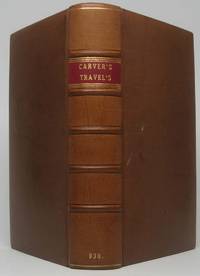
1778007643London: Printed for the Author. First edition. Bound in 3/4 calf with raised bands and gilt titles decorative endpapers. Published London: Printed for the author 1778. 8vo. 5 1/2" x 8 1/4" xvi 17-543 1 pp. errata page two folding engraved maps that are fully hand-colored plus four plates - Falls of St. Anthony on the Mississippi An Indian Pipe of Peace and two plates of native peoples. Includes a Chippewa vocabulary. Large bookplate of Otto Oren Fisher on front pastedown. Jonathan Carver 1710-1780 was an explorer mapmaker author and one of the first white men to explore and map areas of Minnesota and Wisconsin. Part of a small expedition to map uncharted territory west of the Mississippi he visited many of the Native American groups residing in the area. He "penetrated farther into the West than any other English explorer before the Revolution" Howes. While French explorers had been in the area earlier they did not leave behind detailed maps or journals as Carver did. He explored the headwaters of the Mississippi and wintered with a tribe of Dakota in the Great Lakes region recording their customs. A classic of American travel it is one of the earliest and best accounts of pre-Revolution exploration. A compelling narrative of travel and adventure it was highly inspirational to post-Independence explorers and has been published in more than 30 editions. In addition to his comments on the natural history and the Native Americans of the West this work contains the first published mention of the word "Oregon." Wear at the tips outer hinge starting small tape repair to the stub of first map and free endpaper some offsetting from plates and maps to facing page else near fine clean text bright unmarked. A very attractive example. . Very Good Plus. Hard. 1st. 1778. Printed for the Author unknown
177934207Dublin: S. Price et al. 1779. Hardcover. 8vo. Rebound in full calf with compartments and gilt spine lettering. 18pp xiii 508pp. Engraved full-page plate. Modern binding and endpapers are fine while text block is good plus to very good. Moderately age toned throughout with occasional bits of foxing; lacks map and one plate. First Irish edition appearing after the 1778 London first edition and apparently before the 1779 London second edition. Reaffixed to the new front pastedown is an armorial bookplate that purports to be that of George Washington -- but alas our research shows this is spurious as it bears neither the chain lines nor the well-known slip-of-the-burin scratch near lower right that are hallmarks of authentic Washington plates. This example is also not one of the forged bookplates that appeared in a couple hundred volumes in a New England auction in 1863 nor is it one of the late 19th century restrikes made from the original copper plate by well-meaning Washington descendants. Carver's influential account traces his travels further inland than any other Englishman prior to the Revolution and served as inspiration to Lewis and Clark and other explorers. NEW HOWES C 218 note. SABIN 11184. S. Price, et al. hardcover
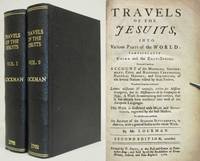
176217827London: Booksellers of Great-Britain Ireland and New-England. Good. 1762. 2nd Edition corrected. Hardcover. Bound in modern black pebble cloth with gilt lettering. Text is tight & clean with light age toning and a few stains. VOLUME 1: 2 vi 24 xii 2 487 1 pages. 1 map of 2. Lacking map "Passage by Land to California". The"Malabar and Cormandel Coasts" map is present & complete but has a vertical tear along the lower half of the center crease. This second edition corrected has added a 24-page supplement on the Spanish settlements in America. VOLUME 2: 2 4 4 507 18 pages. Folding plate of the Ginseng Plant & 3 of 3 maps present: 1-"Map of Terra del Fuego"; 2-"Map of Nangasak called by the Chinese Tchangk"; 3-"Peru Mission of the Moxos". Lacking last 3 leaves rear General Index stops after the letter "T". Religion ; 8vo 8" - 9" tall; 994 pages; Second edition of a 1743 collection of narratives by Jesuit missionaries in Asia and the Americas translated into English and abridged from the 1702-13 Lettres Adifiantes. . Booksellers of Great-Britain Ireland and New-England hardcover
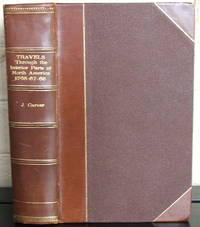
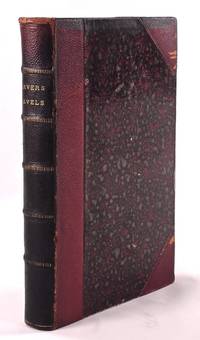
179624415Philadelphia: Key & Simpson 1796. Hardcover. Very good. Full title: Three Years Travels Through the Interior Parts of North-America for more than Five Thousand Miles Containing An Account of the great Lakes and all the Lakes Islands and Rivers Cataracts Mountains Minerals Soil and Vegetable Production of the North-West Regions of that vast Continent; with a Description of the Birds Beasts Reptiles Insects and Fishes Peculiar to the Country Together with a concise History of the Genius Manners and Customs of the Indians Inhabiting the Lands that Life Adjacent to the Heads and the Westward of the Great River Mississippi; and an Appendix Describing the Uncultivated Parts of America that are the Most Proper for Forming Settlements. 8vo pp xx ix 11-360 20 subscriber's list bound in later 3/4 morocco and marbled boards. Spine and top edge darkened scuffing to leather small section torn from title page affecting a few words. Binding tight text clean. with just a few spots of foxing. Howes C-215: "Carver penetrated farther into the West than any other English explorer before the Revolution. Like his French predecessor -- Verendrye -- he was seeking a transcontinental waterway but aside from exploring some tributaries of the Mississippi he made no substantial contributions to geographical knowledge; his book however stimulated curiosity concerning routes to the Pacific later satisfied by Mackenzie and Lewis and Clark." Evans 30169; Field 250. Key & Simpson hardcover
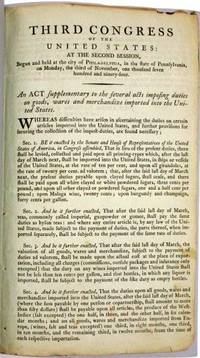
179517611Philadelphia: Francis Childs 1795. Caption title as issued. 6" x 9 3/4". 2 pp. Minor edge wear bound in modern wrappers. Good or better. <br/><br/> The Act establishes duties on imported printing-types sugars Malaga wine burgundy and champaign teas and other items. Approved January 29 1795 it is signed in type by President Washington Vice President and Senate President Adams and House Speaker Muhlenberg. <br/> Two states exist: Evans's copy notes the deposition statement; this one like the Bristol copy and as noted by Stark and Cole NYPL is without the statement. Very scarce each having only a few institutional locations. <br/>Evans 29699. Bristol B9375 2. Stark & Cole 1164. NAIP w014576 5. Francis Childs unknown books
179517611Philadelphia: Francis Childs 1795. Caption title as issued. 6" x 9 3/4". 2 pp. Minor edge wear bound in modern wrappers. Good or better. <br /> <br /> The Act establishes duties on imported printing-types sugars Malaga wine burgundy and champagne teas and other items. Approved January 29 1795 it is signed in type by President Washington Vice President and Senate President Adams and House Speaker Muhlenberg. <br /> Two states exist: Evans's copy notes the deposition statement; this one like the Bristol copy and as noted by Stark and Cole NYPL is without the statement. Very scarce each having only a few institutional locations. <br /> Evans 29699. Bristol B9375 2. Stark & Cole 1164. NAIP w014576 5. Francis Childs unknown
1794807351794. UNITED STATES. Third Congress of the United States: At First Session. An Act making Appropriations for the support of the Military Establishment of the United States for the year one thousand seven hundred and ninety four. Phila.: Francis Childs and John Swaine 1794. Small folio. 2pp. Signed in print by Frederick Augustus Muhlenberg John Adams and George Washington. Small nick to head else very good. Evans 27838. A military expenditure budget totaling "a sum of money not exceeding one million six hundred and twenty nine thousand nine hundred and thirty six dollars and one cent." This is to cover purchases pensions repairs fortifications canon and shot. unknown
1798013825New York: Tiebout & Obrian 1798 Second NY: Tiebout edition with engraved frontispiece of Franklin by Maverick in fur hat and fancy engraved title page as in the First American Edition by Tiebout however collating to the 1798 Tiebout edition. The Life is pp. 184; the Essays pp. 104 followed by 2 pp. Contents. Previous owner names on front endpapers. Spine label partially gone. Near fine. Tiebout & Obrian hardcover
1776M00475<p>In original binding of marbled paper in Dutch double comb pattern of red and blue over boards backed with leather; black spine panels with gilt stamped titles; 5 raised bands. Heavily rubbed on covers and spine; worn to boards at cover edges and corners; spine leather worn/deteriorated raised bands exposed; covers fragile but still attached; text block tightly bound; 19th century bookplate on front pastedown; contemporary owner name in black ink King on title page at top edge; interior supple and clean. Note that title page gives 'Part I for 1776' and index is for 'Volume II' but clearly relates to this volume. Covers many events in all colonies. Included: Ethan Allen's capture; Benedict Arnold's march on Quebec; an early version of the Articles of Confederation as submitted to North Carolina Assembly rejected; Virginia Committee of Safety Resolution appointing Patrick Henry Commander in Chief of VA forces; Ben Franklin's correspondence to British friend expressing impossibility of British prevailing; trial court proceedings for Daniel Disney in Montreal; Notice of December 28 1775 meeting of Massachusetts Assembly naming as delegates to Congress John Hancock Sam Adams John Adams Elbridge Gerry and Rbt Treat Paine; list of Privateers with armaments and officers as ordered by Congress at Philadelphia; much more. Cf Sabin #955; Howes #182. 8vo 371 pp index.</p> J. Almon hardcover
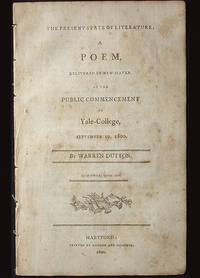
1800001583Hartford Conn: Hudson and Goodwin 1800. Paperback. Very Good. 16 p.; 21 cm. Signatures: A4 B4 8vo. Woodcut title vignette. Disbound from a nonce volume. Evans 37337. The author Warren Dutton 1774-1857 was a lawyer from Connecticut who also served in the state legislature. This poem was his Master's oration at his commencement from Yale. In his Biographical Sketches of the Graduates of Yale College 1911 Franklin Bowditch Dexter describes Dutton's poem as "Unusually sprightly and clever" with a passage "given to the ridicule of Abraham Bishop's Oration on political delusion." In Very Good Condition: disbound; light foxing throughout; pages are otherwise clean and solid. Hudson and Goodwin paperback
1794003621Philadelphia: Francis Bailey 1794. Hardcover. Good. Printed by Francis Bailey . . . for Edmund Hogan." xii 776 p.: tables; 22 cm. Contemporary full calf; red leather spine label with gilt-tooled title: "Hogan's State Trials." Although this is "Vol. I" no more published. First Edition. Early Am. Imprints ser. 1 Evans no. 27132. The Dedication by Edmund Hogan is dated Jan. 1795. Special title page for each trial: An Account of the Impeachment and Trial of the late Francis Hopkinson Esquire Judge of the Court of Admiralty for the Commonwealth of Pennsylvania; and An Account of the Impeachment Trial and Acquittal of John Nicholson Esquire Comptroller-General of the State of Pennsylvania. The list of subscribers pp. ix-xii contains members of the Pennsylvania legislature and other prominent figures including Thomas Bradford Benjamin Franklin Bache William Bingham Tench Francis Albert Gallatin Jared Ingersoll Thomas Mifflin Robert Morris David Rittenhouse Arthur St. Clair and the Library Company. Includes a table with the votes in the Senate on Nicholson's trial and an alphabetical index of the letters official documents witnesses names of the speakers and other occurrences in the two trials. Inscription on front fixed endpaper covered by bookplate of the Belles Lettres Society of Dickinson College indicating that this was presented to the Society by Joshua Hoover in 1827. Written in pencil on front free endpaper: "Joshua Brinkle." Oval stamp of Dickinson College Library on both front endpapers. On the title page "J. P. Brinckle" is crossed out and "Kemp Roberts" written below. Francis Hopkinson 1737-1791 a Signer of the Declaration of Independence and composer was tried in 1780 on charges of accepting bribes; he was acquitted. John Nicholson d. 1800 financier Comptroller General of Pennsylvania and land speculator was charged with financial irregularities in 1793; he was acquitted. In Good Condition: loss of leather at ends of spine and in the middle of the spine including from the spine label; tear from fore-edge across pp. 55-56 without loss of text; light foxing; otherwise clean and solid. Francis Bailey hardcover
1748GT719London: M. Coooper 1748. 1st Edition . Hardback. Vg. 12mo. 316pp pp 253-316 contains The Journal of George Jams i His Pilgrimage amongst the Inland Natives of the Countires Adjoyning to South Carolina Field No 1618 Indian Bibliography. Original full calf with the original red morocco label. Original owners name George Basson to the inside front endpapercrossed out. Title-page dated MDCCXLVII .The spine calf has a lengthways crack affecting the original label. All original state. A RARE ITEM. No copy appears to have been at auction since 1955. Sabin 100991 27x10cms <br/> <br/> M. Coooper hardcover
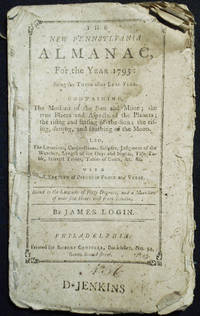
1794007663Philadelphia: Robert Campbell 1794. Paperback. Good. 32 p.: woodcut illustration tables; 19 cm. Stitched. Wrapper included in page count. Wrapper title. Woodcut illustration of "The Anatomy of Man's Body as governed by the Twelve Constellations." "DJenkins" stamped at lower edge of front wrapper. Not in Early American Imprints or WorldCat. Very scarce. In Good Condition: restitched at some point; some chipping from fore-edges; old dampstaining heaviest on first 2 leaves; hole at upper corner of back wrapper with minor loss of printing from tables; corners creased. Robert Campbell paperback
1800D130311London: Bunney and Gold 1800. Well worn with the front board missing and the rear detached. Foxed throughout with the edges of the text block soiled. One plate is missing "A Grand Emlematic Design relating to the Battle of the Nile by a Foreigner of Rank." The name Henley first name illegible is written at the top of the Preface page. 516 pages plus appendix and index. Size: 8vo - over 7¾" - 9¾" tall. Full-Leather. Poor/No Jacket. Bunney and Gold Hardcover
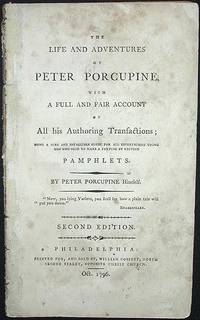
1796001128Philadelphia Pa: William Cobbett 1796. Good . Second Edition. viii 1 10-56 p.; 20 cm. Signatures: pi4 B-G4 8vo. Disbound. Evans 30213. William Cobbett complains about everyone including Benjamin Franklin and various Philadelphia printers and booksellers and defends himself against accusations that he was in the pay of the British while living in Philadelphia. In Good Condition: disbound; title page soiled; lightly stained and foxed throughout; separated between p. 26 and p. 27. Very scarce. William Cobbett unknown
1763002197Nurembergh Nürnberg: Christoph Riegels seel. Wittib 1763. Paperback. Poor. 78 p. incomplete probably of 96 p.; 17 cm. Signatures: A-E8 -E8 8vo. The remains of a contemporary wrapper are attached along the spine but lacking otherwise. The remaining paper cover is lined with part of a page of a German-language book. Several ink notations in the lower margins indicating that this belonged to David Beidleman of Mifflin Town Mifflintown Pa. A few ink corrections of errors. A translation of Verbesserte und Erleichterte Lateinische Grammatica by Johann Joachim Lange 1670-1744 a German Protestant theologian. The year prior to this publication the same printer Christoph Riegels seel. Wittib had issued a 96-page French edition of the work: Dialogues de Feu Monsieur Lang Traduits du Latin Avec les Mots et Phrases de Chaque Dialogue: pour l'Usage des Jeunes Gens. In 1769 an English translation was published in London by Edward and Charles Dilly under the title: Easy and Pleasant Latin Conversations or One Hundred and Forty-four Dialogues on Common Subjects Morals and the First Part of the Roman History. The edition offered here was intended to help German speakers learn English. Unfortunately the translator John Justin Herwig had a less than perfect understanding of English. This may explain the scarcity of the item only one copy is listed on Worldcat with no physical description. The dialogues are grouped by "decades" or groups of 10 dialogues each. The final leaf of signature E is lacking and the text ends at the beginning of the 10th dialogue in the ninth decade the 9th group of 10. Presumably a final signature is also lacking which would have brought the page total to 96 which agrees with the size of the French edition issued one year earlier by the same printer. Extremely scarce and unusual 18th-century work. In Poor Condition: incomplete as described above; old soiling and dampstaining; stitching is going. Christoph Riegels seel. Wittib paperback
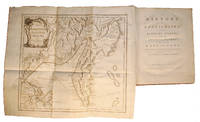
176415085Glocester: R. Raikes for T. Jefferys 1764. First Edition. Hardcover. Near fine. Quarto pp. 8 280 8 with 7 engraved maps and plates 4 folding. Contemporary calf boards with new complementary calf spine in six compartments. Some edgewear to boards; minor foxing to endpapers; text and plates exceptionally clean and bright. Bookplate of Sir Joseph Copley on front pastedown. An abridged translation of the Russian edition of 1755 which offered "The first reliable descriptions of Kamchatka based on the observations of the author and his companions during the Russian expedition to the far north 1734-43 a part of Bering's Great Northern Expedition" Arctic Bib. 9264 9265. It describes the customs morals religion and languages of the inhabitants of the Kamchatkan peninsula. In addition the the author had access to the notes made by pioneering German botanist George Steller during his travels to North America with Bering's expedition and the second part of the narrative includes much on the natural history of the region. Steller's observations "are an important part of this work and constitute one of the earliest accounts of Alaska and the Aleutian islands" Hill 948. R. Raikes for T. Jefferys hardcover books