(California) Farwell, W BBiblio.com
227 résultats
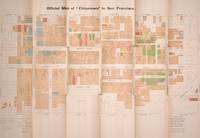
1885333147San Francisco: P. J. Thomas Printer and Publisher 1885. First edition first issue with the first issue large-format version of the map by Bosqui laid in as issued. Illustrated. 95pp. With: Official Map of "Chinatown" in San Francisco. 23-1/4 x 33 inches. Laid in. 8vo. Original tan lettered wrappers minor wear and light soiling. Minor separations at folds of map as usual. First edition first issue with the first issue large-format version of the map by Bosqui laid in as issued. Illustrated. 95pp. With: Official Map of "Chinatown" in San Francisco. 23-1/4 x 33 inches. Laid in. 8vo. An inflammatory report submitted by W.B. Farwell and John E. Kunkler of the San Francisco Board of Supervisors depicting Chinatown as overpopulated with opium dens and prostitution. The report was issued in three versions: 1 as a separate report dated July 20 1885 with the large-format map laid in as here; 2 as part of a bound collection of Municipal Reports for the fiscal year 1884-1885 with a small-format issue of the map; and 3 sometime after September 1885 within a work titled The Chinese At Home and Abroad with a smaller format version of the map and without the Appendix found in the previous two issues. <br /> <br /> The map depicting the area bordered by California Stockton Broadway and Kearny Streets and color coded to show the locations of gambling houses opium "resorts" and both Chinese and White houses of ill repute was issued in a variety of formats. The first "official" issue as here is printed by Bosqui in a larger format approx. 23-1/4 x 33 inches with the text and key below the image. A separately-issued variant was published by Bosqui with the text and key located to the left of the map see Rumsey 6714.001. Subsequent issues of the map are in a much smaller format approx. 8-1/2 x 19-1/2 inches.<br /> <br /> The separately-printed first issue of the Report complete with the large-format map is very scarce in commerce with the last copy recorded by RBH as being the Thomas Wayne Norris copy sold by Oakland dealer Harold C. Holmes in 1948. Cowan Bibliography of the Chinese Question 398; Hansen The Chinese in California: A Brief Bibliographic History p. 54 P. J. Thomas, Printer and Publisher unknown
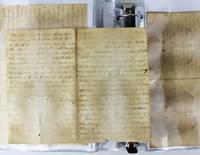
18744492Various locations in California 1874. Good. Ninety-four letters totaling 153pp. Mostly octavo. Leaves lightly dampstained and toned some faded. Old folds some separation and brittleness a few small areas of loss or tearing. An extensive archive documenting the activities of the Bridgeport Gold and Silver Mining Company in Sweetland California. Sweetland is in Nevada County about sixty miles north of Sacramento in the heart of the Sierra Nevada gold fields. At its peak it was home to a few hundred souls; today it is essentially defunct. In the present archive V.G. Bell secretary for the company writes to John Spencer in Nevada an agent for the company. John Spencer 1818-1891 emigrated to California in 1850 where he had some success at placer mining. After moving to Nevada in the early 1860s he became a successful rancher and public servant. We find Bell listed as a "ditching agent" in an 1867 directory for Bridgeport Township. Writing from by turns from Sweetland Birchville French Corral and North San Juan he apprises Spencer of the business activities of various mines including receipt of rent payments sent by Spencer reports of shareholders and trustees property upkeep and mine management. Specific mines mentioned include the Vineyard Mine the Bunker Hill Mine and the Baltimore Mine. Over half of the letters date to the period from 1864 to 1867. Though they have been exposed to water at some point they are mostly legible and are written in a neat hand.<br /> <br /> In the first letter here dated August 8 1864 Bell discusses the Trustees of the company as well as financing options available for the venture. He writes in part: "Dear Sir I have rec'd three reports from you the last of which was perfectly satisfactory; and had our supt. taken the same trouble during the latter part of last year to have made his reports as clean there would have been none of that bickering that took place between himself & the Co. In short the Trustees express themselves as well pleased with your mode of doing business. . It seems to be the desire of the Co. to husband our means in the territory as much as possible and make it a self sustaining institution as it is out of the question to raise means without resorting to borrowing; even at the rates of interest we could get money on this side for would soon eat the vitals out & have a dead concern on our hands."<br /> <br /> Much of the correspondence seems to include concern over the company's struggling finances. In a letter from February 1865 Bell asks Spencer to cut his salary writing "After a consultation of the trustees I was asked to write you in reference to a reduction in your salary to a less figure say seventy five dollars. The company is in debt here to a little over two thousand dollars borrowed money & they feel the necessity of reducing their expenses as much as possible and as there is so little doing with the company's business that it seems like a large salary to pay. . For one to look after this business without any thing else to occupy their time they are ready to admit is none too much and if your time is wholly taken up with their business do you not think it would be advisable to employ some competent person who could take time enough from other employment to see to our affairs." Bell assures Spencer that the Trustees are not unhappy with his work -- just his expense.<br /> <br /> A letter later that year in July discusses the hiring of a man as a second engineer also capable of blacksmith work. Other missives discuss the upkeep and refurbishment of a house as well as the means to rent it out. By October Bell has moved to discussion of the dispersal of some property as well as the difficulty of continually raising funds. "Your suggestion to levy an assessment in the Vineyard Co. to pay it out of debt meets with the approbation of our Co. which I presume was done at your last meeting. It is the wish of some of the members of our Co. to put our property in R into market & sell at some price & close the concern up. The Board is somewhat uncertain as to the course to pursue but the pressure is so great against the continuance of raising money by assessment that they will have to abandon that method for the time being."<br /> <br /> These excerpts are a mere sampling of the content. Some of the later letters are shorter asking for updates or indicating monies received though the bulk of the archive comprises letters that are two to four pages. An interesting and important snapshot of the activities of a large mining operation in the Sierra Nevada in the 1860s and 1870s and worthy of further research. unknown
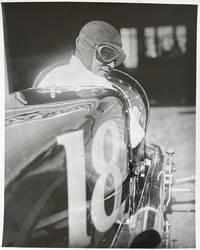
190062411Los Angeles Costa Mesa Huntington Beach Fullerton San Jose Hollywood CA: Gene Sherman Leigh Peffer Briggs Cunningham Briggs Cunningham Museum Ted Wilson et al ca. 1900-1990. Five Vols. & 1 scale model. First four vols. are 4to. 82; 76; 64; 88 leaves all unnumbered. archival mylar sleeves holding 266 photographs sized from 4 x 5 in. up to 8.5 x 11 in. with over 90% sized 8 x 10 in. most are black & white silver gelatin nearly all w/ photographer’s imprint either within the negative or stamped on verso many w/ pencil & ink manuscript annotations on versos most in the bold hand of Leigh Peffer but also many w/ markings by Gene Sherman and a couple possibly Briggs Cunningham several colour negatives many colour photographs some studio others snapshot a couple 1944 Kodacolor shops of young Peffer in US Army uniform during World War II together with over 100 pieces of ephemera including racing forms postcards art brochures promotional materials Midget Car racing rules Auto and racing promotional packets ALS & TLS many on letterhead and more. Three of these 4 vols. with archival mylar sleeves held in 3-ring binders in gray and black cloth 4th vol. a flexible plastic portfolio archival mylar sleeves printed label at spine; Together with: Peffer’s “A Scrap Book of Motor Sports History. . . Peffer Collection†a Oblong folio. 13.5 x 10.5 scrapbook/photo album. 80 pp unpaginated. on thick tan paper with 150 original photographs tipped-in with corners and mounted including 12 original colour negatives many identfied additional ephemera either mounted or laid-in two colour slides several clippings laid-in at rear and mimeographed sales list. Contemporary blue board post-binder nickel-plated screw posts at gutter margin printed metallic gold label mounted front cover neat manuscript hand of Peffer on label front cover occasional edgewear toning to clippings still VG exemplar; Scale model 12 x 4 x 2.5 in. of the So-Cal Streamline racer by Gene Sherman rubber tires leather fittings for cock-pit painted as the original preserved in chamois bag NF exemplar all from the libraries of Leigh Peffer and Gene Sherman. This noteworthy and expansive archive captures the glories of automobile sporting culture in California during the first several decades of the 20th-Century assembled through the effort and passion by several significant figures in the auto-racing and sports car scene of Southern California. These include Gene Sherman 1944-2007 famed auto designer and builder Leigh Peffer 1918-2000 auto racing enthusiast sports car racer and collector and photographer Briggs Cunningham 1907-2003 famed American sportsman whose Cunningham Motors fielded race teams and built race cars for the 24 Hours of Le Mans and later the Briggs Cunningham Automotive Museum in Coasta Mesa CA which operated from 1966-1987 and finally the racing photographs of Ted Wilson famed photographer of California auto racing and race tracks during the 1920’s and 1930’s. Amidst the hundreds of photographs many pieces of ephemera race programs original letters and postcards the joy and energy of the West Coast automobile culture trace the development of automobile manufacturing and racing from the Hodge Brothers electric car manufacturing in Pasadena CA in 1900-1902 through the design and model building and car museums in the 1980’s. Peffer & Sherman sorted the photo collection into race car drivers action shots and miscellaneous which includes photographs from Ted Wilson Doinseau-Rapho Briggs Cunningham Museum Strother MacMinn Thomas Milana Studebaker Ford D.M. Woodhouse of San Diego as well as Peffer and Sherman themselves. The photographs include those of Carroll Shelby driving one of his early Cobra prototypes Rex Mays Dan DePaolao Stubby Stubelfield Bill Schuffler Johnny Parsons Bill Stepp Earl Mansell and Louis Meyer Jr. “Sonny†one of the most successful and accomplished engine builders in Indianapolis 500 history. Still others include veterans of the vaunted Legion Ascot race track in Los Angeles known as the “Killer Track†with such drivers as Howard Wilcox II Jimmie Miller Lon Webb the Robson Bros. Spider Webb Bud Rose Harris Insinger in the Miller Special Gus Schrader Roland Frost Babe Stapp in his Cragar Special April 2 1933 Tony Radeitch Woestman McDowell & Pintorelli. After the Legion Ascot became too dangerous and closed down and AAA racing moved out of the West Coast the dirt track and gritty midget cars moved elsewhere.The Southern Ascot Speedway was a racetrack located at Atlantic and Tweedy Blvd. and ran from 1937 to 1942 now site of the Legacy High School Complex. Other race tracks represented in these photos include the Gilmore Stadium Speedway including photos of the open wheel Krause Offy Offenhauser or Jimmy Miller in the pits in the Scheffler Offenhauser special at Oakland Speedway or Bill Reed and Spud Hinkley at the San Jose Speedway. The Oakland Speedway was in San Leandro CA and was a banked dirt oval built in 1931 operated through the Great Depression and featured roadster motorcycle Big Car Stock Car Midget Car races and was the “fastest dirt track in the Nation.†Another historic race track capturing racers and races was the Mines Field race track including Stubby Stubblefield in 1934 today the site lies under LAX airport. Amidst the hundreds of photos are images of the concept car U.S. Discovery speed model designed by Marshall Space Flight Center Boeing Rockwell Lockheed and Cobalt Boats engines such as the Miller-Ford Motor Ford Motor & Front End Bentleys along with a myriad of photos of famed race cars and spots cars. These automobiles include the Studebaker No. 34 driven by Tony Gulotta fitted with Stromberg carburetors mechanic Carl Rischingo placing 7th in the Indy 500 in 1934; Miller cars powered with 220 cubic in. motors; Allard Race Cars MG race cars Lester MG in 1994; 1948 MG TC 1937 Jaguar SS Bugatti 57C L.P. Breen’s 1926 Bentley the 1925 Lamda Roadster inscribed by Mark Shuttle to Briggs Cunningham the Spike Jones Special and even Peffer’s own Peerless GT at the start of a Southern California vintage sports car rally. Others capture Bill White’s Red Lion Special No. 1 Al Gordon in the Sparks-Weirick Gilmore Special No. 1 the 1934 Pacific Coast champion in Eddie Winfield’s Winfield Special 1949 Ferrari and Ralph De Palma in his Miler Special after winning the Italian Helmet Dash at the Legion Ascot Speedway in the 1920’s. Peffer’s “Scrap Book of Motor Sports History†opens with photos tickets and ephemera for the Brands Hatch Boxing Day Races Dec. 26 1959 which opened with the 10-lap Yuletide Trophy for sports cars up to 1100 C.C. and for all the races that day featured Threlfall Chapman Hill and Crab in Lotus Eleven’s and Seven’s Baillie in 3.4 Jaguar and others. He’s also included photos of his Little Riley restored in Dehham Engladnd with Cecil Cutton’s famed Bugatti next to him along with photos of the rare and famous MG Tigresse. Of particular interest amidst the many different ALS & TLS sent to both Peffer and Sherman is the lengthy and detailed 3 p. letter ALS sent to Gene Sherman at the Briggs Cunningham Automotive Museum June 26 1968 in which Sara J. Hodge of Solana Beach CA describes and explains the founding of the first and largest automobile garage West of the Mississippi by her father Nathaniel Hodge and uncle Arthur Hodge listed in the 1902 Pasadena City Directory. Later named the Hodge Brothers Co. they produced and sold electric automobiles and she has included four historic copy photographs capturing the Hodge Brothers machine shop & garage factory and even a whole bank of 1902 Hodge Bros. EV cars charging. Another letter to Sherman documents the life of Briggs Cunningham after he had sold his collection and museum contents to his friends the Colliers they moved to Naples FL and explaining how their “house is not finished as yet so I don’t believe we can move in until next year. . . I am busy with packing up the mags etc. ready to move. My new library will be larger tha the present one.†The scale model by Gene Sherman painstakingly recreates the famed So-Cal Speed Shop Streamliner. The car was built after Dean Batchelor a So-Cal Speed Shop customer sold his 1932 roadster to raise the capital and built by famed speed shop builder Alex Xydias who would take the body off the tank and subsequently build the Streamliner. Batchelor felt a small streamliner like the MG EX-135 was the best way to move forward on the design. The completed chassis was taken to Valley Custom in Burbank CA where Neil Emory one of the finest early custom craftsmen began working with aluminum to shape the Streamliner designed as a flattened oval with no compound curves. Early test runs at El Mirage ranged from 135 to 142 mph with a 156ci Flathead Ford and at the first Bonneville Nationals held in 1949 on the salt flats the So-Cal Speed Shop Special in iconic white and gold was the star of the show. In the midst of the runs they switched engines to an Edelbrock-built Mercury Engine and 190 mph. The car also achieved a 210.892 mph average a Class C Record and bagged the Hot Rod Magazine “Top Time†trophy. The next year after rolling in high winds Batchelor escaped serious injury and never raced again. Special note should be made of the Ted Wilson photographs although very little personal biographical information is known of him. He was inducted into the Sprint Car Hall of Fame shot historic racing photos during the 1920’s through 1950’s on California race tracks including Oakland Speedway Alviso Speedway San Jose Speedway at King Road mostly in a 4 x 5 format and was a pioneer in marketing his photos often running ads in racing and motoring periodicals at the time. He began purchasing other negative collections from other photographers and amateurs expanding his collection including Carroll Studio Roy Richer’s the Crest Collection and the Douthat Speed Photo collection. Eventually the entire collection was sold to Bruce Craig and Vincente Alvarez and subsequently to Jeannie Hinnershitz and Dale Snyder partner to the Florida-based Collier family which took the collection private. He maintained ongoing relationships with Leigh Peffer often writing and selling him photos Gene Sherman at the Briggs Cunningham Museum and Briggs himself. See: Lawrence Berman Kane Rogers The Cunningham Museum Briggs Cunningham 2023; Norm Bogan Ted Wilson National Spring Car Hall of Fame & Musuem 2023; Cunningham The American Dream at Le Mans Roarington Nov. 1 2023; Greg Sharp Racing History: Alex Sydias the Man Behind the Famous So-Cal Speed Shop In the Garage Media Oct. 3 2021. Gene Sherman, Leigh Peffer, Briggs Cunningham, Briggs Cunningham Museum, Ted Wilson, et al, hardcover
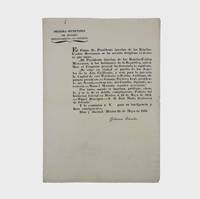
1835377678Mexico 1835. 1. plus integral blank. Signed in print by Estrada. Folio. Unbound. 1. plus integral blank. Signed in print by Estrada. Folio. A broadside decree issued by Migual Barragan giving city status to Pueblo de Nuestra Se ora la Reina de Los Angeles and naming it the provisional capital rather than Monterey. The Mexican congress declares: "The town of Los Angeles of Alta California is elevated to the rank of city and it will be from now on the capital of this territory." However representatives from Monterey would block moving the capital. <br /> <br /> "This decree was largely due to the efforts of Carlos Antonio Carrillo the deputy from California to the Mexican Congress and the author of the Exposicion of 1831" Streeter. Streeter's copy sold for $200 to Dawson's in 1968. Eberstadt 133-187; Streeter sale 2476; Rocq 4223 unknown
1850List1929California 1850. With thirteen letters most multi-page written from Monterey in 1850 a 7 pp facsimile transcription of a 1834 Mexican land grant on cloth measuring 11 x 14 inches and and eleven page document on paper in Spanish relating to a Monterey land grant transcribing an 1841 document. Letters heavily worn with some loss at margins but mostly legible land grant in good to very good condition transcribed document in Spanish in fair condition with water damage to margins. Fair. An interesting archive of 1850s-era material relating to the life and career of the surveyor Edward Williams which recently surfaced in the central mother lode region. The group includes his personal letters from the California Gold Rush as well as well two interesting documents form his work for the Surveyor General J.W. Mandeville in 1858 where he transcribed two Mexican land grants. <br /> <br /> Lt. Edward Williams was a member of Company E New York Volunteers under Capt. Nelson Taylor. He came to California around 1847 and found employment as a deputy surveyor later working for the Office of the Surveyor General of the Unites States for California. In 1858 Surveyor General J.W. Mandeville commissioned a report on Mexican-era California Land Grants. Mandeville had Williams copy the original documents exactly - inclusive of an ink copy on linen that is an "exact tracing" of the original documents starting with 1834 up through about 1840. These "copies" were submitted to the Surveyor General in 1858 for use in the report. Williams continued the title work by copying other documents from about 1841 though this time not as a tracing but hand copied on the usual blue paper of the 1850s.<br /> <br /> The documents illustrate the length officials went to while they investigated Mexican Land Grant titles to California properties in the 1850s. The process was difficult and involved two distinctly separate cultures and legal systems that clearly conflicted. The Mexican Government granted rights for these large land parcels in California to various people but clearly stated they could not sell parts of the property. The wording was used many times in litigation of the period in both defense of the land grants and in opposition to how the land grants were handled. The issues were actually quite simple in that the Mexican legal standards for land grants was far different from those in the United States and the two differing forms of written land ownership and use clashed. <br /> <br /> These documents reflect a parcel of land granted to Francisco Mesa at "Corral de Tierra" a large parcel in Monterrey County California. Mesa had requested land for "his personal use and that of his family." In the Grant the title papers reflect "while the land is under Francisco's possession it cannot be divided mortgaged or a levy placed on it nor handed down." These original documents help illustrate the complex story of Mexican Land Grants in California. <br /> <br /> Also included are thirteen letters from Ed aka "Ned" to various family members primarily his mother and sister Alice and vice versa. About half are from Ed the other half are written to him. The dates of the letters are; 1850: February 10th April 15th April 16th April 28th June 10th July 30th October 11th and November 17th and 1851: September 9th. One undated letter with heavy loss is written from Panama. The letters are generally readable but the condition far from perfect with water stains throughout and chips abundant along edges and significant textual loss. The letters are generally at least two pages sometimes four or more inclusive of writing in the crossed line custom to save paper. Most are datelined at Monterrey where he discusses the people the customs setting and more. <br /> <br /> Despite the condition flaws there is much to be gleaned from his correspondence. In his April 15 1850 letter . he describes his trip to San Juan Bautista from Monterrey in detail while he was on his way to San Francisco. Williams writes of his great pleasure on tasting cooked beef by the Indians that he found was the best he ever tasted as they camped on the way to San Jose with the ultimate goal Mission Dolores in San Francisco: “this the beef they put on the embers of the fire and broiled it - I never tasted anything like it before so tender so juicy…†One of his first notes on San Francisco: "There are regular streets filled with all kinds of sorts of stores… The shipping covers the water as far as you can see. And those nearest the shore are converted into store houses the rigging being taken down and the and holes cut in the sides for doors.The best houses in town are occupied by gamblers . a large saloon filled with tables on which are played all kinds of games of chance - at some of the tables are displayed immense amounts of coin and gold in lumps worth from 1 to 5000 dollars which some poor infatuated fool of a miner has at some time lost to them."<br /> In his letter of April 16th he discusses both his difficulties with women in California and his lack of fitting in back east: “The Spanish Girls are very nice and all that sort of thing but the trouble is to find one that is educated. I can’t bear an uneducated wom an and I think I shall have to come to N.Y. and bring one out here… I know one or two in N.Y. but I don’t believe they would have such an uncouth specimen of an ‘hombre’ as me…†In his next letter he describes Carmel in detail. He states: “I haven’t been to the mines nor have I any inclination to go†though he intends to settle in California permanently. In his next letter he discusses the people he’s met and how he detests the anglophone community there: “How do I like the People Those of Spanish whom I call my friends I love with all my soul - there is not much society except among them… the Eng. and Am. population I detest from the bottom of my heart. This may sound strange but you will know the por que when you arrive.†He then praises the climate and scenery of Monterey. One letter written from Panama which has unfortunately sustained heavy losses at margins offers some details of the trip on the Chagres River. The replies to Williams from his family offer details on life in New York and are similarly compromised in condition but overall there is enough to glean from the group to provide a detailed example of family correspondence from the period. <br /> <br /> Overall a very interesting and unusual archive of a young professional who moved to California during the Gold Rush period and rejected the Anglophone mining community with particular interest to historians of Monterey and of the systems of land grants that shaped Mexican and American land policy in the nineteenth century. unknown
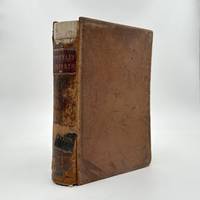
1862370658San Francisco: Numa Hubert 1862. First edition. vii 1 9-458; 146 pp. 8vo. Bound in original sheep with black and red morocco labels loss at head of spine lower label chipped with loss worn at edges. Text toned dampstaining. First edition. vii 1 9-458; 146 pp. 8vo. A crucially important and quite uncommon report on land cases in the fifteen year period after the United States took control of California. One of the most contentious issues in California legal political and economic history in the period was over titles to lands granted by the Spanish and Mexican governments to the "Californios" those of Spanish or Mexican heritage who were born in or lived in California and American residents of California. Ogden Hoffman became the first Judge of the U.S. District Court for the northern district of California in 1851 at the young age of twenty-nine. His was the most significant judicial voice in the period on land title issues and he presided over many important cases including Jose Limantour's claim to the lands that made up San Francisco. In this volume Hoffman presents the reports of 110 important land cases and lists more than 800 other land claims in the appendix. "The consummate early source of information on land ownership in California from the Spanish and Mexican era" Kurutz in Volkmann catalogue. The text also includes biographical sketches of Spanish and Mexican governors from Portola to Pico.<br /> <br /> Thomas Streeter noted that he had searched for a copy of Hoffman's reports for quite some time but that it remained an elusive volume for him. It was only in 1957 that he acquired a copy from Dawson's Book Shop allowing him to complete his Zamorano 80 collection. "Though one would not suspect that this rather thick volume of reports of law cases was at all rare it is in fact a very rare book as well as quite an important one" Streeter. Warren Howell in his landmark catalogue 50 was only able to feature a modern reprint of Hoffman's Reports calling the original work "a classic of California history." Cowan II p 287; Graff 1919; Greenwood 1654; Howes H569 "b"; Streeter sale 2874. Zamorano 80:44; Norris Catalogue 1652 Numa Hubert unknown
188376195Los Angeles: Atwood & Ferguson 1883. Hardcover. Good. A rare survivor not in Quebedeaux this early directory was published just two years after the Los Angeles Times began publication and a year prior to the arrival of cultural crusader Charles F. Lummis following his famous tramp across the continent. It also precedes the mid-1880s boom that initiated the transformation of the small town of just over 11000 people or about 33000 countywide into a thriving metropolis. Numerous notable residents are listed including Horace Bell author of Reminiscences of a Ranger 1881 and Elizabeth A. Follansbee Southern California's first female physican. Aspects of the city's cultural diversity are evident as well either overtly with individuals identified as "colored" or in the case of the Asian American population by omission. Notably the directory includes an advertisement for F.H. Rogers' Solar Art Gallery at 624 San Fernando Street which features an original albumen photograph.<br /> <br /> Octavo: 352 p. with numerous advertisements. Original printed paper-covered boards over a brown cloth spine with gilt titles. Some occasional smudging with a tiny stain to the fore-edge. The ink stamp of Leon F. Moss a Los Angeles attorney and former judge of the Los Angeles Superior Court appears on the front pastedown and both the front and rear panel. Some general shelfwear and toning to the boards with a bit of scuffing and soiling to the front panel and loss of the gilt stamping along the spine. Housed in custom clamshell box with marbled paper lining and a gilt-stamped green morocco spine label. Scarce OCLC locates only five holdings: Azusa Pacific University Fresno County Free Library San Joaquin Valley Library Santa Rosa Junior College and the University of California Los Angeles. Atwood & Ferguson hardcover
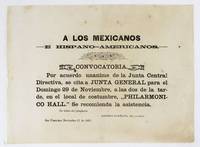
18635596San Francisco: La Voz de Mexico 1863. Very good. Broadside 7.75 x 10.75 inches. Central vertical fold minor creasing light tanning and scattered foxing. A very rare broadside calling a combined meeting of the juntas patrióticas of San Francisco community organizations of Californios and Mexican expatriates convened to support Benito Juarez against the French in the war with Napoleon III. The text announces a meeting at San Francisco’s Philharmonic Hall on Sunday November 29 1863 at 2p.m. Juntas patrióticas like this grew out of a tradition of Latino volunteer organizations in California originally started in 1825 to organize celebrations for Mexican independence. Established in many towns over the following years they continued to promote Mexican culture and traditions after California was annexed by the United States. This largely apolitical role changed however in the face of the twin threats of the Civil War and the French Intervention in Mexico:<br /> <br /> "Despite a time lag of four to eight weeks the newspapers carried stories about the French incursion into Mexico. California's Latinos learned about the landing of the Triple Alliance in Veracruz to collect debts contracted by previous administrations the agreement of Soledad in which President Benito Juarez pled national bankruptcy and asked for an extension the withdrawal of the English and Spanish forces on the strength of Juarez's promises and the menacing French presence continuing after the Spaniards and English had departed. In May 1862 events took a serious turn when the French broke off diplomatic relations with Mexico complaining of 'outrages of which the victims have been French subjects' living in Mexico.<br /> <br /> "But then on May 5 1862 there was a sudden flash of hope -- the outnumbered ragtag Mexican army repelled the seemingly inexorable French advance at Puebla sending the French troops victors of Crimea Sebastopol and the Italian campaign reeling back to Orizaba to lick their wounds. When the news reached California the Spanish-language headlines were enthusiastic: 'Hurrah for Mexico!! Hurrah for independence!!.' For California's Latinos U.S. citizens and immigrants alike this news was a bracing tonic. Suddenly they were part of a force to be reckoned with. Their peers at Puebla had taken a daring stance and had emerged victorious against the odds. Spontaneously Latino residents of the gold country town of Columbia in Tuolumne County celebrated 'our triumph against the French' by firing artillery salutes singing patriotic songs and toasting Mexico's success. Dozens of cities responded and dozens of juntas were formed in the next few months to raise funds to help repel the French invaders from Mexico" – Hayes-Bautista.<br /> <br /> Funneled through a Junta Central Directiva headquartered in San Francisco juntas across California and Nevada raised funds which were sent across the border to the Republican government usually in excess of $1000 every two weeks. This flyer was printed by one such junta known as the Sociedad Patriótica Mexicana and informs its members that the Junta Central Directiva has called a general meeting of all the local juntas on November 29 1863. This was a particularly dark time for the Mexican government in exile – the French had occupied Mexico City in June officially proclaimed the Second Mexican Empire in July and Maximilian was offered the throne at the start of October. This document was most likely printed by La Voz de Méjico a tri-weekly Spanish-language paper centered in San Francisco which became the unofficial organ of the regional juntas. A pencil note on the verso of this copy reads "Mass meeting called to contradict the lies of paper's enemies and newspaper reports this is what I referred to in my 2 notation." A rare piece of ephemera evidencing the active social and political role played by Mexican-American community organizations in the late-19th century. We locate only two recorded copies held by the Bancroft Library and UC Santa Barbara.<br /> David E. Hayes-Bautista et al. "Empowerment Expansion and Engagement: Las Juntas Patrióticas in California 1848-1869" in California History Vol. 85 No. 1 2007 pp.4-23. [La Voz de Mexico?] unknown
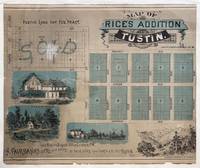
18875454Los Angeles: Los Angeles Lithographic Co 1887. Still very good. Illustrated lithograph map 20 x 24 inches. Trimmed along the left edge and borderline at the right. A few minor tears backed with rice paper. An exceedingly scarce lithograph promotional map for a late-19th-century subdivision in central Orange County California. The "Rice tract" depicted on this land development map was comprised of 194 lots for homes bounded by Prospect Avenue and Vineyard avenues and First Street and Preble Avenue in the town of Tustin east of Santa Ana. Until its proposed development the property was owned by James S. Rice 1846-1903 and his wife Cora who headed one of the pioneering families of Orange County. Rice moved his family there in 1877 and began ranching by working for his brother-in-law James Irvine who purchased the Rancho San Joaquin from José Antonio Andres Sepúlveda in 1864.<br /> <br /> In 1878 Rice purchased a small tract of land in the village of Tustin. He planted Valencia orange trees and Muscat grapes and a few years later he purchased an additional tract of fifty acres and expanded his agricultural operations. In the California real estate boom of 1886–87 he sold off all but twelve acres of his land for development at $4000 per acre allowing him to build a three-story home on his remaining property. His wife was a socialite who hosted numerous performing artists in their Tustin home including Helena Modjeska. The house was demolished in the late 1920s. The vignettes on the map show the future Tustin Hotel a three-story Victorian frame building with forty guest rooms that was built in 1888. Razed in 1914 it was designed by George Preble a Tustin builder who also designed Rice’s home. Scarce one copy is recorded in OCLC at U.C. Irvine which holds the Rice family papers. Los Angeles Lithographic Co unknown
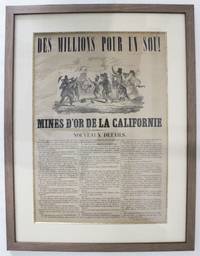
18495043Paris: Typ. Schneider Rue d'Erfurth 1 1849. Very good. Broadside approximately 18 x 13 inches. Matted and framed. A pair of short closed tears repaired at lower edge. Even toning and light creasing. Contemporary manuscript annotation under caption title. A wonderful illustrated faux news broadside published in Paris as gold fever coursed through Europe in 1849. The headline promises "nouveaux détails" of the gold mines in California but the text is in fact a humorous description and light-hearted admonishment of the multitudes thoughtlessly giving up their livelihoods for the hardscrabble life of a gold digger in the California wilderness. The first section runs through a litany of types who are abandoning their lives for adventure and advises them not to consider the difficulties of the journey:<br /> <br /> "En route pour les mines d'or de la Californie! Partez! Il n'est pas néccessaire que vous preniez de lourds baggages : une cassette et une bonne pioche vous suffriont. Ne vous laissez pas décourager par la peur d'une navigation de cinq mois. elle sera peut-être périlleuse. mais le résultat est si consolant : de l'or!. toujours de l'or!. Qu'importent la colique et les fièvres doublées d'un mal de mer brutal. de l'or!. toujours de l'or!. Qu'importe d'être noir ou jaune en mourant du moment qu'on se repose dans un linceul d'or pour l'éternité! Partez!"<br /> <br /> The remainder of the text somewhat sardonically describes life in California and warns prospective travelers not long for the comforts of home but rather to concentrate on their sought-after riches:<br /> <br /> "Par example ne vous attendez pas à jouir de toutes les douceurs de la vie. Vous n'y trouverez ni biftecks au beurre d'anchois ni dinde truffées; car les aliments y sont rares. Mais les racines y sont en grande abondance. Vous vivrez un peu à la manière des anachorètes pour un temps. seulement vous déterrerez de l'or. ce qu'ils ne faisaient pas que l'on sache."<br /> <br /> The illustration which occupies approximately the top third of the broadside depicts men and women from all walks of life carrying pickaxes on their shoulders and racing for a ship about to depart. The image carries the printed signature of "B. Netter;" a contemporary manuscript note under the caption identifies the publication date as February 17 1849. The Bibliothèque Nationale de France estimates that as many as 40000 French men and women made their way to California between 1848 and 1856. The present broadside is an excellent document of California gold fever in France and the pervasive interest in gold rush news in Europe during the mid-19th century. Rare we locate just four copies at Berkeley UCSD California Historical Society and the BNF. Typ. Schneider, Rue d'Erfurth, 1 unknown
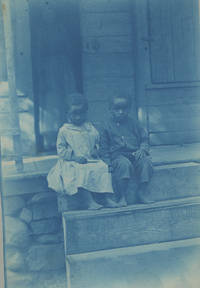
1880List1314Northern California 1880. 4to one album in burgundy cloth the other oblong brown pebbled cloth. Seventy-one sepia-toned and cyanotype photographs most measuring 6 ½ x 4 ½ inches. Near fine with some light wear to albums photographs very good or better with very good contrast some showing a hint of fading. A very early pair of vernacular photograph albums centering on the experiences of a wealthy family in San Francisco Monterey and the surrounding areas in the late 1880s. The bulk of the images show the family and their unidentified circle in domestic scenes with the vernacular architecture and landscapes of the Bay Area on full display. Other images show landmarks including Golden Gate Park the Francis Scott Key monument various views of the first Hotel del Monte in Monterey which would burn in 1887 dating the photographs to the period prior to the fire. The album also includes photographs of African American families. <br /> <br /> The image quality is generally quite strong and the photographer was either a professional assembling the album which includes many portraits of family and presumed friends for themselves or the work of a highly skilled amateur. The Initials on the front pastedown are “M.J.R.†though this could be a later owner. The albums were from the estate of the muralist Clara Fargo Thomas who was a resident of New York and could possibly have been from one of her family members though we are unable to glean much detail from the contents. The few annotations offer little clues one just reading “5/11/89 - Golden Gate Park†and another identifying a house as 509 Webster St. in San Francisco though the typical Victorian architecture and sloped street of the house suggest it could have just been a photograph of San Francisco’s unique architecture. <br /> <br /> The photographs of the people give insight into the lives of the new wealthy class of San Francisco residents of the late 19th century with others interestingly showing rural scenes and people. The photographer also had an eye for the flora of the region which is displayed throughout. It is unclear what the relationship of the African-American subjects was to the photographer and why they appear in the album. Overall a compelling group of images and the earliest example of vernacular photograph albums of California images we can find in the trade. unknown
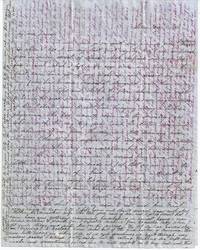
1850020857Portland OR and San Francisco: H. K. Hines and J. D. Hammond 1850 and 1899. First Edition. Letter. The letter in Near Fine condition with normal folds from mailing; the writing in red ink a little difficult to read but legible. The book is Very Good with some edgewear. A closely-written 4-page letter on one sheet of paper 15-1/2" x 9-7/8" folded in half and written on all 4 pages of neat script in black ink with another 2 pages of content overwritten vertically in red ink. Written by the wife of the Rev. Francis S. Hoyt a Methodist minister previously of the New Jersey Conference and first president of Willamette University in Salem Oregon to her parents in Cincinnati Ohio. Writing from Salem on 10 December 1850 Mrs. Hoyt describes their steamer trip from the Isthmus of Panama north along the Pacific Coast with stops at Acapulco Mexico and San Diego Monterey and San Francisco California and on to their new home. She notes that the steamer she was on was the first to "bear the news of the admission of California as a State" to the people of San Francisco. A sign was draped from the side of the ship announcing the news as it sailed along the bay front firing a 100-gun salute from its cannon the noise upsetting Mrs. Hoyt. She vividly describes the city with its summer dust and winter mud its rich gambling houses and houses of ill repute and the many miners down from the hills to "lose all they have earned and are obliged to go back to the mines again." She describes the gambling houses: "the rooms are fitted up beautifully with large mirrors and paintings and every thing to look pretty and then an orchestra of fine music that plays all the time. Frank looked into one for a little time and said he never saw such piles of money as was there." She did not note if the good reverend checked out the brothels. On one page of the letter she has drawn a small map showing their route from the Pacific to Portland and on to Salem. Her husband's life as an educator in Salem is reported in the book that comes with the letter beginning on page 431 which mentions that the steamer reached Oregon in late October 1850 "landing at Portland then a rustic hamlet of some twenty or thirty habitations and a few places of business." The book is INSCRIBED by the author on the front endpaper "To Rowland Abram Waltz/Very Truly Yours/H. K. Hines/Portland OR/June 21st 1901." In addition it is inscribed "Dr. F. S. Hoyt/with compliments of/Mr. & Mrs. Sam Gill/Portland Oregon/June 26-/1911." A fascinating letter with first-hand glimpses of life in early San Francisco and Oregon. <br/><br/> H. K. Hines and J. D. Hammond unknown
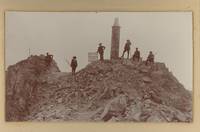
1890List2833Shasta County and Siskiyou County 1890. Fifteen photographs approximately 4 ½ x 7 ½ inches. Each mounted on heavy cardboard backing approximately 5 ½ x 8 ½ inches which is mounted on heavy cardboard of approximately 8 x 10 ½ inches. Unknown if photographs are stamped verso due to mounting. Some with recent captions on the largest mount; some captions likely incorrect see description. Fine contrast overall fine condition. Raper James Waters 1856–1937 was a professional photographer from Sacramento California. He was first active as a photographer in Gold Hill Nevada in the 1880s. Following this he returned to California and had studios in Berkeley and San Francisco between the late 1880s and mid-1920s. Offered here is a collection of fifteen of Waters’ photographs from around Mount Shasta likely from the late 1880s or 1890s.<br /> <br /> The photographs are mainly from places in Siskiyou County where Mount Shasta is located including shots of the towns of Sisson now Mount Shasta and Dunsmuir Sisson and Dunsmuir are on the Siskiyou Trail an ancient Native American footpath running from the San Francisco area to Portland Oregon. The Central Pacific Railroad Company completed a train line along the Siskiyou Trail in 1887; one shot from an unknown location shows railroad tracks rounding a curve among felled trees. Just outside of Dunsmuir is the Shasta Springs resort mislabeled here as Shasta Bottling Works famous for its springwater – the fountains of water in the photograph are from pressurized pipes coming from the springs.<br /> <br /> Other captioned photographs show Castle Crags hikers summiting Mount Shasta Mossbrae Falls and Castle Lake mislabeled as Crystal Lake. Photographs also show campers with their tent small houses a canoe on a lake and snowy winter scenes. Overall a striking set of photographs. unknown
1865List2438Camp Low 1865. Original partially printed document 26cm x 77cm. Printed on both sides of the sheet completed in manuscript. Darkening at folds from old tape repairs; partial splits to folds and extremities; complete and quite Good. Docketed verso signed in ink by Lieutenant Morgan Owen. Lists twelve enlisted soldiers most with Spanish surnames two with French surnames. Fine. The formation of the California Native Cavalry in 1863 marked a significant chapter in the state's history. Comprising primarily Mexican-American individuals colloquially referred to as "native" Californians the California Native Cavalry unit was formed 1863. Initially commanded by Maj. Andreas Pico a distinguished hero from the Mexican-American War and later under Salvador Vallejo the regiment drew its ranks from diverse backgrounds. Recruitment efforts began with vaqueros from southern California expanding to include individuals from San José and San Francisco. The unit boasted a varied composition encompassing not only Mexican-Americans but also Chilenos California and Yaqui Indians and even French legionnaires.<br /> Company "B" a contingent largely recruited from the northern part of the state is reflected in the existing muster roll. The company assembled at Camp Low near San Juan Bautista in 1865 making a striking entrance into the town. Described as "gay and gallant Spanish lancaroes" the cavalrymen presented a formidable sight with lances in hand and flags flying leaving a lasting impression on the townspeople who had never before encountered soldiers."The gay and gallant Spanish lancaroes sic came dashing through the town with the lances in their hand a flag flying from each of them. I assure you that they presented a war like appearance the people here had never seen a soldier in their lives – Yes Sir!." letter Maj. Michael O'Brien to Gov. Frederick Low January 1865; quoted in Prezelski "Lives of the Californio Lancers: the First Battalion of Native California Cavalry" in Journal of Arizona History v.40 no.1 Spring 1999. <br /> Under the command of Capt. Porfirio Jimeno Company B swiftly engaged in a critical mission: dismantling the notorious Mason-Henry Gang that had terrorized the San Juan region in the preceding months. Despite successfully wounding John Mason in early April 1865 the gang persisted for another month until Mason met his demise at the hands of a miner he sought to kidnap.<br /> However Company B faced challenges including low morale and a high rate of desertions with over 40 men leaving the company in 1865 alone. Transferred to Tubac Arizona Territory to confront the Apaches the company encountered further desertions along the way. The muster roll listing only twelve soldiers alongside Capt. Porfirio Jimeno reflects this tumultuous period. Overall the muster roll provides scarce documentation of the role of Mexican-Americans in the Civil War with few other examples in the trade or institutionally. unknown
1880List2834Sears Township California 1880. 10 ½ x 16 inch ledger seventy-five pages. Staining and damage to corners not affecting legibility. Very good to excellent. A ledger of the Sears Township assessor documenting assessment of property values. Sears Township does not appear to exist anymore but a November 1891 census bulletin lists a Sears Township in Sierra County with a population of 400 in 1890 and 585 in 1880. This is likely the same Sears Township as many of the property locations in the ledger are within present-day Sierra County such as Scales St. Louis Howland Flat and others. A later pencil marking on the first page attributes the ledger to Plumas county; this is probably incorrect. The properties include homes businesses and mining claims – most are the latter. <br /> <br /> Chinese immigrants played a significant role in the California gold rush and the ledger indicates the presence of a number of Chinese people in the area particularly in the town of Scales – enough of a presence that according to the ledger Scales had a “Chinatown.†This is given as the location of Ah Toy’s house and a more precise location for Scales’ Chinatown could be found from the ledger’s description of Ah Toy’s residence. Many individuals listed under “Ah†owned property in Scales: Toy Hung Fook and Fon owned houses Tong owned a meat market and Chung owned a warehouse. In addition Hopsing Chung is listed as owning a storehouse in Scales and the first page notes the Ah Wok Mining Company’s claim in Council Hill. Note the possibility that those listed as “Ah†are not one family; “Ah†is not necessarily a surname but can be a sort of nickname-generating prefix similar to “cousin†or “uncle/auntie†that often ended up appended to Chinese immigrant’s names.<br /> <br /> Of interest as a detailed record of the former properties and residents of some of California’s mining ghost towns. unknown
186329955Sacramento: Printed by A. Badlam 1863. 8vo. 8 13/16 x 5 5/8 inches. 26 iv 25-142 3 pp. Publisher's calf-backed printed paper boards. Preliminary ads printed on yellow red and green paper<br/> <br/> An early Sacramento business directory published in California during the Civil War.<br/> <br/> An invaluable source of information from the period with advertisements for a wide-range of businesses including shippers wine merchants surgeons dentists and druggists printers and bookbinders photographers grocers hardware dealers and more. Besides the alphabetical directory the work includes a brief history of Sacramento as well as information on the state county and city offices local institutions as well as post offices and stage routes. With a few pencil annotations by an early resident of Sacramento about the people and places mentioned in the text. Rare with only five examples cited by OCLC with only one being outside of California.<br/> <br/> Rocq 6528. Not in Cowan. Printed by A. Badlam unknown
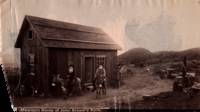
1880List2900Los Angeles California 1880. Two photographs measuring approximately 4 ½ x 7 ½ inches. Pasadena Historical Society stamps verso. One with manuscript caption verso including “Mtn Home of John Brown’s Sons Located just south of Brown’s Peak between Millards Cañon arroyo secoâ€. Wrinkling and marginal tearing with some missing corners. One photograph with tape residue. Very good. Owen Brown 1824–1889 and Jason Brown 1823–1912 were two of abolitionist John Brown’s twenty children. Owen Brown participated in both the Pottawatomie massacre and the Harpers Ferry raid. Following the unsuccessful raid he led the party of escapees to Pennsylvania. He lived in Put-in-Bay Ohio until 1885 when he joined his brother Jason—who was not involved in his father’s activities—in Pasadena. The two lived in poverty in mountain cabins several miles outside the city; offered here are two photographs of the brothers standing outside their cabins. In their time in Pasadena they were described as eccentric and hermetic but were liked and respected by those in town. Several obituaries of Owen Brown describe how witnessing the growing anti-Chinese sentiment in the region the brothers hired two Chinese men from the area to work for them “for the sake of the principle although they had no need†of the workers.1 One of these laborers may be the third man standing behind Jason Brown in the photograph where the brothers are astride donkeys.<br /> <br /> Of interest to scholars of the Brown family and their legacy.<br /> <br /> 1 “The Late Owen Brown. The Peculiar Life of the Son of the Abolitionist Ends in California.†Indianapolis Journal January 13 1889 8. unknown
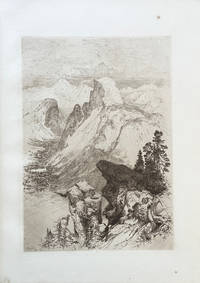
188763320San Francisco & New York: The J.ames Dewing Company Publishers J. Dewing Publshing Co. changeover in 1888 1887-1888 i.e. 1890. Ten vols. Folio. 8 48; 2 49-96; 2 97-144; 2 145-192; 2 193-240; 2 241-288; 2 289-336; 2 337-384; 2 385-432; 2 433-478 8 pp. with titles Div. 1 & end of Div. 10 in red & black. With 120 sepia- and aqua-tinted photogravures and etchings along with illustrated printed tissue guards and 100’s of woodcut engravings etchings and tinted text engravings. Pictorial gray-blue publisher’s cloth cover art illustration of the Sierras and inset California Mission scene Div. 7 w/ ffep. as the original wrappers front & back covers couple minor closed tears to fore-edges minor gouge & chip to fore-edge of front cover Div. 4 occasional closed tears to a few leaves fore-edges occasional minor age toning some soiling & faint tide marks to a couple of the volumes dustsoiling & minor wear to a couple spines still a VG bright set. First edition thus of this version of John Muir’s Picturesque California which was originally issued in 30 monthly parts featuring hundreds of etchings photogravures and wood etchings of California and Western scenery drawing inspiration from Bryant’s Picturesque America. Featuring such authors alongside Muir as Joquin Miller Kate Field George Hamlin Titch Ernest Ingersoll Albert Gray C.C. Goodwin and others this wonderfully illustrated set fulfills “the mission of this work is to make the best possible representation of the marvelous scenery and sublime natural wonders of†California and West. Of additional interest is that this version includes Muir’s article on “Alaska†which appeared in all the 1888 editions but was omitted later in the 1894 printings. The array of artists and their photogravure’s opens with Thomas Moran’s “The Half Dome†and others of his as well as etchings and gravures from art by Keith Julian Rix Frederick Remington Arthir I. Keller John Durkin Frank Tabor Charles Dorman Robinson and more. See: Kimes John Muir: A Reading Bibliography by Kimes 187. The J.[ames] Dewing Company, Publishers, J. Dewing Publshing Co. (changeover in 1888), hardcover
1894008457San Francisco: H. S. Crocker 1894 Book. Fine. Hardcover. MIDWINTER FAIR. Oblong quarto. 10x13 inches. Three parts bound together. Illustrated with 8 full-page lithographed color plates by Dickman-Jones Co. of San Francisco plus the full set of 24 full-page lithographed color plates by H. S. Crocker Co. plus over 213 full-page black & white photographs with extensive descriptive text including 13 of 14 double-page panoramas. Publisher's binding of three-quarter brown morocco darker cloth sides gilt lettering and pictorial element on cloth cover gilt-lettered spine. Outer hinges and spine ends rubbed 3 corners show light wear. A fine clean copy. First edition. With the bookplate of Thomas Wayne Norris and included in the famous Norris Catalogue. An incredibly scarce tile with the full complement of 24 full-page color lithographs Series I & II of scenes and buildings at the Midwinter Fair also issued by H. S. Crocker Co. and the addition of the souvenir grouping Glimpses of the Midwinter Fair issued by Dickman-Jones Co. to their customers with 8 full-page color lithographs of the Fair bound in with its original wrappers. Sunset City and Sunset Scenes is usually found only with the Taber black & white reproductions. We have never had a copy bound with the full series of color lithographs although over the years we've seen a few odd plates. The large number of black and white photographic reproductions include a number of views of the buildings and grounds of the Midwinter Fair held in Golden Gate Park; they are interspersed with select views of the natural wonders of the State. Nearly all the photographs are by Isaiah W. Taber official photographer of the Fair. The text for the non-Fair images was written by J. M. Hutchings; the twenty-four lithographs issued by Crocker were drawn by the famous western artist H. W. Hansen. Norris Norris Catalogue this copy: 3493; Rocq Glimpses of the Midwinter Fair: 11355; Rocq Sunset City: 11359; no Auction Records that include the color plates. . H. S. Crocker hardcover
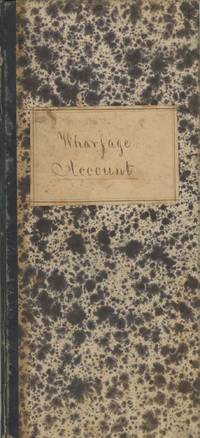
1873List2825Eureka California 1873. Single 5 ½ x 12 inch ledger book with five small pages of notes and one short letter. Forty-two pages of the ledger filled out with many more blank. Some damage to spine on exterior otherwise very good to excellent. Offered here is a wharfage fee account ledger from Eureka California with dates between 1868 and 1873. The first Euro-American settlement at what is now Eureka on the Humboldt Bay was founded in 1850. It became a hub for bringing supplies to the Trinity Klamath and Salmon River mines both by water and over land and a major lumber manufacturing town with seven sawmills by 1858.1 Lumber vessels sent lumber down the Pacific coast as far as Chile. By the 1860s and 70s Eureka’s main exports were lumber and produce including pork and seafood via sailing vessels and there was also regular steamer service taking people and goods between there and San Francisco. Wharfage would have been paid at the port at Eureka for loading or unloading cargo; the ledger tracks ship names alongside either the names of men who loaded the cargo or the cargo type quantities and prices.<br /> <br /> 1 Owen Cochran Coy The Humboldt Bay Region 1850–1875 California State Historical Association 1929. unknown
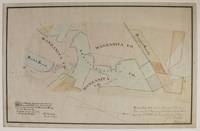
18672904Sweetland Ca 1867. About very good. Hand-colored manuscript map approximately 15 x 21.5 inches. Matted and in corner mounts. Mounted on linen. A few short closed tears and minor chips at edges not entering map area. Horizontal crease across center of map. Light tanning and scattered foxing. A neatly composed and hand-colored manuscript of the Manzanita mine in the Sweetland mining district located in Nevada County California. The settlement of Sweetland was established in 1850 by the Sweetland brothers who operated a trading post there in the early 1850s. The Manzanita mine was one of the largest in the district and the Manzanita Company was listed in the famous 1867 Bean's Directory of Nevada County contemporaneous to the drawing of the present map. It is unclear however whether the company enjoyed much ultimate success. <br /> <br /> Here the claims of the Manzanita Company along with those of the Administration Company and the Rough & Ready and Buck & Breck claims are delineated in black ink and hand shaded in six colors. Claims that were apparently established subsequent to in both pencil and light blue ink and are labeled Tennessee Kentucky Fremont Prospect Riley & Graham and so on. A note at the bottom right corner states that the map composed from a survey completed in November 1867 was "filed Feby 5th 1868 at 3 o'clock P.M. and recorded at the request of H.S. Bradley" the county surveyor. In all a quite attractive and informative manuscript California mining map composed just after the Civil War that evidently does not conform to any printed cartographic examples relating to these claims. unknown
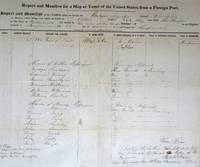
1850List2418Callao: Alsop and Company 1850. Folded ship manifest measuring 15 ¼ x 12 ½ inches. Fine condition with slight normal wear. A very scarce Gold Rush period shipping manifest for the Barque Equator captained by William Weir listing the passengers and cargo for a voyage to San Francisco in December of 1850 with notations showing the vessel’s arrival in San Francisco in May of 1851. Alsop & Co. was the work of Joseph Alsop the grandson of Continental Congress delegate John Alsop and his friend Henry Chauncey. Originally from Middletown Connecticut the pair established Alsop & Co. in New York City in 1824 and would eventually play a large role in the gold trade in California and trade extensively in South and Central America. Chauncey Alsop and others were among the partners in the trans-Panamanian railway that helped transform trans-continental trade in 1850. One of Alsop & Co.’s treasure boxes was aboard the S.S. Central America when it sank in 1857 carrying gold to the Eastern United States from Panama. <br /> <br /> The shipping manifest offered here lists the primary cargo as 195 tons of coal and also lists the names of fourteen passengers on the voyage. Imported coal - from Callao in this case - was essential to heat houses and run furnaces at factories including assay offices before the development of a local coal industry in California. We find only two instances of Gold Rush-era ship manifests - which were usually thrown away - surfacing in the trade or auction records this one and one other which sold for $3600 at PBA Galleries in 2014. Alsop and Company unknown
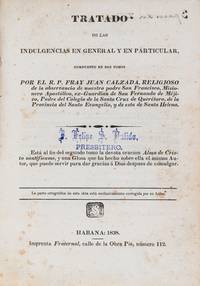
1838RF1306<p><b>Missionary Work Among the Indians in Alta California and the Early Explorers A Rare Cuban Imprint </b></p><p>2 volumes. 8vo. 12 245 1; 8 327 1 pages.Unmatched contemporary tree calf and 1/2 calf inked ownership stamps on title page and final leaf of Volume I.</p><p>A work on papal indulgences by a former Mexican missionary written at the convent of San Francisco de la Habana. Near the end of Volume II are several chapters devoted to missionary work among the Indians including a section titled "<i>De las misiones de la Nueva-California . . . Descripcion de la California"</i> pages 256-265 which gives a short history of missionaries in Alta California and the early explorers such as Vancouver and La Perouse. </p><p>Palau 40643.</p><p>#WorldCat: 6 copies: 3 in CA 1 CT 1 IL 1 PA<b><br /></b></p> Imprenta Fraternal
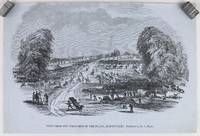
18502853N.p. possibly Marysville: R.A. Eddy 1850. Very good. Single folded quarto sheet on blue wove paper with a large engraved street scene on one page a later pencil drawing of a floral embellishment on an interior page with the remainder blank. Slightly trimmed with minor loss to sky section minor creasing and dust soiling a handful of short repaired closed edge tears. An unusually obscure Gold Rush-era pictorial letter sheet featuring a detailed scene of a crowded Marysville plaza before the city caught fire on August 30 1851. The work was produced by Marysville bookseller and stationer R.A. Eddy and depicts a busy scene in Marysville with horses wagons and people carrying bundles in the foreground and the buildings of the frontier town in the background. The buildings are identified from right to left as follows: Stage Yuba House Magnolia El Dorado Exchange Eddy Book the publisher Sites Jones Shafer St. Louis Hotel Bartlett. This scene was also issued under a slightly different title View from the North Side of the Plaza Marysville. Both titles appear to be very rare with one copy of the alternate title in OCLC at Yale and two others per Baird at the British Library and in a private collection; the only two copies of the present work we could locate reside in a scrapbook at the Fine Arts Museums of San Francisco and in the de Young Collection at the Society of California Pioneers.<br /> Baird 280a. Clifford 290. R.A. Eddy unknown
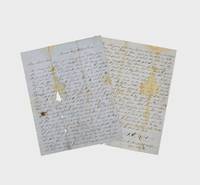
1851376875Nevada City CA 1851. 3pp. folded sheet blue paper. Usual folds some staining two sheets separated small hole affecting a few letters. 3pp. folded sheet blue paper. Writing in 1851 from Nevada City at the time California's most important mining town in the leading gold mining county this letter written by L. O. Hart to his aunt and uncle opens with the familiar prose on not having received letters and fearful that his previous letter not receive before turning to his life in the mines: "My health at present is none of the best but I live in hopes. I have not done any work of moment for 5 or 6 week past and for a week past I have been confined to my cabin though today I feel better by considerable. We have had no rain yet though for weeks it has been predicted that it will rain next week. If anything the weather is warmer than last August for we cannot keep our butter from melting put it where we will and fix it how we may." The letter continues by discussing costs of commodies: "California has much improved in living since I have been here. Now one can enjoy some of the luxuries of home and better preserve his health. Provisions are considerable cheaper than they were one year ago. Then it cost $1.50 cents per day to live upon pork beans and potatoes but now our cost daily is not far from 75 cts and we have flour potatoes butter pork tea coffee and chocolate and fresh beef once a day broought to us at 20 cts per lb. Potatoes sell from 8 to 12 dollars per bushel. Clothing is actually sold lower here than at home. Boots & shoes sell for 2 & 3 dollars per pair."<br /> <br /> The letter continues on Monday morning extolling the virtues of the weather and fauna of California though critical and rascist concerning the region's Native Americans: ". Now that I am somewhat used to I think this climate is unsurpassable. We have an atmosphere healthy clear dry & transparent. Persons can talk 1/2 a mile apart with ease & from the tops of hills we can see what appear to be snow capped mountains some 25 or 30 miles distant but which are in reality 3 & 4 times that distance from us. We never have either frost or dew & from April until December it is but seldom that a cloud can be seen but the whole summer long a clear sun hot dry & parching generally speaking all are very healthy. The only killing disease of the country being the Erysipelas which generally proves fatal . The wild game of the country consists of wolves black bears grizzly bears wildcats deer squirrels turtle doves wild ducks & geese elks & Indians of which the latter is by far the most despicable looking quadruped I ever saw. They are thieving revengful lazy specimens of humanity. At present they are all around us but are perfectly quiet."<br /> <br /> The letter closes with an update on his successes and failures in the mines: "I have made about two thousand dollars this summer and out of that have lost twelve hundred so that I have for my summers work about eight hundred doll. I should not have said work for it has been all speculating &c. It takes a litter experience to handle all of the ropes & I can plainly see where I missed it but 'live and learn' I've got to. So I take it all as a matter of course & try again. And I am going to keep trying until I get $10000 doll then I shall come home sure . Tell all the cousins I'll bring them home something shiney one of these days . unknown