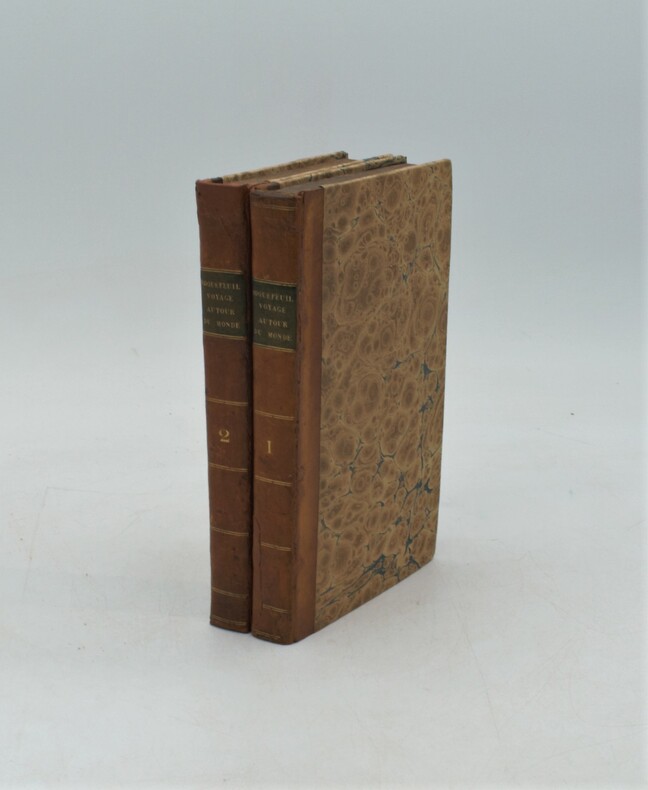
ROQUEFEUIL (Camille de)Livre Rare Book
8 985 résultats
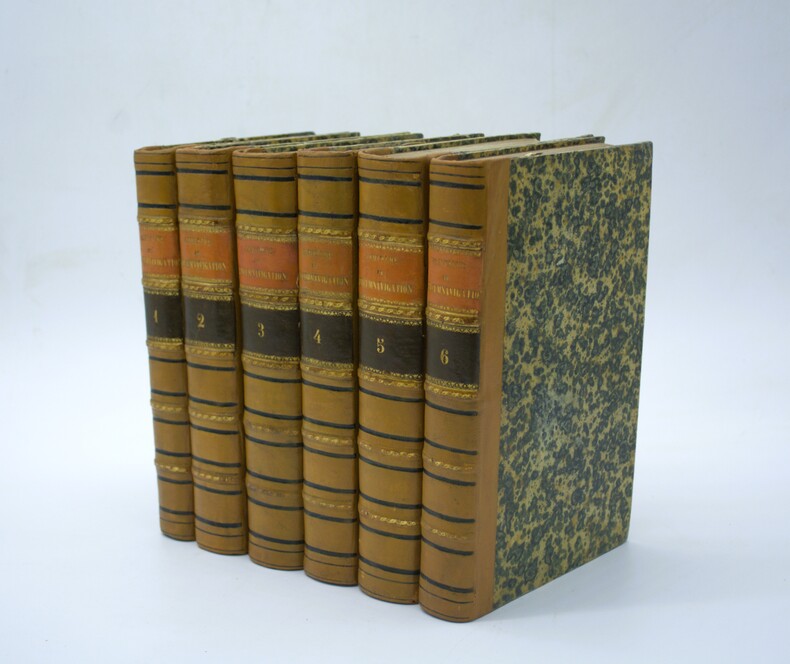
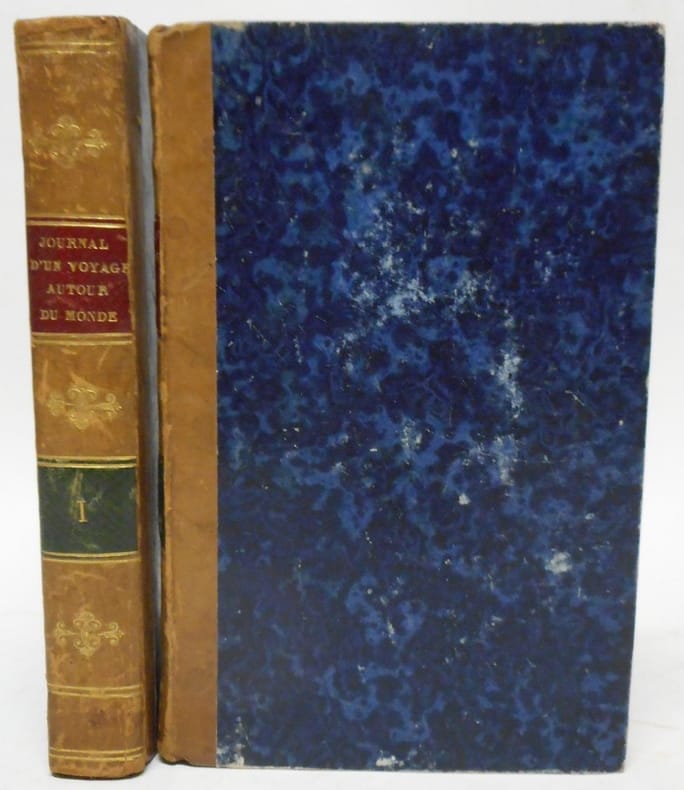
210363Paris, Ponthieu, Lesage, Gide fils, 1823 2 vol. in-8, l-344 pp. ; [2] ff. n. ch., 407 pp., avec 2 grandes cartes dépliantes hors texte, demi-basane fauve, dos lisses ornés de filets et fleurons dorés, pièces de titre et de tomaison cerise et vertes, tranches citron (reliure de l'époque). Rousseurs. Petits frottis aux dos.
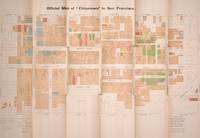
1885333147San Francisco: P. J. Thomas Printer and Publisher 1885. First edition first issue with the first issue large-format version of the map by Bosqui laid in as issued. Illustrated. 95pp. With: Official Map of "Chinatown" in San Francisco. 23-1/4 x 33 inches. Laid in. 8vo. Original tan lettered wrappers minor wear and light soiling. Minor separations at folds of map as usual. First edition first issue with the first issue large-format version of the map by Bosqui laid in as issued. Illustrated. 95pp. With: Official Map of "Chinatown" in San Francisco. 23-1/4 x 33 inches. Laid in. 8vo. An inflammatory report submitted by W.B. Farwell and John E. Kunkler of the San Francisco Board of Supervisors depicting Chinatown as overpopulated with opium dens and prostitution. The report was issued in three versions: 1 as a separate report dated July 20 1885 with the large-format map laid in as here; 2 as part of a bound collection of Municipal Reports for the fiscal year 1884-1885 with a small-format issue of the map; and 3 sometime after September 1885 within a work titled The Chinese At Home and Abroad with a smaller format version of the map and without the Appendix found in the previous two issues. <br /> <br /> The map depicting the area bordered by California Stockton Broadway and Kearny Streets and color coded to show the locations of gambling houses opium "resorts" and both Chinese and White houses of ill repute was issued in a variety of formats. The first "official" issue as here is printed by Bosqui in a larger format approx. 23-1/4 x 33 inches with the text and key below the image. A separately-issued variant was published by Bosqui with the text and key located to the left of the map see Rumsey 6714.001. Subsequent issues of the map are in a much smaller format approx. 8-1/2 x 19-1/2 inches.<br /> <br /> The separately-printed first issue of the Report complete with the large-format map is very scarce in commerce with the last copy recorded by RBH as being the Thomas Wayne Norris copy sold by Oakland dealer Harold C. Holmes in 1948. Cowan Bibliography of the Chinese Question 398; Hansen The Chinese in California: A Brief Bibliographic History p. 54 P. J. Thomas, Printer and Publisher unknown
1921160171Los Angeles: California Theatre 1921. Archive of 41 vintage photographs of the elaborate stage sets and live performers which supported silent film screenings at the California Theatre in Los Angeles taken during the theatre's first three years in operation 1919-1921. 20 photographs with blindstamps crediting photographer Dick Stagg and 14 with blindstamps crediting photographer J.C. Milligan.<br /> <br /> Photographs housed in an album with typed labels on the versos of the adjacent pages identifying the film screening dates performers and musical numbers. <br /> <br /> The first two photographs in the archive feature a day shot and a striking night shot of the theatre's beautifully elaborate facade followed by a photograph of the "original installation" of the stage and grand staircase. The balance of the photographs however show theatre sets usually with performers present occasionally with the orchestra present and always without the audience present likely taken during rehearsals or after the completion of the set designs. <br /> <br /> The earliest dated photographs in the archive only two and a half weeks after the theatre's opening on December 24 1918 show two different sets for the screening of the 1918 film "Eye for an Eye." The last and latest photograph in the archive shows a parlor set with five costumed actors for the 1921 screening of the 1920 film "Billions." All in all 29 films are represented in the archive.<br /> <br /> Interestingly many of the screening dates of the films represented in the archive coincide with-or date earlier than-the currently believed premiere dates of the films some of which may have had their premiere at the California Theatre. <br /> <br /> Fred Miller opened the California Theatre at 810 S. Main Street in downtown Los Angeles on December 24 1918. The majestic Beaux-Arts cinema housed a capacity of 2000 and was designed by architect Alex B. Rosenthal who also designed the Granada Theatre in Santa Barbara. In 1919 the theatre was bought by Goldwyn Pictures and in 1935 operated as Teatro California often showing Spanish language films until 1983 after which it operated as a grindhouse and pornographic theater. The theater closed in 1987 and was demolished in 1990.<br /> <br /> Photographs: 8 x 10 inches. Very Good plus to Near Fine overall with some faint toning with one photograph with two vertical creases.<br /> <br /> Album: 13.75 x 10.25 inches. Very Good plus. California Theatre unknown
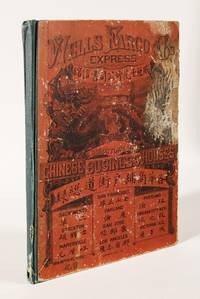
1882319779San Francisco: Britton a& Rey 1882. 146pp. text in English and Chinese. Original half green cloth and pictorial orange paper boards with a lithographic vignette of a dragon and harbor. Boards rubbed paper discolored and scraped along outer edge of front board discolored along outer edge of rear board. Cloth torn at lower spine hinges cracked but holding by cloth. Several instances of Wells Fargo & Co.'s Express red-ink stamp with text in English and Chinese characters. Old tideline along outer edge of many leaves. Very good. 146pp. text in English and Chinese. Rare Directory of Chinese Businesses in the West Published in the Year of the Exclusion Act. The third and last in a series of directories of Chinese businesses published by Wells Fargo this edition issued in the year of the Chinese Exclusion Act of 1882 which prohibited Chinese laborers from entering the United States. This edition is more than half again as long as the 1878 edition which has only 86pp. The first edition of 1873 is only nine pages in length.<br/><br/>Attractively printed by the firm of Britton & Rey the leading lithographers in San Francisco the text is in English and Chinese characters and lists hundreds of Chinese-owned businesses in San Francisco Oakland Sacramento San Jose Stockton Marysville and Los Angeles many of those businesses on a street called "Negro Alley"; as well as Portland Oregon; Virginia City Nevada; Victoria British Columbia; and Denver. The directory not only demonstrates the expansive reach of Chinese communities in the West but also how their businesses were tied to the ever-expanding Wells Fargo Company. Several pages in this copy are stamped with a bilingual logotype: "Ship Money and Goods by Wells Fargo & Co's Express."<br/><br/>The name and address of each merchant is given and in many cases the nature of the business is listed as well. San Francisco businesses take up more than half the text but it is notable to see the wide variety of business ventures undertaken by Chinese in the American West. Among these are laundries merchants druggists cigar factories "slipper" and shoe factories ladies' underwear tailors restaurants doctors Chinese and Japanese imports boarding houses barbers morticians butchers general merchandise jewelers and more. Among the more interesting businesses are employment offices a clam dealer pawn broker junk dealers and opium dealers. The smaller and more remote towns - such as Marysville Portland and Virginia City do not give business types as often and Chinese consulates and missions are also listed.<br/><br/>"Very rare" - Quebedeaux who notes two copies in private collections one of which may be the present copy formerly in the McClatchy family collection and apparently formerly owned by Western historian and novelist Stuart Lake. OCLC locates five copies at the California Historical Society the Autry Museum the Bancroft Library the Library of Congress and the Huntington Library. Rocq adds the copy at the Wells Fargo library in San Francisco and there is also a copy at Yale. Cowan P.175 Note. Cowan Chinese Question 472. Rocq 12764. Quebedeaux 101 Britton a& Rey unknown books
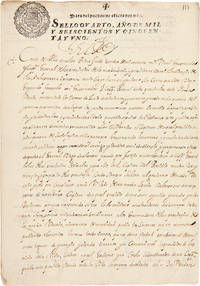
1651WRCAM50706Madrid 1651. 2pp. Folio. Minimal edge toning else fine. An important letter from the King of Spain Philip IV regarding Indian revolts on the California border in the mid-17th century. The King is also asking the Viceroy's opinion as to whether it would be advisable to place the government of Sinaloa under that of Nueva Vizcaya or to agree to its complete separation. Little is known of the thirty- year period in California before the arrival of Kino making this letter of special interest to historians of the Golden State. The letter reads in part and in translation: <br> <br> ".In a letter from Don Diego Guardo Faxardo my Governor and Captain General of the provinces of New Vizcaya dated 14th June 1649 he gives an account of the intended rising of the Taraumares Indians who live in the midst of those provinces and that of Sinaloa; and foreseeing the danger that might arise should the Indians retire towards that part he decided - the officer commanding the garrison having set out for the Californias - to send a responsible person to command the troops and to catch the enemy in the midst of their preparations and make them my subjects.that he found the Captain of the Garrison showed much resistance because the said province was always under the Government of Nueva Vizcaya and their predecessors had refrained from nominating a commanding officer of the Garrison merely to please my Viceroys of New Spain which had led to much inconvenience for not being under their command in military matters the good effect gained in the other way was lost; because they do not wish to come under the rule of the Governors of the provinces of New Vizcaya.I therefore request you to make full investigations and notify me together with your own opinion on the subject." <br> <br> Previously offered as item 4293 in Maggs Brothers' BIBLIOTHECA AMERICANA V 1926. unknown books
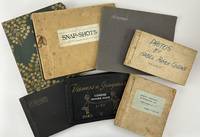
19304373Various locations in California mostly Sausalito and other locations in Marin and Sonoma Counties 1930. Very good. Nine photograph albums in a variety of bindings containing approximately 810 photographs the great majority paper prints but with a fair share of tintypes and CDVs in the earliest two albums plus 102 loose negatives three negative rolls and a metal container housing 135 later color slides. A phenomenal collection of photographs from noted but still somewhat obscure California artist teacher and amateur shutterfly Isabel Margaret Porter Collins. The collection numbers over 800 images ranging from early family images featuring dozens of Collins' antecedents from the 1870s to 1890s personal albums featuring Collins with her family and friends in various locations in California over the course of about thirty years and an album and some further images produced by Collins' son Henry Benjamin Collins whom she called Ben. The collection was most likely retained by Ben. Isabel Margaret Porter Collins 1875-1954 was an artist and teacher who produced both amateur and fine art photography. She was born in Petaluma to a prominent Marin County family descending from the Collins-Dowd-Harris-Howard-Porter line. Collins was a talented visual artist and studied at the Mark Hopkins Institute of Art from 1898-1900. She then worked as a pen-and-ink artist for Shreve & Company producing greeting cards and place cards. She was subsequently employed by Dirk Van Erp from whom she learned coppersmithing producing lamps shades pen trays and other hammered copper objects. In 1906 she married Henry Collins and moved to Sausalito where she taught in Bay Area public schools until her retirement in 1945. She participated in major exhibitions for the San Francisco Art Association 1896 and 1901 and earned a gold medal at the California State Fair in 1900. In her later years Collins lived with her daughter in Seattle. After she died Collins was buried in the family plot in Ukiah California.<br /> <br /> The photograph albums are not organized in strict chronological order as the images overlap slightly in time within a few of the albums. Still the albums are detailed as follows in roughly chronological order: <br /> <br /> 1 Annotated Family Photograph Album. 1870s-1890s. 16 leaves illustrated with forty-four photographs mostly cabinet cards measuring around 6 x 4 inches inset one per page into picture windows with the last six pages comprised of tintypes presented six per page in smaller picture windows. Contemporary padded cloth covers central metal device on front cover manuscript titles to spine reading "Harris Howard Porter Collins." Front cover detached cloth worn and somewhat soiled fore-edge clasp lacking. Occasional wear to photos. The album opens with a nice image of Collins' mother Eliza Harris Porter captioned with her name as well as her birth and death dates. Similarly captioned photographs populate the album throughout featuring Collins' family members and friends such as Alpheus Josephus Harris Julia Harris Polk Porter and so forth providing a solid avenue down which to pursue Collins' ancestry. Many of the images emanate from Honolulu Hawaii where Collins' family lived and worked for some time.<br /> <br /> 2 Annotated Family Photograph Album. 1880s-1890s. 13 leaves illustrated with twenty-five photographs mostly cabinet cards measuring around 6 x 4 inches inset one per page into picture windows. Contemporary red padded cloth with central metal device and corner pieces on front cover four small metal feet on rear cover two music boxes stored within the rear cover which no longer appear to be working and metal clasp on fore-edge. Contents generally nice with occasional dust-soiling. Like the first album this collection of photographs is comprised of cabinet card images of Collins' antecedents beginning with Josephine Porter and also including another image of Collins' mother "Polk with Josie Porter 8-12-82 Healdsburg" "Joe Porter Weller Nevada" "Mr. Crow Nevada Cattleman" Pamela Everett Howard Harris and others. Most notably this album includes an image of a young Collins herself with the manuscript caption reading "Isabelle Porter Collins." In addition to the inset photographs in the album there are several items laid in including later letters to Collins' descendants and a few additional photographs. Another good opportunity to pursue Collins' family lineage.<br /> <br /> 3 Annotated Vernacular Photograph Album of Family and Scenes in Marin County. 1905-1912. 16 leaves illustrated with 104 photographs. Oblong folio. Contemporary gray wrappers. Moderate edge wear and minor soiling to wrappers. Minor dust-soiling to contents but mostly clean and in nice shape. This is the first album in the collection that we can assume is comprised mostly of photographs by Isabel Collins herself. The album features over a hundred shots of Collins and her family mostly centered on her son Ben her mother Eliza and various aunts uncles and family friends. The family is pictured at home in Sausalito as well as traveling around to nearby places in Marin and Sonoma counties such as Fort Ross Sonoma Mission Slide Ranch Muir Woods Carmel and Mill Valley. Apparently Collins's son Ben has occasionally provided his own later captions in some of the albums evidenced here by his inclusion of the word "Grandma" over an image of Eliza Harris Porter. In addition to displaying Collins' talent for photography this album and most of those that follow provide a wide view of the scenery and landscape of the area of California just north of the San Francisco Bay Area where Collins spent most of her married and family life.<br /> <br /> 4 Marin - Monterey & Mendocino Cos. Arizona Isabel P. Collins cover title. 1906-1913. 68 leaves illustrated with 133 photographs. Small square quarto. Contemporary Japanese-style blank book string tied printed title label on front wrapper. Some wear and abrasions to wrappers last few blank pages heavily chipped. Moderate foxing and light occasional staining. A custom photograph album created by Collins featuring scenes in and around the three title counties Marin Monterey and Mendocino as well as a short section near the end capturing a family visit to Arizona. The photos begin in Sausalito at the Collins home and also include pictures of Boyes Hot Springs San Miguel Mission the Presidio Chapel in Monterey Santa Barbara and Sherwood Creek among others. This album also contains numerous images of the Sherwood School in Sherwood California in 1912 where Collins taught school. These images include a class picture of Collins and her class standing outside their one-room schoolhouse other pictures of the school and its students local Sherwood residents a sheep farm in the area and some mining scenes around Sherwood. The small number of photos from Arizona include a shot of Collins labeled "circa 1900 1st teaching job." Due to the language on the printed title card we assume all or most of the images were shot by Collins herself.<br /> <br /> 5 Vernacular Photograph Album of Scenes in Marin and San Mateo Counties. ca. 1910. 48 leaves illustrated with 111 photographs. Oblong quarto. Contemporary limp black cloth "Photographs" in gilt on front cover. Minor edge wear. Contents largely sound and clean. Lightly annotated with a few location captions but largely un-annotated. A collection of photographs featuring Collins' children and family members engaged on a farm and in other outdoor activities in Sherwood and Pescadero attending the "S.D. Fair" and engaged in other recreational activities in and around Sausalito. Two loose images in this album display Collins' photo credit stamp on the verso reading "Isabel Porter Collins Photograph."<br /> <br /> 6 Snap-Shots manuscript cover title. 1911-1930s. 12 leaves illustrated with 116 photographs. Oblong folio. Contemporary tan paper-covered boards manuscript title label on front board single string tie. Minor wear some offsetting to rear cover. One leaf detached but mostly clean and nice internally. A heavily annotated vernacular photograph album that appears to have been compiled by both Isabel and her son Ben and likely mostly the latter. The majority of the images though were likely taken by Isabel though some images are credited to Ben's friends Lafka and Harpo. The photos capture a wide variety of scenes of the Collins family in Sausalito hunting camping and more as well as scenes of Ben's social life and travel to Seattle Salt Lake City and Salinas. Interestingly this album includes a portrait photograph of Collins captioned "Mother 1898 Art School."<br /> <br /> 7 Photos by Isabel Porter Collins - Vallejo manuscript cover title. 1920s-1930s. 38 leaves illustrated with seventy-six photographs and a handful of ephemeral items. Small oblong quarto. Contemporary Japanese-style blank book string tied manuscript title on front cover. Minor wear and soiling to covers. The preponderance of this album concerns Collins' time as a teacher at Lincoln School in Vallejo in the 1920s with numerous images of the students fellow teachers and outdoor scenes around the school. One of the more interesting series of images pictures the Kikuchi children with a later note in Collins' hand reading "Japanese Father Died Consentration sic Camp WWII. Was Vallejo Barber/Wife." There are also several photos of the Collins children and other family members visiting San Francisco. This album was most likely compiled by Collins herself as it includes a few hand-illustrated gift cards from her daughter Clairice Thorsen nee Collins and programs from events attended by Isabel and her two kids with manuscript captions by Collins.<br /> <br /> 8 Annotated Vernacular Photograph Album Recording Isabel Collins' Travels. 1935-1936. 77 loose leaf sheets illustrated with 178 photographs and about thirty postcards. Quarto. Contemporary hardcover three-ring binder covered in decorative floral paper possibly by Collins herself. Minor wear. A few leaves detached from the three-ring binder minor wear to contents but mostly clean and in nice shape. A handmade and very personal account of Collins' travels to Santa Barbara Montecito Santa Ynez Tejon Pass and more in 1935 and 1936 profusely annotated with manuscript captions of the people and places she visited. Collins sees Santa Barbara College the 1935 Santa Barbara Festival the 1936 Old Spanish Days Fiesta Parade in Santa Barbara Huntington Gardens the Santa Ynez Mission and more during her travels. A couple of images feature noted California artist Helen Seegert one captioned "Helen Seegert as a Mexican Flower Girl." The last five pages include a detailed handwritten account and a map detailing the portion of Collins' travels in November 1936. A great many of the vernacular images in this travel album were likely taken by Collins herself except for the images she distinctly captions with the photo credit of another "Photo by Leila Robins" or "Anderson's Photo '35".<br /> <br /> 9 Vamos a Guaymas Mamie y Ben 1-57 manuscript cover title. 1957 1962. 5 leaves illustrated with twenty-three photographs. Oblong quarto. Contemporary black cloth manuscript title on front cover spiral bound. Spine worn moderate edge wear. A short collection of photographs recording Ben Collins and his wife Mamie on a trip to Guaymas Mexico in 1957 and with four photos of a later vacation to southern California in 1962. In addition to this later album the present collection includes three negative rolls and a metal container housing 135 color slides dating from the 1950s and '60s which most likely belong to Ben as well. The assortment of 102 loose negatives arranged by place in a couple of envelopes Sausalito and "Nature Trails Sequoia 1930s" are most likely Isabel Collins' work.<br /> <br /> Collins' photographs are positively rare institutionally. The most substantial collection of Collins' work is held by the California Historical Society numbering 222 photographic prints mostly from her time at the Hopkins Institute. The California State Library holds seven photographs. These two collections are the only institutional records we could find of Collins' work. As such the present collection most certainly represents the largest collection of Collins' work found anywhere and apparently the only deep collection of family photographs as well.<br /> <br /> Edan Milton Hughes Artists in California 1786-1940 Volume I p.233. unknown
1841PHO-2262Paris, Arthus Bertrand, 1841-1842-1844-1848-1853-1854. 6 vol. in-8° de XXIX, 1 bl., 343 pp., [2] ff., Front., 6 pl. h.-t. et 1 carte dé pl. ; 467 pp., [2] ff. Font., 4 pl. h.-t. et 1 carte ; 548 pp., [1] f. Front. et 5 pl. h.-t. ; 464 pp., [2] ff. 4 pl. h.-t. ; III, 1 bl., 542, [2] pp. 4 pl. h.-t. ; 400 pp. Font. et 5 pl. h.-t. demi-basane fauve, dos à 5 faux-nerfs, p ; de t. en maroquin orange, p. de tomaison en maroquin brun, tranches mouchetées (Reliure du temps). Édition originale, bien complète du sixième volume consacré à la Californie qui manque souvent. 31 pl. gravées sur acier (complet) et 2 cartes dépliante, au Tome IV, la pl. du « Fort de Cornouailles » est reliée en frontispice du tome VI. Des rousseurs et quelques planches brunies.
1929302295Los Angeles 1929. 100 pp of typed documents and an additional 50 album leaves mounted with approximately 50 photographs various sizes and processes and various documents. Folio. Limp leatherette with title and recipient name stamped in gilt to upper cover. Large black quarter morocco clamshell box gilt. 100 pp of typed documents and an additional 50 album leaves mounted with approximately 50 photographs various sizes and processes and various documents. Folio. "It is proposed that a COMPLETE ZOOLOGICAL GARDENS be opened to the public on a fifty cent admission basis which is to be properly laid out as an attractive Zoological and Botanical Garden with the finest and largest private collection of animals birds and reptiles to be seen anywhere on the continent."<br /> <br /> The advent of the motion picture industry in California had many wide-ranging ramifications on the business world and one was that it created a new market for firms who traditionally supplied animals to circuses and zoos both public and private owned by the likes of William Randolph Hearst. <br /> <br /> This archive is a report by the Investment Auditors of California for the Horne Corporation that was looking to expand by establishing a zoological garden in the environs of Los Angeles. The Horne Corporation was the largest and most successful of its type at the time apparently the only company in the US that could completely outfit a circus with both animals and show equipment. They were to purchase the Los Angeles Zoological Garden and Jungle Studio for $250000 and thereby sought to provide a similarly complete service to the film studios with both animals and suitable locations for film sets.<br /> <br /> The head of the company I.S. Horne for whom this report was compiled commenced trading in animals from Kansas City MO around 1914. The range of animals at the their disposal included big game birds reptiles and many of the documents concern the prospect of importing reindeer from Alaska.<br /> <br /> The material is held in a presentation album and includes the certificate of incorporation in Wilmington Delaware May 13 1929 as well as the by-laws of the corporation minutes of the first meeting the proposal for Los Angeles Zoological Garden and Jungle Studio and a balance sheet. At this stage the company had total assets of $57700 & liabilities of $625388.46; an enumeration of the various animals in inventory including wildebeest sables leopard lynx Rhodesian baboons bushbaby and a large aardvark.<br /> <br /> Of real interest are the plans for the park including artist's impressions which would be furnished with circus attractions "Monkey Island" jungle setting for motion pictures and an acknowledgment that "before the introduction of the motion picture industry the art of showmanship was not quite so highly developed as it is today." In fact one of the first pictures they supplied animals for was - appropriately enough - Trader Horn which was nominated for the 1931 Academy Award for Best Picture. <br /> <br /> On a more practical level there is a "Descriptive Classification of Principal Commercial Wild Animals" which lists 340 different animals in some details. There is also an account of hunting wild animals in East Africa as well as a section on animals that have been trained to hunt by man. Furthermore there is also much correspondence which provides much insight into the game industry its clients and the prospects for its future.<br /> <br /> Horne's venture subsequently became known as the World Jungle Compound in Thousand Oaks California eventually being acquired by 20th Century Fox studios. This archive is a record of a new phase of the entertainment industry. unknown
1929302295Los Angeles 1929. 100 pp of typed documents and an additional 50 album leaves mounted with approximately 50 photographs various sizes and processes and various documents. Folio. Limp leatherette with title and recipient name stamped in gilt to upper cover. Large black quarter morocco clamshell box gilt. 100 pp of typed documents and an additional 50 album leaves mounted with approximately 50 photographs various sizes and processes and various documents. Folio. "It is proposed that a COMPLETE ZOOLOGICAL GARDENS be opened to the public on a fifty cent admission basis which is to be properly laid out as an attractive Zoological and Botanical Garden with the finest and largest private collection of animals birds and reptiles to be seen anywhere on the continent."<br/><br/>The advent of the motion picture industry in California had many wide-ranging ramifications on the business world and one was that it created a new market for firms who traditionally supplied animals to circuses and zoos both public and private owned by the likes of William Randolph Hearst. <br/><br/>This archive is a report by the Investment Auditors of California for the Horne Corporation that was looking to expand by establishing a zoological garden in the environs of Los Angeles. The Horne Corporation was the largest and most successful of its type at the time apparently the only company in the US that could completely outfit a circus with both animals and show equipment. They were to purchase the Los Angeles Zoological Garden and Jungle Studio for $250000 and thereby sought to provide a similarly complete service to the film studios with both animals and suitable locations for film sets.<br/><br/>The head of the company I.S. Horne for whom this report was compiled commenced trading in animals from Kansas City MO around 1914. The range of animals at the their disposal included big game birds reptiles and many of the documents concern the prospect of importing reindeer from Alaska.<br/><br/>The material is held in a presentation album and includes the certificate of incorporation in Wilmington Delaware May 13 1929 as well as the by-laws of the corporation minutes of the first meeting the proposal for Los Angeles Zoological Garden and Jungle Studio and a balance sheet. At this stage the company had total assets of $57700 & liabilities of $625388.46; an enumeration of the various animals in inventory including wildebeest sables leopard lynx Rhodesian baboons bushbaby and a large aardvark.<br/><br/>Of real interest are the plans for the park including artist's impressions which would be furnished with circus attractions "Monkey Island" jungle setting for motion pictures and an acknowledgment that "before the introduction of the motion picture industry the art of showmanship was not quite so highly developed as it is today." In fact one of the first pictures they supplied animals for was - appropriately enough - Trader Horn which was nominated for the 1931 Academy Award for Best Picture. <br/><br/>On a more practical level there is a "Descriptive Classification of Principal Commercial Wild Animals" which lists 340 different animals in some details. There is also an account of hunting wild animals in East Africa as well as a section on animals that have been trained to hunt by man. Furthermore there is also much correspondence which provides much insight into the game industry its clients and the prospects for its future.<br/><br/>Horne's venture subsequently became known as the World Jungle Compound in Thousand Oaks California eventually being acquired by 20th Century Fox studios. This archive is a record of a new phase of the entertainment industry. unknown books
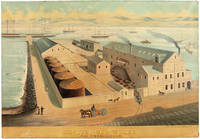
1883WRCAM448311883. Oil on canvas 18 x 26 inches on original wooden stretcher with letters in lower margin after the lithographed view of the same title published by Bosqui. Very good. "Edward Bosqui was born in 1833 in Montreal of French descent. When he was about seventeen years old he decided to go to California. He went by way of Panama where like a good many others who headed for the Gold Rush in those days he became stranded. He worked his way up through Mexico a hazardous trip but young Bosqui survived the many hardships.He arrived in San Francisco in the latter part of 1850 and his first job was as cashier of the first bank to be established there. Afterwards he served as General Fremont's secretary. He first went into the printing business in 1859 at Clay and Leidesdorff Streets and stayed at that location for thirty-nine years. Bosqui did bookbinding as well as printing and lithography.He printed the EVENING BULLETIN in the early days of its existence and did a great deal of commercial label work" - Peters. <br> <br> The Arctic Oil Works was established on a Bay side pier between 17th and 16th streets in 1883 to produce refined oils from seals whales and elephant seals. Soon after opening it became the largest oil refinery on the West Coast. In 1902 the oil works became incorporated as part of Standard Oil. <br> <br> The painting is quite similar to the scarce lithographed view produced by Bosqui although more Impressionistic in style and without quite as much detail. The spelling mistakes in the address of the works "Potrcro" instead of Potrero and in the address of the offices "ZB" instead of 28 further suggest this painting to be after the lithographed view. The painting however shows considerable age is on the original stretcher and dates from the late 19th century. PETERS CALIFORNIA ON STONE pp.60-61. J. Russell Harper EARLY PAINTERS AND ENGRAVERS IN CANADA p.39. unknown books
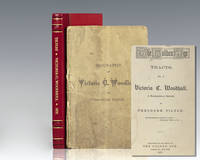
1871125391New York: Published at the Office of The Golden Age 1871. First edition of Tilton's biography of American suffragette Victoria Woodhull published shortly before she became the first woman to campaign for President of the United States. 12 mo original wrappers stitched as issued publisher's advertisement at rear. In very good condition. Housed in a custom cloth chemise and half morocco slipcase. Victoria Woodhull first made her reputation as a supporter of free love by which she meant the freedom to marry divorce and bear children without social restriction or government interference and as one of the only female newspaper publishers Woodhull & Claflin's Weekly with her sister Tennessee Claflin. She soon became an activist for women's rights and labor reforms and in a pivotal 1871 speech argued that the 14th and 15th amendments already covered women's suffrage. She decided to run for president in 1872 backed by the Equal Rights Party whose convention nominated Frederick Douglass for Vice President although he did not participate in the convention or acknowledge the nomination. While she obviously lost--and indeed could not have won constitutionally due to her age--Woodhull became one of the most powerful women's rights advocates of her day. This contemporary biography was written by Theodore Tilton a close friend of many within the movement. In 1872 Tilton confided in Elizabeth Cady Stanton that his wife was having an affair with Henry Ward Beecher. Tilton sued Beecher for alienation of affection and a salacious trial commenced. Woodhull abandoned her friendship to splash the scandal across the pages of Woodhull & Claflin's Weekly. Woodhull was arrested for obscenity and then acquitted--events that gave rise to the Comstock Laws of 1873 arguably the nation's most powerful and successful attempt at censorship. Woodhull emerged from the debacle with fewer friends--Susan B. Anthony for example disagreed with her behavior entirely--but nevertheless managed to retain her reputation as a leading supporter of women's rights and as an early American female politician. Published at the Office of The Golden Age hardcover books
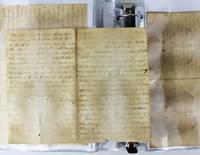
18744492Various locations in California 1874. Good. Ninety-four letters totaling 153pp. Mostly octavo. Leaves lightly dampstained and toned some faded. Old folds some separation and brittleness a few small areas of loss or tearing. An extensive archive documenting the activities of the Bridgeport Gold and Silver Mining Company in Sweetland California. Sweetland is in Nevada County about sixty miles north of Sacramento in the heart of the Sierra Nevada gold fields. At its peak it was home to a few hundred souls; today it is essentially defunct. In the present archive V.G. Bell secretary for the company writes to John Spencer in Nevada an agent for the company. John Spencer 1818-1891 emigrated to California in 1850 where he had some success at placer mining. After moving to Nevada in the early 1860s he became a successful rancher and public servant. We find Bell listed as a "ditching agent" in an 1867 directory for Bridgeport Township. Writing from by turns from Sweetland Birchville French Corral and North San Juan he apprises Spencer of the business activities of various mines including receipt of rent payments sent by Spencer reports of shareholders and trustees property upkeep and mine management. Specific mines mentioned include the Vineyard Mine the Bunker Hill Mine and the Baltimore Mine. Over half of the letters date to the period from 1864 to 1867. Though they have been exposed to water at some point they are mostly legible and are written in a neat hand.<br /> <br /> In the first letter here dated August 8 1864 Bell discusses the Trustees of the company as well as financing options available for the venture. He writes in part: "Dear Sir I have rec'd three reports from you the last of which was perfectly satisfactory; and had our supt. taken the same trouble during the latter part of last year to have made his reports as clean there would have been none of that bickering that took place between himself & the Co. In short the Trustees express themselves as well pleased with your mode of doing business. . It seems to be the desire of the Co. to husband our means in the territory as much as possible and make it a self sustaining institution as it is out of the question to raise means without resorting to borrowing; even at the rates of interest we could get money on this side for would soon eat the vitals out & have a dead concern on our hands."<br /> <br /> Much of the correspondence seems to include concern over the company's struggling finances. In a letter from February 1865 Bell asks Spencer to cut his salary writing "After a consultation of the trustees I was asked to write you in reference to a reduction in your salary to a less figure say seventy five dollars. The company is in debt here to a little over two thousand dollars borrowed money & they feel the necessity of reducing their expenses as much as possible and as there is so little doing with the company's business that it seems like a large salary to pay. . For one to look after this business without any thing else to occupy their time they are ready to admit is none too much and if your time is wholly taken up with their business do you not think it would be advisable to employ some competent person who could take time enough from other employment to see to our affairs." Bell assures Spencer that the Trustees are not unhappy with his work -- just his expense.<br /> <br /> A letter later that year in July discusses the hiring of a man as a second engineer also capable of blacksmith work. Other missives discuss the upkeep and refurbishment of a house as well as the means to rent it out. By October Bell has moved to discussion of the dispersal of some property as well as the difficulty of continually raising funds. "Your suggestion to levy an assessment in the Vineyard Co. to pay it out of debt meets with the approbation of our Co. which I presume was done at your last meeting. It is the wish of some of the members of our Co. to put our property in R into market & sell at some price & close the concern up. The Board is somewhat uncertain as to the course to pursue but the pressure is so great against the continuance of raising money by assessment that they will have to abandon that method for the time being."<br /> <br /> These excerpts are a mere sampling of the content. Some of the later letters are shorter asking for updates or indicating monies received though the bulk of the archive comprises letters that are two to four pages. An interesting and important snapshot of the activities of a large mining operation in the Sierra Nevada in the 1860s and 1870s and worthy of further research. unknown
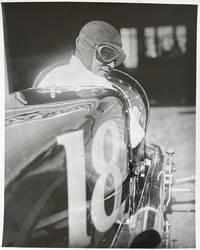
190062411Los Angeles Costa Mesa Huntington Beach Fullerton San Jose Hollywood CA: Gene Sherman Leigh Peffer Briggs Cunningham Briggs Cunningham Museum Ted Wilson et al ca. 1900-1990. Five Vols. & 1 scale model. First four vols. are 4to. 82; 76; 64; 88 leaves all unnumbered. archival mylar sleeves holding 266 photographs sized from 4 x 5 in. up to 8.5 x 11 in. with over 90% sized 8 x 10 in. most are black & white silver gelatin nearly all w/ photographer’s imprint either within the negative or stamped on verso many w/ pencil & ink manuscript annotations on versos most in the bold hand of Leigh Peffer but also many w/ markings by Gene Sherman and a couple possibly Briggs Cunningham several colour negatives many colour photographs some studio others snapshot a couple 1944 Kodacolor shops of young Peffer in US Army uniform during World War II together with over 100 pieces of ephemera including racing forms postcards art brochures promotional materials Midget Car racing rules Auto and racing promotional packets ALS & TLS many on letterhead and more. Three of these 4 vols. with archival mylar sleeves held in 3-ring binders in gray and black cloth 4th vol. a flexible plastic portfolio archival mylar sleeves printed label at spine; Together with: Peffer’s “A Scrap Book of Motor Sports History. . . Peffer Collection†a Oblong folio. 13.5 x 10.5 scrapbook/photo album. 80 pp unpaginated. on thick tan paper with 150 original photographs tipped-in with corners and mounted including 12 original colour negatives many identfied additional ephemera either mounted or laid-in two colour slides several clippings laid-in at rear and mimeographed sales list. Contemporary blue board post-binder nickel-plated screw posts at gutter margin printed metallic gold label mounted front cover neat manuscript hand of Peffer on label front cover occasional edgewear toning to clippings still VG exemplar; Scale model 12 x 4 x 2.5 in. of the So-Cal Streamline racer by Gene Sherman rubber tires leather fittings for cock-pit painted as the original preserved in chamois bag NF exemplar all from the libraries of Leigh Peffer and Gene Sherman. This noteworthy and expansive archive captures the glories of automobile sporting culture in California during the first several decades of the 20th-Century assembled through the effort and passion by several significant figures in the auto-racing and sports car scene of Southern California. These include Gene Sherman 1944-2007 famed auto designer and builder Leigh Peffer 1918-2000 auto racing enthusiast sports car racer and collector and photographer Briggs Cunningham 1907-2003 famed American sportsman whose Cunningham Motors fielded race teams and built race cars for the 24 Hours of Le Mans and later the Briggs Cunningham Automotive Museum in Coasta Mesa CA which operated from 1966-1987 and finally the racing photographs of Ted Wilson famed photographer of California auto racing and race tracks during the 1920’s and 1930’s. Amidst the hundreds of photographs many pieces of ephemera race programs original letters and postcards the joy and energy of the West Coast automobile culture trace the development of automobile manufacturing and racing from the Hodge Brothers electric car manufacturing in Pasadena CA in 1900-1902 through the design and model building and car museums in the 1980’s. Peffer & Sherman sorted the photo collection into race car drivers action shots and miscellaneous which includes photographs from Ted Wilson Doinseau-Rapho Briggs Cunningham Museum Strother MacMinn Thomas Milana Studebaker Ford D.M. Woodhouse of San Diego as well as Peffer and Sherman themselves. The photographs include those of Carroll Shelby driving one of his early Cobra prototypes Rex Mays Dan DePaolao Stubby Stubelfield Bill Schuffler Johnny Parsons Bill Stepp Earl Mansell and Louis Meyer Jr. “Sonny†one of the most successful and accomplished engine builders in Indianapolis 500 history. Still others include veterans of the vaunted Legion Ascot race track in Los Angeles known as the “Killer Track†with such drivers as Howard Wilcox II Jimmie Miller Lon Webb the Robson Bros. Spider Webb Bud Rose Harris Insinger in the Miller Special Gus Schrader Roland Frost Babe Stapp in his Cragar Special April 2 1933 Tony Radeitch Woestman McDowell & Pintorelli. After the Legion Ascot became too dangerous and closed down and AAA racing moved out of the West Coast the dirt track and gritty midget cars moved elsewhere.The Southern Ascot Speedway was a racetrack located at Atlantic and Tweedy Blvd. and ran from 1937 to 1942 now site of the Legacy High School Complex. Other race tracks represented in these photos include the Gilmore Stadium Speedway including photos of the open wheel Krause Offy Offenhauser or Jimmy Miller in the pits in the Scheffler Offenhauser special at Oakland Speedway or Bill Reed and Spud Hinkley at the San Jose Speedway. The Oakland Speedway was in San Leandro CA and was a banked dirt oval built in 1931 operated through the Great Depression and featured roadster motorcycle Big Car Stock Car Midget Car races and was the “fastest dirt track in the Nation.†Another historic race track capturing racers and races was the Mines Field race track including Stubby Stubblefield in 1934 today the site lies under LAX airport. Amidst the hundreds of photos are images of the concept car U.S. Discovery speed model designed by Marshall Space Flight Center Boeing Rockwell Lockheed and Cobalt Boats engines such as the Miller-Ford Motor Ford Motor & Front End Bentleys along with a myriad of photos of famed race cars and spots cars. These automobiles include the Studebaker No. 34 driven by Tony Gulotta fitted with Stromberg carburetors mechanic Carl Rischingo placing 7th in the Indy 500 in 1934; Miller cars powered with 220 cubic in. motors; Allard Race Cars MG race cars Lester MG in 1994; 1948 MG TC 1937 Jaguar SS Bugatti 57C L.P. Breen’s 1926 Bentley the 1925 Lamda Roadster inscribed by Mark Shuttle to Briggs Cunningham the Spike Jones Special and even Peffer’s own Peerless GT at the start of a Southern California vintage sports car rally. Others capture Bill White’s Red Lion Special No. 1 Al Gordon in the Sparks-Weirick Gilmore Special No. 1 the 1934 Pacific Coast champion in Eddie Winfield’s Winfield Special 1949 Ferrari and Ralph De Palma in his Miler Special after winning the Italian Helmet Dash at the Legion Ascot Speedway in the 1920’s. Peffer’s “Scrap Book of Motor Sports History†opens with photos tickets and ephemera for the Brands Hatch Boxing Day Races Dec. 26 1959 which opened with the 10-lap Yuletide Trophy for sports cars up to 1100 C.C. and for all the races that day featured Threlfall Chapman Hill and Crab in Lotus Eleven’s and Seven’s Baillie in 3.4 Jaguar and others. He’s also included photos of his Little Riley restored in Dehham Engladnd with Cecil Cutton’s famed Bugatti next to him along with photos of the rare and famous MG Tigresse. Of particular interest amidst the many different ALS & TLS sent to both Peffer and Sherman is the lengthy and detailed 3 p. letter ALS sent to Gene Sherman at the Briggs Cunningham Automotive Museum June 26 1968 in which Sara J. Hodge of Solana Beach CA describes and explains the founding of the first and largest automobile garage West of the Mississippi by her father Nathaniel Hodge and uncle Arthur Hodge listed in the 1902 Pasadena City Directory. Later named the Hodge Brothers Co. they produced and sold electric automobiles and she has included four historic copy photographs capturing the Hodge Brothers machine shop & garage factory and even a whole bank of 1902 Hodge Bros. EV cars charging. Another letter to Sherman documents the life of Briggs Cunningham after he had sold his collection and museum contents to his friends the Colliers they moved to Naples FL and explaining how their “house is not finished as yet so I don’t believe we can move in until next year. . . I am busy with packing up the mags etc. ready to move. My new library will be larger tha the present one.†The scale model by Gene Sherman painstakingly recreates the famed So-Cal Speed Shop Streamliner. The car was built after Dean Batchelor a So-Cal Speed Shop customer sold his 1932 roadster to raise the capital and built by famed speed shop builder Alex Xydias who would take the body off the tank and subsequently build the Streamliner. Batchelor felt a small streamliner like the MG EX-135 was the best way to move forward on the design. The completed chassis was taken to Valley Custom in Burbank CA where Neil Emory one of the finest early custom craftsmen began working with aluminum to shape the Streamliner designed as a flattened oval with no compound curves. Early test runs at El Mirage ranged from 135 to 142 mph with a 156ci Flathead Ford and at the first Bonneville Nationals held in 1949 on the salt flats the So-Cal Speed Shop Special in iconic white and gold was the star of the show. In the midst of the runs they switched engines to an Edelbrock-built Mercury Engine and 190 mph. The car also achieved a 210.892 mph average a Class C Record and bagged the Hot Rod Magazine “Top Time†trophy. The next year after rolling in high winds Batchelor escaped serious injury and never raced again. Special note should be made of the Ted Wilson photographs although very little personal biographical information is known of him. He was inducted into the Sprint Car Hall of Fame shot historic racing photos during the 1920’s through 1950’s on California race tracks including Oakland Speedway Alviso Speedway San Jose Speedway at King Road mostly in a 4 x 5 format and was a pioneer in marketing his photos often running ads in racing and motoring periodicals at the time. He began purchasing other negative collections from other photographers and amateurs expanding his collection including Carroll Studio Roy Richer’s the Crest Collection and the Douthat Speed Photo collection. Eventually the entire collection was sold to Bruce Craig and Vincente Alvarez and subsequently to Jeannie Hinnershitz and Dale Snyder partner to the Florida-based Collier family which took the collection private. He maintained ongoing relationships with Leigh Peffer often writing and selling him photos Gene Sherman at the Briggs Cunningham Museum and Briggs himself. See: Lawrence Berman Kane Rogers The Cunningham Museum Briggs Cunningham 2023; Norm Bogan Ted Wilson National Spring Car Hall of Fame & Musuem 2023; Cunningham The American Dream at Le Mans Roarington Nov. 1 2023; Greg Sharp Racing History: Alex Sydias the Man Behind the Famous So-Cal Speed Shop In the Garage Media Oct. 3 2021. Gene Sherman, Leigh Peffer, Briggs Cunningham, Briggs Cunningham Museum, Ted Wilson, et al, hardcover
19384491Primarily Los Angeles 1938. Overall about very good. Thirty-four printed items varying lengths; forty-eight postcards; eighty-four loose photographs mostly larger formats; string tied oblong folio album with sixty-six medium and large format images. Some wear with scattered chipping and closed tears to printed items. Occasional chipping and creasing to photo mounts. A few images beginning to fade but mostly crisp and clean. An extensive collection of photographs and ephemera related to the Mount Lowe Railway and various hotels and attractions that operated on Echo Mountain at the crest of the San Gabriel Mountains at the turn of the 20th century and the first part of the 1900s. The mountain was the site of a popular funicular that was originally engineered by Professor Thaddeus S.C. Lowe and opened as the Pasadena & Mt. Wilson Railroad Company in 1893. It was the only scenic mountain electric traction railroad ever built in the U.S. and it remained in operation until 1938 although its heyday was primarily the 1890s and the early-20th century. The railway consisted of nearly seven miles of track beginning in Altadena at a station called Mountain Junction and ending atop Echo Mountain at a magnificent seventy-room Victorian hotel called the Echo Mountain House. Only a few yards away stood the forty-room Echo Chalet which opened in conjunction with the railway. Other buildings on the peak over the years included an astronomical observatory car barns repair facilities dormitories a casino and a dance hall. Mount Lowe's operation was hit by a number of disasters which brought about a slow and ultimately terminal decline. The first was a kitchen fire that destroyed the Echo Mountain House in 1900. Further fires and floods eventually destroyed all remaining facilities and the railway was completely abandoned in 1938 after a storm cleared the mountainside and washed away nearly everything that remained.<br /> <br /> The collection includes thirty-four railway brochures pamphlets and other promotional items; two issues of the promotional Mount Lowe Daily News and a piece of sheet music in honor of the line; a collection of forty-eight postcards; eighty-seven loose photos mostly large format and mounted images; as well as a photograph album containing another sixty-six mid- to large format photos of this ingenious and precipitous tourist railway. The line was broken into three sections. The first was a fairly straightforward section that traversed the hillside residential sections of Altadena to the upper base of Echo Mountain. In order to reach the peak of Mount Lowe however passengers would have to transfer to a steeply graded and narrow funicular that travelled up 2200 feet on the "Great Incline" to the top of Echo before transferring again to wind up a further 3.5 miles on trolley cars over sharp switchbacks and curved viaducts with nicknames like "Cape of Good Hope." Because of the repeated setbacks caused by fire and storm the original owners sold the railroad and its mountain top attractions to Henry Huntington in 1905 after which the line operated as part of the Pacific Electric Railway for another thirty years. <br /> <br /> Amongst the printed matter here highlights include a program from the opening of the railway on August 23 1893 featuring a portrait of Thaddeus Lowe and an image of the Great Incline; a pair of extremely scarce copies of the illustrated promotional newspaper the "Mount Lowe Echo" from the early years of operation; three unrecorded broadsides advertising Mount Lowe excursions around the turn of the century; and a detailed and extensively illustrated pamphlet "Scenes on the Line of the Pasadena Mountain Railway." Also present are a clutch of nearly a dozen scarce color- and photo-illustrated brochures from the Pacific Electric era several illustrated leaflets including one with a bird's-eye view of Echo Mountain and Mount Lowe timetables and other promotional and review materials. The group of over fifty colorized photographic postcards were produced by a variety of publishers but a great number emanate from the shop of M. Rieder who produced numerous viewbooks of California towns in both English and Spanish-language editions during the early-20th century.<br /> <br /> The almost ninety larger format loose and individually mounted photographs show a variety of scenes depicting the railroad tourist facilities and environs across the span of its operation. Most are sized 8"x10" 5"x8" or in the vicinity of said measurements. The first group of photos shows early observation parties and other excursions including one mounted image by the Hill studio of Pasadena showing Professor Lowe guiding a party during the construction of the railway. The following considerate group comprises about twelve posed photos of children and families engaged in winter activities on Mt Lowe and clearly intended for an advertising campaign for year-round tourism to the peak and includes an idyllic image of children on a horse-drawn sleigh in the snow mounted on the card of LA studio Graham & Morill. Other studios represented here include C.B. Waite Putnam Studios and George Wharton James. There are also a number of images from the photo department of the Mt. Lowe Railway itself including numerous photos of the funicular and large souvenir images of tourists riding the open cars on the Great Incline. On the whole the images are often accompanied by manuscript or typed captions and in some cases by lengthy printed texts on the versos of card mounts.<br /> <br /> The terrific album of sixty-six photographs is focused for the most part on the early period of the railroad under the operation of Pacific Electric Railway following its purchase by Huntington in 1905. The professional photographer of these images is unidentified here but several conform to known photographs by C.C. Pierce who heavily documented the railway during this period and the group as a whole is heavily reminiscent of his work. The photos for the most part focus on the operation of the line and its dramatic setting and engineering with images of deep and narrow cuts along through the mountainside hairpin turns on precarious looking trestles the steep incline of the funicular and the astonishingly unfazed passengers. Mixed in with these are shots of the tourist facilities as they existed at that point and the mechanical and structural plant of the rail line. Similar to the loose photographs in the collection the album prints are mostly 8"x10" 5"x8" or thereabouts.<br /> <br /> In all a compelling and rich multi-format archive of one of the most interesting and spectacularly engineered tourist railroads of the late-19th and early-20th centuries. unknown
196467049Milano: Grafica Uno 1964. 11 stampe a rilievo di Claire Falkenstein su matrice in filo di rame saldato numerate e firmate a matita cm 45x45. Testi di Michel Tapié"; e Berto Morucchio in italiano e inglese. cm 70x50. . Edizione originale di 70 XXX es. numerati. <em>Coi suoi ferri coi suoi morceaux choisies stabilì anzitutto una segreta impalcatura su cui posto il foglio doveva aderire come l'anima il corpo o più modestamente ma non meno vitalmente la pelle i diffrenti organi. Per pressione e per impressione si sviluppava il suo discorso plastico già" iniziato nel periodo 1953-1958 con l'object-gravure espsoto nel 1958 alla galleria "Il Segno" di Roma da testo di Morucchio</em> Grafica Uno, unknown
In folio (546 x 330 mm), frontespizio figurato e animato da personaggi emblematici, di notevole bellezza (J.C.Weijerman inv. et delin. - M.G.Grophius sculp.), 29 tavole a doppia pagina incise in rame e finemente dipinte da mano del tempo, decorate con scene allegoriche incise. Al verso del frontespizio è applicato un indice delle tavole abilmente calligrafato da mano coeva. Legatura in piena pelle floscia coeva con aletta e laccio, titolo impresso a secco al piatto superiore entro riquadro in alto al centro. Un po' usurata la pelle della legatura, ad indicare che l'atlante fu ampiamente consultato. Alcune fioriture sparse, brunitura uniforme alle carte di Hispania e Gallia. Nel complesso buon esemplare, stampato su carta forte. Assai bello il frontespizio allegorico così come la coloritura coeva. Questo decorativo atlante fu pubblicato per la prima volta nel 1720 con sole 16 mappe. Negli anni fu arricchito ed alcuni esemplari possono contenere fino a oltre 50 mappe. Matthia Seutter di Augsburg (1678-1757) fu allievo di Homann e ne continuò l'attività come cartografo, incisore ed editore di atlanti. Le carte contenute in questo esemplare: Globo Terrestre, Europa, Asia, Africa, America (in cui la California è raffigurata come un'isola), Portogallo, Spagna, Francia, Inghilterra e Scozia, Belgio, Olanda, Svizzera, Italia, Sicilia e Sardegna, Germania, Boemia, Svezia, Danimarca e Norvegia, Polonia e Lituania, Prussia, Moscovia, Ungheria, Grecia, Turchia e Terra Santa. Al presente esemplare è stata aggiunta un'altra carta dell'Italia (che presenta alcuni difetti), incisa da Giacomo Cantelli e datata 1694, applicata tra la carta dell'Italia del Seutter e quella del Regno di Sicilia. . Bagrow-Skelton, History of Cartography, p.272..
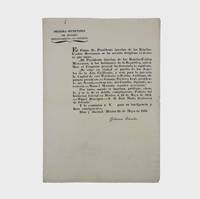
1835377678Mexico 1835. 1. plus integral blank. Signed in print by Estrada. Folio. Unbound. 1. plus integral blank. Signed in print by Estrada. Folio. A broadside decree issued by Migual Barragan giving city status to Pueblo de Nuestra Se ora la Reina de Los Angeles and naming it the provisional capital rather than Monterey. The Mexican congress declares: "The town of Los Angeles of Alta California is elevated to the rank of city and it will be from now on the capital of this territory." However representatives from Monterey would block moving the capital. <br /> <br /> "This decree was largely due to the efforts of Carlos Antonio Carrillo the deputy from California to the Mexican Congress and the author of the Exposicion of 1831" Streeter. Streeter's copy sold for $200 to Dawson's in 1968. Eberstadt 133-187; Streeter sale 2476; Rocq 4223 unknown
1850List1929California 1850. With thirteen letters most multi-page written from Monterey in 1850 a 7 pp facsimile transcription of a 1834 Mexican land grant on cloth measuring 11 x 14 inches and and eleven page document on paper in Spanish relating to a Monterey land grant transcribing an 1841 document. Letters heavily worn with some loss at margins but mostly legible land grant in good to very good condition transcribed document in Spanish in fair condition with water damage to margins. Fair. An interesting archive of 1850s-era material relating to the life and career of the surveyor Edward Williams which recently surfaced in the central mother lode region. The group includes his personal letters from the California Gold Rush as well as well two interesting documents form his work for the Surveyor General J.W. Mandeville in 1858 where he transcribed two Mexican land grants. <br /> <br /> Lt. Edward Williams was a member of Company E New York Volunteers under Capt. Nelson Taylor. He came to California around 1847 and found employment as a deputy surveyor later working for the Office of the Surveyor General of the Unites States for California. In 1858 Surveyor General J.W. Mandeville commissioned a report on Mexican-era California Land Grants. Mandeville had Williams copy the original documents exactly - inclusive of an ink copy on linen that is an "exact tracing" of the original documents starting with 1834 up through about 1840. These "copies" were submitted to the Surveyor General in 1858 for use in the report. Williams continued the title work by copying other documents from about 1841 though this time not as a tracing but hand copied on the usual blue paper of the 1850s.<br /> <br /> The documents illustrate the length officials went to while they investigated Mexican Land Grant titles to California properties in the 1850s. The process was difficult and involved two distinctly separate cultures and legal systems that clearly conflicted. The Mexican Government granted rights for these large land parcels in California to various people but clearly stated they could not sell parts of the property. The wording was used many times in litigation of the period in both defense of the land grants and in opposition to how the land grants were handled. The issues were actually quite simple in that the Mexican legal standards for land grants was far different from those in the United States and the two differing forms of written land ownership and use clashed. <br /> <br /> These documents reflect a parcel of land granted to Francisco Mesa at "Corral de Tierra" a large parcel in Monterrey County California. Mesa had requested land for "his personal use and that of his family." In the Grant the title papers reflect "while the land is under Francisco's possession it cannot be divided mortgaged or a levy placed on it nor handed down." These original documents help illustrate the complex story of Mexican Land Grants in California. <br /> <br /> Also included are thirteen letters from Ed aka "Ned" to various family members primarily his mother and sister Alice and vice versa. About half are from Ed the other half are written to him. The dates of the letters are; 1850: February 10th April 15th April 16th April 28th June 10th July 30th October 11th and November 17th and 1851: September 9th. One undated letter with heavy loss is written from Panama. The letters are generally readable but the condition far from perfect with water stains throughout and chips abundant along edges and significant textual loss. The letters are generally at least two pages sometimes four or more inclusive of writing in the crossed line custom to save paper. Most are datelined at Monterrey where he discusses the people the customs setting and more. <br /> <br /> Despite the condition flaws there is much to be gleaned from his correspondence. In his April 15 1850 letter . he describes his trip to San Juan Bautista from Monterrey in detail while he was on his way to San Francisco. Williams writes of his great pleasure on tasting cooked beef by the Indians that he found was the best he ever tasted as they camped on the way to San Jose with the ultimate goal Mission Dolores in San Francisco: “this the beef they put on the embers of the fire and broiled it - I never tasted anything like it before so tender so juicy…†One of his first notes on San Francisco: "There are regular streets filled with all kinds of sorts of stores… The shipping covers the water as far as you can see. And those nearest the shore are converted into store houses the rigging being taken down and the and holes cut in the sides for doors.The best houses in town are occupied by gamblers . a large saloon filled with tables on which are played all kinds of games of chance - at some of the tables are displayed immense amounts of coin and gold in lumps worth from 1 to 5000 dollars which some poor infatuated fool of a miner has at some time lost to them."<br /> In his letter of April 16th he discusses both his difficulties with women in California and his lack of fitting in back east: “The Spanish Girls are very nice and all that sort of thing but the trouble is to find one that is educated. I can’t bear an uneducated wom an and I think I shall have to come to N.Y. and bring one out here… I know one or two in N.Y. but I don’t believe they would have such an uncouth specimen of an ‘hombre’ as me…†In his next letter he describes Carmel in detail. He states: “I haven’t been to the mines nor have I any inclination to go†though he intends to settle in California permanently. In his next letter he discusses the people he’s met and how he detests the anglophone community there: “How do I like the People Those of Spanish whom I call my friends I love with all my soul - there is not much society except among them… the Eng. and Am. population I detest from the bottom of my heart. This may sound strange but you will know the por que when you arrive.†He then praises the climate and scenery of Monterey. One letter written from Panama which has unfortunately sustained heavy losses at margins offers some details of the trip on the Chagres River. The replies to Williams from his family offer details on life in New York and are similarly compromised in condition but overall there is enough to glean from the group to provide a detailed example of family correspondence from the period. <br /> <br /> Overall a very interesting and unusual archive of a young professional who moved to California during the Gold Rush period and rejected the Anglophone mining community with particular interest to historians of Monterey and of the systems of land grants that shaped Mexican and American land policy in the nineteenth century. unknown
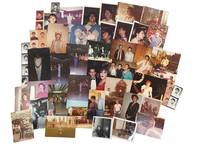
1967230901967. LGBTQGay ActivismDrag "Miss Jessie" photo archive chronicling 30 years in the life of San Diego drag performer and gay community activist Edward "Jesse" Taylor. The archive documents 30 years of Taylor's life as well as images from his 1987 title as Empress XVI in the California Imperial Court and his drag career as Miss Jessie. Taylor's also wrote as a columnist for the San Diego based LGBTQ community newspaper The Gay and Lesbian Times. Included in this archive is a scan of Taylor's 1998 obituary from the Gay and Lesbian Times a touching personal remembrance during a period marked by the AIDS crisis and its aftermath highlighting Taylor's cherished role in San Diego's LGBTQ community.<br /> <br /> Archive comprises approximately 330 photographs primarily color snapshots with some black-and-white prints dating from the 1960s through the 1990s with strong concentration in the late 1970s and 1980s. The photographs depict Taylor from childhood and adolescence to adulthood; with 18 images documenting drag performers including Taylor as Miss Jessie. The images include stage performances in sequined gowns and formal dresses candid backstage and social images and an image of Taylor wearing a crown captioned en verso "Miss Jessie / Empress" likely an image of Taylor as Empress XVI 1987 in the California Imperial Court. The archive also includes numerous photobooth strips snapshots annotated on versos with names dates and personal inscriptions and a California driver's license identifying Edward Gray Taylor linking Taylor's legal identity with his drag persona. Images show Taylor in costume both drag and playful dress-up posing with partners loved ones and family and traveling across the country and abroad. Several images show Taylor reading palms at a rainbow-decorated booth. The obituary clipping from the Gay and Lesbian Times dated October 29 1998 provides personal detail noting Taylor's title as Empress XVI his performance career and his role as a columnist as well as his belief in the mystic and professional psychic and palm-reading work. Jesse is described by those who knew him as as "an asset to the community and a gentle man who gave a lot of himself" and "an extremely loving man."<br /> <br /> The archive is an intimate personal glance at San Diego's LGBTQ community during an immense period of increased visibility through the Gay Liberation Movement of the 60s and 70s and of intense sorrow through the AIDS crisis of the 80s and 90s. Organizations such as the Imperial Court System and local drag performance revues were both sources of escapist entertainment and fundraising supporting the gay community. Taylor's life bridged performance with community journalism and gay activism. Light edge wear minor surface scratching and occasional fading present across photographs; some verso inscriptions in ink; driver's license shows creasing and corner wear; overall condition good. A rare cohesive rich and intensely personal archive offering insight into the life of a beloved figure in San Diego's LGBTQ history. unknown
1823PHO-2006Paris, Ponthieu, Lesage, Gide fils, 1823. 2 volumes in-8, xlix, [1]. 344 ; [4], 407 pp., relié demi basane époque, dos lisse orné avec pièce de titre olive et tomaison, ex-libris Jacob Fagel, réparations, quelques rousseurs. Chadenat, n°1196. - Forbes, n°569. - Sabin, n°73149.
1862370658San Francisco: Numa Hubert 1862. First edition. vii 1 9-458; 146 pp. 8vo. Bound in original sheep with black and red morocco labels loss at head of spine lower label chipped with loss worn at edges. Text toned dampstaining. First edition. vii 1 9-458; 146 pp. 8vo. A crucially important and quite uncommon report on land cases in the fifteen year period after the United States took control of California. One of the most contentious issues in California legal political and economic history in the period was over titles to lands granted by the Spanish and Mexican governments to the "Californios" those of Spanish or Mexican heritage who were born in or lived in California and American residents of California. Ogden Hoffman became the first Judge of the U.S. District Court for the northern district of California in 1851 at the young age of twenty-nine. His was the most significant judicial voice in the period on land title issues and he presided over many important cases including Jose Limantour's claim to the lands that made up San Francisco. In this volume Hoffman presents the reports of 110 important land cases and lists more than 800 other land claims in the appendix. "The consummate early source of information on land ownership in California from the Spanish and Mexican era" Kurutz in Volkmann catalogue. The text also includes biographical sketches of Spanish and Mexican governors from Portola to Pico.<br /> <br /> Thomas Streeter noted that he had searched for a copy of Hoffman's reports for quite some time but that it remained an elusive volume for him. It was only in 1957 that he acquired a copy from Dawson's Book Shop allowing him to complete his Zamorano 80 collection. "Though one would not suspect that this rather thick volume of reports of law cases was at all rare it is in fact a very rare book as well as quite an important one" Streeter. Warren Howell in his landmark catalogue 50 was only able to feature a modern reprint of Hoffman's Reports calling the original work "a classic of California history." Cowan II p 287; Graff 1919; Greenwood 1654; Howes H569 "b"; Streeter sale 2874. Zamorano 80:44; Norris Catalogue 1652 Numa Hubert unknown
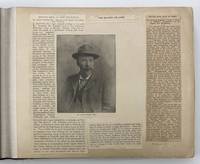
191413005Various locations in Nevada California and British Columbia 1914. 19 leaves illustrated with 176 photographs a combination of albumens cyanotypes silver gelatin and printing out paper images most with penciled captions on the album leaves plus relevant newspaper clippings to first and last leaves and a folder of original drawings letters manuscript poetry and additional newspaper clippings laid in. Oblong folio. Contemporary black pebbled cloth spine bound with two screw posts. Minor wear and dust soiling to covers edges and corners worn. Very good. An extraordinary annotated vernacular photograph album memorializing the career of legendary mining manager Frank Robbins 1856-1914. The compiler of the album was likely Robbins' son George C. Robbins who followed his father into the mining and geology fields. Frank Robbins was born in Portland Oregon in 1856. He studied science at Upper Canada College before first practicing his profession at the celebrated mining camp at Eureka Nevada where he apprenticed to prominent mining and metallurgical engineer Max Moeller. He became partners with Moeller before managing the famous lead mine at Eureka then mining camps at Leadville Colorado; various locations in southern California and northern Mexico; and Hells Canyon New Mexico and two notable mining concerns in British Columbia. He served in various advisory positions including a term as president of the British Columbia Mine Owners Association before moving to Los Angeles in 1902. The newspaper clippings in the album provide further biographical details on Robbins' life and career.<br /> <br /> The album is not presented in chronological order with the photographs beginning with two of Robbins' last managerial stints at the North Star Mine in Kimberley East Kootenay British Columbia and the Brooklyn Mine in Phoenix B.C. The North Star images include several shots of the mining campgrounds the assay office and some of the miners. The Phoenix Mine is presented in several cyanotypes and other photos showing the grounds and buildings from various angles as well as a few shots of Robbin's son Tom Robbins who died of typhoid fever at age twenty at the Phoenix mine camp. The next series of over twenty photographs emanate from the Jacalitos geological formation in southern California and are interspersed with shots of Robbins' family residences at San Diego and some images of the mining camp at Leadville Colorado. The Jacalitos images also include shots taken at Tijuana and Carrissa Valley. These are followed by about twenty images of Robbins and others with their drywasher and other scenes in the Goler Mining District in the Mojave Desert near Randsburg California.<br /> <br /> The next series of twenty photographs capture Robbins traveling to and exploring Cedros Island in Baja California. As with other series in the album several other people are identified in the captions in this section providing important details on Robbins' crew at each stop of his career. These images are followed by a series of over thirty images from Julian San Diego County and Deer Park California. A handful of these images feature mining-related buildings but most of the photos in this section show Robbins and his family and friends. The album concludes with a series of six images from the Hells Canyon Mining District in New Mexico. The images showing Robbins' various mining camps are sometimes interspersed with numerous shots of his family capturing group shots family scenes while traveling exterior and interior scenes of their residences and so forth. A couple of images capture indigenous peoples in the various places Robbins visited "Indians at Needles Calif.".<br /> <br /> The photographs and newspaper clippings in the album are accompanied by a folder containing numerous original materials that were probably intended to be mounted in the album but the compiler ran out of room. These items include thirteen illustrations in ink. All of these were likely executed by Frank Robbins himself as one is a self portrait signed by him. The other illustrations are largely comic or satirical scenes of travels and voyages and early California with one scene seeming to lampoon religious intrusion on Robbins' North Star Mine showing two nuns pushing a mine cart full of "glittering ore" with the mine cart labeled "Souvenir d' Etoile de Nord 1901." The folder also includes a few letters sent home by Robbins and two manuscript poems by him from a mining camp in 1897. Amongst these items is a letter from George Robbins Frank's son docketed on the verso as "George's first letter Sep. 20 1886." George was probably the compiler of the present album as the last page is mostly taken up with newspaper clippings of his professional activities as assayer and chemist namely as manager of the Jay Gould Mine in the Chewelah Mining District in Washington. Altogether the album and laid-in folder constitute a unique record of the life and career of one of the American West's most prominent mining engineers of the late-19th century. unknown
1853WRCAM46036Columbia Ca.: Gazette Print 1853. Broadside 10 3/4 x 8 inches. Printed in three columns. A bit of light foxing mostly in margins. Near fine. In a folding cloth clamshell case spine gilt. A rare broadside printing of the laws of the Columbia Mining District in California in 1853 created and enforced by the miners for their own self-government. The seventeen articles all deal with regulations for mining and claims. The first nine set out rules for making and operating claims. The next three address foreign ownership of claims. Article 10: "None but Americans and Europeans who have or shall declare their intentions of becoming citizens shall hold claims in this district." Article 11: "Neither Asiatics nor South Sea Islanders shall be allowed to mine in this district either for themselves or for others." Article 12 sets out a punishment for any miner who sells a claim to an Asian or a Polynesian. The final five articles set out rules for enforcing the laws including the creation of a Miners Committee and a system of binding arbitration. According to the text the laws were adopted "at a meeting of the Miners of the Columbia Mining District held Oct. 1st 1853." and the laws are signed in print by "C.H. Chamberlain Pres." and "R.A. Robinson Sec'y." <br> <br> "The item is of basic importance.as an example of how the California miners - or men beyond the reach of government anywhere else in our States and Territories for that matter - banded together and enacted and enforced codes of law for their own protection" - Eberstadt. The COLUMBIA GAZETTE which printed this broadside was according to Kemble the second newspaper to operate in Columbia starting operations in the fall of 1852. The first newspaper in the area the COLUMBIA STAR apparently printed only two or three issues in October-November of 1851 before the printing press was destroyed by vandals. <br> <br> Greenwood locates only three copies at the California Historical Society and the Bancroft Library and the Streeter copy which was sold at the Clifford sale in 1994. Rocq lists a copy at the Huntington Library. OCLC adds copies at Yale Library of Congress University of California at San Diego Stanford and DeGolyer Library at Southern Methodist University. A rare and interesting example of the search for order in the tumult of the gold rush. <br> <br> The Streeter copy sold to Howell for $550 in 1968. It later reappeared in the sale of California collector Henry Clifford in 1994. GREENWOOD 381. ROCQ 15427. EBERSTADT 131:105. STREETER SALE 2735. CLIFFORD SALE 26. OCLC 29876358. Gazette Print hardcover books
19163823San Diego 1916. Very good. Eight volumes totaling 2635 pages and approximately 85000 words with individual daily entries ranging from a single line to an entire page. Six volumes octavo final two volumes twelvemo all matching "Date Book" annual diaries uniformly bound in matching limp red cloth. Varying levels of rubbing edge wear and insect damage to cloth. Internally clean with occasional related newspaper clippings pasted in. A prime example of "history from below" comprised of eight manuscript diaries recording the daily activities observations thoughts and feelings of a young man living in San Diego for 2635 of the 2920 days that occurred from January 1 1909 through December 31 1916. Allen H. Wright was originally from Rome New York where he returns at least once in the time period covered by the present diaries but the diaries otherwise wholly pertain to Wright’s life in San Diego over an eight-year period. During this time Wright worked a variety of jobs such as shoe salesman freelance journalist with numerous specific mentions of article submissions mentioned here and City Clerk of San Diego. Wright was married to Florence Wright and the couple had two children - Allyn and Helen. Wright balanced his work life with family activities such as picnics trips to the beach visits to San Diego harbor where they witness the arrival of Mexican Japanese and other ships vacations across California and more. He also kept busy socially attending church and recording numerous instances of the meetings of his stamp club the “Floating Society†the New York State Society the “Men’s Club†and other organizations. In addition Wright makes numerous mentions of visitations letters received and news from back home in New York and other places.<br /> <br /> Considering Wright’s voluminous number of diary entries there are necessarily many thousands of subjects events names and more covered by him. A very small sampling of entries from just the first diary relate a wide variety of experience including: the robbery of the local library Wright’s attendance at the local Congregational Church to witness the anniversary exercises of the Chinese and Japanese missions the visit of a “young Mexican†to Wright’s house who asked to buy some flowers for the funeral of a baby the details of a day spent at the Ringling Brothers circus and parade the arrival of a copy of McCarthy’s “Lincoln’s Plan of Reconstruction†that Wright won from an Anderson Galleries book auction and information on other books and autographs he buys including California history works and legions more.<br /> <br /> Wright's life was relatively peaceful with much content recorded here on daily activities talks and sermons heard at his church “I heard Rev. Madison C. Peters the noted divine talk on what the Jew has done for American civilization†and so forth but naturally he also puts down his thoughts on some important and notable historical events. On April 15 1912 Wright writes: "News came today of the wrecking of the great ocean liner 'Titanic' on her first trip from Southampton to New York." In April of the next year Wright attended a lecture of the famed Arctic explorer Frederick Cook who referred to Admiral Peary as “a liar thief and murderer†as Cook claimed that “he himself has been cheated out of the honors which rightly belong to him as the true discoverer of the North Pole.†In January 1916 Wright “heard Upton Sinclair the novelist and author of ‘The Jungle’ talk on ‘After the War’ at the Open Forum. He is not an orator by any means but is argumentative in his utterances. A much more youthful man than I expected to see. Some of his socialist brethren here differed with him.†Wright had attended a speech by Teddy Roosevelt the year before also centered around World War I: "His main plea was for preparedness for war." The threat of the First World War was growing at that time but the event comes off as rather remote in Wright's account of a mostly quiet life in Southern California.<br /> <br /> Another military event which occurred very close to Wright’s home city was the Mexican Revolution which he makes several mentions of in his diaries beginning in August 1913: “Late tonight a special train brought in about 500 Mexican refugees from the frontier at El Paso Texas and Nogales Arizona who had been ordered here by the war department under escort of U.S. troops. Col. Emilio Kosterlitsky sic head of the rurales and Col. J.M. Reyes of the regular Mexican army are among those in the party.†Wright also notes further interactions with refugees the landing of American troops in Vera Cruz in April 1914 which he hopes won’t squelch a real estate deal for himself the arrival of “over a thousand marines†set to train on North Island in July 1914 the attack on a garrison in Tijuana by “the Villa troops†in December 1914 and more.<br /> <br /> Managing elections and oversight of voting was apparently a significant part of Wright's position as City Clerk. In a typical entry from November 1911 he reports "A total vote of 4380 was gotten out including a large percentage of women who thus had their first crack at the ballot." Earlier that same year Wright mentions sending out “2200 sample ballots†and promises to “get off as many more tomorrow.†The next year Wright reports that “for the first time in my voting experience I voted for the Democratic electors for president and for a Democrat ‘Billy’ Kettner of this city for Congress.†Wright was also privy to details regarding local government and political maneuverings as well as the economics of city development and various bond issues.<br /> <br /> A voluminous manuscript record of "ordinary" life in Southern California in the first decade-and-a-half of the 20th century with about 2600 daily entries over the eight years covered providing an opportunity for much deeper research into Wright’s time and place. unknown
1849WRCAM52151Kreuznach: R. Voigtlander 1849. 32pp. Printed blue wrappers rear wrapper original front wrapper in facsimile. Small corner repairs to rear wrapper. Some foxing two ink stamps on titlepage. Else very good. In a half morocco slipcase and cloth chemise. The first edition of an exceedingly rare Gold Rush pamphlet printed in the hallowed year of that epochal event. "Like many guidebooks for Europeans this pamphlet gives general information on California's physical features history and 'Notes for Emigrants' on the gold discovery. The portion on California's gold riches consists primarily of an article reprinted from the KOELNER ZEITUNG of January 14 1849 which in turn summarizes R.B. Mason and others. The guide mentions the many German settlers in the Sacramento Valley and speaks proudly of Captain Sutter" - Kurutz. <br> <br> Only four institutions worldwide report a copy of this book: the California State Library the University of California at Berkeley Yale and the State Library in Berlin. It is even more difficult to encounter at auction this copy being the only one on record to pass through the rooms. COWAN II p.102. HOWES C43 "aa." KURUTZ 112. SABIN 9984. R. Voigtlander hardcover books