Virginia; Mississippi; New OrleansBiblio.com
63 résultats
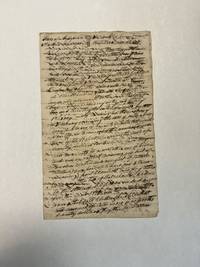
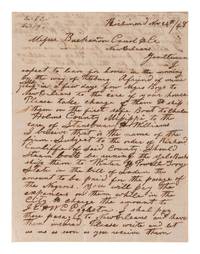
1848215241848. J.E. Eggleston correspondence dated 24 November 1848 documents the commercial shipment and sale of enslaved boys from Virginia to Mississippi within the interstate slave trade that expanded across the American South during the nineteenth century. The letter records logistical arrangements for transporting enslaved individuals through New Orleans before forwarding them by steamboat into the Mississippi interior. Written during a period when enslaved people were regularly moved from the Upper South to expanding plantation regions in the Deep South the document illustrates the economic and geographic structure of the domestic slave trade and reveals how enslaved children were treated as movable property within commercial networks linking Virginia Louisiana and Mississippi. The letter also directly references the relationship between the cotton market and the price of enslaved labor demonstrating how fluctuations in the agricultural economy shaped the buying and selling of enslaved people.<br /> <br /> Eggleston J.E. Autograph Letter Signed to "Messrs. Buckannon Carrol & Co." New Orleans. Richmond Virginia: 24 November 1848. One and one quarter pages written on a bifolium with address panel and postal markings. Eggleston informs the New Orleans firm that "a friend of mine will ship in a few days four Negro Boys to New Orleans to the care of your house" instructing them to receive the boys upon arrival and arrange onward shipment by steamboat to Mississippi. He directs the firm to "take charge of them & ship them on the first safe Boat to Chula Holms County Mississippi to the care of Stansbuary & Williams" with alternate instructions if river traffic permits delivery through another route. The letter treats the boys as financial cargo noting that the shipping record should state "the amount to be paid for the passage of the Negroes" and instructing the firm to cover any temporary expenses and charge them to the Eggleston account. Eggleston further notes that he will insure the enslaved individuals during the journey indicating the practice of protecting enslaved property through commercial insurance policies during transport.<br /> <br /> The letter also connects the purchase of enslaved labor directly to the speculative cotton economy of the nineteenth century South. Eggleston explains that falling cotton prices influenced his purchasing decisions writing that "owing to the low price of cotton I determined to purchase no more negroes at present. They are selling too high for the prospect of the price of cotton." Such remarks demonstrate the close relationship between commodity markets and the valuation of enslaved people within the plantation economy. Correspondence documenting the logistics of the interstate slave trade provides direct evidence of how enslaved individuals were transported through commercial networks linking coastal ports and inland plantations. Bifolium measuring approximately 6.5 x 8.75 inches with address panel postmark and "Paid 10" postal marking. Light creasing and toning with minor ink bleed through; folded for mailing. Overall very good condition. The letter preserves firsthand documentation of the commercial mechanisms that sustained the nineteenth century domestic slave trade. unknown
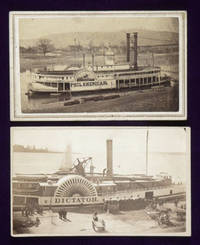
1870104901870. Photographer unknown. Steamboat Dictator photograph circa 1870s documenting Mississippi River transportation during the late nineteenth century a period when paddlewheel steamboats formed the central infrastructure of inland American commerce and travel. The image records the sidewheel steamboat Dictator at a river landing with passengers workers and horse drawn vehicles gathered nearby illustrating the role of river steam navigation in connecting towns and transporting goods throughout the Mississippi River system. Such vessels served as essential commercial and social conduits across the interior United States supporting regional trade networks passenger movement and communication between river communities during the decades following the Civil War.<br /> <br /> Silver gelatin photograph depicting the sidewheel steamboat Dictator moored at a river landing. The vessel's large paddlewheel housing prominently displays the name "Dictator" with the radial paddlewheel structure visible behind the decorative housing. The photograph shows numerous figures assembled along the dock area including groups of men standing near the landing and several horse drawn carriages positioned along the riverbank road. The steamboat's smokestack deck structures and railings are clearly visible while the surrounding landscape shows the wide river channel extending into the distance. The image captures a busy moment of docking activity with people gathered at the landing and transportation equipment indicating the movement of passengers and goods between riverboats and nearby communities.<br /> <br /> Steamboat transportation dominated commerce along the Mississippi River and its tributaries throughout the nineteenth century particularly in the decades following the Civil War when river trade remained vital to regional economies despite the rapid expansion of railroads. Paddlewheel steamers such as the Dictator carried passengers agricultural products and manufactured goods between river towns while serving as visible symbols of technological progress and regional connectivity. Photographs documenting individual vessels at work along river landings provide valuable visual evidence of how these transportation systems functioned within everyday commercial environments. Image measures approximately size not provided. Light edge wear and minor surface toning; overall condition good. An evocative visual document of Mississippi River transportation during the late nineteenth century. unknown
18041502190017City of Washington : A. & G. Way 1804-01-01. Hardcover. Very Good. Ocatvo. 7 109 p. ; 22 cm. Bound in publisher's paper wraps. In custom made box. Small stain to front wrap. Wear to extremities. Library stamp to second page from NYPL dated 1902. Contemporary owners name to head of title page of Thomas Dwight Massachusetts representative during the 8th Congress. Dwight's notations to some pages. Shaw & Shoemaker 7540. Sabin 52708 OCLC 1484388 <br> An extremely important Yazoo document. The Yazoo land scandal was a massive fraud perpetrated from in the mid-1790s by Georgia governor George Mathews and the state legislature. They sold large tracts of land in the Yazoo lands in what are now portions of Alabama and Mississippi to political insiders at very low prices in 1794. <br>With the end of the American Revolutionary War most of the states of the new Union attempted to extend their territorial claims from the Proclamation line of 1763 to the lands towards the Mississippi River. <Br> The Yazoo scandal began after the Bourbon County Act was dissolved in 1788 under pressure by the federal government a secret society was formed called the Combined Society formed with purpose money by land speculation. The group gained power in the state legislature and in the following year three companies The South Carolina Yazoo Company The Virginia Yazoo Company which was headed by Patrick Henry and the Tennessee Company built by the society's interests formed to buy land from Georgia. These venture were exposed and the deal for the land fell through in 1792 though the members of the Society still wished to develop Georgia lands. <br>In 1794 four companies were formed with several principal being from the original members of 1789 purchases and high ranking Georgian politicians to purchase 40 million acres of land for $500000. On January 7 1795 Governor Mathews signed into law a bill authorizing the sale of the 40000000 acres known as the Yazoo Act. When the details of the sale were revealed public outrage was widespread and people protested to federal officials and Congressmen. Jared Irwin and U.S. Senator James Jackson led the reform efforts: Irwin was elected Governor of Georgia and less than two months after taking office signed The Rescinding Act on February 13 1796 nullifying the Yazoo Act. <br> On the same day of The Rescinding Act 11 million acres of the Yazoo land was sold to the New England Mississippi Land Company who felt the repel was illegal for $1138000 a 650% profit in 13 months' time. The lands west of Georgia would be ceded to the United States government in the Compact of 1802 for 1.25 million. This last act threw land holders into a limbo and claims by third-party owners who had innocently purchased land from the original companies would not be resolved till 1816. <br> With the last private sale prior to the Compact of 1802 coupled with the 11th amendment the landmark case of Fletcher v. Peck would occur. John Peck of Massachusetts bought land from someone who could trace his title to the state of Georgia from 1795 when the Act was legal. He then sold 15000 acres to Robert Fletcher of New Hampshire based on a warranty deed warranting good title. The two were obviously citizens of different New England states and in June 1803 Fletcher sued Peck in federal circuit court in Massachusetts on diversity grounds alleging that the title was bad and requesting the return of his money. This landmark Yazoo document attempts to serve the land holders affected by the 1802 Compact the fledgling court case as well as an attempt to repel the sale by the State of Georgia. City of Washington : A. & G. Way hardcover
187514747New York: George Nesbitt 1875. Original printed wrappers front wrap detached with erasure of old institutional mark rear wrap illustrated with 'The Great Highway and Railroad Three Span Steel Bridge over the Mississippi River at Saint Louis Missouri'. Small map on page 3 shows the Road's locations. 22pp two folding tables. Good or so. FIRST EDITION. George Nesbitt unknown
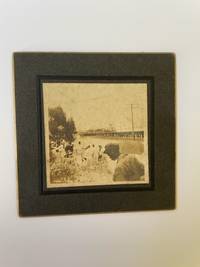
1900177661900. Early African American PHOTOGRAPHY -- RELIGION. silver gelatin photograph of a river baptism featuring a large group of African American subjects. Mississippi ca early 1900s. Photograph size is 2 1/4 x 2 1/4 in. Original silver gelatin photograph on cardstock mount .A young African American man wearing a hat and suit stands with his back to the camera we see in the foreground on the riverbank a group of African American subjects in light clothing close to the water's edge. A large ship is just visible beyond the dock in the background. Pencil inscription on verso reads "Miss- Colored Baptizing." 9Not: Historical records are evidence of the time in which they were created and often contain language are racist or derogatory and insensitive. This content does not reflect our values. These type of baptism on the banks of the Mississippi River were a public ceremony that attracted many converts in the South to the Delta region. Predominately African American Baptists performed their sacred ritual of outdoor baptisms on the Mississippi River until well into the 20th century in this Baptist-heavy state. Immersion baptisms typically took place in rivers or other natural bodies of water and summer and fall were the natural seasons for these congregational events. This rare photo captures a religious practice that has been integral to African-American Baptists for centuries. Photo has some toning surface soiling spotting and very small tear to right edge. But is still clear and in good to very good condition. unknown
183231197Franklin County MS 1832. Folio 7.75" x 12.25". 4 pp folded entirely in manuscript. The writing on either side of the first leaf is visible from the other side but everything is legible. Oneal's Complaint appears on the first two pages and on five lines of page three where it is signed by his lawyer. <br /> A nine-line summary of the case in different handwriting is also on page 3. <br /> Page 4 contains defendant's scribbled answer by his attorney R.W. Webber; an accounting of the costs incurred in the case; a notation of defendant's verdict; attorneys' signatures; and docketing information. Age toned old folds several small holes along top fold loss of a few words. Signatures of attorneys appear on final page on panel with defendant's answer. Good.<br /> <br /> John Cade 1788-1839 lived in Franklin County. The parties were probably local farmers. Richard W. Webber c.1798-1843 Cade's lawyer was born in Virginia and settled in Franklin County. A Whig and State representative he ran unsuccessfully for Congress in 1830. He was for a time the editor of the Jackson Independent Journal. JOURNAL OF MISSISSIPPI HISTORY Vol. 7 Page 148; and Volume 21-22 Page 34. unknown
183231198Franklin County Mississippi 1832. Folio 7.5" x 13". 4 pp folded. Completely in ink manuscript docketed on final page. Minor edgewear old folds. The writing on either side of each leaf is visible from the other side making the document difficult to read. Wax seal in interior blank margin of third page. Several small wormholes along one fold several letters affected. Signed on behalf of the plaintiff by an attorney with the surname of Stuart. Overall Good. <br /> <br /> Claibourn Read 1807-1845 and Thomas Lassiter 1772-1844 were related by marriage Read having married Lassiter's daughter Nancy 1805-1865 in 1826. Duncan Magee c.1799-1890 was the son of Willis Magee 1763-1827 one of the first settlers of Franklin County and father of Judge Thomas A. Magee1822-1891 after whom a cemetery was named in 1878. Gabriel Scott may have been related to the Magee family as Duncan's mother was Asha Scott Magee. unknown
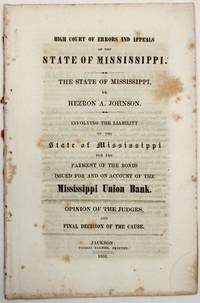
185323122Jackson: Thomas Palmer Printer 1853. 55 1 blank pp. Disbound with scattered foxing else Very Good. <br /> <br /> The court held the State of Mississippi liable for the payment of a State Bond payable to the order of the directors of the Mississippi Union Bank. The bond executed under seal by Mississippi's Governor and Treasurer had been issued in accordance with a statute pledging the State's credit to secure loans to the Mississippi Union Bank. <br /> Mississippi refused to pay claiming that the bond had been issued irregularly and that the governing Act had been passed unconstitutionally. The Court rejects these defenses after examining the statute and its purposes the State Constitution and the business of the Bank.<br /> Sabin 49545. Not in Marke Harv. Law Cat. Owen Cohen. Thomas Palmer, Printer unknown
185331456Davenport: Sanders & Davis 1853. 24pp. Stitched lightly foxed. Very Good. <br /> <br /> This pamphlet provides "elaborate details of the projected road across the State from Davenport to Council Bluffs" 130 Eberstadt 311. The incorporators included the well known civil engineer John Jervis of New York. <br /> 130 Eberstadt 312. Graff 2828. Not in Sabin Moffit Decker or BRE. Sanders & Davis unknown
185232118Jackson: Palmer & Pickett 1852. pp 3 vii-xvi 219pp. Bound in later buckram institutional bookplate. Title and certification leaves reinforced with some creasing. Lightly toned some spotting. About Good.<br /> Babbitt 266. Palmer & Pickett unknown
183825609Jackson Mi.: B.D. Howard State Printer 1838. Later plain wrappers light spine wear stitched. viii 1 blank 9-368pp. Some tan and fox Good.<br /> <br /> These early Mississippi laws treat a variety of subjects including banking incorporation police courts internal improvements voluntary associations state and local government. <br /> One law relieves Henry Foote later a U.S. Senator from Mississippi from the penalties incurred for dueling; those penalties would have barred him from holding public office.<br /> AI 51717 5. B.D. Howard, State Printer unknown
183625610Jackson Mi.: G.R. & J.S. Fall State Printers 1836. Contemporary plain wrappers worn stitched. viii 9-440pp. Early and late leaves foxed tanned. Else light scattered foxing. Good.<br /> <br /> These early Mississippi laws treat a variety of subjects including banking incorporation police courts internal improvements voluntary associations state and local government. One Resolve urges the non-slaveholding States to prevent abolitionists "from associating plotting or conspiring to undermine disturb or abolish our institution of domestic slavery." A detailed Index is included.<br /> AI 39009 5. G.R. & J.S. Fall, State Printers unknown
184127529Jackson: G.M. Price State Printer 1841. Contemporary plain pale pink wrappers worn at extremities and spine stitched. 302pp. Early leaves with a margin spot. Clean text. Very Good. <br /> <br /> This collection of the Laws prints Mississippi's Constitution of 1832 which replaced the original Constitution of 1817 and which governed Mississippi until Reconstruction. The Laws include a detailed Table of Contents and Index with Laws and Resolutions on fugitive slaves banking corporations police courts internal improvements voluntary associations state and local government. <br /> AI 41-3563 5. G.M. Price, State Printer unknown
186512930Meridian Miss.: J.J. Shannon. 1865. 71 1 blank pp.Disbound lacks printed wrappers. Moderately foxed. Good. <br /> <br /> One of the last Mississippi confederate imprints. Among its Acts are the emancipation of the "male slave Loyd" for his bravery on the field of battle in recovering the body of his mortally wounded master; and an Act authorizing the governor to call out the militia to arrest deserters from the Confederate army; Resolutions urge the return to active duty of General Joseph Johnston and thank Nathan Bedford Forrest for his decision to have stragglers and absentees returned to their commands. <br /> FIRST EDITION. P&W 3297. Crandall 1664. J.J. Shannon. unknown
187825697Cincinnati OH: Peter G. Thomson Arcade Book Store 1878. 3 1 blank pp. folded printed in red green black and gilt. Front of invitation ornately decorated in gilt and colored ink with several fancy typesettings and decorative banners. Second page contains the list of officers printed within a gilt border in the shape of a cross. Third page contains names of committee members printed within a gilt border. Two horizontal folds very short split at edge of one fold no text loss. Very attractive and Very Good.<br /> <br /> Several members had served in the Confederate Army. E.C. Carroll was an owner of the Vicksburg Sentinel and the President of the Board of Directors of the Merchant's National Bank in Vicksburg. Frederic Speed was an officer of this Lodge. and an Honorary 33rd Degree Scottish Rite Mason. He was involved in the great explosion of the ship Sultana at the end of the Civil War which resulted in the deaths of over 1700 Union prisoners of war. The steamship had been overloaded to several times the ship's capacity in an effort to make as much money as possible from the $5 per prisoner rate paid by the government. Speed was indicted and found guilty; the verdict was reversed by Brig. Gen. Joseph Holt on the ground that Speed's involvement was remote. <br /> Officers listed: Sir Wm. A. Fairchild P.E.C. Prelate; Sir H.W. Bowen Treasurer; Sir W.G. Paxton Eminent Commander; Sir. Wm. French Generalissimo; Sir F. Speed Captain General; Sir J.W. Powell P.E.C. Recorder; Sir I. Hardy Senior Warden; Sir H. Denio Junior Warden; Sir T.J. Thompson Warder; Sir J.H. Berresford Standard Bearer; Sir. E.P. Jones Sword Bearer; Sir Wm. Murry Sentinel. Committee on Invitation: Sir C.C. Floweree Sir E.C. Carroll Sir W.M. Vosburg Sir L.C. Moore P.E.C. Sir T.G. Birchett P.E.C. Sir W.H. Andrews and Sir M.R. Payne. Reception Committee: Sir J.W. Gray Sir T.J. Harper Sir H. Wilkerson Sir Jas. H. King Sir C.A. Manlove P.E.C. Sir Wm. French Sir W.S. Harris and Sir Simes Coate. Floor Managers: Sir Geo. M. Klein Sir G.G. Manlove Sir W.M. Chamberlain Sir A.G. Russell Sir M.C. Klein Sir S.H. Childress and Sir C.H. Nathan. Peter G. Thomson, Arcade Book Store] unknown
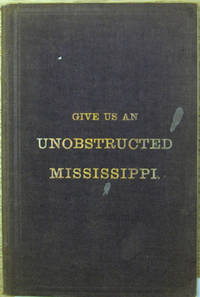
18778042baSt. Louis MO: John J. Daly 1877. Book. Very good condition. Hardcover. Americana; Mississippi river; 39p.; 19.4cm; original brown soft cloth; Sylvester Waterhouse 1830-1902 from paper delivered at convention in St. Paul MN; cover title: Give us an unobstructed Mississippi; owner marks. John J. Daly Hardcover
18839358np Columbus MS: Novelty" Print 1883. 18pp foldout statistical table stitched original printed wrappers with wrapper title as issued. Verso of front wrap is a "Map of the Columbus Baptist Association " Lightly foxed and worn upper corners turned Good. Bound in is an advertising slip for the New Baptist Hymnal. <br /> <br /> An accounting of the doings of the Session with ordained ministers and their addresses; Reports on Home Missions Ministerial Education Systematic Benevolence State Missions Publications Mississippi College and "Report on Colored Population." The latter seeks "the best method of imparting religious instruction to the colored population. Lost confidence in the white race is to some extent in many places being restored and they are willing and anxious in some places to receive religious instruction." FIRST EDITION. Owen 675. Not in NUC. Novelty" Print unknown
18879417Jackson Miss.: Sword and Shield Book Print 1887. 23pp stitched original printed wrappers. Lightly tanned blank inner margin stab holes old rubberstamp date. Good. An accounting of the doings of the Session. "The report on Prohibition was read and after lengthy and spirited discussion adoption was postponed for further discussion." Participants churches and ministers are named; Reports on Foreign and Home Missions Ministerial Education Spiritual Condition of the Churches Publications Mississippi College. FIRST EDITION.Not in Owen. Sword and Shield Book Print unknown
18779355Jackson Miss.: Charles Winkley Book and Job Printer 1877. 27pp stitched original printed self-wrappers. Lightly foxed and worn light old rubberstamp Good. An accounting of the doings of the Session with name and "post office" of each participant the churches represented; Reports on Sunday Schools Foreign Missions the Central Female Institute Ministerial Education State Missions "spiritual darkness spreads over the Mississippi Bottom" Mississippi College. An Abstract from Church Letters is also included: "We have nothing encouraging to write" says one; "We regret to say we are in a spiritually cold condition" says another. FIRST EDITION. Not in Owen. 34 NUC 0102351 1- annual series. Charles Winkley, Book and Job Printer unknown
188837442Printed for State of Mississippi. Near Fine with no dust jacket. 1888. First Edition. Hardcover. 423; appendix pages; Bound in later brown cloth boards with morocco and gilt spine label. Tight and NF with light aging of text block. Includes anti-negro voter fraud charges. . Printed for State of Mississippi hardcover
188136639Saint Louis: Great Western Printing Co. 1881. First edition. Cloth. A very good copy extremities worn front hinge starting foxing to endpapers and fore edge presentation stamp on title. 244 pp. 8vo. "Together with a Memorial to Congress prepared by the Committee of Twenty-One as Authorized by the Convention." Gift copy with stamp reading: "Compliments of George L. Wright Secretary" who ran the meeting. Great Western Printing Co. hardcover
188436643Washington D.C.: U.S. Government Printing Office 1884. Second edition. Cloth. A very good copy spine ends worn boards rubbed plates fine and quite uncommonly except for two small marginal tears without blemish. 2407-2901 pp. i.e 494 pp. plates. Illus. with 61 folding b/w plates 3 other plates and occasional in-text drawings. 8vo. Published first as part of "48th Congress 1st Session. House of Representatives. Ex. Doc.; No. 37." [U.S.] Government Printing Office hardcover
188235938Government Printing Office Washington - Mississippi River Commission 1882. 1st edition. Hardback. Cloth VG. 225712pp 26 folding b/w plates of 37 - LACKS the 10 plates corresponding to appendix D and the single plate making up appendix E. Plates to appendix F have been bound in here in error instead giving two sets of these plates spine lettering dulled cloth rubbed & worn especially to the corners text unmarked & folding plates in nice condition. 47th Congress 1st Session. Senate. Ex. Doc.; No. 10. Compehensive & detailed annual report of the Mississippi River Commission which was formed in 1879 to promote better navigation of the Mississippi & prevent flooding. The report consists mainly of hydrographic data and bore hole findings. There are 9 maps of the river mainly in the Memphis area. The 11 missing plates which were never bound in concern an appendix dealing with flow rates on the river & would seem to have shown pictorial representations of the results. Government Printing Office, Washington - Mississippi River Commission hardcover
181211748MAY 29 1812. Washington: Way. 1812. 4pp bound in attractive modern quarter calf and marbled boards. Very Good. <br /> <br /> The Committee attempts to cure the uncertain status of land titles that resulted from the Spanish evacuation of the Mississippi Territory. "Many persons holding lands" under Spanish authority "who were either ignorant of the transfer of the country to the United States or of any legal defect in their titles neglected to obtain patents for their lands" although under Spanish law they had evidently perfected their titles. The Committee recommends respecting those titles especially as "the claims are generally for small tracts of land and in many instances the lands have been inhabited and cultivated for a number of years." <br /> AI 27326 2. Not in Eberstadt Decker. Way. unknown
181714725Washington 1817. 7 1 blank pp. Disbound Very Good. The Convention had sought admission as a single State rather than division in two. But the Territory is so vast with so much uncultivated "wilderness" that the Committee worries whether "the whole Territory is capable of such a strong population as ever to render it a formidable State compared with the largest sized of the northern middle and western States." A chart is provided with data on the quantity of land sold in Mississippi Territory from the opening of the land offices on September 30 1816. FIRST EDITION. AI 42725 2. unknown