Volney, C. F :Livre Rare Book
171 résultats
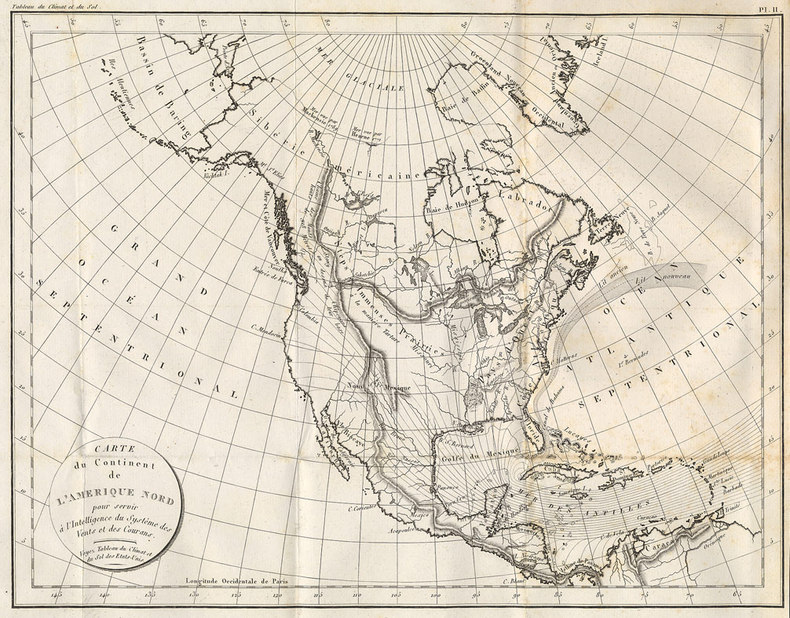
182511259Paris, Parmentier ; Froment, 1825 ; in-8 ; XIX, (1), 478 pp., 2 cartes dépliantes hors-texte, couverture de relai datée de 1826 par Froment et Coste ; tome quatrième des oeuvres de Volney.
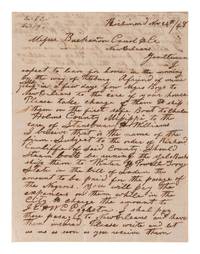
1848215241848. J.E. Eggleston correspondence dated 24 November 1848 documents the commercial shipment and sale of enslaved boys from Virginia to Mississippi within the interstate slave trade that expanded across the American South during the nineteenth century. The letter records logistical arrangements for transporting enslaved individuals through New Orleans before forwarding them by steamboat into the Mississippi interior. Written during a period when enslaved people were regularly moved from the Upper South to expanding plantation regions in the Deep South the document illustrates the economic and geographic structure of the domestic slave trade and reveals how enslaved children were treated as movable property within commercial networks linking Virginia Louisiana and Mississippi. The letter also directly references the relationship between the cotton market and the price of enslaved labor demonstrating how fluctuations in the agricultural economy shaped the buying and selling of enslaved people.<br /> <br /> Eggleston J.E. Autograph Letter Signed to "Messrs. Buckannon Carrol & Co." New Orleans. Richmond Virginia: 24 November 1848. One and one quarter pages written on a bifolium with address panel and postal markings. Eggleston informs the New Orleans firm that "a friend of mine will ship in a few days four Negro Boys to New Orleans to the care of your house" instructing them to receive the boys upon arrival and arrange onward shipment by steamboat to Mississippi. He directs the firm to "take charge of them & ship them on the first safe Boat to Chula Holms County Mississippi to the care of Stansbuary & Williams" with alternate instructions if river traffic permits delivery through another route. The letter treats the boys as financial cargo noting that the shipping record should state "the amount to be paid for the passage of the Negroes" and instructing the firm to cover any temporary expenses and charge them to the Eggleston account. Eggleston further notes that he will insure the enslaved individuals during the journey indicating the practice of protecting enslaved property through commercial insurance policies during transport.<br /> <br /> The letter also connects the purchase of enslaved labor directly to the speculative cotton economy of the nineteenth century South. Eggleston explains that falling cotton prices influenced his purchasing decisions writing that "owing to the low price of cotton I determined to purchase no more negroes at present. They are selling too high for the prospect of the price of cotton." Such remarks demonstrate the close relationship between commodity markets and the valuation of enslaved people within the plantation economy. Correspondence documenting the logistics of the interstate slave trade provides direct evidence of how enslaved individuals were transported through commercial networks linking coastal ports and inland plantations. Bifolium measuring approximately 6.5 x 8.75 inches with address panel postmark and "Paid 10" postal marking. Light creasing and toning with minor ink bleed through; folded for mailing. Overall very good condition. The letter preserves firsthand documentation of the commercial mechanisms that sustained the nineteenth century domestic slave trade. unknown
181537595Washington D.C.: n.p. 1815. First edition. Removed. A very good copy with a War Department stamp on title. 6 pp. 8vo. Shaw & Shoemaker 36393. n.p. unknown books
181637599Washington D.C.: Printed by William A. Davis 1816. First edition. Removed. A very good copy with a War Department stamp on title light foxing mostly to margins. 6 pp. 8vo. Shaw & Shoemaker 39618. [Printed by William A. Davis] unknown books
180411324Washington 1804. 8vo. 140 of 156 pp. <br><br>Via this agreement Georgia turned over to the U.S. its claim to land south of Tennessee and west of the "Chatahochie" River for the express purpose of creating the future state of Mississippi. In return it received the sum of $1250000. The new territory would result in the creation of Alabama and Mississippi. A sticking point but ultimately resolved was the problem of land in Georgia set aside for the Creek Indians by a treaty in 1798. It is common to find the Message without its accompanying documents but this copy is complete: p. 1-8: Message. p. 9-28: Report of the Commissioners appointed in pursuance of An Act for the Amicable Settlement of Limits with the States of Georgia . : 29th November 1804; p. 29-140: Documents accompanying the Report of the Commissioners on the Georgia Mississippi Territory Ceded to the United States: Feb. 10 1803. <br>Â Â Â Â <br>Â Â Â Â Shaw & Shoemaker 7452. Removed from a nonce volume in need of restiching. "Message" separated from the other pages. Lacks text of document L. A good copy. unknown books
188827816Stuttgart, Robert Lutz, 1888. (Sternbanner-Serie - Amerikanische Humoristen und Novellisten, Band V) XVI, 317 S. (16 cm) marmorierter Halbleinen / gebundene Ausgabe
1894120900London, Chatto & Windus, Piccadilly 1894. VIII, 208 pages and 32 pages "Publishers catalogue". Blauer geprägter u. titelvergoldeter Original-Leinwand-Einband. (Einband etwas bestossen u. gering fleckig). 20x13 cm
1898WRCAM52771Omaha 1898. Broadside approximately 10 1/2 x 7 3/4 inches. Previously folded some separations along old fold lines. Tanned corners slightly chipped. Good. A curious survival from the 1898 Trans- Mississippi Exposition held in Omaha promoting the sale of Mongolian jade carvings at a booth in the International Hall of the fair. The advertisement emphasizes the obscurity of the region of origin "the Chinese population could not understand their Mongolian brothers except through writing" and the convoluted journey of the artwork to America "carried in wicker baskets suspended on a pole resting on the shoulders of two men". "Were it not for the fact that the workers receive but a small daily wage hundreds of dollars would be represented in many of the pieces; as it is it is possible to dispose of them at moderate prices. An opportunity is thus offered to lovers of the curious and the beautiful to secure something entirely new in the art world something too of great artistic merit." unknown books
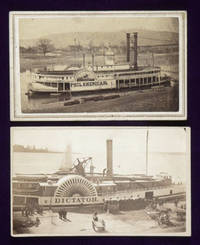
1870104901870. Photographer unknown. Steamboat Dictator photograph circa 1870s documenting Mississippi River transportation during the late nineteenth century a period when paddlewheel steamboats formed the central infrastructure of inland American commerce and travel. The image records the sidewheel steamboat Dictator at a river landing with passengers workers and horse drawn vehicles gathered nearby illustrating the role of river steam navigation in connecting towns and transporting goods throughout the Mississippi River system. Such vessels served as essential commercial and social conduits across the interior United States supporting regional trade networks passenger movement and communication between river communities during the decades following the Civil War.<br /> <br /> Silver gelatin photograph depicting the sidewheel steamboat Dictator moored at a river landing. The vessel's large paddlewheel housing prominently displays the name "Dictator" with the radial paddlewheel structure visible behind the decorative housing. The photograph shows numerous figures assembled along the dock area including groups of men standing near the landing and several horse drawn carriages positioned along the riverbank road. The steamboat's smokestack deck structures and railings are clearly visible while the surrounding landscape shows the wide river channel extending into the distance. The image captures a busy moment of docking activity with people gathered at the landing and transportation equipment indicating the movement of passengers and goods between riverboats and nearby communities.<br /> <br /> Steamboat transportation dominated commerce along the Mississippi River and its tributaries throughout the nineteenth century particularly in the decades following the Civil War when river trade remained vital to regional economies despite the rapid expansion of railroads. Paddlewheel steamers such as the Dictator carried passengers agricultural products and manufactured goods between river towns while serving as visible symbols of technological progress and regional connectivity. Photographs documenting individual vessels at work along river landings provide valuable visual evidence of how these transportation systems functioned within everyday commercial environments. Image measures approximately size not provided. Light edge wear and minor surface toning; overall condition good. An evocative visual document of Mississippi River transportation during the late nineteenth century. unknown
18250081RfPrag, J. G. Calve'sche Buchhandlung, 1825. s/w Frontispiz, 4 Kupfertafeln, XL, 428 S., 2 Bl. Verlagsanz., [3 Warenabbildungen] Pappband der Zeit mit attraktivem buntpapierbezug u. goldgeprägtem Rückenschild, Farbschnitt. Zustand 2, stark stockfleckig, S. 299-302 lose.
1858714Jefferson County State of Mississippi 1858. 4to. 315 x 200mm. 12 ½ x 8 inches. 2 pp. Docket on verso. Blue legal paper; folds edges browned and slightly frayed; top page cut 2 inches shorter no loss. The first page dated July 27 1858 shows the value of two slaves Juda and Emma owned by the named wards to be valued at $40 together. The three appraisers of the above slave property signed their names on the first page. The second page is an application of Mary Shaw dated April 9 guardian of the four Killingsworth wards to appoint the appraisers for the slaves. It is signed by Albert N. Ford clerk. There is an interesting story behind these records. William Anderson Killingsworth owner of about thirty slaves was born 1821 in Tennessee. He married Nancy Ann Shaw who was born 1820 in Mississippi and died 23 June 1853 in Jefferson County MS. Their children were Francis Horace Valencia William and Albert. On July 19 1854 William Killingsworth was murdered by two of his slaves named Jesse and Albert. Two more slaves Bill and Charles were accused of torching the house. Unnamed slaves retrieved William's body and his three children from the burning house. The slaves' trial was in the fall of 1854. Jesse and Albert were hung November 21 1854. Jesse confessed that he alone committed the murder. This information is recorded in a diary written by Susan Sillers Darden which began in January 1854.  Darden was thirty-eight years old when she wrote the diary. The diary reads in part; "July 20 1854: There was an awful murder committed at Killingsworth's last night. He was murdered by his negroes and the house burned down; he had four children but the house was discovered and taken out." "November 21 1854: Our negroes went to Fayette to see Jesse and Albert hung for murdering their master W. Killingsworth. Jesse confessed that he had done it all that no one helped to do it; exhorted his fellow servants to be faithful and do their duty." Since both parents were deceased the Killingsworth children were the wards of their grandmother Mary Shaw and Uncle William Shaw. Frances Chalmers Killingsworth 1842-1910 was the oldest child.  See The Diary of Susan Sillers Darden on-line at the Mississippi Department of Archives and History Jackson Mississippi. . unknown books
186312102Paris, Librairie L. Hachette et Cie, 1863 ; in-8, demi-chagrin maroquiné havane, dos lisse, faux nerfs dorés, titre doré, tranches mouchetées (reliure de l'époque) ; (4), 320 pp.
18041502190017City of Washington : A. & G. Way 1804-01-01. Hardcover. Very Good. Ocatvo. 7 109 p. ; 22 cm. Bound in publisher's paper wraps. In custom made box. Small stain to front wrap. Wear to extremities. Library stamp to second page from NYPL dated 1902. Contemporary owners name to head of title page of Thomas Dwight Massachusetts representative during the 8th Congress. Dwight's notations to some pages. Shaw & Shoemaker 7540. Sabin 52708 OCLC 1484388 <br> An extremely important Yazoo document. The Yazoo land scandal was a massive fraud perpetrated from in the mid-1790s by Georgia governor George Mathews and the state legislature. They sold large tracts of land in the Yazoo lands in what are now portions of Alabama and Mississippi to political insiders at very low prices in 1794. <br>With the end of the American Revolutionary War most of the states of the new Union attempted to extend their territorial claims from the Proclamation line of 1763 to the lands towards the Mississippi River. <Br> The Yazoo scandal began after the Bourbon County Act was dissolved in 1788 under pressure by the federal government a secret society was formed called the Combined Society formed with purpose money by land speculation. The group gained power in the state legislature and in the following year three companies The South Carolina Yazoo Company The Virginia Yazoo Company which was headed by Patrick Henry and the Tennessee Company built by the society's interests formed to buy land from Georgia. These venture were exposed and the deal for the land fell through in 1792 though the members of the Society still wished to develop Georgia lands. <br>In 1794 four companies were formed with several principal being from the original members of 1789 purchases and high ranking Georgian politicians to purchase 40 million acres of land for $500000. On January 7 1795 Governor Mathews signed into law a bill authorizing the sale of the 40000000 acres known as the Yazoo Act. When the details of the sale were revealed public outrage was widespread and people protested to federal officials and Congressmen. Jared Irwin and U.S. Senator James Jackson led the reform efforts: Irwin was elected Governor of Georgia and less than two months after taking office signed The Rescinding Act on February 13 1796 nullifying the Yazoo Act. <br> On the same day of The Rescinding Act 11 million acres of the Yazoo land was sold to the New England Mississippi Land Company who felt the repel was illegal for $1138000 a 650% profit in 13 months' time. The lands west of Georgia would be ceded to the United States government in the Compact of 1802 for 1.25 million. This last act threw land holders into a limbo and claims by third-party owners who had innocently purchased land from the original companies would not be resolved till 1816. <br> With the last private sale prior to the Compact of 1802 coupled with the 11th amendment the landmark case of Fletcher v. Peck would occur. John Peck of Massachusetts bought land from someone who could trace his title to the state of Georgia from 1795 when the Act was legal. He then sold 15000 acres to Robert Fletcher of New Hampshire based on a warranty deed warranting good title. The two were obviously citizens of different New England states and in June 1803 Fletcher sued Peck in federal circuit court in Massachusetts on diversity grounds alleging that the title was bad and requesting the return of his money. This landmark Yazoo document attempts to serve the land holders affected by the 1802 Compact the fledgling court case as well as an attempt to repel the sale by the State of Georgia. City of Washington : A. & G. Way hardcover
187514747New York: George Nesbitt 1875. Original printed wrappers front wrap detached with erasure of old institutional mark rear wrap illustrated with 'The Great Highway and Railroad Three Span Steel Bridge over the Mississippi River at Saint Louis Missouri'. Small map on page 3 shows the Road's locations. 22pp two folding tables. Good or so. FIRST EDITION. George Nesbitt unknown books
18581100Cincinnati: Enquirer Print 1858. Good. Broadside approximately 14.5 x 7 inches. Matted. Internal tear near top edge slightly affecting text. Light dust soiling heavier at foot; some creasing and foxing at edges. An attractive broadside advertisement for the Ohio & Mississippi Railroad promoting its newly completed line from Cincinnati to St. Louis. The broadside highlights the O&M as the "Shortest and Quickest" route from Cincinnati to Indianapolis Vincennes and St. Louis travelling on the "Only Wide Gauge in the West" with two trains leaving Cincinnati daily and arriving in St. Louis "two hours in advance of any other route." Ohio & Mississippi passengers enjoy "wide and spacious Saloon Cars unattainable on narrow gauge Roads and cross the River at Illinoistown on arrival." By contrast the dimwitted passengers of the Terre Haute and Alton "wait on bank of River one hour before crossing." With a woodcut illustration and a bracing combination of woodcut types. Not in OCLC; the line was completed at the end of 1857. Enquirer Print unknown books
187514747New York: George Nesbitt 1875. Original printed wrappers front wrap detached with erasure of old institutional mark rear wrap illustrated with 'The Great Highway and Railroad Three Span Steel Bridge over the Mississippi River at Saint Louis Missouri'. Small map on page 3 shows the Road's locations. 22pp two folding tables. Good or so. FIRST EDITION. George Nesbitt unknown
181411409Washington City: Pr. by Roger C. Weightman 1814. 8vo. 20 pp. <br><br>Concerns claims to territory ceded to the United States by the state of Georgia on 24 April 1802. The Yazoo land fiasco. <br>Â Â Â Â <br>Â Â Â Â Shaw & Shoemaker 33299; Eberstadt 133:456. Removed from a nonce volume. Very good condition. Pr. by Roger C. Weightman unknown books
183557663Northampton MA 1835. Whole number 293. folio pp. 4. Page 3 contains a story about a "negro insurrection in Mississippi". Paper toned folded good. unknown books
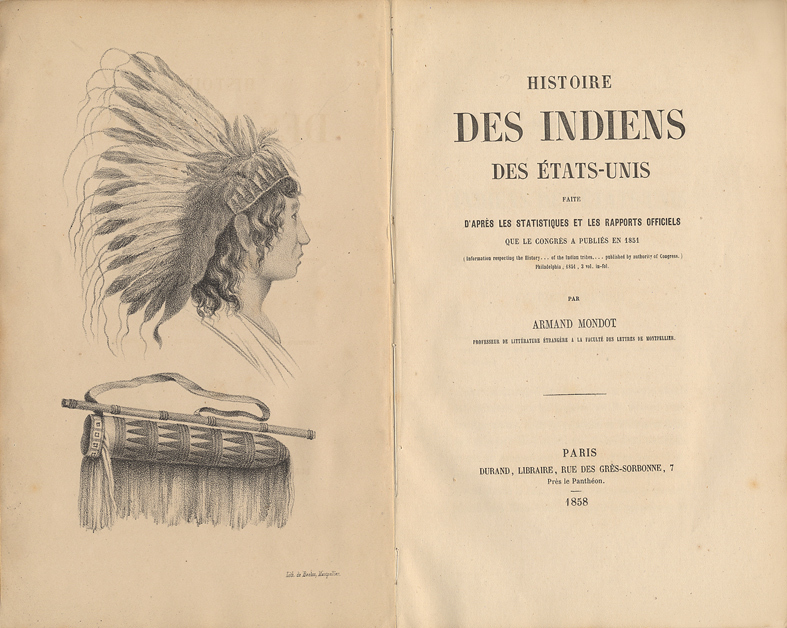
185811257Paris, Durand, 1858 ; in-8, broché ; (4), 352 pp., lithographie en frontispice, couverture imprimée.
1839WRCAM31975Washington Ms 1839. Broadside 15 1/2 x 13 inches. Separated at vertical center fold. Slight chipping at edges. Light tanning and dampstaining. Good. A prospectus for Jefferson College providing course information and names of professors most notably Jacob Ammen who was a West Pointer teacher of military engineering and eventually lieutenant colonel in the 12th Ohio Volunteers under McClellan. A key point is the argument that the local boys must be kept close to home and away from the evil influence of the abolitionists of the North. Wales writes: <br> <br> "At this very moment a formidable contest has commenced between North and South from the possible results of which the eye of the patriot instinctively revolts.it surely becomes us to preserve our children from any influence that might mislead their judgement or weaken their patriotism. To do this effectively WE MUST KEEP THEM AT HOME!" <br> <br> Good evidence of defending regional education in the antebellum South. Rare with only three copies located by OCLC at the University of Virginia the Clements Library and the American Antiquarian Society. HUMMEL SOUTHEASTERN BROADSIDES 1088. AMERICAN IMPRINTS 56588. unknown books
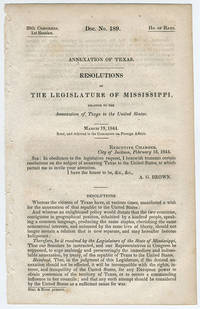
184411435Washington: Blair & Rives pr. 1844. 8vo. 2 p. <br><br>The Mississippians urge their senators and congressmen "zealously and perservingly" to bring about the annexation of Texas immediately and indissolubly. Government document: 28th Cong. 1st sess. H.R. Doc. 189. Removed from a nonce volume. Good condition. Blair & Rives, pr. unknown books
181111387Washington: A. & G. Way printers 1811. 8vo. 4 pp. <br><br>Unsuccessful petition to admit the Mississippi Territory into the union. <br>Â Â Â Â <br>Â Â Â Â Shaw & Shoemaker 24203. Removed from a nonce volume; gutter margin a little irregular; edges darkened three pages with a couple of small brown spots. Leaves separated. A. & G. Way, printers unknown books
181536029Washington City: Printed by order of the Senate of the United States. . . . Roger C. Weightman 1815. 8vo 21 cm; 8.375". 4 pp. <br><br>This resolution dated 27 December 1814 with a print date of 21 January 1815 expresses the Mississippi territory's outrage at British demands during negotiations to end the War of 1812 probably in relation to Great Britain's desire to travel freely on the Mississippi River. "We prefer a sacrifice of our lives and fortunes to the surrender of our rights or our national dignity. <br>Â Â Â Â <br>Â Â Â Â Shaw & Shoemaker 36405. Removed from a nonce volume; some very minor chipping around edges. Pencilling on title-page. Second and fourth page blank. Printed by order of the Senate of the United States. . . . Roger C. Weightman unknown books
1811WRCAM40132Washington City: R.C. Weightman 1811. 4pp. Dbd. Minor foxing stain in upper corner. Very good. A letter to the Speaker of the House of Representatives dated "January 3d 1811." The letter requests further compensation for the time and duties of the land commissioners of Mississippi Territory. Mississippi Territory encompassed the present states of Mississippi and Alabama until it declared statehood in 1817 at which time Alabama became its own territory. Very scarce. SHAW & SHOEMAKER 24188. R.C. Weightman unknown books
1801WRCAM35410Washington 1801. 16pp. Modern half calf and marbled boards spine gilt. Very light foxing. Near fine. A very early work on Mississippi territorial law printed in Washington in 1801 and containing ten laws that were eventually published "by order of the House of Representatives" after some local controversy over their content. The laws from the second half of 1799 range in subject matter from distempered cattle to divorce. These were added to the twenty-five laws already passed by the territorial legislature. The House of Representatives published this volume to assist in the "enquiry into the official conduct of Winthrop Sargent governor of the Mississippi territory" p.1. Thomas Jefferson removed Sargent from office later that year. SABIN 49519. SHAW & SHOEMAKER 1515. LC MISSISSIPPI. A SESQUICENTENNIAL OF STATEHOOD 1967 60. GOODSPEED 141:351 161:683. hardcover books