MississippiBiblio.com
Staying Safe at School
30093837-nnew. unknown

GreatBookPrices · États-Unis288,59 $US≈ 244,18 €
896 résultats
184127529Jackson: G.M. Price State Printer 1841. Contemporary plain pale pink wrappers worn at extremities and spine stitched. 302pp. Early leaves with a margin spot. Clean text. Very Good. <br /> <br /> This collection of the Laws prints Mississippi's Constitution of 1832 which replaced the original Constitution of 1817 and which governed Mississippi until Reconstruction. The Laws include a detailed Table of Contents and Index with Laws and Resolutions on fugitive slaves banking corporations police courts internal improvements voluntary associations state and local government. <br /> AI 41-3563 5. G.M. Price, State Printer unknown
30093837-nnew. unknown
30093837like new. unknown
188436643Washington D.C.: U.S. Government Printing Office 1884. Second edition. Cloth. A very good copy spine ends worn boards rubbed plates fine and quite uncommonly except for two small marginal tears without blemish. 2407-2901 pp. i.e 494 pp. plates. Illus. with 61 folding b/w plates 3 other plates and occasional in-text drawings. 8vo. Published first as part of "48th Congress 1st Session. House of Representatives. Ex. Doc.; No. 37." [U.S.] Government Printing Office hardcover
192241198Washington D.C.: Published by the United States Coast and Geodetic Survey 1922. Large folding nautical chart printed on heavy paper stock. Colored. A rare original coastal survey of the border between Mississippi and Alabama including the Mississippi Sound Gulfport Biloxi Pascagoula and a series of barrier islands: Cat Island Ship Island Horn Island Petit Bois Island Dauphin Island and Island Aux Herbes.<br/> <br/> Established by President Thomas Jefferson in 1807 as the Survey of the Coast the U.S. Coast and Geodetic Survey was the United States' first civilian scientific agency. This agency has followed its mission to survey the U.S. coastline create nautical charts of the coast and help increase maritime safety since its founding and has often played fascinating roles in significant chapters of U.S. history. It served in all theaters of the Civil War in the service of the Union Army and Navy pioneered acoustic exploration in the wake of the sinking of the Titanic and during WWI it worked to detect enemy submarines. In addition this agency worked to survey and produce detailed maps and renderings of the U.S. coast. These nautical survey maps commonly referred to as "T-sheets" provide fascinating insights into the history of the United States coastline which has and will continue to shift. These maps are the most important data source for understanding the physical and ecological characteristics of the U.S. shoreline. The present map is notable for its inclusion of Gulfport Biloxi and Pascagoula as they were gridded in 1922 and Cat Island a barrier island used for an undercover WWII program Dogs for Defense. Cat Island was chosen as the training camp dedicated to a specialized training program based off the untrue belief that dogs could differentiate humans by smell based on their cultural heritage. The top secret program attempted to train dogs to track and attack Japanese soldiers in the Pacific Theater and was held at Cat Island because of its similar terrain to that of the Pacific Islands and its uninhabited status. This operation was unsuccessful due to the incorrect assumption and shut down in 1944. This map is a highly detailed and accurate sea chart of the coastal border between Mississippi and Alabama and an important historical view of the developing states. Published by the United States Coast and Geodetic Survey unknown
3395Columbus Miss.: Headquaters 1895. . Handbill 11 x 5 1/2 inches Two copies only located one at Virginia Historical and one at the University of South Caroline which came from a scrapbook put together by Col. Benjamin Franklin Eshleman 1830-1909 a West Point graduate born in Pennsylvania but moved to Louisiana as a child and fought on the Confederate side during the Civil War. The scrap book was a gift of Jack and Mindy Castles; Mr. Castle's grandfather having married a daughter of Eshleman. This copy has been digitized. The handbill contains a plea to Confederate Veterans to contribute to a fund for a memorial in Richmond: Battle "As well said by Comrade Rouss: "The mementos of the struggle of the South.are scattered broadcast over the country. Should they not be collected and provision be made for their preservation.Then as our ranks are being rapidly thinnned by the Scythe of Time let the comparatively few of us that remain at once take the matter in hand and labor for the realization of the prophetic vision and joyous hope of the patriot orator Senator Daniel of Virginia--in the consummation of a completed Battle Abbey.which would beÊÊAn undying memorial of the people who fought their own battles in their own way for their own liberty as they conceived it for their own independence as they desired it and who need give to the world no other reason why." Signed in print by two ex-Confederate generals Stephen D. Lee and Edward Turner Sykes. Columbus, Miss.: Headquaters, 1895. unknown
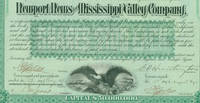
15-8430New York: Newport News And Mississippi Valley Company 1890. Folded Sheet. 39.5 x 29 cm. Near Fine. Stock certificate issued to C. Weidenfeld signed by C.P. Huntington & others for capital stock in the Newport News and Mississippi Valley Company dated August 11 1890. New York: Newport News And Mississippi Valley Company, 1890. unknown
183825609Jackson Mi.: B.D. Howard State Printer 1838. Later plain wrappers light spine wear stitched. viii 1 blank 9-368pp. Some tan and fox Good.<br /> <br /> These early Mississippi laws treat a variety of subjects including banking incorporation police courts internal improvements voluntary associations state and local government. <br /> One law relieves Henry Foote later a U.S. Senator from Mississippi from the penalties incurred for dueling; those penalties would have barred him from holding public office.<br /> AI 51717 5. B.D. Howard, State Printer unknown
183625610Jackson Mi.: G.R. & J.S. Fall State Printers 1836. Contemporary plain wrappers worn stitched. viii 9-440pp. Early and late leaves foxed tanned. Else light scattered foxing. Good.<br /> <br /> These early Mississippi laws treat a variety of subjects including banking incorporation police courts internal improvements voluntary associations state and local government. One Resolve urges the non-slaveholding States to prevent abolitionists "from associating plotting or conspiring to undermine disturb or abolish our institution of domestic slavery." A detailed Index is included.<br /> AI 39009 5. G.R. & J.S. Fall, State Printers unknown
3190Jackson Miss.: Clarion Book and Job Printing 1869. . 8vo disbound gutter showing evidence of previous pamphlet binding Two copies in OCLC: Harvard Law and the University of Mississippi. Wiley Pope Harris 1818 -1891 was a U.S. Representative from Mississippi. He attended the University of Virginia and graduated from the Law Department of Transylvania College Lexington Kentucky in 1840. Harris was elected as a Democrat to the Thirty-third Congress March 4 1853-March 3 1855. He declined renomination in 1854 and consequently resumed his law practice in Jackson Jackson, Miss.: Clarion Book and Job Printing, 1869. unknown
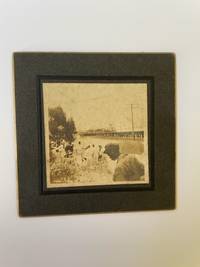
1900177661900. Early African American PHOTOGRAPHY -- RELIGION. silver gelatin photograph of a river baptism featuring a large group of African American subjects. Mississippi ca early 1900s. Photograph size is 2 1/4 x 2 1/4 in. Original silver gelatin photograph on cardstock mount .A young African American man wearing a hat and suit stands with his back to the camera we see in the foreground on the riverbank a group of African American subjects in light clothing close to the water's edge. A large ship is just visible beyond the dock in the background. Pencil inscription on verso reads "Miss- Colored Baptizing." 9Not: Historical records are evidence of the time in which they were created and often contain language are racist or derogatory and insensitive. This content does not reflect our values. These type of baptism on the banks of the Mississippi River were a public ceremony that attracted many converts in the South to the Delta region. Predominately African American Baptists performed their sacred ritual of outdoor baptisms on the Mississippi River until well into the 20th century in this Baptist-heavy state. Immersion baptisms typically took place in rivers or other natural bodies of water and summer and fall were the natural seasons for these congregational events. This rare photo captures a religious practice that has been integral to African-American Baptists for centuries. Photo has some toning surface soiling spotting and very small tear to right edge. But is still clear and in good to very good condition. unknown
19081144960State of Mississippi 1908. Hinge starting between ffep and frontis. Crease of spine. Presentation card signed by Dunbar Rowland Director of the Dept. of Archives and History tipped in at title page. Owner's name. 1911 date written on ffep. Hardcover. Good/No Jacket as Issued. Thick Large Octavo. Book. State of Mississippi Hardcover
1835354311Grand Gulf Mississippi 1835. 4pp. Folio newspaper. Minor fold lines light browning. Institutional deaccession stamp in lower margin. Contemporary ownership signature in right margin. Very good. 4pp. An early issue of this scarce Mississippi newspaper. Edited by W.M. Smyth publication of the GRAND GULF ADVERTISER began on Feb. 17 1834 and continued to 1839 after which it became known as the WEEKLY GRAND GULF ADVERTISER. The bulk of the present issue is comprised of Andrew Jackson's Dec. 7 1835 address to both houses of Congress. Jackson touches on Spain's internal conflicts political unrest in South America and the abandonment of an Indian policy rooted in engagement. A wealth of advertisements occupy the verso of the last leaf. EBERSTADT 135:543. OCLC 10134360 unknown
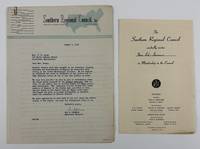
19465498Atlanta; Cleveland MS 1946. Very good. Two typed letters totaling 3pp. plus printed form completed in manuscript. Previously folded. Minor edge wear. Light tanning. A pair of typed letters that comprise an inquiry from Guy B. Johnson President of the Southern Regional Council and a response from Mrs. E.H. Green a resident of Bolivar County Mississippi concerning Black voting there in the July 1946 primary election. In his letter Johnson asks Green if she can corroborate stories in the Jackson Advocate that "all Negro votes were challenged" in Bolivar despite the fact that "Large numbers of Negroes were qualified to vote." Green responds that the votes of 241 qualified Blacks in Mound Bayou "the all Negro town" were all challenged on the basis that eligible African Americans had previously voted only in November general elections not primary elections. She also adds several observations from other districts in the county including the second where the votes of registered Blacks who appeared were also challenged and set aside. As a matter of prudence Green asks that "You do not give my name any publicity in this matter." The Southern Regional Council was a multiracial group founded in 1944 that sought equality and an end to racial violence. Also included with the two letters is a printed invitation for Mrs. E.H. Green to join the council with some information on its founding and goals. unknown
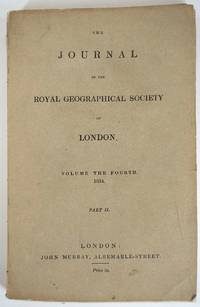
183429276London: Royal Geographical Society 1834. Paper wrappers pamphlet. Overall very good condition. Early RGS report in the original paper wrappers. It includes articles & maps on the failed settlement in North Australia "Geographical Memoir of Melville Island & Port Essington on the Cobourg sic Peninsula Northern Australia"; "Expeditions through the Upper Mississippi in 1832"; "Sketch showing the Routes of Lieutenants Conolly & Burnes" through India Pakistan Afghanistan Uzbekistan Iran down to the Persian Gulf where they travel through "Ormuz" straits. All three articles are illustrated by folding maps. 5pp letter towards the end about Volcanoes in Hawaii by David Douglas.<br /> <br /> This is in fine unopened uncut condition which we purchased from the RGS as they were deaccessing duplicate archives. Interestingly the list of publisher's offerings has a date of April 1837 which advertises Wellsted's account of his 1835 journey through Oman. He "reached areas which no European had previously seen and which were not visited again by Europeans for another hundred years" ODNB.<br /> <br /> 8vo gray paper wraps iv 129 - 422pp viii advertisements publisher's announcements of new books 4 maps and 2 lithographed plates bound in rear plates browned. Covers slt dusty. Volume the Fourth Part II complete in itself in original printed wrappers. Royal Geographical Society unknown
192041182Washington D.C.: Published by the United States Coast and Geodetic Survey 1920. Large folding nautical chart printed on heavy paper stock. Colored. A rare original coastal survey of coast between Louisiana and Mississippi and includes Lake Borgne Lake Ponchartrain the Mississippi Sound St Louis Bay Cat Island Long Beach and Gulfport.<br/> <br/> Established by President Thomas Jefferson in 1807 as the Survey of the Coast the U.S. Coast and Geodetic Survey was the United States' first civilian scientific agency. This agency has followed its mission to survey the U.S. coastline create nautical charts of the coast and help increase maritime safety since its founding and has often played fascinating roles in significant chapters of U.S. history. It served in all theaters of the Civil War in the service of the Union Army and Navy pioneered acoustic exploration in the wake of the sinking of the Titanic and during WWI it worked to detect enemy submarines. In addition this agency worked to survey and produce detailed maps and renderings of the U.S. coast. These nautical survey maps commonly referred to as "T-sheets" provide fascinating insights into the history of the United States coastline which has and will continue to shift. These maps are the most important data source for understanding the physical and ecological characteristics of the U.S. shoreline. The present map is notable for its inclusion of Gulfport as it was gridded in 1920 and Cat Island a barrier island used for an undercover WWII program Dogs for Defense. Cat Island was chosen as the training camp dedicated to a specialized training program based off the untrue belief that dogs could differentiate humans by smell based on their cultural heritage. The top secret program attempted to train dogs to track and attack Japanese soldiers in the Pacific Theater and was held at Cat Island because of its similar terrain to that of the Pacific Islands and its uninhabited status. This operation was unsuccessful due to the incorrect assumption and shut down in 1944. This map is a highly detailed and accurate sea chart of the coastal border between Louisiana and Mississippi and is an important historical view of the developing Louisiana and Mississippi. Published by the United States Coast and Geodetic Survey unknown
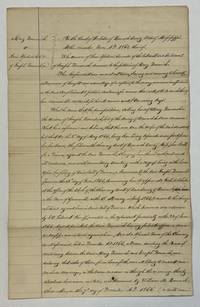
186840969Hancock County MS 1868. 6 pp on lined legal-size paper entirely in ink manuscript. Consisting of the answer of the Executor to the complaint of Mary Tomasich. Light wear a couple of short closed tears without loss. Very Good.<br /> <br /> Mary Tomasich calling herself "the widow of Joseph Tomasich late of the County of Hancock but now deceased" filed a claim against Joseph's estate. But in 1866 while Joseph was still alive she petitioned for a divorce from Joseph "charging him therein with continued ill treatments and with committing adultery with a negress living with him."<br /> The Hancock County Court issued a decree of divorce which the Executor attaches to this Answer. Having dissolved the bonds of holy matrimony Mary thus has no claim to Joseph's estate. unknown
186927439Vicksburg 1869. 3 1 blank pp. Folded. Toned old folds with a short closed margin tear. Title printed within a border. Good. Signed in ink by Brevet Major John Tyler Aide-de-Camp and Acting Assistant Adjutant General. <br /> <br /> The pamphlet lists Staff Officers Quartermasters at the Vicksburg Depot and Commanding Officers of troops stationed at Vicksburg Jackson Natchez Grenada Columbus Corinth Holly Springs and Lauderdale. Rare.<br /> See OCLC 48113898 1- NYPL. unknown
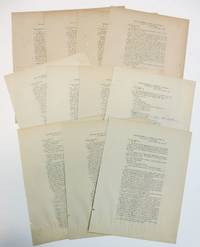
186927316Jackson Miss. 1869. Eleven Special Orders May 6-8 10 12-18 1869. Each 2-4 pages. Special Orders Nos. 92 93 94 95 96 98 99 100 101 102 103. Several manuscript emendations. Each signed in type and manuscript at the end by William Atwood Aide-de-Camp and Acting Assistant Adjutant General. Light wear light spotting Very Good.<br /> <br /> Mississippi's Reconstruction occurred under military rule. As evidenced by these Special Orders the military authorities appointed and removed Justices of the Peace members of the Board of Police Marshals Constables District Attorneys Clerks County Treasurers Mayors and other officers normally elected by the people or appointed by civil authorities.<br /> Not located on OCLC as of March 2024. unknown
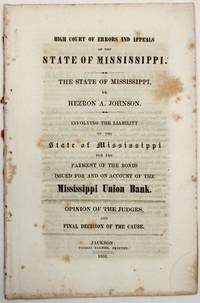
185323122Jackson: Thomas Palmer Printer 1853. 55 1 blank pp. Disbound with scattered foxing else Very Good. <br /> <br /> The court held the State of Mississippi liable for the payment of a State Bond payable to the order of the directors of the Mississippi Union Bank. The bond executed under seal by Mississippi's Governor and Treasurer had been issued in accordance with a statute pledging the State's credit to secure loans to the Mississippi Union Bank. <br /> Mississippi refused to pay claiming that the bond had been issued irregularly and that the governing Act had been passed unconstitutionally. The Court rejects these defenses after examining the statute and its purposes the State Constitution and the business of the Bank.<br /> Sabin 49545. Not in Marke Harv. Law Cat. Owen Cohen. Thomas Palmer, Printer unknown
185331456Davenport: Sanders & Davis 1853. 24pp. Stitched lightly foxed. Very Good. <br /> <br /> This pamphlet provides "elaborate details of the projected road across the State from Davenport to Council Bluffs" 130 Eberstadt 311. The incorporators included the well known civil engineer John Jervis of New York. <br /> 130 Eberstadt 312. Graff 2828. Not in Sabin Moffit Decker or BRE. Sanders & Davis unknown
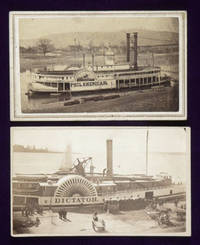
1870104901870. Photographer unknown. Steamboat Dictator photograph circa 1870s documenting Mississippi River transportation during the late nineteenth century a period when paddlewheel steamboats formed the central infrastructure of inland American commerce and travel. The image records the sidewheel steamboat Dictator at a river landing with passengers workers and horse drawn vehicles gathered nearby illustrating the role of river steam navigation in connecting towns and transporting goods throughout the Mississippi River system. Such vessels served as essential commercial and social conduits across the interior United States supporting regional trade networks passenger movement and communication between river communities during the decades following the Civil War.<br /> <br /> Silver gelatin photograph depicting the sidewheel steamboat Dictator moored at a river landing. The vessel's large paddlewheel housing prominently displays the name "Dictator" with the radial paddlewheel structure visible behind the decorative housing. The photograph shows numerous figures assembled along the dock area including groups of men standing near the landing and several horse drawn carriages positioned along the riverbank road. The steamboat's smokestack deck structures and railings are clearly visible while the surrounding landscape shows the wide river channel extending into the distance. The image captures a busy moment of docking activity with people gathered at the landing and transportation equipment indicating the movement of passengers and goods between riverboats and nearby communities.<br /> <br /> Steamboat transportation dominated commerce along the Mississippi River and its tributaries throughout the nineteenth century particularly in the decades following the Civil War when river trade remained vital to regional economies despite the rapid expansion of railroads. Paddlewheel steamers such as the Dictator carried passengers agricultural products and manufactured goods between river towns while serving as visible symbols of technological progress and regional connectivity. Photographs documenting individual vessels at work along river landings provide valuable visual evidence of how these transportation systems functioned within everyday commercial environments. Image measures approximately size not provided. Light edge wear and minor surface toning; overall condition good. An evocative visual document of Mississippi River transportation during the late nineteenth century. unknown
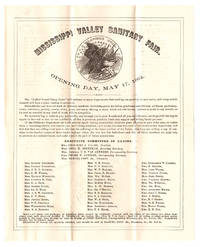
7128Mississippi Sanitary Fair 5 Feb.; 29 Feb.; 17 May 1864. 3 circulars 8" x 10" a total of 6 pp.: 1 3 pp. circular; 2 pp. listing of prizes etc.; 1 p. announcement of the fair illustrated. CONDITION: Very good one circular with tiny separations along old folds another circular with 1.5" and .5" tears along old fold. <p>A group of three scarce circulars issued to promote a St. Louis Sanitary Fair in 1864.</p> <br /> <br /> <p>The Western Sanitary Commission's biggest fund-raising event was the Grand Mississippi Valley Sanitary Fair. The Commission was a private agency devoted to aiding the Union Army's sick and wounded soldiers. Led by abolitionists and also focused on the needs of Freedmen it provided clothing and places to stay for freedmen and refugees and set up schools for African American children. The Western Sanitary Commission handled all sanitary affairs west of the Mississippi. The Grand Mississippi Valley Sanitary Fair opened on 17 May 1864 and ran through 18 June. Women did most of the work. The fair raised some $550000.</p> <br /> <br /> <p>The first circular concerns a fair to be held in St. Louis on 17 May 1864. The stated object of the fair was to raise a sufficient fund for the sanitary uses of the armies in the Mississippi Valley and for relief of their sick and wounded. It is noted that while its sphere of action is geographically limited to the states west of the mountains the Commission treats all soldiers alike and so far as in its power permits no one to suffer or be neglected. Pages two and three list the Commission's President Vice-President and staff. A note at the end of the circular requests that all goods and packages of whatever kind to be "distinctly marked with the name of the donor and place from which sent and directed to James E. Yeatman. Donations of money are specially solicited."</p> <br /> <br /> <p>The second circular reproducing two letters between Mrs. Chuncey I. Filley President of the Ladies's Executive Committee of the fair and Warne Cheever & Co. concerns the same fair to be held in St. Louis on 17 May 1864 which is described here as presenting an opportunity to every lady in the U.S. to show in one way or another her sympathy for the sick and wounded soldiers of our army. In view of encouraging a "pleasant spirit of rivalry" among the ladies that will ensure success of the fair the circular proposes two valuable prizes which will be sold to benefit the Sanitary Commission to be awarded to the lady who contributed to the fair the best and second best gentlemen's shirt. The first prize was an elegant silver plated tea set while second prize was a complete set of superior quality table cutlery. Provided are directions for making gentlemen's shirts.</p> <br /> <br /> <p>The third circular published at the time of the 17 May 1864 fair notes that the Ladies's Grand Fancy Court accepted all donated articles including any of the following items: embroideries worsted work wardrobe furnishing goods for ladies perfumes books stationary jewelry trunks china and glass. The public is exhorted to contribute to the exhibition "all that a generous patriotic heart may suggest and willing hands prepare" and to contribute to the fair's Children's Department "whatever gives pleasure to your little ones or incites them to ennobling efforts." "All the children who visit or contribute to this department will feel that they are adding their mite to alleviate the suffering of the brave soldiers of the Union-that they are adding a ray of sunshine to the desolate homes of those tender orphans whom the war has left fatherless-and that these sacrifices are made only to preserve our national honor and make smooth the path of future generations." Listed are the members of the Executive Committee of Ladies.</p> <br /> <br /> <p>OCLC records only five copies of the Mississippi Valley Sanitary Fair. Circular 5 Feb.; two copies of Mississippi Valley Sanitary Fair. Magnificent Premiums for the Best Shirts. at New York Historical Society and AAS; and two copies of Mississippi Valley Sanitary Fair. Opening Day May 17 1864 at New York Historical Society and AAS.</p> <br /> <br /> <p>REFERENCES: O'Neil Tim. "A Look Back : Fair held here in 1864 raised $550000 to aid Union troops." St. Louis Post-Dispatch 17 May 2021 at St. Louis Today online.</p> Mississippi Sanitary Fair, 5 Feb.; 29 Feb.; 17 May 1864 unknown
1882JC111661882. Hardcover. Very Good. Mottled black cloth backed in ornately gilt-ruled black calf; oblong 184 x 132 mm; contains 25 pencil drawings most of them titled and dated. It includes Fort Snelling; Minnehaha Falls; Oak Drive in White Bear Lake; a boat on White Bear Lake; St. Anthony's Falls in Minneapolis; Lake Minnetonka; Wabasha St. Bridge; an Old Brewery in St. Paul; Shanty-ville; Shelter Island New York; Goat Island; plus 3 portraits a bonfire scene and other views of the upper Mississippi River Niagara Falls and St. Paul Minnesota. Boards detached and spine perished; a few leaves loose and laid-in. Skilled work most of it on one side of the leaf therefore removable and suitable for display. <br/><br/>Harley DeWitt Nichols 1859-1939 was born in Barton Wisconsin. He began his education in art as early as 11 years of age. His first job putting his talent and training to use came in the form of an apprenticeship with the Milwaukee firm Marr & Richards where he stayed for 3 years drawing and engraving on wood. The subsequent years included many moves from Milwaukee to Chicago and later to New York where he studied at ASL and was encouraged by Professor Packard to pursue a career as an illustrator at a European school. Nichols left for Munich in October 1885 to attend the Royal Academy where he studied under Heckel became a member of the American Club and socialized with Carl von Marr the clubs president. He went to London for a little while and worked as an illustrator. By 1893 hed returned to New York working mostly in advertising and illustrating for Harpers Weekly and Century magazines. He helped organize the New York Water Color Club. Nichols didnt curb his parapatetic lifestyle until he moved to Laguna Beach California in 1894. The art community in Los Angeles was in its infancy but he got a teaching job at the Echo Mountain summer school and he was inspired by the scenery of Yosemite Monterey San Juan Capistrano and other locations in southern California. He stayed in Laguna Beach until his death in 1939. hardcover
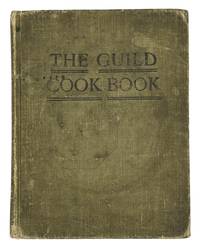
190710723Meridian Mississippi 1907. 7 x 5.5" tan cloth with black lettering 111 33 pp including 28 pages of local advertisements at the end. A rare Mississippi community cookbook. According to the foreword the recipes were "gathered from our friends and from other reliable sources" including The Delineator a women's magazine of the period. Many of the recipes are attributed to local women while several recipes submitted by celebrities of the era are attributed to The Delineator; the book also contains three bean recipes "Written expressly for the Junior Guild's Cook Book" by Miles Bradford editor of The Delineator. Other recipes include Gopher Soup Gumbo five recipes and Vegetarian Mince Meat; the book also contains around a dozen recipes for alcoholic drinks including Brandy Punch Whiskey Cocktail Old Fashioned Absinthe Cocktail Coffee Cocktail and Mint Julep. Staining and wear to covers staining/spattering to some pages in good condition overall. hardcover