[Mississippi River]Biblio.com
63 résultats
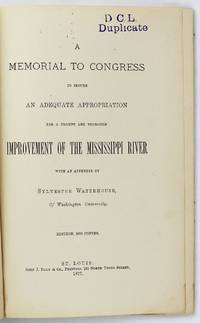
18775827St. Louis 1877. Good. 239pp. Original limp cloth covers gilt. Light fading and wear. Library ink stamp on title page. Minor wear to contents. Memorial submitted to Congress by the members of the River Improvement Convention held in St. Paul advocating for an allocation of government funds to improve the flow and path of the Mississippi River to better accommodate trade along the water route. unknown
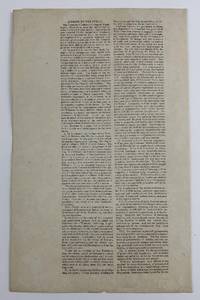
18393269Natchez Ms. 1839. Very good. Broadside 13 x 15.75 inches. Printed in four columns; central vertical fold. Light wear and toning. In the present broadside the trustees of Jefferson College announce that they are once again prepared to admit students in 1839 following a reorganization and give their mission statement courses of study faculty list tuition fees and more. The school located in Washington Mississippi just north of Natchez opened in 1811 and was the first college in the Mississippi Territory. In the text of this broadside one can clearly see sentiments and dispositions that would bring the Civil War to fruition. The first two columns are chiefly dedicated to a description fo the new faculty and their skills but also new measures put in place during the reorganization of the school. In place of gymnastics a daily military drill was substituted and a military police was to be established "for the preservation of good order and regularity."<br /> <br /> The remainder of the broadside descends into sectional paranoia arguing that students must be kept close to home in order for them to maintain allegiance to Mississippi and the South: "At this very moment a formidable content has commenced between the North and the South from the possible results of which the eye of the patriot instantly revolts. It surely becomes us to preserve our children from any influence that might mislead their judgment or weaken their patriotism. To do this effectually we must keep them at home!. Send your sons to other States where they are relased from social bonds you not only cut off these powerful incentives to emulation but you do more and worse you weaken or detach the growing virtues of the heart. and you estrange them from their native land."<br /> <br /> OCLC locates only a small handful of examples. unknown
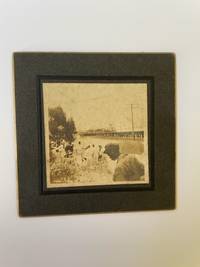
1900177661900. Early African American PHOTOGRAPHY -- RELIGION. silver gelatin photograph of a river baptism featuring a large group of African American subjects. Mississippi ca early 1900s. Photograph size is 2 1/4 x 2 1/4 in. Original silver gelatin photograph on cardstock mount .A young African American man wearing a hat and suit stands with his back to the camera we see in the foreground on the riverbank a group of African American subjects in light clothing close to the water's edge. A large ship is just visible beyond the dock in the background. Pencil inscription on verso reads "Miss- Colored Baptizing." 9Not: Historical records are evidence of the time in which they were created and often contain language are racist or derogatory and insensitive. This content does not reflect our values. These type of baptism on the banks of the Mississippi River were a public ceremony that attracted many converts in the South to the Delta region. Predominately African American Baptists performed their sacred ritual of outdoor baptisms on the Mississippi River until well into the 20th century in this Baptist-heavy state. Immersion baptisms typically took place in rivers or other natural bodies of water and summer and fall were the natural seasons for these congregational events. This rare photo captures a religious practice that has been integral to African-American Baptists for centuries. Photo has some toning surface soiling spotting and very small tear to right edge. But is still clear and in good to very good condition. unknown
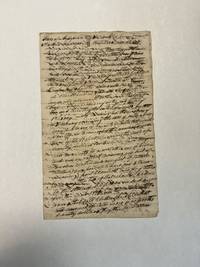
183231197Franklin County MS 1832. Folio 7.75" x 12.25". 4 pp folded entirely in manuscript. The writing on either side of the first leaf is visible from the other side but everything is legible. Oneal's Complaint appears on the first two pages and on five lines of page three where it is signed by his lawyer. <br /> A nine-line summary of the case in different handwriting is also on page 3. <br /> Page 4 contains defendant's scribbled answer by his attorney R.W. Webber; an accounting of the costs incurred in the case; a notation of defendant's verdict; attorneys' signatures; and docketing information. Age toned old folds several small holes along top fold loss of a few words. Signatures of attorneys appear on final page on panel with defendant's answer. Good.<br /> <br /> John Cade 1788-1839 lived in Franklin County. The parties were probably local farmers. Richard W. Webber c.1798-1843 Cade's lawyer was born in Virginia and settled in Franklin County. A Whig and State representative he ran unsuccessfully for Congress in 1830. He was for a time the editor of the Jackson Independent Journal. JOURNAL OF MISSISSIPPI HISTORY Vol. 7 Page 148; and Volume 21-22 Page 34. unknown
187140107Jackson Miss.: Kimball Raymond & Co. State Printers 1871. Original printed pale green wrappers lightly spotted. Stitched. 67 1 blank pp. Clean text. Very Good plus. Contemporary ownership inscription in pencil "W.H. Bullard." <br /> <br /> Alcorn 1816-1894 born in Illinois Territory was Governor of Mississippi from March 1870 through November 1871. He was active in Mississippi politics from about 1845. During the Civil War he served as a Confederate. After the War as a "Scalawag" he supported the 14th Amendment and votes for freedmen. Nevertheless he clashed with his new Republican friends by opposing federal intervention against the Klan and federal laws abolishing segregation in public facilities. <br /> Alcorn addresses "what remains to be done of the work of reconstruction" thus focusing on "the restoration of our social and material ruin." With tables and data he demonstrates the disastrous economic effects of the War. But his data also give "encouragement to the practicability of educating the great body of our labor to the moral level of freedom." Marriage licenses are up; extreme "sexual license" is down. Preachers teachers schools property ownership and trades for the freedmen are all on the increase.<br /> Denouncing vigilantism he says that "A class of lawless violence the most cruel and cowardly proceeds in a few quarters in the person of the masked assassin; and so far has succeeded in evading punishment if not detection."<br /> OCLC 28758840 3- Columbia Yale LSU as of June 2024. Not at online AAS. Kimball, Raymond & Co., State Printers unknown
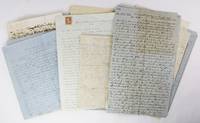
18656242Various locations 1865. About very good. Forty letters approximately 96pp. Many with original envelopes. Light wear and soiling old folds. In a legible hand. Together with twelve additional family letters and two military commissions. A wonderful archive of correspondence written home from the Confederate lines by William Henry Tabb of the 14th Mississippi Infantry. William Henry Tabb 1837-1864 was the son of a minister at the Choctaw Agency in Oktibbeha County Mississippi. In April 1861 he was commissioned as a lieutenant in the Agency Guards which were soon absorbed as a company in the 14th Mississippi Infantry. He was captured at Fort Donelson exchanged reached the rank of captain and was with his regiment when he suffered a fatal wound in the defense of Atlanta on August 5 1864. <br /> <br /> Tabb begins his letters with optimism. On August 1861 after training in Corinth Mississippi the regiment met with a parade in Huntsville en route to eastern Tennessee: "The women men and children were down to see us and a regiment turned out to do us honor. Such cheering from beautiful young ladies all along our way is enough to make men brave." On October 22 1861 he recounts the recent death by disease of his brother Thomas Tabb in Marion Alabama also of the 14th Mississippi calling him "my dearest friend on earth."<br /> <br /> Tabb was captured at Fort Donelson in February of 1862. Two of these letters were written from the Union prison at Johnson's Island near Sandusky Ohio. In May 1862 he writes: "We are not allowed to write what nor as much as we please. I have no friends to work for me see no indications of a general exchange or parole and it is almost impossible to escape from this island. It is amusing to see men one day Confederate officers and the next day cooking or around the wash tub. We have no servants. I am well treated have a plenty not a variety of food and clothing that we need issued to us." By September 24th he was back with his regiment in Mississippi: "The Yankees stole my shoes and I am wearing an old pr of boots. It appears that my conduct at Donelson has been very highly spoken of. Well I.tried to do my duty but I am sure I did nothing extra. Indeed our regt in my opinion fell little short of disgracing itself." He adds a word on the troubled home front situation: "Am sorry to hear that the Negroes have commenced stealing. I would very much like to see all that have behaved themselves and wd thrash those who have been stealing."<br /> <br /> On April 11 1863 he describes the recent Battle of Ponchatoula which other companies in his regiment participated in: "Rollins was sent out with ten of the company on our right wing to try to flank them. As soon as he commenced firing on them we attacked their center and they broke to run. They were zouaves red pants we never could catch them." He lamented the loss of his enslaved servant on June 7th near Yazoo City: "I expected John to come to me. I have become attached to John and don't know how to get along without him. I look for him every day now." Tabb had some great stories about Grant's efforts to take Jackson the Mississippi capital from which Johnston's Confederates performed a stealth evacuation. On the 19th and 20th of July 1863 he wrote: "All of the boys wanted to stay and fight but Grant had 80000 men and we had only 30000. It is true we were behind breastworks but they were not good and the place could be easily flanked. Johnson prepared to evacuate the place from the time we got there. The Yankees knew it. Not a word was spoken not a command given. The Yankees knew nothing of our leaving. Some of our men did not know we had left and were left behind but overtook us. I hear that the Yankees commenced shelling the town the other morning after we left and kept it up til 9 o'clock when some of the citizens hoisted the white flag and surrendered the place. They were vexed to know that we had left them without their knowing anything about it."<br /> <br /> Tabb had been away from the regiment for the start of the Atlanta campaign and on July 9 1864 he wrote: "I reached the command the evening of the 5th and found my company.8 miles from Atlanta. I found the men dirty and many of them with worn out clothes and not very good rations but all in good spirits and glad to see me. The people of Atlanta are leaving rapidly. They think the place will be evacuated. Do not be surprised if you hear it. We will not be whipped if we do leave it." This is Tabb's final letter in the collection. He was shot a month later. The group concludes with nine condolence letters and memorials. An October 1864 memoriam copied in 1894 recounted his death: "At the time he received the fatal shot he was commanding the brigade skirmishers & was just forming the line to proceed to the front. Though terribly mangled & in great pain he was calm & collected." He survived long enough to send farewell thoughts to his family and to regret "that I was not spared to see my country through her troubles." Also included are two of Tabb's military commissions in the Agency Rifles from the State of Mississippi: as Second Lieutenant on 24 April 1861 and as First Lieutenant on 25 December 1861. Both are signed by Governor John J. Pettus. In all a wonderful archive from a Confederate soldier who saw significant action and imprisonment during the war. unknown
1887108433Century Company. Very Good with no dust jacket. 1887. Magazine. Battles & Leaders of the Civil War; 9 x 11; 40 pages; Very nice condition with illustrations . Century Company unknown
1882JC111661882. Hardcover. Very Good. Mottled black cloth backed in ornately gilt-ruled black calf; oblong 184 x 132 mm; contains 25 pencil drawings most of them titled and dated. It includes Fort Snelling; Minnehaha Falls; Oak Drive in White Bear Lake; a boat on White Bear Lake; St. Anthony's Falls in Minneapolis; Lake Minnetonka; Wabasha St. Bridge; an Old Brewery in St. Paul; Shanty-ville; Shelter Island New York; Goat Island; plus 3 portraits a bonfire scene and other views of the upper Mississippi River Niagara Falls and St. Paul Minnesota. Boards detached and spine perished; a few leaves loose and laid-in. Skilled work most of it on one side of the leaf therefore removable and suitable for display. <br/><br/>Harley DeWitt Nichols 1859-1939 was born in Barton Wisconsin. He began his education in art as early as 11 years of age. His first job putting his talent and training to use came in the form of an apprenticeship with the Milwaukee firm Marr & Richards where he stayed for 3 years drawing and engraving on wood. The subsequent years included many moves from Milwaukee to Chicago and later to New York where he studied at ASL and was encouraged by Professor Packard to pursue a career as an illustrator at a European school. Nichols left for Munich in October 1885 to attend the Royal Academy where he studied under Heckel became a member of the American Club and socialized with Carl von Marr the clubs president. He went to London for a little while and worked as an illustrator. By 1893 hed returned to New York working mostly in advertising and illustrating for Harpers Weekly and Century magazines. He helped organize the New York Water Color Club. Nichols didnt curb his parapatetic lifestyle until he moved to Laguna Beach California in 1894. The art community in Los Angeles was in its infancy but he got a teaching job at the Echo Mountain summer school and he was inspired by the scenery of Yosemite Monterey San Juan Capistrano and other locations in southern California. He stayed in Laguna Beach until his death in 1939. hardcover
1837250311Augusta Mississippi 1837. 1 pp. 4to. Toned old folds else fine. 1 pp. 4to. Reads in part: "According to a promisee made to Mr. George Holley of Biloxi I have written to give you some information in relation to the claim to Cat Island in Consequence of Mr. Holley not being able to give me the name of the claimant." <br/><br/> unknown
187032897Jackson: W.W. Gates & Co. 1870. 16mo. 15 1 pp. Stitched in original printed and lightly worn wrappers. Very Good.<br /> <br /> The By-Laws of Jackson Council No. 13 are printed at pages 12-15. Page 16 prints a list of eight "Officers for 1870" and 24 Members.<br /> Not located on OCLC as of May 2016. W.W. Gates & Co. unknown
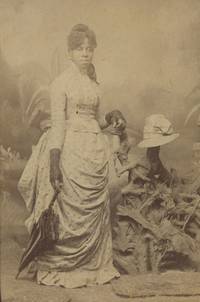
1890List1739Vickburg: M.T. Frederichs 1890. Cabinet card photograph measuring 5 ½ x 4 on larger mount. Some light wear to mount very good. Very Good. A portrait of an African-American woman in a dress holding a parasol and with a hat curiously perched on a prop branch nearby. We find a record of an M.T. Frederichs operating from a different address in Vicksburg in 1895 but are unable to identify the subject of this photograph. M.T. Frederichs unknown
186927439Vicksburg 1869. 3 1 blank pp. Folded. Toned old folds with a short closed margin tear. Title printed within a border. Good. Signed in ink by Brevet Major John Tyler Aide-de-Camp and Acting Assistant Adjutant General. <br /> <br /> The pamphlet lists Staff Officers Quartermasters at the Vicksburg Depot and Commanding Officers of troops stationed at Vicksburg Jackson Natchez Grenada Columbus Corinth Holly Springs and Lauderdale. Rare.<br /> See OCLC 48113898 1- NYPL. unknown
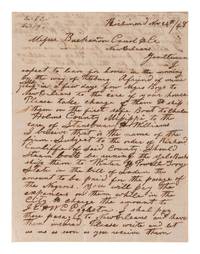
1848215241848. J.E. Eggleston correspondence dated 24 November 1848 documents the commercial shipment and sale of enslaved boys from Virginia to Mississippi within the interstate slave trade that expanded across the American South during the nineteenth century. The letter records logistical arrangements for transporting enslaved individuals through New Orleans before forwarding them by steamboat into the Mississippi interior. Written during a period when enslaved people were regularly moved from the Upper South to expanding plantation regions in the Deep South the document illustrates the economic and geographic structure of the domestic slave trade and reveals how enslaved children were treated as movable property within commercial networks linking Virginia Louisiana and Mississippi. The letter also directly references the relationship between the cotton market and the price of enslaved labor demonstrating how fluctuations in the agricultural economy shaped the buying and selling of enslaved people.<br /> <br /> Eggleston J.E. Autograph Letter Signed to "Messrs. Buckannon Carrol & Co." New Orleans. Richmond Virginia: 24 November 1848. One and one quarter pages written on a bifolium with address panel and postal markings. Eggleston informs the New Orleans firm that "a friend of mine will ship in a few days four Negro Boys to New Orleans to the care of your house" instructing them to receive the boys upon arrival and arrange onward shipment by steamboat to Mississippi. He directs the firm to "take charge of them & ship them on the first safe Boat to Chula Holms County Mississippi to the care of Stansbuary & Williams" with alternate instructions if river traffic permits delivery through another route. The letter treats the boys as financial cargo noting that the shipping record should state "the amount to be paid for the passage of the Negroes" and instructing the firm to cover any temporary expenses and charge them to the Eggleston account. Eggleston further notes that he will insure the enslaved individuals during the journey indicating the practice of protecting enslaved property through commercial insurance policies during transport.<br /> <br /> The letter also connects the purchase of enslaved labor directly to the speculative cotton economy of the nineteenth century South. Eggleston explains that falling cotton prices influenced his purchasing decisions writing that "owing to the low price of cotton I determined to purchase no more negroes at present. They are selling too high for the prospect of the price of cotton." Such remarks demonstrate the close relationship between commodity markets and the valuation of enslaved people within the plantation economy. Correspondence documenting the logistics of the interstate slave trade provides direct evidence of how enslaved individuals were transported through commercial networks linking coastal ports and inland plantations. Bifolium measuring approximately 6.5 x 8.75 inches with address panel postmark and "Paid 10" postal marking. Light creasing and toning with minor ink bleed through; folded for mailing. Overall very good condition. The letter preserves firsthand documentation of the commercial mechanisms that sustained the nineteenth century domestic slave trade. unknown
189840873N.P.: Sentinel and Gazette Steam Press 1851. 1898. 8 1/2" x 5 1/2" in light peach wrappers though missing the front wrapper. 15 pp. Illustrations. Map. Although it eventually became a transcontinental railroad the railroad that became the Milwaukee Road began as the Milwaukee and Waukesha Railroad whose goal was to link the developing Lake Michigan port city of Milwaukee Wisconsin with the Mississippi River. The company incorporated in 1847 but changed its name to the Milwaukee and Mississippi Railroad in 1850 before construction began. A report to the Board of Directors explaining that the railroad is not completed to Waukesha as was expected and offering reasons for the delay in its completion. "Considering our small beginning only a little over one year ago - that we have relied solely on the resources of the people of Wisconsin for the means of prosecuting this enterprise - without seeking foreign aid - with only the small contributions of each of our thousand Stockholders and the credits based on the securities of our city and citizens we have in that time completed the grade of our Road for twenty and a half miles laid the Track and brought into actual use the half of that distance - and will have the whole completed and in successful operation by the middle of February next." Information on estimated and actual costs of the First Division extending the road from Milwaukee to Waukesha. It appears that actual costs far exceeded estimates "but that has been the result of peculiar circumstances under which the work has been performed and by the adoption of a rail of greater weight than that estimated." It was determined that the contractors to whom jobs had been given at lower costs were inexperienced and inefficient resulting in their work having to be re-done. Furthermore the delay was caused by some stockholders not promptly paying the small installment of only 5% every three months thus leaving a deficit. Also a bank in a marsh sunk and had to be built back up. Th cost of constructing the first twenty and 1/2 miles is only $9495 per mile. Report ends with the reassurance that the Road will be complete by February and if weather permits perhaps even earlier. 8 1/4" x 21 1/2" map of the Milwaukee and Mississippi Rail-Road. Map is neatly torn in half at one fold and has 1 1/2 - 2" closed tears to tops of a couple folds. Front wrapper missing along with 3" split to toe of spine and with light wear to the extremities. Sentinel and Gazette Steam Press, 1851]. unknown
183231198Franklin County Mississippi 1832. Folio 7.5" x 13". 4 pp folded. Completely in ink manuscript docketed on final page. Minor edgewear old folds. The writing on either side of each leaf is visible from the other side making the document difficult to read. Wax seal in interior blank margin of third page. Several small wormholes along one fold several letters affected. Signed on behalf of the plaintiff by an attorney with the surname of Stuart. Overall Good. <br /> <br /> Claibourn Read 1807-1845 and Thomas Lassiter 1772-1844 were related by marriage Read having married Lassiter's daughter Nancy 1805-1865 in 1826. Duncan Magee c.1799-1890 was the son of Willis Magee 1763-1827 one of the first settlers of Franklin County and father of Judge Thomas A. Magee1822-1891 after whom a cemetery was named in 1878. Gabriel Scott may have been related to the Magee family as Duncan's mother was Asha Scott Magee. unknown
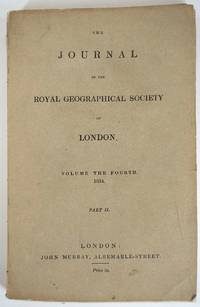
183429276London: Royal Geographical Society 1834. Paper wrappers pamphlet. Overall very good condition. Early RGS report in the original paper wrappers. It includes articles & maps on the failed settlement in North Australia "Geographical Memoir of Melville Island & Port Essington on the Cobourg sic Peninsula Northern Australia"; "Expeditions through the Upper Mississippi in 1832"; "Sketch showing the Routes of Lieutenants Conolly & Burnes" through India Pakistan Afghanistan Uzbekistan Iran down to the Persian Gulf where they travel through "Ormuz" straits. All three articles are illustrated by folding maps. 5pp letter towards the end about Volcanoes in Hawaii by David Douglas.<br /> <br /> This is in fine unopened uncut condition which we purchased from the RGS as they were deaccessing duplicate archives. Interestingly the list of publisher's offerings has a date of April 1837 which advertises Wellsted's account of his 1835 journey through Oman. He "reached areas which no European had previously seen and which were not visited again by Europeans for another hundred years" ODNB.<br /> <br /> 8vo gray paper wraps iv 129 - 422pp viii advertisements publisher's announcements of new books 4 maps and 2 lithographed plates bound in rear plates browned. Covers slt dusty. Volume the Fourth Part II complete in itself in original printed wrappers. Royal Geographical Society unknown
1835354311Grand Gulf Mississippi 1835. 4pp. Folio newspaper. Minor fold lines light browning. Institutional deaccession stamp in lower margin. Contemporary ownership signature in right margin. Very good. 4pp. An early issue of this scarce Mississippi newspaper. Edited by W.M. Smyth publication of the GRAND GULF ADVERTISER began on Feb. 17 1834 and continued to 1839 after which it became known as the WEEKLY GRAND GULF ADVERTISER. The bulk of the present issue is comprised of Andrew Jackson's Dec. 7 1835 address to both houses of Congress. Jackson touches on Spain's internal conflicts political unrest in South America and the abandonment of an Indian policy rooted in engagement. A wealth of advertisements occupy the verso of the last leaf. EBERSTADT 135:543. OCLC 10134360 unknown
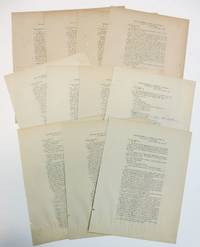
186927316Jackson Miss. 1869. Eleven Special Orders May 6-8 10 12-18 1869. Each 2-4 pages. Special Orders Nos. 92 93 94 95 96 98 99 100 101 102 103. Several manuscript emendations. Each signed in type and manuscript at the end by William Atwood Aide-de-Camp and Acting Assistant Adjutant General. Light wear light spotting Very Good.<br /> <br /> Mississippi's Reconstruction occurred under military rule. As evidenced by these Special Orders the military authorities appointed and removed Justices of the Peace members of the Board of Police Marshals Constables District Attorneys Clerks County Treasurers Mayors and other officers normally elected by the people or appointed by civil authorities.<br /> Not located on OCLC as of March 2024. unknown
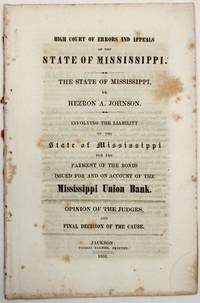
185323122Jackson: Thomas Palmer Printer 1853. 55 1 blank pp. Disbound with scattered foxing else Very Good. <br /> <br /> The court held the State of Mississippi liable for the payment of a State Bond payable to the order of the directors of the Mississippi Union Bank. The bond executed under seal by Mississippi's Governor and Treasurer had been issued in accordance with a statute pledging the State's credit to secure loans to the Mississippi Union Bank. <br /> Mississippi refused to pay claiming that the bond had been issued irregularly and that the governing Act had been passed unconstitutionally. The Court rejects these defenses after examining the statute and its purposes the State Constitution and the business of the Bank.<br /> Sabin 49545. Not in Marke Harv. Law Cat. Owen Cohen. Thomas Palmer, Printer unknown
1884216651St Louis: Mississippi River Improvement Committee of the Merchant's Exchange of St. Louis 1884. First edition thus. Map. 54 pp. 1 vols. 12mo. Printed yellow wrappers minor edge chipping very good. First edition thus. Map. 54 pp. 1 vols. 12mo. <br/><br/> Mississippi River Improvement Committee of the Merchant's Exchange of St. Louis unknown
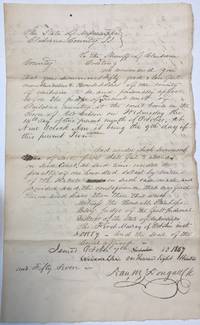
185737204Claiborne County MS 1857. 4to. 4 pp entirely in ink manuscript. Signed with a flourish by the Clerk Dan McDougall and the Deputy Sheriff G.R. Girault.<br /> <br /> Daniel McDougall 1813-1863 born in Schenectady migrated to Port Gibson Claiborne County. He was appointed Clerk of the Claiborne County Circuit Court in 1853 and served as such until his death. Colonel George Rogers Girault c.1815-1857 also of Port Gibson was a farmer owning 11 slaves as of 1850 and was also a County Deputy Sheriff. He died two months after this writ was issued. <br /> Stanhope Posey c.1813-1859 full name John Stanhope Posey a Wilkinson County lawyer owned 38 slaves as of the 1850 census. He was elected District Attorney of the Third District of Mississippi in 1839 and a Judge of the First Judicial District Circuit Court in 1845. We don't know who "Everett a Slave" was or what happened to him. We can guess that a jury of slaveholders was not sympathetic to him. unknown
185331456Davenport: Sanders & Davis 1853. 24pp. Stitched lightly foxed. Very Good. <br /> <br /> This pamphlet provides "elaborate details of the projected road across the State from Davenport to Council Bluffs" 130 Eberstadt 311. The incorporators included the well known civil engineer John Jervis of New York. <br /> 130 Eberstadt 312. Graff 2828. Not in Sabin Moffit Decker or BRE. Sanders & Davis unknown
185232118Jackson: Palmer & Pickett 1852. pp 3 vii-xvi 219pp. Bound in later buckram institutional bookplate. Title and certification leaves reinforced with some creasing. Lightly toned some spotting. About Good.<br /> Babbitt 266. Palmer & Pickett unknown
183825609Jackson Mi.: B.D. Howard State Printer 1838. Later plain wrappers light spine wear stitched. viii 1 blank 9-368pp. Some tan and fox Good.<br /> <br /> These early Mississippi laws treat a variety of subjects including banking incorporation police courts internal improvements voluntary associations state and local government. <br /> One law relieves Henry Foote later a U.S. Senator from Mississippi from the penalties incurred for dueling; those penalties would have barred him from holding public office.<br /> AI 51717 5. B.D. Howard, State Printer unknown
183625610Jackson Mi.: G.R. & J.S. Fall State Printers 1836. Contemporary plain wrappers worn stitched. viii 9-440pp. Early and late leaves foxed tanned. Else light scattered foxing. Good.<br /> <br /> These early Mississippi laws treat a variety of subjects including banking incorporation police courts internal improvements voluntary associations state and local government. One Resolve urges the non-slaveholding States to prevent abolitionists "from associating plotting or conspiring to undermine disturb or abolish our institution of domestic slavery." A detailed Index is included.<br /> AI 39009 5. G.R. & J.S. Fall, State Printers unknown