[Alton]Antiquariat.de

171 résultats
185043401Hildburghausen, Bibliographisches Institut, o. J. (um 1850). Orig.-Stahlstich. Blattgröße 17,5 x 24,5 cm; Darstellung 10,9 x 15,7 cm.
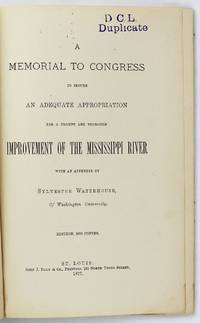
18775827St. Louis 1877. Good. 239pp. Original limp cloth covers gilt. Light fading and wear. Library ink stamp on title page. Minor wear to contents. Memorial submitted to Congress by the members of the River Improvement Convention held in St. Paul advocating for an allocation of government funds to improve the flow and path of the Mississippi River to better accommodate trade along the water route. unknown
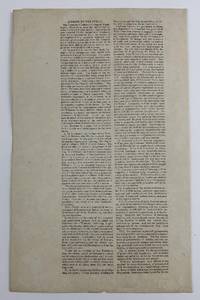
18393269Natchez Ms. 1839. Very good. Broadside 13 x 15.75 inches. Printed in four columns; central vertical fold. Light wear and toning. In the present broadside the trustees of Jefferson College announce that they are once again prepared to admit students in 1839 following a reorganization and give their mission statement courses of study faculty list tuition fees and more. The school located in Washington Mississippi just north of Natchez opened in 1811 and was the first college in the Mississippi Territory. In the text of this broadside one can clearly see sentiments and dispositions that would bring the Civil War to fruition. The first two columns are chiefly dedicated to a description fo the new faculty and their skills but also new measures put in place during the reorganization of the school. In place of gymnastics a daily military drill was substituted and a military police was to be established "for the preservation of good order and regularity."<br /> <br /> The remainder of the broadside descends into sectional paranoia arguing that students must be kept close to home in order for them to maintain allegiance to Mississippi and the South: "At this very moment a formidable content has commenced between the North and the South from the possible results of which the eye of the patriot instantly revolts. It surely becomes us to preserve our children from any influence that might mislead their judgment or weaken their patriotism. To do this effectually we must keep them at home!. Send your sons to other States where they are relased from social bonds you not only cut off these powerful incentives to emulation but you do more and worse you weaken or detach the growing virtues of the heart. and you estrange them from their native land."<br /> <br /> OCLC locates only a small handful of examples. unknown
1839WRCAM31975Washington Ms 1839. Broadside 15 1/2 x 13 inches. Separated at vertical center fold. Slight chipping at edges. Light tanning and dampstaining. Good. A prospectus for Jefferson College providing course information and names of professors most notably Jacob Ammen who was a West Pointer teacher of military engineering and eventually lieutenant colonel in the 12th Ohio Volunteers under McClellan. A key point is the argument that the local boys must be kept close to home and away from the evil influence of the abolitionists of the North. Wales writes: <br> <br> "At this very moment a formidable contest has commenced between North and South from the possible results of which the eye of the patriot instinctively revolts.it surely becomes us to preserve our children from any influence that might mislead their judgement or weaken their patriotism. To do this effectively WE MUST KEEP THEM AT HOME!" <br> <br> Good evidence of defending regional education in the antebellum South. Rare with only three copies located by OCLC at the University of Virginia the Clements Library and the American Antiquarian Society. HUMMEL SOUTHEASTERN BROADSIDES 1088. AMERICAN IMPRINTS 56588. unknown books
184834983Hinds County MS 1848. Folio 8" x 13" blue unlined paper completely in ink manuscript. Very Good. <br/><br/> In addition to the slaves the inventory lists many household items The verso is a sworn statement from C.R. Clifton that he posted notices of the Sale. Attested to and signed by J.T. Aldham as Justice of the Peace. Docketed: "Exhibit B - Administrators Sale/ Filed February 13th 1849 W.H. Hampton Clk."<br/> Col. William Campbell Demoss 1790-1845 born in Virginia owned plantations simultaneously in Madison County Louisiana and Hinds County Mississippi. He was appointed Associate Justice of the Hinds County Court in 1830 elected to the Mississippi House of Representatives in 1833 and was county sheriff. He was a partner in the mercantile firm of A. Coleman & Co. D.M. Dancy was a physician in Raymond Hinds County Mississippi. The Clerk of the Probate Court William H. Hampton was 2nd Lieutenant with the "Raymond Fencibles" Company G of the First Regiment Mississippi Rifles at the Battles of Monterey and Buena Vista during the Mexican American War. Caswell R. Clifton became Judge of the Circuit Court and Clerk of the High Court of Appeals. unknown books
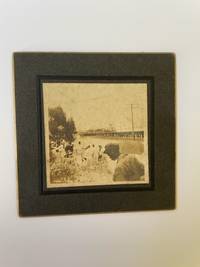
1900177661900. Early African American PHOTOGRAPHY -- RELIGION. silver gelatin photograph of a river baptism featuring a large group of African American subjects. Mississippi ca early 1900s. Photograph size is 2 1/4 x 2 1/4 in. Original silver gelatin photograph on cardstock mount .A young African American man wearing a hat and suit stands with his back to the camera we see in the foreground on the riverbank a group of African American subjects in light clothing close to the water's edge. A large ship is just visible beyond the dock in the background. Pencil inscription on verso reads "Miss- Colored Baptizing." 9Not: Historical records are evidence of the time in which they were created and often contain language are racist or derogatory and insensitive. This content does not reflect our values. These type of baptism on the banks of the Mississippi River were a public ceremony that attracted many converts in the South to the Delta region. Predominately African American Baptists performed their sacred ritual of outdoor baptisms on the Mississippi River until well into the 20th century in this Baptist-heavy state. Immersion baptisms typically took place in rivers or other natural bodies of water and summer and fall were the natural seasons for these congregational events. This rare photo captures a religious practice that has been integral to African-American Baptists for centuries. Photo has some toning surface soiling spotting and very small tear to right edge. But is still clear and in good to very good condition. unknown
183231197Franklin County MS 1832. Folio 7.75" x 12.25". 4 pp folded entirely in manuscript. The writing on either side of the first leaf is visible from the other side but everything is legible. Oneal's Complaint appears on the first two pages and on five lines of page three where it is signed by his lawyer. <br /> A nine-line summary of the case in different handwriting is also on page 3. <br /> Page 4 contains defendant's scribbled answer by his attorney R.W. Webber; an accounting of the costs incurred in the case; a notation of defendant's verdict; attorneys' signatures; and docketing information. Age toned old folds several small holes along top fold loss of a few words. Signatures of attorneys appear on final page on panel with defendant's answer. Good.<br /> <br /> John Cade 1788-1839 lived in Franklin County. The parties were probably local farmers. Richard W. Webber c.1798-1843 Cade's lawyer was born in Virginia and settled in Franklin County. A Whig and State representative he ran unsuccessfully for Congress in 1830. He was for a time the editor of the Jackson Independent Journal. JOURNAL OF MISSISSIPPI HISTORY Vol. 7 Page 148; and Volume 21-22 Page 34. unknown
183231197Franklin County MS 1832. Folio 7.75" x 12.25". 4 pp folded entirely in manuscript. The writing on either side of the first leaf is visible from the other side but everything is legible. Oneal's Complaint appears on the first two pages and on five lines of page three where it is signed by his lawyer. A nine-line summary of the case in different handwriting is also on page 3. Page 4 contains defendant's scribbled answer by his attorney R.W. Webber; an accounting of the costs incurred in the case; a notation of defendant's verdict; attorneys' signatures; and docketing information. Age toned old folds several small holes along top fold loss of a few words. Signatures of attorneys appear on final page on panel with defendant's answer. Good or so.<br/> <br/> John Cade 1788-1839 lived in Franklin County. The parties were probably local farmers. Richard W. Webber c.1798-1843 Cade's lawyer was born in Virginia and settled in Franklin County. A Whig and State representative he ran unsuccessfully for Congress in 1830. He was for a time the editor of the Jackson Independent Journal. JOURNAL OF MISSISSIPPI HISTORY Vol. 7 Page 148; and Volume 21-22 Page 34. unknown books
186035027Hinds County Miss. 1860. Folio three sheets attached end to end 7 1/4" x 31". First two sheets white and unlined third sheet blue and lined. Completely in ink manuscript. The top section is an "Account of Sale of the Balance of Estate of Wm. B. Mower." the second is "Copy of Notice of Executors Sale" with certification at bottom by Justice of the Peace J.W. Welborn that the notice was posted by Robert P. Paris in two public places. The third attests to the posting of the notice. Other names mentioned within this document are G.H. Jones R.P. & C. Parish Clerk. Signed at end by S.J. Thigpen as Clerk of the Probate Court. <br/><br/> William B. Mower 1810-1860 was born in New York. He worked as a saddler in Hinds County and owned at least eight slaves by 1850 as noted in the U.S. Federal Census Slave Schedule. Justice of the Peace Johnson W. Welborne 1824-1872 was a merchant and planter in Clinton Hinds County. At one time he owned about 2000 acres of land and 90 slaves. He was a Trustee of the Central Female Institute of Clinton as of 1871 and the Mississippi College in Clinton. During the Civil War he was Captain of the Mississippi College Rifles Company E 18th Regiment Mississippi Volunteers C.S.A. He received a wound to his neck on October 21 1861 during the Battle of Ball's Bluff.<br/> Clerk S.J. Thigpen was likely Samuel James Thigpen 1833-1884. A Samuel Thigpen was elected as judge of the probate court of Rowland Hinds County Mississippi during the 1859 elections. Olsen: POLITICAL CULTURE AND SECESSION IN MISSISSIPPI. 2002 page 107 accessed at Google books on 6/11/2018. unknown books
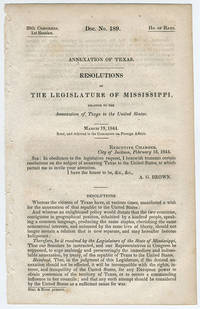
184411435Washington: Blair & Rives pr. 1844. 8vo. 2 p. <br><br>The Mississippians urge their senators and congressmen "zealously and perservingly" to bring about the annexation of Texas immediately and indissolubly. Government document: 28th Cong. 1st sess. H.R. Doc. 189. Removed from a nonce volume. Good condition. Blair & Rives, pr. unknown books
187140107Jackson Miss.: Kimball Raymond & Co. State Printers 1871. Original printed pale green wrappers lightly spotted. Stitched. 67 1 blank pp. Clean text. Very Good plus. Contemporary ownership inscription in pencil "W.H. Bullard." <br /> <br /> Alcorn 1816-1894 born in Illinois Territory was Governor of Mississippi from March 1870 through November 1871. He was active in Mississippi politics from about 1845. During the Civil War he served as a Confederate. After the War as a "Scalawag" he supported the 14th Amendment and votes for freedmen. Nevertheless he clashed with his new Republican friends by opposing federal intervention against the Klan and federal laws abolishing segregation in public facilities. <br /> Alcorn addresses "what remains to be done of the work of reconstruction" thus focusing on "the restoration of our social and material ruin." With tables and data he demonstrates the disastrous economic effects of the War. But his data also give "encouragement to the practicability of educating the great body of our labor to the moral level of freedom." Marriage licenses are up; extreme "sexual license" is down. Preachers teachers schools property ownership and trades for the freedmen are all on the increase.<br /> Denouncing vigilantism he says that "A class of lawless violence the most cruel and cowardly proceeds in a few quarters in the person of the masked assassin; and so far has succeeded in evading punishment if not detection."<br /> OCLC 28758840 3- Columbia Yale LSU as of June 2024. Not at online AAS. Kimball, Raymond & Co., State Printers unknown
182263107Columbia MS 1822. Oblong folio 7 5/8 x 12 3/8 inches. Partly printed broadside document headlined "The State of Mississippi / To all who shall see these presents greeting / followed by 14 printed lines with spaces left for appropriate material to be entered by manuscript in this case appointees name and position place of execution date and officials' signatures. Leake a native of Virginia served in the Revolutionary War and in the state legislature moving to the Mississippi Territory in 1807 when appointed judge by Thomas Jefferson; following Mississippi's admission to statehood he was appointed one of its first two senators taking a seat of the state's supreme court following his resignation from the senate in 1820 and was elected governor in 1821 assuming office in January 1822. During his two terms Leake oversaw the beginning of a major road system arranged for the transfer of land to support a state university and signed a law abolishing imprisonment for debt among other achievements. Grimball was the second Secretary of State for Mississippi serving 1821-1833. Columbia served as capital of Mississippi for a about 18 months 1821-1822 before Jackson became its permanent site. Somewhat browned but very good. Previously folded. A scarce early Mississippi state document. 9863. <br/><br/> unknown books
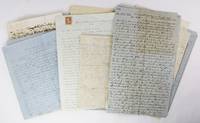
18656242Various locations 1865. About very good. Forty letters approximately 96pp. Many with original envelopes. Light wear and soiling old folds. In a legible hand. Together with twelve additional family letters and two military commissions. A wonderful archive of correspondence written home from the Confederate lines by William Henry Tabb of the 14th Mississippi Infantry. William Henry Tabb 1837-1864 was the son of a minister at the Choctaw Agency in Oktibbeha County Mississippi. In April 1861 he was commissioned as a lieutenant in the Agency Guards which were soon absorbed as a company in the 14th Mississippi Infantry. He was captured at Fort Donelson exchanged reached the rank of captain and was with his regiment when he suffered a fatal wound in the defense of Atlanta on August 5 1864. <br /> <br /> Tabb begins his letters with optimism. On August 1861 after training in Corinth Mississippi the regiment met with a parade in Huntsville en route to eastern Tennessee: "The women men and children were down to see us and a regiment turned out to do us honor. Such cheering from beautiful young ladies all along our way is enough to make men brave." On October 22 1861 he recounts the recent death by disease of his brother Thomas Tabb in Marion Alabama also of the 14th Mississippi calling him "my dearest friend on earth."<br /> <br /> Tabb was captured at Fort Donelson in February of 1862. Two of these letters were written from the Union prison at Johnson's Island near Sandusky Ohio. In May 1862 he writes: "We are not allowed to write what nor as much as we please. I have no friends to work for me see no indications of a general exchange or parole and it is almost impossible to escape from this island. It is amusing to see men one day Confederate officers and the next day cooking or around the wash tub. We have no servants. I am well treated have a plenty not a variety of food and clothing that we need issued to us." By September 24th he was back with his regiment in Mississippi: "The Yankees stole my shoes and I am wearing an old pr of boots. It appears that my conduct at Donelson has been very highly spoken of. Well I.tried to do my duty but I am sure I did nothing extra. Indeed our regt in my opinion fell little short of disgracing itself." He adds a word on the troubled home front situation: "Am sorry to hear that the Negroes have commenced stealing. I would very much like to see all that have behaved themselves and wd thrash those who have been stealing."<br /> <br /> On April 11 1863 he describes the recent Battle of Ponchatoula which other companies in his regiment participated in: "Rollins was sent out with ten of the company on our right wing to try to flank them. As soon as he commenced firing on them we attacked their center and they broke to run. They were zouaves red pants we never could catch them." He lamented the loss of his enslaved servant on June 7th near Yazoo City: "I expected John to come to me. I have become attached to John and don't know how to get along without him. I look for him every day now." Tabb had some great stories about Grant's efforts to take Jackson the Mississippi capital from which Johnston's Confederates performed a stealth evacuation. On the 19th and 20th of July 1863 he wrote: "All of the boys wanted to stay and fight but Grant had 80000 men and we had only 30000. It is true we were behind breastworks but they were not good and the place could be easily flanked. Johnson prepared to evacuate the place from the time we got there. The Yankees knew it. Not a word was spoken not a command given. The Yankees knew nothing of our leaving. Some of our men did not know we had left and were left behind but overtook us. I hear that the Yankees commenced shelling the town the other morning after we left and kept it up til 9 o'clock when some of the citizens hoisted the white flag and surrendered the place. They were vexed to know that we had left them without their knowing anything about it."<br /> <br /> Tabb had been away from the regiment for the start of the Atlanta campaign and on July 9 1864 he wrote: "I reached the command the evening of the 5th and found my company.8 miles from Atlanta. I found the men dirty and many of them with worn out clothes and not very good rations but all in good spirits and glad to see me. The people of Atlanta are leaving rapidly. They think the place will be evacuated. Do not be surprised if you hear it. We will not be whipped if we do leave it." This is Tabb's final letter in the collection. He was shot a month later. The group concludes with nine condolence letters and memorials. An October 1864 memoriam copied in 1894 recounted his death: "At the time he received the fatal shot he was commanding the brigade skirmishers & was just forming the line to proceed to the front. Though terribly mangled & in great pain he was calm & collected." He survived long enough to send farewell thoughts to his family and to regret "that I was not spared to see my country through her troubles." Also included are two of Tabb's military commissions in the Agency Rifles from the State of Mississippi: as Second Lieutenant on 24 April 1861 and as First Lieutenant on 25 December 1861. Both are signed by Governor John J. Pettus. In all a wonderful archive from a Confederate soldier who saw significant action and imprisonment during the war. unknown
1887108433Century Company. Very Good with no dust jacket. 1887. Magazine. Battles & Leaders of the Civil War; 9 x 11; 40 pages; Very nice condition with illustrations . Century Company unknown
1882JC111661882. Hardcover. Very Good. Mottled black cloth backed in ornately gilt-ruled black calf; oblong 184 x 132 mm; contains 25 pencil drawings most of them titled and dated. It includes Fort Snelling; Minnehaha Falls; Oak Drive in White Bear Lake; a boat on White Bear Lake; St. Anthony's Falls in Minneapolis; Lake Minnetonka; Wabasha St. Bridge; an Old Brewery in St. Paul; Shanty-ville; Shelter Island New York; Goat Island; plus 3 portraits a bonfire scene and other views of the upper Mississippi River Niagara Falls and St. Paul Minnesota. Boards detached and spine perished; a few leaves loose and laid-in. Skilled work most of it on one side of the leaf therefore removable and suitable for display. <br/><br/>Harley DeWitt Nichols 1859-1939 was born in Barton Wisconsin. He began his education in art as early as 11 years of age. His first job putting his talent and training to use came in the form of an apprenticeship with the Milwaukee firm Marr & Richards where he stayed for 3 years drawing and engraving on wood. The subsequent years included many moves from Milwaukee to Chicago and later to New York where he studied at ASL and was encouraged by Professor Packard to pursue a career as an illustrator at a European school. Nichols left for Munich in October 1885 to attend the Royal Academy where he studied under Heckel became a member of the American Club and socialized with Carl von Marr the clubs president. He went to London for a little while and worked as an illustrator. By 1893 hed returned to New York working mostly in advertising and illustrating for Harpers Weekly and Century magazines. He helped organize the New York Water Color Club. Nichols didnt curb his parapatetic lifestyle until he moved to Laguna Beach California in 1894. The art community in Los Angeles was in its infancy but he got a teaching job at the Echo Mountain summer school and he was inspired by the scenery of Yosemite Monterey San Juan Capistrano and other locations in southern California. He stayed in Laguna Beach until his death in 1939. hardcover
1882JC111661882. Hardcover. Very Good. Mottled black cloth backed in ornately gilt-ruled black calf; oblong 184 x 132 mm; contains 25 pencil drawings most of them titled and dated. It includes Fort Snelling; Minnehaha Falls; Oak Drive in White Bear Lake; a boat on White Bear Lake; St. Anthony's Falls in Minneapolis; Lake Minnetonka; Wabasha St. Bridge; an Old Brewery in St. Paul; Shanty-ville; Shelter Island New York; Goat Island; plus 3 portraits a bonfire scene and other views of the upper Mississippi River Niagara Falls and St. Paul Minnesota. Boards detached and spine perished; a few leaves loose and laid-in. Skilled work most of it on one side of the leaf therefore removable and suitable for display. <br/><br/>Harley DeWitt Nichols 1859-1939 was born in Barton Wisconsin. He began his education in art as early as 11 years of age. His first job putting his talent and training to use came in the form of an apprenticeship with the Milwaukee firm Marr & Richards where he stayed for 3 years drawing and engraving on wood. The subsequent years included many moves from Milwaukee to Chicago and later to New York where he studied at ASL and was encouraged by Professor Packard to pursue a career as an illustrator at a European school. Nichols left for Munich in October 1885 to attend the Royal Academy where he studied under Heckel became a member of the American Club and socialized with Carl von Marr the clubs president. He went to London for a little while and worked as an illustrator. By 1893 hed returned to New York working mostly in advertising and illustrating for Harpers Weekly and Century magazines. He helped organize the New York Water Color Club. Nichols didnt curb his parapatetic lifestyle until he moved to Laguna Beach California in 1894. The art community in Los Angeles was in its infancy but he got a teaching job at the Echo Mountain summer school and he was inspired by the scenery of Yosemite Monterey San Juan Capistrano and other locations in southern California. He stayed in Laguna Beach until his death in 1939. hardcover books
1837250311Augusta Mississippi 1837. 1 pp. 4to. Toned old folds else fine. 1 pp. 4to. Reads in part: "According to a promisee made to Mr. George Holley of Biloxi I have written to give you some information in relation to the claim to Cat Island in Consequence of Mr. Holley not being able to give me the name of the claimant." <br/><br/> unknown
18504755AGN.Y. H.Meyer, 1850 (ca.). Stahlstich n.d. Natur, Darst. 10,1 x 15,5 (excl. Text), Bll. 18,5 x 26 Auf Wunsch Digitalaufnahme in jpg-Format erhältlich- photo in jpg-format available. Je nach Versandart können die Portokosten bis zu 2 ? weniger als angegeben betragen.+
18504836AGNew York, H. Meyer, 1850 (ca.). Stahlstich n.d. Natur, Darst. 15,2 x 10,2; Bll. 26,2 x 18,6 Auf Wunsch Digitalaufnahme in jpg-Format erhältlich- photo in jpg-format available. Je nach Versandart können die Portokosten bis zu 2 ? weniger als angegeben betragen.+
18504837AGNew York, H. Meyer, 1850 (ca.). Stahlstich n.d. Natur, Darst. 15,5 x 10,4; Bll. 26,5 x 18,6 Auf Wunsch Digitalaufnahme in jpg-Format erhältlich- photo in jpg-format available. Je nach Versandart können die Portokosten bis zu 2 ? weniger als angegeben betragen.+
18582276AGN.Y. H.Meyer, 1858. Stahlstich n.d. Natur,, 15,5 x 10,5 25,5 x 18,5 Auf Wunsch Digitalaufnahme in jpg-Format erhältlich- photo in jpg-format available. Je nach Versandart können die Portokosten bis zu 2 ? weniger als angegeben betragen.+
18565297AGNew York, Meyer, 1856. Stahlstich nch der Natur, Darst. (excl. Text) 15,5 x 10,2; Bll. 24,5 x 18,5. Auf Wunsch Digitalaufnahme in jpg-Format erhältlich- photo in jpg-format available. Je nach Versandart können die Portokosten bis zu 2 ? weniger als angegeben betragen.
18502275AGBI, 1850 (ca.). Stahlstich n.d. Natur,, 15,5 x 10,5 Auf Wunsch Digitalaufnahme in jpg-Format erhältlich- photo in jpg-format available. Je nach Versandart können die Portokosten bis zu 2 ? weniger als angegeben betragen.+
18502274AGN.Y. H.Meyer, 1850 (ca.). Stahlstich n.d. Natur,, 15,5 x 10,5 Auf Wunsch Digitalaufnahme in jpg-Format erhältlich- photo in jpg-format available. Je nach Versandart können die Portokosten bis zu 2 ? weniger als angegeben betragen.+
18503425AGN.Y. H.Meyer, 1850 (ca.). Stahlstich n.d. Natur, Darst. 10,1 x 15,2 (excl. Text), Bll. 18,7 x 25,4; Schmutzstreifen längs. Auf Wunsch Digitalaufnahme in jpg-Format erhältlich- photo in jpg-format available. Je nach Versandart können die Portokosten bis zu 2 ? weniger als angegeben betragen.+