New OrleansABAA

223 résultats
1915WRCAM55407New Orleans 1915. 96pp. printed throughout in black. 12mo. Original pale blue wrappers printed in red. Spine sunned minor edge wear. Internally clean. Very good plus. The last edition of the series of guides to the bawdy houses and prostitutes of New Orleans issued between 1900 and 1915 and known collectively as the "Blue Books" of Storyville. Heartman identifies this is as the twelfth or thirteenth edition. Pamela Arceneaux in GUIDEBOOKS TO SIN condenses Heartman's last two editions into the same print run having compared Heartman's two editions and found them identical. Arceneaux further believes that this edition could have been printed as early as 1913 based on intertextual clues found during her research cross-referenced with contemporary New Orleans city directories. <br> <br> Further the textblock of this copy is printed entirely in black unlike the normal red-and-black printing of most other copies of this edition. Arceneaux explains on p.105 of GUIDEBOOKS TO SIN: <br> <br> "There appears to have been a printing of this edition in which all of the text and design elements of the interior pages are printed only in black ink with none of the rubrication seen in THNOC's The Historic New Orleans Collection's seven identical copies. I have examined a copy of this item that is in private hands and its size the cover printing and the quality of the paper are exactly the same as THNOC's seven. There is one other exception - three staples are used to bind the text block rather than the usual two seen in most issues. The printing on the interior pages the overall wear and the accumulation of rust around the staples leads me to believe that even lacking the red-ink highlights of the others this one is also of the Storyville period." <br> <br> The only way in which the present copy differs from the above description is in the number of staples - the present copy has two as seen in the red-ink issue. Arceneaux does not postulate about the differences in this printing of the Blue Book from the red-ink version but we might propose that the all- black-ink version of the Blue Book was perhaps a trial printing executed at the beginning of the period of this edition or likely one of the very latest productions of this edition once the printer had exhausted the red ink and there was still demand for the guidebook. <br> <br> The red-light district of New Orleans operated in a very public way until the U.S. government suppressed it at the time of the American entrance into the First World War. This guide lists women by address followed by advertisements for brothels; all interspersed with advertisements for liquor and cigars. Included are lists of burlesque houses names of landladies and names of prominent women in the trade. The prostitutes are often identified by race most commonly white black and octoroon. <br> <br> The earliest such guide appeared about 1896 and they were produced almost annually from 1900 to 1915. During this period all of the guides issued under the title BLUE BOOK were the product of Billy Struve allegedly from the second floor of Lulu White's saloon at the corner of Basin Street and Bienville though that story is likely apocryphal. More likely Struve assembled the BLUE BOOKS from his management offices at Anderson's a saloon owned by the "Mayor of Storyville" Tom Anderson located at the corner of Basin and Iberville where according to the city directories he also resided for most of the Storyville years. An advertisement for Tom Anderson's New Cabaret and Restaurant is found on the rear wrapper of this edition. The two photographs include the facade of Emma Johnson's famous "Studio" and a portrait of the Oriental Danseuse Rita Walker. <br> <br> Owing to their content and heavy use all BLUE BOOK guides are extremely rare. A nice example of a rarely-encountered variant of the last Storyville BLUE BOOK. HEARTMAN BLUE BOOKS XII/XIII. ARCENEAUX GUIDEBOOKS TO SIN 10. unknown books
1915140940342New Orleans 1915. Very Good. ca. 1915. 96 pp. The last edition of the famed "Blue Books" a series of directories to houses of prostitution in New Orleans's red-light district Storyville. Bound in publisher's original pale blue wraps printed in red bound with three staples and text printed only in black. As bibliographer Pamela Arceneaux explains in Guidebooks to Sin "There appears to have been a printing of this edition in which all of the text and design elements of the interior pages are printed only in black ink with none of the rubrication seen in THNOC's The Historic New Orleans Collection's seven identical copies. I have examined a copy of this item that is in private hands and its size the cover printing and the quality of the paper are exactly the same as THNOC's seven. There is one other exception - three staples are used to bind the text block rather than the usual two seen in most issues. The printing on the interior pages the overall wear and the accumulation of rust around the staples leads me to believe that even lacking the red-ink highlights of the others this one is also of the Storyville period." Very Good with some toning and light wear to wraps. Colloquially named for the city alderman Sidney Story much to his chagrin who sponsored legislation to confine city-sanctioned prostitution to a 38-block area just north of the French Quarter the red-light district of Storyville lasted form 1897-1917. During that time guide books such as these were often available in barbershops and saloons. This lists burlesque houses prostitutes by race such as white black octoroon and landladies interspersed with ads for cigars and liquor and contains a notice that this guide must not be mailed as the distribution of suggestive material by the United States Postal Service was banned. unknown books
1915WRCAM55273New Orleans 1915. 96pp. printed throughout in red and black. 12mo. Original printed pale blue wrappers expertly rebacked in matching blue paper. Soft vertical crease to text minor toning upper outer corner of one leaf repaired. Very good. The last edition of the series of guides to the bawdy houses and prostitutes of New Orleans issued between 1900 and 1915 and known collectively as the "Blue Books" of Storyville. Heartman identifies this is as the twelfth or thirteenth edition. Pamela Arceneaux in GUIDEBOOKS TO SIN condenses Heartman's last two editions into the same print run having compared Heartman's two editions and finding them identical. Arceneaux further believes that this edition could have been printed as early as 1913 based on intertextual clues found during her research cross-referenced with contemporary New Orleans city directories. <br> <br> The red-light district of New Orleans operated in a very public way until the U.S. government suppressed it at the time of the American entrance into the First World War. This guide lists women by address followed by advertisements for brothels; all interspersed with advertisements for liquor and cigars. Included lists of burlesque houses names of landladies and names of prominent women in the trade. The prostitutes are often identified by race most commonly white black and octoroon. <br> <br> The earliest such guide appeared about 1896 and they were produced almost annually from 1900 to 1915. During this period all of the guides issued under the title BLUE BOOK were the product of Billy Struve allegedly from the second floor of Lulu White's saloon at the corner of Basin Street and Bienville though that story is likely apocryphal. More likely Struve assembled the BLUE BOOKS from his management offices at Anderson's a saloon owned by the "Mayor of Storyville" Tom Anderson located at the corner of Basin and Iberville where according to the city directories he also resided for most of the Storyville years. An advertisement for Tom Anderson's New Cabaret and Restaurant is found on the rear wrapper of this edition. The two photographs include the facade of Emma Johnson's famous "Studio" and a portrait of the Oriental Danseuse Rita Walker. <br> <br> Owing to their content and heavy use all BLUE BOOK guides are extremely rare. A nice example. HEARTMAN BLUE BOOKS XII/XIII. ARCENEAUX GUIDEBOOKS TO SIN 10. unknown books
196258615New Orleans La: Isaac Delgado Museum. As New. 1962. Paperback. FREE UPGRADE to Courier/Priority Shipping Upon Request IN STOCK AND IMMEDIATELY AVAILABLE FOR SHIPMENT - AS NEW THE TEXT BLOCK IS PRISTINE CLEAN UNMARKED AND IN EXCELLENT CONDITION - - 146 pp. With 87 ills. 24 x 20 cm. -- with a bonus offer-- . Isaac Delgado Museum paperback
199928086New Orleans LA: Neal Auction Company. New. 1999. Paperback. FREE UPGRADE to Courier/Priority Shipping Upon Request - IN STOCK AND IMMEDIATELY AVAILABLE FOR SHIPMENT - Fine -- with a bonus offer-- . Neal Auction Company paperback
200669946New Orleans Louisiana: Neal Auction Company. New. 2006. Softcover Auction Catalog. FREE UPGRADE to Courier/Priority Shipping Upon Request - IN STOCK AND IMMEDIATELY AVAILABLE FOR SHIPMENT - FLAWLESS COPY BRAND NEW PRISTINE NEVER OPENED - 1218 lots many color illustrations. Among the artists represented: Thomas Bailey Griffin; Matthew Ridley Corbett; Mcneil Robert McLeavy; Joseph Rodefer de Camp; William A. Walker; George Chambers; and others. -- with a bonus offer-- . Neal Auction Company paperback
200650931New Orleans La: Neal Auction Company. New. 2006. Paperback. FREE UPGRADE to Courier/Priority Shipping Upon Request IN STOCK AND IMMEDIATELY AVAILABLE FOR SHIPMENT - Flawless copy brand new pristine never opened - 1251 lots many color illustrations. Auction features an important collection of period furniture & decorations from Garner Creeek Farms Cypress TX English & American antiques removed from One Everett Place New Orleans Arcadiana from a gentleman's lifetime collection property from the estate of New Orleans architect William W. Deadman & property from the collection of L. S. U. History professor and archivist Edwin A. Davis. Among the artists represented in this sale: G. P. A. Healy Knute Heldner George Sotter J. Henderson and others. -- with a bonus offer-- . Neal Auction Company paperback
200639729New Orleans LA: Neal Auction Company. New. 2006. Paperback. FREE UPGRADE to Courier/Priority Shipping Upon Request IN STOCK AND IMMEDIATELY AVAILABLE FOR SHIPMENT - FLAWLESS COPY BRAND NEW PRISTINE NEVER OPENED - 1147 lots many color illustrations. Among the artists represented: J. W. Whitesell; C. Reinike; G. W. Drew; M. Waterman; and others. -- with a bonus offer-- . Neal Auction Company paperback
200752066New Orleans La: New Orleans Auction Galleries Inc. New. 2007. Paperback. FREE UPGRADE to Courier/Priority Shipping Upon Request IN STOCK AND IMMEDIATELY AVAILABLE FOR SHIPMENT - Flawless copy brand new pristine never opened - Many color illustrations. Among the artists represented in this sale: Charles Haigh-Wood Edgar Longstaffe Ida Kohlmeyer Robert Gordy C. O. Longabaugh William Woodward and others. -- with a bonus offer-- . New Orleans Auction Galleries, Inc. paperback
1840707101840. LOUISIANA. NEW ORLEANS. New-Orleans Directory for 1841; Made by the United States Deputy Marshalls While Taking the Late Census. Containing the Names Professions and Residences of All the Inhabitants of the City and Suburbs of New-Orleans Lafayette and Algiers. New Orleans: Michel & Co. 1840. vii1366pp. 12mo. Contemporary half sheep and marbled paper spine gilt. Boards rubbed spine chipping. Contemporary ownership signature on boards and flyleaves. Bookplate on front pastedown; faded ownership stamp on first leaf. Heavy foxing. Good. Scarce New Orleans directory containing a complete list of citizens and their professions. SABIN 53344. SPEAR p.225. unknown
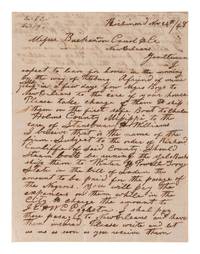
1848215241848. J.E. Eggleston correspondence dated 24 November 1848 documents the commercial shipment and sale of enslaved boys from Virginia to Mississippi within the interstate slave trade that expanded across the American South during the nineteenth century. The letter records logistical arrangements for transporting enslaved individuals through New Orleans before forwarding them by steamboat into the Mississippi interior. Written during a period when enslaved people were regularly moved from the Upper South to expanding plantation regions in the Deep South the document illustrates the economic and geographic structure of the domestic slave trade and reveals how enslaved children were treated as movable property within commercial networks linking Virginia Louisiana and Mississippi. The letter also directly references the relationship between the cotton market and the price of enslaved labor demonstrating how fluctuations in the agricultural economy shaped the buying and selling of enslaved people.<br /> <br /> Eggleston J.E. Autograph Letter Signed to "Messrs. Buckannon Carrol & Co." New Orleans. Richmond Virginia: 24 November 1848. One and one quarter pages written on a bifolium with address panel and postal markings. Eggleston informs the New Orleans firm that "a friend of mine will ship in a few days four Negro Boys to New Orleans to the care of your house" instructing them to receive the boys upon arrival and arrange onward shipment by steamboat to Mississippi. He directs the firm to "take charge of them & ship them on the first safe Boat to Chula Holms County Mississippi to the care of Stansbuary & Williams" with alternate instructions if river traffic permits delivery through another route. The letter treats the boys as financial cargo noting that the shipping record should state "the amount to be paid for the passage of the Negroes" and instructing the firm to cover any temporary expenses and charge them to the Eggleston account. Eggleston further notes that he will insure the enslaved individuals during the journey indicating the practice of protecting enslaved property through commercial insurance policies during transport.<br /> <br /> The letter also connects the purchase of enslaved labor directly to the speculative cotton economy of the nineteenth century South. Eggleston explains that falling cotton prices influenced his purchasing decisions writing that "owing to the low price of cotton I determined to purchase no more negroes at present. They are selling too high for the prospect of the price of cotton." Such remarks demonstrate the close relationship between commodity markets and the valuation of enslaved people within the plantation economy. Correspondence documenting the logistics of the interstate slave trade provides direct evidence of how enslaved individuals were transported through commercial networks linking coastal ports and inland plantations. Bifolium measuring approximately 6.5 x 8.75 inches with address panel postmark and "Paid 10" postal marking. Light creasing and toning with minor ink bleed through; folded for mailing. Overall very good condition. The letter preserves firsthand documentation of the commercial mechanisms that sustained the nineteenth century domestic slave trade. unknown
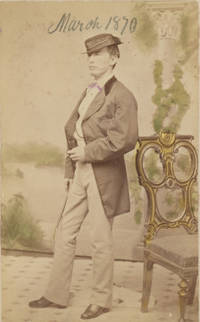
1870List1434New Orleans: Various Photographers 1870. Twenty-four cartes-de-Visite and three ninth-plate tintypes all bearing New Orleans photographers’ marks to versos. Very good to fine. Very Good. A curated group of images of New Orleans subjects with an emphasis on women children and religious imagery including one uncommon image of a rosary and another of the interior of a church. Most photographs document the city’s wealthy residents at a time when elite culture changed due to the abolition of French instruction in schools and the general forces of reconstruction. The images include several with identified subjects. Overall an evocative group worthy of study by scholars of the city. Various Photographers unknown
1807WRCAM3793New Orleans: Printed by Bradford & Anderson 1807. 63pp. Modern half morocco and cloth. Foxed and tanned. Good. A printing in parallel English and French of some important post-cession acts including those confirming validity of original Spanish and French grants and so forth. Although these acts are frequently found bound with the ACTS PASSED AT THE SECOND SESSION. they were printed and paginated separately. A good example of the printing work of Bradford and Anderson. Bradford arrived in New Orleans in 1804 rising to the post of printer to the Territory in 1805. The patronage was withdrawn three years later because Bradford and Anderson repeatedly attacked Gov. Claiborne in their newspaper the ORLEANS GAZETTE. McMURTRIE LOUISIANA 99. SHAW & SHOEMAKER 11502 13789. FOOTE p.7. JUMONVILLE 144. THOMPSON 1078. Printed by Bradford & Anderson hardcover books
185721897New Orleans E. C. Wharton 1857 in-8 br., couv. rose impr., dos manquant, rouss
180925953Washington: A. & G. Way 1809. 53 3 blanks pp. With the signature crossed out of John Smilie probably the Pennsylvanian then serving in Congress and an opponent of slavery. Contemporary signature also of Samuel Burch. Bound in modern cloth bit of lower spine discoloration. A bit of light spotting to the title page light numerical accession number at top margin of page 3 else a clean text. Very Good. <br/><br/> Jean Gravier a major landowner in New Orleans claimed title to a river bank known as a batture. The Mississippi River covered it for three months of the year but during the other nine months it was dry and from time immemorial used by the public for its alluvium deposits and other purposes. Gravier's claims triggered litigation against the City which refused to acknowledge his title. In 1807 the Louisiana Superior Court awarded judgment to Gravier. The unpopularity of the decision resulted in years of acrimony and further litigation which Edward Livingston Gravier's successor in title carried on against the City as well as the national government. This publication offers a wealth of material in the form of public documents and affidavits gathered for the litigation demonstrating the nullity of Gravier's title.<br/>FIRST EDITION. Cohen 11679. AI 18892 3. Not in Harv. Law Cat. Marvin Marke Eberstadt Thompson. A. & G. Way unknown books
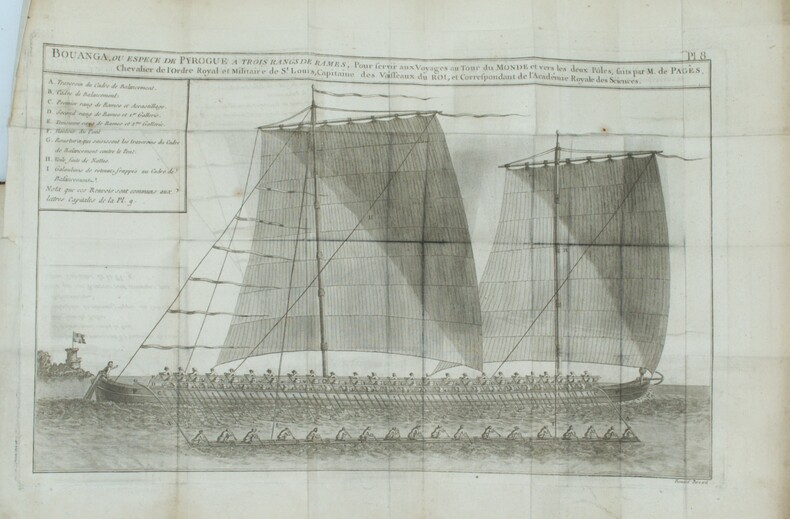
1782PHO-1554Moutard, Paris, 1782. 2 vol. in-8 de 432 pp. et 272 pp. illustré de 10 planches dépliantes, relié plein basane époque, dos lisse avec titre et tomaison (reliures différentes), frottements, coins et coiffes usés, bord des planches usé.
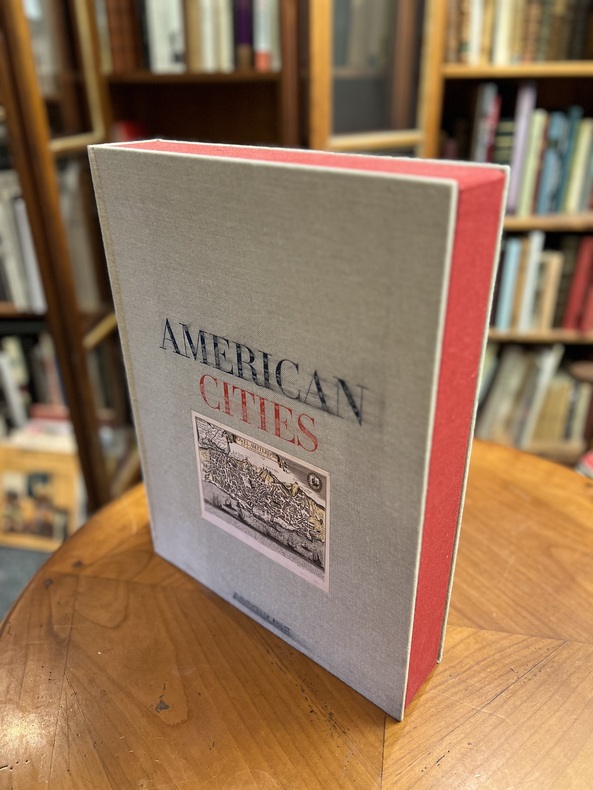
2005CSP-1952Découvrez une pièce d’exception pour les amateurs de beaux livres et de cartographie historique. American Cities est bien plus qu’un ouvrage : c’est un objet de collection rare, édité en 2005 en seulement 300 exemplaires, dont celui-ci porte le numéro 299 (voir photo). À l’intérieur, vous découvrirez une remarquable collection de cartes historiques reproduites, datant du XVIIe siècle à nos jours, mettant à l’honneur les grandes villes américaines telles que New York, La Nouvelle-Orléans, Denver, Washington, Philadelphie, Saint-Louis, San Francisco, Boston et Chicago. Plusieurs cartes spectaculaires se déploient en triptyques sur trois pages, offrant une immersion fascinante dans l’évolution urbaine et historique de ces métropoles emblématiques.
1838707111838. LOUISIANA. NEW ORLEANS. Gibson's Guide and Directory of the State of Louisiana and the Cities of New Orleans & Lafayette. New Orleans: John Gibson 1838. viii384pp. plus 12pp. of ads. and numerous illustrations. Lacks frontispiece and map. Contemporary 3/4 sheep and marbled boards. Rebacked in matching gilt-decorated black calf boards lightly rubbed light scattered foxing. Later bookplate on front pastedown. A very good copy. Spear p. 225. Jumonville 1006. An early New Orleans directory containing "historical accounts of Louisiana and New Orleans" - Spear. Includes detailed information on buildings such as the Sugar Refinery and Orleans Cotton Press accompanied by illustrations. unknown
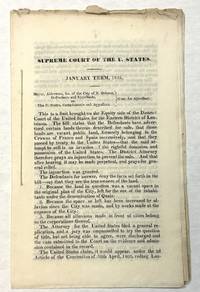
183332746np 1833. 10 2 blank pp. Caption title as issued stitched untrimmed partly uncut. Minor dustsoiling on untrimmed edges. Else crisp and bright. Near Fine.<br /> <br /> This is the Brief submitted to the United States Supreme Court by the City of New Orleans. The City and the United States each claimed title to the same area of "vacant public land." The City sought to sell it. The United States objected on the ground that the land "formerly belonging to the Crowns of France and Spain successively passed by treaty to the United States." The U.S. District Court for the Eastern District of Louisiana enjoined the sale. The City appealed.<br /> The City's Brief an unusually detailed examination of its chain of title beginning in 1720 argues that ownership of the disputed lands did not vest in the United States under the treaty to purchase Louisiana; and that the "original plan of the City" left those lands "for the use of the inhabitants." The Supreme Court agreed. Its opinion by Justice McLean of Ohio is officially reported at 35 U.S. 662 1836. <br /> Daniel Webster and Edward Livingston-- who had spent years fending off U.S. claims to New Orleans alluvial lands-- represented the City; Attorney General Benjamin Franklin Butler was counsel for the United States. <br /> OCLC 1297855642 "Reproduction of the original from Harvard Law School Library" as of May 2026. unknown
183332746np 1833. 10 2 blank pp. Caption title as issued stitched untrimmed partly uncut. Minor dustsoiling on untrimmed edges. Else crisp and bright. Near Fine.<br/><br/> This is the Brief submitted to the United States Supreme Court by the City of New Orleans. The City and the United States each claimed title to the same area of "vacant public land." The City sought to sell it. The United States objected on the ground that the land "formerly belonging to the Crowns of France and Spain successively passed by treaty to the United States." The U.S. District Court for the Eastern District of Louisiana enjoined the sale. The City appealed.<br/> The City's Brief an unusually detailed examination of its chain of title beginning in 1720 argues that ownership of the disputed lands did not vest in the United States under the treaty to purchase Louisiana; and that the "original plan of the City" left those lands "for the use of the inhabitants." The Supreme Court agreed. Its opinion by Justice McLean of Ohio is officially reported at 35 U.S. 662 1836. Daniel Webster and Edward Livingston-- who had spent years fending off U.S. claims to New Orleans alluvial lands-- represented the City; Attorney General Benjamin Franklin Butler was counsel for the United States. <br/>OCLC records only facsimiles as of August 2016 evidently from an original residing at the Harvard Law School. unknown books
393-488, 126 [ads] pages. One fold-out drawing. Profusely illustrated with detailed drawings and black and white photos. Printed upon glossy stock. Includes dozens of magnificently illustrated ads. Features: The Residence of F.F. Peabody, Esq., Montecito, California; The Ravisloe Country Club, Homewood, Illinois - George C. Nimmons & Co., Architects; The Phi Delta Theta Chapter House at the University of California, John Reid Jr., Architect; Otto R. Eggers, Architectural Renderer and Designer; The Creole Architecture of New Orleans; Industrial Housing Developments in America - Part III, Sawyer Park, Williamsport, PA, George S. and Lewis E. Welsh, Architects; Portfolio of Current Architecture; The Architect's Library - Hispanic Society Publications. Notes and Comments. Somewhat above-average external wear. Openings at each end of backstrip. Two small binding holes near spine. Faint library stamp upon front cover. Binding intact. A worthy vintage copy. Book
1958146640Associated Booking Corp. Joe Glaser, President. New York, Chicago, Hollywood. (Ohne Jahr. Um 1958). Fotoformat: 21x25 cm
187329323New Orleans: Picayune Steam Press 1873. Original printed wrappers clean but with a bit of corner wear with wrapper title as issued. 27 1 blank pp. Minor wear clean text Very Good plus. <br /> offered with Typescript Letter laid in from New Orleans March 22 1873 1 page: 'Dear Sir: We assume the liberty to commend to your patriotism and to your love of our common country the accompanying Report.' It is signed in type by Thos. A. Adams Chairman and five others comprising the Executive Committee of the Committee of Two Hundred Citizens. Fine.<br /> <br /> The Committee recites "the discontents pressures and grievances under which the people of the State were suffering from the unconstitutional and revolutionary action of a portion of the federal authorities" especially the federal court's intervention in the 1872 elections in favor of the Pinchback government. <br /> The elections produced rival claimants for the governor's office and sparked the Colfax massacre in which 280 blacks were killed some while attempting to surrender to armed whites. The Report is signed in type by Thomas A. Adams Chairman and five other members of the Executive Committee. <br /> FIRST EDITION. 136 Eberstadt 391. Thompson 1232. Picayune Steam Press unknown
189536470New Orleans La.: Wm. Miller Printer 104 Gravier Street 1895. Original staples small bleedthrough and printed wrappers light wear. 4" x 6." 35 3 pp. Light uniform toning Very Good.<br/><br/> Chalmette is a geographic area in St. Bernard Parish just east of downtown New Orleans. It is named after a local 18th century plantation owner. The Chalmette Benevolent Association was a mutual benefit organization whose members would "divide each other's sorrows and increase each other's joys to care for our sick and to bury our dead and to relieve our widows and orphans." Members were eligible for medical surgical and funeral assistance. The Charter from 1885 Constitution Bylaws and Rules of Order are printed through page 35. The list of officers and members is printed at pages 36-37 with an Index at page 38.<br/> Officers included a physician and an undertaker. There were about 110 members. White men between the ages of 18 and 45 years able-bodied and of good moral character who believed in a Supreme Being were eligible for membership. Members elected druggists and an undertaker; provision is made for a Health and Relief Committee and a Wake Committee. <br/>OCLC 731667710 1- LSU as of December 2019. Not in Thompson. Wm. Miller, Printer, 104 Gravier Street unknown books
187329323New Orleans: Picayune Steam Press 1873. Original printed wrappers clean but with a bit of corner wear with wrapper title as issued. 27 1 blank pp. Minor wear clean text Very Good plus. <br/> offered with Typescript Letter laid in from New Orleans March 22 1873 1 page: 'Dear Sir: We assume the liberty to commend to your patriotism and to your love of our common country the accompanying Report.' It is signed in type by Thos. A. Adams Chairman and five others comprising the Executive Committee of the Committee of Two Hundred Citizens. Fine.<br/><br/> The Committee recites "the discontents pressures and grievances under which the people of the State were suffering from the unconstitutional and revolutionary action of a portion of the federal authorities" especially the federal court's intervention in the 1872 elections in favor of the Pinchback government. The elections produced rival claimants for the governor's office and sparked the Colfax massacre in which 280 blacks were killed some while attempting to surrender to armed whites. The Report is signed in type by Thomas A. Adams Chairman and five other members of the Executive Committee. <br/>FIRST EDITION. 136 Eberstadt 391. Thompson 1232. Picayune Steam Press unknown books