7 201 résultats
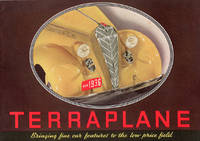
193643457Detroit: Hudson Motor Car Company 1936. 1936. TRADE CATALOGUE. First edition. 28 x 19.5 cm 7 1/4" x 11" original color oblong pictorial wrappers n. p. 20 pp. text illustrated throughout with exterior and interior views from black-and-white photographs red highlights printed on coated white stock. Bound in color-pictorial wrappers with a bold front-end view of a 1936 Terraplane on the front cover. Specification details on the rear cover. WorldCat finds holdings of this title at the Library of Michigan and Harvard Business School. Fine bright copy. Hudson Motor Car Company, 1936]. unknown
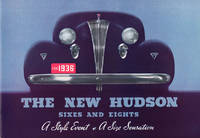
193643456Detroit: Hudson Motor Car Company 1936. 1936. TRADE CATALOGUE. First edition. 28 x 19.5 cm 7 1/4" x 11" original color oblong pictorial wrappers n. p. 28 pp. text illustrated throughout with exterior and interior views from black-and-white photographs blue highlights printed on coated white stock. Bound in color-pictorial wrappers with a bold front-end view of a 1936 Hudson on the cover. Specifications details are presented on the rear cover. WorldCat finds holdings of this title at the Library of Michigan and Hagley Museum. Fine bright copy. Hudson Motor Car Company, 1936]. unknown
193842948N. P.: Printed in Canada by R. G. McLean Limited 1938. 1938. TRADE CATALOGUE. First edition. 4to. 12" x 9" color pictorial wrappers 24 pp. including covers color-lithograph illustrated throughout and numerous black & white photograph illustrations. This scarce dealership catalogue is the Hudson Motor Car Company's 30th anniversary lineup with fresh new styling and models. A limited numbers of these models have survived and very few appear in period photographs. Even though over 80000 cars were shipped to dealers there are very few remaining examples from one of the few surviving pre-World War II smaller automakers. For the year 1939 the company offered six new models all equipped with L-head engines with chrome-iron blocks beginning with a bare-bones Series 90 and then the Series 91 92 and 93 straight sixes and finally the fully equipped Series 95 and 97. The Country Club sedans Broughams and Coupes featured luxurious Airfoam interiors with a broad range of paint and upholstery choices. This is a very colorful and informative catalogue. Light wear to the spine and extremities else a very good clean copy. Worldcat locates 1 copy Library of Michigan Lansing. [Printed in Canada by R. G. McLean Limited], 1938. unknown
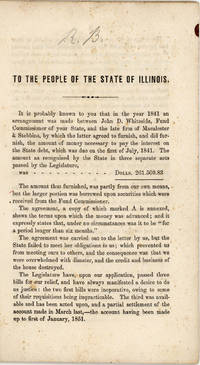
185137649Philadelphia Pa.: B. Mifflin Printer 1851. First edition. Removed. Removed from a larger volume lacking the wrappers mail fold otherwise good. 19 pp. 8vo. After the initial route was laid out in 1824 construction on the Illinois and Michigan Canal began in 1836 only to be suspended for several years after the Panic of 1837 which set the state of Illinois into a financial crisis. To meet the debt payments for the state in 1841 money was borrowed from the firm of Macalester & Stebbins of Philadelphia "but the State failed to meet her obligations to us; which prevented us from meeting ours to others and the consequence was that we were overwhelmed with disaster and the credit and business of the house destroyed." This appeal to the People of Illinois is for the final resolution of justice after some payments had been made.<br /> <br /> A quite detailed analysis and accounting and scarce. We could located only one other copy at the Abraham Lincoln Presidential Library which provides the title and printing information from the wrapper: "Appeal of Macalester and Stebbins to the people of Illinois Philadelphia June 1851".<br /> <br /> Charles Macalester II 1798–1873 was a businessman in Ohio & Philadelphia and for whom Macalester College in Minnesota is named. [B. Mifflin, Printer] unknown
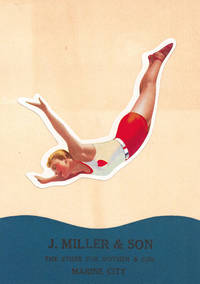
193049068Chicago: Manz 1930. 1930. First edition. 8-1/4" x 5-3/4" striking pictorial wrappers showing a cut out of a woman diving in a Bradley bathing suit. 16 pp. including wrappers. Color illustrations. A very nice catalog of swimsuits for women and men. Listed are "New Novel Colorful Swim Suits For Men" as wells as "Mermaid Suits In The Modern Manner" "The Bradley Backless Wonders Of This Sun Tan Age" "Bradleys For The Conservative Dresser And For The Fast Swimmer" for women and bathing suits for children. Also offers "smart sweaters for everybody for everything" along with a little bit of sportswear. Very light discoloration else fine. A beautiful catalog. Manz, 1930. unknown
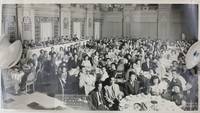
19553892Detroit Mi 1955. Very good. Panoramic photographs 10 x 18.5 inches and 12 x 19.75 inches. Moderate creasing surface and edge wear. A pair of rare small-format panoramic photographs at least one of which was produced by a Japanese American photographer featuring diners at two different Detroit conventions of the Japanese American Citizens League in the mid-20th century. The first photograph pictures hundreds of Japanese American men and women dining at the Book Cadillac Hotel in Detroit during the September 1-2 1951 convention of the JACL. According to the printed title at bottom this was the organization's "2nd biennial Midwest District Convention." This photo was produced by a photographer named Kawamoto with his name scratched into the negative at bottom right. The second features the attendees of the "Testimonial Dinner" of the Detroit chapter of the JACL at the International Institute on May 15 1955. Material from eastern JACL chapters is especially difficult to find in the present market. unknown
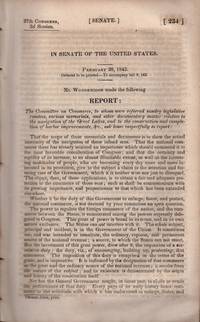
184334809Washington DC: United States Senate 1843. Map. Good. Disbound wraps. 30 pages. Includes an 1842 large folding map approx. 36" x 46" of the Delta of Lake St. Clair. Approx. 6" closed tear not affecting the main content. Map has numerous folds and some small pin holes at the fold intersections. Light toning to the text. Good. United States Senate unknown
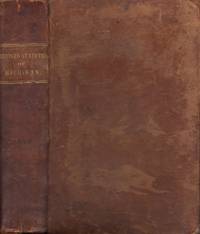
184635266Detroit: Sanford M. Green 1846. First Edition. Leather bound. Fair. Quarto. 1 xvi 829 pages errata page 2. Brown sheepskin leather binding with title label on the spine. Leather binding is scuffed and rubbed. Light cracks to the outer joints. Moderate to heavy scattered foxing toning and damp staining to the contents. Fair only. Sanford M. Green unknown
193654247New York: Thomas Y. Crowell 1936. 8vo. 238 pp. Black cloth gilt illust. of doctor’s horse-drawn cart front cover gilt lettering w/ d.j. minor scuffing very small tear back cover edgewear still NF/VG copy. Second printing of this frank and outspoken memoir by a country doctor in Michigan’s Upper Peninsula. His blunt discussion about sexuality abortion and illegitimate pregnancies led to a recommendation in the 1930s for libraries such as those in Wisconsin to not offer the book for general circulation. Thomas Y. Crowell, hardcover
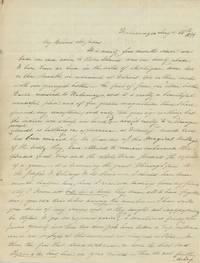
1844List3335Kalamazoo Michigan 1844. Single three-page letter measuring 7 ½ x 9 ¾ inches. Folded with very small tears at folds; larger tear at seal intersecting with text. Overall excellent to Near Fine. An 1844 letter from a woman who had recently moved to Kalamazoo to a friend in Urbana Ohio. The writer describes Kalamazoo:<br /> <br /> “It is nearly four months since we bade our sad adieu to Staten Island and our lovely abode & here have we been in the wilds of Michigan some two or three months we remained at Detroit two or three weeks with our youngest brother — the first of June our elder brother David removed to Kalamazoo and it is really a beautiful wonderful place; and of far greater magnitude than I had formed any conception and only ten years ago nothing but the indian war whoop was heard — now it really to a stranger presents almost as bustling an appearance as Detroit; much taste has been evinced by the founders of this magical village of the west; – they have allowed to remain unharmed the splendid forest trees and the whole town presents the aspect of a grove — it is becoming the great thoroughfare to St Josephs & Chicago & St Louis —.â€<br /> <br /> The first white settler within what is now the city of Kalamazoo Titus Bronson arrived in 1829; within ten years Kalamazoo County had several thousand residents. <br /> <br /> The writer also describes her plans for traveling to New Orleans hoping to avoid the seasickness-inducing “‘big lake’ travellingâ€. This would have been difficult as plank roads were not laid in the area until the following year and railroads would not reach Kalamazoo until 1846.<br /> <br /> Of interest to historians of white American settlement of Michigan. unknown
1921List3033Spring Lake Michigan 1921. Twelve 8 ½ x 11 inch pages affixed to backing sheet. Wear marginal damage and some tearing to backing sheet; pages folded with some wrinkling; excellent. Joos Verplanke 1844–1943 was born in Zeeland The Netherlands and immigrated with his family to the United States in 1849. They settled in Holland Michigan and besides his time serving in the Union Army Verplanke would live in the Ottawa County area for the rest of his life. Offered here is a short memoir written by Verplanke for his children in 1921 when he was in his late 70s.<br /> <br /> The Verplanke family came to the US as part of the wave of immigration that followed the Dutch Reformed Church secession and the economic downturn in The Netherlands in the 1830s. Some Seceder church leaders such as Albertus Van Raalte felt that they were being religiously persecuted by the government and that staying in The Netherlands was religiously and economically untenable for their congregants.1 By the mid-1840s several Seceder ministers had formed emigration societies to help their parishioners leave for the US. As Verplanke puts it “They went in order to live where they could be free in religious matters as they had not been entirely free in the Netherlands during the thirties.â€<br /> <br /> Joos Verplanke and his family left Biervliet Zeeland in 1849 to join the Dutch colony in what would become Holland Michigan—but they and others in their party ran out of funds by Albany. The group was sent to “the Poor Houseâ€; many including Verplanke’s mother and younger brother died from cholera and the group was forced to leave. Arriving in Grand Haven Michigan they were assisted by a farmer who had also immigrated from The Netherlands a few years prior. The farmer fed and housed the family and eventually raised funds for them to continue to Holland. In fact this ethos was important to the Dutch immigrants; some Seceder emigration societies had provisions that money would be pooled so that the richer immigrants could help the poorer reach the colony.1<br /> <br /> The Verplankes arrived destitute in Holland. Joos Verplanke describes the colony:<br /> <br /> “Holland was a very new colony practically in the woods with a few stores a few small houses. The Government land was taken up by these colonists. Rev. VanDerMeulen had settled in Zeeland. Rev. Ypma im Vriesland Rev. Bolks in Overisel and others in Graafscap; each in his colony. A few of the immigrants had money but most had just enough to get them here. It was very hard for them in this wild timbered country so different from the cultivated and thickly settled Netherlands. None of them had ever handled an axe. . However encouraged by their ministers they were determined to learn to use the axe and chop out a place where they could worship God as they wished which they had not been allowed to do in the Netherlands some time before.â€<br /> <br /> In 1862 Verplanke enlisted with the Union Army. He recalls training:<br /> <br /> “We were in Holland two weeks training. Had a jolly time everyone was good to us. We could have anything we wanted. All the beer we wanted to as there was no prohibition those days.â€<br /> <br /> He recalls the unit fighting Morgan’s raiders at “Tip’s Bend†Tebbs Bend Kentucky fighting in Knoxville and with Sherman on his March to the Sea. He also recalls his short-lived desertion from the steamer Matanzas in Washington:<br /> <br /> “So crowded was the boat that there was no room to lie down not even on the upper deck. I thought if I can get off I will not go with this boat. I talked to a few of the boys and they agreed with me. Just then the gang planks were hauled in so we could not sneak off that way. I looked over and noticed along the boat’s side the whale-fenders were hanging by ropes. We threw our knapsacks and slide sic down the ropes. . The next morning we went to headquarters and I told some kind of a story about getting left. . Though we had been booked as deserters there was nothing more said of it. So we remembered only the fun we had out of what might have proved to be a very bad venture.â€<br /> <br /> Verplanke mustered out in June of 1865. He became the town marshall in Holland and in 1876 successfully ran as a Democrat for Ottawa County Sheriff despite the county’s Republican lean. He ran again two years later as a Greenback. The Greenback Party was an agrarian anti-monopoly and pro- monetary and labor reform party but Verplanke frames his running as a Greenback as a practical decision: “I knew if I accepted the Greenback nomination I was almost certain of victory. . I needed it badly as I had spent so much money in electioneering†for the previous election.<br /> Verplanke farmed in Crockery Township and then moved to Spring Lake where he authored this document for the benefit of his nine living sons.<br /> <br /> Of interest to scholars of the Dutch settlement of Michigan following the Dutch Reformed Church split and those immigrants’ participation in the Civil War and American political life.<br /> <br /> 1 Robert P. Swierenga “‘By the Sweat of our Brow’: Economic Aspects of the Dutch Immigration to Michigan†lecture at the A.C. Van Raalte Institute for Historical Studies Hope College Holland Museum Sesquicentennial Lecture Series Holland MI March 13 1997. unknown
197341364Detroit: Nancy Lee Coleman 1973. 4to. 38 leaves. Including 8 wood engraved plates on sumi-e paper. Black & green rice-paper portfolio leaves & plates loose as issued w/ open-backed cream-linen slipcase w/ decorative papers on cvrs signed & numbered by the artist. First edition No. 1 of 7 copies printed by the artist and presented to Katy Thomas. This private press book was printed by the author in summer 1973 the prints hand rubbed on sumi-e paper and mounted on dyed rice papers. The poems were printed in 18 point Spartan Book Type hand set by the artist and printed at Wayne State University on Tuscan cover gray. Nancy Lee Coleman, unknown
193955010New York: E.P. Dutton & Co. Inc. 1939. Small 4to. 86 pp. Illustrated title in pink & black numerous plates and text illustrations throughout many printed in combination of pink & black. Brown publisher’s cloth black lettering front cover & spine illustrated endpapers w/ d.j. cover art by Downer very light age toning and dustsoiling 1 closed tear at spine NF/VG copy. First edition stated of this beloved and charming book based on the childhood of Michigan pioneer Amelia Kaden. The nicely illustrated story relates the tale of the Kadens arriving in Petoskey MI and then developing and claiming their homestead near what today is Chandler near Boyne Falls. E.P. Dutton & Co., Inc., hardcover
185530671New York: John W. Amerman 1855. First Edition. Hardcover. Very good. Octavo. 2 vi 218 pages. Dark brown cloth hardcover with blind stamped designs and gilt stamped title on the front cover. Light edge wear to cloth head of the spine. A few light rubbed spots to the cloth right edges of front cover. Scarce. One copy located in OCLC Germany. John W. Amerman hardcover
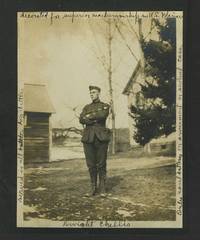
1919277021919. Ephemera. Very good condition. Silvertone photograph of Dwight Chellis Navy Chief in the Locomotive-Mounted U.S. Naval Railroad Batteries who fought with the American Expeditionary force in France during W.W.I.<br /> <br /> Photo most likely taken in France showing Chellis a former student of the University of Michigan before the war in what might be a U.S. Marine uniform. Photo has writing in the margins: "Dwight F. Chellis/served in all the big battles/ decorated for superior marksmanship in the U.S. Marines/only naval battery on armament or swivel cars." <br /> <br /> It is accompanied by a three page handwritten note in pencil possibly written later by another family member who identified Chellis as a sailor Dwight F. Chellis/February 1919/Chief Engineers mate/U.S. Naval Battery"<br /> <br /> The note is mistaken with regard to his rating and Marine Corps service. According to The Michigan Alumnus April 1919 Chellis had been a member of the Michigan Naval Militia which was organized at UMichigan in January 1917. He with 37 other students enlisted or were commissioned in the U.S. Naval Batteries USNB and served in France by July 9 1918. The magazine notes that he was a "CCM" Chief Carpenter's Mate rather than a "Chief Engineers mate" per the note.<br /> <br /> The note is also incorrect regarding Chellis's having served with the Marine Corps. As documented in Navy Department Publication Number 6: The United States Navy Railroad Batteries in France 1922 and the Naval History and Heritage Command's Historical Summary of the U.S. Naval Railway Batteries 2018 the USNB was strictly a U.S. Navy unit and never affiliated with the U.S. Marines. Rather it was assigned to the U.S. Army specifically the First Army's Railway Artillery Reserve RAR. The photograph appears to show Chellis wearing an indistinct shoulder sleeve patch. Army soldiers assigned to the RAR wore shoulder patches featuring the Coastal Artilleries fictional mascot the Oozlefinch Woozlefinch and some sources suggest that the USNB wore a variation of this patch.<br /> <br /> Following the war Chellis returned to New England and became a successful real estate agent in Rutland VT. <br /> <br /> Photo 3.25" x 4" attached to partial album page with 3 8.5 x 5.5" pages written in pencil. Photo in vgc notes toned slt ruffled. An interesting vernacular image of a W.W.I soldier. unknown
52907MICHIGAN. ST. JOSEPH COUNTY. MICHIGAN. 1827 History of St. Joseph County Michigan. With Illustrations Descriptive of Its Scenery Palatial Residences Public Buildings Fine Blocks and Important Manufactories from Original Sketches by Artists of the Highest Ability. Phila. 1877. 1st ed. Folio. Profusely illus. with lithographic views. A fine copy. unknown
194127594(Mansfield, Martino, 2000; Nachdruck der Ausgabe Ann Arbor, 1941). Gr.-8°. Mit Titelbild u. zahlr. tlw. ganzs. Abbildungen auf 37 Tafeln. XVI, 44 S., 2 Bll., OLwd.
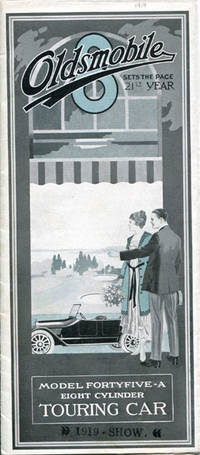
191942619Lansing: Robert Smith Company 1919. 1919. TRADE CATALOGUE. First edition. 18" x 16" sheet printed both sides folds to 9" x 4" duo-tone pictorial wrappers 16 panels illustrated. One side promotes the advantages of the Oldsmobile Model 45-A eight cylinder touring car is a refinement of the Model 45 which has served thousands of satisfied customers. The car has "Beauty and power combined with comfort performance endurance and economy." The other side devotes four panels to showing the merits of the Oldsmobile Model 45-A eight cylinder touring car; two panels to picture and discuss the Oldsmobile Club Roadster and the Standard Roadster; one panel for specifications and the title page. Oldsmobile was a brand of American automobiles produced for most of its existence by General Motors. Olds Motor Vehicle Co. was founded by Ransom E. Olds in 1897. In its 107-year history it produced 35.2 million cars including at least 14 million built at its Lansing Michigan factory. When it was phased out in 2004 Oldsmobile was the oldest surviving American automobile marque and one of the oldest in the world after Daimler Peugeot and Tatra. Fine bright copy. Robert Smith Company, 1919. unknown
201221688Paris, Les editions de la seine, s.d. ; in-12, 180 pp., br. État correct.
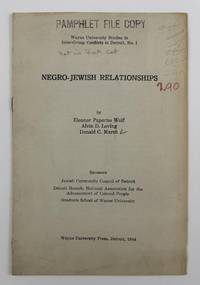
19443261Detroit: Wayne State University 1944. Very good. 8pp. Original printed self wrappers stapled. Minor dust-soiling and edge wear. Internally clean. The first entry in a series of studies issued by Wayne State University in "Inter-Group Conflicts in Detroit." The studies were triggered by the June 1943 Detroit Race Riots and intended to bring a greater understanding to the relationship between Jewish and African American communities in the city. The majority of the present pamphlet is comprised of twenty conclusions reached by the study the first of which begins: "Jewish business does not have a monopoly on Hastings Oakland or Warren. Negro business is increasingly important in all three areas." Another interesting conclusion reads: "The factor of mixed racial employees does not lead to conflict but more often to friendly relationships." The Detroit branch of the NAACP was one of three sponsors of the study along with the Jewish Community Council of Detroit and the Graduate School of Wayne State University. Wayne State University unknown
19009312N.P.: Privately printed n.d. ca. 1900. 1900. 4-3/8" x 3". One side has description noted above with an illustration of a "Buchanan Wagon" image approx. 1" x 2". The reverse side is an attractive color lithograph of a hunter with knife held overhead charging a snarling bear which is standing over the hunters fallen companion. Three dogs attacking the bear add to the action. "Compliments of Rough Bros. Wagon Works. Buchanan Mich." appears in small type at upper right corner. An insignificant minor blemish on printed side not affecting text else a fine example of a "turn-of-the-century" business card with an unusually attractive color lithograph. Privately printed, n.d. [ca. 1900]. unknown
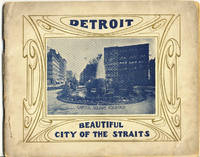
190738873New York Buffalo and Toronto: W.G. MacFarlane n.d. ca 1907. 1907. MICHIGAN. First edition. 10" x 8" oblong pictorial wrappers showing photograph of Capitol Square Fountain on front wrapper n. p. 52 pp. illustrated from photographs. Photographic views of Belle Isle Woodward Avenue looking northbird's-eye views of Detroit City Hall County Court House Capitol Square and Fountain Detroit Opera House Detroit Museum of Art Cadillac Square S. H. Knox & Co. etc. Many prominent buildings street scenes double-page view of the Detroit water front lake steamships including the City Of Cleveland the pride of the D. AND C. Navigation Co. and the S. S. Northwest of the Northern S. S. Co. Covers and interior pages soiled and worn and with covers only connected at spine at top staple. Good. W.G. MacFarlane, n.d. [ca 1907]. unknown
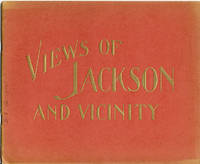
190538883Portland: L.H. Nelson Company n.d. ca 1905. 1905. MICHIGAN. 10" x 8" oblong in red printed wrappers with title in gilt. 32 pp. illustrations. Information about Jackson followed by 31 pages of full-page black and white photographs. Pictures include a bird's-eye view of Jackson on MacCabee Day showing an on-going parade various views of Main Street the Michigan Central Railroad Station interior and exterior views of the Michigan Central Railroad shop the state prison the Athenaeum the Elks' Temple Jackson Water Works the city bank park scenes West Side High School St. John's Academy various churches residences lake scenes etc. At bottom of one page is a very small closed tear not affecting the photograph. Wrappers sunned at edges and with "B.C.A 1905" neatly written in ink at spine of front wrapper along with 3/4" split to bottom of spine. Very good. A nice collection of photographs. L.H. Nelson Company, n.d. [ca 1905]. unknown
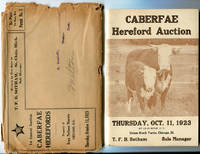
192341935Port Huron: Riverside Printing Company 1923. 1923. First edition. 7 1/2" x 5" in pictorial wrappers. 80 pp. Illustrations. Index. The Caberfae Herefords at auction are the property of Irna Nelson Morris of Chicago Illinois. "The Caberfae Hereford herd was established upon wild cutover timber or rather brush land in Wexford County Michigan near Boon. Selections were made for thrift and hardiness from the Fairfax Anxiety Disturber Corrector Columbus and other noted bloods to represent the best individuals of the breed and the best herd of America and England." Pamphlet offers information about 160 lots offered at auction. A listing of terms and conditions; information about the herd for auction and why now is the time to buy; black and white photos of various bulls to include Beau Mischief Repeater Perfection Fairfax Paragon Beau Picture Anxiety Disturber etc.; photographs/illustrations of and information about some of Sotham's prize stock. Also includes addressed envelop to S. Ormduff of Troy Iowa. Envelop chipped and worn. Pamphlet with a bit of chewing to bottom edge. Riverside Printing Company, 1923. unknown
194042638N. P.: Ford Motor Company 1940. 1940. TRADE CATALOGUE. First edition. 9 " x 12" pictorial stiff wrappers n. p. 20 pp. illustrated in color information specifications. Promotes the 1941 Mercury 8 for its important advances in comfort and roominess clean styling and commanding size ease of handling and is both a big car that is unusually economical to operate. Offered for sale are the sedan the sedan-coupe the coupe the club convertible the town sedan and the station wagon. Minor wear to the spine ends else a fine copy. Ford Motor Company, [1940]. unknown