Boizot, Louis Simon; Darcis, LouisBiblio.com
221 résultats
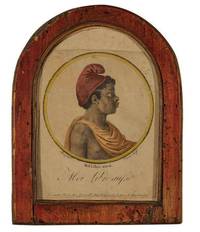
17943053Paris: : Se vend à Paris chez Depeuille Rue Franciade Section de Bon Conseil François Jules Gabriel Depeuille 1794. First edition. Hand-colored engraving. In contemporary or near contemporary frame. Engraved by Louis Darcis after Boizot Boizot del.t : Darcis Sculp.t. Showing a black man with a red Phrygian liberty cap in a circular medallion with the motto or title engraved beneath twice in different typefaces. Paper tanned trimmed the engraving mounted on paper to fill the arch-shaped frame. Wormholes to the frame. Otherwise in fine condition. First edition. Hand-colored engraving. In contemporary or near contemporary frame. Engraved by Louis Darcis after Boizot Boizot del.t : Darcis Sculp.t. Showing a black man with a red Phrygian liberty cap in a circular medallion with the motto or title engraved beneath twice in different typefaces. Diameter: ca. 75 mm. <p><br /> Important public propaganda image commemorating the abolition of slavery in France in 1794.<br /> <p><br /> The abolition of slavery in Saint Domingue in 1793 a major achievement of the slave revolt the Haitian Revolution the activity of the abolitionist societies in France and just as importantly the ideas of the French Enlightenment and the revolutionary ethos of Liberté égalité fraternité convinced the French National Convention to issue a decree in 1794 the so-called Law of 4 February 1794 which abolished slavery and the slave trade in all French colonies and gave the formerly enslaved equal rights.<br /> <br /> Commemorating the occasion promoting the idea of general emancipation and proclaiming equality in public propaganda various images featuring men and women of African descent with different printed slogans referring to freedom and equality started to circulate.<br /> <p><br /> A pair of these images depicting a freed woman and a man titled Moi libre aussi I Too Am Free was created by Louis Simon Boizot 1743–1809. Boizot's designs were probably intended to decorate porcelain box lids as the artist was the director of the Sèvres porcelain manufactory at the time and also created sculptures with the same title for the company. The freed black man the engraving presented here wears a red Phrygian liberty cap of emancipated enslaved people a symbol still featured in the centerpiece of the Haitian flag and the title Moi libre aussi appears twice beneath his image.<br /> <br /> <p><br /> Scarce. Except for the present one no other records on RBH.We could trace institutional copies only in France BnF - 4 copies in two versions with a slightly different arrangement of the text; Le musée Carnavalet the UK British Museum and the United States JCB. One of the BnF-copies a variant was exhibited at The Metropolitan Museum of Art in New York City as part of the exhibition Fictions of Emancipation: Carpeaux Recast March 10 2022–March 5 2023.<br /> <br /> <br /> <br /> <br /> <p>. : Se vend à Paris chez Depeuille, Rue Franciade, Section de Bon Conseil [François Jules Gabriel Depeuille] unknown
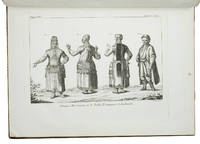
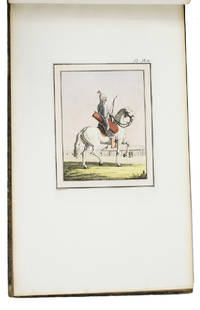
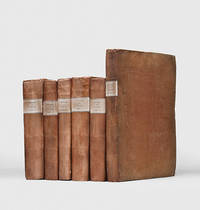
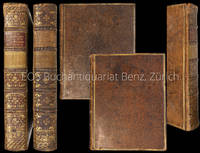
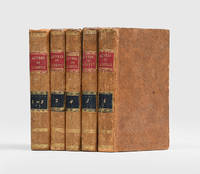
1788ABC_45571Paris: Lagrange vol. 1 Maradan vol. 2-5; colophon of vol. 5: De l'Imprimerie de Demonville 1788. Uniform gold-tooled tree calf with a border on each board richly gold-tooled spines a red morocco spine label with the title and a green morocco spine label with the volume number gilt edges marbled endpapers. 4to text and Imperial 4to atlas: 33.5 x 25 cm. With 123 engraved plates and maps 29 16 22 35 21 to accompany the 5 text volumes respectively printed on 108 leaves 27 folding including a large folding map of the Russian Empire and several other maps plans views and plates showing costumes plants birds etc. and some engraved head- and tailpieces in all text volumes. 5 text volumes and 1 atlas volume. First edition of the French translation of Peter Simon Pallas's 1741-1811 famous account of his first expedition to Russia and Siberia one of the "academic expeditions" undertaken by the Academy of Sciences in St Petersburg 1768-1774. One of Pallas's chief geological contributions from the expedition was "the recognition of temporal sequence of rocks from the centre to the flanks of a range" DSB mainly based on his study of the Ural and Altai Mountains. He describes numerous Russian plants many depicted in the 123 plates along with some birds and other animals living in the Russian areas he visited.Pallas also describes his journey through the less-visited regions of the Russian Empire depicted in 11 maps including a large folding map of the Russian Empire and he describes the population depicted with their costumes in several plates and the economy of each area. Although a large amount of the 5 text volumes are because of Pallas's background on geology geography climate and flora and fauna and were of great importance for the natural science of Russia the volumes are more than that: they contain a sketch of the Russian Empire in the years 1768-1774 and are a beautiful witness of the first "academic expedition".Bindings a little worn corners bumped heads and feet of the spines a little worn those of volume 1 and the atlas volumes a little cracked. The endpapers of some volumes are browned in vols. 2 and 5 also the half-title and the title-page. Only some very small stains and slight foxing not affecting the text or images. With a tear in the first endpaper of vol. 5 some larger stains on the endpapers of vol. 3 and on rare occasions the foot margin of a text page is cut a little bit short. The edges of the folding plates in the atlas volume are sometimes a little frayed. Otherwise a beautiful set uniformly bound and in good condition.l Brunet IV col. 325; Catalogue de la section des Russica P35; Howgego P9; Hunt 672 note; Nissen ZBI 3076; Stafleu & Cowan 7224; for the author: DSB X pp. 283-285. Lagrange (vol. 1), Maradan (vol. 2-5; colophon of vol. 5: De l'Imprimerie de Demonville), unknown
1797006817London: Printed by W. Bulmer & Co. Shakespeare Printing-Office for John & Josiah Boydell and George Nicol. From the Types of W. Martin 1797. First Edition. Full Gilt and Blindstamped Morocco. Near Fine. Folio 32 by 26 cm. cxxxiii 3 213 286 300 pp. 32 hand-colored mezzotint plates within the 3 volumes one plate folding. Among them are three reproductions of Milton portraits including Milton as an infant as a boy and the famous Romney painting of the blind Milton dictating to his daughters this plate being the folding one. To our knowledge this copy of the Boydell Milton is an uniquely hand-colored copy. All the plates other than the Milton portraits are the artwork of Westall. These have an unmistakable affinity to the heroic style of Blake his contemporary. The men and even the women can have exaggerated bulging muscles as found most famously in Michelangelo. As invited by Milton's epic light contends with dark and the illustrations serve up a phantasmagoria of imagery with swirling shadows and specters. The hand-coloring is of a very high caliber and we think greatly enriches the mezzotints. The three volumes contain all the major poetry of Milton -- "Paradise Lost" "Paradise Regained" "Samson Agonistes" "Comus" etc. etc. Note all half-titles are present. Binding of a rich russet/crimson straight-grained morocco with bands of blindstamping and gilt-stamping decoration on the boards and gilt decoration within and on the raised bands. Decoration consists of ruling Greek palmettos and more floral rinceaux bands. Conditiion: morocco binding with minor abrasions and wear. One leaf with repaired tear Vol. II pp. 103/4. Pages generally clean plates bright. All volumes tight. Printed by W. Bulmer & Co., Shakespeare Printing-Office, for John & Josiah Boydell, and George Nicol. From the Types of W. Marti unknown
1799ABC_45555Paris Strasbourg Amand Koening; Leipzig Godefroi Martini 1799. 4to text and oblong folio atlas: 24 x 40 cm. Text volumes in contemporary and uniform gold-tooled mottled calf with a frame on each board gold-tooled spine with red morocco label with title in gold and green morocco label with volume number in gold marbled endpapers. Atlas in matching contemporary mottled half calf marbled sides further like the text volumes but with Atlas instead of a volume number. With 28 engravings in the text and 1 woodcut in each text volumes 23 hand-coloured and 55 engraved plates and maps 43 hand-coloured in the atlas volume. 2 text volumes and 1 atlas volume. XXXII 438; XVI 452 pp. ; 55 ll. Very rare account by Peter Simon Pallas 1741-1811 of his second expedition to Russia in 1793-1794. This time he studied the southern provinces of Russia especially the steppes near the Caspian Sea the northern Caucasus the Crimea and the Black Sea. Although Pallas published an extensive account in German of his second expedition in 1799-1801 it never gained as much attention as the first expedition to Russia and Siberia 1768-1774. The present work is the French translation of this German account.In this account of his travel to South Russia the Crimea and the Black Sea Pallas not only describes his route through the Russian Empire he also - as a geologist and naturalist - gives an excellent physical and topographical description of the landscape. He notes the differences in the landscapes he faces along his way not only differences in nature but also how these Crimean landscapes have historically changed over years. He describes their historical geological changes based on fossils and antiquities he finds. He also discusses the flora fauna and climatology of the area. Next to this he gives a more cultural and anthropological description of South Russia and the Crimea. He gives his own remarks on the Crimean peoples economy and trade.With a bookplate on the front paste-downs of all volumes. Annotation on second endpaper of the atlas volume some of the 55 plates with manuscript captions in French in ink. With a library stamp on the title-page of both text volumes and on the first plate of the atlas volume. Bindings of the two volumes very slightly worn corners of the atlas volume bumped. Some browning and foxing not affecting the text or images. Avertissement in vol. 2 erroneously bound in before the Supplement de la liste des souscripteurs du premier tome.l Catalogue de la section des Russica P59; Howgego P10; Schuh 3613; cf. Abbey Travel 222 English edition London 1802-1803; WorldCat 3 complete & a few incompl. copies of the 1799-1801 issue; for the author: DSB X pp. 283-285; Wendland Peter Simon Pallas 1742-1811: Materialien einer Biographie I 1992 pp. 479-481. unknown
1789168579Paris: Maradan 1789-93. The celebrated French translation in the original boards First edition in French. First published in German this is the account of Pallas's expedition across the central Russian provinces from 1768 to 1774. He reported on the passage of Venus brought back numerous animal and plant specimens and made anthropological observations of local peoples. Simon Peter Pallas 1741-1811 was a German zoologist and botanist and a leading figure in the Russian scientific enlightenment. He was educated at Halle Göttingen and at Leiden where he submitted his doctorate in 1760. After a trip to England to study natural history and geology Pallas settled at The Hague where he published the acclaimed Elenchus zoophytorum and Miscellanea zoologica. He soon attracted the attention of Catherine the Great who invited him to St Petersburg where he became a professor of natural history at the Imperial Academy of Sciences. In 1768 at the specific request of the tsarina he was placed in charge of an expedition of five naturalists and seven astronomers into Russia and Siberia. Over the next six years the party traversed the empire from the plains of European Russia to the borders of Mongolia. "Pallas arrived back in St Petersburg in July 1774 with a vast amount of data and many fossil specimens but broken in health. His hair was whitened with fatigue and nearly all of his companions had died. His journals had been regularly despatched back to St Petersburg and were awaiting him on his arrival" Howgego. His chief geological contribution was the recognition of the temporal sequence of rocks from the centre to the flanks of a range. He also found a wide distribution of mammoth and rhinoceros fossils in the Siberian ice. This work was originally published in German in the period 1771-76. This French edition includes additional material covering the findings of the natural historians Samuel Gottlieb Gmelin Ivan Ivanovich Lepekhin and Johann Gottlieb Georgi. Volume I is the second issue with the Maradan imprint and dated 1789. 6 vols comprising: 5 text vols quarto 274 x 214 mm; folio with maps and plates 354 x 265 mm. With 97 engraved plates 26 folding 10 engraved maps 3 folding 2 double-page large folding general area map as called for loosely inserted. Original dark pink paper covered boards neatly rebacked to style with typographical labels edges uncut. Boards a little rubbed and sunned with minor neat repairs soiled and softened at the corners lightly browned throughout also some occasional marginal damp staining minor loss to front free endpaper in Vol. IV preliminary leaves split at head in Vol. V corners of front board of atlas heavily bumped. A very good wide-margined copy. Atabey 900; Cohen-De Ricci p. 781; Cross D11 for first English edition; Howgego I P10; Nissen ZBI 3076. hardcover
179221136Parma 1792. 12mo. Bodoni 19th-century gold- and blind-tooled mottled calf by Loutrel with a pink morocco title label on the spine lettered in gold a blind-tooled single fillet border on both boards fleurons on the spine head edge gilt marbled endpapers. 2 volumes. 44 25 bis. - 44 bis. 45-144; 8 168 pp. Extremely rare imprint limited to only 25 copies all printed on "paper vélin". This copy nearly matches one recorded in the BNF. However ours has additional title pages to both parts both of which carry the author's name as well as the supplementary pages 25 bis. - 44 bis. which are lacking in the BNF copy.Simon Pierre Mérard de Saint-Just 1749-1812 was a rich French nobleman who was in charge of the residence of the future Louis XIII for several years. After retiring from his public duties in 1782 he concentrated on both book collecting and literary pursuits. He who wrote primarily for his own enjoyment and issued his works in very limited editions. The present work contains fables and short stories on animals humans and emotions many of which are adapted or translated from the writings of John Gay 1685-1732 who Mérard calls "the British La Fontaine" in the introduction.The imprint is almost certainly fictitious as several fables bear dates as late as 1794 while the epilogue is dated 1795 in the table of contents. The work was most likely printed in Paris in of after 1795 though a connection with Giambattista Bodoni cannot be entirely ruled out. Copies dated 1787 and 1799 are also known but it remains unclear whether these are different editions or merely issues with different title pages.With the stamp of the bookbinder on the verso of the first free flyleaf of the first volume. Occasionally mildly foxed or stained the fore edge and lower margins are untrimmed. Otherwise in excellent condition.l Cioranescu 44414; Monglond II 370; Quérard VI 52; not in Brooks. hardcover
17997152CB1799. 2 Bände inkl. Tafeln und Karten. Leipzig Gottfried Martini 17991801. 4°. XXXII 516 S.; XXIV 526 S. Mit 52 meist gef. davon 23 koloriert Kupfertafeln und 3 Kupferkarten alt montiert auf einem Blatt dieses lose. Lederbände der Zeit mit reicher Rücken- und Deckelvergoldung nicht uniform. Cox I 199. Henze III 708. Lipperheide Kaa 17. Nissen ZBI 3064. Grässe V 109. Erste Ausgabe. Der Naturforscher und Ethnograph Peter Simon Pallas 17411811 bereiste in den Jahren 1793 und 1794 die südlichen Gebiete Russlands. Die Ergebnisse dieser wissenschaftlich sehr ertragreichen Forschungsreise legte er in vorliegendem Werk nieder. Die prachtvollen kolorierten Umrissradierungen zeigen Städte 21 Tafeln Trachten 17 Tiere 4 sowie Pläne Kunst- und Kulturgegenstände gezeichnet von G. Geissler und gestochen von Adam Aubertin Frosch und Scheffner. Bei vorliegendem Exemplar die Tafeln miteingebunden. Mit Besitzerstempel und handschriftlichem Namenszug auf den Titelblättern. Das Papier durchgehend etwas stockfleckig. Die Einbände berieben und bestossen. Das hintere Rückengelenk von Band I am Kopf angeplatzt. unknown
175918779The Hague 1759. Large folio ca. 50 x 36 cm. Pierre Gosse junior 19th-century half green morocco a red morocco label on the spine with the title in French lettered in gold marbled endpapers. With 20 engravings each mounted on a double-leaf of heavy paper the text is printed in Dutch and French with a separate title page for each language the engraved coat of arms of Princess Anna on each and 4 decorated woodcut initials. 2 parts in 1 volume. 4 4; 4 27 pp. First edition of two works with illustrations and descriptions of the funeral ceremonies for Princess Anna of Hannover 1709-1759 who was then regent for her son William V Stadtholder of the Dutch Republic. The first work shows the ceremonial mourning chamber with Princess Anna on her death bed. The plates were drawn by Pieter de Swart 1709-1772 one of the most important Dutch architects of the 18th century and engraved by Simon Fokke 1712-1784. The second work shows the funeral procession which took place in Delft on the 23rd of February in 1759 with detailed illustrations of all the heralds riflemen guards etc. that took part in the ceremony. The plates for this work were drawn by artist Paulus Constantijn la Fargue 1729-1782 and also engraved by Fokke. The creators apparently suspected that counterfeit editions of the work might appear as the text at the end of the first work states that only copies signed by the bookseller would be considered real. The present copy is signed.Princess Anna of Hannover duchess of Brunswick-Luneburg was the eldest daughter of George II August later King of England as George II and Wilhelmina Charlotte of Brandenburg-Ansbach. In 1734 she married the Dutch Willem Karel Hendrik Friso 1711-1751 Prince of Orange and Stadtholder of Friesland. When in 1747 her husband became Stadtholder of the Dutch Republic as Willem IV the couple moved from Leeuwarden to The Hague and Anna became highly involved in politics. After the death of Willem IV in 1751 she became regent for her three-year old son the later Stadtholder Willem V. In this position she played a prominent part in the political life of the Republic defending the position of the House of Orange against the republicans.The edges and corners of the boards are somewhat scuffed the boards are slightly rubbed the spine is somewhat discoloured. Otherwise a beautiful copy on heavy large paper with the plates in their original fresh impressions.l Ad 1: Landwehr Splendid ceremonies 233; Lipperheide 2675; Muller 4095; STCN 23024453X 7 copies; Vinet 756; Ad 2: Landwehr Splendid ceremonies 234; Lipperheide 2676; Muller 4097; STCN 230244394 7 copies; Vinet 756bis. ABE CAT Costumes & Uniforms hardcover
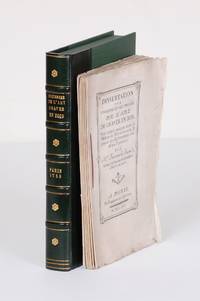
175876869Paris: J. Barbou 1758. unbound cord tied housed in a green half-morocco goat over cloth boards clamshell case spine tooled in gold leaf with title author and date. large 12mo. unbound cord tied housed in a green half-morocco goat over cloth boards clamshell case spine tooled in gold leaf with title author and date. 92 3 pages. Pour éclaircir quelques traits de l"histoire de l'Imprimerie & prouver que Guttemberg n'en est pas l'Inventeur. Very rare first edition Bigmore and Wyman p.227. Unbound textblock lightly soiled with minor creasing at corners. Faint moisture staining throughout with some affecting the text. In this text Fournier sets out to prove that Gutenberg was not the inventor of the printing press by examining the history of printing. He believed that the technology Gutenberg made popular existed long before the German printer's work. Fournier also followed up this text with two additional works which are not present: De l'origine et des productions de l'imprimerie primitive en taille de bois 1759 and Observations sur un ouvrage intitulé Vindiciae Typographicae 1760. These two works provided further discussion of the origins of woodcut prints including a passage refuting popular belief about the origin wood engraving and some ideas for further study. <BR> <br /> <BR> <br /> Fournier 1712--1768 was born in Paris and trained as a wood engraver and type founder being a member of the 18th century dynasty of the well-known Fournier family. He later turned to steel engraving. He published a table of the proportions of the different printing characters whose purpose was to propose for all typefaces a fixed measurement in "typographic points" and a systematic gradation. He worked closely with the collaborators of the Encyclopédie providing the printer Le Breton with all the documentation relating to the typographic foundry and plans for his own instruments as well as providing Diderot with his collection of ancient alphabets. Finally after multiple disputes with his Parisian colleagues he became infamous for the printing of his famous Manuel Typographique 1764 1766 just prior to his death. J. Barbou unknown
1758141839Paris: J. Barbou 1758. full brown leather border stamped in blind on the front and rear boards gilt ornaments on spine title in second compartment five raised bands all edges stained red marbled endsheets. small 8vo. full brown leather border stamped in blind on the front and rear boards gilt ornaments on spine title in second compartment five raised bands all edges stained red marbled endsheets. 1ff.-92 3 -263 pages. Pour éclaircir quelques traits de l"histoire de l'Imprimerie & prouver que Guttemberg n'en est pas l'Inventeur. Two works bound in one. Very rare first edition Bigmore and Wyman p.228. Private bookplate of Jackson Burke on the verso of the front free endpaper. Contemporary boards with some rubbing to the spine and extremities corners a bit worn gilt on the spine is lightly flaking evidence of bookplate removal to front and rear pastedowns. Else a fine copy of this very scarce work.<BR> <br /> <BR> <br /> Two works bound together. Complete titles are: Dissertation sur l'origine et les progrès de l'art de graver en bois 1758 and De l'origine et des productions de l'imprimerie primitive en taille de bois 1759.<BR> <br /> <BR> <br /> Fournier 1712--1768 was born in Paris and trained as a wood engraver. He later turned to steel engraving. In the first essay Fournier sets out to prove that Gutenberg was not the inventor of the printing press by examining the history of printing. He believes that the technology Gutenberg made popular existed long before the German printer's work. The second volume follows this up with further discussion of the origins of woodcut prints. <BR> <br /> <BR> <br /> Fournier wrongly disputes the dating of Mr. De Bure le Jeune concerning the Gutenberg Bible but he is the first with the help of an observation by Gerard Meerman to note the progressive increase in the number of lines per page in the early stages of Bible production. J. Barbou unknown
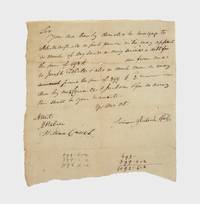
1800374674Np 1800. 1p. On laid paper. Countersigned by William Couch. Docketed on verso. Old folds torn at bottom blank margin without loss of text. 1p. On laid paper. Countersigned by William Couch. Docketed on verso. "Sir You are hereby directed to mortgage to A. K. Maisahale or such person as he may appoint as much of my land as may secure a debt for the sum of 693£ due from me to Joseph Tidball & also as much more as may secure the sum of 399 & 2c due by me to Carswiule & Jackson & for so doing this shall be your warrant."<br /> <br /> Scarce autograph by the noted frontiersman soldier and scout noted for his exploits in Kentucky Ohio and western Virginia during the Revolution and the Northwest Indian War. unknown
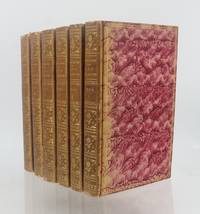
176887056à Amsterdam et Leipzig: Chez Arkstée & Merkus 1768. Fine. Chez Arkstée & Merkus à Amsterdam et Leipzig 1768 12.20 x 18 cm 6 volumes reliés Edition of the translation by François Filleau de Saint-Martin illustrated with 31 copperplate engravings by Folkema and Fokke after Antoine Coypel as well as a portrait of the author as frontispiece engraved by Folkema after G. Kent at the head of the first volume. Title pages in black and red accompanied by engraved vignettes for each volume preceded by a half-title page on each. First volume complete with an engraved half-title. Numerous tailpieces. Pastiche Bradel bindings in full fuchsia pink paper boards smooth brown spines decorated with small gilt tools and fillets gilt date at foot of spines covers decorated with double gilt fillet border original red paper board waiting covers preserved and bound at head and tail of each volume pastedowns and endpapers of watermarked Arches laid paper uncut pages. Headcaps rubbed with occasional small paper losses scattered foxing small marginal tear repaired not affecting text p. 15 vol. I and p. 191 vol. VI corner loss filled p. 321 vol. III pale dampstain p. 253 vol. VI more pronounced foxing p. 309 vol. VI. Handsome copy with entirely uncut margins of this famous illustrated edition of Cervantes' masterpiece. The superb full-page copperplate engravings are a reduction to octavo format of the engravings from the 1746 edition executed after drawings by the great painter Charles Coypel as well as the artists François Boucher Cochin Lebas Pacard and Tremolières. Chez Arkstée & Merkus hardcover
1703B7160Nuremburg: Berlegung Wolfgang Moritz Endters / Wolfgangue Maurice Endter. 1703. Interior clean and crisp. Binding: Full original vellum boards rebacked saving original spine. Spine with brown morocco label. Notes: Text in Latin German Italian and French each printed in single column with two columns per page; Italian and French on recto Latin and German on verso. Size: Folio 340 x 215mm Illustration: Near fine example of this quatro-lingual treatise on horses and horse breeding illustrated with 46 fine copperplate engravings plus engraved title. Detailed plates illustrating training mating behavioural presentation etc.; also including mating between horses and bulls donkeys etc.<br>PLATES:<br>1.104<br>2.124<br>3.223 44 plates<br> Provenance: Ex-Libris; bookplate of Fritz von Baroalaban mounted to front pastedown. Pages: P Engraved title. Blank. Latin/German title. Blank. Italian/French title. Blank. Dedication. Author’s dedication 3. Dedication title. Author’s second dedication 5. Note to the reader. Index 6. Blank. Title. Pp. 2-223. Category: Book Natural History; Berlegung Wolfgang Moritz Endters / Wolfgangue Maurice Endter. hardcover
1774189500London: 1774. Exposing the bread conspiracy First edition of this incisive attack on physiocracy by the habitual contrarian and one-time physiocrat published as the first two parts of this six-part collected edition of his works. This set also includes the first edition of Linguet's Du Pain et du Bled and a revised edition of the Théorie des loix civiles first published in 1767 his critique of Enlightenment liberalism. Simon Nicolas Henri Linguet 1736-1794 was among the most renowned lawyers in France during the 1760s and 1770s until his attacks on colleagues led to his expulsion from the bar in 1775. Voltaire observed of his streak of nonconformity that "Paris too has its Jean-Jacques Rousseau" quoted in Vyverberg p. 476. The works published here inveigh against multiple aspects of the pre-revolutionary status quo including physiocratic notions of liberty and the dependence of the French upon bread. The Théorie des loix civiles opened Linguet's campaign again the physiocrats but did not target them by name: the Plus Heureux Gouvernement by contrast directly charged that physiocratic concepts of liberty were opportunistic shams designed to enrich the elite. Linguet's Du Pain et du Bled On Wheat and Bread tackles the systemic dependence of the French peasantry on bread contending - perhaps hyperbolically - that it was a fundamentally harmful food responsible in large part for the grim health of the poor. A response by Tissot 1728-1797 published at Neufchatel in 1779 is bound in this volume. 2 works in 5 vols octavo 163 x 91 mm. With 2 folding letterpress tables. Contemporary tree sheep spines decorated in gilt and with twin red and black morocco labels edges sprinkled grey. Light rubbing and stripping a couple of spots of wear to rear board of vol. 1 and slight loss to head of spine minor browning and foxing to contents: a very good copy ESTC T149730. Henry Vyverberg "Limits of Nonconformity in the Enlightenment: The Case of Simon-Nicolas Henri Linguet" French Historical Studies vol. 6 no. 4 Sept. 1970. unknown
1758263129Paris: Chez de Bure 1758. First. hardcover. good. l'Histoire Naturelle; les Moeurs Coutumes & Religion des Naturels. folding map of the Gulf of Mexico 40 engraved plates including the folding plan of New Orleans lacks large folding map of Louisiana. 3 volumes. 16mo contemporary mottled calf gilt spines spines and some edges of covers worn on all volumes shellac applied to all spines ex-lib lacks errata leaf in volume I. Paris: Chez de Bure 1758. First Edition.<br/> <br/> "One fo the most useful contemporary authorities on French Louisiana. Le Page du Pratz lived there for 16 years and his detailed description is one of the main sources of his period." Streeter Sale 127. "Relation based on a residence from 1718 to 1734 valuable for showing French claims to the southern territory east of the Mississippi and for particulars concerning Indian nations there." Howes L-266. Ex libris from the library of the American Chamber of Commerce in Paris with their bookplate on the front and back endpapers of each volume. Clark I: 75. Graff 2462. Field 910. Sabin 40122. Raines p. 73.<br/> <br/> Chez de Bure unknown
1794S508Paris: Maradan 1794. Uniform contemporary mottled calf richly gold-tooled spines. 8vo text and large 4to atlas. With 8 title pages and 8 half-titles 108 engraved plates and maps of which 22 folding and 2 double-page. 8 text-volumes and 1 atlas-volume. Second French edition of Pallas's 1768-1774 journeys through Russia. Peter Simon Pallas Berlin 1741-1811 studied medicine and natural history in Germany Holland and England. In 1767 he went to St Petersburg and began to conduct research in Russia. He was an eminent botanist zoologist and geographer and "sought to advance from merely describing nature to finding the causal interrelationships and hidden regularities of natural phenomena." Darwin acknowledged his work to have been influential in the development of evolutionary ideas DSB .In the years 1768 to 1774 Pallas joined so-called "academic expeditions" which traversed the Russian Empire from west to east. He studied flora and fauna landscape geological condition local population and culture. His findings were published in Reise durch verschiedenen Provinzen des russischen Reichs 3 volumes St Petersburg 1771-1776. The French translation of the work appeared in five volumes and one atlas-volume 1788-1793. The present nouvelle édition revised by Lamarck and Langlès comprises eight text-volumes and one atlas volume with maps and plates. The large map of Russia 55 x 117 cm is accompanied by ten others of parts of Russia three folding and two double-page. The other illustrations show plants ca. 58 costumes animals buildings inscriptions etc. A fine set; large bookplates of "Charles Baron de Selby" with smaller bookplates with the text "Caroli de Hoffmann Bruxellis" pasted onto them. Fine setof a great work on Russian natural history.l Cat. Russica 36; DSB X pp. 283-285; Stafleu & Cowan 7224; Wood p. 511. Maradan, unknown
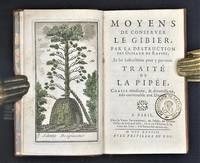
17386<p><strong>First Edition - The copy of king Louis Philippe I</strong></p><p><strong>Exceedingly rare hunting treatise on Bird trapping </strong><em><strong>pipée </strong></em><strong> AS A METHOD TO protect and preserve bush animals from birds of prey</strong></p><p>Simon Jean-Baptiste. <em>Moyens de conserver le Gibier par la destruction des oiseaux de rapine ; Et les Instructions pour y parvenir. </em><em>Traité de la pipée Chasse amusante & divertissante très-convenable aux Dames. </em>Paris Veuve Prudhomme 1738.</p><p>12° 163 x 10 cm contemporary full leather binding gilt decoration and title at compartments pp. 4 – first blank <em>recto</em> of second page engraved frontispiece xxvii 3 84 4 engraved handcoloured frontispiece original silk bookmark perfectly preserved red edges.</p><p>Hand coloured full page engraving at frontispiece representing a birds trap with the Latin <em>motto</em> "<em>Silentio Decipiuntur</em> Deceived in Silence"</p><p>Only three complete copies of this first edition recorded in worldwide libraries WorldCat</p><p>Extremely rare treatise on Birds Trapping <em>pipée</em> which as the author specifies in the preface can be considered the first and most complete popular and infomrative work on this hunting technique.</p><p>This method of hunting now prohibited and already discussed in Simon's time is based on the preparation of traps usually poles leaning against trees or branches sprinkled with a sticky substance towards which a team of beaters lures the birds with decoys.</p><p>Simon tries to valorise this hunting method not considering it only as it was mainly considered at the time a fun pastime perfectly suitable for ladies but as a very useful hunting method to control the number of birds of prey and therefore preserve bush animals otherwise destined to be their victims.</p><p>Book Structure:</p><p>· Hand coloured engraved frontispiece</p><p>· Title page</p><p>· Preface</p><p>· Table of Contents</p><p>· Chapter I – On the hunting methods of the "<em>pipée" </em>in general</p><p>· Chapter II – On the preparation of the "Glue" for the traps</p><p>· Chapter III – How to optimize the glue</p><p>· Chapter IV – On Glue in general</p><p>· Chapter V – About the best locations to prepare the traps</p><p>· Chapter VI – How to choose the tree and how to prepare it</p><p>· Chapter VII – Where to hide the hunt beaters</p><p>· Chapter VIII – IX How to set up the traps</p><p>· Chapter X – About the best time of the day to start the hunting</p><p>· Chapter XI – About the decoys in hunting</p><p>· Chapter XII – The best season for "<em>pipée"</em></p><p>· Chapter XIII – The best weather to practice Hunting</p><p>· Chapter XIV – Which are the birds usually captured with "<em>pipée"</em></p><p>· Chapter XV – How to build a perfect Hunting Team.</p><p>· Printing Authorization</p><p>· King's privilege</p><p>Simon Jean-Baptiste early XVIII century - 1762 was a French Lawyer member of the Parliament and Royal censor from 1742 to 1762. He was author of works on bees birds hunting and cosmography.</p><p>Census: exceedingly rare edition. Only three copies of this first edition are recorded in Worldcat plus one imperfect:</p><p>· 2 in USA Yale imperfect Berkeley</p><p>· 1 in Sweden Kungliga biblioteket</p><p>· 1 in France BnF.</p><p>Conditions: Perfect copy of an exceedingly rare hunting treatise with an important noble provenance and with hand colored illustration.</p><p>Provenance: I. From the prestigious <em>Bibliothèque royale de Louis-Philippe au château d'Eu </em>with his ownership stamp at title page. Louis Philippe 6 October 1773 – 26 August 1850 was King of the French from 1830 to 1848 the last King and penultimate monarch of France and <em>Château d'Eu</em> served as his summer residence. II: handwritten shelf location notes at front and back fly leaves.</p> Veuve Prudhomme
172325150à La Haye The Hague: Aux dépens de la Compagnie 1723. Fine. Aux dépens de la Compagnie à La Haye The Hague 1723 15.50 x 20.50 cm 4 tomes reliés en 1 volume New edition in four languages after that cited on p. 59 at Mortier in 1659. This is the third edition the original having been published in Paris in 1694 in 8vo in French only. The remarkable illustration includes an allegorical frontispiece by Jan van Vianen a large folding plan of the city and castle of Versailles and 218 numbered plates five of which are folding all engraved by P. le Gros Garnier I. la Clerion N. Coustous Cornu after drawings by Thomassin. The work is divided into four parts with 3 title pages in red and black for the whole one in Dutch one in French and one dated 1695 at Pierre Mortier and 4 title pages in red and black for each of the volumes detailed as follows: vol. 1. The ancient & modern statues of Versailles fig. 1-53 -- vol. 2. The groups of Versailles fig. 54-85 -- vol. 3. The fountains and other ornaments of Versailles fig 86-172 -- vol. 4. The thermal baths and vases of Versailles fig. 173-218. Contemporary full vellum binding. Jansenist spine with raised bands. Red morocco title label. Marbled edges. Some leaves browned at the end of the index. Fine copy in good condition. The work in question is considered to form the finest achievement of Simon Thomassin 1653-1732 engraver to the king who created numerous works. The work was commissioned by Louis XIV himself in 1689. Aux dépens de la Compagnie hardcover
1759137120Paris: J. Barbou 1759. Full period French binding in Calf five raised bands gilt ornamentation on spine author and title in gilt on red leather spine label in second compartment. 8vo. Full period French binding in Calf five raised bands gilt ornamentation on spine author and title in gilt on red leather spine label in second compartment. 263 pages. First edition Bigmore and Wyman p.228. Minor soiling to the text block else a fine copy.<BR> <br /> <BR> <br /> In this volume Fournier sets out to prove that Gutenberg was not the inventor of the printing press by examining the history of printing. He believes that the technology Gutenberg made popular existed long before the German printer's work. <BR> <br /> <BR> <br /> "Peter Simon Fournier a French engraver and letter-founder was born at Paris 1712 and died 1768. He studied under Colson painter of the Academy of Saint Luc and devoted himself first to the art of wood-engraving; he afterwards as an engraver on steel rendered himself famous in all countries. In some of his works he seeks to prove that Gutenberg is not the inventor of printing and maintains that long before Gutenberg engraving on wood had been employed for printing images and inscriptions; that during his residence in Strasburg Gutenberg attempted the application of this art to the printing of books and that on his return to Mayence he first printed the Donatus and the Catholicon of Johannes de Janua with engraved and solid blocks. Fournier's ingenious theories were ably refuted by Baron Heinecken in his "Idée Générale d'une Collection complette d'Estamples" Leipsic: 1771" Bigmore & Wyman p 229. J. Barbou unknown
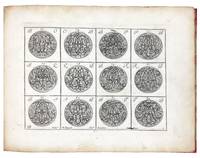
170441629London: Printed for the Author in the Old Palace Westminster; and Sold by W. Rogers and H. Rhodes in Fleet Street; E. Harris and B. Barker in Westminster-Hall 1704. Oblong 4to. 8 x 10 inches. First edition. I-IV A4 B-M4 I-IV. 56 ff. 1-112. 112 pp. 56 copper engraved plates 50 each with 12 cyphers; 6 other engraved plates with text in French and English. Coronets Frontispiece Title English Advertisement French Advertisement 50 Leaves of Cyphers. Frontispiece reads: "A book of cyphers composed by Col. Parsons. Imprimatur Carlisle. E. M. 1703." Priced bound at 12 shillings. 18 leaves with extensive contemporary ink manuscript penmanship editions on versos. Bound to style in quarter 18th-century morocco over 18th-century marble paper boards<br/> <br/> Extensively annotated first edition Parsons's enigmatic cypher book draws on heraldy cryptography and typography and led a craze for monogrammatic systems of which many imitators followed.<br/> <br/> "Such cyphers were extremely popular on both sides of the Atlantic during the late seventeenth and early eighteenth centuries. For inspiration in preparing clients' personal designs engravers typically relied on guides by designers such as William Parsons's New Book of Cyphers." - DDW Parsons's New Book of Cyphers was at the forefront of a publishing craze for cyphers in the 1700s; it was the fourth such book to be printed and dozens of nearly identical ones followed. Samuel Sympson released books with the exact same title as the present in 1739 and 1750. Phillip Barraud meanwhile had the good taste in 1782 to change Parsons's title by one word to "A New Book of Single Cyphers." Cyphers were used to create heraldic devices and monogrammatic signatures to embroider on clothing use as trademarks or store signs or to incorporate into bookplates as many book collectors have and continue to do. Cyphers differ from monograms in that the individual aspects of a cypher system can be exchanged without affecting the overall system; the letterforms in monograms must be redesigned each time. The cypher system with its internal algorithmic rules and capacity for change can easily encrypt secret messages and has done so from mysterious medieval codices like the Voynich Manuscript to the communiques of British generals during the American Revolution to the blockchain and "crypto" today. Cyphers were so faddish in the 1700s that people kept albums full of printed cyphers they had collected from their family friends and celebrities of the period. Cyphers in other words were treated something like autographs something like business cards something like keepsakes and they were devices people and their families identified with strongly. The 600 engraved cyphers across 56 plates in this first edition of Parson's book each show how to interlink two separate letters within Parsons's larger system of encipherment. Parsons gives instructions in both French and English on how to use them to compose longer texts. Parsons comments severely in his preliminary "Advertisement" preface that the earlier works on the subject contained only half the required number of cyphers necessary to complete their alphabets. By extrapolating from Parsons's text and his supplied two-letter cypher building-blocks one could create cyphers of any length that would maintain a consistent coherent design and be able to be deciphered if one knew the system. This book of cyphers seems oriented toward a striving merchant class not an aristocracy born into their family's symbols from the beginning of their lives. Anyone with access to pen and paper could make a cypher of their initials using this book. This interpretation is bolstered by the early-19th century ink manuscript editions found in the book. Numerous pages of repetitive handwriting exercises express upright moral sentiments: "By a commendable deportment we gain reputation." "Compassionate men never prove extortioners." "A flattering companion is a dangerous enemy." "Brave spirits promote the public good." These didactic lines were copied out of Fisher's The American Instructor: or Young Man's Best Companion . . . How to Qualify Any Person for Business without the Help of a Master. More manuscript editions present includes numerous pages of budgetary ledgers for a construction worker or carpenter an architectural sketch calligraphic practice lyrics from a song called "Mr. Clark and His Bacon" by G. Colman and two poems: "The Essex Spark" and "The Model." Parsons was the younger son of a baronet and attended Christ Church Oxford. He entered the army in 1682 and took part in the Glorious Revolution in 1688. Afterward he turned to publishing especially popular works of learning. His translation of Guillaume Marcel's Tablettes chronologiques chronological tables listing the dates of Kings Popes and Emperors ran through many editions. Parsons helped produce a new set of globes but none survive. For the present work Parsons commissioned Michel Tauvel an engraver in the Strand to work on his cypher designs in 1698. Permission to print the complete work was finally given in 1703. The finished book engraved throughout includes a fine frontispiece engraved by Simon Gribelin to Parsons's design and a title-page and text leaves by Joseph Nutting. Parsons's own cipher is visible in the bottom left-hand corner of each leaf.<br/> <br/> Berlin Katalog 5315. Collins "The Modern Monogram" Print Magazine 08.06.19. DDW "No. 14 Waiter" in American Silver in the Art Institute of Chicago p.59. ESTC T116152. Francis Edwards Catalog No.800. Hale Treasures from Lord Fairhaven's Library at Anglesey Abbey cat.8 pp.58-9. O'Donoghue "Nutting Joseph" in DNB 18885-1900 Vol.41. Printed for the Author, in the Old Palace Westminster; and Sold by W. Rogers and H. Rhodes in Fleet Street; E. Harris and B. Bar unknown
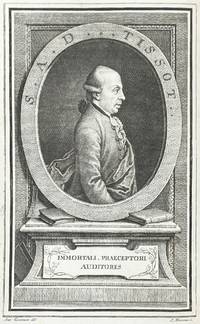
178312066Pavia: P. Galeazzi 1783. Contemporary gilt green morocco extremities rubbed spine rubbed and faded POUR MR TISSOT gilt-lettered on the front panel. <p> Only Edition bound for the recipient of the volume’s adulation.<br /> This tribute to the retiring medical professor and prolific author — famous for his work on the dangers of onanism — contains poems in Italian German Greek English and Latin by seventy-two former students and professional colleagues. The odes sonnets elegies canzoni and a single distich praise Tissot as the Swiss Asclepius and meditate on the practice of medicine. In nice condition.<br /> ¶Buck The Dawn of Modern Medicine 103.</p> P. Galeazzi unknown
1755129343Amiens Chez la Veuve Godart et se vend à Paris chez Ganeau Chaubert & Lambert 1755. Economic disputes in the middle of the 18th century A remarkable tract volume of economic writings from the mid-18th century all in first edition. The above work a prize essay on the effect of interest rates on trade is bound with: i Discours en forme de lettre sur l'esprit universel à Messieurs de la Société royale d'agriculture de Paris; Brussels Chez Van Dem Bergen 1765. An anonymous work purporting that there is a "universal spirit" animating all nature and that agriculturalists should endeavour to understand this. ii Réponse du Magistrat du Parlement de Rouen à la Lettre d'un Gentilhomme des États de Languedoc Sur le Commerce des Bleds des Farines & du Pain. Amsterdam et se trouve à Paris Chez Durand 1768. Part of the considerable stream of anonymous publications on the question of liberalising the French bread trade with this tract opposing liberalisation. A few pencilled marginalia. iii Clauses Et Conventions Les Plus Ordinaires Des Contrats de Mariage avec des notions directes ou relatives sur leur étendue & les effets qu'elles produisent. Par l'auteur des Principes Généraux de la Coutume de Chaumont i.e. Jean-Baptiste-Francois-Nicolas Thieriot Paris: Chez Antoine Boudet 1768. A tract on the law surrounding marriage contracts. A few pencilled marginalia. All are rare items with WorldCat listing four copies of the first tract three of the second two of the third and two of the fourth. Each is complete with half-titles errata and privilege leaves where issued. Four works bound in a single vol. duodecimo 158 x 95 mm. With folding table. Contemporary mottled sheep gilt floral motifs to compartments. Ink notes on verso of front endpaper. Spine label lacking light insect damage to sheep some faint foxing but generally clean and crisp. A very good copy joints and hinges intact folding table without tears. unknown
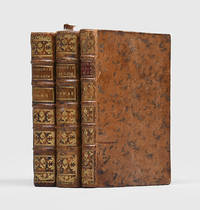
1767172269Théorie: "Londres" though Paris; Lettres: Amsterdam no publisher 1767; 1770. Defending despotism in the final years of the ancien régime First edition of Lettres together with the presumed first edition of Théorie. These controversial tracts oppose political reform in the run-up to the Revolution. Simon Nicolas Henri Linguet 1736-1794 argues that free workers are worse off than enslaved people in a market economy and that despotism is a more effective protector of the poor than liberalism - arguments which would lead to his execution under the Reign of Terror in 1794. This collection comprises the Théorie des loix civiles arguably Linguet's major political work and his Lettres sur la théorie a response to criticisms of Théorie. These works outline a stinging attack on Montesquieu's theories on laws and the state and challenge physiocratic arguments including their objection to grain regulation. Linguet a habitual controversialist was among the most renowned lawyers in France during the 1760s and 1770s until his attacks on other lawyers led to his expulsion from the bar in 1775. Initially a friend of the philosophes he gradually came to reject much of their philosophy - in the Lettres he rejects the argument that English liberties provide a model for France a popular claim among philosophes. Linguet's critique of Enlightenment liberalism in these works has been identified as an influence on Karl Marx. Two distinct editions of Théorie have been identified with a London/1767 imprint. This edition runs to 507 and 532 pages and includes three pages of errata following the "Discours Préliminaire". Many of these errata have been corrected in the other edition which runs to 496 and 528 pages. 3 vols duodecimo 165 x 98 mm. Woodcut ornament to title pages head- and tailpieces. Contemporary mottled calf spines with panelling and floral decoration in gilt raised bands and red brown and yellow morocco labels covers ruled in blind Lettres marbled endpapers edges red red and blue silk bookmarkers. Contemporary engraved bookplate of "C. T. Noel du Payrat" to front pastedown of Lettres. Light bumping and rubbing a couple of spots of foxing to endpapers and content margins: a very good collection. Einaudi 3420 3415; Goldsmiths' 10377; INED 2919; Kress 6459. hardcover
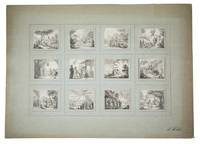
175019580Amsterdam 1750. Twelve pen and ink wash drawings each ca. 8 x 6.5 cm in subtle shades of grey and sepia. All 12 drawings mounted on a single contemporary stiff paper support 44 x 61 cm neatly arranged in three rows of four each with a border of lines drawn around it in ink. A contemporary pencil inscription below the lower right drawing reads "S. Fokke Amsterdam 1712-1784". Another in a later hand in the lower right corner of the support reads "S. Fokke". A set of drawings by Simon Fokke 1712-1784 made as models for the illustrations in J.F. Martinet's Alle de werken van Flavius Josephus Amsterdam 1783-1787. The 12 pen and ink wash drawings vividly depict Old Testament scenes very beautifully drawn and so subtly washed in a rich pattern of greys and sepia that the spaces left blank seem to radiate fire and sunlight. The engravings made from these drawings are in reverse and have 2 scenes on each plate.Simon Fokke was one of the most important artists of the second generation of 18th century book illustrators. According to E. de La Fontaine Verwey he was a spontaneous and very gifted draughtsman and an expressive designer who sometimes even engraved a plate without first drawing a model.A fine set.l Poortman 54; cf. E. de la Fontaine Verwey Illustr. letterk werken XVIIIe eeuw pp. 70-85 & passim; Scheen I p. 343; Waller Biogr. woordenboek p. 102; Wurzbach I 2 p. 544. ABE CAT Bibles Sermons & Psalmbooks unknown
174012525Amsterdam Isaak Tirion en Jacobus Loveringh 1740-1757. 17 delen in 19 banden Origineel Perkament 4° Mooie set in quarto-formaat van de bekende bijbelverklaring van Patrick Polus en Wells gebonden in volledig perkamenten en compleet met de 6 kaarten en 2 tabellen. Enkele kleine restuaraties aan de ruggen blokken helder wit en fris. Amsterdam, Isaak Tirion, en Jacobus Loveringh unknown