468 résultats
183622874New York 1836. 11 1 blank pp. Folding chart. Stitched untrimmed. Scattered light foxing Very Good. <br/><br/> The pamphlet includes 'Report of the Receipts and Expenditures .up to and including the 31st day of December 1835'; 'Copy of the Petition of the New-York and Erie Rail Road Company' seeking State support for the Road; and a folding chart by James Seymour Division Engineer with a detailed list of 'Engineer's estimate of quantity and Contractor's prices'. James G. King was President and Samuel B. Ruggles Comptroller of the Road. <br/>Thompson 1419. OCLC 39255517 2- NYPL Princeton. Not in American Imprints. unknown books
69768Hardcover. Good. Holograph. Includes Charles River Branch Railroad Company pages 1-116 covering June 20 1849-Oct. 24 1853; Charles River Railroad Company pages 119-133 covering Dec. 8 1852-Oct. 12 1853; and United Charles River Railroad Company pages 139-209 covering Nov. 9 1853-Aug. 30 1855. Ruled ledger. Leather. 26cm. Covers sound but scuffed and rather worn. <br/><br/> hardcover books
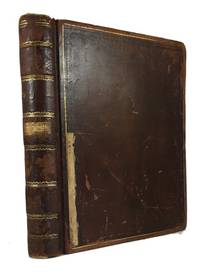
1873697671873. Hardcover. Good. Circa 175 pages of holograph text; remainder of book blank. Scuffed leather minute book. 34cm. Ruled pages. This railroad seems to been relatively short running from the Connecticut border south of Longmeadow Massachusetts to East Hartford. At the final 1887 meetings of the stockholders and directors recorded in this minute book the Company appeared to be facing a foreclosure suit by the Connecticut State Treasurer. The railroad appears to have ceased in 1887. <br/><br/> hardcover books
198440433Chama NM: Kyle Railways Inc 1984. 1st printing presumed. Neon orange printed paper wrappers stapled. Intense rubbing and wear to wrappers soiling and notations apparent. A Good example. 29 pp. 10-7/8" x 4-1/2" <br/><br/>"The Cumbres & Toltec Scenic Railroad C&TS is a 3 ft 914 mm narrow gauge heritage railroad running between Chama New Mexico and Antonito Colorado. It runs over 10015 ft 3053 m Cumbres Pass and through Toltec Gorge from which it takes its name. Trains operate from both endpoints and meet at the midpoint. Today the railroad is now the highest narrow gauge steam railroad in the United States." Wikipedia. Kyle Railways Inc unknown books
196810740Dusseldorf: Albis Verlag 1968. First edition. Hardcover. Near Fine. First German edition. 123 pp. Text in German. Illustrated with numerous black and white photographs. A clean near fine copy in photo-illustrated boards. Issued without dustwrapper. Railroading Trains. <br/><br/> Albis Verlag hardcover books
192672648Washington: GPO 1926. Paperback. Good. vii 1491p. Wrapper. 24cm. Age-toned. Small gouge at bottom of back cover and last several pages. <br/><br/> GPO paperback books
1924696461924. GREAT WESTERN RAILWAY COMPANY. DEVON: THE SHIRE OF THE SEA KINGS. London: Great Western Railway Company 1924. Wrappers. Includes two maps. Good only. unknown books
2626Leipzig: A Deichertsche 1931. . 8vo stiff gray wrappers front printed. Leipzig: A Deichertsche, 1931. unknown books
185918458np New York 1859. Original printed front wrapper with wrapper title as well as caption title as issued. Stitched. 39 1 blank pp. Light dust and wear Good. <br/><br/> An analysis of litigation between the Railroad and a supplier demonstrating the incompetence of the New York Central's management team. The author warns the Company's stockholders that the case ought to galvanize them to elect new directors in order to avoid disastrous financial consequences from further bad decisions. <br/>FIRST EDITION. Not in BRE Sabin Eberstadt Decker Harv. Law Cat. Marke. unknown books
1859562051859. Analysis of Litigation Between The New York Central and One of Its Vendors New York Central Railroad Company. Disaster to the New York Central Railroad: Decisions of the General Term of the Supreme Court In Third Judicial District September 1859. 37 pp. Octavo 9" x 6". Stab-stitched pamphlet in printed wrappers. Rear wrapper lacking front detached signatures loose some chipping to edges of front wrapper and margins of a few leaves. Some toning to text internally clean. A scarce item. $50. Only edition. This anonymous pamphlet analyzes litigation between the railroad and a wood supplier. It alleges incompetence on the part of the New York Central's management team. OCLC locates 6 copies 1 in New York at Syracuse University none in law libraries. Not in Cohen. unknown books
40454n. p.: The Milwaukee Road Union Pacific Railroad Norfolk & WEstern Ry. and Southern Pacific Co. n. d. Blue red and black ink printed on white paper & envelopes. Near Fine. Stationary sheet folded once. Small illustration of a speeding rail to stationary. Stationary: 7-3/4" x 5-3/8" <br/><br/>Includes piece of stationary 1 small envelope and 1 larger envelope. [The Milwaukee Road, Union Pacific Railroad, Norfolk & WEstern Ry., and Southern Pacific Co.] unknown books
1857TB31218Albany NY: Printed by C. Van Benthuysen 1857. First Edition. Very good- in its original patterned dark brown cloth covered boards with gilt text on the front board. A small quarto of 9 by 5 5/8 inches with heavy wear to the cloth at the head and heel of the spine such that the cloth is worn down to the edges of the text block. The cloth is also worn through in several spots at the lower edges of the boards. The upper 1 1/2 inches of both joints are splitting from their respective boards. Without a dust jacket. No pagination. Illustrated throughout with two large fold-out maps 8 plans of bridges 5 locomotives from the Hudson River line two from the New Haven Railroad and one from the Long Island Railroad Rail sections from the New York Central Albany and West Stockbridge and Hudson River Railroads 7 drawings for tunnels 3 miscellaneous drawings and 29 profiles. The profile for the New York and Erie Railroad has been spliced at a torn fold line. Printed by C. Van Benthuysen hardcover books
184228532Philadelphia 1842. White wove paper. Fold lines; slight loss to second leaf where separated from wax seal not affecting text; minor ink smudge to first page; light soiling to last page. VG overall. Bifolium folded to make a self-composed envelope. 3 full pages of text; wax seal address with Philadelphia postmark and short notation in a different hand to verso of second leaf. 9-7/8" x 7-5/8" <br/><br/>Revealing early correspondence from the then still-young company of Baldwin & Whitney to T. W. Wells President of the Board of Internal Improvements for the Michigan Central Rail Road alluding to an ongoing payment dispute for two engines. Baldwin & Whitney an early incarnation of what would later be known as the Baldwin Locomotive Works was struggling to recover from the financial hardships of the Panic of 1837 as well as to expand to meet rapidly increasing demand; the Central Railroad too was in the midst of ongoing financial woes and transfers of ownership. The dispute seems to have been a somewhat protracted one as the letter references several prior correspondences with Mr. Wells dating back to June 14th. Although initially quite firm and apparently seeking to address specific imputations from Mr. Wells -- "we would beg leave to state that we do not pretend that there is any difficulty in arriving at a conclusion as to when the two engines alluded to should be paid for" -- the tone soon turns concilliatory admitting that there may have been some lack of clarity regarding the terms of payment thus allowing for alternate interpretations of the contract. Nevertheless the payment was obviously needed: "Our want of money is such however that we have authorized Mr. Briscoe to settle the whole account on such terms as we trust will be satisfactory to you and which under our present circumstances would be preferable to us --." One Jarvis S. Wyckoff of New York is referenced as an involved party although it is not entirely clear in what respect as well as items under the charge of Mr. Briscoe "which we trust will arrive safely and in time to answer the purpose for which they were intended." A bill for $541.50 worth of parts follows the salutation and includes "2 brauk brake Axles Larger Size 3rd claps $175 - $350 2 pair brick wheels - - - - 190 Cartage to Wharf - 1.50." In 1842 both of Matthias Baldwin's partners George Hufty and George Vail withdrew from the partnership. Asa Whitney joined soon after and the business became Baldwin & Whitney though this partnership too would be quite brief; Whitney would later become one of the biggest proponents of the Transcontinental Railroad. Although highly renowned and with no shortage of orders the company continued to struggle with finances for several years. By 1845 the company would simply be M. W. Baldwin and was so inundated with orders that they were building 20 engines per year and had backorders for at least as many. Historical Society of Pennsylvania Baldwin Locomotive Works Records The Detroit and St. Joseph Railroad was chartered in 1831 began construction in 1836 and had to be bailed out by the State of Michigan in 1837. The company was then renamed the Central Railroad of Michigan but by 1840 it too was nearly out of money. On May 25 1842 Detroit's Democratic Free Press ran an editorial by T. W. Wells "Acting Commissioner Int. Imp." rebutting charges of mismanagment of the Central Railroad and citing its many benefits for the state. The railroad would be transferred to private ownership again in 1846; the line to Chicago rather than St. Joseph was finally completed in 1852. An advertisement in Railway Locomotives and Cars Volume 10 1840 includes a blurb from Benjamin Briscoe Superintendent of Motive Power Central Michigan proclaiming his trust in what were then Baldwin Huft & Vale engines: "We have two engines manufactured by others but we can only place confidence while running in yours and I believe them superior to any manufactured in this country or in Europe." All in all an interesting documentary record of the negotiations and financial struggles that created the United States railroad system and of the early years of what would become Baldwin Locomotive Works. unknown books
183524879<p>This volume is a fascinating primary source for the nation's oldest railroad still operating under its original name including correspondence setting the course for routes now traveled by millions of riders every month. Later use of this book by a New Jersey hatmaker and Civil War veteran gives insights into the daily life and expenses of a craftsman and farmer in the 1870s.</p> <b>LONG ISLAND RAILROAD.</b>Memorandum and Letter Book 1835-1872. 344 pp. of which 212 pp. have writing 8¼ x 13 x 1¼ in.<p><br /></p><p>This volume likely originally belonging to chief engineer James P. Kirkwood contains a wide variety of memoranda relating to the railroad. It begins with two pages of diary-like entries from February 8 to May 16 1836 including mention of Matthias W. Baldwin 1795-1866 the founder of Baldwin Locomotive Works February 8 and discussion of the route for the new Williamsburg Branch April 1 and reports on the contractors at Jamaica May 4 and 11.</p><p>It is followed by copies of two letters from the chief engineer regarding the delivery of railroad ties from Maine May 27 and August 4 1836 then six pages of estimates for grade work on new lines between Jericho and Ronkonkoma Pond between Jamaica and Jericho and between Flushing and Jericho.</p><p>Next are three draft letters totaling 40 pages to the president and directors of the railroad reporting engineering details on three different routes which had been surveyed from Jamaica to Greenport. The letters are dated November 4 1835 January 1836 and September 19 1836 and include tables estimating the costs for grading each route.</p><p>The following 37 pages include copies of letters to and from Long Island Rail Road engineer James P. Kirkwood between August 11 1835 and March 28 1837 mostly about surveying and construction issues. Among the interesting letters is one from Postmaster General Amos Kendall to the President of the Long Island Rail Road April 26 1836 asking for a map or plan of the route so the post office could update its maps. These pages also include an August 9 1836 letter from Lieutenant George Gordon Meade 1815-1872 acknowledging payment of $45.44 for "services rendered" to the railroad likely surveying shortly before he resigned from the army to pursue work as a civil engineer. Meade went on to lead the Army of the Potomac to victory at the Battle of Gettysburg in July 1863 and continued in command until the end of the Civil War.</p><p><b>James Pugh Kirkwood</b> 1807-1877 was born in Edinburgh Scotland. After his education and an apprenticeship to a land surveyor he began his own business in Glasgow in 1832. Later that same year he immigrated to the United States where he worked as an engineer on the Norwich & Worcester the Boston & Providence and the Stonington & Providence Railroads. In 1837 he became the resident engineer for the Long Island Rail Road. From 1840 to 1843 he was resident engineer for the Western Railroad of Massachusetts. Over the course of his career Kirkwood became one of the foremost civil engineers of the mid-nineteenth century. He was involved in many improvement projects to enhance the harbor of New York City. As general superintendent of the New York & Erie Railroad he pioneered the use of telegraph signals to manage trains. From 1850 to 1855 he was the chief engineer of the Missouri Pacific Railroad and managed its construction. He was a co-founder of the American Society of Civil Engineers in 1852 and served as its president from 1867 to 1868. He also became involved in a variety of water supply projects for various cities in the United States and Europe.</p><p><b>Long Island Rail Road</b> 1835-1928 1949-present is the oldest U.S. railroad still operating under its original name and charter. The New York General Assembly passed an act to incorporate the Brooklyn and Jamaica Railroad in 1831 which incorporated in 1832 to build a ten-mile line between those cities. Engineer Major D. B. Douglass planned for a continuation through the center of Long Island to near its eastern end to connect New York and Boston via rail and steamship. The legislature chartered the Long Island Rail Road Company in 1834. The railroad organized in June 1835 with Knowles Taylor as the first president and it soon acquired the Brooklyn and Jamaica line. The main line from Brooklyn to Greenport was completed in 1844 but rail and steamship service to Boston lasted only until 1847 when competing rail lines through southern Connecticut and steamships directly from New York took away business. The railroad then turned its attention to local service and added more branches to the northern and southern shores while small rival rail lines opened on the island. In 1875 New York rubber baron Conrad Poppenhusen acquired all of the railroads and consolidated them under the Long Island Railroad Company. By 1900 the Pennsylvania Railroad purchased a controlling interest in the Long Island Railroad and the railroad served more and more commuters into Manhattan. From 1928 to 1949 the railroad was largely owned by the Pennsylvania Railroad but it declared bankruptcy in 1949 and the Pennsylvania Railroad stopped supporting its debts. The Long Island Railroad came out of bankruptcy in 1954 and the State of New York purchased it in 1965. Today the railroad carries more than 300000 passengers each weekday over more than seven hundred miles of track.</p><p><b>Further items in the book:</b></p><p>Next comes eight pages of descriptions of land purchases dated between 1798 and 1842 which may be related to the Long Island Rail Road.</p><p>A three-page undated anti-Whig political letter regarding civic responsibility follows: "<i>There is no higher duty we owe to ourselves to each other and to our country in whatever situation we may be placed in whatever sphere of action we may fill than to understand the nature of our government and the civil institutions by which our rights are maintained as citizens and by which our civil duties & obligations towards each other are to be regulated</i>."</p><p>The latter half of the book was apparently used by at least two different owners who recorded property acquisitions reports on canals and railroads in different states and various memoranda.</p><p>Peter J. Butler used fifty-eight pages in the latter half of the volume for a diary with income and expenditures from January 1870 to March 1872. Later pages record Butler's individual accounts with John Allen Johnson Abner Reeves Charles Bessing the School District Nathan Squire and M. P. Hart. Four additional pages give school receipts and expenditures for school years ending August 31 1873 and July 31 1875; Butler served as clerk for the school. The diary provides an interesting view of the household finances of a craftsman and Civil War veteran in the years after the war.</p><p><b>Peter J. Butler</b> 1842-1889 was born in New Jersey as the son of Peter Butler 1806-1874 and Catherine Butler 1802-1893 both Irish immigrants. Peter J. Butler was a farmer and hatmaker in Livingston New Jersey twenty miles west of New York City. During the Civil War Butler served as a landsman for the navy steamers USS <i>North Carolina</i> and USS <i>Monticello</i> from August 1864 to June 1865. In February 1867 he married Hettie C. Denman with whom he had two children.</p><p>Among the interesting items is the following letter to a soldier perhaps Peter J. Butler from the Civil War:</p><p><i>Dear Friend</i></p><p> <i>I arrived at home on Saturday as I left on Thursday after a verry pleasant ride. I intended to write before but I have been on the go day and night since I have been home so that I have had no time yet I am anxious to hear from you as ever. The 4 of July was selebrated in great stile all over the country and all had a good time in general I am in hopes that you will not have to serve the whole of your time out in fact I think you ought to be entitled to your discharge oferd the verry reason that you have served in the army and navy ever since the commencement of the war and before and never had a bounty I think the Captain will interseed for you and he will if he has any manly principle in him whatever</i></p><p>Another owner of the book appears to have been John S. Cunningham who is likely responsible for the copy of the "<i>Speech of Adherbal to the Roman Senate imploring their Protection against Jugurtha</i>" in parallel Latin and English columns and a map of a battle from the Jugurthine War in 108 B.C. with Latin labels and narrative. Both have the initials "<i>J.S.C.</i>" at the bottom. Among other items in the book is a brief "List of John S. Cunningham's private library" including books on Greek Latin and French and an 1847 account of J. S. Cunningham with Andrew A. Smalley 1814-1893 covering two pages. Early in Butler's diary is an entry for January 9 1870: "<i>Wrote to John S Cunningham</i>" so perhaps Cunningham had given the ledger to Butler.</p><p><b>John S. Cunningham</b> 1827-1893 was born in New Jersey and educated at Orange Academy. He particularly studied surveying and civil engineering. He was involved in the manufacture of wrought bar iron for several years. In 1848 he became an assistant engineer with the Morris & Essex Railroad and then the Patterson & Ramapo Railroad. From 1849 to 1851 he worked as an engineer on the Chesapeake and Ohio Canal. He then returned to railroad work through the 1850s. He settled in Coalsmouth Virginia St. Albans West Virginia thirty-five miles east of Huntington. During the Civil War he served as an officer in a loyal Virginia regiment then returned to St. Albans where he held a variety of local offices including from 1889 judge of the Kanawha County Court.</p><p><b>Condition</b></p><p>Overall good. Cover wear and some missing spine cap; marbled endpapers; one torn page; interior clean.</p> hardcover books
1884280East Tennessee Virginia and Georgia Railway Company O'Brien John F. General Superintendent and Flippen T. D. Auditor. <i>East Tennessee Virginia and Georgia Railway Company List No. 14. List of Stations and Names of Agents. </i>ETV&G Railway Office of the Auditor Knoxville January 31 1884. A broadside directory listing the agents by name and by town for the East Tennessee Division and branches for the Alabama division the Atlanta division and the Brunswick division and branches. A broadside sheet 34 cm x 36 cm black ink on white paper fold creases otherwise very good. The ETV&G railway became part of the Southern Railway in 1894. The ETV&G made Knoxville Tennessee a wholesaling center as it provided both passenger and freight rail service to many small communities in Appalachia. East Tennessee, Virginia and Georgia Railway Company books
2628New York: New York Journal of Commerce June 1910. . Large 8vo buff wrappers front printed; has been folded vertically. Two holdings in OCLC Univ. of Missouri and the De Golyer. Offprint from the New York Journal of Commerce June 1910. New York: New York Journal of Commerce, June 1910. unknown books
1892018825Philadelphia: Compania Del Ferrocarril De Pennsylvania 1892. Octavo. 139p. 7 maps as called for in most editions some apparently have only 6. Spanish language. The Pennsylvania Railroad made an extraordinary effort in corporate image making to produce editions both in English and Spanish. Maps included are: Pennsylvania RR New York to Chicago: 2 New York Harbor; 3 New York City; 4 Philadelphia 5 Washington 6 Chicago; and 7 Chicago Business District. This copy was bound in Malaga Spain for the W.C. Bevan & Company which was one of the largest U.S. companies in Spain. Bound in brown cloth spine lettering gilt light brown endpapers. A very good copy with nice maps. Compania Del Ferrocarril De Pennsylvania unknown books
19182783611918. With block signals home signals bracket signals and others illustrated in color. Also with diagrams of train signals. We know from a check out form printed in that the book was at one time lent to William S. Mills Fireman in service of the Gary Division. Uncommon; we locate no copies on OCLC. unknown books
28105.1Philadelphia: Printed by J. B. Lippincott & Co n. d. 1st edition. Ca 1893. Scarce OCLC locates 13 cc. Not in Romaine. Original publisher's red cloth with gilt stamped lettering to front board. Floral patterned paper eps. Some unobtrusive wear/soiling to boards. Period pos to preliminary blank. A VG copy. 78 2 pp. Advertisement penultimate page listing the divers locomotive types 9 custom built by Baldwin. Frontis from a photograph showing an interior factory view of the Baldwin Locomotive Works. Images from photographs of the 14 engines on exhibit. Woodcut of "Old Ironsides" 1832 locomotive built by Matthias Baldwin. 4to. 10-7/8" x 7-3/4" <br/><br/>Baldwin exhibited 14 locomotives in the Exposition including an Express Passenger Locomotive "American Pattern" Class 8-34 C; 3 Compound Express Passenger Locomotives a "Double-Ender" Type Wootten Fire-Box Class 8 20/38 1/4 C No. 694 an "American Type" Class 8 20/38 C No. 450 & a "Special High-Speed" Type Class 8 20/38 1/4 C No. 13350; a Passenger Locomotive "American" Type Class 830 C No. 13400 and other divers models such as a Logging Locomotive "Double-Ender" Pattern Class 8=22 1/4 C No. 13361. Printed by J. B. Lippincott & Co hardcover books
28105.2Philadelphia: Printed by J. B. Lippincott & Co n. d. 1st edition. Ca 1893. Scarce OCLC locates 13 cc. Not in Romaine. Original publisher's red cloth with gilt lettering to front board. Floral patterned paper eps. Soiling to boards with a bit of fraying to spine ends. Period pos to front paste-down and later one to preliminary blank. A solid VG copy. 78 2 pp. Advertisement penultimate page listing the divers locomotive types 9 custom built by Baldwin. Frontis from a photograph showing an interior factory view of the Baldwin Locomotive Works. Images from photographs of the 14 engines on exhibit. Woodcut of "Old Ironsides" 1832 locomotive built by Matthias Baldwin. 4to. 10-7/8" x 7-3/4" <br/><br/>Baldwin exhibited 14 locomotives in the Exposition including an Express Passenger Locomotive "American Pattern" Class 8-34 C; 3 Compound Express Passenger Locomotives a "Double-Ender" Type Wootten Fire-Box Class 8 20/38 1/4 C No. 694 an "American Type" Class 8 20/38 C No. 450 & a "Special High-Speed" Type Class 8 20/38 1/4 C No. 13350; a Passenger Locomotive "American" Type Class 830 C No. 13400 and other divers models such as a Logging Locomotive "Double-Ender" Pattern Class 8=22 1/4 C No. 13361. Printed by J. B. Lippincott & Co hardcover books
193143321London: Waterlow & Sons Ltd. 1931. First edition. A near fine copy. 1 sheet. Folio. A canceled issue 500 pound note of the 1200000 pounds sterling 5 per cent second mortgage debentures for the Buenos Ayres Central Railway which was first granted a concession in 1894. Waterlow & Sons, Ltd. unknown books
193137891London: Waterlow & Sons Ltd. 1931. First edition. A near fine copy. 1 sheet. Folio. A canceled issue 500 pound note of the 1200000 pounds sterling 5 per cent second mortgage debentures for the Buenos Ayres Central Railway which was first granted a concession in 1894. Waterlow & Sons, Ltd. unknown books
2938St. Louis Mo.: The Company 1872. . 8vo pale blue wrappers front printed This copy has been marked up for another printing by an unknown hand using the ititials "EW" St. Louis, Mo.: The Company, 1872. unknown books
18401008168vo pamphlet removed dbd 31 pp. Some minor foxing and aging; otherwise very good. Interesting early railroad report to shareholders that provides considerable useful historical information including railroad construction costs and description and costs of engines and pessanger cars. While the title suggests a westward theme much of the construction is along the Connecticut River. Also the schedule of distances in the report seems to focus on Massachusetts and the greater Boston area. S.N. Dickinson, books
18471008208vo pamphlet publishers printed wrappers 20 pp. Crease in the middle corners and extremities chipped a bit small hole in the middle of front wrapper not affecting text wrappers darkened and faded some mild foxing in the margins; otherwise very good. Somewhat typical report to shareholders but this was published a year after the railroad was founded. The company actually shows a surplus of funds and there is a very positive tone concerning future prospects and railroad construction. Interestingly the company points to problems facing other companies who had to borrow money at very high fixed interest rates to to develop their business. Sabin 60358. books