[IMPERIAL JAPANESE NAVY TRAINING ALBUM].Biblio.com
2 165 résultats
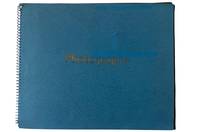
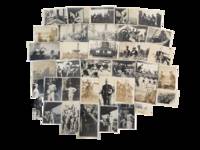
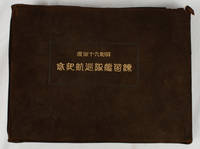
1935173467東京. Tokyo.: 昭和九・十年度練習艦隊司令部. Shōwa Kyū-Jūnendo Renshū Kantai Shireibu. Showa 10 1935. Colour map two large folding panoramas including a very striking one showing Sydney black and white photographic illustrations with captioned tissue guards in Japanese three full-page colour plates show: a Malay House an Australian rural scene featuring sheep and an Australian couple walking in Sydney's Hyde Park by Minakai. Three tipped-in portrait photographs of the Japanese Royal Princes profusely illustrated throughout with monochrome photographic plates showing the crew and ports of call with accompanying tissue guards titled in Japanese. 210 10pp all edges gilt. <br> <br>Handsome special brown suede binding with yap edges Japanese characters stamped in gilt on upper cover. Suede torn with minor loss at head of spine and upper corner lower hinge opening at lower edge. A particularly good copy in a superior binding suggesting it was issued to a high ranking officer on the occasion of this special Royal cruise. 22 x 30cm. This photographic album was issued to commemorate the Japanese Naval Training Squadron's tour which took place in 1934 and 1935. Two war ships the Yagumo and the Asama cruised around Japan before departing for Korea and China. There they visited Incheon Dalian Qingdao and Shanghai before returning to Japan. They also visited Hsin-King Shinkyo the newly established capital of Manchukuo to met the Manchukuo Emperor where a panorama photograph of the whole group of officers was taken. The ships then set off on their main cruise to Australia and New Zealand visiting Taiwan Hong Kong Manila Bangkok Singapore and Jakarta enroute to Fremantle. A colourful art illustration of a Malay house is a memento of their visit to the area. Hong Kong and Singapore sections have a whole page panorama photograph of the harbour each and two additional pages of photographs of the city. The crew visited a British naval ship in Hong Kong. In Singapore they enjoyed cosmopolitan atmosphere of the city where peoples from different racial backgrounds live together. <br> <br>During their tour of Australia the ships visited Adelaide Melbourne and Sydney and made a courtesy call to Canberra. Their cruise then continued to New Zealand after visiting Wellington and Auckland the ships continued to Fiji and Apia Western Samoa before reaching Honolulu. Finally they headed westward to the Marshal Islands Chuk Saipan and the Bonin Islands before returning to Yokosuka Japan. <br> <br>Australian ports of call were Fremantle Perth Adelaide Melbourne and Sydney where the crew participated in local activities and also held open ship exhibitions where the crew demonstrated Sumo wrestling and Kendo to the local public. In Sydney the ships participated in the silver jubilee celebration of King George V with a light display. A magnificent large panorama of Circular Quay and the newly opened Harbour Bridge through to a view across to the Eastern suburbs is fascinating. The region of Circular Quay is particularly striking for its emptiness! There are many other pages showing photographs of their visit to Sydney and the Blue Mountains. The Commandant with the royal Princes also made a courtesy visit to Canberra and a page of photographs marks this occasion. <br> <br>In New Zealand the Yagumo and the Asama visited Wellington and Auckland. Here the crew had an excursion to Rotorua. The cruise continued on to Hawaii where the Princes were welcomed enthusiastically by the Japanese migrants. On the return trip to Japan the ships called into Micronesia including Chuuk and Saipan. <br> <br>This cruise was of particular importance as three members of the Japanese Royal Family were among the crew. Prince Asa'akira of the Kuninomiya Household was in charge of the artillery on the Yagumo and two young Princes were among the newly graduated naval officers. Their presence probably explains why this album is more substantial than others previously issued - with more panoramic views and photographic illustrations; detailed captions are included on the tissue guards. Also the crew had access to royal members and other dignitaries during the cruise. <br> <br>This interesting album offers an extensive and detailed photographic record of all the places visited during the tour. Some pages are delicately illustrated with local motifs in monochrome. The album also includes photographs of the crew detailing names and positions as well as including information about lives on board. Photographs of local receptions and dignitaries at each port visited are featured. All indications are that the ships were warmly welcomed by the host countries and cities as well as the local Japanese residents. This edition was not circulated widely and is bound with suede leather cover special finish from other copies. It was probably offered to somebody important a memento of the Japanese Naval Training's Squadron's tour with three royal household members. . 昭和九・十年度練習艦隊司令部. [Shōwa K hardcover
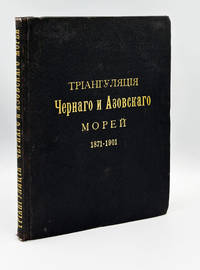
1907009702St. Petersburg: Imperial Academy of Sciences 1907 8vo 24.5 cm 2 146 pp 7 folding maps and plans. Publisher's cloth with gilt lettering to upper cover and spine binding slightly stained and rubbed ownership entry on the front free endpaper number in red pencil to title page. The volume presents the complete geodetic results of thirty years of systematic triangulation survey of the Russian and adjacent coastlines of the Black Sea and Sea of Azov conducted by the Hydrographic Expedition of the Black Sea from 1871 and continued by the Separate Survey of the Black Sea to 1901 covering seven component triangulation chains from the Nikolayev Bakal Yenikalsky Taganrog Mariupol Berdyansk and Feodosiya bases with all angles measured by theodolites to 10-arc-second precision coordinates calculated using Legendre's formulae on the Bessel ellipsoid to 0.001 arc-seconds and results presented in extensive numerical tables. Complete with all large folding plates comprising a schematic overview map of the principal triangulation network corrected to 1903 and five detailed triangulation chain diagrams showing all measured points triangle sides and base measurements with distances in versts. A work of fundamental importance to the geodetic and cartographic history of the Black Sea region representing the primary positional control data upon which subsequent Imperial Russian and later Soviet hydrographic charting of these waters was founded. Imperial Academy of Sciences hardcover
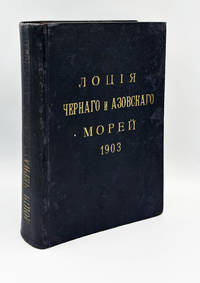
1903009701St. Petersburg: R. Golike & A. Vilborg 1903 8vo 24 cm LXIX 539 pp 2 folding maps 1 folding table 98 plates of photographs and diagrams. Publisher's cloth title gilt binding slightly rubbed and stained gilt partly faded. From the library of Paul v. Hintze stamps on endpapers. The fourth edition of the sailing directions for the Black and Azov Seas comprising an extensive physical-geographical survey covering coastlines currents temperatures salinity ice conditions weather prediction and storms followed by ten navigational chapters describing all shores from the Constantinople Strait proceeding westward northward and eastward around the entire Black Sea littoral to the Anatolian coast with a full chapter devoted to the Sea of Azov. With a prefatory history tracing the work through its four editions from 1851 the present edition prepared by Lieutenant A. M. Bukhtveyev in 1901-1902 and verified in the field by Colonel K. P. Andreyev. Supplemented by 118 autotype photographic views of Black Sea shores 31 wind-rose diagrams a general chart of the Black Sea and Sea of Azov and a composite sheet of charts and plans corrected to 1 January 1903. Provenance: Paul von Hintze German Admiral and diplomat who served as Naval Attaché in St. Petersburg 1903-1908 and later as Foreign Secretary of the German Empire in 1918. R. Golike & A. Vilborg hardcover
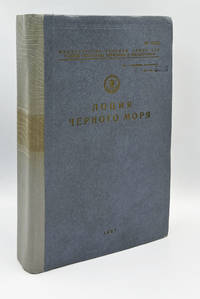
1987009700Leningrad: Main Directorate of Navigation and Oceanography Ministry of Defence of the USSR 1987 4to 26 cm 584 pp. Publisher's cloth with gilt lettering and Soviet naval anchor-and-star emblem to upper cover number stamped on the front board rebacked binding somewhat skewed with extensive manuscript corrections and annotations in red ink throughout including a densely completed "Лист для учёта корректуры" Correction Record Sheet correction slips inserted for crossed out parts. Publication No. 1244 copy No. 5536 stamped "Для служебного пользования" For Official Use Only. Comprising a general survey navigational-geographical and hydrometeorological overviews and nine chapters of detailed coastal navigation covering the entire Black Sea littoral from the Kiliya mouth of the Danube through the Crimea Caucasian coast Turkish coast and Bulgarian and Romanian shores to the Bosphorus; with a reference section distance tables and alphabetical index; illustrated throughout with coastal profile engravings and navigational diagrams; tracking amendments applied through 1991 the final entries postdating the dissolution of the USSR. A later and substantially expanded edition than the 1968 issue this copy is of exceptional documentary interest as a working navigational instrument actively corrected and used through the final years of the Soviet Black Sea Fleet with the correction record providing a remarkable archival trace of operational naval use up to and beyond the collapse of the Soviet state. Main Directorate of Navigation and Oceanography, Ministry of Defence of the USSR hardcover
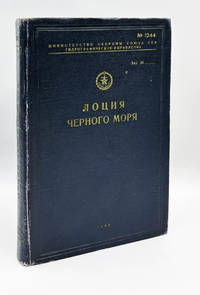
1968009699Leningrad: Hydrographic Directorate of the Ministry of Defence of the USSR 1968 4to 26 cm 440 pp with a loosely inserted pamphlet of corrections 14 pp. Publisher's cloth with gilt lettering and Soviet naval anchor-and-star emblem to upper cover binding slightly rubbed and dusted paper somewhat toned library stamps on the title. Publication No. 1244 copy No. 1433. Comprising a general survey navigational-geographical and hydrometeorological overviews and detailed coastal navigation in nine chapters covering the entire Black Sea littoral from the Kiliya mouth of the Danube to Cape Kaliakra; with a reference section including port and anchorage data distance tables and territorial waters information plus alphabetical index and correction notes. Stamped throughout “ДЛЯ СЛУЖЕБНОГО ПОЛЬЗОВАНИЯ” For Official Use Only with library stamp of the Technical Library of TsKB “Chernomorsudoproekt” Central Design Bureau for Black Sea Shipbuilding to the title page. Accompanied by the separately issued Сводная Корректура 1969 г. Consolidated Correction Supplement for 1969 copy No. 1535 a printed pamphlet with manuscript annotations in red ink updating the main volume in accordance with Notices to Mariners through September 1969. A complete and rare Soviet navigational publication for the Black Sea of considerable historical interest due to its restricted official-use classification and direct institutional provenance from a major Soviet shipbuilding design bureau. Hydrographic Directorate of the Ministry of Defence of the USSR hardcover
1988BN61307Wien : Falter; Köln : Kiepenheuer u. Witsch 1988. <br/><br/>Varia Wien : Falter; Köln : Kiepenheuer u. Witsch unknown
1988BN58864Wien: Falter; Köln: Kiepenheuer u. Witsch 1988. Erstauflage EA. <br/><br/>Umweltschutz Wien: Falter; Köln: Kiepenheuer u. Witsch unknown
1999H-091-767C.H. Beck Verlag 1999. Paperback. Good. Former library book. Edition 1999. Ammareal gives back up to 15% of this item's net price to charity organizations. C.H. Beck Verlag paperback
19832091502133507069OS Publishing 1983. Soft Cover. Fine. Number of books: 1 OS Publishing paperback
19832111902153302206OS Publisher 1983. Soft Cover. Fine. Number of books: 1 OS Publisher paperback
198251238Pelican. GOOD- Reading Copy. 1982. Soft Cover. 0941998002 G153 . Pelican paperback
1955040984Daito Art Printing 1955. Hardcover. Near Fine. CLEAN 1955 hard cover cruise book in near fine condition with rare near fine dust jacket. Daito Art Printing hardcover
19862080302106805599Yokohama Museum of Marine Science 1986. Soft Cover. Fine. Number of books: one Yokohama Museum of Marine Science paperback
1980333474Newton Abbot: David & Charles 1980. New Impression. Hardcover. Near fine cloth copy in a very good if slightly edge-nicked and dust-dulled dust wrapper now mylar-sleeved. Remains particularly well-preserved overall; tight bright clean and strong. Physical description: 6 lxiii 1282 pages chiefly illustrations form maps 2 plans 26 cm. Subjects: Army & Navy Co-operative Society. Manufactures; Catalogues. Army-Navy stores England; Catalogues. Manufactures. Department store; Catalogues. Department stores Great Britain History. Manufactures England Catalogues. Manufactures; Catalogues. Commercial catalogues Great Britain 20th century. Genre: Catalogue. Illustrated. Newton Abbot: David & Charles hardcover
1976751984PN. New. 1976. Soft Cover. Date is original print. This is a reprint edition. . PN paperback
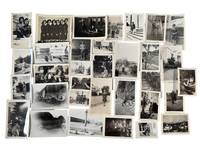
1944235151944. Women's Royal Naval Service photograph album documenting life at HMS Royal Arthur the Royal Navy's training camp establishment at Skegness where a prewar holiday camp was transformed into a military training and accommodation center during the Second World War. Named individuals throughout with handwritten identifications the album follows Dorothy Gardner and other Wrens serving in the expanding wartime navy while also capturing the theatrical entertainment routines featuring cross dressed men and ceremonial duties that shaped daily life away from the front lines. Beyond its images of uniformed women the album records a military community of offices dining halls stages chalets and training facilities that supported Britain's wartime naval operations at a camp which was bombed by German aircraft on February 21st 1942.<br /> <br /> Photo album of approximately 73 silver gelatin photographs various sizes ranging from 1.5" x 1.5" to 8.5" x 6.5" chiefly HMS Royal Arthur Camp Skegness Lincoln and other British locations c. 1944. Large group portraits are captioned "H.M.S. Royal Arthur July 1944" showing rows of Wrens in naval caps and dark uniforms. Several photos show soldiers by artillery navy men on small military boats and canons. Multiple group photos show men and women in Navy uniform. The photographs place women within the essential but often overlooked machinery of wartime naval administration including supply clerical work communications camp management transport and food service. Captions identify Peggy Marjorie Dorothy Margaret Joan Harry Blake Farnsworth Bernard Cavanagh Dennis Leo Dugay May of Glasgow Geoffrey Roy Bluemel Mrs. Thomason of Leigh Pat Taylor Nancy and Cynthia of HMS Ariel. Additional off camp photographs show bicycle outings skating scenes shipboard snapshots barracks and chalet interiors social gatherings and a guard of honour at Lincoln near the cathedral. Particularly notable is the album's extensive documentation of entertainment and morale-building activities. Several photographs are captioned "Up Spirits" and "concerts at H.M.S. Royal Arthur" revealing an active performance culture within the camp. Sailors appear in theatrical productions alongside women in costume while musicians perform with accordions and pianos before assembled audiences. One series features actor Charles Redgrave "with the girls" and another photograph captures the wartime tradition of gender-crossing stage entertainment in which male servicemen performed in women's clothing for camp audiences. These scenes provide an unusually vivid record of military leisure performance and social life within a wartime naval community.<br /> <br /> HMS Royal Arthur was bombed by German aircraft on 21 February 1942 The album therefore records daily life at a site that was both a military workplace and a target of wartime attack. By 1944 the Women's Royal Naval Service had expanded dramatically from its earlier First World War role with women serving in hundreds of naval occupations while remaining largely excluded from combat at sea. The photographs capture that transformation through named individuals workplace groups ceremonial events friendships and recreational activities illustrating how women became integral to the operation of Britain's wartime navy. The album documents the social world created when thousands of servicewomen and servicemen lived and worked together inside one of Britain's largest naval shore establishments. Sailors Wrens airmen Canadians civilians performers and local acquaintances appear throughout its pages creating a rich portrait of wartime relationships and community formation. Album shows handling wear page wear and a few removed photographs; handwritten captions remain extensive and legible throughout. Overall in good condition. An unusually dense and highly personal record of women's naval service wartime labor military entertainment gender performance and everyday life at HMS Royal Arthur during the Second World War. unknown
1943213151943. United States Marine Corps Women's Reserve service documented in photographs produced during World War II in the San Francisco Bay Area. The images record the participation of women in the Marine Corps Women's Reserve program established in 1943 a wartime expansion of the U.S. armed forces that assigned women to administrative communications and logistical roles in order to release male Marines for combat duty. The photographs depict women serving in uniform performing clerical tasks assembling for formation and socializing together preserving visual evidence of the daily lives and institutional roles of women who entered the Marine Corps during the wartime mobilization of the 1940s. Several photographs also trace the personal backgrounds of these service members including family portraits and earlier images connected to Polish American communities in Chicago situating military service within immigrant family histories and urban social networks.<br /> <br /> Archive of 129 black and white photographs primarily silver gelatin prints dating from the late 1930s through the World War II years. The photographs show women wearing United States Marine Corps Women's Reserve winter service uniforms consisting of forest green jackets six gore skirts khaki shirts and ties with several individuals wearing bell crowned service hats with red cords distinctive to the branch. Chevron insignia visible on some sleeves indicate non commissioned officer ranks. A number of images show groups of women standing in formation suggesting training exercises or ceremonial assembly. Another photograph shows a uniformed servicewoman beside a sign for a United States Naval Hospital indicating work in medical or administrative support functions. Other photographs depict everyday activities including typing at desks walking across military grounds and gathering in outdoor spaces with fellow service members. Leisure scenes show women seated together on lawns posing near buildings and socializing during off duty hours. Civilian photographs include picnics park outings beach and poolside scenes where women appear in swimsuits and images of wedding celebrations and formal portraits in evening dress. The archive also includes staged theatrical photographs in which women appear in costume suggesting participation in recreational performances or amateur productions.<br /> <br /> Many photographs include recognizable San Francisco landmarks including City Hall Market Street Fisherman's Wharf and views toward Alcatraz Island placing the military service documented in the archive within the wartime urban environment of the Bay Area. Earlier photographs predating the war include family portraits taken in professional studios some bearing embossed photographer stamps and inscriptions associated with Polish surnames and Chicago studios. One cabinet card identifies Stephanie Hanslik of 1669 Milwaukee Avenue in Chicago linking the servicewomen documented here to immigrant communities in the American Midwest. Together the images trace a visual narrative connecting immigrant family life wartime mobilization and the institutional integration of women into the Marine Corps during the Second World War. Photographs range in size from approximately 1 x 2 inch snapshots to larger cabinet card formats measuring up to approximately 6 x 7.75 inches with most prints around 3 x 4.5 inches. Minor surface wear and light handling marks consistent with age; overall very good condition. The archive offers substantial documentation of women's military service and social life within the USMC Women's Reserve during the wartime expansion of the U.S. armed forces. unknown
1917233411917. U.S. Navy photo archive documenting the Mexican Patrol mission of USS Rainier a Pacific Fleet auxiliary schoonerduring World War I. This archive documents U.S. naval personnel moved between shipboard duty shore stations and regional exploration in Mexican and California waters. Taken by Lieutenant junior grade Dr. Louis Henry Clerf the ship's medical officer these photographs place a named naval physician inside the working life of a little-documented auxiliary vessel assigned to Division 2 Pacific Fleet and the Mexican Patrol after the Navy acquired and commissioned the former civilian schooner in 1917. Rather than isolating military routine from observational practice the archive shows how officers aboard a small auxiliary ship simultaneously functioned as servicemen medical staff coastal travelers and recorders of local environments and natural science during a period of expanding American naval movement along the Pacific and Baja coastline.<br /> <br /> <br /> Photo archive of 41 silver gelatin photographs with many captions most measure 3.5" x 4.5" aboard USS Rainier and in Pacific coastal locations including San Diego and the Guaymas region circa 1917 to 1919. Several photographs focus on animals aboard ship including dogs kept by the crew birds fish catches and larger game animals associated with hunting and provisioning activities carried out during the patrol. Other images depict sailors handling fish and displaying catches beside the vessel revealing the practical realities of subsistence and food sourcing aboard a small auxiliary ship operating in relatively isolated Pacific waters. Together the photographs document the intersection of military hierarchy environmental encounter maritime labor and animal life aboard a World War I patrol. The images include repeated shipboard views of sailors and officers in white tropical uniforms and darker service dress posed singly and in groups on deck among rigging spars deck fittings railings and a mounted gun firmly establishing the operational setting aboard a naval auxiliary rather than a private voyage. Several photographs show relaxed mess scenes beneath awnings men seated at tables or gathered informally at sea while others picture uniformed personnel beside an automobile ashore and in front of a large urban hotel or institutional building. A large formal group portrait taken before an ornate Spanish colonial church further extends the coastal location. One verso identifies "Duck shooting at Ensenada de Francisco Bay about 20 miles north of Guaymas" while another reads "Hospital. Navy Training camp San Diego" linking the group to both field excursion and medical infrastructure. The captions combined with views of harbor craft shore architecture and regional movement show the same photographic hand operating across military environmental and natural science subjects. There are also many photos of the fishes and animals of the Baha region with captions.<br /> <br /> <br /> USS Rainier built in Portland in 1917 as the civilian schooner Patrol and later renamed Angel entered Navy service as a Pacific auxiliary during World War I. Commissioned at Mare Island on July 30 1917 and assigned to Division 2 Pacific Fleet she served on the Mexican Patrol off Southern California and Baja California placing this archive within the history of continued U.S. naval surveillance and mobility in Mexican waters during World War I rather than in a purely European war frame. The archive is attributable to a trained Navy physician who later went on to a long and prominent civilian medical career Dr. Louis Henry Clerf of Washington state. this archive preserve the operational world of a Navy auxiliary schooner where smaller patrol and support vessels were essential to maritime presence but far less frequently documented than battleships or major transports. Clerf's position as medical officer gives the archive unusual coherence since the photographs join shipboard hierarchy working naval space coastal circulation and natural-history attention within one attributable officer's record of service during the final years of World War I and the Mexican Patrol. Dr. Cliff also seem to have a deep interest in natural sciences and has included many photographs of the fish and animals that could be found at the time in the Baha region. Light surface wear scattered fading and minor edge or corner wear; captions present on some versos with images generally clean and legible. The archive offers an identified record of Mexican Patrol service aboard USS Rainier and of the broader naval presence that connected California Baja California and the Gulf of California during the final years of World War I. unknown
1999BN332799London Language & Literacy Unit 1999. 1999. Writing Works: Using a Genre Approach for Teaching Writing to Adults and Young People in Esol and Basic Education Classes <br/><br/>Writing Works: Using a Genre Approach for Teaching Writing to Adults and Young People in Esol and Basic Education Classes Marina Spiegel Helen Sunderland London Language & Literacy Unit unknown
194353652Annapolis MD: U.S. Naval Institute 1943. First Edition. First Printing. fair to good fair. 160 illus. index lesson plans some wear and soiling to DJ: tear in front DJ and a few small pieces missing stains inside boards. Stains to a few pages. One of a series of Naval Aviation Physical Training Manuals. This important physical education work provides snapshot of practice during World War II. U.S. Naval Institute hardcover
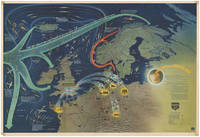
1944NL-02478<p><strong>Large-format 1944 U.S. Navy "NavWar" training map of the North Sea celebrating Allied victory over the German U-boat threat.</strong></p><p>This is a scarce very large-format 1944 map of the North Sea prepared by the U.S. Navy's Educational Service Section.</p><p>The stunning visuals executed in offset lithography are reminiscent of propaganda materials intended for public consumption but these were in fact prepared to train and educate Naval personnel on the conflict. The map traces the history of naval warfare in the North Atlantic and North Sea up to that point and celebrates Allied successes with the tide clearly having turned in their favor.</p><p>Perhaps the most striking feature of the map is the large arrow occupied by Allied shipping convoys titled 'Our Navy Breaks the U-Boat Scourge on the Allies' Supply Lines with Destroyers Destroyer Escorts and Escort Carriers.' Similar blue bands emanate from southern England towards the Continent with the label 'The R.A.F. And The A.A.F. Control The Industrial Heart Of Europe From England the World's Most Powerful Air Base.' Throughout German ships are depicted as sinking and burning while German industrial areas and key occupied strongholds are bombed relentlessly from the air. A timeline and legend at right provide further background information on the conflict and the map.</p><p><strong>Context is Everything</strong></p><p>During the Second World War the North Sea was a critical arena of naval operations serving as a strategic chokepoint for controlling maritime routes and access to the Atlantic. As in the First World War the Royal Navy maintained a constant patrol presence to enforce blockades against Germany restricting access to vital raw materials and trade. The North Sea's shallow waters and unpredictable weather made it a difficult environment for large-scale fleet engagements but it was heavily mined – one of the most extensively mined seas in history. Mines submarines and fast attack craft rather than battleships defined its warfare creating a deadly environment for both military and merchant shipping.</p><p>German naval operations in the North Sea centered on disrupting British trade and supply lines while protecting their own coastal traffic. The Kriegsmarine used U-boats E-boats <em>Schnellboote</em> 'fast boats' and aircraft to harass Allied convoys while the British developed extensive anti-submarine and radar networks to counter them. Air power especially from bases in eastern England and occupied Norway increasingly shaped the conflict turning the North Sea into an air-sea battlefield. Germany's limited fleet of battleships had by this point been sunk as with the <em>Bismarck</em> seen ablaze at left heavily damaged or forced to stay in port to prevent their loss as with the <em>Tirpitz</em> sunk later in 1944 and <em>Prinz Eugen</em> both stationed in Norway. The Allies' control of the North Sea by 1944 proved essential for the success of the D-Day invasion allowing the safe buildup of forces in Britain and denying Germany the ability to strike effectively from the sea. By war's end the North Sea had become a heavily fortified and scarred maritime zone symbolizing the constant struggle for maritime supremacy that underpinned the wider European conflict.</p><p><strong>Census</strong></p><p>This map was produced by the U.S. Navy's Bureau of Naval Personnel printed by the Government Printing Office and distributed by the Navy's Educational Service Section in 1944. It is one of six 'NavWar Maps' all of which are quite scarce now and generally in poor condition due to being folded for many years. The present map is independently cataloged among the holdings of perhaps fifteen institutions in the OCLC and appears occasionally on the market. Some institutions also hold all six maps in the series and catalog them together OCLC 53073135. For reasons that are unclear some examples of NavWar Maps are printed as double-sided while others are only printed on one side.</p><p>Condition Description</p><p>Very good. Fold creases as issued originally faint discoloration at corners from old tape reinforcing pinholes minor shelfwear slight scuffing couple minor tears</p> Educational Service Section / U.S. Navy
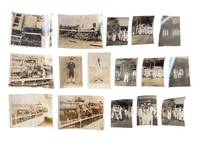
1943215061943. African American MilitaryWWII African American U.S. Navy sailors photographic archive 1943-1946 documenting Black naval service during World War II and the immediate postwar demobilization period capturing lived experience within a still-segregated military structure. Produced during a pivotal era when the Navy began to expand African American participation beyond steward and mess attendant roles the photographs reflect the evolving challenges and opportunities faced by Black servicemen in wartime. A dated postcard image from March 21 1943 anchors the collection to the height of the war when the Navy was under mounting pressure from civil rights advocates to expand enlistment for Black servicemen.<br /> Archive consists of 19 original silver gelatin photographs including 16 black and white prints measuring approximately 3 x 4 inches to 5 x 7 inches along with a postcard photograph dated March 21 1943. The images depict Black sailors in U.S. Navy service uniforms identifiable by white "Dixie cup" hats dark jumper tops and neckerchiefs. Several photographs show sailors gathered outside a Ship's Service facility a recreational and supply center on naval installations suggesting moments of rest or liberty. Group portraits emphasize camaraderie including one image of four sailors standing closely with arms around one another. Additional photographs document crowded military transport ships with servicemen lining railings and lifeboat stations. One image captures a transport vessel entering San Francisco Bay with the Bay Bridge visible in the background strongly suggesting return to a principal West Coast demobilization port. Such scenes are consistent with large-scale troop returns at the close of the Pacific War when thousands of servicemen were processed through West Coast ports following overseas deployment.<br /> <br /> During World War II the Navy maintained formal segregation policies initially restricting Black sailors to service roles before gradually permitting broader enlistment classifications beginning in 1942. The photographs capture this transitional moment: some images depict exclusively Black groups while others suggest more integrated spaces reflecting incremental institutional change that would culminate in President Harry S. Truman's Executive Order 9981 in 1948 mandating desegregation of the armed forces. The archive preserves evidence of African American participation in naval mobilization transoceanic transport and postwar demobilization at a time when service abroad coexisted with racial inequality at home. Light surface wear and minor corner curling visible on several prints; images retain strong tonal contrast; overall very good. A cohesive photographic record of Black naval service at the intersection of global war and the early movement toward military desegregation. unknown
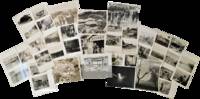
1945189141945. U.S. Army and Navy photographs of Okinawa 1945 document the immediate aftermath of the Battle of Okinawa and the establishment of American control over a strategically critical island at the close of the Pacific War. The images place American troops within the Okinawan interior and along coastal installations following the April 1945 landings including the secured Yontan airfield a primary objective of the invasion. The archive records the physical destruction resulting from one of the war's most intensive campaigns alongside scenes of civilian movement and return situating the photographs within the transition from active combat to military occupation.<br /> <br /> Archive of 37 black and white silver gelatin photographs. Okinawa Japan circa 1945. Photographs measure approximately 3.75 x 4.5 inches to 7 x 10.5 inches with brief handwritten captions on verso. Images depict American troops in villages farmland and near shrines as well as at Yontan airfield. Several photographs show destroyed aircraft including a crashed Japanese plane and associated debris along with damaged infrastructure and equipment. Naval activity is represented through images of American ships in harbor and offshore including a landing ship dock LSD transport vessel. An aerial photograph shows a harbor with multiple wrecked ships and flattened industrial areas. One image documents a column of civilians carrying belongings captioned "civilians returning to homes."<br /> <br /> The Battle of Okinawa fought from April to June 1945 resulted in extensive military and civilian casualties and widespread destruction of the island's infrastructure. The subsequent American occupation transformed Okinawa into a major U.S. military base in the western Pacific a status it retained even after reversion to Japanese administration in 1972. These photographs document both the operational objectives of the invasion and the conditions encountered in its aftermath including the displacement and return of local populations. The archive provides material for examining military strategy occupation practices and the impact of large-scale warfare on civilian landscapes in the Pacific theater. Light wear consistent with handling; overall very good condition. unknown
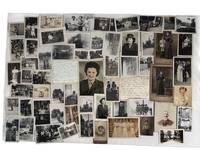
1944213131944. United States Marine Corps Women's Reserve service of Lucille documented in photographs created primarily during the Second World War. The images provide direct visual evidence of women's integration into the United States Marine Corps through the Women's Reserve program established in 1943 which expanded military labor by assigning women to administrative communications and logistical roles that freed male Marines for overseas combat service. Lucille appears repeatedly in uniform as a non-commissioned officer her sleeve chevrons indicating rank within a branch that became one of the most visible examples of women's wartime military participation. The photographs situate her service within a broader life history that includes family life in Chicago and Polish immigrant heritage placing the wartime mobilization of American women within the social networks of ethnic urban communities that supplied many of the nation's wartime workers and service personnel.<br /> <br /> Archive of 168 black and white photographs primarily silver gelatin prints dating from the mid-1930s through the immediate post-war years accompanied by several earlier family portraits including cabinet cards and cartes de visite. The collection centers on Lucille's Marine Corps service and includes a hand colored portrait inscribed "Lucille 1944" depicting her in USMC Women's Reserve dress uniform with jacket tie and rank chevrons visible on the left sleeve. Additional images show her standing at attention on the steps of a large institutional building and posing in formation with fellow servicewomen wearing winter coats and garrison caps scenes consistent with stateside training or official gatherings. Other photographs document civilian life in Chicago including family gatherings wedding celebrations and leisure outings along the Lake Michigan shoreline north of the city. The archive also preserves earlier generational photographs of relatives in traditional Polish dress and an inscribed carte de visite of "Miss Sobaleski" from Włocławek Poland linking the wartime Marine to a late nineteenth century immigrant family network.<br /> <br /> Creation of the United States Marine Corps Women's Reserve marked a significant expansion of women's participation in the armed forces during World War II when more than 20000 women served in the Marine Corps between 1943 and 1945. Photographic documentation of individual service members provides an important record of how women navigated military authority uniformed identity and wartime labor during a period of rapid institutional change within the armed forces. The inclusion of prewar family portraits and Polish immigrant imagery situates Lucille's military service within the longer trajectory of ethnic community life in Chicago one of the largest centers of Polish American settlement in the United States. Together the photographs document the intersection of immigrant family history urban American life and women's wartime military service. Photographs range in size from approximately 2 x 3 inches to cabinet card formats; the archive preserved loose. Minor edge wear and light toning consistent with age; overall very good condition. The breadth of images linking immigrant heritage civilian life and Marine Corps service gives the archive strong documentary value for the study of women in the U.S. military and Polish American community history during the Second World War era. unknown
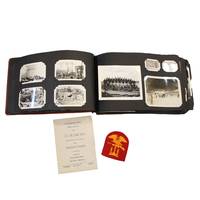
1943185431943. United States Marine Corps World War II photograph album documenting global American military operations across the Pacific and Atlantic theaters during the 1940s including combat scenes naval deployments and high level wartime leadership meetings. The album records the experience of U.S. Marine personnel during the global campaigns against Axis powers with photographs spanning the South Pacific Japan North Africa the Mediterranean Greenland and Alaska. Numerous images show Marines in active combat environments amphibious landings and wartime garrison life providing visual documentation of the operational geography of the war. The album also preserves photographic evidence of a significant wartime meeting in Hawaii on July 26 1944 when President Franklin Roosevelt met with General Douglas MacArthur and Admiral Chester Nimitz to determine the strategic direction of the Pacific campaign. Roosevelt ultimately endorsed MacArthur's plan to return to the Philippines a decision that shaped the final phase of the Pacific war.<br /> <br /> Photograph album compiled by a U.S. Marine during World War II containing 364 black and white silver gelatin photographs and 21 real photo postcards depicting American military operations across multiple theaters including Namur Island Peleliu New Guinea the Solomon Islands Tarawa Cape Gloucester Saipan North Africa and Alaska. Several photographs appear to be official Marine Corps press images with printed captions such as "Marines take cover in invasion of Tarawa" "Actual landing operations on South Sea Island" and "Two rear gunners in Guadalcanal bomb shelter." Other images show Marines moving through tropical marshes occupying foxholes standing watch in lookout towers assembling on invasion beaches and operating aboard naval vessels. The album also contains candid images of President Franklin Roosevelt General Douglas MacArthur and Admiral Chester Nimitz taken during the Pacific Strategy Conference in Hawaii with approximately twenty nine photographs documenting the leaders meeting and greeting during wartime consultations. Additional photographs depict local populations encountered by American forces in the South Pacific and North Africa scenes of war damaged buildings and the daily lives of servicemen both on duty and during periods of rest.<br /> <br /> Album containing 385 photographs in total including 364 silver gelatin prints and 21 real photo postcards with image sizes ranging approximately from 1.75 x 2.75 inches to 3.5 x 4.5 inches. Photographs mounted in an original tobacco leather album. The archive also includes several loose photographs handwritten greeting cards an invitation for officers and crew of the seaplane tender USS Pine Island dated April 26 1945 with program details and a shoulder sleeve insignia for an Engineer Special Brigade. Minor age wear present; photographs remain clear with strong contrast and legible captions. The album provides a wide ranging visual record of American Marine operations during the Second World War linking frontline combat imagery with documentation of the strategic leadership decisions that shaped the Pacific campaign. unknown