10 383 résultats
1962718151PN. New. 1962. Soft Cover. Date is original print. This is a reprint edition. . PN paperback
1966728681PN. New. 1966. Soft Cover. Date is original print. This is a reprint edition. . PN paperback
ANAIS-0160664624United States Government Printing. paperback. Good. 0x0x0. Buy with confidence. Excellent Customer Service & Return policy. United States Government Printing paperback
In 8br. ed., pp- 95, ill. in n. f.t.Estratto dal fascicolo di Luglio-Agosto 1922 di "Rivista Marittima",Timbro dell'areonautica militare in frontespiziotracce d'uso alla cop, angolo inf. piegato, strappetti alla cop.Luogo di pubblicazione RomaEditore Arti grafiche Ugo Pinnarbr>Anno pubblicazione 1922Materia/Argomento Fotografia, Aeronautica
20161-1938168283XanEdu Publishing Inc 2016. Hardcover. New. 1187 pages. 11.00x9.00x2.00 inches. XanEdu Publishing Inc hardcover
195294829Paris, P., Gallimard 1952 In-12, bradel demi-basane rouge à bandes, dos lisse, 54 pp. Un mors fendillé en tête. Bon exemplaire.
0309164281.Gpaperback. Good. Access codes and supplements are not guaranteed with used items. May be an ex-library book. paperback
199556085Washington DC: National Aeronautics and Space Administration 1995-8. First Edition. First printings. Three large octavo volumes 25cm. Green cloth-covered boards titled in gilt on spines and front covers; pictorial dustjackets; 795636608pp. Mild lean to text block of v.2 else a uniformly Fine unmarked and new-appearing set. National Aeronautics and Space Administration unknown
1850WRCAM16807Paris 1850. 3pp. Plain wrappers. A very good copy in modern folder. An extract from COMPTES RENDUS DES SEANCES DE L'ACADEMIE DES SCIENCES TOME XXXI. A rare separately printed piece about a balloon trip taken by Bixio et Barral presumably in France. unknown books
19693123National Aeronautics and Space Administration Washington D.C. 1969 Four volumes as a set green cloth-covered boards white spine lettering 10 1/2 x 8 inches. Ex-library with usual markings else near fine. 24 NASA Contractor Reports 1969-1970. Amazing technology. CR-1496: Radio/Optical/Strapdown Inertial Guidance Study for Advanced Kick Stage Applications 1969 189 pp. CR-1497: The Density of Eigenvalues in Thin Circular Conical Shells 1970 126 pp. CR-1498: Potassium Turboalternator Preliminary Design Study; Turbine Bearing and Seal Parametric Design 1970 224 pp. CR-1499: Potassium Turboalternator Preliminary Design Study; Alternator Parametric Design 1970 322 pp. CR-1506: Radio Astronomical Studies with 1500-Meter Diameter Low-Frequency Telescope 1970 51 pp. CR-1507: Analysis of Large Bending Deformations of a Filamentary Tubular Shell Typical for Pressure Constraint Components of Space Suits 1970 48 pp. CR-1508: Researches in Optimal Rendezvous 1970 47 pp. CR-1509: Cb-1Zr Rankine System Corrosion Test Loop 1970 440 pp. CR-1510: A Procedure for Assessing Aircraft Turbulence-Penetration Performance 1970 56 pp. plus appendices. CR-1511: Error Sensitivity Function Catalog 1970 102 pp. CR-1512: Launch Vehicle Error Sensitivity Study 1970 41 pp. CR-1513: The Determination of Atmospheric Temperature Profiles From Planetary Limb Radiance Profiles 1970 83 pp. CR-1514: Research and Development of a Single Gun Color CRT 1970 54 pp. CR-1515: A Study of the Vibration Responses of Shells and Plates to Fluctuating Pressure Environments 1970 160 pp. CR-1516: Evaluation of Refractory/Austenitic Bimetal Combinations 1970 105 pp. CR-1517: Hydrodynamic Journal Bearing Test and Analysis 1970 215 pp. CR-1518: Axisymmetric Filamentary Structures 1970 107 pp. CR-1519: An Application of Theory to Axial Compressor Noise 1970 95 pp. CR-1520: Flight Computer and Language Processor Study 1970 137 pp. CR-1521: Optical Altimeter Receiver Systems Study and Design for a Spaceborne Laser Altimeter 1970 59 pp. CR-1522: Effects of Sonic Booms and Subsonic Jet Flyover Noise on Skeletal Muscle Tension and a Paced Tracing Task 1970 38 pp. CR-1523: Evaluation of the Gust-Alleviation Characteristics and Handling Qualities of a Free-Wing Aircraft 1970 151 pp. CR-1524: Optimum Solar Electric Interplanetary Trajectory and Performance Data 1970 477 pp. CR-1525: The Effect of Composition on the Mechanism of Stress-Corrosion Cracking of Titanium Alloys in N2O4 and Aqueous and Hot-Salt Environments 1970 79 pp. 3214049. 1st Edition. Hardcover. Near Fine. National Aeronautics and Space Administration, Washington, D.C. hardcover
200784040Washington DC: National Aeronautics and Space Administration 2007. Final Report--Presumed first edition first printing. Wraps. Very good. Format is approximately 8.5 inches by 11 inches. 272 pages. Illustrated front and back cover. Illustrations mostly in color. Definition of Terms. References. Appendices. Minor cover wear noted. NASA letter of appreciation to a senior National Nuclear Security Administration technical expert for support to this report. In the 2005 Budget Authorization Act the U.S. Congress directed the NASA Administrator to provide an analysis of alternatives to detect track catalogue and characterize potentially hazardous near-Earth objects NEO. Congress required that the Administrator submit a program by December 28 2006 to survey 90% of the potentially hazardous objects measuring at least 140 meters in diameter by the end of 2020. In addition the legislation required the Administrator to submit an analysis of alternatives that NASA could employ to divert an object on a likely collision course with Earth. A study team led by the Office of Program Analysis and Evaluation PA&E derived requirements and figures of merit from the Act and used these factors to evaluate the alternatives. The team developed a range of options from public and private sources and then analyzed their capabilities levels of performance life-cycle costs schedules and development and operations risks. This document presents the detailed results of these analyses. A summary report was submitted to Congress in December of 2006. During related Congressional testimony on this report it was stated that The report's basic conclusion is that ``NASA recommends that the program continue as currently planned and we will also take advantage of opportunities using potential dual-use telescopes and spacecraft--and partner with other agencies as feasible--to attempt to achieve the legislated goal within 15 years. However due to current budget constraints NASA cannot initiate a new program at this time.'' In addition the report contained a number of additional findings <br /> including: ``The goal of the Survey Program should be modified to detect track catalogue and characterize by the end of 2020 90 percent of all Potentially Hazardous Objects PHOs greater than 140m whose orbits pass within 0.05 AU of the Earth's orbit as opposed to surveying for all NEOs; The Agency could achieve the specified goal of surveying for 90 percent of the potentially hazardous NEOs by the end of 2020 by partnering with other government agencies on potential future optical ground-based observatories and building a dedicated NEO survey asset assuming the partners' potential ground assets come online by 2010 and 2014 and a dedicated asset by 2015; Together the two observatories potentially to be developed by other government agencies could complete 83 percent of the survey by 2020 if observing time at these observatories is shared with NASA's NEO Survey Program; New space-based infrared systems combined with ground-based assets could reduce the overall time to reach the 90 percent goal by at least three years. Space systems have additional benefits as well as costs and risks compared to ground-based alternatives; Radar systems cannot contribute to the search for potentially hazardous objects but may be used to rapidly refine tracking and to determine object sizes for a few NEOs of potentially high interest. Existing radar systems are currently oversubscribed by other missions. Determining a NEO's mass and orbit is required to determine whether it represents a potential threat and to provide required information for most alternatives to mitigate such a threat. Beyond these parameters characterization requirements and capabilities are tied directly to the mitigation strategy selected.''. National Aeronautics and Space Administration paperback
200986131Washington DC: National Aeronautics and Space Administration 2009. Presumed First Edition First printing. Comb binding. Very good. 31 3 pages including covers. Contents include Media Services Information; Quick Facts; NASA's Search for Habitable Planets; Scientific Goals and Objectives; Mission Overview; Spacecraft; Instrument - Photometer; Selecting the Kepler Star Field; Education and Public Outreach; Other Exoplanet Activities; Science Team; and Project Management. The Kepler space telescope is a disused space telescope launched by NASA in 2009 to discover Earth-sized planets orbiting other stars. Named after astronomer Johannes Kepler the spacecraft was launched into an Earth-trailing heliocentric orbit. The principal investigator was William J. Borucki. After nine and a half years of operation the telescope's reaction control system fuel was depleted and NASA announced its retirement on October 30 2018.<br /> Designed to survey a portion of Earth's region of the Milky Way to discover Earth-size exoplanets in or near habitable zones and estimate how many of the billions of stars in the Milky Way have such planets Kepler's sole scientific instrument is a photometer that continually monitored the brightness of approximately 150000 main sequence stars in a fixed field of view. These data were transmitted to Earth then analyzed to detect periodic dimming caused by exoplanets that cross in front of their host star. Only planets whose orbits are seen edge-on from Earth could be detected. Kepler observed 530506 stars and detected 2778 confirmed planets as of June 16 2023. By January 2015 Kepler and its follow-up observations had found 1013 confirmed exoplanets in about 440 star systems along with a further 3199 unconfirmed planet candidates. Four planets have been confirmed through Kepler's K2 mission. In November 2013 astronomers estimated based on Kepler space mission data that there could be as many as 40 billion rocky Earth-size exoplanets orbiting in the habitable zones of Sun-like stars and red dwarfs within the Milky Way. It is estimated that 11 billion of these planets may be orbiting Sun-like stars. The nearest such planet may be 3.7 parsecs 12 ly away according to the scientists. On January 6 2015 NASA announced the 1000th confirmed exoplanet discovered by the Kepler space telescope. Four of the newly confirmed exoplanets were found to orbit within habitable zones of their related stars: three of the four Kepler-438b Kepler-442b and Kepler-452b are almost Earth-size and likely rocky; the fourth Kepler-440b is a super-Earth. On May 10 2016 NASA verified 1284 new exoplanets found by Kepler the single largest finding of planets to date. Kepler data has also helped scientists observe and understand supernovae; measurements were collected every half-hour so the light curves were especially useful for studying these types of astronomical events. National Aeronautics and Space Administration unknown
201186130Washington DC: National Aeronautics and Space Administration 2011. Xerox-style reproduction. Assumed to be one of only a few produced for media representatives. Stapled at upper left corner. Very good. 63 1 pages. Illustrations. Mars Science Laboratory MSL is a robotic space probe mission to Mars launched by NASA on November 26 2011 which successfully landed Curiosity a Mars rover in Gale Crater on August 6 2012. The overall objectives include investigating Mars' habitability studying its climate and geology and collecting data for a human mission to Mars. The rover carries a variety of scientific instruments designed by an international team. Contents include Media Services Information; Quick Facts; Mars at a Glance: Mars Science Laboratory Investigations; Mission Overview; Comparing Two Mars Rover Projects; Spacecraft; Mars Science Laboratory Landing Site; Recent Current and Upcoming Missions; Mars Science: A Story of Changes; Historical Mars Missions; and Program/Project Management. For several reasons a different landing system was chosen for MSL compared to previous Mars landers and rovers. Curiosity was considered too heavy to use the airbag landing system as used on the Mars Pathfinder and Mars Exploration Rovers. The MSL engineers came up with a novel alternative solution: the sky crane. The sky crane system lowered the rover with a 25 ft tether to a soft landing—wheels down—on the surface of Mars. This system consists of a bridle lowering the rover on three nylon tethers and an electrical cable carrying information and power between the descent stage and rover. As the support and data cables unreeled the rover's six motorized wheels snapped into position. At roughly 25 ft below the descent stage the sky crane system slowed to a halt and the rover touched down. After the rover touched down it waited two seconds to confirm that it was on solid ground by detecting the weight on the wheels and fired several pyros small explosive devices activating cable cutters on the bridle and umbilical cords to free itself from the descent stage. The descent stage then flew away to a crash landing 2100 ft away. The sky crane concept had never been used in missions before. National Aeronautics and Space Administration unknown
200256499Washington DC: NASA 2002. very good CD-ROM's in fair to good plastic cases. 7 CD-ROM disks 7 CD-ROM disks in plastic cases--cases for disks 1 2 5 & 6 are cracked but no damage to CD-ROM's. The Nimbus 7 Limb Infrared Monitor of the Stratosphere LIMS radiance profile dataset of 1978/79 was reconditioned and reprocessed to Version 6 profiles of temperature and species that are improved significantly over those from Version 5. NASA unknown
13073Washington DC: GPO n.d. very good. 8" x 10" 1 photo 1 signed color photograph. GPO unknown
198013065Washington DC: GPO 1980. very good. 8" x 10" 1 photo 1 signed color photograph. GPO unknown
197546110Washington DC: NASA 1975. First Edition. First Printing. fair. 859 wraps illus. diagrams references covers worn and soiled slightly cocked damp staining at edges. This was prepared at Goddard Space Flight Center. The Symposium was held in Silver Spring MD and was sponsored by the Institute of Environmental Sciences The American Institute of Aeronautics and Astronautics The American Society for Testing and Materials and the National Aeronautics and Space Administration. NASA paperback
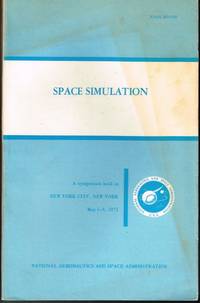
197246119Washington DC: NASA 1972. First Edition. First Printing. good. 23 cm 1071 wraps illus. references covers somewhat worn and soiled some edge soiling. This symposium was sponsored by the Institute of Environmental Sciences The American Institute of Aeronautics and Astronautics; The American Society for Testing and Materials; and the National Aeronautics and Space Administration. NASA paperback
197872350Washington DC: National Aeronautics and Space Administration Scientific and Technical Information Office 1978. Presumed First Edition First printing. Hardcover. good. 11" x 14" vii 1 160 pages profusely illus. some in color tables Cover has some fading. Some pages has slight corner creasing. No dust jacket present. 3D viewer in pocket at rear boards have some edge wear. Oversized item requires more shipping charges if sent overseas. The Viking program consisted of a pair of American space probes sent to Mars Viking 1 and Viking 2. Each spacecraft was composed of two main parts: an orbiter designed to photograph the surface and a lander designed to study the planet from the surface. The orbiters also served as communication relays for the landers. The Viking program grew from NASA's earlier Voyager Mars program. Viking 1 entered Mars orbit on June 19 1976 with Viking 2 following suit on August 7. After orbiting Mars for more than a month and returning images used for landing site selection the orbiters and landers detached; the landers then soft-landed. The Viking 1 lander touched down on the surface of Mars on July 20 1976 and was joined by the Viking 2 lander on September 3. The orbiters continued imaging and performing other scientific operations from orbit while the landers deployed instruments on the surface. Pictures from the Viking 1 and Viking 2 Landers as well as an account of the decade leading up to the Mars pictures by Tim Mutch leader of the Viking Lander Imaging Team. The Viking landers were the first completely successful spacecrafts to land on Mars. Before Viking arrived at Mars landing sites were chosen for both Viking landers. On July 20 1976 Viking lander 1 arrived at its chosen site in the western part of Chryse Planitia. On August 7 1976 Viking lander 2 touched down on Utopia Planitia. Each of the Viking landers carried a series of science packages which included a weather station a seismometer a chemical analysis package two cameras a soil composition package and a biological experiment package. Within minutes of lander 1's touch down the first picture was taken in case something happened to the spacecraft. This picture showed what looked like a sandy dusty surface with rocks up to 10 cm in diameter. The two cameras on each lander were mounted on opposite sides of the space craft. This allowed stereoscopic images to be taken which could be used to calculate distances from the lander to the features in the pictures. National Aeronautics and Space Administration, Scientific and Technical Information Office hardcover
193059963Washington DC: United States Government Printing office 1930. Hardcover. Good. No dust jacket as issued. Ex-library. Usual library markings. Cover has some wear and soiling. vi 242 p. Abbreviations. This Bibliography of Aeronautics for 1929 covers the aeronautical literature published from January 1 to December 31 1929. The first Bibliography of Aeronautics was published by the Smithsonian Institution as Volume 55 of the SMithsonian Miscellaneous Collections and covers the material published prior to June 30 1909. Supplementary volumes of the Bibliography of Aeronautics for the subsequent years have bee published the the National Advisory Committee for Aeronautics. Citations of the publications of all nations are included in the languages in which these publications originally appeared. The arrangement is in dictionary form with author and subject entry and one alphabetical arrangement. An attempt has been made to give sufficient cross refered for research in special lines. United States Government Printing office hardcover
191919047Washington:: Government Printing Office 1919. First edition. original cloth. Slight chipping to the fore-edge of one plate; light wear; but very good. Large 8vo. 104 plates; 1 folding chart. Hoff & Fulton 5729. Government Printing Office, hardcover
1928201159Berlin, Scherl, (1928). M. 1 Kte. u. zahlr. Abb. 115 S. OLwd.
S. A. Edizioni Sunland, Milano, s. d. (ma 1930 circa). In 8vo, pp. 26 + 2 (Indice) + (8) su carta lucida con publicità aziendali, bross. edit. in carta illustrata da Sunland in rosso / giallo su fondo blu. Estesa dedica autografa dell'A. alla prima bianca: "Alla signorina Giulia Donegani con cordiale simpatia. Lino Piazza 1939". Il volume, come si riporta a stampain antiporta, è dedicato "A Italo Balbo volatore atlantico offro le pagine di Quota Mille nella medesima fede". Raro. Mende e mancanze alla brossura, molto buono tutto l'interno.
1985774201PN. New. 1985. Soft Cover. Date is original print. This is a reprint edition. . PN paperback
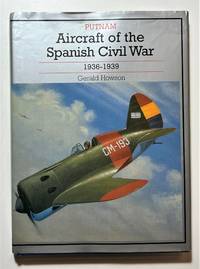
109755Aeronautica - G. Howson - Aircraft of the Spanish Civil War 1936-39 - ed. 1990 Putnam - Testo in lingua inglese. Pagine 310 con illustrazioni. - Copertina rigida. - Condizioni molto buone. unknown