National Aeronautics and AdministrationBiblio.com
857 résultats
B9781503248854Paperback / softback. New. paperback
196545464Washington DC: GPO 1965. fair. Oversized approx. 200 Part II only wraps profusely illus. figures tables references some foxing to fore-edge and a few pages. Covers somewhat worn soiled and creased small tears and small pieces missing at spine. GPO paperback
33331155like new. unknown
1721675779.Gpaperback. Good. Access codes and supplements are not guaranteed with used items. May be an ex-library book. paperback
1992260028PN. New. 1992. Soft Cover. Date is original print. This is a reprint edition . PN paperback
2009Q-0160817234History Division 2009-02-10. Hardcover. New. In shrink wrap. Looks like an interesting title! History Division hardcover
1997298493PN. New. 1997. . Soft Cover. Date is original print. This is a reprint edition . PN paperback
1961713695PN. New. 1961. Soft Cover. Date is original print. This is a reprint edition. . PN paperback
196211493Washington DC: GPO 1962. fair to good. Quarto 204 wraps illus. tables charts apps spine & cover edges faded side margin cut off pp. i-10 inner margin cut off pp. 11-18. Chapter 10 "Astronaut Preparation " was written by Scott Carpenter; Chapter 12 "Pilot's Flight Report " was written by John Glenn. GPO paperback
1960707129PN. New. 1960. Soft Cover. Date is original print. This is a reprint edition. . PN paperback
195980611Washington DC: National Aeronautics and Space Administration 1959. Contemporary print. Photograph. Good. Sheet is approximately 8 inches by 10.5 inches. Black and white photographic image is approximately 9 inches by 6.5 inches. This is printed on photographic paper stock. The image is of a rocket in front of a gantry taken at night. There is a group of people gathered at the base of the rocket. This may be a photograph of the Mercury Redstone or the Mercury Atlas rocket. Mercury-Atlas was a subprogram of Project Mercury that included most of the flights and tests using the Atlas LV-3B launch vehicle. The Atlas was also used for one Mercury flight under the Big Joe subprogram. The photo is contemporary with Project Mercury. Project Mercury was the first human spaceflight program of the United States running from 1958 through 1963. An early highlight of the Space Race its goal was to put a man into Earth orbit and return him safely ideally before the Soviet Union. Taken over from the US Air Force by the newly created civilian space agency NASA it conducted twenty uncrewed developmental flights some using animals and six successful flights by astronauts. The program took its name from Roman mythology. The astronauts were collectively known as the "Mercury Seven" and each spacecraft was given a name ending with a "7" by its pilot. The Mercury-Redstone launch vehicle was the first crewed launch vehicle in the United States space program. The Mercury-Redstone provided NASA with an opportunity understand performance aspects of the Mercury spacecraft the effect of a weightless environment on astronauts and launch and recovery operations at Kennedy Space Center. Development of the Redstone missile began directly after the transfer of the Fort Bliss rocket team to Huntsville Alabama in 1950. The fuselage of the Redstone was developed in-house at the Army's Guided Missile Development Division with Chrysler serving as prime contractor. Peenemunde veteran William A. Mrazek was placed in charge of developing the structure that consisted of pressurized aluminum propellant tanks. The tail unit consisted of a riveted aluminum structure with four stabilizing fins and air rudders with carbon jet vanes extending into the exhaust stream. The initial flight test of the Redstone occurred on August 20 1953 at Cape Canaveral. Between August 1953 and November 1958 37 Redstone missiles were fired altogether with only 13 experiencing any sort of malfunction. On October 7 1958 NASA formally organized Project Mercury to place a manned space capsule in orbital flight around the Earth investigate man's reaction to this new environment and recover the capsule and the pilot safely. The Army agreed to provide ten Redstone and three Jupiter vehicles for NASA's manned space program. Funding for the eight Redstone boosters was provided to the Army Ordnance Missile Command at the Arsenal in January 1959. "Man-rating" for human spaceflight what was previously a ballistic missile was not an easy project. Requirements for the project included launching a two-ton payload to an apogee of 100 nautical miles. The vehicle also had to meet important criteria of safety during launch adequate human factors consideration and necessary performance margins. A key development decision involved using the Jupiter C variation of the Redstone for the project. The Jupiter C design included a propellant tank six feet longer than the Redstone a lighter overall structure and improved performance capable of 78000 pounds of thrust. The elongated tanks of the Jupiter C provided the vehicle with an engine burn time of 143.5 seconds a twenty seconds increase over the Redstone. On July 1 1960 a core group from the Army Ballistic Missile Agency ABMA transferred from the Army to NASA formally creating the Marshall Space Flight Center. With this transfer came overall responsibility for the Mercury-Redstone launch vehicles. By October of that year a status report on Marshall's involvement in Mercury noted that the first two Mercury-Redstones had been assembled by the Marshall Center with many of the components fabricated at Marshall. The Chrysler Corporation had assembled an additional six launch vehicles. The first four of the eight Mercury-Redstone vehicles had been static fired and the first Mercury-Redstone was on the launch pad at Cape Canaveral after a capsule-booster compatibility checkout in Huntsville. National Aeronautics and Space Administration unknown
196080610Washington DC: National Aeronautics and Space Administration 1960. Contemporary print. Photograph. Good. Sheet is approximately 8 inches by 10.5 inches. Black and white photographic image is approximately 9 inches by 6.5 inches. This is printed on photographic paper stock. The image is of a rocket between a gantry and another structure/tower. This may be a photograph of the Mercury Redstone or the Mercury Atlas rocket. Mercury-Atlas was a subprogram of Project Mercury that included most of the flights and tests using the Atlas LV-3B launch vehicle. The Atlas was also used for one Mercury flight under the Big Joe subprogram. The photo is contemporary with Project Mercury. Project Mercury was the first human spaceflight program of the United States running from 1958 through 1963. An early highlight of the Space Race its goal was to put a man into Earth orbit and return him safely ideally before the Soviet Union. Taken over from the US Air Force by the newly created civilian space agency NASA it conducted twenty uncrewed developmental flights some using animals and six successful flights by astronauts. The program took its name from Roman mythology. The astronauts were collectively known as the "Mercury Seven" and each spacecraft was given a name ending with a "7" by its pilot. The Mercury-Redstone launch vehicle was the first crewed launch vehicle in the United States space program. The Mercury-Redstone provided NASA with an opportunity understand performance aspects of the Mercury spacecraft the effect of a weightless environment on astronauts and launch and recovery operations at Kennedy Space Center. Development of the Redstone missile began directly after the transfer of the Fort Bliss rocket team to Huntsville Alabama in 1950. The fuselage of the Redstone was developed in-house at the Army's Guided Missile Development Division with Chrysler serving as prime contractor. Peenemunde veteran William A. Mrazek was placed in charge of developing the structure that consisted of pressurized aluminum propellant tanks. The tail unit consisted of a riveted aluminum structure with four stabilizing fins and air rudders with carbon jet vanes extending into the exhaust stream. The initial flight test of the Redstone occurred on August 20 1953 at Cape Canaveral. Between August 1953 and November 1958 37 Redstone missiles were fired altogether with only 13 experiencing any sort of malfunction. On October 7 1958 NASA formally organized Project Mercury to place a manned space capsule in orbital flight around the Earth investigate man's reaction to this new environment and recover the capsule and the pilot safely. The Army agreed to provide ten Redstone and three Jupiter vehicles for NASA's manned space program. Funding for the eight Redstone boosters was provided to the Army Ordnance Missile Command at the Arsenal in January 1959. "Man-rating" for human spaceflight what was previously a ballistic missile was not an easy project. Requirements for the project included launching a two-ton payload to an apogee of 100 nautical miles. The vehicle also had to meet important criteria of safety during launch adequate human factors consideration and necessary performance margins. A key development decision involved using the Jupiter C variation of the Redstone for the project. The Jupiter C design included a propellant tank six feet longer than the Redstone a lighter overall structure and improved performance capable of 78000 pounds of thrust. The elongated tanks of the Jupiter C provided the vehicle with an engine burn time of 143.5 seconds a twenty seconds increase over the Redstone. On July 1 1960 a core group from the Army Ballistic Missile Agency ABMA transferred from the Army to NASA formally creating the Marshall Space Flight Center. With this transfer came overall responsibility for the Mercury-Redstone launch vehicles. By October of that year a status report on Marshall's involvement in Mercury noted that the first two Mercury-Redstones had been assembled by the Marshall Center with many of the components fabricated at Marshall. The Chrysler Corporation had assembled an additional six launch vehicles. The first four of the eight Mercury-Redstone vehicles had been static fired and the first Mercury-Redstone was on the launch pad at Cape Canaveral after a capsule-booster compatibility checkout in Huntsville. National Aeronautics and Space Administration unknown
195980608Washington DC: National Aeronautics and Space Administration 1959. Contemporary print. Photograph. Good. Sheet is approximately 8 inches by 10.5 inches. Black and white photographic image is approximately 9 inches by 6.5 inches. This is printed on photographic paper stock. The image is of a rocket next to a gantry taken at night. There are many people visible at ground level. This may be a photgraph of the Mercury Redstone rocket. It is contemporary with Project Mercury. Project Mercury was the first human spaceflight program of the United States running from 1958 through 1963. An early highlight of the Space Race its goal was to put a man into Earth orbit and return him safely ideally before the Soviet Union. Taken over from the US Air Force by the newly created civilian space agency NASA it conducted twenty uncrewed developmental flights some using animals and six successful flights by astronauts. The program took its name from Roman mythology. The astronauts were collectively known as the "Mercury Seven" and each spacecraft was given a name ending with a "7" by its pilot. The Mercury-Redstone launch vehicle was the first crewed launch vehicle in the United States space program. The Mercury-Redstone provided NASA with an opportunity understand performance aspects of the Mercury spacecraft the effect of a weightless environment on astronauts and launch and recovery operations at Kennedy Space Center. Development of the Redstone missile began directly after the transfer of the Fort Bliss rocket team to Huntsville Alabama in 1950. The fuselage of the Redstone was developed in-house at the Army's Guided Missile Development Division with Chrysler serving as prime contractor. Peenemunde veteran William A. Mrazek was placed in charge of developing the structure that consisted of pressurized aluminum propellant tanks. The tail unit consisted of a riveted aluminum structure with four stabilizing fins and air rudders with carbon jet vanes extending into the exhaust stream. The initial flight test of the Redstone occurred on August 20 1953 at Cape Canaveral. Between August 1953 and November 1958 37 Redstone missiles were fired altogether with only 13 experiencing any sort of malfunction. On October 7 1958 NASA formally organized Project Mercury to place a manned space capsule in orbital flight around the Earth investigate man's reaction to this new environment and recover the capsule and the pilot safely. The Army agreed to provide ten Redstone and three Jupiter vehicles for NASA's manned space program. Funding for the eight Redstone boosters was provided to the Army Ordnance Missile Command at the Arsenal in January 1959. "Man-rating" for human spaceflight what was previously a ballistic missile was not an easy project. Requirements for the project included launching a two-ton payload to an apogee of 100 nautical miles. The vehicle also had to meet important criteria of safety during launch adequate human factors consideration and necessary performance margins. A key development decision involved using the Jupiter C variation of the Redstone for the project. The Jupiter C design included a propellant tank six feet longer than the Redstone a lighter overall structure and improved performance capable of 78000 pounds of thrust. The elongated tanks of the Jupiter C provided the vehicle with an engine burn time of 143.5 seconds a twenty seconds increase over the Redstone. On July 1 1960 a core group from the Army Ballistic Missile Agency ABMA transferred from the Army to NASA formally creating the Marshall Space Flight Center. With this transfer came overall responsibility for the Mercury-Redstone launch vehicles. By October of that year a status report on Marshall's involvement in Mercury noted that the first two Mercury-Redstones had been assembled by the Marshall Center with many of the components fabricated at Marshall. The Chrysler Corporation had assembled an additional six launch vehicles. The first four of the eight Mercury-Redstone vehicles had been static fired and the first Mercury-Redstone was on the launch pad at Cape Canaveral after a capsule-booster compatibility checkout in Huntsville. National Aeronautics and Space Administration unknown
195980609Washington DC: National Aeronautics and Space Administration 1959. Contemporary print. Photograph. Good. Sheet is approximately 8 inches by 10.5 inches. Black and white photographic image is approximately 9 inches by 6.5 inches. This is printed on photographic paper stock. The image is of a rocket lifting off next to a gantry taken at night. This may be a photograph of the Mercury Redstone rocket. It is contemporary with Project Mercury. Project Mercury was the first human spaceflight program of the United States running from 1958 through 1963. An early highlight of the Space Race its goal was to put a man into Earth orbit and return him safely ideally before the Soviet Union. Taken over from the US Air Force by the newly created civilian space agency NASA it conducted twenty uncrewed developmental flights some using animals and six successful flights by astronauts. The program took its name from Roman mythology. The astronauts were collectively known as the "Mercury Seven" and each spacecraft was given a name ending with a "7" by its pilot. The Mercury-Redstone launch vehicle was the first crewed launch vehicle in the United States space program. The Mercury-Redstone provided NASA with an opportunity understand performance aspects of the Mercury spacecraft the effect of a weightless environment on astronauts and launch and recovery operations at Kennedy Space Center. Development of the Redstone missile began directly after the transfer of the Fort Bliss rocket team to Huntsville Alabama in 1950. The fuselage of the Redstone was developed in-house at the Army's Guided Missile Development Division with Chrysler serving as prime contractor. Peenemunde veteran William A. Mrazek was placed in charge of developing the structure that consisted of pressurized aluminum propellant tanks. The tail unit consisted of a riveted aluminum structure with four stabilizing fins and air rudders with carbon jet vanes extending into the exhaust stream. The initial flight test of the Redstone occurred on August 20 1953 at Cape Canaveral. Between August 1953 and November 1958 37 Redstone missiles were fired altogether with only 13 experiencing any sort of malfunction. On October 7 1958 NASA formally organized Project Mercury to place a manned space capsule in orbital flight around the Earth investigate man's reaction to this new environment and recover the capsule and the pilot safely. The Army agreed to provide ten Redstone and three Jupiter vehicles for NASA's manned space program. Funding for the eight Redstone boosters was provided to the Army Ordnance Missile Command at the Arsenal in January 1959. "Man-rating" for human spaceflight what was previously a ballistic missile was not an easy project. Requirements for the project included launching a two-ton payload to an apogee of 100 nautical miles. The vehicle also had to meet important criteria of safety during launch adequate human factors consideration and necessary performance margins. A key development decision involved using the Jupiter C variation of the Redstone for the project. The Jupiter C design included a propellant tank six feet longer than the Redstone a lighter overall structure and improved performance capable of 78000 pounds of thrust. The elongated tanks of the Jupiter C provided the vehicle with an engine burn time of 143.5 seconds a twenty seconds increase over the Redstone. On July 1 1960 a core group from the Army Ballistic Missile Agency ABMA transferred from the Army to NASA formally creating the Marshall Space Flight Center. With this transfer came overall responsibility for the Mercury-Redstone launch vehicles. By October of that year a status report on Marshall's involvement in Mercury noted that the first two Mercury-Redstones had been assembled by the Marshall Center with many of the components fabricated at Marshall. The Chrysler Corporation had assembled an additional six launch vehicles. The first four of the eight Mercury-Redstone vehicles had been static fired and the first Mercury-Redstone was on the launch pad at Cape Canaveral after a capsule-booster compatibility checkout in Huntsville. National Aeronautics and Space Administration unknown
196080612Washington DC: National Aeronautics and Space Administration 1960. Contemporary print. Photograph. Good. Sheet is approximately 8 inches by 10.5 inches. Black and white photographic image is approximately 9 inches by 6.5 inches. This is printed on photographic paper stock. The image is of a rocket taking off at night. This may be a photograph of a sounding rocket. Rocket has two visible fins near that base of the rocket. The photo is contemporary with Project Mercury. Project Mercury was the first human spaceflight program of the United States running from 1958 through 1963. An early highlight of the Space Race its goal was to put a man into Earth orbit and return him safely ideally before the Soviet Union. Taken over from the US Air Force by the newly created civilian space agency NASA it conducted twenty uncrewed developmental flights some using animals and six successful flights by astronauts. The program took its name from Roman mythology. The astronauts were collectively known as the "Mercury Seven" and each spacecraft was given a name ending with a "7" by its pilot. The Mercury-Redstone launch vehicle was the first crewed launch vehicle in the United States space program. The Mercury-Redstone provided NASA with an opportunity understand performance aspects of the Mercury spacecraft the effect of a weightless environment on astronauts and launch and recovery operations at Kennedy Space Center. Development of the Redstone missile began directly after the transfer of the Fort Bliss rocket team to Huntsville Alabama in 1950. The fuselage of the Redstone was developed in-house at the Army's Guided Missile Development Division with Chrysler serving as prime contractor. Peenemunde veteran William A. Mrazek was placed in charge of developing the structure that consisted of pressurized aluminum propellant tanks. The tail unit consisted of a riveted aluminum structure with four stabilizing fins and air rudders with carbon jet vanes extending into the exhaust stream. The initial flight test of the Redstone occurred on August 20 1953 at Cape Canaveral. Between August 1953 and November 1958 37 Redstone missiles were fired altogether with only 13 experiencing any sort of malfunction. On October 7 1958 NASA formally organized Project Mercury to place a manned space capsule in orbital flight around the Earth investigate man's reaction to this new environment and recover the capsule and the pilot safely. The Army agreed to provide ten Redstone and three Jupiter vehicles for NASA's manned space program. Funding for the eight Redstone boosters was provided to the Army Ordnance Missile Command at the Arsenal in January 1959. "Man-rating" for human spaceflight what was previously a ballistic missile was not an easy project. Requirements for the project included launching a two-ton payload to an apogee of 100 nautical miles. The vehicle also had to meet important criteria of safety during launch adequate human factors consideration and necessary performance margins. A key development decision involved using the Jupiter C variation of the Redstone for the project. The Jupiter C design included a propellant tank six feet longer than the Redstone a lighter overall structure and improved performance capable of 78000 pounds of thrust. The elongated tanks of the Jupiter C provided the vehicle with an engine burn time of 143.5 seconds a twenty seconds increase over the Redstone. On July 1 1960 a core group from the Army Ballistic Missile Agency ABMA transferred from the Army to NASA formally creating the Marshall Space Flight Center. With this transfer came overall responsibility for the Mercury-Redstone launch vehicles. By October of that year a status report on Marshall's involvement in Mercury noted that the first two Mercury-Redstones had been assembled by the Marshall Center with many of the components fabricated at Marshall. The Chrysler Corporation had assembled an additional six launch vehicles. The first four of the eight Mercury-Redstone vehicles had been static fired and the first Mercury-Redstone was on the launch pad at Cape Canaveral after a capsule-booster compatibility checkout in Huntsville. National Aeronautics and Space Administration unknown
2010DADAX0160817331Government Printing Office 2010-05-05. 1st English langua edition. hardcover. New. 6.50x2.00x9.50. Buy with confidence. Excellent Customer Service & Return policy. Government Printing Office hardcover
198558682National Aeronautics and Space Administration. VG. 1985. Paperback. Paperback in Very Good condition. 4to 11" - 13" tall. 501 pages. Quick Shipping All Books Mailed in Boxes Free Tracking Provided . National Aeronautics and Space Administration paperback
19991317216PN. New. 1999. Soft Cover. Date is original print. This is a reprint edition . PN paperback
1965726412PN. New. 1965. Soft Cover. Date is original print. This is a reprint edition. . PN paperback
1966731005PN. New. 1966. Soft Cover. Date is original print. This is a reprint edition. . PN paperback
1965727443PN. New. 1965. Soft Cover. Date is original print. This is a reprint edition. . PN paperback
1964725014PN. New. 1964. Soft Cover. Date is original print. This is a reprint edition. . PN paperback
1964ZB455960NASA 1964. 34 pp. softcover very good. - If you are reading this this item is actually physically in our stock and ready for shipment once ordered. We are not bookjackers. Buyer is responsible for any additional duties taxes or fees required by recipient's country. NASA paperback
20011329808PN. New. 2001. Soft Cover. Date is original print. This is a reprint edition . PN paperback
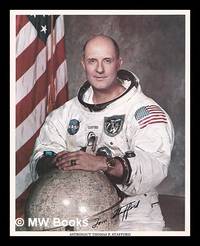
374310Houston TX USA: National Aeronautics and Space Administration. First Edition. Softcover. One colour photograph SIGNED by Astronaut Thomas P. Stafford. Remains well preserved overall; bright clean and sharp-cornered. Provenance; envelope addressed to Ron Crosby. Physical description; 1 colour photograph. Notes; No publication date given. SIGNED by Astronaut Thomas P. Stafford. Subjects; National Aeronautics and Space Administration NASA. Astronaut Thomas P. Stafford. Houston, TX (USA): National Aeronautics and Space Administration paperback