Flight 603 DC 10 Plane CrashBiblio.com
102 résultats
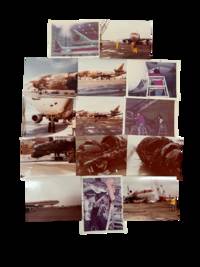
1978233051978. Continental Airlines Flight 603 disaster photographs documenting the burned wreckage and structural damage of the DC 10 runway overrun at Los Angeles International Airport on March 1 1978 one of the most consequential American aviation accidents of the late 1970s and a major catalyst for changes in tire safety standards rejected takeoff procedures and aircraft evacuation systems. Flight 603 a Continental Airlines DC 10 10 scheduled from Los Angeles to Honolulu attempted to abort takeoff after multiple tire failures near decision speed on a wet runway; the aircraft overran runway 6R at LAX the left main landing gear collapsed beyond the pavement fuel tanks ruptured and a major fire engulfed the underside and left side of the aircraft during evacuation. The NTSB recorded 2 deaths and 28 serious injuries in its formal report while later accounts place the eventual death toll at 4 after additional passengers later died from injuries sustained in the crash.<br /> Photo archive of 14 color snapshot photographs each approximately 3.5" x 4.5" Los Angeles International Airport California March 1978. The photographs show Continental Airlines McDonnell Douglas DC 10 10 N68045 after the accident resting heavily fire damaged on the runway and adjacent overrun area. Multiple images focus closely on the burned underside of the fuselage where large sections of aluminum skin have been completely burned away exposing the aircraft's internal rib structure wiring insulation and lower cabin framework. Other views show extensive scorching along the left side of the aircraft blackened and partially melted fuselage panels around the wing root and landing gear area collapsed structural sections beneath the passenger cabin and debris scattered across the wet runway surface. Several photographs widen outward to show emergency and recovery operations surrounding the aircraft including personnel service vehicles cranes and towing equipment positioned around the destroyed DC 10. One image records the full profile of the aircraft from a distance emphasizing the scale of the burn damage extending across much of the fuselage exterior. Together the photographs document not merely the existence of the accident but the specific physical consequences of the runway overrun and post crash fire: ruptured lower fuselage sections exposed aircraft structure burned cabin undersides and the recovery environment at LAX immediately after the disaster. <br /> Flight 603 became an important case study in late twentieth century aviation safety because the accident linked tire failure runway conditions aircraft stopping performance and evacuation survivability within the emerging era of mass deregulated air travel. The NTSB investigation led to recommendations intended to "significantly reduce the incidence of tire failures during takeoffs and rejected takeoffs" while later FAA and industry reforms addressed tire testing standards takeoff performance calculations and the durability and fire resistance of emergency evacuation slides. These photographs preserve the material evidence behind those institutional and engineering changes documenting the burned airframe and structural destruction that transformed Flight 603 into a major reference point in modern commercial aviation safety history. Minor wear from handling. Overall very good condition. unknown
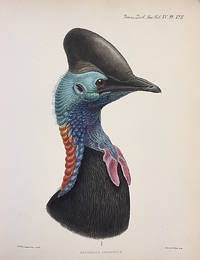
190016257London: for the Society 1900. FIRST EDITION. Complete with 18 hand-colored lithographed plates of birds by Keulemans 2 hand-colored lithographed maps 4 duo-tone osteological plates and 10 text illustrations. Half morocco with the original blue printed rear wrapper bound in at the end. From the library of Dr. James M. Dolan Jr. curator of the San Diego Zoological Society with his bookplate and blind-stamp on lower blank margin of first leaf. An excellent copy with only very light browning on osteological plates. First edition as issued by the Zoological Society of London. Rothschild with Keulemans’ exquisite plates again outdoes himself. Rothschild was obsessed with the cassowary a giant flightless bird with a colorful neck native to Papua New Guinea and the surrounding islands. He invested huge amounts of money in bringing the species over to England both dead and alive in order to study their habits plumage and behavior. In this monograph Rothschild describes in minute detail all species and subspecies local names measurements distribution bibliography and all other pertinent information such as the anatomical and taxonomic information. Casey Wood refers to it as “a beautifully illustrated treatise†and Anker goes a step further by calling it “an especially profusely illustrated treatise.†The second section deals withâ€the relations of the Casuariidae to the remaining ‘Struthious’ forms and the position of these with regard to the ‘Carinatae’†introduction. Pycraft credits Rothschild for having furnished the bulk of the material for this monograph.<br /> <br /> Rothschild 1868-1937 2nd Baron Rothschild member of one of the world’s wealthiest familes was a British zoologist who became a great collector and founded the Rothschild Natural History Museum in London. The Zoological Society published a number of exquisite ornithological monographs in the late nineteenth and early twentieth century; this one is considered one of the most important as well as magnificent and beautifully illustrated monograph of the period. for the Society unknown